Justin
Yiwu kitchenware sourcing covers utensils, cookware, storage, tableware and gadgets from thousands of booths — but it is a food-contact category, which makes compliance the deciding factor, not price. The same spatula can be food-grade silicone or a cheaper filler blend, and the difference only shows up in a lab test or a customs hold. This guide covers what to buy, the food-contact rules, and the material traps to avoid.
Key Takeaways
- Yiwu covers utensils, cookware, storage, tableware and kitchen gadgets.
- Kitchenware is food-contact — US FDA and EU LFGB rules often apply.
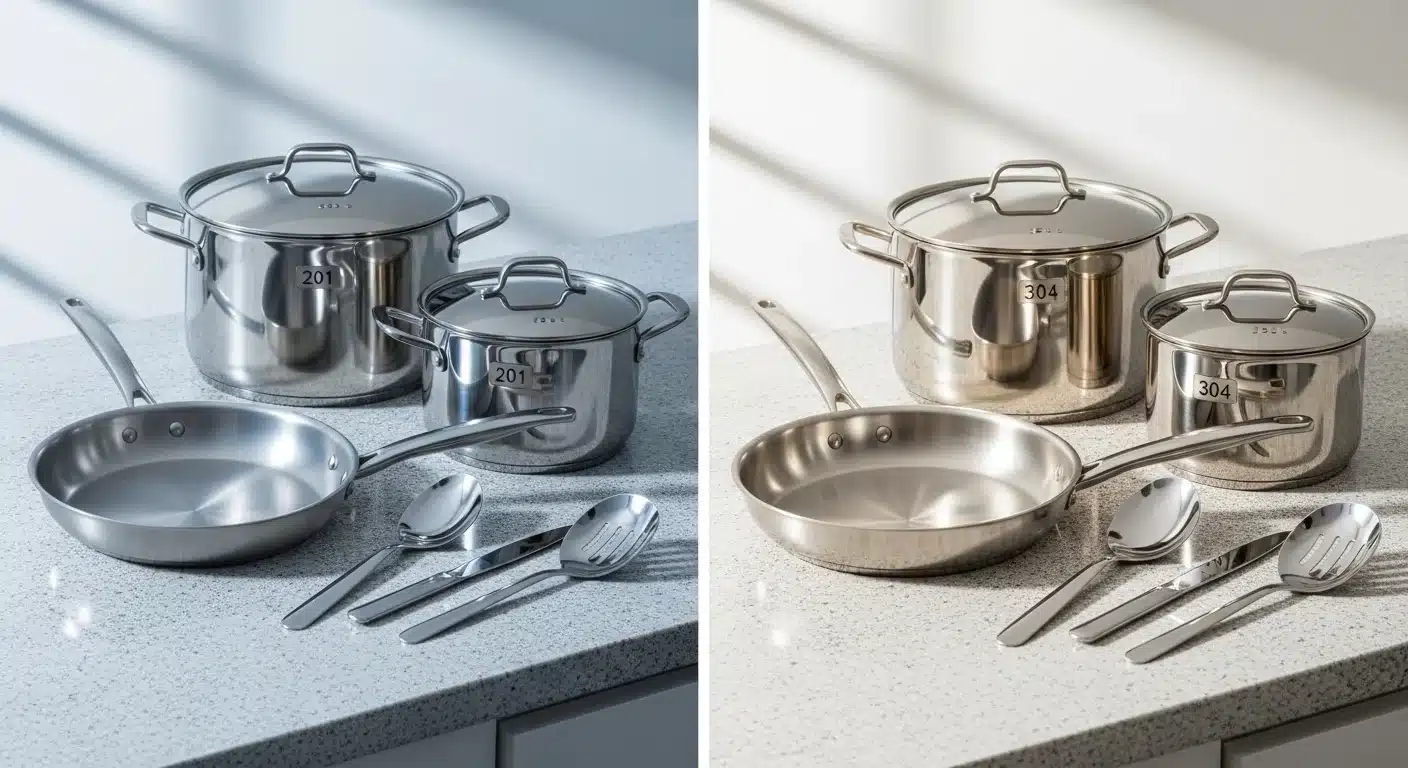
- Stainless grade matters: 304 resists rust far better than cheaper 201.
- Glazed ceramics and glass can leach lead and cadmium — test them.
- Minimums are often low, from roughly 100-500 pieces per design.
- Confirm food-grade material in writing before you order.
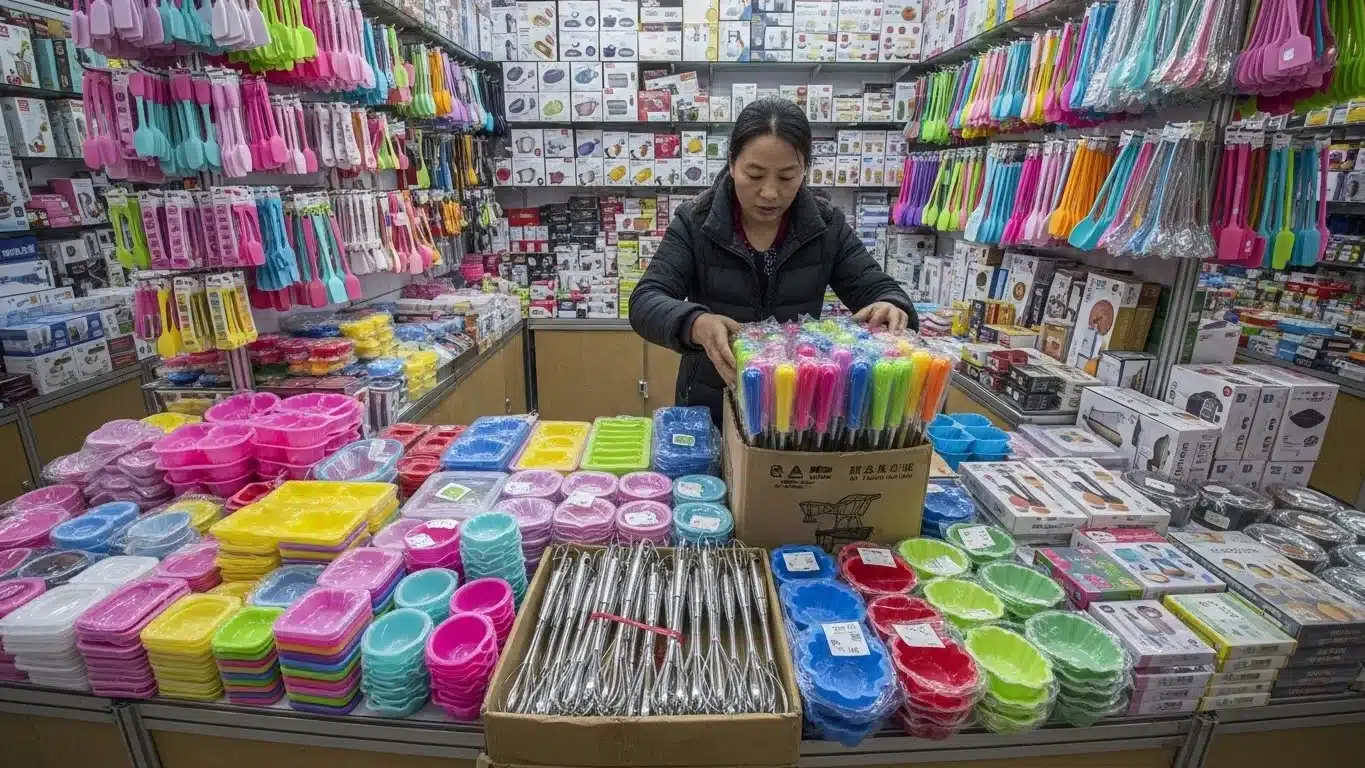
Kitchenware is one of many categories in the market — see the full Yiwu product categories guide, and for the full buying process start with our complete Yiwu sourcing guide.
Why Yiwu for Kitchenware
Kitchenware sits mostly in the hardware and daily-goods districts, with deep ranges in silicone tools, stainless utensils, storage containers and melamine tableware. Yiwu’s strength is variety and low minimums for stock items, which suits Amazon bundles and variety retailers. For heavy cookware with serious manufacturing depth, a specialist factory cluster can beat Yiwu — but for a broad kitchen range in one container, Yiwu wins.
What Kitchenware You Can Source
- Stainless utensils and cookware: grade is everything — confirm 304 vs 201.
- Silicone tools: spatulas, molds — must be food-grade, not filled blends.
- Storage containers: plastic and glass; check BPA claims and seals.
- Tableware: melamine, ceramic, glass — migration and lead risk.
- Gadgets and small electricals: add electrical certification if powered.
Food-Contact Compliance
Anything that touches food is regulated, and the rules vary by market, material, and importer role — confirm current requirements with a testing lab or customs broker before you commit.
- United States: food-contact materials fall under FDA rules (e.g. 21 CFR), and California Prop 65 may require warnings for listed substances such as lead.
- European Union: framework Regulation 1935/2004 applies, and Germany’s LFGB testing is a common buyer requirement for food-contact goods.
- Ceramics and glass: glazed or decorated surfaces need lead and cadmium migration testing.
- Melamine and plastics: watch migration limits and avoid melamine for high-heat use.
A booth will happily call a spatula food-grade silicone. Only a migration test proves it. For food-contact goods, get the test report tied to your exact SKU before you wire the balance.
Kitchenware at a Glance
| Kitchenware Type | Material | Food-Contact Check | Typical MOQ | Key QC Point |
|---|---|---|---|---|
| Utensils / cookware | Stainless steel | Grade 304 vs 201 | 100-500 pcs | Magnet/grade test, no rust |
| Spatulas / molds | Silicone | Food-grade migration | 100-1,000 pcs | Smell test, migration report |
| Storage containers | PP plastic, glass | BPA, seal integrity | 300-1,000 pcs | Leak test, lid fit |
| Tableware | Melamine, ceramic | Lead/cadmium, migration | 300-1,000 pcs | Migration test, chip check |
MOQ and Pricing
Stock kitchenware minimums are often 100 to 500 pieces per design. Price moves most on material grade — 304 stainless costs more than 201 but resists rust for years, and food-grade silicone costs more than a filled blend. The cheap quote almost always hides a lower material spec, so price like-for-like only after the grade is confirmed. Expect to pay roughly 0.30-0.80 USD more per unit for verified 304 over 201 on a basic utensil — a gap most buyers recover on the first avoided rust complaint.
What We Check on a Kitchenware Supplier
- License name matching the invoice and bank account.
- Stainless grade verified (304 vs 201) — not just the supplier’s word.
- A food-contact migration test on samples for silicone, ceramic and plastic.
- Seal and leak tests on any storage container.
- An AQL inspection against the approved sample before the balance is paid.
Material Pitfalls
The classic kitchenware failure is 201 stainless sold as 304 — it looks identical but rusts within months, especially in humid climates or dishwashers. The second is filled silicone that smells or leaches. Confirm the grade with a test, lock the sample, and inspect the bulk against it. A supplier who resists a grade test is telling you what the bulk run is made of. As a rule, 304 stainless carries roughly 8% nickel and 18% chromium for corrosion resistance, while cheaper 201 swaps in manganese and rusts faster; and melamine tableware should not be used above about 70°C, since heat accelerates chemical migration.

Food-contact goods live and die on inspection — see our Yiwu quality inspection guide for the AQL process before you pay the balance.
Stainless Grades Explained
Most kitchenware disputes trace back to one number: the stainless grade. The grade decides corrosion resistance, and it is invisible on the shelf, so it is the first thing to specify and test.
| Grade | Composition | Corrosion Resistance | Best Use | Relative Cost |
|---|---|---|---|---|
| 304 (18/8) | ~18% chromium, 8% nickel | High | Cookware, utensils, bowls | Higher |
| 316 | Adds molybdenum | Le plus élevé | Marine / high-salt use | Le plus élevé |
| 201 | Manganese replaces some nickel | Lower, rusts faster | Low-cost stock items | Lower |
| 430 | ~16% chromium, no nickel | Medium, magnetic | Budget, dishwasher-light | Low |
Lead Times, Tooling and Custom Branding
Stock kitchenware ships fast — often 7-15 days. The jump in cost and time comes with customization. A custom silicone or plastic item needs a mold, and tooling typically runs a few hundred to a few thousand USD with a 20-40 day build before the first production run. Custom-printed handles, color matching or branded packaging add 15-30 days. If you are testing a line, start with stock items and reserve tooling spend for SKUs you have already validated.
Coatings and Non-Stick Safety
Coated cookware adds a second compliance layer on top of the base material. Non-stick coatings should be PFOA-free, and many buyers now ask for PTFE-free ceramic coatings to match retailer and marketplace policies. A coating also has a service life — cheap non-stick can start failing within months of normal use, which shows up as returns, not a customs problem. Ask for the coating type in writing, confirm it is PFOA-free, and run an adhesion and abrasion check on the sample before committing to a bulk run.
How to Read a Kitchenware Test Report
A test report is only useful if you can read past the pass/fail line. For food-contact kitchenware, check these on the actual report before you trust it:
- SKU match: the report must reference your exact item and material, not a similar one — a common swap that voids the whole document.
- Standard cited: confirm it tests against the right rule for your market (FDA 21 CFR for the US, LFGB or Regulation 1935/2004 for the EU).
- Migration results: for ceramics and glass, look for lead and cadmium migration figures within limits, not just an overall ‘pass’.
- Lab and date: an accredited lab and a recent date; an old report on a re-tooled product is not proof.
- Grade verification: for stainless, a composition test confirming 304 rather than 201.
Coatings and Non-Stick Notes
Coated cookware adds a compliance layer on top of the base metal. Non-stick should be PFOA-free, and many buyers now ask for PTFE-free ceramic coatings to match marketplace and retailer policies. A coating also has a service life — cheap non-stick can start failing within months of normal use, which shows up as returns rather than a customs problem. Ask for the coating type in writing, confirm it is PFOA-free, and run an adhesion and abrasion check on the sample before committing to a bulk run.
Conclusion
Yiwu kitchenware sourcing is a compliance game first and a price game second. Confirm the food-grade material, verify the stainless grade, test the glazes, and inspect the bulk. Get that right and Yiwu delivers a broad, food-safe kitchen range at trade prices.
Questions fréquemment posées
Is Yiwu kitchenware food-safe?
It can be, but it is not automatic. Kitchenware is a food-contact category, so confirm food-grade materials and get migration testing (FDA in the US, LFGB or Regulation 1935/2004 in the EU) on samples before bulk ordering.
What is the difference between 304 and 201 stainless?
304 stainless resists corrosion far better than the cheaper 201, which can rust within months in humid or dishwasher conditions. Verify the grade with a test, not just the supplier’s claim.
What is the MOQ for Yiwu kitchenware?
Stock designs often start from roughly 100 to 500 pieces. Custom shapes, colors or branded packaging raise the minimum and the lead time.
Do I need LFGB or FDA testing?
Often, depending on your market and product. EU buyers frequently require LFGB or Regulation 1935/2004 compliance; US buyers rely on FDA food-contact rules. Confirm with a testing lab for your destination.
About the author: Written by the ChineseYiwu Sourcing Team — based inside the Yiwu International Trade City since 2005, with 50+ sourcing specialists and QC inspectors serving importers in 100+ countries.