Justin
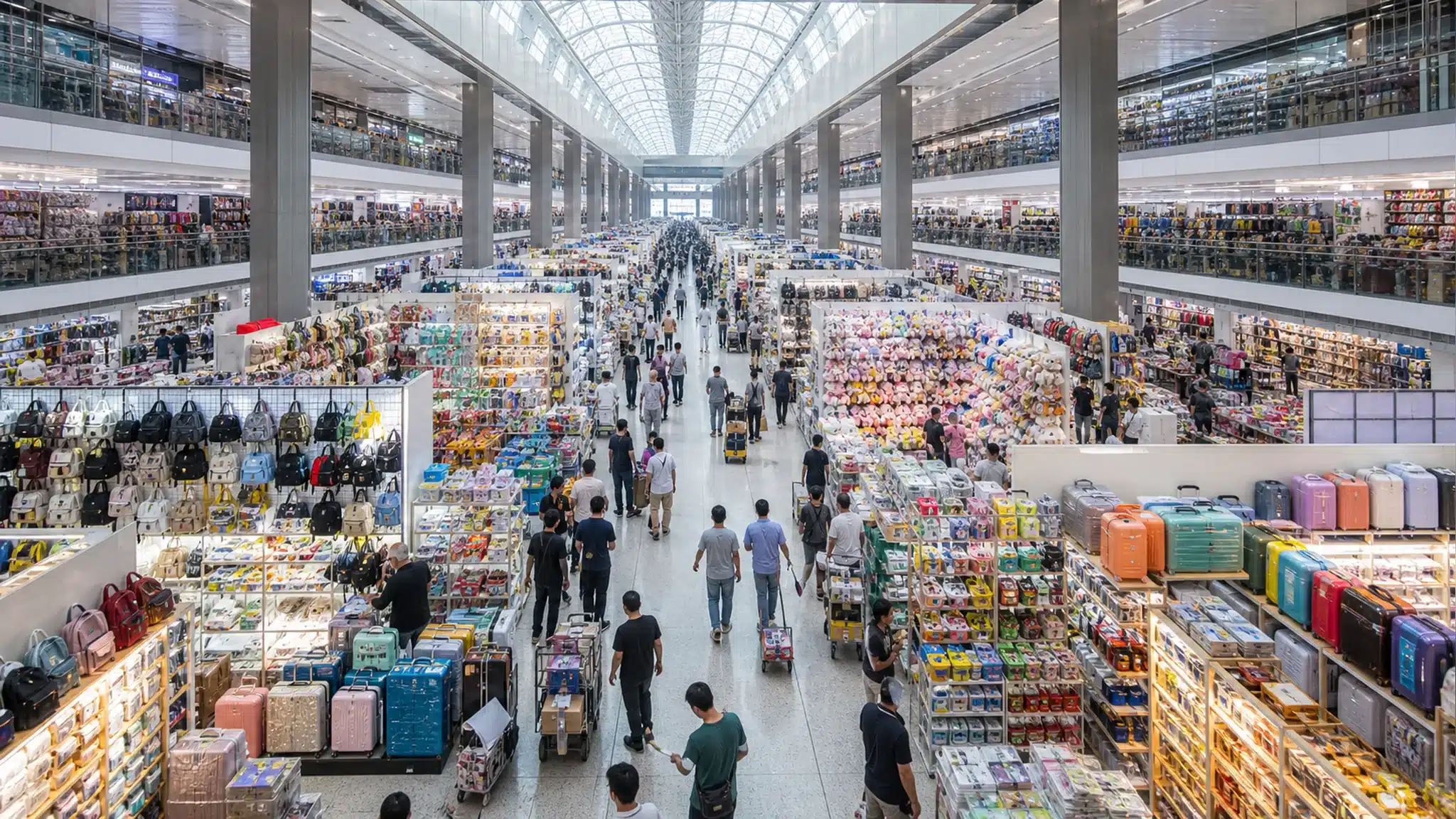
Almost everything on a discount-store shelf, a party-supplies aisle, or a phone-accessory rack passed through a China wholesale market before it reached you. The question overseas buyers actually ask isn’t “does China have wholesale markets” — it’s which one, for which product, and whether buying there instead of from a domestic distributor is worth the freight, the tariffs, and the language barrier. This guide answers that. It maps the physical mega-markets by what they’re best at, compares the online platforms that mirror them, and — critically for 2026 — shows what the recent tariff and de-minimis changes did to the landed-cost math that used to make direct buying a no-brainer.
“China wholesale market” is really three different things wearing one name: the permanent physical trade cities (Yiwu, Keqiao, Huaqiangbei), the online B2B platforms (1688, Alibaba, Made-in-China), and the twice-yearly trade fairs (Canton Fair). Buyers who treat them as interchangeable overpay or buy the wrong way. Below, each gets its own section, its own best-fit buyer, and its own trap to avoid.
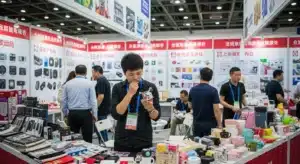
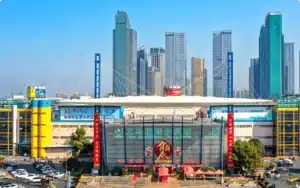
National Geographic inside Yiwu — the world’s largest small-commodity wholesale market.
Key Takeaways
- The biggest one is Yiwu. Yiwu International Trade City (Futian Market) runs roughly 75,000 booths across five districts and more than 4 million m², trading over 2 million small-commodity items — the world’s largest small-commodity wholesale market.
- Markets are specialized, not general. Yiwu for small commodities and mixed containers, Keqiao (Shaoxing) for fabric, Shantou Chenghai for toys, Shenzhen Huaqiangbei for electronics, Guangzhou for clothing and leather goods. Going to the wrong city wastes the trip.
- Online, “biggest” means 1688.com. It’s Alibaba’s China-domestic platform with the deepest factory supply and lowest prices — but it’s in Mandarin, priced in RMB, and effectively needs an agent. Alibaba.com is the export-facing sibling.
- 2026 changed the cost math. Section 301 tariffs (7.5% on many finished consumer goods, 25% on many inputs) survived the February 2026 Supreme Court ruling that struck down the separate IEEPA tariffs — and the $800 de-minimis exemption for China is gone, so small parcels now pay duty too.
- Direct isn’t for everyone. Below roughly one full container a year, or for regulated/branded goods, a sourcing agent or a domestic distributor often beats going to the market yourself.
What “China wholesale market” actually means: three different channels
The phrase collapses three distinct buying channels that work very differently. Getting the channel right is the first decision — it dictates your minimum order, your price, and how much hand-holding you’ll need.
- Physical trade cities — permanent, year-round wholesale malls where thousands of suppliers rent booths. You walk the aisles, see and touch samples, and place orders on the spot or through the booth’s export desk. Best for discovering products, checking quality in person, and building a mixed container from many suppliers. Yiwu, Keqiao and Guangzhou’s clusters are the flagships.
- Online B2B platforms — the digital mirror of those markets. 1688.com (domestic, cheapest, Mandarin), Alibaba.com (export, English, verified suppliers), Made-in-China.com (industrial goods and machinery), and DHgate (small test batches). Best when you know exactly what you want and don’t need to fly in.
- Trade fairs — the twice-yearly Foire de Canton in Guangzhou is the giant. It’s not a market you can visit any day; it’s an event where export-ready manufacturers exhibit. Best for meeting larger factories and OEM partners, weaker for spot-buying small quantities.
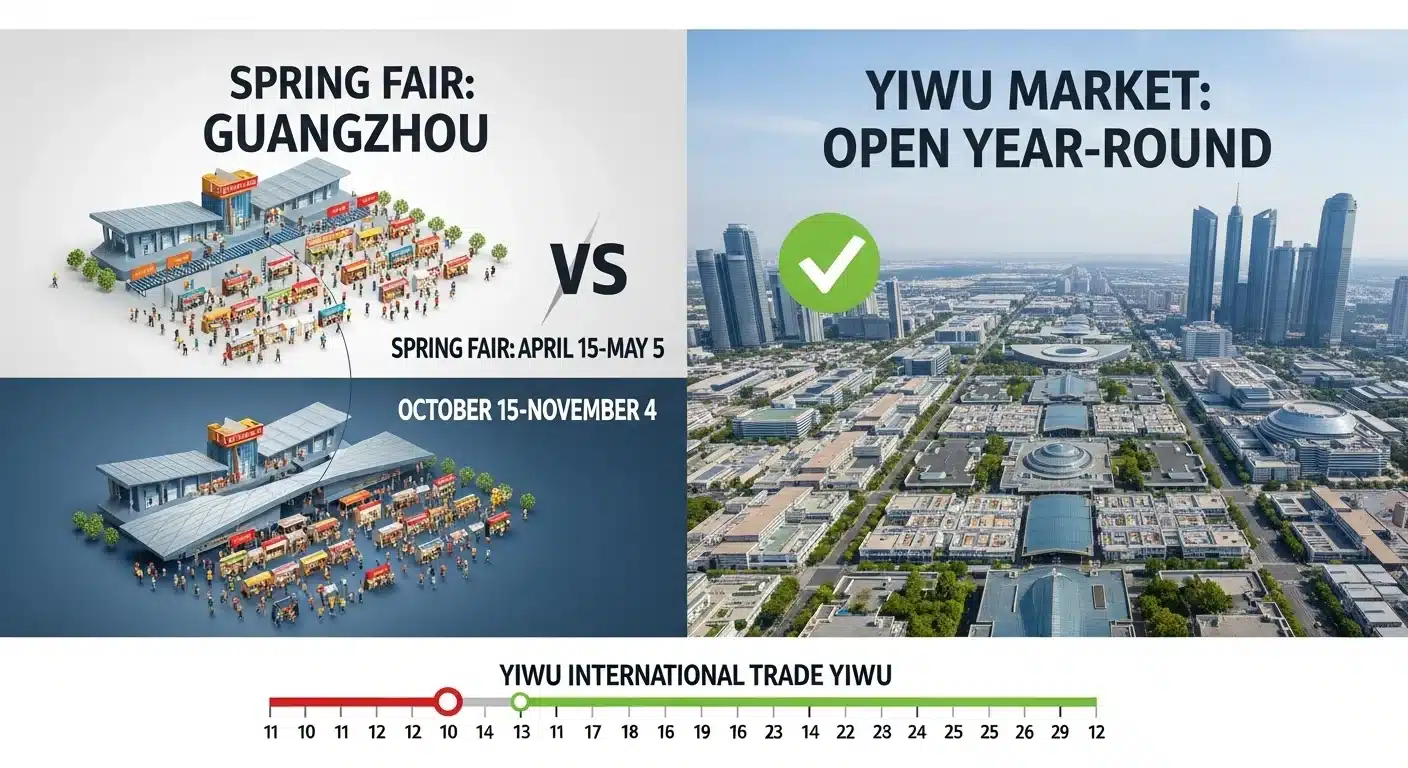
Most experienced importers use a combination: discover and vet on a platform, confirm quality at the physical market or via an agent’s inspection, then reorder online. If you’re weighing the fair against the permanent market specifically, our Canton Fair vs. Yiwu Market comparison breaks down which fits which buyer.
The major physical wholesale markets, mapped by product
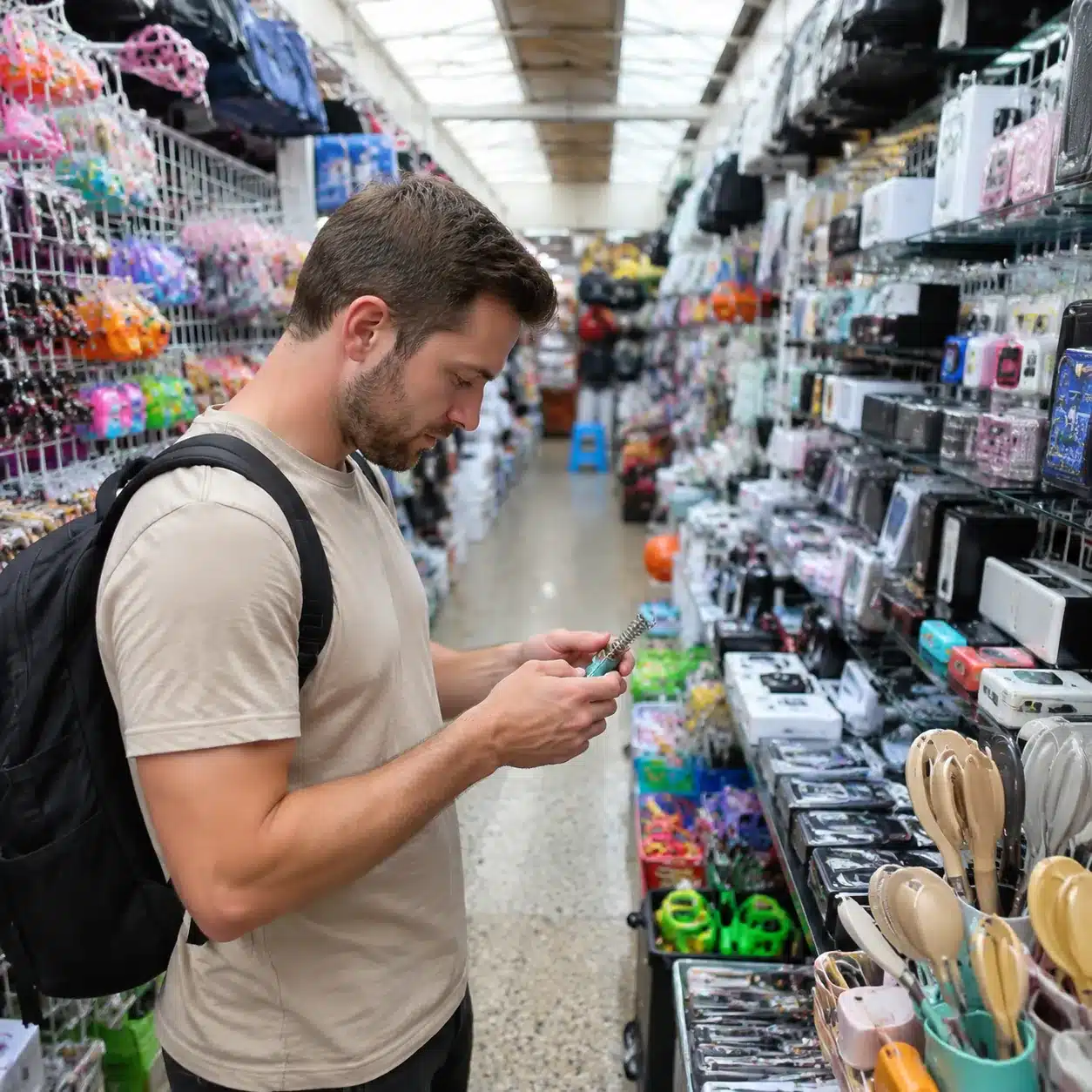
China’s markets are hyper-specialized. Each city grew a cluster around one product family, and that concentration is the reason prices are low: hundreds of competing suppliers, shared components, and factories a short drive away. Buy where your product lives, and you get the best price and the deepest selection. Buy in the wrong city and you’re paying a trader’s markup on goods trucked in from somewhere else. Here’s the map that matters:
| Marché | City | Best for | Scale / claim to fame |
|---|---|---|---|
| Yiwu International Trade City (Futian) | Yiwu, Zhejiang | Small commodities: toys, jewelry, stationery, homeware, accessories, hardware, seasonal goods — and mixed containers | ~75,000 booths, 5 districts, 2M+ products; world’s largest small-commodity market |
| China Textile City | Keqiao, Shaoxing | Fabric and textiles by the roll — polyester, cotton, silk blends, technical and home textiles | 30,000+ stalls; world’s largest fabric market; >US$30B annual turnover |
| Chenghai toy cluster | Shantou, Guangdong | Plastic toys, RC vehicles, educational and novelty toys | Industry sources estimate it makes on the order of a third of the world’s plastic toys |
| Huaqiangbei | Shenzhen, Guangdong | Electronics, components, phone accessories, gadgets, LED modules | China’s most concentrated electronics market |
| Baiyun / Shahe / Shisanhang clusters | Guangzhou, Guangdong | Clothing (Shahe, Shisanhang), leather goods and bags (Baiyun), fashion apparel | Southern China’s apparel and leather sourcing hub |
Yiwu: the default for anything small and varied
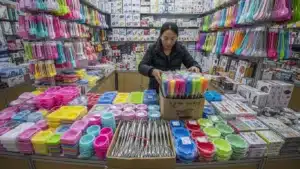
If your catalog is a mix of low-cost consumer goods — the kind a dollar store, a party shop, a promotional-products company, or an Amazon reseller carries — Yiwu is almost always the right first stop. Its five districts are organized by category (toys and jewelry in one, bags and umbrellas in another, hardware and imports in another), which is why buyers can assemble a full 20-foot or 40-foot container from dozens of suppliers in a single trip. That “one city, one container, many products” model is Yiwu’s real advantage over buying online, where consolidating twenty small suppliers into one shipment is a logistics headache. Our full Yiwu market sourcing guide walks the districts in detail.
When a specialized market beats Yiwu
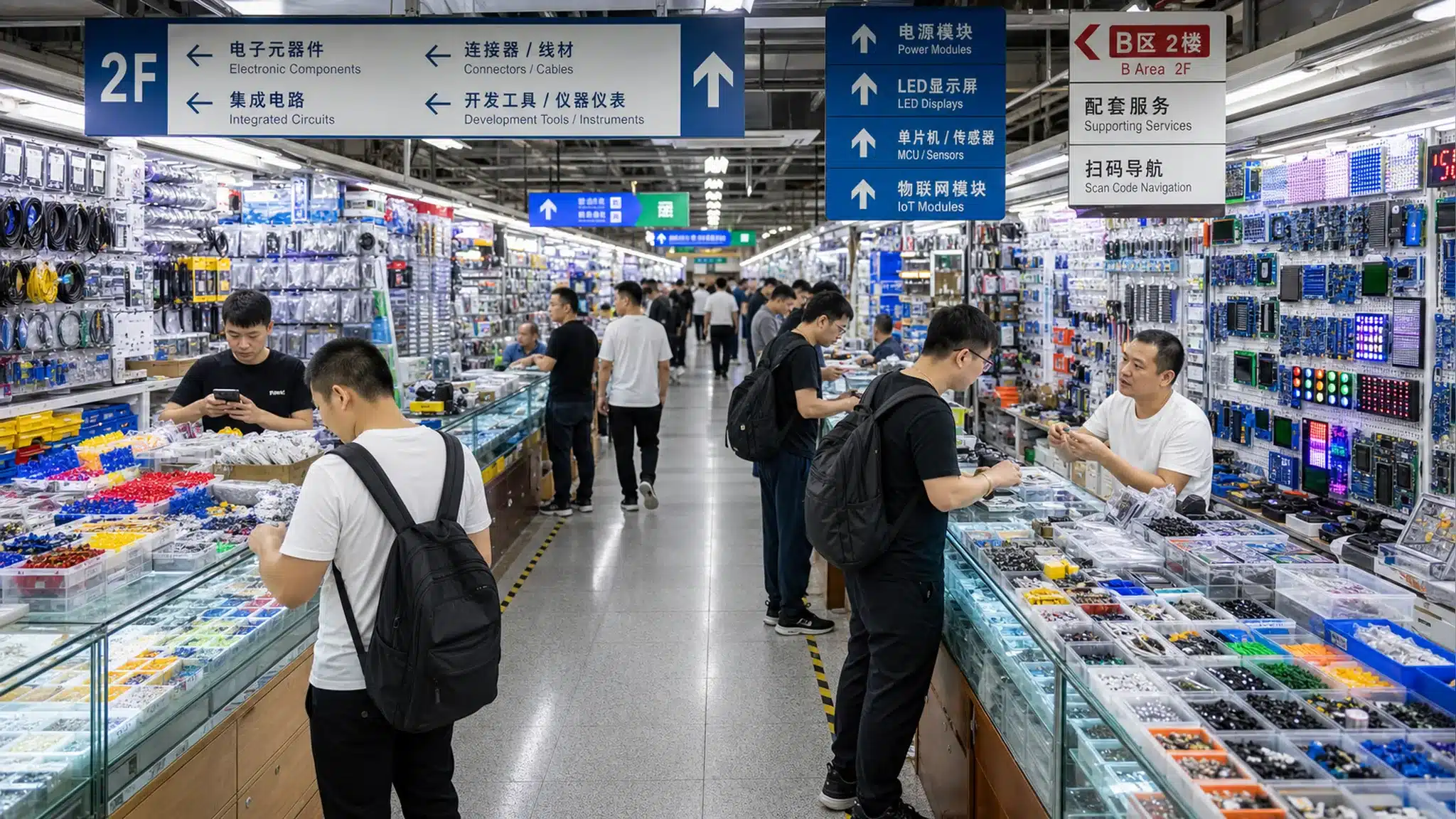
Yiwu carries a little of everything, but for a few categories the specialist city wins decisively. If you’re buying fabric by the roll, Keqiao’s China Textile City gives you mills at source rather than traders. For serious electronics — not phone cases, but components, boards and gadgets — Shenzhen’s Huaqiangbei has the depth and the technical suppliers Yiwu lacks. For toys at volume, Shantou Chenghai’s factories (which industry sources estimate make on the order of a third of the world’s plastic toys) undercut what a Yiwu trader charges. And for clothing and leather, Guangzhou’s Shahe, Shisanhang and Baiyun markets are the apparel heartland. The rule of thumb: single-category, high-volume, quality-sensitive orders reward a trip to the specialist city; mixed, small-quantity catalogs reward Yiwu.
The online wholesale platforms: which “biggest website” is which
Every physical market has an online counterpart, and buyers constantly confuse them. The single most important distinction: 1688.com is for the Chinese domestic market, Alibaba.com is for exporters. Both are Alibaba Group, but they are priced and built for different customers. Here’s how the main platforms compare for an overseas buyer:
| Plate-forme | Built for | Price level | Catch for overseas buyers |
|---|---|---|---|
| 1688.com | China-domestic wholesale; the largest wholesale site in China | Lowest — factory-direct | Mandarin only, RMB, China bank/Alipay; usually needs an agent to buy and forward |
| Alibaba.com | Cross-border trade / export | Higher than 1688 (export markup) | English, Trade Assurance, but some listings are traders not factories |
| Made-in-China.com | Industrial goods, machinery, B2B export | Mid | Strong for heavy/industrial, thinner for consumer novelty goods |
| DHgate / AliExpress | Very small batches, test orders, dropshipping | Highest per unit | Convenient but retail-adjacent pricing; quality varies widely |
The practical workflow most importers land on: find the product on Alibaba.com in English, then have an agent source the same item on 1688.com at the domestic price — often 20–40% cheaper — and consolidate it. That’s exactly the gap a buying agent monetizes. If you’re comparing platforms head-to-head, see our deep dives on sourcing from 1688 et the Yiwu market vs. Alibaba trade-offs.
Which channel is right for you
There is no single “best” way to buy from a China wholesale market — it depends on your volume, your product’s risk profile, and whether you can travel. Match yourself to the profile below.
Best for buying direct from the market
- You move at least a partial container a year, or several mixed shipments
- Your catalog is many low-cost SKUs (Yiwu-style) and margin per unit is thin
- You can travel or you work with an agent who inspects on your behalf
- You want to own supplier relationships and control quality
Better off with a distributor or a middleman
- You need only a few cartons — under one pallet, freight and duty eat the savings
- Your product is regulated (food-contact, children’s items, electronics, cosmetics) and needs certification you can’t verify remotely
- You need it fast and can’t wait 4–8 weeks of production plus ocean transit
- You’re testing a product and don’t want to commit to an MOQ yet
How to actually buy wholesale from China, step by step
Whether you go through a physical market or a platform, the mechanics are the same. Skipping a step is where first-time buyers lose money.
- Identify the right market/platform for your category using the map above. Don’t shop for electronics in Yiwu or toys on Made-in-China.
- Shortlist suppliers and separate factories from traders. A trader adds a margin and a communication layer; a factory gives better prices and control but higher MOQs. Both have their place — just know which you’re talking to. Our guide on factory vs. trading company sourcing covers how to tell them apart.
- Order samples first, always. A sample confirms quality, materials, and that the photos match reality. Paying for samples is the cheapest insurance you’ll buy.
- Negotiate MOQ, price and terms. Minimum order quantities are negotiable, especially if you mix designs or commit to reorders. See our negotiation guide for Chinese suppliers.
- Inspect before you pay the balance. A pre-shipment inspection (yours, or an agent’s) catches defects while you still hold payment leverage — the one point in the deal where you have power.
- Consolidate and ship. Combine suppliers into one container (FCL) or share one (LCL), then handle customs and the last mile. Our breakdown of shipping methods, costs and transit times lays out the options.
The recurring theme across all six steps is verification you can’t do from another continent — separating a factory from a trader, judging a sample, catching defects before the balance is paid. That on-the-ground layer is exactly what a Yiwu sourcing agent exists to provide: they walk the market you can’t fly to, vet the supplier, inspect the goods, and consolidate the container, for a transparent commission rather than a hidden markup. For buyers moving mixed catalogs at volume, that service usually pays for itself in avoided defects and domestic-price sourcing on 1688.
The 2026 cost reality: tariffs, de minimis, and landed cost
This is the section that most “top 10 markets” listicles skip, and it’s the one that decides whether direct buying still makes sense. Two regulatory changes reshaped the math for US buyers, and both are current as of 2026.
Section 301 tariffs are still in force. On 20 February 2026 the US Supreme Court ruled that the President cannot impose tariffs under the International Emergency Economic Powers Act (IEEPA), striking down the separate “reciprocal” and fentanyl-related tariffs. But Section 301 — the China-specific tariffs that predate IEEPA — was a different legal authority and was not affected. It remains fully in effect: List 4A adds 7.5% on many finished consumer goods, and List 3 adds 25% on many components and inputs, stacked on top of the normal duty for your product’s HTS code. In plain terms: the headline “tariff repeal” you may have read about did not remove the China tariff most wholesale buyers actually pay.
Watch the temporary Section 122 surcharge. Separately, a 10% Section 122 surcharge has applied on imports from all countries — stacked on top of Section 301 for Chinese goods. It carries a 150-day statutory limit and is set to expire at 12:01 a.m. EDT on 24 July 2026 unless Congress extends it. If it lapses, landed cost on affected goods drops by that 10% of customs value; if it’s replaced, a new rate applies. This is the one tariff line most likely to change right after you read this, so confirm its status the week you file entry.
The $800 de-minimis loophole is closed. The Section 321 rule that let shipments under US$800 enter duty-free was eliminated for China and Hong Kong on 2 May 2025 (Executive Order 14256) and then for all countries from 29 August 2025. Practically, the parcel-by-parcel dropshipping model that dodged duty is dead — small China parcels now clear customs with duty owed like any other import. That change quietly raised the cost floor on low-value direct-from-China orders and made consolidated container shipping relatively more attractive.
A worked landed-cost example
Suppose you buy 5,000 plastic homeware units at a market/1688 price of US$1.20 each. The unit price is only the start; landed cost is what actually lands in your warehouse:
| Cost line | Amount | Note |
|---|---|---|
| Goods (5,000 × $1.20) | $6,000 | FOB / market price |
| Base duty (illustrative ~3.4%) | ~$204 | Depends on your exact HTS code |
| Section 301 List 4A (7.5%) | ~$450 | Stacks on the base duty |
| Ocean freight + consolidation (LCL est.) | ~$700 | Varies by lane and season |
| Agent commission / inspection | ~$300 | If using a sourcing agent |
| Landed cost | ~$7,654 → ~$1.53/unit | ~28% above the sticker price |
The lesson: the market price is roughly three-quarters of your true cost, and tariffs plus freight make up most of the rest. Direct buying still beats a domestic distributor on many goods — distributors typically mark up 2–3× — but only once you’ve run your numbers with your HTS code and freight lane. Our landed-cost formula guide gives you the full worksheet. Duty rates and Section 301 lists are set by US Customs and the USTR; always confirm your specific code against the official USITC Harmonized Tariff Schedule before you commit.
Red flags and how to protect yourself
Wholesale markets are legitimate and enormous, but they attract the usual hazards of any high-volume, cash-friendly trade. The most common ways buyers get burned — and the defenses:
- Trader posing as a factory. Many “manufacturers” are middlemen. Not fatal — but you should know you’re paying a layer, and price accordingly.
- Sample-vs-bulk quality gap. The golden sample is perfect; the container is not. Defend with a pre-shipment inspection and payment terms that keep the balance until inspection passes. See how buyers use payment leverage on defective goods.
- Replica and IP-infringing goods. Some Guangzhou and Shenzhen sub-markets openly sell counterfeits. Importing them is a customs seizure and legal risk — steer clear.
- All-in “too cheap” quotes. A price far below the cluster average usually hides thinner material, missing certification, or a bait price that rises after the sample.
- No written spec. Verbal agreements at a booth evaporate. Put material, dimensions, packaging and tolerances in writing before you pay a deposit.
The through-line: every one of these is caught by a trusted pair of eyes on the ground plus disciplined payment terms — which is why buyers who can’t travel lean on an agent rather than wiring deposits blind.
Putting it together
China’s wholesale markets aren’t one place or one website — they’re a specialized network. Match the product to the city (Yiwu for small commodities, Keqiao for fabric, Shantou for toys, Shenzhen for electronics, Guangzhou for apparel), match the channel to your volume and travel constraints (physical market, 1688 via an agent, or Alibaba direct), and run the 2026 landed-cost math before you commit — because Section 301 and the end of de-minimis changed the break-even. Do that, and buying from source can cut a domestic distributor’s markup dramatically. Skip it, and the savings disappear into tariffs, freight, and avoidable defects.
Sourcing from a China wholesale market and want the market walked for you?
We’re on the ground in Yiwu — we vet suppliers, inspect goods before you pay the balance, source at domestic 1688 prices, and consolidate your container. Transparent commission, no hidden markup.
Frequently asked questions
Which is the biggest wholesale market in China?
Yiwu International Trade City (Futian Market) in Zhejiang is the largest, with roughly 75,000 booths across five districts, over 4 million m² of floor space, and more than 2 million small-commodity products. It’s recognized as the world’s largest small-commodity wholesale market. For fabric specifically, Keqiao’s China Textile City is the largest of its kind.
How can I buy wholesale from China?
Pick the right channel for your category — a physical market (Yiwu, Guangzhou), an online platform (1688, Alibaba), or the Canton Fair. Then shortlist suppliers, order samples, negotiate MOQ and price, inspect before paying the balance, and consolidate for shipping. Overseas buyers who can’t travel usually work with a sourcing agent who handles vetting, inspection and consolidation on the ground.
What is the biggest Chinese wholesale website?
1688.com — Alibaba’s China-domestic platform — is the largest wholesale website in China, with the deepest factory supply and the lowest prices. It’s built for domestic buyers (Mandarin, RMB, China-based payment), so overseas buyers typically access it through a sourcing agent. Alibaba.com is the English, export-facing platform for cross-border buyers.
Which part of China has all the wholesale items?
Two regions dominate. Zhejiang province — chiefly Yiwu for small commodities and Keqiao for fabric — is the small-goods heartland. Guangdong province — Guangzhou for clothing and leather, Shenzhen for electronics, Shantou for toys — covers apparel and tech. Between these two provinces you can source the overwhelming majority of consumer products made in China.
Is it still cheaper to buy direct from China in 2026?
For most goods, yes — but by less than it used to be. Section 301 tariffs (7.5% on many finished goods, 25% on many inputs) survived the February 2026 Supreme Court ruling, and the $800 de-minimis exemption ended in 2025, so small parcels now pay duty. Once you add tariffs and freight, expect landed cost to run roughly 25–35% above the sticker price. Direct still beats a domestic distributor’s typical 2–3× markup on volume orders, but you must run your own landed-cost numbers first.
Do I need to visit China to buy from a wholesale market?
No. Many buyers never travel. You can source online via 1688 or Alibaba, or hire a sourcing agent who visits the market for you, vets suppliers, inspects goods, and consolidates your shipment. Visiting in person helps for large or quality-sensitive orders and for building relationships, but it isn’t required to buy.