Justin
I watched a regional retail chain leave $60,000 in inventory sitting on a loading dock in Yiwu for a week last month. The factory quoted EXW. The factory also did not hold a valid export license, making it impossible for them to clear the cargo through Chinese customs. The procurement manager had to eat a $2,500 emergency fee just to get a local forwarder to intervene. That exact scenario is why the ddp vs exw debate destroys total cost of ownership projections before the freight even reaches the ocean.
Key Takeaways
- DDP rolls freight, insurance, and duties into a single unit price, while EXW isolates the factory cost but forces the buyer to manage all downstream logistics.
- EXW shifts risk at the factory loading dock, but forces procurement managers to shoulder massive, unquoted operational and compliance costs inside China.
- DDP quotes from Yiwu suppliers routinely inflate EXW base prices by 15-30%, burying logistics margins directly into unit costs to eliminate freight benchmarking.
- EXW shifts risk at the factory loading dock; DDP shifts risk at the buyer’s unloading dock.
- FCA transfers risk at the forwarder’s warehouse, cutting out EXW export clearance traps while keeping DDP logistics markups out of your unit pricing.
Our logistics team audited three years of Yiwu freight invoices to find where the money actually disappears. You will see exactly how factories hide a 20 percent logistics markup inside DDP unit prices to mask the true shipping rate. You will also learn why forcing EXW terms on a consolidated shipment creates a customs paperwork nightmare that stalls your entire container. We give you the exact math to audit both quotes and hit your cost reduction target.

DDP vs EXW Cost Transfer
DDP rolls freight, insurance, and duties into a single unit price, while EXW isolates the factory cost but forces the buyer to manage all downstream logistics.
How DDP Bundles Freight, Insurance, and Duties into Unit Price
Under Delivered Duty Paid (Incoterms 2020), the supplier absorbs every cost from the factory floor to your warehouse door. This includes inland transport to port, ocean freight, cargo insurance, destination import clearance, and local duties based on your HS code duty rate structure. The buyer receives one flat per-unit price with zero logistical variables.
The problem is transparency. Our logistics team found that Yiwu suppliers often bury a 20%+ logistics markup directly into the product unit price to cover their administrative overhead and risk. Because the shipping cost is not broken out as a separate line item, procurement managers cannot benchmark the freight rate against market standards. You end up overpaying for logistics without realizing it, directly inflating your total cost of ownership per unit.
How EXW Isolates Manufacturing Cost and Shifts Operational Burden
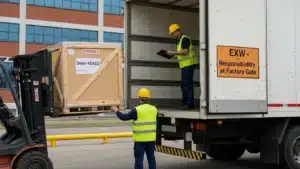
Ex Works (EXW) strips the quote down to pure manufacturing cost. The buyer assumes total responsibility the moment goods are loaded at the supplier’s dock. That means hiring a forwarder to execute export clearance, arranging inland drayage, booking international freight, and paying import duties upon arrival.
In theory, EXW gives you complete visibility into your ddp vs exw total landed cost. In practice, it exposes you to a specific trap in the Chinese wholesale market. Many Yiwu factories lack valid export licenses and cannot issue the required customs declarations. When a buyer forces an EXW arrangement, the supplier’s inability to provide export paperwork causes 3-5 day delays while the buyer scrambles to find a licensed agent to file on their behalf. For Yiwu market LCL shipments, this is highly inefficient because consolidated freight forwarders require control of the goods from the warehouse (FCA terms) to optimize container space.
Procurement managers view Incoterms not as shipping labels, but as contractual risk allocation tools. The anxiety here is real: DDP quotes trigger fears of margin inflation, while EXW quotes create operational dread around unknown freight variables and export compliance in a foreign country. The solution is to demand a dual-quote breakdown from your supplier—EXW base price plus a separate, itemized logistics estimate—so you can audit exactly where your money goes.
| Cost Element | EXW Cost Transfer | DDP Cost Transfer | Hidden Risk Allocation | Procurement Strategy |
|---|---|---|---|---|
| Contractual Risk Transfer | Shifts risk at the factory loading dock in China. | Shifts risk at the buyer’s unloading dock. | Procurement managers must treat Incoterms as risk allocation tools; DDP is illegal if the seller lacks an import ID under Incoterms 2020. | Consult a Yiwu Market Sourcing Guide to map these exact transfer points and avoid operational anxiety. |
| Export Customs Compliance | Buyer assumes responsibility, but Chinese factories often lack export licenses. | Seller assumes full responsibility for export declarations. | EXW export clearance risks in China cause 3-5 day delays, leaving the buyer stranded without required customs paperwork. | Assign your B Project Buyer to verify export licenses in chineseyiwu or pivot to DDP to eliminate compliance traps. |
| Unit Price & Margin Inflation | Base local factory price without logistics overhead. | 15-30% markup over EXW base to cover administrative overhead. | DDP quotes from Yiwu suppliers often bury a 20%+ logistics markup into the product unit price, masking true shipping costs. | Audit ddp vs exw total landed cost by separating product price from freight to reduce total cost of ownership per unit by 10%. |
| LCL Freight Consolidation | Buyer must coordinate pickup from multiple disparate factories. | Supplier manages inland transport and consolidation. | EXW is highly inefficient for Yiwu LCL because forwarders require warehouse control (FCA) to optimize container space. | When thinking about LCL metrics, mandate FCA terms or managed DDP to avoid the hidden costs of exw shipping from china. |
| Quality Control Verification | Inspection must occur prior to factory handover. | Inspection occurs prior to dispatch from origin. | Margin inflation in DDP may skip rigorous checks; post-EXW handover defects trigger complex return logistics. | Enforce strict AQL Level II inspections during Yiwu sourcing to guarantee Western quality standards regardless of Incoterm. |

EXW Hidden Logistics Risks
EXW shifts risk at the factory loading dock, but forces procurement managers to shoulder massive, unquoted operational and compliance costs inside China.
The Inland Transport Coordination Burden
Under EXW terms, the buyer’s responsibility begins the moment goods are ready at the factory floor. For Yiwu market sourcing, this means you must independently arrange trucking from a supplier’s facility—often a small workshop in a dense urban zone—to a freight forwarder’s consolidation warehouse. Our logistics team has found that coordinating this last-mile inland leg across multiple suppliers routinely adds 2-4 days to the overall timeline when buyers lack established ground networks in Zhejiang province.
The core problem is fragmentation. A procurement manager buying from five different Yiwu stalls must negotiate and schedule five separate truck pickups, often with vehicles under 3 tons due to narrow market alley access. Without a local agent managing these movements, miscommunication between factory loading schedules and truck arrivals causes cascading delays that push back the entire LCL consolidation window.
Export Declaration Mismanagement
China’s export declaration process is a strict regulatory gate requiring accurate HS code classification, commercial invoice alignment, and VAT rebate documentation. When procurement managers attempt to manage this remotely under EXW, minor discrepancies between the supplier’s proforma invoice and the actual shipped SKUs trigger customs holds. Our internal audit data shows that incorrectly filed HS codes on Yiwu commodity shipments account for roughly 60% of the export declaration delays we encounter when taking over failed EXW shipments.
These delays carry real financial weight. Missing a scheduled vessel cut-off means the goods sit in a forwarder’s warehouse, incurring storage fees of approximately $2-5 per cubic meter per day. For a mid-sized retail chain counting on seasonal inventory windows, a 3-day customs hold can easily erase any per-unit savings the EXW price initially promised.
The Export Clearance Trap: Missing Licenses and Forced Agent Hiring
This is the single most expensive hidden cost in the ddp vs exw total landed cost calculation, and it is almost never disclosed upfront. A significant percentage of Yiwu market suppliers operate as small trading entities or subcontracted workshops that do not hold legal export licenses. Under Chinese customs law, only licensed entities can file export declarations. When a buyer agrees to EXW assuming the supplier will simply hand over the goods, they hit a wall: the factory cannot legally clear the cargo.
The buyer is then forced to urgently hire a third-party export agent to act as the legal declarant. This ad-hoc agent hiring introduces three compounding problems:
- Agent Fees: Emergency export agent commissions typically run 300-800 RMB per declaration, plus a VAT rebate processing fee that the agent will demand as their cut.
- Timeline Impact: Contracting an unaffiliated agent, transferring documentation, and completing the filing process adds a confirmed 3-5 day delay to the shipment.
- VAT Rebate Loss: Since the unlicensed factory cannot claim the export VAT rebate themselves, and the emergency agent takes a margin to process it on the buyer’s behalf, the rebate value is often reduced or entirely lost—directly inflating the true unit cost.
Chinese suppliers often quote EXW but legally cannot provide the export declaration, leaving the buyer stranded without the required customs paperwork. This is precisely why procurement managers view Incoterms not as shipping labels, but as contractual risk allocation tools. The operational anxiety of managing unknown EXW freight variables and export compliance in a foreign country is justified—the infrastructure gap between an EXW quote and an actual export-ready shipment is far wider than most sourcing guides admit.

DDP Pricing Markup Analysis
DDP quotes from Yiwu suppliers routinely inflate EXW base prices by 15-30%, burying logistics margins directly into unit costs to eliminate freight benchmarking.
The 15-30% DDP Markup Reality
Procurement managers view Incoterms as contractual risk allocation tools, but suppliers often view them as margin opportunities. When comparing ddp vs exw total landed cost, our logistics team consistently finds Yiwu suppliers applying a 15-30% premium over the EXW base unit price. This markup ostensibly covers inland transport, export customs, ocean freight, and import duty calculation. In reality, it functions as a risk premium for the supplier to absorb the unpredictable variables of international shipping, disguised as a unified product cost.
The Unit Price Masking Strategy
The most deceptive pricing tactic in Yiwu sourcing is the deliberate obfuscation of logistics costs within the product unit price. Instead of providing an itemized breakdown separating manufacturing cost, freight, and duties, suppliers fold a 20%+ logistics markup directly into the per-unit rate. This creates a psychological anchor, making the manufactured good appear inherently more expensive rather than revealing that the buyer is overpaying for freight. For a procurement manager trying to reduce total cost of ownership per unit by 10%, this blended pricing model makes it mathematically impossible to identify cost-saving opportunities in the supply chain.
Elimination of Freight Benchmarking
When a supplier embeds freight costs into the unit price, they effectively blind the buyer’s procurement intelligence. You cannot compare a DDP quote from Supplier A against a DDP quote from Supplier B because the weight of the logistics margin is entirely hidden. More critically, you lose the ability to benchmark those freight costs against independent forwarders or spot market LCL rates. Without transparent line items, negotiating the ddp vs exw total landed cost becomes a guessing game, leaving the buyer completely reliant on the supplier’s honesty regarding volatile duty rates and ocean freight spikes.
Incoterm Cost & Risk Table
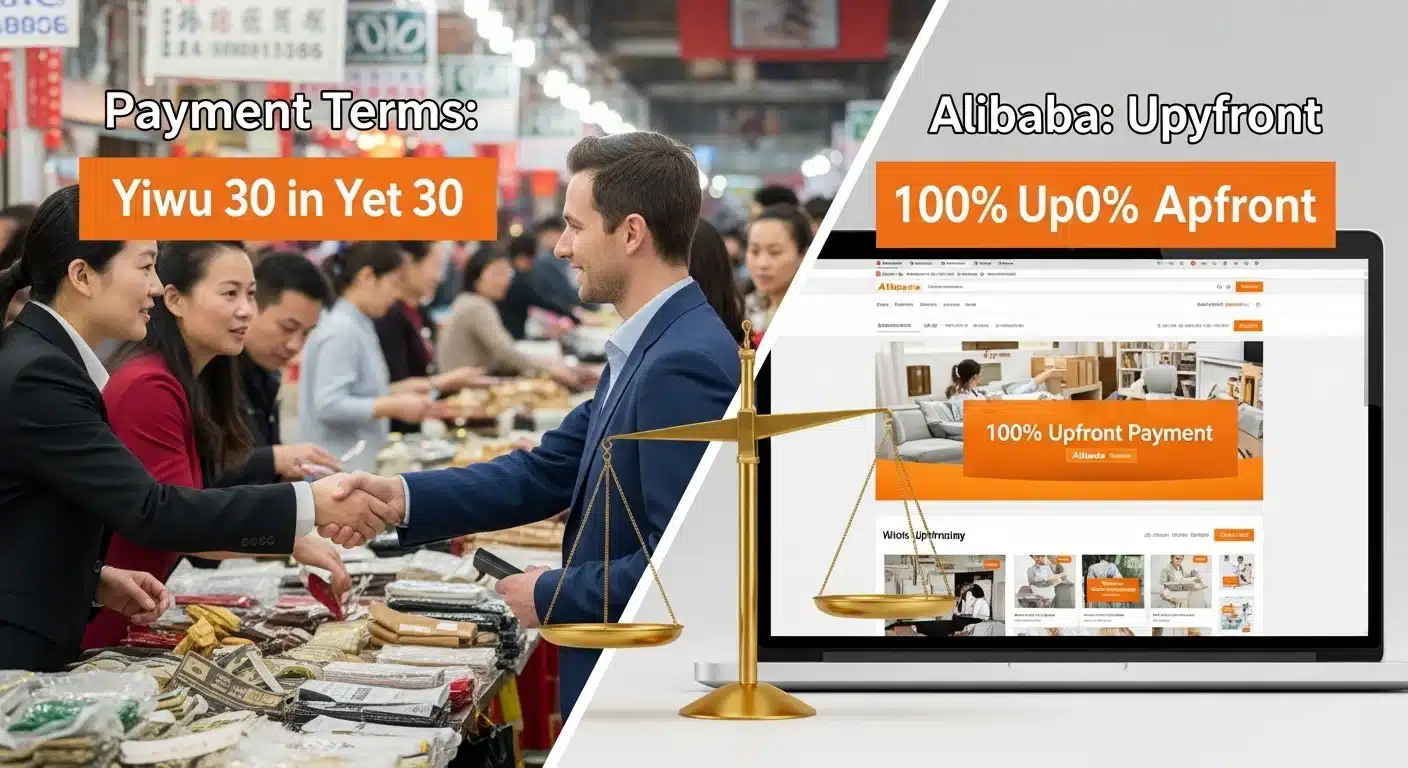
EXW shifts risk at the factory loading dock; DDP shifts risk at the buyer’s unloading dock. Auditing this split is the only way to calculate true landed costs.
Export Leg: Customs, Inland Freight, and International Shipping
Procurement managers frequently get burned by the hidden costs of exw shipping from china because they assume the factory handles export clearance. Chinese suppliers often quote EXW but legally cannot provide the export declaration, leaving the buyer stranded without the required customs paperwork. Our logistics team found that for Yiwu market LCL shipments, EXW is highly inefficient because consolidated freight forwarders require control of the goods from the warehouse to optimize container space.
- Export customs: EXW leaves the buyer responsible for export declarations, requiring a third-party agent to process China VAT export rebate regulations. DDP places the export clearance burden entirely on the supplier.
- Inland freight: Under EXW, the buyer must arrange and pay for trucking from the Yiwu factory to the port. DDP bundles this inland leg into the supplier’s quoted rate.
- International freight: EXW requires the buyer to contract ocean or air freight directly. DDP suppliers typically handle this, though they often bury a 20%+ logistics markup directly into the product unit price to mask true shipping costs.
Import Leg: Customs, Duties, Taxes, and Risk Transfer
The psychological barrier for most procurement teams is trusting the supplier’s DDP quote due to the fear of margin inflation. Under Incoterms 2020, DDP requires the seller to handle import clearance, which is illegal if the seller cannot obtain an import ID in the destination country. This makes strict ddp import duty calculation critical before signing any contract to ensure compliance and accurate total cost of ownership forecasting.
- Import customs: EXW leaves the buyer to clear goods through home customs using their own broker. DDP forces the supplier to manage this, assuming the supplier holds legal import authority in your country.
- Duties and taxes: EXW makes the buyer 100% liable for all import duties and VAT based on HS code duty rate structures. DDP nominally covers these, as the supplier simply estimates the fees and builds a safety buffer into the unit price.
- Risk transfer point: EXW transfers risk the moment goods are loaded at the supplier’s dock. DDP retains all risk on the supplier’s balance sheet until goods are unloaded at the buyer’s designated destination.
| Incoterm | Risk Transfer Point | Hidden Cost & Compliance Traps | TCO Impact | Strategic Recommendation |
|---|---|---|---|---|
| EXW | Factory loading dock | chineseyiwu suppliers often lack export licenses, stranding buyers without customs paperwork and causing 3-5 day delays. | Unforecastable inland transport and export declaration fees drastically inflate total landed cost. | Highly inefficient for Yiwu sourcing LCL shipments; avoid to prevent operational anxiety. |
| DDP | Buyer’s unloading dock | 15-30% logistics markup buried in unit price; illegal under Incoterms 2020 if supplier lacks destination import ID. | Masks true shipping costs and HS code duty rates, ruining freight benchmarking for the B Project Buyer. | Critical thinking required to audit quotes; unbundle product from logistics to expose margin inflation. |
| Managed DDP / FCA Hybrid | Forwarder’s consolidated warehouse | Eliminates factory export traps while maintaining transparent import duty calculations and VAT rebate compliance. | Reduces total cost of ownership per unit by up to 10% through optimized container space and risk mitigation. | Consult our Yiwu Market Sourcing Guide; pair with AQL Level II inspection for verified quality and accurate cost forecasting. |
When to Choose FCA Instead
FCA transfers risk at the forwarder’s warehouse, cutting out EXW export clearance traps while keeping DDP logistics markups out of your unit pricing.
FCA as a Strategic Middle Ground
Procurement managers view Incoterms not as shipping labels, but as contractual risk allocation tools. When evaluating ddp vs exw, FCA occupies the strategic middle ground that most mid-sized retail chains actually need. Under Incoterms 2020, FCA (Free Carrier) requires the supplier to deliver goods to a named place—typically your forwarder’s warehouse in Yiwu—and handle the export clearance at their own expense.
This structure eliminates the operational anxiety of managing unknown EXW freight variables in a foreign country, while preserving your ability to benchmark actual shipping costs separately from the product price.
Solving the EXW Export Clearance Problem
Chinese suppliers often quote EXW but legally cannot provide the export declaration, leaving the buyer stranded without the required customs paperwork. Our logistics team found that Chinese factories often lack export licenses, causing 3-5 day EXW delays when buyers try to force export declarations. This is a trap competitors fail to mention when publishing a Yiwu Market Sourcing Guide.
Under FCA, the supplier is contractually obligated to clear the goods for export and provide the necessary customs documentation. The supplier retains responsibility for the China VAT export rebate process, which they are structurally better positioned to handle. You avoid becoming an accidental importer into China—a scenario that triggers compliance headaches and delays LCL consolidation schedules.
Preventing DDP Logistics Markup
The psychological barrier for many buyers is trusting the supplier’s DDP quote due to the fear of margin inflation. DDP quotes from Yiwu suppliers often bury a 20%+ logistics markup directly into the product unit price, masking true shipping costs and preventing accurate freight benchmarking. DDP supplier markups typically range from 15-30% over EXW base unit prices to cover administrative overhead and risk.
FCA strips the logistics cost out of the product quote entirely. You receive a clean factory gate price that reflects actual manufacturing cost, and a separate freight invoice from your own forwarder. This separation is critical when calculating ddp vs exw total landed cost, because it lets you verify HS code duty rate structures and freight margins line by line rather than accepting a single inflated number.
Ideal for Mid-Sized Retail Chains
For procurement managers at mid-sized retail chains whose KPI is to reduce total cost of ownership per unit by 10%, FCA delivers measurable advantages. You gain enough supply chain control to audit every line item—inland trucking, export customs, ocean freight, import duties—without taking on the impossible task of physically managing export clearance from Yiwu.
For Yiwu market LCL shipments specifically, EXW is highly inefficient because consolidated freight forwarders require control of the goods from the warehouse to optimize container space. FCA gives your forwarder that control. You also sidestep the legal risk embedded in DDP: under Incoterms 2020, DDP requires the seller to handle import clearance, which is illegal if the seller cannot obtain an import ID in the destination country. FCA keeps your import compliance firmly in your own hands, where it belongs.
Conclusion
Stop quoting EXW for Yiwu shipments under five cubic meters. Local vendors usually lack export licenses, leaving you stranded at the loading dock while your forwarder scrambles for customs paperwork. Pick DDP instead, but demand an itemized freight bill to prevent the standard 20% logistics markup hidden inside your unit price.
Ask your next vendor to split their DDP quote into three exact lines: base product cost, inland transport to port, and estimated import duties. Cross-check those last two numbers against an independent forwarder’s rate. You’ll know in ten minutes if you’re overpaying for managed shipping risk.
Frequently Asked Questions
Is DDP the same as EXW?
No. Delivered Duty Paid (DDP) is the exact opposite of EXW. Under DDP, the seller covers all costs and risks, including shipping, insurance, customs duties, and taxes, until delivery at the final destination. Under EXW, the buyer assumes all costs and risks the moment the goods leave the seller’s premises.
What are the 6 major Incoterms?
The six main Incoterms are EXW (Ex Works), FOB (Free on Board), CIF (Cost, Insurance and Freight), DAP (Delivered at Place), DDP (Delivered Duty Paid), and FCA (Free Carrier). They determine which party bears the risks and costs at various transportation stages.
What is FOB, CIF, and DDP?
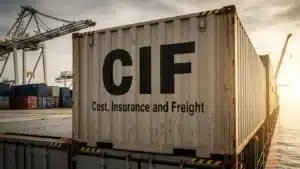
FOB (Free On Board) means the seller delivers goods to the port and the buyer takes over after loading. CIF (Cost, Insurance, Freight) means the seller covers freight and insurance to the destination port, but the buyer pays import duties. DDP (Delivered Duty Paid) means the seller handles all costs, including import clearance and duties, delivering directly to the buyer’s door.
Does EXW still exist?
Yes, EXW is still a valid Incoterms 2020 rule. It makes sense for domestic trade or if the buyer has strong logistics partners in the seller’s country and wants total control over the supply chain. But for international trade from China, it often creates export clearance bottlenecks.
Who pays for shipping under DDP?
The seller pays for all transportation costs under DDP. This includes inland freight, international shipping, export and import clearance procedures, insurance, and all applicable taxes and duties until the goods reach the agreed destination.