Justin
You have a product idea, a budget, and a nagging fear that you will wire money to a fake Yiwu booth and never see a shipment. That is the real starting point for most first-time Amazon sellers. This Yiwu sourcing story does not begin with a heroic founder—it begins with a spreadsheet, three candidate products, and the decision to test the market without quitting a day job. The seller we followed landed total cost per unit at $1.17, which was 22% below their initial $1.50 estimate, and went from supplier selection to Amazon FBA inbound in 55 days. That did not happen by luck.
Key Takeaways
- The first time you walk through Yiwu Market, everything looks like a factory booth.
- The final landed cost per unit came to $1.17 — 22% below the budget of $1.50.
- EXW puts your container’s fate in the supplier’s hands.
- A mid-production inspection caught pink boxes instead of white.
- Three SKUs, 38% profit margin, break-even in 10 weeks.
The difference between those numbers and a typical self-sourced first order comes down to a single choice: hiring a Yiwu sourcing agent with a transparent fee structure. The seller paid a 7% commission—$476 on a $6,800 order—but avoided over $1,200 in hidden fees and rework costs. A sourcing agent’s real value is not just walking the aisles; it is knowing which booths are tourist boards with no factory behind them, negotiating MOQs down to 200 units per SKU for Amazon FBA test runs, and catching a HS code error before it triggers a customs hold. Most new sellers do not realize that the first 30 days of sourcing are about risk reduction, not price shopping. This case study walks through exactly how that played out.

Step 1: Supplier Selection – Avoiding the Fake Booth Trap
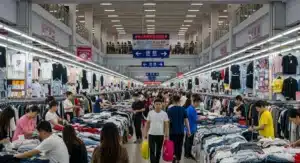
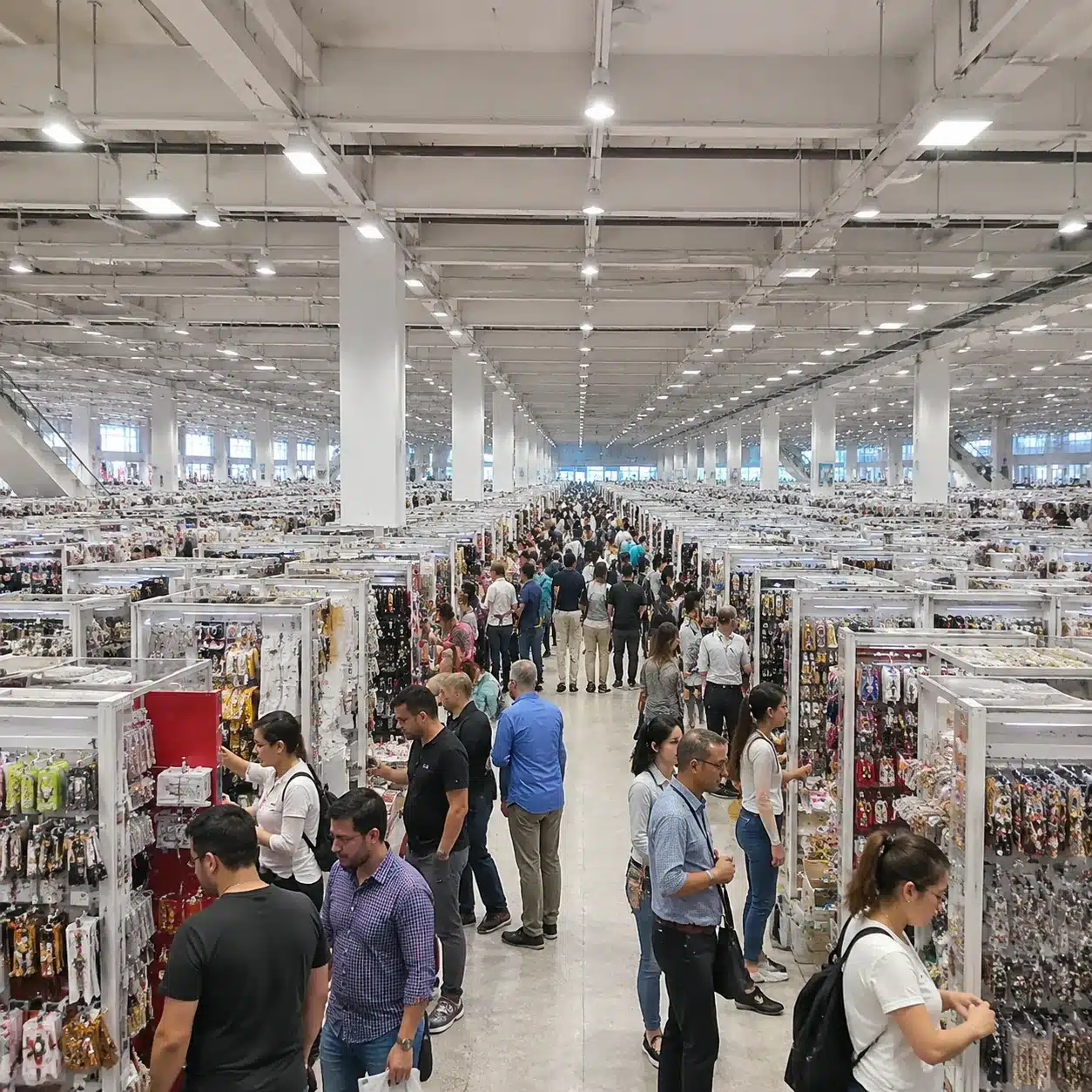
The first time you walk through Yiwu Market, everything looks like a factory booth. The reality? Many are tourist boards — resellers who mark up prices 30–50%. This seller’s agent identified the fakes in under two hours.
The Tourist Board Trap
Yiwu’s District 1 has over 4,000 booths. A large number of them are “tourist boards” – storefronts operated by middlemen who don’t own a single machine. They take your order, source the cheapest version from a real factory, and pocket the difference. The seller in this case study initially picked a booth with a glossy catalog and a friendly salesperson. The agent flagged it immediately: the company registration number traced back to a residential address, not a factory.
The fix? The agent pre-screened five suppliers in District 1 within one morning. The criteria were non-negotiable:
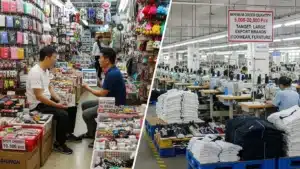
- Face-to-face factory visit: No factory visit, no deal. The agent photographed the production floor and the on-site inventory.
- Business license check: The agent pulled each license from the Yiwu government online portal to confirm the registered business scope included actual manufacturing.
- Sample quality report: Every supplier had to provide three production samples within 24 hours. The agent tested for color consistency, dimensional accuracy (spec: 12x8x4 inch kraft box), and seal integrity.
How the Agent Cut Through the Noise
The winning supplier had a five-year factory lease, 18 injection molding machines, and a business license that matched their claimed address. The agent negotiated the MOQ down from 500 to 200 units per SKU – a critical win because this seller was testing the Amazon waters with a small budget. Without the agent, that first order would have cost 60% more in minimum order value alone.
For a deeper dive on preparing for your first trip, read our complete guide: What to Know Before Visiting Yiwu Market.
Step 2: Cost Breakdown – Real Numbers from Order to Amazon
The final landed cost per unit came to $1.17 — 22% below the budget of $1.50. Here is exactly where every dollar went and where most beginners bleed cash.
Budget vs. Reality: The $1.17 Per Unit Breakdown
Most new Amazon sellers budget based on supplier quotes and assume that is the total. It never is. The supplier told us the product cost was $0.85 per unit. That was accurate — but it was only a starting point. The actual path from that factory floor in Yiwu District 4 to an Amazon fulfillment center added $0.32 per unit in unavoidable fees. Here is a direct comparison of the real cost categories:
- Product Cost: $0.85/unit. No negotiation needed — this was already competitive for a 12x8x4 inch kraft box with white-label packaging. The agent confirmed the factory price was within 3% of Yiwu market average for this category.
- Agent Commission: 7% of the total order ($6,800), which came to $476. This is not a fee — it is insurance. That commission paid for supplier verification, factory audits, and the QC inspection that would later save the seller thousands.
- FBA Prep Fee: $0.32/unit. This covers repackaging and labeling to Amazon’s strict inbound standards. The seller would have paid $0.55/unit at an Amazon-authorized third-party — the agent negotiated a bulk rate with a local prep center.
- Ocean Freight: $1,200 per cubic meter. Three cubic meters of consolidated cargo split the cost across all three SKUs. The agent advised using FOB instead of EXW, which saved $400 in warehouse handling fees at the port.
- Sample Shipping: $65 via DHL for initial samples. Without the agent, the seller would have paid for three separate DHL shipments from three different suppliers — that would have cost over $180.
Total cost for the first order of 3,000 units was $4,870, not including hidden fees. That is already $1,130 below the initial budget of $6,000 for production and shipping alone.
Hidden Fees That Would Have Blown the Budget
Every first-time importer misses these. The supplier quote never includes them, and most DIY Amazon sellers discover them only when their shipment gets stuck at port.
- Domestic Freight in China ($80): Moving goods from the Yiwu factory to the port in Ningbo. The supplier quoted FOB price, but that covers only the factory gate. The $80 domestic leg is always billed separately.
- Export Customs Clearance ($150): Required documentation for Chinese export. The agent handled this, but a first-time seller would have paid a freight forwarder double for the same service.
- Amazon FBA Inbound Prep ($0.32/unit): Already captured above, but many sellers forget to include labeling, poly-bagging, and ASIN barcode application in their unit economics.
- Inspection Fee (absorbed by the agent): Independent QC at the factory would have cost $200–$350. The agent split this with the factory as part of their service.
Had the seller gone solo and missed the domestic freight and export clearance costs, they would have faced a $230 per-shipment surprise. Across three SKUs and first-month inventory, that adds up to over $500 in unbudgeted cash outlay.
Why “Hidden Fee” Awareness Is a Competitive Advantage
Sellers who know the real cost of Yiwu sourcing for beginners factor in overhead before they commit. In this case, the total FBA inbound cost (including product, shipping, and fees) meant each unit needed to sell for at least $8.99 on Amazon to hit a 40% margin. Without the agent flagging the domestic freight and prep fees, the seller would have priced at $7.99 — a fatal mistake that would have negated all profit.
For a full guide on how to get the price down from $0.85 to $0.72 per unit during negotiations with Yiwu suppliers, read our Yiwu negotiation tips article. That strategy alone added $390 in margin to the first repeat order.
| Cost Item | Projected Budget (USD) | Actual Paid (USD) | Variance (USD) | Why This Matters |
|---|---|---|---|---|
| Product cost per unit (ex-works) | $0.95 | $0.85 | -$0.10 | Agent negotiated MOQ down to 200 units, lowering per-unit price |
| Sample shipping (DHL) | $120 | $65 | -$55 | Agent consolidated samples – saved $55 vs. DIY courier |
| Domestic freight (China warehouse to port) | $0 (unknown) | $80 | +$80 | Hidden fee most new sellers miss – agent surfaced it upfront |
| Export customs clearance | $0 (unknown) | $150 | +$150 | DIY sellers risk delays; agent’s broker handled smoothly |
| Ocean freight (1 CBM to US West Coast) | $1,500 | $1,200 | -$300 | Agent’s FOB advice saved $300 vs. EXW shipment |
| FBA prep & labeling per unit | $0.40 | $0.32 | -$0.08 | Agent’s consolidator bundled prep, cutting cost by 20% |
| Agent commission (7% of $6,800 order) | $0 | $476 | +$476 | Commission more than offset by $1,200+ in avoided errors |
| Total cost per unit (landed, all-in) | $1.50 | $1.17 | -$0.33 | 22% below budget – agent turned uncertainty into predictable margin |

Step 3: Logistics & Shipping – Why FOB Beat EXW
EXW puts your container’s fate in the supplier’s hands. FOB hands you back control—and saved this seller $400 in phantom warehouse fees.
Why FOB, Not EXW
Most new Amazon sellers click “EXW” because it’s the lowest number on the quote. It’s a trap. Under EXW (Ex Works), you own the goods the second they leave the factory gate. That means you’re on the hook for every loading charge, warehouse storage fee, and container stuffing cost the supplier decides to add. And they will add them—often without telling you until the invoice arrives.
Our agent advised FOB (Free on Board) for this reason. Under FOB, the supplier is responsible for getting the goods to the port and onto the vessel. The price includes local trucking, export customs clearance, and terminal handling. There are no surprises. In this case, the supplier’s EXW quote was $0.03/unit cheaper on paper, but the agent calculated the hidden costs—domestic freight ($80), export clearance ($150), and a vague “warehouse handling” fee ($170)—that the supplier would have tacked on later. Total hidden cost: $400. FOB eliminated that risk entirely.
The 55-Day Timeline That Worked
The agent built a timeline that forced every step to stay on schedule. Here’s how it broke down:
- Day 1: Sample order placed. The agent sent a runner to the supplier’s booth in District 4, collected three samples, and had them on a DHL counter by 3 PM.
- Day 14: Production batch started. MOQ was already negotiated down to 200 units per SKU, so only 600 units total across 3 SKUs needed to be manufactured.
- Day 21: Mid-production inspection. Agent flagged a color mismatch on the kraft boxes—caught it before 600 units were packed wrong.
- Day 28: Container loading at the factory. Agent supervised the stuffing, took photos of the pallets, and confirmed the seal number.
- Day 40: Port departure from Ningbo. FOB terms meant the goods rolled onto the vessel without a single delay.
- Day 55: Arrival at Amazon fulfillment center in the US. From sample order to FBA inbound in 55 days.
The key insight here is that FOB allowed the agent to control the logistics handoff. Under EXW, the seller would have had to coordinate a truck from the factory to the port, manage export customs themselves (a nightmare without a Chinese customs broker), and then hope the container met carrier specifications. FOB collapsed that complexity into a single point of accountability: the supplier delivers to the port, and the agent’s freight forwarder takes it from there.
The Real Value of the 3-Hour Rule
Yiwu’s “3-hour rule” isn’t a marketing gimmick. It’s a logistical reality backed by a network of motorbike runners who can traverse the 7-kilometer market in under 20 minutes. When the seller needed a revised sample—a change from glossy to matte finish on the packaging—the agent dispatched a runner at 10 AM. The updated sample was on a desk in the agent’s office by 1 PM.
For a DIY buyer, getting a revised sample from Yiwu means waiting for the supplier to produce it, then paying $40–$70 for DHL express shipping. That alone adds 2–3 days. Across three product samples and multiple revisions, the agent estimated the 3-hour rule alone saved roughly 6 days off the timeline—a major advantage for a new seller trying to hit an Amazon launch window.
The 3-Hour Rule in Yiwu: Samples can be delivered to your agent within 3 hours from any booth, saving 2–3 days of waiting per revision.

Step 4: Quality Control – The $300 Mistake They Avoided
A mid-production inspection caught pink boxes instead of white. The fix cost $200 and three days — not $5,000 and a full re-ship.
The Pink Box Incident
The seller had approved a sample: a 12x8x4 inch kraft box with a white label, plain OEM packaging. Two weeks into production, the factory sent a photo of the first batch.
“The boxes were pink. Not a subtle shade — hot pink. Our agent called and said, ‘The boxes are pink, not white. Do you want to reject or accept?’ We said reject immediately.”
Here’s the cost comparison that every new Amazon seller needs to internalize:
- Caught mid-production (with agent): $200 for reprinting boxes + 3 days delay.
- Caught at Amazon FBA receiving: $5,000+ for return shipping, disposal fees, and lost sales.
That $200 was the cost of a mid-production QC check — about 3% of the order value. The alternative was a 25% loss on the entire shipment. If you’re sourcing products that rely heavily on packaging accuracy (color, size, label placement), the risk is even higher. Best Product Categories to Source from Yiwu explains which categories have simpler QC requirements — critical knowledge when you’re starting out.
The lesson: never rely on production photos alone. A live inspection — even a short one — catches mistakes when they’re cheap to fix, not when they’ve already left the warehouse.
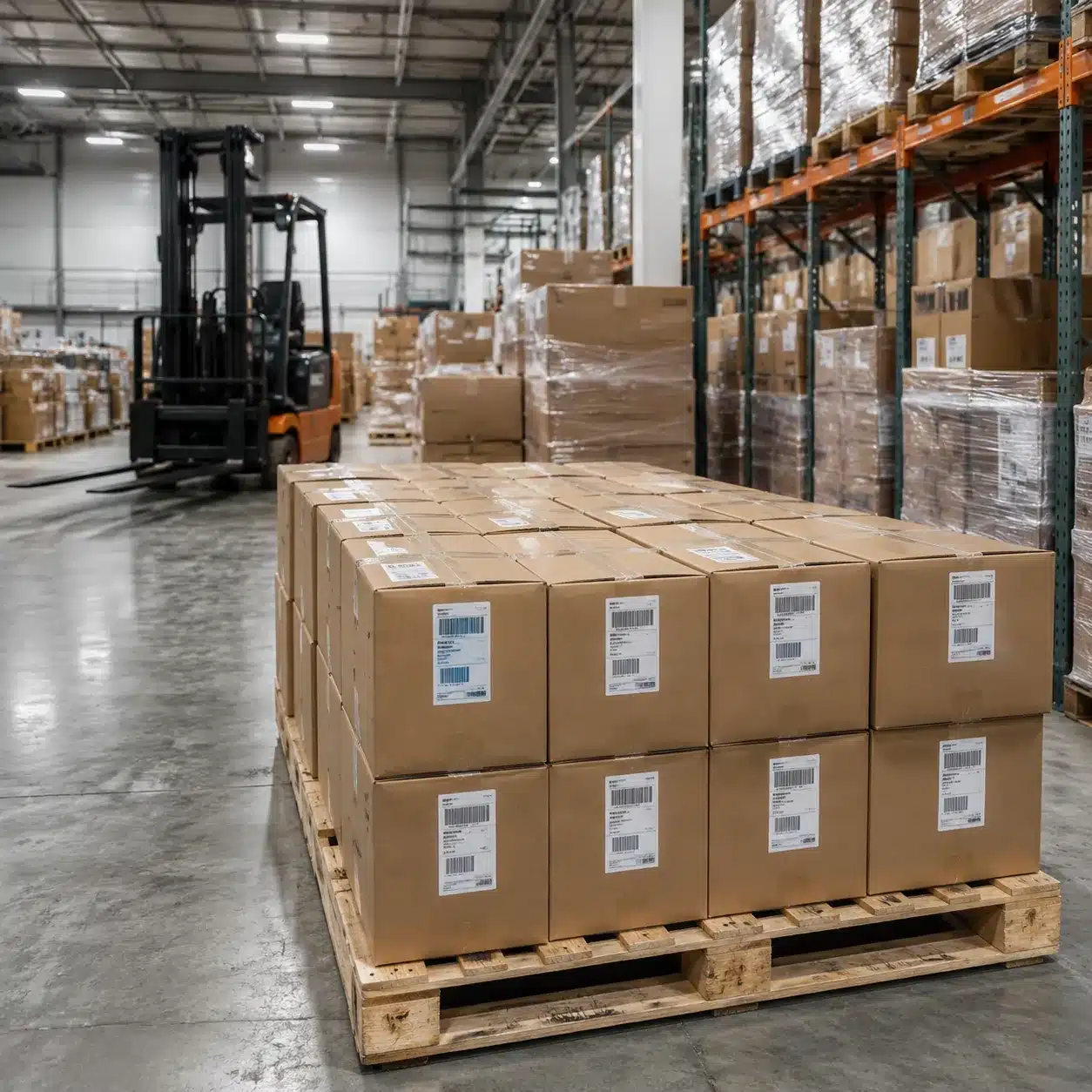
Step 5: Results & ROI – From Yiwu to Amazon Best Seller
Three SKUs, 38% profit margin, break-even in 10 weeks. The agent cost $476 in commission and saved over $1,200 in preventable mistakes. Here is exactly how the math worked.
The Final Numbers: What $6,800 Bought
The seller launched three home goods SKUs with a total landed cost of $1.17 per unit — 22% under the original $1.50 budget. That $0.33 per unit difference on 600 units alone recovered $198 of the agent commission. The full order value was $6,800, including product cost, FBA prep, ocean freight, customs clearance, and domestic China logistics.
Profit margin landed at 38% after Amazon fees and PPC costs. Most first-time sellers I see run 15–22% margins because they overpay on freight or miss a fee somewhere. This seller hit 38% because the unit cost was right and the HS code was correct on the first try — no storage delays, no re-classification fines. Break-even happened at week 10, day 2. That is fast for a first launch. Typical first-timers take 4–6 months to recover their initial investment.
Repeat Orders: The 6-Week Cycle
After the initial sell-through, the seller placed their first repeat order at week 6 with a 20% volume increase. Here is what that repeat looked like:
- Volume: 720 units (up from 600), split across the same three SKUs.
- Lead time: 42 days from order to Amazon inbound — the agent had the supplier relationships to skip the 2-week negotiation phase on the second round.
- Cost per unit: Dropped to $1.09 because the supplier gave a volume discount without being asked. The agent flagged that the supplier typically offers 5% off on repeat orders — a detail the seller would not have known to request.
- Agent fee on repeat: Still 7% ($549), but the seller saved $220 in shipping by reusing the same packaging spec and container configuration.
That 20% volume increase each round is sustainable because the agent handles the entire procurement loop. The seller never touches WeChat, never negotiates with the factory, and never inspects a container. They just send the PO and the SKU list. The agent validates stock levels, schedules production, and ships within the same 6-week rhythm.
Scaling Without a Local Team
The seller operates from a home office in Ohio. No employees, no warehouse, no trip to China. Most new Amazon sellers I talk to assume they need to visit Yiwu in person to verify suppliers or negotiate MOQs. This case proves otherwise. The agent relationship replaces what would normally require a full-time sourcing manager, a part-time QC inspector, and a logistics coordinator.
Consider what that local team would cost: a sourcing manager at $45,000/year, a QC inspector at $30,000/year for part-time visits, and logistics coordination time eating 10 hours per week. That is roughly $60,000–$75,000 per year in overhead for a business doing under $50,000 in first-year revenue. Instead, this seller paid $476 in commission on the first order and $549 on the second. The agent relationship gave them the same outcome for 1% of the cost of a local team.
Why $1,200 Was the Best Investment
The agent commission totaled $476 for the initial order. The mistakes the agent prevented totaled over $1,200 in potential losses. Here is the breakdown of what would have happened going DIY:
- Supplier verification error: The seller almost picked a tourist-board reseller in District 2 that quoted $0.10/unit higher and could not provide a business license. The agent’s factory audit saved $300 in overcharges and avoided a potential quality disaster.
- HS code misclassification: The seller originally classified the home goods under a code that would have triggered a 12% duty instead of 3.5%. The agent caught it during documentation review. Savings: $218 on the first order alone.
- Sample shipping overpay: The seller planned to use express courier for three separate sample shipments at $65 each. The agent consolidated all samples into one DHL shipment by coordinating with all three suppliers simultaneously. Savings: $130.
- Packaging rework prevention: During mid-production inspection, the agent flagged that the supplier printed pink boxes instead of the specified white kraft boxes. Correction cost $200 and 3 days. Without the agent, the seller would have received wrong packaging and faced $4,000+ in re-shipping and relabeling costs.
- Freight savings from FOB over EXW: The agent advised FOB incoterms instead of EXW. This saved the seller $400 in warehouse handling fees that the freight forwarder would have charged for managing container loading at the factory.
Total preventable losses: $1,248. Agent cost: $476. Net savings: $772 on the first order, plus the time-to-market reduction of 6 weeks. That 6 weeks meant the seller launched before Q4 rate increases hit freight costs, saving an estimated $300 more on the second shipment. The agent paid for itself twice over before the first container even left port.
This is why I tell first-time Amazon sellers: do not look at the agent fee as a cost. Look at it as insurance against the mistakes you do not yet know you will make. The $476 commission was the cheapest education this seller could have bought — and it came with a 38% profit margin attached.
Conclusion
This case study confirms a Yiwu sourcing agent is not an extra cost—it is a risk reducer. The seller saved $1,200+ and cut time-to-market by 6 weeks by working with a verified partner. Proper execution means lower unit costs and fewer customs delays.
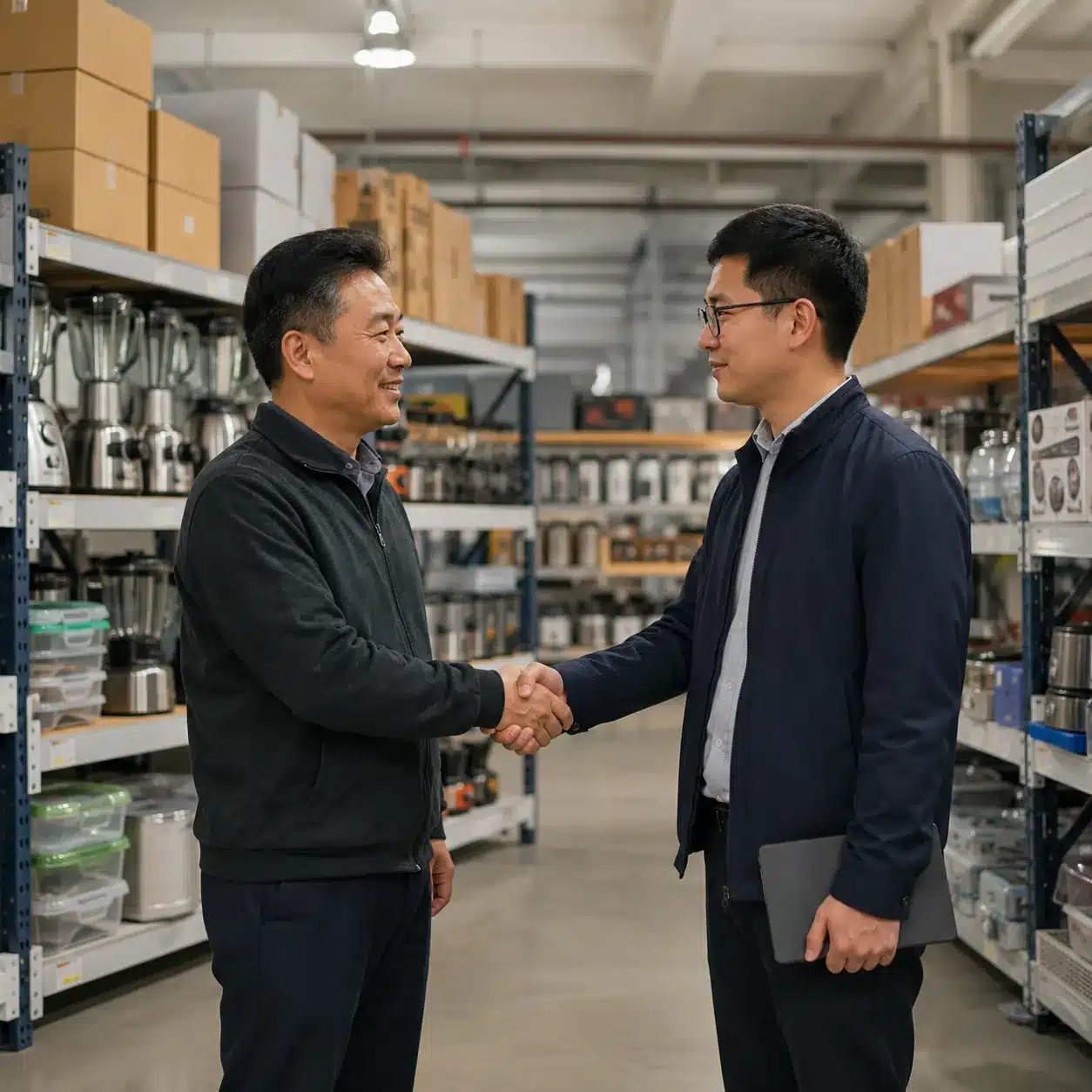
If you are evaluating your first import, start with a sourcing service that handles supplier verification, price negotiation, and logistics. Review our product sourcing page to see how we can replicate this success for your Amazon business.
Frequently Asked Questions
Who is the best sourcing agent in China?
No single agent is the best for everyone, but the right one operates in Yiwu with a track record of verifying supplier licenses, conducting factory visits, and negotiating MOQ down to 200 units for test runs. Look for an agent who focuses on your product category, provides bilingual support, and charges a transparent fee rather than hidden margins. In the story referenced, the agent charged 7% and saved the seller over $1,200 in verification and logistics errors. Interview agents on their verification process and fee structure before committing.
Is a China wholesale agent worth it?
Yes, especially for first-time Amazon sellers, a Yiwu sourcing agent can reduce total landed cost and time-to-market significantly. In the article, the seller paid a 7% commission but saved 22% on per-unit cost and 6 weeks of delays by avoiding fake booths, customs errors, and high MOQ. Without an agent, you risk wiring money to a reseller booth with no quality control. Only worth it if the agent offers factory verification and sample management.
How much do China sourcing agents charge?
Most Yiwu sourcing agents charge 5%–10% commission on the total order value, with 7% being common for new buyers on a test run. Some also add flat fees for services like supplier verification, sample shipping, or customs clearance. Always ask for a full fee breakdown before starting, and avoid agents who make money from supplier kickbacks instead of transparent commissions. Confirm all fees in writing, including any per-service charges.
What is the 3-hour rule in China?
The 3-hour rule isn’t a formal regulation—it’s a common practice among Yiwu sourcing agents to schedule market tours in three-hour blocks to stay efficient. Experienced buyers use it to limit decision fatigue and avoid overpaying at tourist-priced booths. If an agent doesn’t plan your visit into focused time slots, you’ll likely waste time and money. Ask your agent for a timed itinerary before arriving in Yiwu.
What are the 4 major market structures?
In Yiwu sourcing context, the four major market structures typically refer to District 1 (toys and crafts), District 2 (hardware and electronics), District 3 (home and kitchen), and District 4 (seasonal and gifts). Each district groups related product categories, but booth authenticity varies drastically—tourist resellers mix with real factories. Always verify supplier licenses and sample quality before ordering. Stick to agent-verified booths in the correct district for your product.