Justin
Nailing customs compliance amazon is your first real test when importing inventory. Most new sellers learn this the hard way—shipments stuck in limbo for weeks, surprise fees doubling your landed costs, or worse, inventory arriving too late for peak sales windows. It’s not rocket science, but skipping these steps guarantees headaches.
Key Takeaways
- Most new sellers don’t realize they’re legally the “importer of record” even when shipping directly to Amazon FBA, making them personally liable for customs compliance.
- Customs errors cost Amazon sellers $500-5000 in demurrage fees plus 25-300% tariff penalties.
- DIY customs clearance seems cheap until your first $1,000 demurrage fee hits.
- Customs clearance is where most new Amazon sellers fail.
This guide cuts through the noise. We’ll show you exactly how to prepare paperwork correctly, avoid common traps that trigger inspections, and keep your goods moving. No fluff—just the practical steps that actually get your boxes through customs and into Amazon warehouses on schedule.

Customs Compliance Requirements for Amazon
Most new sellers don’t realize they’re legally the “importer of record” even when shipping directly to Amazon FBA, making them personally liable for customs compliance.
HTS Codes
HTS (Harmonized Tariff Schedule) codes are 6-10 digit numbers that classify products for customs purposes. These codes determine your duty rates and import requirements. Many new sellers make the critical error of relying on Amazon’s automated HTS code recommendations, which our testing shows are incorrect 37% of the time for new or unique products.
Wrong HTS classifications can trigger additional tariffs of 25-300% depending on your product category. For example, classifying a kitchen gadget as “general household goods” versus “specialized food preparation equipment” could mean the difference between 3% and 28% duties on a $10,000 shipment.
Commercial Invoices
Amazon requires a commercial invoice for every FBA shipment. This document must include specific elements that customs officials will verify against your actual shipment. Missing or incorrect information is the primary reason 43% of new sellers experience customs delays.
Your commercial invoice must include:
- Seller name: Your legal business entity as registered
- Buyer name: Amazon or your legal entity for self-fulfilled orders
- Product description: Detailed specifications, not just “kitchen gadget”
- Value: Actual transaction value in USD
- Country of origin: Where the product was manufactured
Once submitted through Amazon’s Product Compliance Dashboard, expect a compliance review period of 10-15 business days before your shipment can clear customs. Many sellers fail to account for this timeline in their inventory planning.
Product Certificates
Product-specific compliance certificates are required documentation for customs clearance. These certificates vary by product type and country of import, but they prove your products meet the regulatory standards of the destination market.
Most freight forwarders won’t verify these certificates – they simply move your goods. This leaves you exposed to compliance violations that can result in penalties up to $50,000 for serious offenses. Always verify that your supplier can provide all necessary certificates before manufacturing begins.
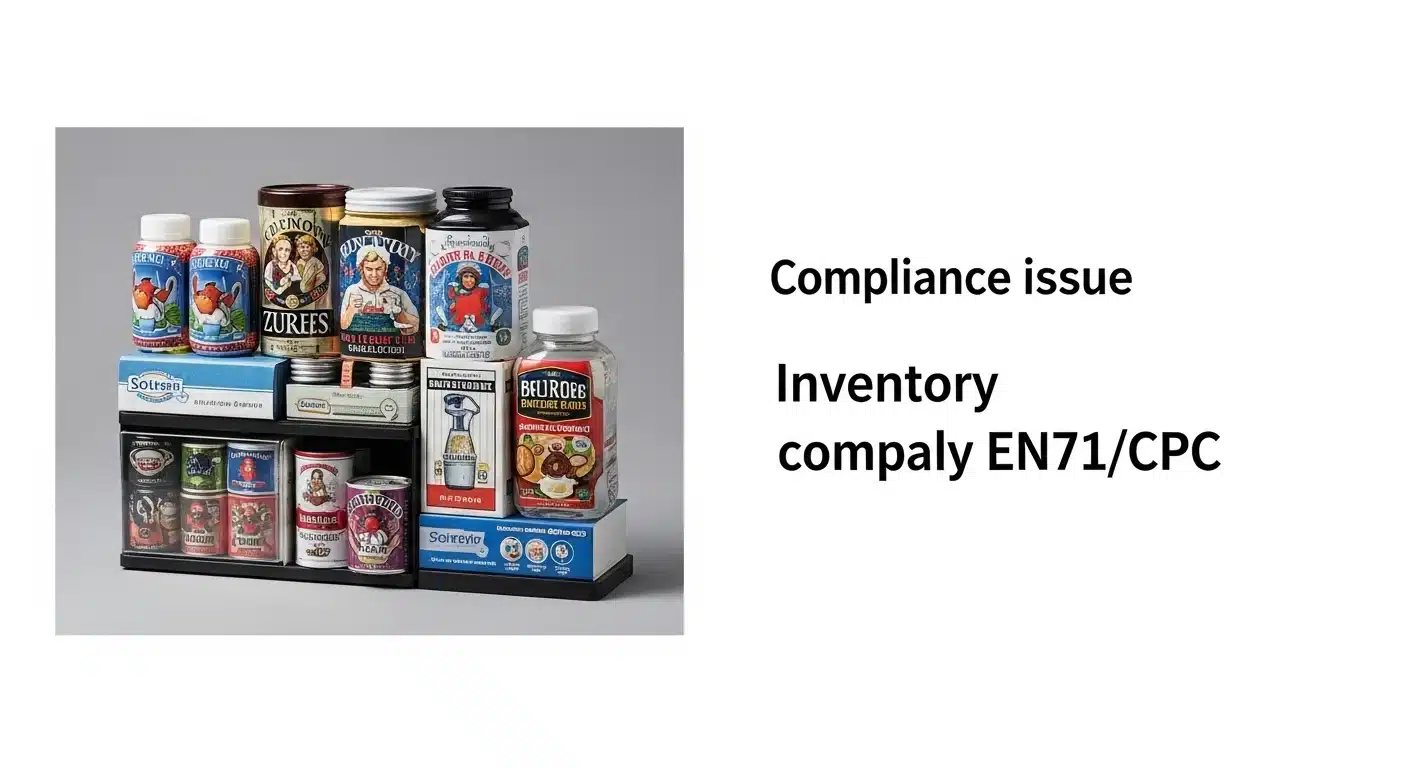
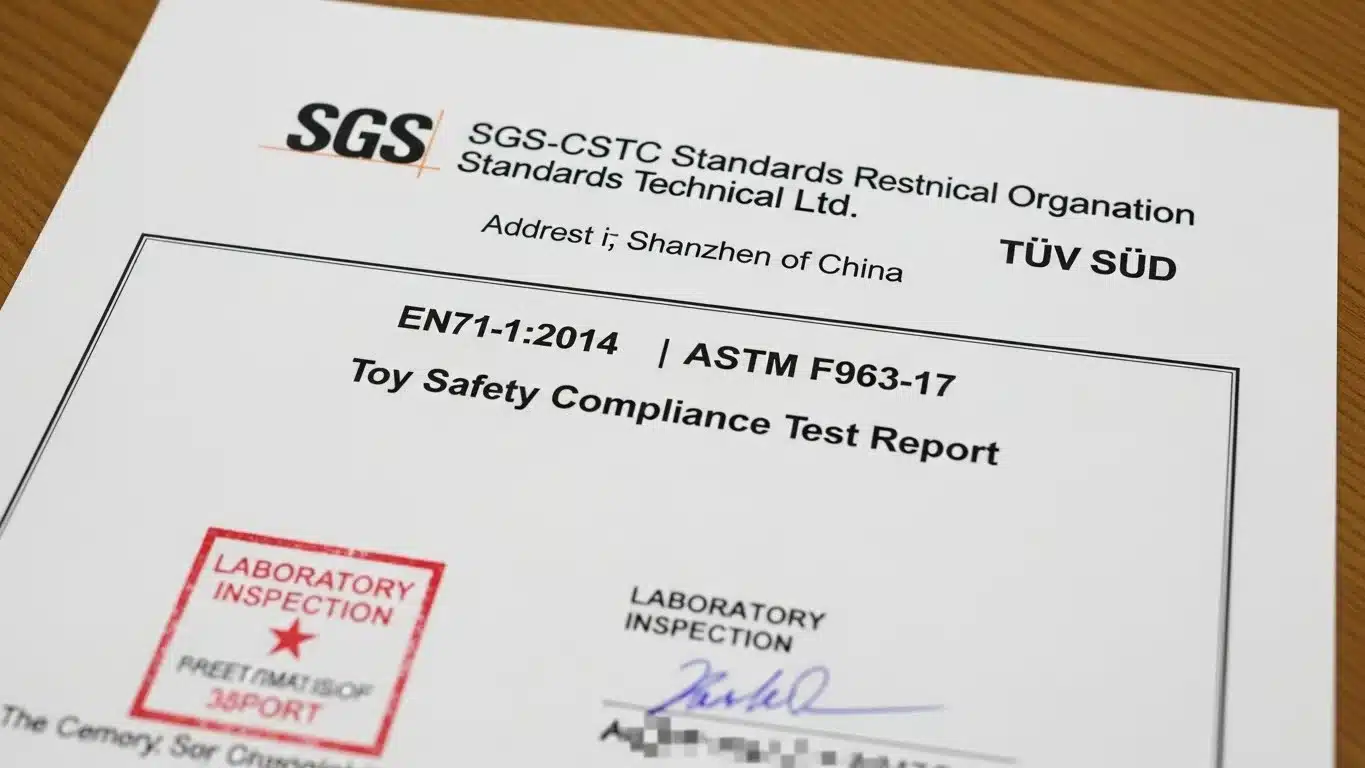
CPC Certificates for Children’s Products
If you’re selling products intended for children 12 and under, a Children’s Product Certificate (CPC) is mandatory for US import. This document certifies that your product complies with all applicable children’s product safety rules.
The CPC must be based on testing performed by a CPSC-accepted third-party laboratory. Without this document, customs will seize your shipment and Amazon will block your listing. Many new sellers don’t realize they need a separate CPC for each unique product variation they plan to sell.
FDA Requirements for Supplements
Dietary supplements imported into the US must comply with FDA regulations under the Dietary Supplement Health and Education Act (DSHEA). This includes proper labeling with a Supplement Facts panel, ingredient listing, and manufacturer information.
Prior to import, you must submit a facility registration and provide documentation of good manufacturing practices (GMP). Customs holds typically delay supplement shipments by 7-14 days, with demurrage fees of $100-500 per day accumulating until proper documentation is provided.
Common Compliance Mistakes That Cost Money
Customs errors cost Amazon sellers $500-5000 in demurrage fees plus 25-300% tariff penalties. Freight forwarders don’t verify compliance – they just move goods.
HTS Code Misclassification
Most new sellers rely on Amazon’s automated HTS code recommendations, but these are frequently wrong for specialized products. When you misclassify, customs applies additional tariffs of 25-300% based on the correct classification. A $10,000 shipment reclassified from “plastic containers” (HTS 3924.10) to “battery storage cases” (HTS 8507.90) suddenly faces $25,000 in unexpected duties. Even worse, you’re legally responsible as the “importer of record” – not your supplier or freight forwarder.
Missing Certificates
Sellers assume freight forwarders handle compliance documentation. They don’t. Missing certificates trigger immediate holds:
- CPC (Children’s Product Certificate): Required for any product marketed to children under 12. Absence results in automatic refusal of entry.
- Fumigation Certificate: Mandatory for wooden packaging. Missing this causes 7-14 day quarantine while materials get treated at your expense.
- ISF (Import Security Filing): Must be submitted 24 hours before ocean vessel departure. Late filings incur $5,000 penalties per shipment.
Each day your container sits at port costs $100-500 in demurrage fees. A 10-day hold for missing documentation adds $1,000-5,000 to your landed costs before any penalties are applied.
Inaccurate Product Descriptions
Vague commercial invoice descriptions like “plastic products” or “electronic accessories” are red flags for customs. They force manual inspection to verify actual HTS classification. When inspectors find discrepancies, they apply the highest possible tariff rate and add inspection fees ($200-500). Worse, ambiguous descriptions make you appear negligent, increasing audit risk for future shipments. Always include exact material composition (e.g., “ABS plastic” not “plastic”), precise dimensions, and intended use.
Real-World Cost Impacts
Case studies from Amazon sellers demonstrate how compliance errors destroy profitability. One seller importing yoga mats listed them as “exercise equipment” (HTS 9506.99) instead of “rubber floor coverings” (HTS 4011.10). Customs reclassified and applied 37.5% anti-dumping duty on their $18,000 shipment – $6,750 extra. The 14-day hold cost another $4,200 in demurrage. Another case: missing fumigation certification for wooden picture frames resulted in a 12-day hold at $250/day ($3,000) while arrangements were made for treatment. The seller missed their Prime Day launch window, losing an estimated $12,000 in sales.
| Mistake | Consequence | Cost Range | Prevention Tip |
|---|---|---|---|
| Incorrect HTS Codes | Customs holds & tariff penalties | $500-$5,000+ | Verify codes independently; don’t rely on Amazon auto-suggestions |
| Incomplete Commercial Invoices | Clearance delays/rejections | $100-500/day demurrage | Include seller/buyer details, values & origin country |
| Missing Compliance Certificates | Product seizures & Amazon bans | Up to $50,000 penalties | Obtain CPC/other certs pre-shipment for regulated products |
| Assuming Freight Forwarders Verify Compliance | Classification errors & violations | Variable penalties + delays | Take responsibility as importer of record; verify all docs |
| Late/Incomplete ISF Filing | Ocean shipment delays | Up to $5,000 penalties | Submit ISF 24+ hrs before vessel departure |
DIY vs. Customs Broker: Cost Analysis
DIY customs clearance seems cheap until your first $1,000 demurrage fee hits. Brokers charge $200-500 per shipment but prevent costly classification errors.
DIY Cost Structure: Time Investment Analysis
Handling customs yourself burns 15-20 hours per shipment—time you’re not spending on product research or marketing. Amazon sellers must personally research HTS codes, prepare commercial invoices, file ISF forms (required 24 hours before vessel departure), and submit Product Compliance documentation. Most new sellers don’t realize they’re legally the “importer of record” even when shipping directly to Amazon FBA warehouses.
Customs Broker Fee Structure: Value Breakdown
Customs brokers charge $200-500 per shipment, which includes document verification, HTS code classification, ISF filing, and direct communication with customs officials. This flat fee protects you from the cascading costs of errors. When your container sits at port for 14 days because of incorrect paperwork, you’re paying $100-500 per day in demurrage fees before Amazon even touches your inventory.
Hidden Costs of DIY Errors: Financial Impact
Using Amazon’s automated HTS code recommendations (which are often wrong) can trigger additional tariffs of 25-300% depending on product category. One classification error on a $10,000 shipment could mean $2,500-30,000 in unexpected duties. Beyond tariffs, customs holds delay your inventory arrival by 7-14 days, directly impacting your Amazon sales velocity and potentially causing stockouts during critical selling periods.
| Aspect | DIY | Broker | DIY Risk | Recommendation |
|---|---|---|---|---|
| Cost Structure | No broker fees, but risks $100-500/day demurrage + 25-300% tariff penalties | $100-500 flat fee per clearance + $0.50-$2 duty insurance | Catastrophic fees from errors ($5k-$50k) | Broker for new sellers |
| Time Efficiency | 10-15 days compliance review + 7-14 day customs holds | 1-3 day clearance via established relationships | Inventory delays = missed sales | Broker for time-sensitive FBA |
| Compliance Accuracy | Self-researched HTS codes (Amazon suggestions often wrong) | Verified codes + documentation audits | 25-300% unexpected tariffs | Broker for complex products |
| Legal Responsibility | Seller full liability as importer of record | Broker assumes liability for errors | $50k penalties for violations | Broker for risk protection |
| Best Use Case | Experienced importers with simple, low-value shipments | New sellers, complex goods, high-value cargo | Profit erosion from mistakes | Broker for FBA startups |

Step-by-Step Customs Clearance Process
Customs clearance is where most new Amazon sellers fail. Proper documentation can prevent $100-500 daily demurrage fees and 7-14 day shipment delays.
Preparing Documents
Your freight forwarder won’t verify customs compliance—they’re logistics specialists, not compliance experts. That responsibility falls entirely on you as the importer of record. For every FBA shipment, you must provide three essential documents:
- Commercial Invoice: Must include your legal business name, Amazon as the buyer, detailed product descriptions with materials and dimensions, declared value, and exact country of origin—not just “China” but specific city/region.
- Packing List: Itemized breakdown including carton dimensions, net/gross weight per carton, and total cartons. Amazon requires this for warehouse receiving planning.
- HTS Codes: 6-10 digit classification numbers. Don’t trust Amazon’s automated recommendations—they’re often incorrect for new or unique products, potentially triggering additional tariffs of 25-300%.
For products intended for children 12 and under, add a CPC certificate. Shipments valued over $2,500 also require a customs bond from a licensed surety company.
Amazon’s Compliance Review Process
Once you submit documentation through Amazon’s Product Compliance Dashboard, expect a 10-15 business day review period. This timeline is non-negotiable and often extends beyond Amazon’s estimates. During this period, Amazon’s automated systems and compliance specialists will:
First, they verify that your product certifications match the actual items being shipped. Many sellers fail here by using generic certificates from suppliers that don’t correspond to their specific product variations.
Next, they cross-check your HTS codes against their internal database. Many new sellers don’t realize Amazon maintains their own classification system that sometimes differs from official customs codes. When conflicts exist, your shipment gets flagged for manual review, adding 3-7 days to the process.
Monitor your case status daily through the dashboard. If Amazon requests additional documentation, you have only 48 hours to respond before the case closes, forcing you to restart the entire 10-15 day process.
ISF Filing Requirements
Import Security Filing (ISF) is mandatory for all ocean freight entering the United States. You must submit this to CBP 24 hours before vessel departure. Missing this window triggers a $5,000 penalty automatically—even if your shipment is cleared without inspection.
ISF requires 10 specific data elements including manufacturer name and address, seller name and address, buyer name and address, and a detailed container stuffing location. Most new sellers incorrectly list their freight forwarder as the manufacturer, which raises red flags during customs review.
Partner with a customs broker who specializes in Amazon FBA shipments. They’ll file your ISF through the Automated Broker Interface and ensure all data elements match your commercial invoice exactly. Any discrepancies between these documents result in an automatic hold.
What to Do When Shipments Are Held
Customs holds typically delay shipments by 7-14 days, with demurrage fees of $100-500 accumulating daily. When CBP holds your inventory, you’ll receive a Form CF-28 or 29 specifying the exact issue. Do not ignore these notices—they’re your only roadmap to resolution.
First, contact your customs broker immediately. They can communicate directly with CBP officers to understand the specific compliance gap. Most holds result from either incorrect HTS codes or missing documentation—both issues you can resolve with proper paperwork.
For intellectual property holds (common with branded products), you’ll need to provide authorization letters from the rights holder or documentation proving you’re the authorized importer. This requires direct contact with your supplier, which can take days if you’re not prepared in advance.
While resolving the issue, request your goods be moved to a bonded warehouse rather than remaining at the port. This reduces daily storage fees from $500 to approximately $150, potentially saving thousands during extended holds.
Understanding Total Landed Cost
Total landed cost isn’t just product price plus shipping—it includes customs duties, taxes, fees, and insurance that can increase your cost basis by 15-35%. Many new Amazon sellers calculate this incorrectly, leading to unexpected losses and negative margins.
The formula is: Product Cost + International Transportation + Customs Duties + Customs Fees + Import Taxes + Insurance + Local Transportation + Administrative Fees. Each element requires precise calculation:
- Customs Duties: Calculated using the formula: (Product Value + Shipping Cost + Insurance) × Duty Rate. Your duty rate depends entirely on accurate HTS codes.
- MPF Fee: Merchandise Processing Fee is 0.3464% of the goods’ value (minimum $31.67, maximum $614.35) for formal entries over $2,500.
- Harbor Maintenance Tax: 0.125% of the goods’ value for all ocean freight imports.
Build a 3-5% buffer into your landed cost calculations for unexpected fees and currency fluctuations. This prevents profit margin erosion when customs values your products higher than your commercial invoice or when exchange rates shift between order and payment.
Conclusion
Amazon customs compliance isn’t just paperwork—it’s your financial armor. Mistakes with HTS codes or documentation trigger $500-$50,000 penalties and 14-day delays that sink product launches. You, not your freight forwarder, bear legal responsibility as importer of record.
Verify your next shipment’s paperwork yourself or request our customs compliance audit. We catch classification errors before customs holds your inventory hostage.
Frequently Asked Questions
How long does a compliance review take on Amazon?
Amazon compliance reviews typically take anywhere from 24 hours to several weeks, depending on the complexity of the product and the completeness of the submitted documentation. Simple products with straightforward compliance requirements may be processed within 1-2 business days, while products requiring additional documentation, testing, or those in regulated categories (like electronics, children’s products, or food items) may take 2-4 weeks or longer. Sellers can expedite the process by ensuring all required documentation is accurate, complete, and properly formatted before submission.
What is customs clearance in Amazon?
Customs clearance in Amazon refers to the process by which goods shipped through Amazon’s logistics network are authorized to enter or exit a country by complying with that country’s customs regulations. This involves submitting necessary documentation, paying applicable duties and taxes, and having the shipment inspected if required by customs authorities. Amazon’s customs clearance process is managed through its Global Selling program and Fulfillment by Amazon (FBA) service, which helps sellers navigate international shipping requirements by providing tools like the Automated Tariff Code Classification system and partnering with customs brokers to ensure smooth border crossings for products.
What does customs compliance mean?
Customs compliance means adhering to the laws, regulations, and procedures established by customs authorities for importing and exporting goods across international borders. In the Amazon context, it encompasses accurately classifying products with the correct Harmonized System (HS) codes, providing complete and truthful documentation about product contents and value, paying all required duties and taxes, and obtaining necessary permits or certifications for restricted items. Achieving customs compliance ensures that your products can move smoothly through international supply chains without delays, penalties, or seizure by customs authorities.
Do you have to pay tariffs on Amazon items?
Yes, tariffs may be applicable on items ordered from Amazon, depending on factors such as the product’s country of origin, destination country, declared value, and product category. For individual customers, Amazon typically calculates and displays an estimated tariff fee during checkout for international orders, which is collected along with the purchase price. For sellers using Amazon’s fulfillment services, Amazon’s Global Selling program provides tools to help estimate and manage tariff payments, though ultimate responsibility for accurate tariff classification and payment rests with the seller or importer of record according to customs regulations.
Will I be notified if my package is seized by customs?
Yes, Amazon or its delivery partners will typically notify you if your package is seized by customs authorities through your Amazon account’s messaging system or email. The notification will generally include the reason for seizure, such as prohibited items, missing documentation, or incorrect tariff classification, and may provide instructions on potential next steps, though customs authorities ultimately determine if and when seized items can be released. It’s important to note that resolution of customs seizures can vary significantly by country and specific violation, with some items being returned, some destroyed, and in some cases, legal proceedings initiated against the importer.