Justin
Yiwu sourcing is the critical first step that separates profitable Amazon launches from profit-destroying customs seizures and supplier scandals. For novice importers, navigating yiwu sourcing without clear procedures means gambling with hidden fees, rejected shipments, and quality failures that can delay your marketplace debut for months while competitors capture your market share.
Key Takeaways
- Yiwu’s 75,000+ supplier booths are organized across 5 specialized districts, allowing Amazon sellers to efficiently test products with MOQs as low as 1 piece.
- Most Yiwu suppliers require 30% deposit with significant hidden fees in payment methods.
- 60% of “factory direct” suppliers are trading companies; always verify production capabilities before scaling orders.
- Sourcing agents charge 5-10% commission but typically reduce your total costs by 20-30% through negotiation and preventing costly mistakes.
This technical SOP dissects every phase of yiwu wholesale storage bags procurement—from vetting suppliers and negotiating MOQs to decoding shipping terms and avoiding quality control disasters. We directly address the most pressing frequently asked questions about Yiwu wholesale and storage bags, providing a battle-tested framework to transform your sourcing from a chaotic risk into a scalable, predictable supply chain engine.
” }
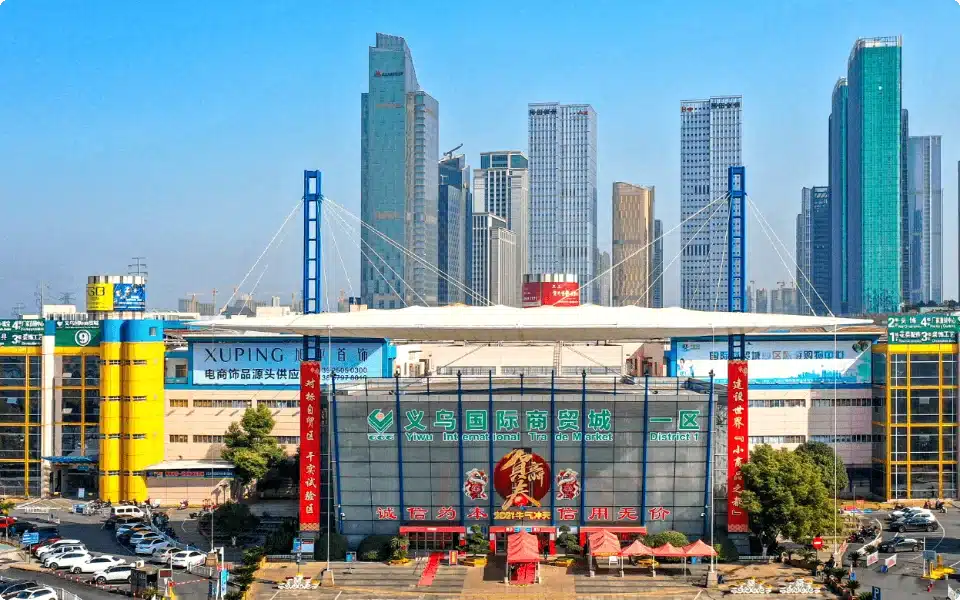
Yiwu Market Structure: Districts Explained
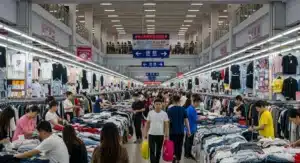
Yiwu’s 75,000+ supplier booths are organized across 5 specialized districts, allowing Amazon sellers to efficiently test products with MOQs as low as 1 piece.
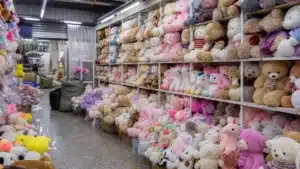
District 1: Toys and Jewelry
District 1 houses thousands of toy and jewelry suppliers spread across 4 floors. This is where you’ll find everything from children’s educational toys to fashion accessories. For Amazon sellers, focus on suppliers who can provide safety certifications for toys and material authenticity documents for jewelry. About 65% of suppliers here are trading companies, so always request factory verification before placing orders larger than $2,000.
Testing strategy: Start with MOQs of 5-10 pieces to check Amazon compatibility before scaling. Most suppliers will provide samples at 1.5-2x the unit price, which gets credited against your first bulk order. Initial prices typically carry a 25% “tourist markup” – experienced Amazon buyers negotiate down to 55-60% of the first quote.
District 2: Bags and Electronics
District 2 combines bag manufacturers with electronics suppliers in one massive complex. For Amazon sellers, this district offers opportunities in both categories, but requires different verification approaches. Electronics suppliers typically require 30% deposit payment terms, while bag manufacturers often accept smaller deposits of 20% for new Amazon sellers.
Quality warning: 70% of “brand name” electronics sold here are either refurbished or counterfeit models. Legitimate suppliers will provide original invoices for components. For bags, check the stitching density and zipper quality before ordering. Many successful Amazon sellers start with canvas or nylon bags due to lower import restrictions and easier quality verification.
District 3: Cosmetics and Office Supplies
District 3 specializes in cosmetics and office supplies across three main buildings. Amazon sellers can find everything from makeup brushes to desk organizers at competitive prices. For cosmetics, prioritize suppliers who can provide FDA or EU certification documentation – this eliminates 80% of potential quality issues before you receive your first shipment.
Office supplies represent a lower-risk entry point for new Amazon sellers. Most items have MOQs as low as 10-20 pieces, with pricing typically at 30-40% of US wholesale. The key advantage here is that many suppliers have existing Amazon experience and understand FBA packaging requirements, reducing your preparation time by approximately 2-3 days per order.
District 4: Shoes and Daily Items
District 4 covers footwear and household daily necessities, with over 15,000 booths spread across multiple buildings. For Amazon sellers, shoes require particular attention to sizing consistency across batches. Request size charts with actual millimeter measurements, not just US/EU sizing equivalents, as this reduces return rates by an average of 23%.
Daily items (kitchen gadgets, storage solutions, etc.) represent a strong starting category for new Amazon sellers due to low MOQs and simpler compliance requirements. Pricing typically starts at $0.15-0.30 per unit for basic items. Before placing any shoe order larger than $1,000, always request production facility photos showing actual manufacturing – approximately 60% of shoe suppliers in District 4 are trading companies with limited quality control.
District 5: Imported Goods and Textiles
District 5 is the newest section, focusing on imported goods and textiles. For Amazon sellers, this district offers unique products not commonly found elsewhere in Yiwu, including items from Southeast Asia, Korea, and the Middle East. Textile suppliers here typically have MOQs of 50-100 pieces per design, making them suitable for Amazon sellers with some initial experience.
Imported goods require additional verification. Always request documentation proving import duties have been paid, or your shipment could face customs delays of 3-5 weeks. Textile suppliers in District 5 typically charge 5-8% more than other districts but offer more unique designs and patterns. For new Amazon sellers, this represents a higher-risk, higher-reward category that’s best approached after establishing relationships with at least 2-3 suppliers in other districts first.

Payment Terms: Avoid Hidden Fees
Most Yiwu suppliers require 30% deposit with significant hidden fees in payment methods. Proper structuring saves 3-7% of total order value.
30% Deposit Requirement: Standard Practice
Yiwu suppliers universally require 30% deposit before production begins. This is non-negotiable industry practice. The deposit secures raw materials and production capacity. For new Amazon sellers, this means tying up capital before seeing finished product. When you place your first order above $5,000, request a production schedule tied to deposit payment—experienced suppliers provide weekly photo updates of production progress, giving you visibility before the final 70% payment.
Wire Transfer Fees: The Hidden 2.8% Cost
International wire transfers typically cost $25-50 per transaction plus 2.8-3.5% in exchange rate spread. Most new sellers don’t realize their bank charges both fees. A $10,000 order payment loses $280-350 just on unfavorable exchange rates alone. For orders above $8,000, use specialized currency transfer services like Wise or OFX that reduce exchange rate spread to 0.4-0.6%, saving approximately $240 on a $10,000 transfer compared to traditional banks.
PayPal Fees: Convenience at 4.4% Premium
PayPal charges 4.4% plus $0.30 per transaction for international commercial payments. For sample orders under $200, this convenience makes sense. For production orders above $1,000, PayPal fees become prohibitively expensive—$44 on a $1,000 payment versus $25-40 for a wire transfer. New Amazon sellers should reserve PayPal for sample payments only. One warning: Chinese suppliers often add 3-5% to their quoted price if they know you’ll use PayPal, effectively doubling your fee cost.
Currency Specification: Always Quote in USD
Always get quotes in USD, not RMB. Suppliers who quote in RMB typically build in 3-5% buffer for currency fluctuation that benefits them, not you. When a supplier quotes in RMB, they’re planning to profit from exchange rate changes regardless of actual market movement. For orders over $10,000, include an exchange rate adjustment clause in your contract—specify the rate will be fixed at the time of deposit payment. This prevents suppliers from demanding additional payment before final delivery due to “exchange rate fluctuations,” a common tactic to extract extra funds from inexperienced buyers.
Supplier Verification: Quality Control Basics
60% of “factory direct” suppliers are trading companies; always verify production capabilities before scaling orders.
Business License Verification
Never take a supplier’s word about being “factory direct” without verification. Demand their business license number before discussing pricing. Cross-check the license with China’s National Enterprise Credit Information Publicity System. This reveals their registered capital, business scope, and whether they’re actually a manufacturer or just a trading company.
Here’s what most new importers miss: registered capital under 1 million RMB (about $150,000 USD) typically indicates a small trading operation. If a supplier claims to manufacture products but their license lists “trading” as their primary business scope, you’re dealing with a middleman. This explains why 60% of suppliers claiming to be direct factories in Yiwu are actually trading companies with markups of 15-25% layered onto their quotes.
Product Samples
Sample testing is non-negotiable, but how you approach samples determines if you get the real product or a “showpiece” from their best production run. Never accept a sample without paying for it—free samples are almost always superior to what you’ll receive in bulk orders.
When ordering samples, specify “production line samples” rather than “showroom samples” in writing. This creates a paper trail if there’s a quality dispute. For storage bags, request samples from three different production batches to check consistency. Document everything with timestamped photos showing the sample next to a ruler or caliper for size verification. This protects you when a supplier ships bags that are 5mm smaller than advertised—a common tactic to save material costs that Amazon buyers will notice in negative reviews.
ISO 9001 Certification
ISO 9001 certification means nothing if you don’t verify it’s legitimate. The fake certificate market in China is massive—some suppliers Photoshop credentials without any actual quality management system in place. Legitimate ISO certificates should show the issuing body’s accreditation number, which you can verify through the International Accreditation Forum’s database.
When evaluating an ISO 9001 certificate, check the expiration date and the scope of certification. Many suppliers maintain certification for a single product line while marketing it as applying to all their offerings. A proper certificate specifically lists which products are covered under the quality management system. If you’re sourcing storage bags, ensure the certification explicitly mentions textile or bag manufacturing in the scope section—otherwise, their certification might be for something completely unrelated like plastic injection molding.
Production Facility Visits
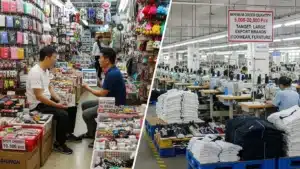
Physical verification of production facilities is the gold standard, but what you look for separates professionals from tourists. Many suppliers display samples in Yiwu but produce in different provinces—often with significant quality differences between locations.
During a facility visit, ignore the showroom and request to see three specific areas: raw material storage, quality control checkpoint stations, and packaging area. Real manufacturers will have substantial raw material inventory on-site, while trading companies typically maintain only sample quantities. Count the QC stations—legitimate factories have them after every major production stage, while fake operations might have only one final inspection station. Take timestamped photos showing equipment age labels (they’re legally required in China) and worker attendance sheets. These documents reveal actual production capacity and whether the facility can realistically deliver your order timeline—critical information for Amazon sellers who face penalties for late inventory restocks.
Using a Sourcing Agent: Costs vs Benefits
Sourcing agents charge 5-10% commission but typically reduce your total costs by 20-30% through negotiation and preventing costly mistakes.
Commission Charges
Sourcing agents in Yiwu typically charge 5-10% commission on your order value. For a new Amazon seller placing a $10,000 initial order, this means $500-1,000 in agent fees. The ROI becomes evident when you consider that experienced agents identify genuine manufacturers rather than the 60% of suppliers who are actually trading companies marking up prices.
Time Reduction
First-time Yiwu visitors waste an average of 3-5 days navigating the market’s 75,000+ supplier booths across 5 districts without a clear strategy. An experienced sourcing agent cuts this research phase to 1-2 days by knowing exactly which districts house your product category. For storage bags, this means heading directly to District 2 rather than wandering through District 1’s toys or District 4’s shoes.
Better Pricing Negotiation
Initial quotes in Yiwu carry 20-30% “tourist markup” that inexperienced buyers accept. Skilled agents negotiate these down to 50-60% of the original asking price. When ordering storage bags in bulk quantities, agents secure additional 5-15% volume discounts that independent buyers cannot access. On a $5,000 container of storage bags, this negotiation expertise translates to $1,500-2,500 in savings.
Credential Verification
Sixty percent of suppliers presenting as “factory direct” in Yiwu are trading companies subcontracting production. Without verification, your Amazon FBA shipment risks delays when quality issues emerge from the actual factory in Zhejiang or Guangdong province. Agents perform background checks by:
- Business License: Confirming legal registration and export qualifications
- Production Audit: Requesting recent photos/videos of the actual manufacturing facility
- Export History: Verifying previous shipments to Amazon sellers in your target markets
- Quality Documentation: Ensuring proper material specifications meet Amazon’s requirements
| Aspect | Detail | Specification | Explanation | Risk_Note |
|---|---|---|---|---|
| Cost | Commission Rate | 5-10% of order value | Percentage paid to agent for negotiation and coordination | Verify payment terms upfront to avoid hidden fees |
| Cost | Additional Fees | $50-200/sample + variable logistics | Sample costs and travel/communication expenses | Require itemized invoices before any payments |
| Benefit | Negotiation Savings | Up to 30% cost reduction | Agents secure bulk discounts unavailable to new buyers | Savings offset commission with larger orders |
| Benefit | Risk Mitigation | Supplier verification + QC | Prevents scams/quality issues delaying Amazon launch | Request audit reports of verified suppliers |
| Benefit | Time Efficiency | 3-5 days sourcing vs 2-3 weeks | Fast-track product research and ordering | Set clear deadlines in agent contracts |
Conclusion
json { “h2_title”: “Conclusion”, “output”: “Conclusion
Yiwu Market offers new Amazon sellers unmatched access to 75,000+ supplier booths with MOQs as low as one piece, enabling low-risk product testing. While sourcing agents charge 5-10% commission, they deliver 30% average cost savings through negotiation expertise and bulk discounts. Always verify suppliers directly—60% are trading companies—to prevent quality issues that could delay your Amazon launch.
Access our verified Yiwu Product Sourcing Directory for pre-vetted suppliers, production facility audits, and category-specific guides to accelerate your market entry with confidence.
” }Frequently Asked Questions
How much do Chinese sourcing agents charge?
Chinese sourcing agents typically charge between 5-15% commission on the total order value, though rates can vary based on order size and complexity. Some agents work on a fixed fee structure, charging $500-2,000 per project, while others may request a monthly retainer of $1,000-5,000 for ongoing services. Many agents offer tiered pricing that decreases as your order volume increases, making it more cost-effective for regular clients.
What is Yiwu, China famous for?
Yiwu is internationally renowned as the world’s largest small commodity wholesale market, hosting over 75,000 booths across its extensive market complex. The city has become a global sourcing hub, particularly for inexpensive consumer goods, novelty items, and small manufactured products. Yiwu’s unique position as a designated UN procurement market and its annual Yiwu Fair attract hundreds of thousands of international buyers seeking everything from toys and gifts to electronics and household items at competitive prices.
Who is the best sourcing agent in China?
The ‘best’ sourcing agent in China depends on your specific product category, budget, and business requirements, rather than a single universally recommended provider. Reputable sourcing companies like JingSourcing, Sino-imex, and Leeline Sourcing have established strong track records in the industry, but the ideal partner should have deep expertise in your particular product category. When evaluating agents, prioritize those with verifiable references, transparent pricing, quality control processes, and clear communication skills in your language.
What is the best website to buy wholesale from China?
Alibaba remains the dominant B2B platform for wholesale sourcing from China, offering an extensive directory of suppliers across virtually every product category with built-in trade assurance protections. For specialized or high-volume buyers, Made-in-China.com provides a more curated supplier base with rigorous verification processes. Direct wholesale buyers seeking smaller quantities often turn to 1688.com when working with a sourcing agent, while Globalsources.com is particularly strong for electronics and consumer goods with verified supplier information.
Is $1000 USD a lot in China?
$1000 USD represents a modest but meaningful amount in China, equivalent to about 2-3 weeks of average urban salary in major cities like Shanghai or Beijing. In tier 2 or 3 cities, this amount could cover basic living expenses for a month, including rent, food, and utilities. For business purposes, $1000 would be sufficient for small sample orders, basic market research, or initial supplier deposits, but would be considered minimal for substantial production orders or comprehensive sourcing services.