Justin
A buyer from the UK spent three days wandering the Yiwu market districts last autumn and flew home with nothing but sore feet and a stack of useless business cards. He spent all his time on the first three floors of District 1 talking to trading companies instead of walking up one flight to find the actual manufacturers. That single routing mistake burned a week of his production timeline and added 15% to his unit costs.
Key Takeaways
- The Yiwu International Trade Market spans 6.4 million square meters across 5 districts.
- District 1 holds over 10,500 shops across 4 floors.
- District 2 holds 8,000 shops across 5 floors.
- District 3 holds roughly 7,000 booths dedicated to stationery, cosmetics, and sports goods—categories where low freight weight per unit translates directly into higher net margins.
- District 4 is the world’s largest single-structure market building globally, housing 16,000 shops.
- First-time buyers covering all 5 districts solo will fail.
You do not need another generic product list to memorize. You need a physical routing strategy to cut through 75,000 booths without wasting a single hour on the wrong floor. We are breaking down the exact floor plans so you can bypass the middlemen, hit the direct manufacturer centers, and consolidate your orders correctly.
Yiwu Market Districts Overview Table
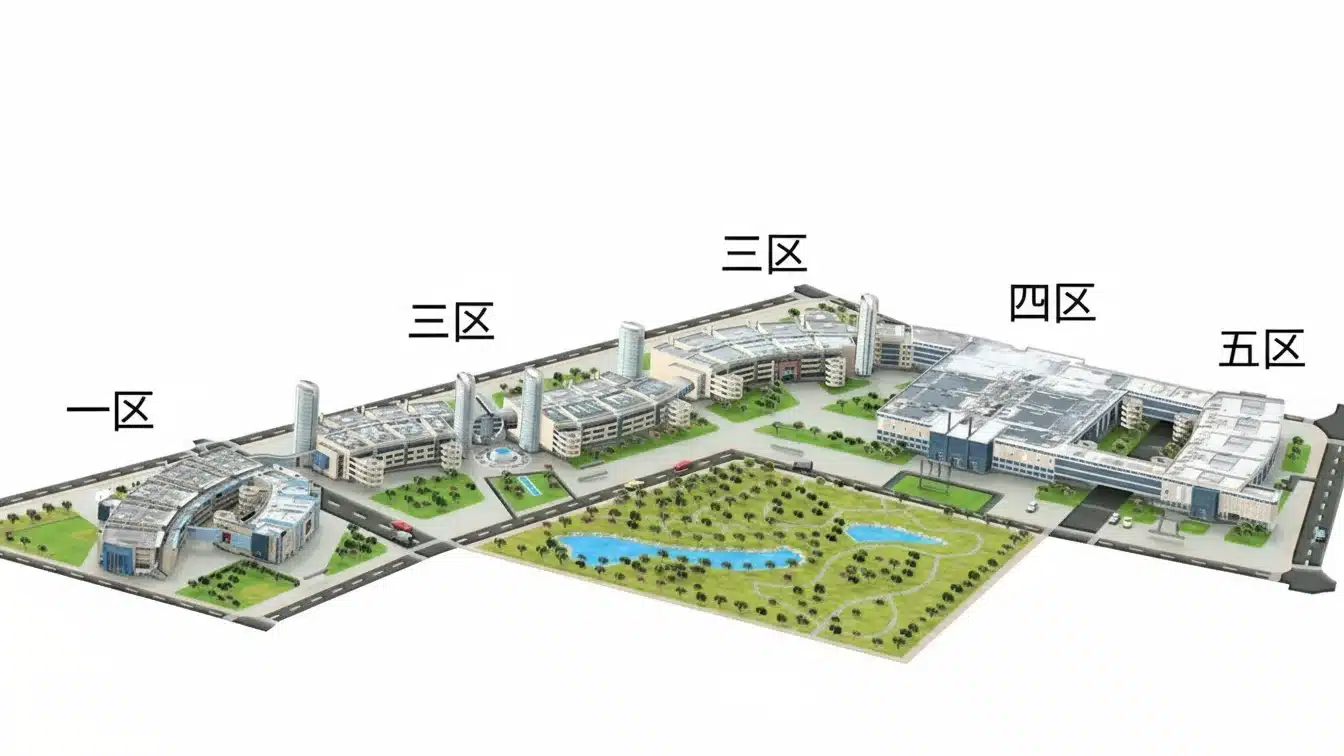
The Yiwu International Trade Market spans 6.4 million square meters across 5 districts. Treat this breakdown as your physical reference before stepping inside.
District 1-5 Comparison
- District 1: Primary specialty covers Yiwu market district 1 toys and jewelry. Approximately 10,500 shops across 4 floors. Best for seasonal party imports, balloons, costumes, and fashion accessories.
- District 2: Primary specialty is hardware, tools, and small electronics. Approximately 8,000 shops across 5 floors. Best for bulk hardware purchasing and daily-use electrical items.
- District 3: Primary specialty covers stationery, sports equipment, and cosmetics. Approximately 7,000 shops. Best for office supply consolidation and fitness accessories.
- District 4: Primary specialty is Yiwu district 4 socks and textiles wholesale. Approximately 16,000 shops, making it the largest single-structure market building globally. Best for bulk hosiery, towels, and apparel with direct container loading via elevated lanes.
- District 5: Primary specialty covers imported goods, auto accessories, and pet products. Approximately 7,000 shops. Best for margin opportunities on what to buy in Yiwu District 5, specifically Floor 4 auto and pet categories with less global saturation.
Using This as Your Yiwu International Trade Market Map by Floor
We typically route first-time buyers to one district per day. Attempting to cover multiple districts in a single morning leads to decision paralysis and shallow supplier contact. The market operates from 08:30 to 17:00 daily, giving you roughly 8 hours of actual walking and negotiation time per district.
A critical detail most guides omit: across all five districts, the 4th floor houses Manufacturers Direct Sales Centers. We direct buyers there first because you access factory compliance documentation, lower MOQs, and bypass the trading company markups prevalent on floors 1 through 3.
District 1: Toys, Jewelry, Decor
District 1 holds over 10,500 shops across 4 floors. Most first-time buyers waste 60% of their time here on trading booths instead of reaching the factory-direct floors.
Floor-by-Floor Product Breakdown
District 1 is the original core of the Yiwu International Trade Market, operating daily from 08:30 to 17:00. We typically route first-time buyers here first because the product categories are the most visually intuitive, which helps build confidence before moving into the denser, more technical districts.
- 1st Floor: Toys (plastic, plush, RC, educational), inflatable products, and party supplies. This is where seasonal party importers spend the majority of their time.
- 2nd Floor: Fashion jewelry, hair accessories, and artificial flowers. Extremely high booth density with aggressive sampling tactics from booth owners.
- 3rd Floor: Decorative handicrafts, picture frames, crystal/glass ornaments, and festival decorations. Fragile goods dominate this floor.
- 4th Floor: Manufacturers Direct Sales Centers for toys and crafts. This is your highest-ROI floor, offering lower MOQs and direct access to factory compliance documentation.
The critical mistake beginners make is spending all day on floors 1 through 3. Those floors are dominated by trading companies who buy from the exact same factories found on the 4th floor, then add their margin. If you walk out of District 1 without visiting the 4th floor, you overpaid.
Factory Outlets vs. Trading Booths
The visual difference between a factory outlet and a trading booth is almost zero. Both have identical glass display cases, LED lighting, and branded signage. You cannot tell them apart by looking. You differentiate them by asking two questions: “Can I see your factory audit report?” and “Where is your production facility located?”
Trading booths will deflect, claim the factory is “far away,” or say they will “ask their boss.” Factory-direct booths will pull up ISO certificates, show you live factory video, and discuss raw material sourcing in technical detail. For a first-time buyer, this distinction directly impacts your per-unit margin by 15% to 30%.
We always advise first-time buyers to walk floors 1 through 3 purely for trend identification and product design sampling. Take photos, note the item codes, and then bring that list directly to the 4th floor. The manufacturers there will recognize the designs and quote you the actual factory price, cutting out the middleman markup entirely.
One logistical reality most guides omit: the fragile decorative items on the 3rd floor require specific packing standards. You cannot casually mix District 1 ceramics and glass with heavy items from other districts. Multi-district buying requires a consolidation warehouse to apply proper dunnage and palletization before container stuffing, which is exactly why first-timers should not attempt to manage shipping logistics independently.
District 2: Hardware, Bags, Electronics
District 2 holds 8,000 shops across 5 floors. Skip floors 1-3 and head straight to the 4th floor for factory-direct hardware and appliance deals.
Floors 1 through 3 in District 2 are packed with trading companies. They buy from the same factories you want to reach, add their markup, and hand you catalogs. You will burn half a day here without gaining a pricing edge.
The actual hardware and small appliance manufacturers sit on the 4th floor in the Manufacturers Direct Sales Centers. This is where you access compliance documentation, negotiate lower MOQs, and cut out the middleman entirely. We route first-time buyers here first because the time savings are immediate.
A practical warning: you cannot casually mix heavy District 2 hardware like wrench sets and power tools with fragile District 1 ceramics in a single container. Multi-district buying requires your agent to warehouse everything first, apply specific dunnage and palletization, then stuff the container correctly. Walking between districts with a rolling suitcase and expecting to ship it all home is a recipe for damaged goods.
Regional Showrooms on the 4th Floor
The 4th floor of District 2 is organized by regional manufacturing hubs, not by product category. This confuses buyers who expect to see “all screwdrivers in one aisle.” Instead, you will find grouped showrooms representing specific Chinese industrial clusters.
- Sichuan Showrooms: Heavy-duty hardware, stainless steel fittings, and industrial-grade tools sourced directly from Sichuan province manufacturing bases.
- Hong Kong Malls: Higher-spec small appliances, electronics accessories, and premium packaging goods targeting export-quality standards and international certification requirements.
This regional layout works in your favor once you understand it. If your order requires a specific certification like CE or UL, walk into the Hong Kong Mall section first. These suppliers already maintain the documentation your customs clearance needs. If you are buying heavy, price-sensitive hardware with looser compliance requirements, the Sichuan showrooms will give you better per-unit pricing.
The market closes at 17:00. Most 4th-floor factory reps leave by 16:30. Arrive by 09:00, walk the regional sections with a clear list, and leave the consolidation logistics to your agent rather than figuring it out on the showroom floor.
District 3: Stationery, Cosmetics, Sports
District 3 holds roughly 7,000 booths dedicated to stationery, cosmetics, and sports goods—categories where low freight weight per unit translates directly into higher net margins.
Why Lightweight Categories Work for First-Time Buyers
First-time buyers often overlook freight weight as a cost variable. In District 3, the products themselves solve this problem. A carton of makeup brushes or gel pens weighs a fraction of what District 2 hardware weighs, yet retails at comparable or higher markups.
We typically route new buyers here first because these categories offer fast decision-making. The SKUs are visually simple, pricing is transparent, and MOQs are forgiving. You can lock in 15 to 20 suppliers in a single afternoon across these three categories.
District 3 Floor Layout
District 3 spans four main floors. Each floor is cleanly segmented by category, which eliminates the blind wandering that triggers analysis paralysis in first-time visitors.
- Floor 1: Pens, notebooks, filing systems, and office stationery. Density is high—expect 40 to 50 shops per aisle.
- Floor 2: Cosmetics and skincare tools. Makeup brushes, cosmetic bags, and nail care tools dominate. This floor carries the highest margin potential in the entire district.
- Floor 3: Sports and fitness accessories. Focus on resistance bands, jump ropes, yoga mats, and protective gear—avoid full-size equipment due to volumetric weight penalties.
- Floor 4: Manufacturers Direct Sales Centers. This is where you access factory compliance documents, negotiate lower MOQs, and cut out trading company markups entirely.
The High-Margin Sourcing Play
The real margin in District 3 lives on Floor 2 cosmetics and Floor 4 direct factory counters. A makeup brush set that costs $0.80 per unit FOB can retail for $8 to $12 in Western markets. The weight per unit is under 50 grams, meaning a 20-foot container holds enormous quantity.
Apply the 4th Floor Strategy here without exception. Floors 1 through 3 are filled with trading companies that add 15 to 25 percent markup with no added value. Floor 4 suppliers provide the same products with verifiable factory certifications and lower minimum order quantities.
Keep the consolidation reality in mind when buying across districts. You cannot simply stack District 3 cosmetics next to District 2 hardware in a container. Multi-district purchases require an agent’s warehouse for proper dunnage, palletization, and weight distribution before container stuffing.
District 4: Textiles, Socks, Apparel
District 4 is the world’s largest single-structure market building globally, housing 16,000 shops. For first-time buyers, strict routing is mandatory to avoid wasting an entire day.
The World’s Largest Textile Building
When building your Yiwu International Trade Market map by floor, District 4 breaks every rule of standard retail expectations. It physically dwarfs District 1’s 10,500 shops and District 2’s 8,000 shops combined. We typically route first-time buyers here with a strict three-shop-per-category limit, because without spatial predictability, the sheer density triggers decision paralysis.
You are not walking into a mall; you are entering an industrial-scale infrastructure project. The building operates daily from 08:30 to 17:00, but covering this single district properly takes a full day minimum. If you are sourcing Yiwu district 4 socks and textiles wholesale, you must isolate your exact material blends and target price points before entering, or you will drown in visually identical options spread across multiple floors.
16,000 Shops with Elevated Lanes for Loading
The physical engineering of District 4 is designed for high-volume export logistics, not casual foot traffic. The building features elevated lanes and a combination of underground and roof parking structures built specifically for direct container loading. Trucks drive directly into the structure to pick up palletized textiles, completely eliminating the chaotic street-level loading you see in older wholesale markets.
For your cross-district consolidation strategy, this infrastructure changes how you execute a multi-district buying trip. You cannot casually mix fragile District 1 ceramics or heavy District 2 hardware with soft textiles in a single container without applying specific dunnage and palletization. We pull District 4 textile shipments directly into our consolidation warehouse first, applying compression packing to reduce volumetric weight before mixing them with rigid goods from other districts.
Apply the “4th Floor Strategy” here to maximize your margin. While floors one through three are flooded with trading companies, the 4th floor houses Manufacturers Direct Sales Centers. This is where you access factory compliance documentation, negotiate lower MOQs, and bypass the markup layers that dominate the lower levels of these 16,000 shops.
District 5: Imports, Bedding, Auto Parts
District 5 holds 7,000 booths. First-time buyers should skip the ground floor imports and head straight to Floor 4 for factory-direct auto and pet accessories.
Niche Categories and E-commerce Zones
When buyers ask what to buy in Yiwu District 5, most guides highlight the ground and second floors: imported goods, bedding, and textiles. These zones cater primarily to domestic Chinese retailers reselling foreign brands. For an international buyer, the ground floor holds almost zero sourcing value since you would import those same products from their country of origin directly.
The practical value sits in the bedding and home textile sections on the second and third floors. You will find bulk quilts, mattress protectors, and raw textile rolls here. But if your primary goal is high-margin commodities with lower global saturation, these floors still fall short compared to what sits directly above them.
The 4th Floor High-Margin Opportunity
Across all Yiwu market districts, the 4th floor consistently houses Manufacturers Direct Sales Centers. District 5 Floor 4 applies this exact logic to auto parts, motorcycle accessories, and pet products. We route first-time buyers here specifically because it solves their biggest fear: wasting time on trading companies that inflate prices.
The auto accessories segment includes interior trim, LED lighting kits, steering wheel covers, and cleaning tools. The pet product zone covers collars, leashes, grooming brushes, and plastic toys. Neither category faces the extreme price compression seen in Yiwu market district 1 toys and jewelry, meaning your per-unit margins remain significantly healthier.
Factory booths on this floor operate with lower MOQs than the trading companies below. You can request factory compliance documentation, audit reports, and material spec sheets directly from the booth owner. This floor receives a fraction of the foot traffic that District 1 gets, which translates to less sales pressure and more time to evaluate product quality before committing to an order.
One logistical reality to keep in mind: auto plastic parts are dense, and pet product packaging is irregular. If you plan to combine these with fragile District 1 ceramics or soft District 4 textiles, you need a consolidation warehouse to apply specific dunnage and palletization before container stuffing. Walking between districts with mixed product categories requires this intermediate step to prevent freight damage.
Strategic Routing for First-Time Buyers
First-time buyers covering all 5 districts solo will fail. Limit yourself to one district per day and use an agent for cross-district consolidation.
1-Day vs. 3-Day Sourcing Plans
For a 1-day plan, you pick exactly one district. We typically route first-time buyers to District 1 for toys and jewelry or District 4 for socks and textiles wholesale. The market operates 08:30 to 17:00, giving you roughly 7.5 hours of actual floor time. With District 1 holding over 10,500 shops across 4 main floors, you cannot physically walk every aisle. Focus exclusively on the 4th floor Manufacturer Direct Sales Centers to bypass trading companies and access factory compliance documentation directly.
A 3-day plan allows category-specific deep dives without the mental fatigue. Day 1 covers Yiwu market district 1 toys and jewelry across its 4 floors. Day 2 targets District 4 for socks and textiles wholesale — the largest single-structure market building globally, housing 16,000 shops. Day 3 focuses on what to buy in Yiwu District 5, specifically Floor 4 for auto accessories and pet products. We push buyers toward District 5 Floor 4 because it offers significantly higher margins and less global saturation than the oversaturated toy and jewelry segments.
Why You Cannot Cover All 5 Districts Without an Agent
The Yiwu International Trade Market spans 6.4 million square meters with over 75,000 booths. Attempting to walk even three districts without local support triggers immediate analysis paralysis. You will burn hours just locating the correct product zones within District 2’s 5-floor layout or District 3’s 7,000 booths.
The real bottleneck is not spatial orientation — it is logistical consolidation. You cannot casually mix fragile District 1 ceramics with heavy District 2 hardware in a single shipment. Multi-district buying requires an agent’s warehouse to apply specific dunnage and palletization before container stuffing. While District 4 features elevated lanes and underground parking for direct container loading, you still need a coordinator to merge purchases from different buildings into organized loads. Without an agent handling consolidation, you end up with fragmented orders from independent suppliers who cannot pack together on their own.
A proper Yiwu International Trade Market map by floor helps you plan which booths to visit, but it will not solve the backend logistics. We handle the routing, the 4th-floor factory-direct negotiations, and the cross-district consolidation so you walk out with a properly packed container, not a spreadsheet of disconnected contacts.
Conclusion
Skip the ground floors entirely on your first day and head straight to the 4th floors. Actual production facility reps sit up there. The lower levels are just crowded with trading companies padding their prices, and avoiding them saves you three hours of useless haggling per district.
Print a blank spreadsheet before you land and log the exact booth numbers for every item you price. You cannot mentally track 75,000 shops. Hand that list to a local warehouse team to pull your samples and handle the mixed-container packing while you fly home.
Frequently Asked Questions
What’s in District 1?
District 1 serves as the foundational hub for artificial flowers, toys, and fashion accessories within the Yiwu International Trade City. Across its four floors, buyers can source an extensive variety of plush, electronic, and inflatable toys alongside premium hair ornaments and jewelry. Also, this district is the primary destination for procuring festival supplies and decorative crafts, making it ideal for gift and event sourcing.
How many districts are there?
The Yiwu International Trade City is systematically organized into five primary districts designed to categorize wholesale merchandise efficiently. Together, these massive interconnected structures span over 6.4 million square meters of dedicated retail and wholesale space. This colossal footprint houses more than 75,000 individual booths, firmly establishing the market as the world’s largest small commodities trading hub.
Which district is for textiles?
District 4 is the undisputed textile powerhouse of the Yiwu market, catering almost exclusively to fabric and garment-related sourcing. It boasts an impressive 16,000 specialized shops dedicated to socks, towels, underwear, laces, and various knitting materials. Procurement professionals rely on this dedicated district for comprehensive textile supply chains, offering everything from raw materials to finished apparel accessories under one roof.
What’s in District 5?
District 5 functions as a premium sourcing center for home lifestyle products, featuring high-quality bedding, curtains, and intricate DIY crafts. It also serves as the market’s dedicated hub for imported goods, providing buyers with direct access to international commodities. Also, the fourth floor is strategically zoned for emerging high-margin niches, housing a robust selection of automobile accessories and pet products.
Should I visit all districts?
Visiting all five districts is highly discouraged, as the sheer scale of the market can easily lead to decision paralysis and wasted sourcing time. First-time buyers should strategically target only one or two districts that strictly align with their product niche, such as District 1 for gifts or District 4 for apparel. This focused approach allows for deeper supplier engagement, accurate price comparison, and a much more efficient procurement workflow.