Джастин
Yiwu electronics and gadgets sourcing covers phone accessories, LED products, small audio, chargers, cables and trend gadgets — a fast, high-margin category spread across the hardware district and the newer District 6. It is also the category where certification is not optional: every radio device and every battery carries rules that decide whether your container clears customs or sits at port.
Key Takeaways
- Yiwu covers phone accessories, LED, audio, chargers, cables and trend gadgets.
- Radio devices need FCC (US) or CE + RoHS (EU) certification.
- Any lithium battery needs a UN38.3 test summary to ship.
- Verify an FCC ID yourself before you trust a supplier’s claim.
- Minimums are low for stock accessories, higher for custom electronics.
- Function-test and certify before you scale.
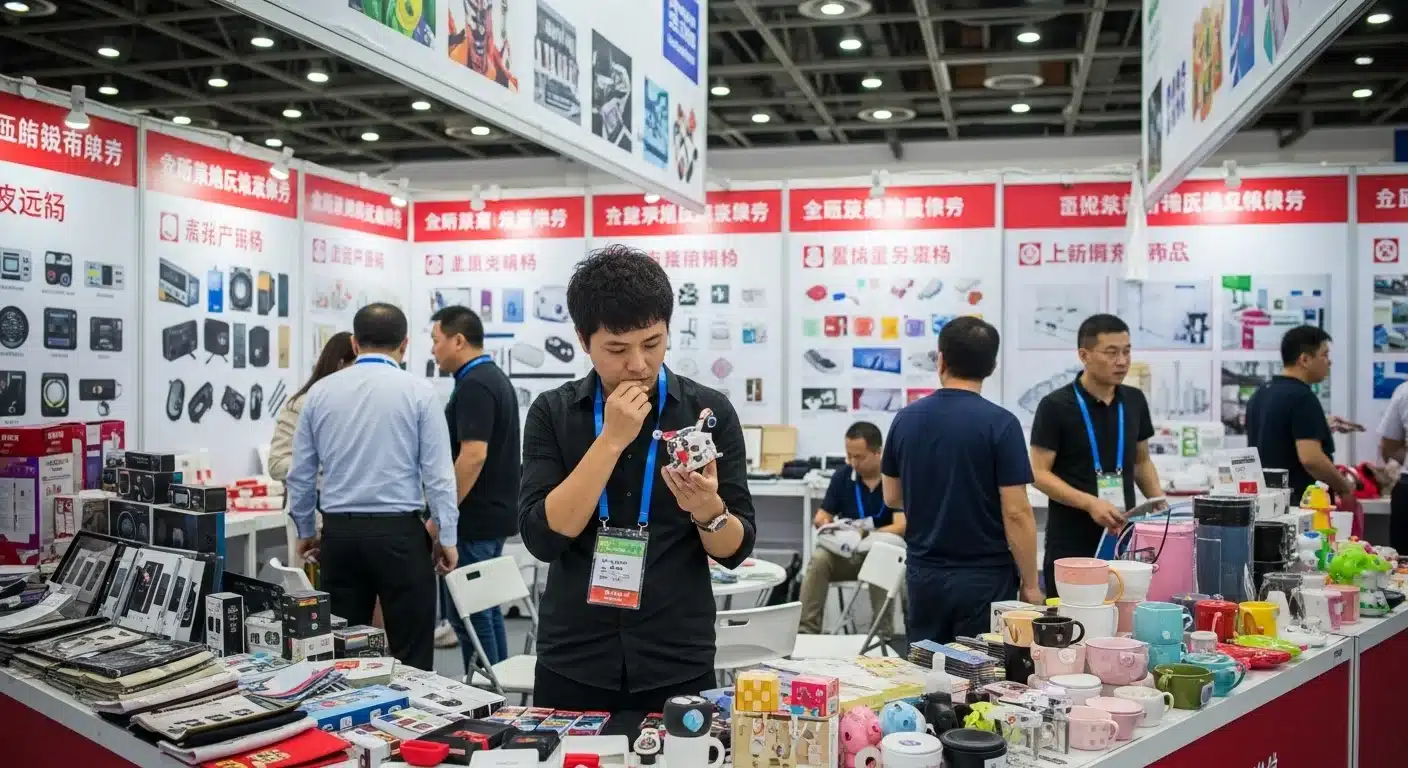
Electronics are one of many categories — see the full Yiwu product categories guide, and for the full buying process start with our complete Yiwu sourcing guide.
Why Yiwu for Electronics and Gadgets
Yiwu is strong for high-volume consumer electronics accessories — phone cases, cables, chargers, LED lights, small Bluetooth audio and novelty gadgets — at low minimums and fast trend turnover. For complex or high-spec electronics, a Shenzhen factory cluster has deeper engineering, but for accessory-grade gadgets in variety, Yiwu wins on price and breadth. The catch is that even a cheap gadget is a regulated electrical product.
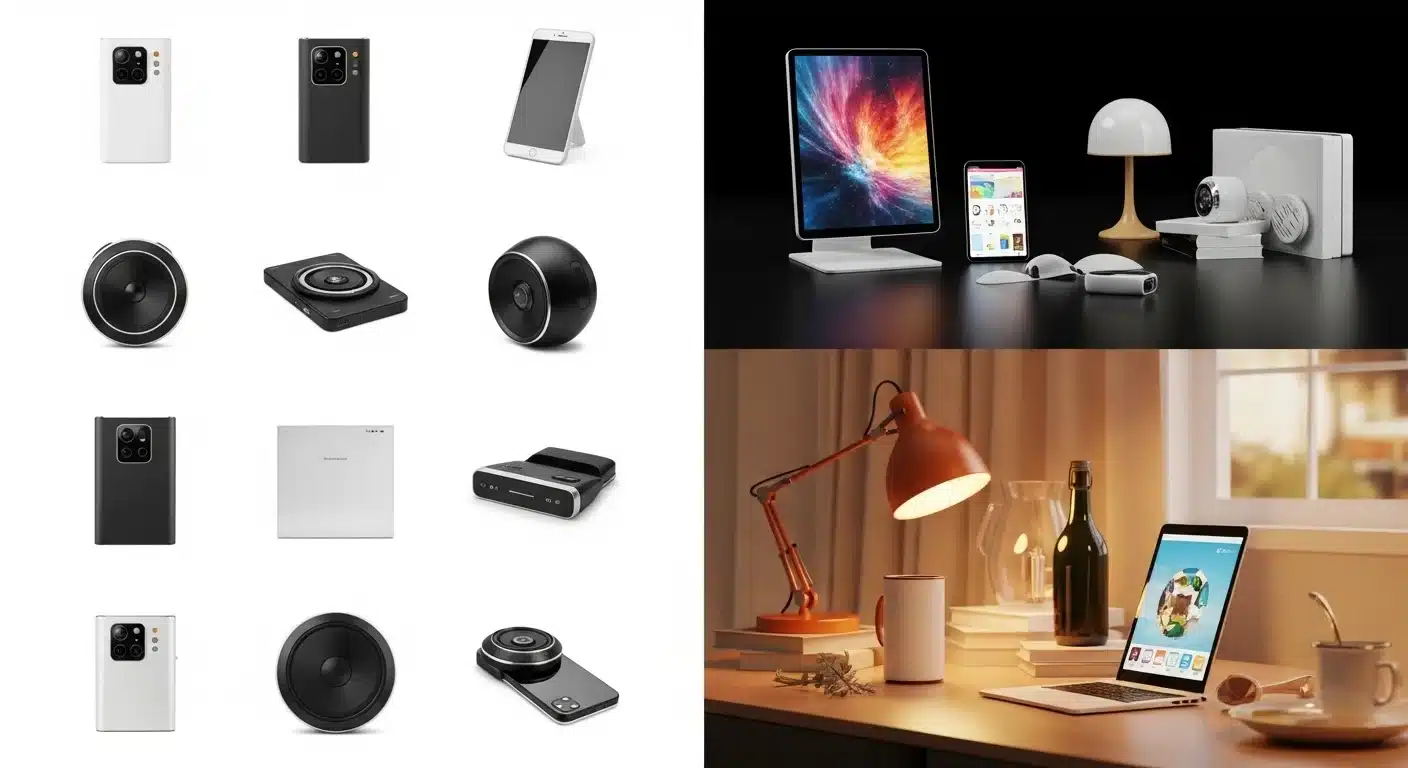
What Electronics You Can Source
Certification and Battery Rules
Electronics compliance is strict and varies by market, so confirm with a testing lab. A US-bound radio device needs an FCC ID you can verify yourself at fccid.io — no record means it is not compliant. EU-bound devices need CE plus RoHS. The bigger gate is batteries: any lithium cell needs a valid UN38.3 test summary, an MSDS and a Dangerous Goods declaration to ship, and cells over 100Wh move as Class 9 dangerous goods on cargo aircraft only.
Most freight forwarders are not certified for lithium dangerous-goods cargo. Confirm the battery paperwork and a DG-capable forwarder before you pay the deposit, or the booking dies at the warehouse.
Electronics at a Glance
| Product | Certification Needed | Battery? | Typical MOQ | Key QC Point |
|---|---|---|---|---|
| Phone cases/cables | RoHS; FCC for active | No / small | 100-1,000 pcs | Fit + continuity test |
| Chargers/power banks | FCC/CE, UN38.3 | Yes | 500-2,000 pcs | Capacity + safety test |
| Bluetooth audio | FCC/CE, UN38.3 | Yes | 500-2,000 pcs | Function + battery test |
| LED gadgets | CE/RoHS | Sometimes | 500-2,000 pcs | Voltage + burn test |
MOQ and Pricing
Stock accessories start with low minimums, but anything custom, branded or battery-powered pushes minimums toward 1,000-3,000 units and adds certification time and tooling. Price moves on component quality and certification; a certified charger costs more than an uncertified one, and that difference is the difference between selling it and having it seized or recalled.
What We Check on an Electronics Supplier
Quality and Compliance Pitfalls
The classic electronics failure is a sample that works and a bulk run with a cheaper chip, a smaller battery, or a borrowed certificate that does not match the product. Verify the FCC ID yourself, get the certification tied to your exact model, and inspect and function-test the bulk. A supplier who supplies a certificate for a similar but different product is handing you a customs problem.
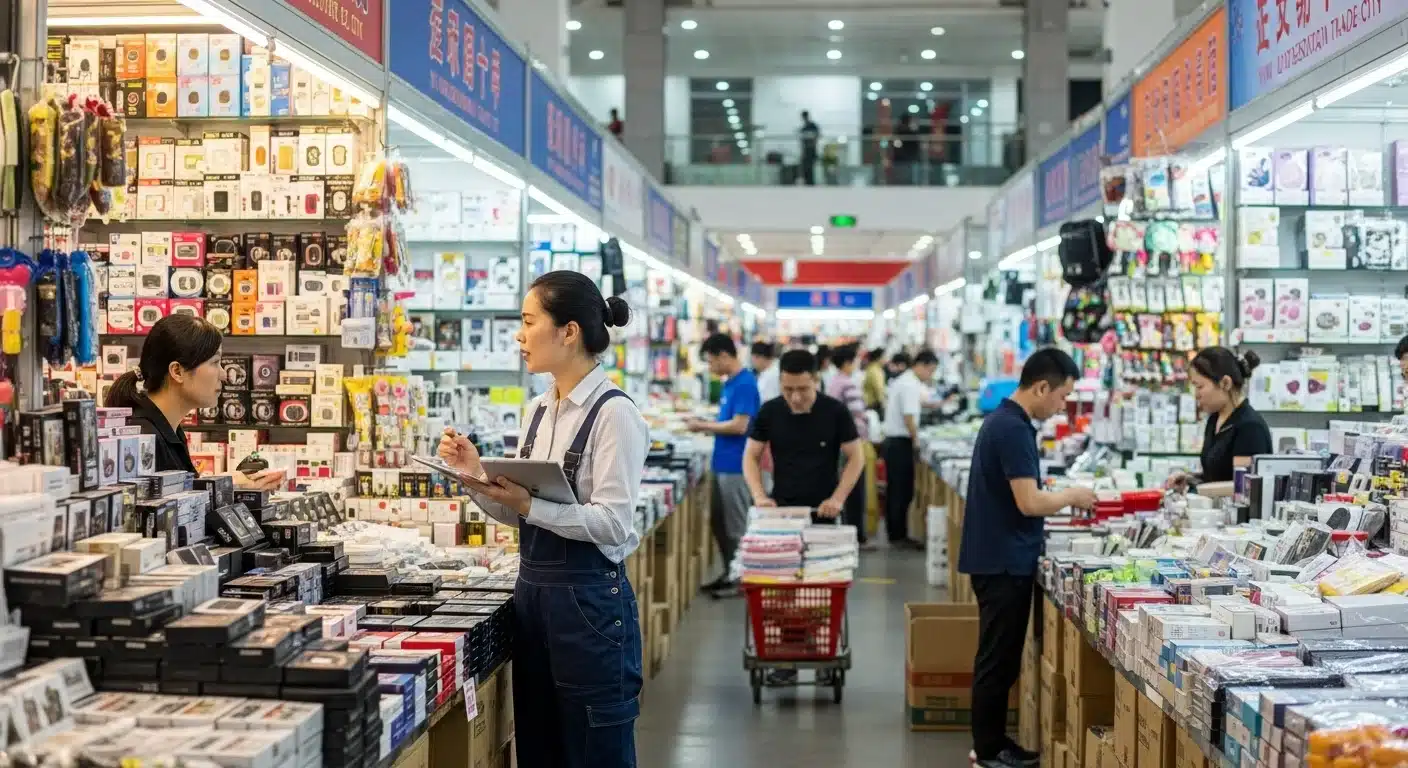
Electronics demand inspection and document checks — see our Yiwu quality inspection guide before you pay the balance.
Battery Shipping Tiers
If your gadget has a battery, the shipping rules change with its watt-hour rating, and getting this wrong strands the order at the warehouse.
| Battery / product | Shipping treatment | What you need |
|---|---|---|
| Small cells (under 100Wh) | Restricted but widely shippable | UN38.3, MSDS, proper packing |
| Cells over 100Wh | Cargo Aircraft Only, Class 9 | UN38.3, DG declaration, DG forwarder |
| Loose/spare batteries | Tightest air rules | Separate packing, low charge state |
| No battery | Standard | RoHS / FCC as applicable |
Custom Branding, Tooling and OEM
Custom electronics raise both cost and lead time. A branded case or a printed logo is quick, but a custom housing or PCB needs tooling that runs from hundreds to thousands of dollars and 30-45 days before the first run, and re-certification if you change the electronics. For a first launch, brand a stock, already-certified product rather than tooling a new one, and reserve custom development for SKUs you have validated.
Common Electronics Sourcing Mistakes
- Trusting a supplier’s certification claim without verifying the FCC ID at fccid.io.
- Accepting a certificate for a similar but different model.
- Booking a general forwarder for lithium batteries instead of a DG-capable one.
- Skipping a function test on the bulk run.
- Tooling a custom product before validating demand on a stock one.
How to Verify an FCC ID and Certification
The fastest way to separate a compliant electronics supplier from a risky one is to verify the certification yourself, and for US-bound radio devices that means the FCC ID. Ask for the FCC ID printed on the device or its label, then look it up at the public fccid.io database; a genuine grant shows the test reports, the applicant, and photos of the certified product. If nothing comes up, or the photos show a different device, the product is not compliant for the US, full stop — no supplier reassurance changes that. For the EU, ask for the CE Declaration of Conformity and RoHS documentation, and confirm they reference your exact model.
Certification fraud usually takes one of two forms: a borrowed certificate from a similar product, or a premium sample certified while a cheaper version ships. Defend against both by tying every document to your exact model and serial range, verifying the FCC ID independently, and function-testing the bulk run rather than the golden sample. Pair that with the battery paperwork — a valid UN38.3 summary and a dangerous-goods-capable forwarder — and you have closed the two gaps that strand most electronics orders at the port.
- The FCC ID looked up and matched at fccid.io.
- CE Declaration of Conformity and RoHS for EU goods.
- Every document tied to your exact model and serial range.
- A function test on the bulk run, not just the sample.
- Battery UN38.3 summary and a DG-capable forwarder confirmed.
Example: Launching a Bluetooth Speaker
A seller launching a branded Bluetooth speaker starts with certification, not price. They confirm the FCC ID on the candidate product at fccid.io, check that the photos and applicant match, and request the CE Declaration of Conformity and RoHS for the EU version. Because the speaker has a lithium battery, they get the UN38.3 summary and an MSDS, and line up a dangerous-goods-capable forwarder before paying anything. Rather than tool a custom housing on launch, they brand an already-certified stock model, function-test the bulk run against the approved sample, and only consider custom tooling once the product sells. The result is a compliant launch that clears customs the first time, instead of a cheaper unit stranded at the port.
The launch worked because certification and the battery paperwork were verified before negotiation — the two gaps that strand most electronics orders.
Заключение
Yiwu electronics and gadgets sourcing is a certification game first. Verify the FCC ID, confirm CE/RoHS and UN38.3, line up a DG-capable forwarder, and function-test the bulk. Sort the paperwork before you negotiate price, because a cheap gadget you cannot legally import is not cheap.
Часто задаваемые вопросы
Is Yiwu good for sourcing electronics?
Yes for accessory-grade consumer electronics — phone accessories, cables, LED, small audio and gadgets — at low minimums. For high-spec or complex electronics, Shenzhen has deeper engineering.
Do Yiwu electronics need FCC or CE certification?
Usually. US-bound radio devices need an FCC ID you can verify at fccid.io, and EU-bound devices need CE plus RoHS. Get the certificate tied to your exact model.
Can I ship gadgets with batteries from Yiwu?
Only with the right paperwork. Lithium batteries need a UN38.3 summary, an MSDS and a Dangerous Goods declaration, and a DG-capable forwarder. Confirm these before paying a deposit.
What is the MOQ for Yiwu electronics?
Stock accessories start low; custom, branded or battery-powered electronics often require 1,000-3,000 units plus certification and tooling time.
About the author: Written by the ChineseYiwu Sourcing Team — based inside the Yiwu International Trade City since 2005, with 50+ sourcing specialists and QC inspectors serving importers in 100+ countries.