 Джастин
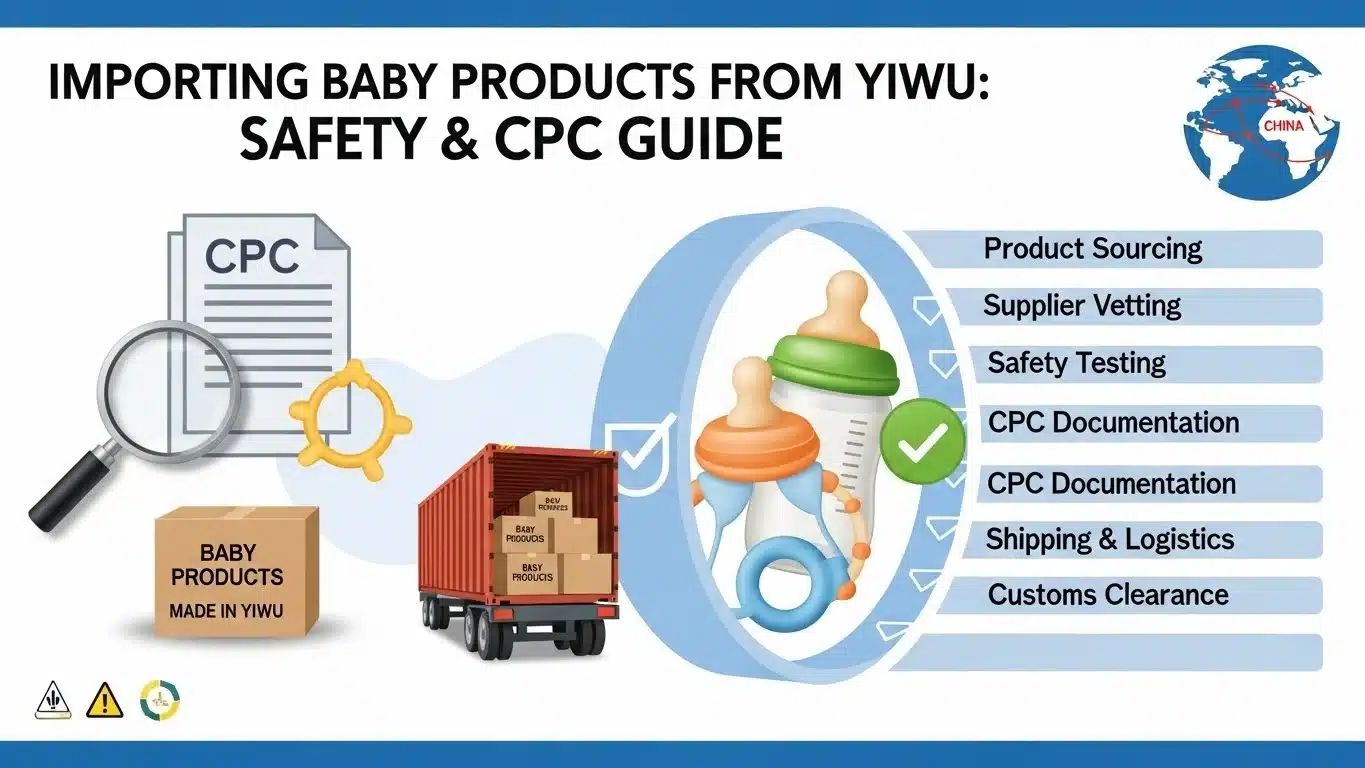
Yiwu baby and maternity products sourcing spans clothing, toys, feeding gear, nursery items and travel accessories from a deep, low-MOQ market — but it is the single most regulated category a new importer can touch. Everything a baby wears, mouths, or sleeps in carries strict safety rules in every Western market, and the market hands you the product, not the compliance file. Get the paperwork wrong and a container of adorable baby goods becomes a customs seizure or, worse, a recall.
Key Takeaways
- Yiwu covers baby clothing, toys, feeding, nursery and travel gear at low MOQ.
- Baby products are the most heavily regulated category — CPSIA in the US, EN 71 in the EU.
- Anything for children needs third-party testing and a Children’s Product Certificate.
- Small parts, phthalates, lead and flammability are the recurring failure points.
- Stock items start low; custom and branded runs raise the minimum and lead time.
- Test every baby SKU from samples before you place a bulk order.
Baby is one of many categories in the market — see the full Yiwu product categories guide, and for the buying process start with our complete Yiwu sourcing guide.
Why Yiwu for Baby and Maternity Products
Yiwu’s baby ranges are broad and cheap, covering apparel, plush and developmental toys, bottles and feeding sets, bibs, blankets, nursery decor and stroller accessories. It suits online sellers and variety retailers who want a wide baby catalog at low minimums rather than one deeply engineered product. The category’s strength is variety and price; its discipline is compliance, because no other category is scrutinized harder at customs or by marketplaces like Amazon.
What Baby Products You Can Source
- Baby clothing: bodysuits, sleepwear — flammability and fibre rules apply.
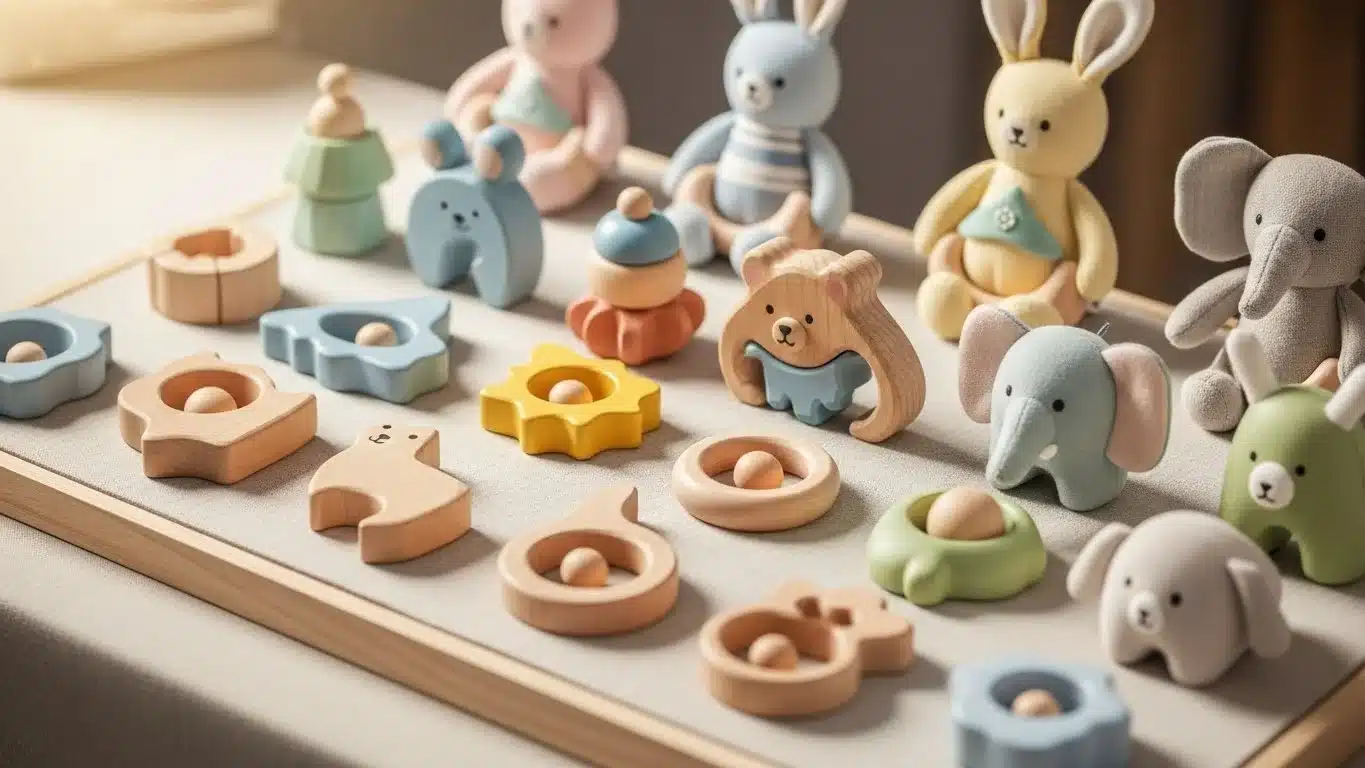
- Toys: plush, teethers, developmental — small-parts and material testing.
- Feeding: bottles, bibs, plates — food-contact and BPA rules.
- Nursery: bedding, blankets, decor — flammability and lead.
- Travel and gear: carriers, stroller accessories — structural safety.
Baby Product Compliance: The Non-Negotiables
Baby compliance varies by product and market, and the stakes are high, so confirm current rules with a testing lab or your customs broker before you order. In the US, most items for children 12 and under fall under CPSIA, which requires third-party lab testing, a tracking label, and a Children’s Product Certificate; it also caps lead in coatings at 90 ppm and bans eight phthalates above 0.1%. Toys must meet ASTM F963 in the US and EN 71 for CE marking in the EU. Sleepwear faces flammability standards, and cribs and bedding have their own dedicated rules.
| Product | Key US Rule | Key EU Rule | Core Risk |
|---|---|---|---|
| Игрушки | CPSIA + ASTM F963 | EN 71 (CE) | Small parts, chemicals |
| Clothing/sleepwear | 16 CFR flammability | EN 14682 (cords) | Flammability, drawstrings |
| Feeding items | FDA food-contact | EU 10/2011 | BPA, migration |
| Nursery/bedding | CPSIA + crib rules | EN standards | Lead, flammability, suffocation |
An adorable plush with glued-on eyes and no CPC is a recall and a customs hold in one. For baby goods, the test report and certificate are not optional paperwork — they are the product.
Baby Products at a Glance
| Product | Common Material | Compliance Risk | Typical MOQ | Key QC Point |
|---|---|---|---|---|
| Plush/teethers | Plush, silicone, TPE | Small parts, non-toxic | 100-1,000 pcs | Pull test + material test |
| Baby clothing | Cotton, bamboo | Flammability, dyes | 100-500 pcs | Fibre + colorfastness |
| Bottles/feeding | PP, silicone, glass | BPA, food-contact | 500-2,000 pcs | Migration + leak test |
| Bedding/blankets | Cotton, polyester | Flammability, lead | 100-500 pcs | Fill + flammability |
MOQ and Pricing
Stock baby items start with low minimums, but custom prints, branded packaging, and anything requiring a fresh test report push minimums toward 500-2,000 units and add 30-45 days of lead time plus testing. Price moves on material grade and, above all, whether the supplier already holds valid test reports — a certified baby product costs more than an uncertified one, and that gap is the difference between selling it and having it destroyed at the border. Budget the lab fees from day one.
What We Check on a Baby Supplier
- License name matching the invoice and bank account.
- Whether the supplier holds valid, current third-party test reports for your market.
- A small-parts and pull test on toys and anything with attached components.
- Non-toxic material testing (phthalates, heavy metals) on mouthed items.
- An AQL inspection against the approved sample before the balance is paid.
Safety Pitfalls
The classic baby failure is a certified sample and an uncertified bulk run, or a certificate that belongs to a different product. Verify that every test report references your exact SKU and material, lock the approved sample, and inspect the bulk against it. Small parts that pass on the sample can appear when a supplier swaps a cheaper component, so a pull test on the production run is non-negotiable. When in doubt on a baby product, do not ship it — the cost of a recall dwarfs the cost of a re-test.
Baby products live and die on inspection — see our Yiwu quality inspection guide for the AQL process before you pay the balance.
How to Vet a Baby Product’s Test Report
With baby goods, the test report is the deal — so learn to read it rather than trust a stamp. Ask for the third-party lab report and confirm it names your exact product and material, not a similar item; a certificate for a different SKU is worthless and disturbingly common. Check that the report tests against the right standard for your market — CPSIA plus ASTM F963 for US toys, EN 71 for CE in the EU — and that it covers the specific hazards your product carries: small parts, lead and phthalate content, and flammability where relevant. An accredited lab and a recent date matter; an old report on a re-tooled product is not proof.
Then validate the physical sample against that report. Pull-test any attached part — eyes, buttons, squeakers — because a component that passes on the golden sample can detach when a supplier swaps a cheaper part in bulk. Lock the approved, tested sample as your inspection standard and inspect the production run against it before releasing the balance. If a supplier cannot provide a matching, current report, treat it as a hard stop; re-testing costs a fraction of a recall.
- A third-party lab report naming your exact SKU and material.
- The correct standard for your market (CPSIA/ASTM F963, or EN 71/CE).
- Small-parts, lead, phthalate and flammability results as applicable.
- An accredited lab and a recent test date.
- A pull test on the bulk run, not just the sample.
Packaging and Labeling for Baby Goods
Baby packaging carries legal weight, not just branding. Many markets require a tracking label on children’s products, age grading and warnings (small parts, suffocation), and clear care or usage instructions. Suffocation warnings on plastic packaging and cord-length limits on anything near a crib are common requirements. Agree the exact label and packaging artwork in writing before production, and confirm it prints correctly on the sample — a missing warning label can hold a compliant product at customs just as surely as a failed test.
Example: Launching a 10-SKU Baby Line
Here is how a careful first baby order runs. A seller building a 10-SKU baby line shortlists suppliers who already hold current test reports, then requests those reports and confirms each names the exact SKU and material. Samples are sent for small-parts, phthalate and lead screening where relevant, and toys are checked against ASTM F963 or EN 71. The seller pull-tests every attached part, locks each approved sample, and places the order at 30% deposit. Before the 70% balance, an inspector checks the bulk against the samples at AQL Level II and re-runs the pull test on the production run. Only compliant, inspected goods ship — and the tracking labels and warnings are verified on the sample first.
The order worked because compliance came first: reports tied to the SKU, samples tested, and a pull test on the bulk — not a scramble for certificates after the goods were made.
Заключение
Yiwu baby and maternity sourcing rewards importers who treat compliance as the product, not an afterthought. Confirm test reports for your market, verify small parts and materials, and inspect the bulk. Do that and Yiwu delivers a wide, affordable baby range; skip it and you import a recall waiting to happen.
Часто задаваемые вопросы
Is Yiwu good for sourcing baby products?
Yes for variety and low minimums across clothing, toys, feeding and nursery items. The real work is compliance — CPSIA and testing in the US, EN 71 and CE in the EU — not finding suppliers.
Do baby products from Yiwu need testing?
Almost always. Items for children 12 and under typically need third-party lab testing and a Children’s Product Certificate in the US, and EN 71 compliance for CE marking in the EU. Test from samples before bulk.
What is the MOQ for Yiwu baby products?
Stock items often start from 100-500 pieces; custom prints, branded packaging or fresh test reports raise the minimum toward 500-2,000 and lengthen lead times.
Why do baby products get seized at customs?
Usually a missing or mismatched test report, uncertified materials, or small-parts hazards. Ensure every certificate names your exact SKU and inspect the bulk against the approved sample.
About the author: Written by the ChineseYiwu Sourcing Team — based inside the Yiwu International Trade City since 2005, with 50+ sourcing specialists and QC inspectors serving importers in 100+ countries.