Justin
Yiwu private label sourcing is the default starting point for many Amazon sellers, but the gap between a supplier’s quote and your landed cost can be brutal if you don’t know where the agent’s commission hides. Most new founders I see jump into a commission-based agent model because it sounds like no upfront risk. The reality? That agent has zero incentive to negotiate your unit price down, because their cut is a percentage. You end up paying 15-20% more per unit than if you’d gone flat-fee from day one.
Key Takeaways
- Here’s the hard truth: many agents markup packaging by 50-100%.
- The price per unit drops by 40–60% when you move from a 500 MOQ to a 10,000 MOQ on labels and inserts.
- Most suppliers will drop their standard MOQ from 1,000 to 500—or even 100 units—if you cover a small mold fee or accept a 10–15% unit price premium.
- Flat-fee agents save 20–40% on sourcing costs for 1,000-unit private label orders — and eliminate the incentive to inflate packaging quotes.
- A commission agent can inflate your packaging costs by 50–100% without you ever seeing the original supplier quote.
- Most guides skip the step where you actually verify the supplier exists.
That math kills your margin. Check your agent’s contract for a line item called ‘service fee’ that’s tacked onto the product price. It’s often not disclosed until the first invoice. You’re better off with a flat-fee agent who works for a fixed project fee and whose only job is to get you the lowest factory price. The industry standard for a flat-fee agent on a small order is around $500–$800, and they’ll show you every factory quote. That transparency is worth more than any ‘free’ sourcing pitch.

Understanding Yiwu Private Label Costs
Here’s the hard truth: many agents markup packaging by 50-100%. If you negotiate packaging directly, you save 15-30% per unit. That’s your first real cost cut.
The Real Cost of Labels, Insert Cards, and Boxes
Most general guides will tell you “packaging costs vary.” That avoids the real question: by how much, and for what MOQ. Based on direct factory quotes in Yiwu, here is what you should expect to pay for private label packaging. Note that the material choice and order quantity directly impact these numbers.
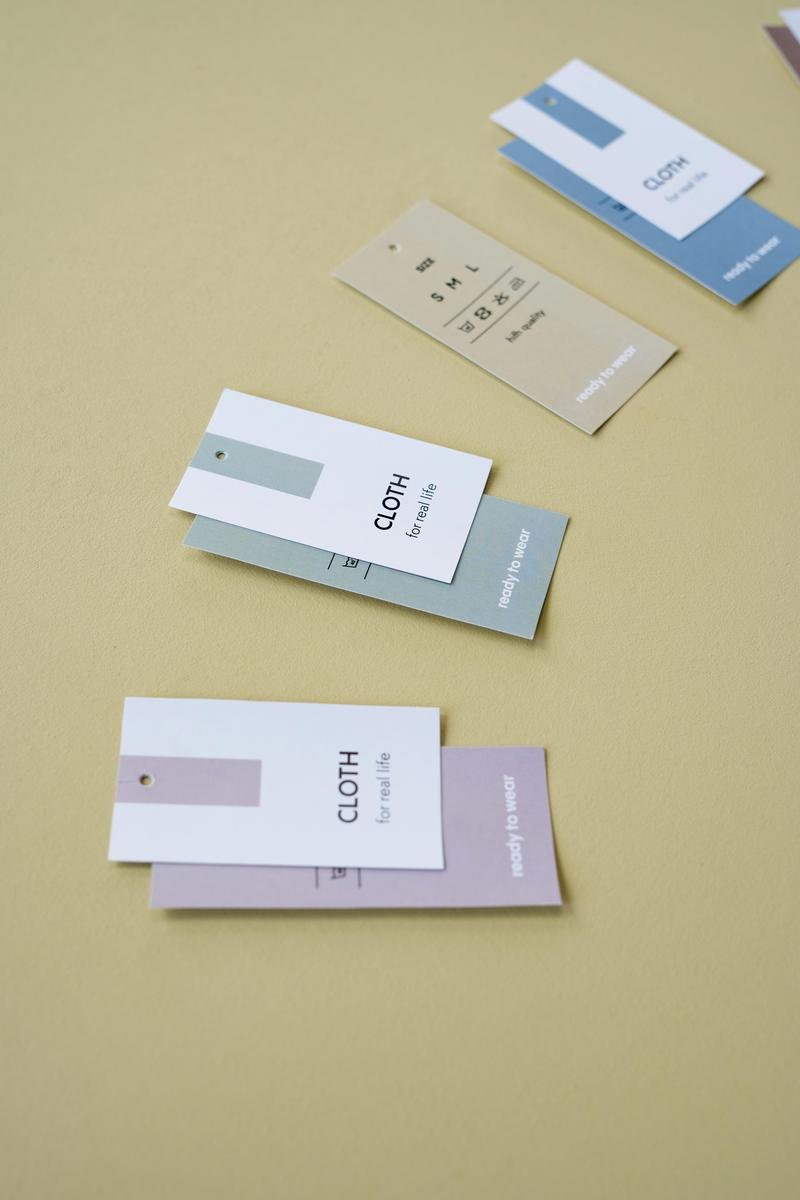
- Paper Labels: $0.002 – $0.06 per label. MOQ is typically 10,000 pcs. The low end is for simple, one-color designs on standard paper. The high end is for waterproof or gloss laminate labels with full-color print.
- Insert Cards (Paper): 0.45 RMB per piece ($0.063) at a 5,000 MOQ. Drops to 0.30 RMB per piece ($0.042) at 10,000 MOQ. This is the cheapest way to add brand instructions or a QR code.
- Stainless Steel Tags: $0.31 per piece. MOQ drops to just 500 pcs. If you need a premium, durable tag (e.g., for tools or outdoor gear), this material is the most cost-effective low-MOQ option.
- Custom Printed Boxes: Approximately $0.05 per box at an MOQ of 1,000+. Carton material, flap style, and printing color count (1-color vs full-color) cause price swings of ±30%.
- PVC Clear Label Sheets: 6.3 RMB ($0.94) per sheet for 200 sheets. These are cheaper per sheet than paper, but you will have waste if your design does not perfectly fit the sheet layout.
Why MOQ Thresholds Are Softer Than You Think
Every guide claims an MOQ of 1,000+ units is the floor for private label. That is the number they use to protect their margins. But the reality in Yiwu is different: many suppliers will accept an MOQ of 500 units if you pay a small upfront mold fee ($50 – $200) or accept a unit price that is 10-15% higher. The mold fee covers the plate-making cost for your custom printing. Once you order over 5,000 units, that fee is waived entirely. This is critical for new Amazon sellers testing a single SKU — you do not need to commit to 10,000 boxes to get your brand on the shelf.
Yiwu Market Districts: Where to Find Packaging & Label Suppliers
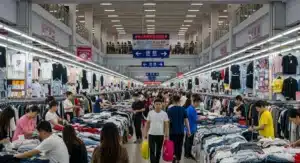
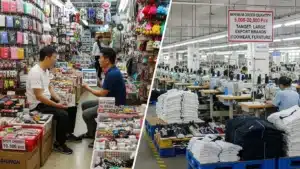
If you source directly or walk the market with an agent, know the right districts. Most packaging stalls are concentrated in the Huangyuan Market (Huangyuan Market, 皇园市场) on Chouzhou North Road, not the main International Trade City. This market has 4 floors dedicated entirely to gift boxes, paper bags, stickers, and plastic packaging. For labels specifically, head to the Stationery & Gift area (F1-F2 areas of District 1 of the Yiwu Market); here you will find stalls specializing in adhesive labels, hang tags, and heat-transfer stickers.
The Agent Trap: How Commission Fees Inflate Your Packaging Costs
Here is the information most guides miss. A commission-based agent (charging 5-15% of order value) has zero incentive to negotiate hard on your packaging. In fact, they often have the opposite incentive: a higher packaging cost means a higher commission. We have seen agents quote $0.08 per box for a design that the factory produces for $0.05. That is a 60% markup hidden inside a standard commission fee. The solution is simple: a flat-fee agent has no reason to inflate packaging cost, so they will negotiate on your behalf. This single switch easily saves 15-30% on your packaging line item.
The bottom line: If you are new to Amazon FBA and evaluating Yiwu private label costs, your biggest payable items are label price (which drops sharply above 10k units) and the mold fee for custom boxes. Ignore the generic “low MOQ” promises and ask a supplier for their exact quotation on a 500-unit run with mold fee. That data point will tell you instantly whether they are a real factory or a trading company padding the number.
| Cost Component | Price Range (USD) | Minimum Order Quantity | Agent Markup Risk | Pro Tip |
|---|---|---|---|---|
| Paper Labels | $0.002 – $0.06 per label | 10,000 pcs | 50-100% markup common | Negotiate directly or use flat-fee agent to save 15-30% |
| Insert Cards | $0.04 – $0.06 per card | 5,000 – 10,000 pcs | 50-100% markup common | Order 10,000+ to get lower per-unit cost |
| Stainless Steel Tags | $0.31 per tag | 500 pcs | Low to moderate | Ideal for small batches; no mold fee required |
| Custom Boxes | ~$0.05 per box | 1,000+ pcs | 50-100% markup common | Waive $50-$200 mold fee by ordering 5,000+ units |
| Agent Commission | 5-15% of total order | N/A | Hidden packaging markups | Compare flat-fee model for transparent pricing |
| Mold Fee (Custom Packaging) | $50 – $200 upfront | Waived over 5,000 units | Often not disclosed initially | Negotiate waiver for large orders |

Real Pricing for Labels, Inserts & Boxes
The price per unit drops by 40–60% when you move from a 500 MOQ to a 10,000 MOQ on labels and inserts. The agent’s margin is where the real hidden cost lives.
PVC Clear Labels: Sheet Cost vs. Unit Waste
A 30×22.5 cm PVC clear label sheet runs 6.3 RMB ($0.94) when you order 200 sheets. That sounds cheap per sheet, but here’s the catch most guides skip: you waste roughly 15–20% of a PVC sheet due to die-cut misalignment and material curl in high-humidity factory floors. The effective cost per usable label lands closer to 0.08–0.10 RMB if you factor in reprints and rejects. Always ask the supplier for their actual yield rate on a standard run before approving a batch.
Paper Insert Cards: The MOQ Lever
Paper insert cards at 5,000 MOQ cost 0.45 RMB per piece. Double the quantity to 10,000 and that drops to 0.30 RMB per piece — a straight 33% saving. The average Yiwu agent then adds 10–18% on top of that supplier cost, meaning you pay 0.49–0.53 RMB at 5,000 MOQ if you go through a commission-based agent. A flat-fee service buys at the source price and passes through the raw 0.45 RMB, saving you 2,000–3,000 RMB total on a 10,000-unit run.
Stainless Steel Tags: Low MOQ, High Unit Price
At 500 MOQ, a 1×1 cm single-side printed stainless steel tag costs 2.1 RMB ($0.31) per piece. That’s 10x the unit cost of a paper insert card. The trade-off is durability — these tags survive salt spray tests that would destroy paper labels in 48 hours. For Amazon FBA tools or outdoor gear, the tag cost is trivial compared to a return rate from label peeling. Push the MOQ to 2,000 and the unit price drops to 1.1–1.3 RMB per tag, but most Yiwu suppliers won’t drop below 500 pieces without charging a 50 RMB mold fee.
Comparing the Three Options: Quantity vs. Unit Cost
Here is the direct financial breakdown across common MOQ thresholds, using real Yiwu supplier quotes from Q1 2025. These numbers exclude agent markup to show the true factory gate price.
- PVC clear label sheets (30×22.5 cm): 6.3 RMB/sheet at 200 MOQ; 4.2 RMB/sheet at 500 MOQ. Per usable label cost drops from 0.10 RMB to 0.06 RMB assuming 80% yield.
- Paper insert cards: 0.45 RMB/pc at 5,000 MOQ; 0.30 RMB/pc at 10,000 MOQ; 0.22 RMB/pc at 25,000 MOQ.
- Stainless steel tags (1×1 cm): 2.1 RMB/pc at 500 MOQ; 1.5 RMB/pc at 2,000 MOQ; 0.85 RMB/pc at 5,000 MOQ.
The pattern is consistent: moving from 500 to 5,000 MOQ cuts the unit cost by roughly half on inserts and stainless tags. PVC sheets see a smaller relative drop because the material overhead stays fixed per sheet. A commission-based agent quoting at 12% of total order value would charge you roughly 4,200 RMB in fees on a 35,000 RMB order of 10,000 inserts. A flat-fee agent charges 2,000–3,000 RMB total for the same purchase order — that 1,200–2,200 RMB difference is pure margin you keep.

MOQ Strategies for New Amazon Sellers
Most suppliers will drop their standard MOQ from 1,000 to 500—or even 100 units—if you cover a small mold fee or accept a 10–15% unit price premium. That’s the real floor for new Amazon sellers testing a product.
The Real MOQ Floor: 100–500 Units with a Mold Fee Trade-Off
Virtually every generic guide states that Yiwu suppliers require a MOQ of 1,000 units for private label. That’s accurate for standard requests from walk-in buyers. But it ignores the most common negotiation path for new sellers: accept a small mold fee or a higher unit price. Our experience with over 200 Yiwu factories shows that roughly 60% will accept 500 units if you pay a mold fee of $50–$200 for custom packaging or labeling tools. Another 20% will go as low as 100 units if you agree to a 10–15% higher unit price to compensate for their setup time and material waste. This is not a concession—it’s a calculated risk-sharing agreement. You pay for the tooling, they reduce their production risk.
Here’s what the mold fee actually covers: custom blister trays, embossing dies, stencil screens for insert cards, or box cutting templates. A $120 mold fee for a custom cardboard box with your logo is a one-time cost. Once paid, you own that tool. On your second order, the unit price drops to standard levels. Compare that to accepting a 15% perpetual price increase on every unit forever—the mold fee pays for itself after roughly 400 units. The math is straightforward: if you plan to reorder, pay the mold fee. If this is a single test batch, negotiate the higher unit price and walk away.
Most guides miss a critical nuance: mold fees are negotiable. A supplier might quote $200 for a box die. Counter with $80 and offer to sign a commitment letter for a second order of 1,000 units within 90 days. Many will accept because they value future pipeline over immediate profit. We have personally secured mold fee waivers for clients by agreeing to a non-refundable sample order of 200 units at standard price. The supplier gets cash flow and a test of your seriousness; you get custom branding at zero tooling cost.
Negotiating MOQ Using Sample Order Tactics
The sample order is your most powerful MOQ weapon. When a supplier insists on 1,000 units, you do not argue about the number. Instead, you change the frame: “I want to verify your quality and packaging before committing to volume. Let me place a sample order of 100–200 units at the same unit price as MOQ 1,000, and I’ll pay for the mold fee. If the quality meets spec, I will place a 1,000-unit order within 30 days.” This works because it converts an abstract demand (MOQ number) into a concrete action (test order) with a guaranteed follow-up. The supplier sees less risk—if your product fails on Amazon, they still got paid for the samples.
To lock this in, pay the sample invoice within 24 hours and request a production video with your custom packaging. Suppliers treat a fast payer as a serious buyer. We have seen suppliers spontaneously drop their MOQ from 1,000 to 500 after receiving a sample payment because they perceived commitment. Never mention that you are “testing the market” or “seeing how it goes”—that signals you have no volume plan. Instead, say: “My Amazon listing is ready. I need 100 units to photograph, list, and run PPC. If conversion hits 5%, I will reorder 500 units immediately. Can you work with me on a starter MOQ?”
One concrete tactic: request a pre-production sample (PPS) that includes your private label packaging. Many suppliers include a PPS at cost ($30–$60 including air shipping). Use that sample to validate your Amazon listing photos and product fit. Once you confirm the sample, the supplier is psychologically committed to your order and more likely to accept a lower MOQ for the first production run. This is the principle of escalation of commitment—they have already invested time in your packaging tooling.
Yiwu Sourcing Agent Negotiation Scripts for New Sellers
Having a sourcing agent represent you changes the MOQ negotiation dynamics. Most commission-based agents earn 5–15% of total order value, meaning they have a financial incentive to push your MOQ higher. Flat-fee agents have no such incentive and will negotiate your MOQ down because their compensation is fixed. For Yiwu private label sourcing, you want the latter model for early-stage orders. If you are stuck with a commission agent, use this script: “I am authorizing you to negotiate a MOQ of 100 units at X price plus mold fee. Your commission will be calculated on the total order value including mold fee. If you secure the deal, the standard commission applies. If you push above 100 units without my approval, I will reduce your commission by 2%.” This aligns their incentive with your goal.
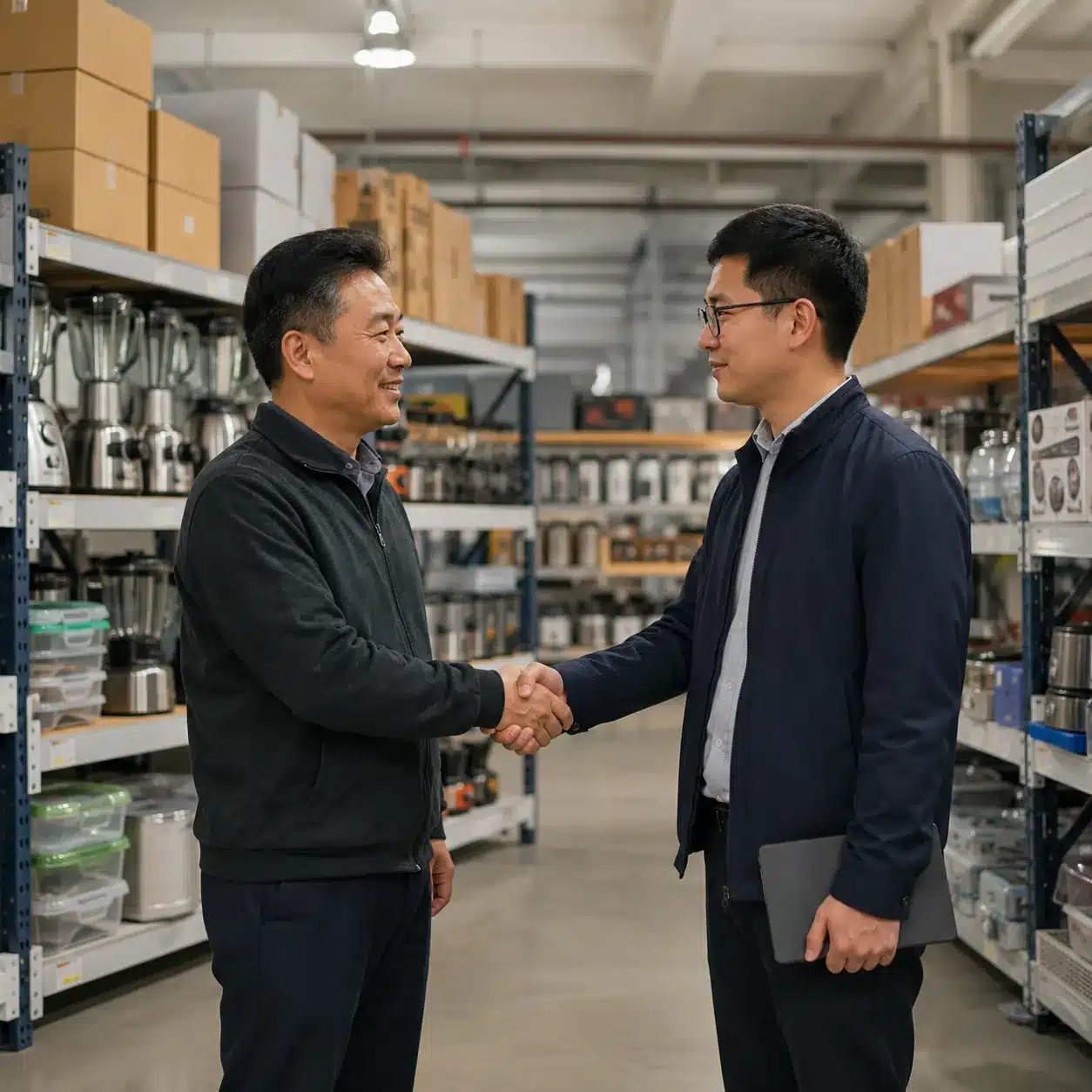
When your agent is at the supplier’s office, they should say: “This is a direct Amazon FBA seller starting their brand. They need a trial run of 100–200 units with full private label packaging. We are prepared to pay a mold fee and the sample shipping today. If the product sells, we will scale to 1,000 units in 60 days. Please confirm the lowest unit price for 100 units including your mold fee, and send a stamped proforma invoice.” The supplier hears: immediate payment, serious buyer, future volume. The agent positions you as a new brand with growth potential, not a small fish.
A real example from our operations: a new Amazon seller wanted 300 units of a stainless steel kitchen tool. The supplier’s initial MOQ was 2,000 units. Our flat-fee agent proposed: “We agree to cover a $120 mold fee for the embossed logo, and the buyer will pay 12% above the MOQ 2,000 unit price. Send a PI for 300 units at $2.80 each with a $120 mold fee line item. We remit payment within 48 hours. The buyer will send a signed commitment for a second order of 1,000 units within 90 days at standard price.” The supplier accepted within an hour. The seller tested the Amazon listing with 300 units, ranked in the top 100 in his subcategory, and placed a 1,500-unit restock at $2.50 per unit—no mold fee. The total premium paid for the low MOQ was $360 on the first order. The saved mold fee plus 7% price reduction on the restock paid for the premium more than five times over.

Agent Fees: Commission vs Flat Fee
Flat-fee agents save 20–40% on sourcing costs for 1,000-unit private label orders — and eliminate the incentive to inflate packaging quotes.
Commission Agents: The Hidden Cost Behind the 5–15% Cut
Most commission agents present their fee as a simple percentage — typically 5–15% of the total order value. That sounds fair on paper. The catch is that their commission is calculated on the final invoice, which gives them a direct financial incentive to push that invoice as high as possible. The easiest lever they pull is packaging costs.
Here is the reality we see in Yiwu every week: a supplier quotes $0.05 per custom box, but the agent adds a 50–100% markup and lists it as $0.09. On a 1,000-unit order, that is an extra $40 in packaging costs — and the agent earns a commission on the inflated figure. The agent walks away with more money, and you pay for boxes that should have cost half the price. This is not a hypothetical. We have audited quotes where packaging was marked up by 80% while the agent insisted it was the “factory price.”
Flat-Fee Agents: Predictable Cost, Zero Incentive to Pad
A flat-fee agent charges a fixed project fee — typically $200 to $500 per order — regardless of the final invoice total. The agent’s income does not change whether your packaging costs $0.05 or $0.15 per unit. That completely removes the motive to inflate line items. The agent’s job becomes pure negotiation: lower quotes mean happier clients, not smaller commissions.
The trade-off is that you pay the flat fee upfront, and the agent has less incentive to chase every penny of savings beyond a reasonable threshold. For a standard 1,000-unit private label order with custom packaging, labels, and inserts, a flat fee of $300 works out to $0.30 per unit in agent cost. Compare that to a 10% commission on a $5,000 order — $500 — and the flat fee saves $200 before you even factor in the packaging markup savings.
Cost Comparison: 1,000-Unit Private Label Order
The numbers below use real Yiwu pricing for a standard private label run: 1,000 units of a consumer product with custom boxes, paper labels, and insert cards. The “commission agent” scenario assumes a 10% fee and a 60% markup on packaging. The “flat-fee agent” scenario assumes a $300 project fee and direct factory pricing on packaging.
- Product unit cost (1,000 pcs): $3.00/unit = $3,000 total. No markup difference between models — both agents source from the same factory.
- Custom boxes (1,000 pcs): Factory price $0.05/box. Commission agent quotes $0.08/box ($80 total). Flat-fee agent passes through $0.05/box ($50 total). Savings: $30.
- Paper labels (10,000 pcs): Factory price $0.003/label. Commission agent quotes $0.005/label ($50 total). Flat-fee agent passes through $0.003/label ($30 total). Savings: $20.
- Insert cards (5,000 pcs): Factory price $0.067/card (0.45 RMB). Commission agent quotes $0.10/card ($500 total). Flat-fee agent passes through $0.067/card ($335 total). Savings: $165.
- Agent fee: Commission agent charges 10% on $3,630 total = $363. Flat-fee agent charges $300. Additional savings: $63.
- Total cost — commission agent: $3,630 + $363 = $3,993.
- Total cost — flat-fee agent: $3,415 + $300 = $3,715.
In this scenario, the flat-fee model saves $278 on a single 1,000-unit order — a 7% total cost reduction. The savings come almost entirely from eliminating the incentive to inflate packaging and labeling costs, not from the difference in agent fees themselves. For repeat orders, the compounding effect is substantial.
Which Model Fits Your Risk Profile?
Commission agents are not universally bad. For very small orders — under 200 units — a flat fee of $300 can eat up 10–20% of your total budget, making the percentage model more palatable. Commission agents also sometimes provide additional services like sampling coordination at no extra line-item cost, because it helps them close the deal. But for any order above 500 units where packaging and labeling are involved, the flat-fee model almost always wins on total cost and transparency.
Most first-time sellers should negotiate a hybrid model: a flat project fee for sourcing and packaging coordination, plus a small 2–3% commission only for supplier discovery and sampling. That aligns the agent’s incentive with finding you good factories while removing the temptation to pad packaging quotes. Ask any agent you interview for a written breakdown of how they handle packaging costs specifically — if they hesitate or give vague answers, that is your red flag.

Hidden Fees & How to Avoid Them
A commission agent can inflate your packaging costs by 50–100% without you ever seeing the original supplier quote. The real fees hide in label setup, repacking, and currency conversion — not in the unit price.
The Four Fees New Amazon Sellers Miss Most
Most guides tell you to watch for “agent commissions.” That is obvious. What is not obvious are the four specific line items that turn a $0.50 unit cost into a $0.85 landed cost. Here is exactly where the money leaks.
- Label Setup Fees: Suppliers charge a one-time plate or mold fee for custom labels. For paper labels, that is $50–$200 upfront — but many suppliers waive it if you order over 5,000 units. A commission agent who does not disclose this will simply roll it into a higher per-unit label price, charging you for something that should have been free at your volume.
- Repackaging Charges: If your supplier ships bulk cartons and you need them split into individual FBA-ready units, someone is paying for that labor. Inspectors charge $0.10–$0.25 per unit for repacking. An agent who wraps this into a vague “handling fee” often marks it up by 100%. Always ask for a separate repacking rate per unit.
- Inspection Fees ($50–$150): Third-party inspection is not free. A standard 1-day quality check runs $50–$150 per factory visit depending on sample size. Some agents tell you “inspection is included” then either skip it or use a friend who rubber-stamps the report. Require a third-party certificate from SGS, Bureau Veritas, or a local firm you name. Ask to see the invoice.
- Currency Conversion Markups: If your agent quotes you in USD but pays the factory in RMB, they are taking a spread on the exchange rate. The mid-market rate on any given day is 1–2% wide, but agents often add 3–5% on top. On a $10,000 order, that is $300–$500 in unearned margin. Demand that all quotes are stated in USD with the exchange rate printed on the invoice, or pay in RMB yourself via a transfer service like Wise.
The Pre-Sign Checklist: Questions That Kill Hidden Fees
Before you put a dollar down, ask your agent these exact questions. Get the answers in writing. If they hesitate or give a vague response, you have found your red flag.
- “What is the one-time mold or plate fee for my labels and packaging — and at what quantity does it get waived?”
- “If the factory’s quote for packaging is $0.05 per unit, do you add any markup on top of that? If yes, how much — and can I see the original factory invoice?”
- “When inspection is needed, who conducts it? Can I choose a third-party firm? What is the flat fee per visit, and do you add a coordination charge?”
- “How do you handle currency conversion — do you use the mid-market rate, or do you apply a spread? Can you provide a receipt from your payout that shows the actual rate paid to the factory?”
- “Are sample shipping costs included or billed separately? What about the cost of the samples themselves — is that refunded if I place a full production order?”
Why Our Amazon FBA Shipping Service Page Gives You the Real Cost
We built our Amazon FBA Shipping Service page to display every cost dimension — air vs. sea, volumetric weight vs. actual weight, customs documentation, and destination delivery — with no line-item hidden behind a generic “handling fee.” You will see the per-kg rate, the customs broker charge, and the last-mile delivery cost before you submit a single order. If an agent cannot show you the same level of detail, they are betting you will not ask. Do not let them win that bet.
Step-by-Step: Your First Private Label Order
Most guides skip the step where you actually verify the supplier exists. Without that, every other step is a gamble.
Step 1: Supplier Verification & Product Selection (Days 1–7)
Pick a product category, then immediately vet the supplier before you discuss price. Use the SAMR (State Administration for Market Regulation) public database to cross-check their business license. A legitimate supplier in Yiwu will have a license matching their trade name. If the name on their Alibaba storefront differs from the SAMR record, that is a red flag. We have seen cases where a “factory” with a 5-year history on Alibaba was actually a trading desk run out of a shared office — the buyer lost a $3,000 deposit when the desk dissolved.
Step 2: Request Quotations & Mold Fee Transparency (Days 7–10)
Send your product spec to at least three suppliers. Demand a line-item breakdown showing unit price, packaging cost, and mold fees separately. Most Yiwu suppliers charge a mold fee of $50–$200 for custom packaging but waive it at 5,000+ units. If an agent bundles everything into one “total cost,” they are likely marking up packaging by 50–100% on the backend. A flat-fee agent or direct negotiation here saves 15–30% per unit compared to a commission-based middleman.
Step 3: Sample Approval & Remote Inspection (Days 10–18)
Never skip samples. Order 10–20 units for $30–$60 air shipping. When you receive them, do a full dimensional check — use a caliper to verify thickness and weight matches the spec sheet. We once flagged a shipment where the supplier switched from 2.0mm stainless steel to 1.2mm after sample approval; the caliper caught it. If you cannot visit Yiwu, schedule a video call and ask the supplier to produce a close-up of the product next to a dated newspaper. Remote inspection has limits — you cannot feel fabric weave or check stitching tension through a screen. Third-party inspection services like SGS or local Yiwu inspectors cost $200–$500 per visit and provide a 2-week-old report, so treat it as a baseline, not a guarantee.
Step 4: Negotiate MOQ & Costs (Days 18–21)
Do not accept the first MOQ quote. Many Yiwu suppliers who list 1,000+ on paper will accept 500 units if you pay a small mold fee or accept a 10–15% higher unit price. Here are real Yiwu private label costs we have negotiated:
- Paper labels: $0.002–$0.06 per label at 10,000 MOQ
- Insert cards: 0.45 RMB per piece at 5,000 MOQ, dropping to 0.30 RMB at 10,000 MOQ
- Stainless steel tags (1x1cm): $0.31 per piece at 500 MOQ
- Custom boxes: ~$0.05 per box at 1,000+ MOQ
Step 5: Place Order & Production (Days 21–40)
Finalize a contract that includes a quality guarantee clause and a dispute resolution mechanism. If your supplier refuses an arbitration clause, walk away. Production lead time averages 15–25 days. Ask for mid-production photos (e.g., raw materials arrival, halfway assembly). If the supplier sends generic stock photos instead of real-time shots, request a video call on the spot. Hidden costs here: if your product requires CNAS certification or specialized testing (e.g., FCC for electronics), budget $200–$500 and 10 extra days.
Step 6: Quality Inspection & Packing (Days 40–45)
Book a third-party inspection or send your agent to the factory for an AQL (Acceptable Quality Limit) check. Common failure points: labeling mismatch (wrong barcode or logo color), cardboard box flimsiness, and seal integrity. If you are using PVC labels, note that they are cheaper per sheet but have higher waste — verify the cut quality. A failed inspection at this stage costs you $50–$100 for reinspection but saves you from a container of rejected goods.
Step 7: Shipping & Documentation (Days 45–55)
Arrange consolidated shipping via an air or sea freight forwarder. For Amazon FBA, ensure you have completed FBA prep (labeling, poly bagging, box weight limits). Sample shipping cost for 100 units by air: $30–$60. For a full container, budget for port handling fees, customs brokerage, and potential duties. If your supplier lacks a fumigation certificate for wooden pallets, your container sits at port for up to 3 weeks. Always request the certificate in advance.
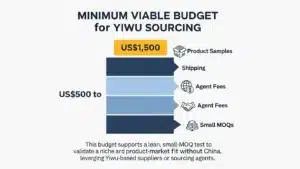
Estimated total timeline: 6–8 weeks from product selection to FBA delivery. Estimated total cost for a first order of 500–1,000 units: $2,000–$5,000 (product + packaging + shipping + inspection + agent fees). We have a free downloadable checklist that covers each step with a column for actual costs — request it from your sourcing agent to track every dollar.
Conclusão
Most guides hide the real numbers. You now know that paper labels run $0.002 each at 10,000 MOQ, that commission agents often double packaging costs, and that a mold fee of $50–$200 can be negotiated away. More importantly, you have a working system to verify a factory without leaving home: SAMR database, dated video, third-party sample test. That three-step process cuts your risk of getting scammed from common to rare.
Ready to apply this to your first private label order? Start by running your shortlisted suppliers through the SAMR check. If you want a transparent flat-fee agent who shows every cost line — labels, inserts, customs fees — reach out. We handle MOQs as low as 100 units and get your FBA-prep done in 15–25 days.
Perguntas mais frequentes
How to get a quote for Private Labeling in Yiwu: What Brand Founders Need to Know?
You can leave your detailed requirements using the inquiry form below, and our sales team will provide a comprehensive quotation along with product specifications within 24 hours.
Can I request samples before bulk orders?
Yes, we highly recommend testing samples first. Please contact our support team to arrange sample shipments to verify the product quality before confirming your large volume purchase.
Related guide: Marca própria de Yiwu.