 Justin
If a container leaves Ningbo later than mid-October 2026, most sellers will miss Black Friday — that single date is what the rest of a yiwu christmas sourcing 2026 plan has to bend around. Q4 ocean transit, U.S. customs, and Amazon receiving windows all stretch during peak, and none of them stretch in the seller’s favor.

Key Takeaways
- Last realistic PO for ocean freight: end of August 2026 for U.S. West Coast; mid-August for U.S. East Coast, U.K., and continental EU.
- Ocean cutoff sailing from Ningbo: ~Oct 15 to Los Angeles / Long Beach; ~Sep 25 to New York, Savannah, Felixstowe, Rotterdam.
- Air freight becomes the only ocean-alternative after roughly Oct 20; expect USD 6–9 / kg with 5–8 day door times.
- Express / DDP is the last-window option — usable until roughly Nov 20 for small parcels at 3–5× ocean per-unit cost.
- Chinese New Year 2027 falls on Feb 17, so factories start clearing capacity in mid-November — December re-orders are almost impossible.
- Amazon Q4 receiving delays typically run 2–3 weeks — back-plan arrival at the fulfillment center by Nov 10 for Black Friday sell-through.
This is a date-anchored operational timeline built backwards from the Dec 24 shelf, not a category shopping list. It gives the sample, purchase-order, inspection, and cutoff dates buyers need for Yiwu-sourced ornaments, lights, gift packaging, and holiday textiles — plus the 5 lead-time traps that consistently push orders into January arrivals.
The One-Page Timeline (TL;DR)
Every date below assumes a finished-goods holiday order out of Yiwu — ornaments, lights, gift boxes, stockings, holiday apparel. Custom-print or private-label runs add 2–3 weeks upstream for artwork and pre-production samples.
| Month | Action | Trap if skipped |
|---|---|---|
| Jul 2026 | Category shortlist, walk District 1 Zone 1, request samples | Each sampling round runs 10–14 days — losing July means losing a full round |
| Aug 2026 | Approve samples, sign purchase orders, wire deposit, lock QC dates | Aug PO is the last window for U.K. / EU / U.S. East ocean freight |
| Sep 2026 | Production run, mid-production inspection, book freight | Late booking pays peak-season surcharge (PSS / GRI) |
| Early Oct 2026 | Final AQL inspection, balance payment, gate-in at Ningbo | Failed AQL now forces air freight — margin gone |
| ~Oct 15, 2026 | Last realistic ocean sailing to U.S. West Coast | Miss this and cost per unit doubles to triples |
| Late Oct 2026 | Air freight only — book blocked space with forwarder | Ad-hoc air quotes at this stage run USD 8–12 / kg |
| ~Nov 20, 2026 | Express / DDP small-parcel cutoff for Black Friday sell-through | Anything after is a January arrival |
Why Q3 Is the Pressure Point for Yiwu Holiday Orders

Yiwu handles the bulk of the world’s mass-market Christmas decor out of District 1, Zone 1 — the section commonly called the “Christmas Village.” The trade city’s official B2B platform lists Zone 1 as the primary hall for holiday and festive-decor stalls. Buyers walk 700+ booths concentrated in a single hall, most of which run finished-goods inventory rather than made-to-order. That density is why Yiwu can compress the sampling stage to days rather than weeks.
The catch: every serious buyer already knows this. Booth capacity peaks in July and August; by September, top-tier suppliers stop taking new customers for the Christmas cycle because their production lines are booked. Buyers who arrive in October for a “quick Christmas order” typically end up with second-tier factories, small minimum orders, and no negotiation room on price.
Le festive and event supplies guide covers the SKU mix across seasonal categories year-round. This article is the operational counterpart — when to move, not what to buy.
The Yiwu Christmas Fair anchor
The Yiwu International Christmas Products Fair (义乌国际圣诞用品博览会) is typically held in mid-October each year. Details are published at yiwufair.com. It is a useful last-check for missed SKUs, not a sourcing starting point — by the time the fair opens, most 2026 season production is already shipped or on the water. Buyers combining it with the October Canton Fair usually treat both as sample-collection trips for the next year.
The 2026 Backwards-Planned Timeline
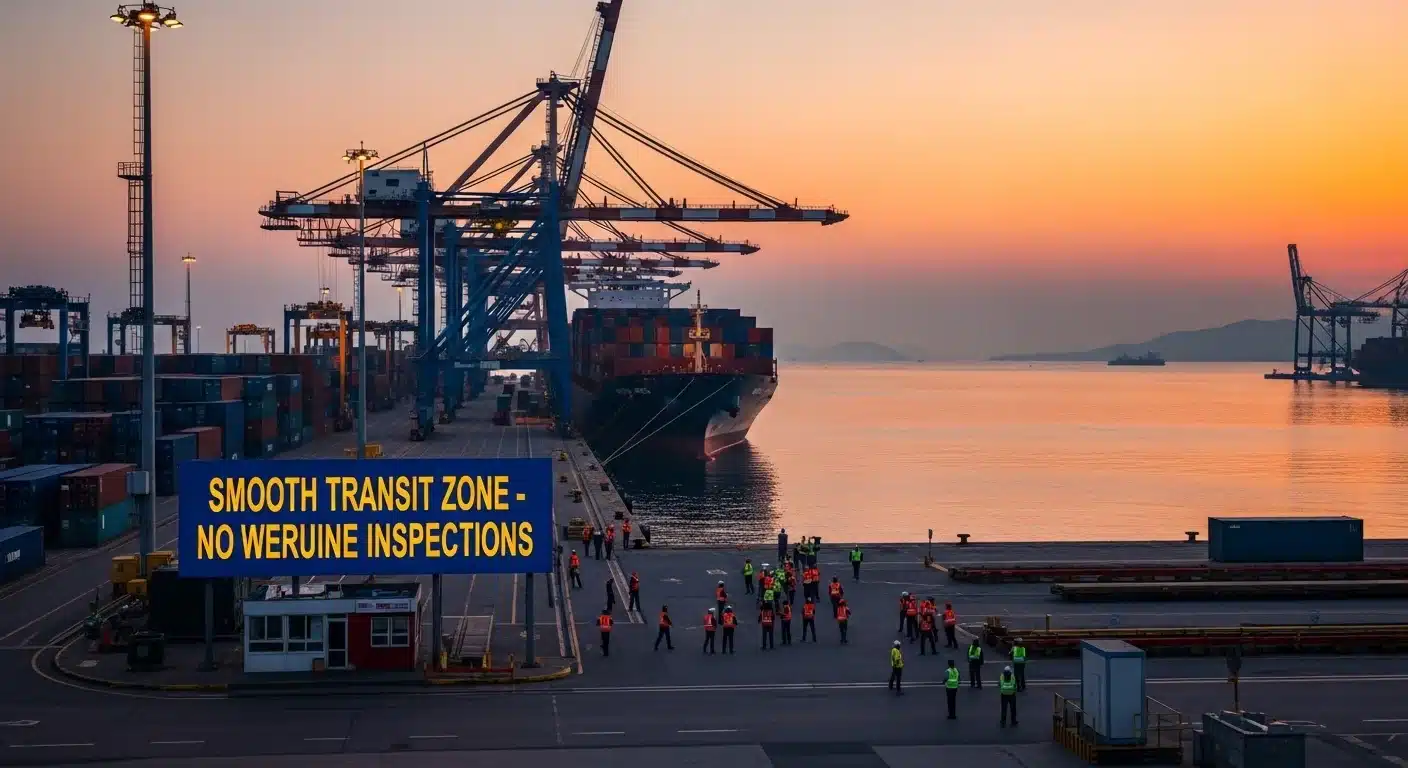
The anchor date is December 20 — the last day inventory can arrive at Amazon FBA and still ship to end-buyers before Christmas Eve. Working backwards from there through Q4 receiving delays, customs, ocean transit, production, and sampling gives every earlier deadline.
July 2026 — sample and shortlist
Book the Yiwu trip for the first three weeks of July. Cover District 1 Zone 1 first (ornaments, trees, stockings, wreaths, gift packaging), then District 2 for battery-operated lights and Christmas electronics — see the District 2 sourcing guide for the electronics-side layout.
Two July checks decide whether a supplier can hit the Christmas timeline:
- Does the supplier ship finished stock, or run production? Finished-stock suppliers can compress the timeline by 3–4 weeks — critical if July slipped.
- Will they hold minimum-order flexibility until August? Many raise minimums in September as capacity fills.
Budget for the July trip typically runs USD 3,500–5,500 for a solo buyer over 7 days — see the 2026 sourcing trip cost breakdown for the line items.
August 2026 — the purchase-order window
August is the single most important month. Every subsequent step assumes the purchase order is signed and the deposit wired by the last week of August at the latest. Three August tasks that get skipped often:
- Lock the inspection dates in the PO, not just the ship date. Suppliers who agree to a mid-production and pre-shipment AQL check up front rarely push back later — see the AQL inspection stages guide for the specific defect thresholds to specify.
- Fix the incoterm early. For peak season, DDP shifts the freight-booking risk to the supplier or agent, which is worth the premium — the FOB vs DDP breakdown explains the trade-off. Buyers switching from FOB to DDP after October rarely find capacity.
- Negotiate in August, not October. Suppliers hold pricing power in Q3 — the negotiation tactics guide gives the specific asks that still work when factories are 80% booked.
September 2026 — production and mid-run inspection
A mid-production inspection at day 50–60% of the run is the difference between catching a materials defect early and eating a rework cycle in October. For ornaments the common failure is paint adhesion on hollow glass; for lights it is IC-driver mismatch that only appears when a full string is powered on.
September is also the booking month for ocean freight. Peak Season Surcharges (PSS) and General Rate Increases (GRI) publish in early September for the October sailings — the hidden fees breakdown covers the surcharge stack, and live rate benchmarks are visible on the Freightos Baltic Index. The Xeneta Shipping Index publishes complementary long-term contract-rate data for the same lanes. Buyers who wait for October rates typically pay 15–25% more per container.
Early October 2026 — final AQL, balance payment, gate-in
The pre-shipment AQL check happens at 100% production complete, before the balance is wired. A failed AQL at this stage is the single most common reason a Christmas order flips from ocean to air freight — and air at that stage costs enough to erase the season’s margin.
Gate-in at Ningbo runs 2–5 days before the sailing date. Buyers consolidating multiple Yiwu suppliers into one container should book the consolidation service in September, not October — CFS warehouse slots fill fast.
Buyers with under about 10 CBM should shift from a full 20-foot container to LCL (less-than-container-load) — consolidated LCL sailings from Ningbo typically run USD 60–90 per CBM in Q4, and the CFS warehouse handles the multi-supplier merge before ocean gate-in.
Mid-October 2026 — the ocean cutoff wall
The hard wall for Christmas 2026: ~Oct 15 sailing from Ningbo to Los Angeles / Long Beach. That gives a realistic Nov 5–10 U.S. arrival, customs clearance by Nov 12–15, and FBA receiving by Nov 20–25 in a normal Q4 — see the shipping-mode comparison in the Yiwu shipping methods guide for the transit-time math.
For U.S. East Coast, U.K. Felixstowe, or EU Rotterdam / Hamburg, the equivalent cutoff is roughly Sep 25, because transit runs 30–35 days plus port congestion in Q4. After these dates, ocean is not an option for Black Friday sell-through. Everything shifts to air.
Shipping Cutoffs by Lane — 2026
The table below gives realistic last-order-in-Ningbo dates by mode and destination. All dates assume standard Q4 congestion, no factory delays, and no customs holds. Confirm current cutoff dates directly with a freight forwarder in September.
| Destination | Ocean cutoff | Air cutoff | Express / DDP cutoff | Typical transit |
|---|---|---|---|---|
| U.S. West (LA/LB) | ~Oct 15 | ~Nov 8 | ~Nov 20 | 20–25 / 5–8 / 3–5 days |
| U.S. East (NY / Savannah) | ~Sep 25 | ~Nov 5 | ~Nov 18 | 30–40 / 6–9 / 4–6 days |
| U.K. (Felixstowe) | ~Sep 25 | ~Nov 5 | ~Nov 18 | 30–35 / 5–7 / 3–5 days |
| EU (Rotterdam / Hamburg) | ~Sep 25 | ~Nov 5 | ~Nov 18 | 30–35 / 5–7 / 3–5 days |
| Australia (Sydney) | ~Oct 5 | ~Nov 10 | ~Nov 20 | 18–25 / 5–8 / 3–5 days |
Cost stack in 2026 dollars: ocean typically USD 0.20–0.40 per kg equivalent, air freight USD 6–9 per kg, express / DDP USD 9–14 per kg for small parcels. That gap is why the ocean cutoff decides whether the season is profitable — the landed-cost formula shows how the mode swap compounds through duty and last-mile.
What to Source from Yiwu for Christmas 2026
Five categories that consistently perform out of Yiwu, with 2026 minimum-order and price ranges typical of District 1 Zone 1 stalls. Buyers negotiating below these minimums should expect price premiums or older stock.
| Catégorie | Typical minimum order | FOB Ningbo price band | Where in Yiwu |
|---|---|---|---|
| Glass and shatterproof ornaments | 500–1,000 pcs / SKU | USD 0.08–0.35 / pc | District 1, Zone 1 |
| LED string lights (battery / USB) | 500–2,000 pcs | USD 0.35–1.20 / pc | District 2, Zone 1 |
| Gift boxes and kraft packaging | 1,000–3,000 pcs | USD 0.15–0.60 / pc | District 1, Zone 4 |
| Holiday textiles (stockings, runners) | 500–1,500 pcs | USD 0.40–1.80 / pc | District 4 (textile hall) |
| Artificial trees (small tabletop) | 300–500 pcs | USD 2.20–6.50 / pc | District 1, Zone 1 |
The categories that punish late buyers hardest are LED lights and packaging. Lights carry lithium-battery shipping restrictions that slow air freight, and packaging always ships slower than the product it wraps if ordered separately.
Is This Timeline Right for Your Operation?
The timeline above suits some buyer profiles well and others poorly. Read the split below before committing to the July trip.
| Best for | Not ideal for |
|---|---|
| Amazon FBA sellers with stable Q4 restock capacity | Sellers whose category restock limit is not confirmed by early September |
| Multi-SKU importers consolidating 3–15 suppliers into one container | Single-SKU buyers below 300 pcs — LCL / express fits better than a full timeline |
| Private-label buyers with artwork finalized before August | Private-label buyers still iterating on print / logo past August |
| Buyers targeting Black Friday, Cyber Monday, or the Dec 14 Green Monday window | Buyers targeting only in-store retail with a fixed December 1 planogram date |
| Repeat buyers reordering a proven 2025 SKU list | First-time Yiwu buyers starting after mid-September |
The 5 Lead-Time Traps That Miss the Shelf

Every Q4, a predictable set of failure points push otherwise on-schedule orders into January arrivals. All 5 are recoverable if caught in July or August; almost none are recoverable in October.
1. Late artwork or logo approval
The single most common trap for private-label Christmas orders. Artwork revisions in September push production start by 2–3 weeks, which cascades into missing the ocean cutoff. Approve final artwork before signing the purchase order, not after.
2. Late incoterm switch (FOB → DDP)
Buyers who start on FOB expecting to book their own freight, then flip to DDP in October when they cannot find space, typically pay 30–50% above the DDP rate they would have gotten in August. Peak-season carriers hold DDP space for customers who booked early.
3. Failed pre-shipment inspection
A pre-shipment AQL failure in early October forces one of three outcomes: rework and miss the ocean cutoff, ship as-is and accept the defect rate, or air-freight and lose margin. Build 5–7 days of AQL buffer into the September plan and the rework option stays open without breaking the ocean cutoff.
4. FBA appointment / receiving-window delay
Amazon Q4 receiving typically runs 2–3 weeks from truck arrival to inventory-available. Amazon’s Q4 restock and receiving windows may vary by category and account standing — confirm the current 2026 policy in Seller Central before finalizing shipment plans. Buyers who assume a 3-day receiving window from prior years often miss Black Friday by a week.
5. Port congestion and last-mile
U.S. West Coast port dwell time typically extends by 3–7 days during peak Q4. Public congestion notices are posted by the U.S. Customs and Border Protection newsroom when clearance delays cross the threshold. U.K. and EU ports commonly add 4–10 days for customs and delivery to third-party warehouses. Build 10 days of port buffer into the October arrival plan and Black Friday stays reachable — skip the buffer and Cyber Monday becomes the realistic target.
What We Check Before a Christmas Order Leaves Yiwu
Every Christmas order routed through our team clears the same operational check before it moves to the next stage. The list below is what we actually run — not a general framework:
- License-name vs invoice bank-account name match — the supplier’s business license name must match the account receiving the deposit wire. Mismatch is the #1 red flag for a rebilling scam.
- Booth number recorded on the PO — District, Zone, Floor, Booth number goes on every purchase order, so any dispute can be traced to a physical location within 24 hours.
- Sample photos vs approved sample — mid-production photos at 50% completion are checked against the July approved sample. Colour drift on printed ornaments and PCB mismatches on light strings show up here.
- Full AQL 2.5 report before balance wire — pre-shipment inspection with AQL 2.5 general, 1.0 critical, and photographic evidence. Balance is not released without the signed report.
- Carton marks + packing list against FNSKU / SKU sheet — for FBA-bound cartons, carton labels are cross-checked against the buyer’s FNSKU sheet before container gate-in, so no rework happens at the U.S. warehouse.
- Lithium-battery declaration on lights — for LED strings with lithium cells, the UN class, watt-hour rating, and packaging declaration are cross-referenced against the freight forwarder’s dangerous-goods policy before booking.
Amazon FBA — The Q4 Layer
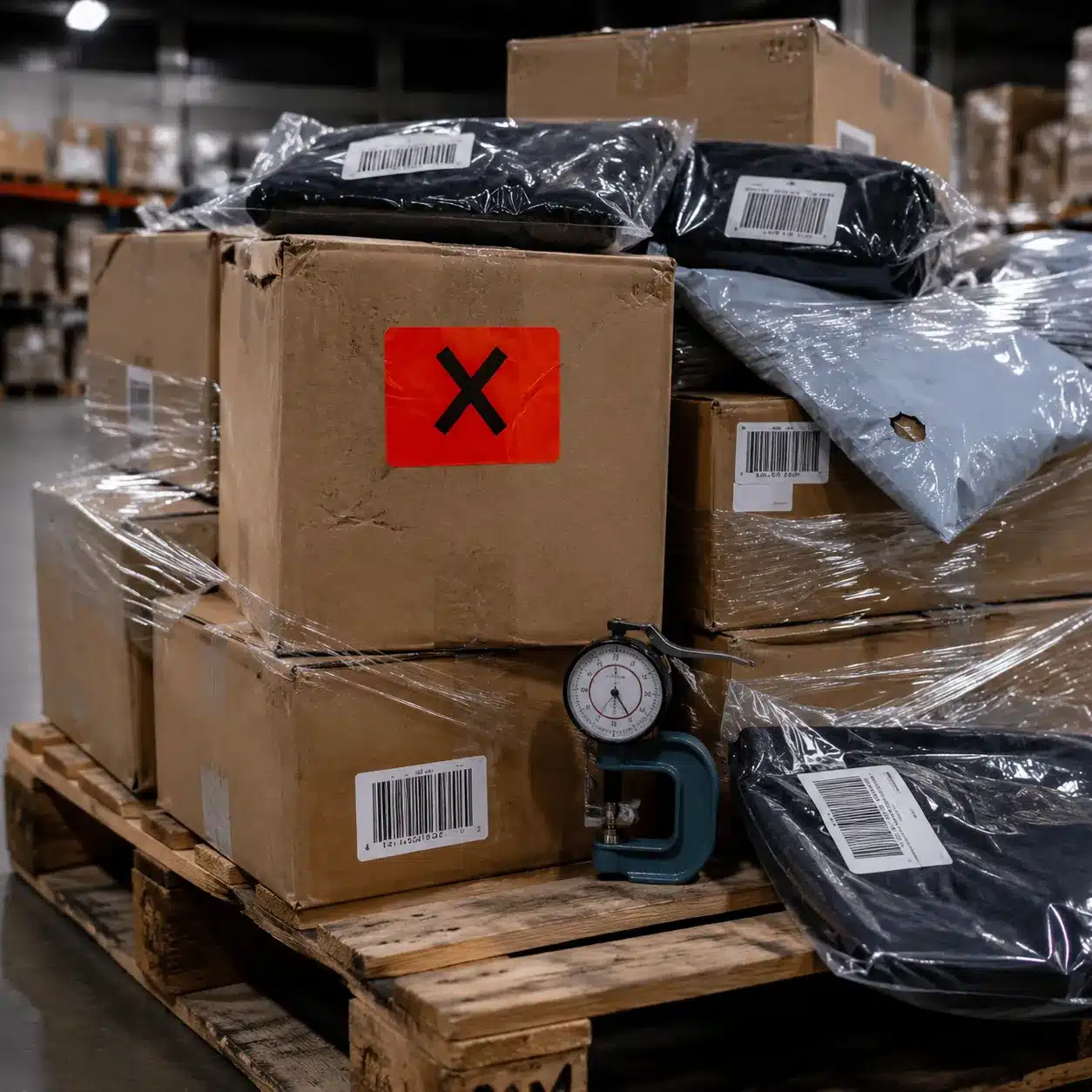
For FBA sellers specifically, the Yiwu timeline has to fit inside three additional Amazon-side windows. All three may change in 2026, and buyers should confirm current values in Seller Central before finalizing the plan.
- Restock limits — Amazon typically tightens category-level storage limits from October through December. Sellers with strong IPI scores may get more capacity; newer accounts may get less. Confirm restock limits in September and size the purchase order accordingly.
- Receiving delays — arrival-to-active can stretch to 2–3 weeks in a normal Q4. Plan for arrivals on Nov 10, not Nov 25.
- Removal and return policies — Q4 returns typically post from Dec 26 through January. Factor a 10–15% return rate into the season sell-through math — see the FBA profit-margin breakdown for the full formula.
How Chinese New Year 2027 Rebounds Into Q4 2026
Chinese New Year 2027 falls on February 17, which sounds distant from Christmas 2026 but compresses the December re-order window sharply. By mid-November, Yiwu factories start clearing capacity for CNY holiday shutdowns — a December Christmas re-order (say, a fast-selling SKU that runs out on Cyber Monday) is essentially impossible to produce and ship in time.
The practical implication: build the initial PO with a 15–20% cushion, not a lean forecast. Selling out on Dec 5 with no re-order pipeline is worse than carrying 500 extra units into January.
Example: A 20-SKU Consolidated Christmas Order
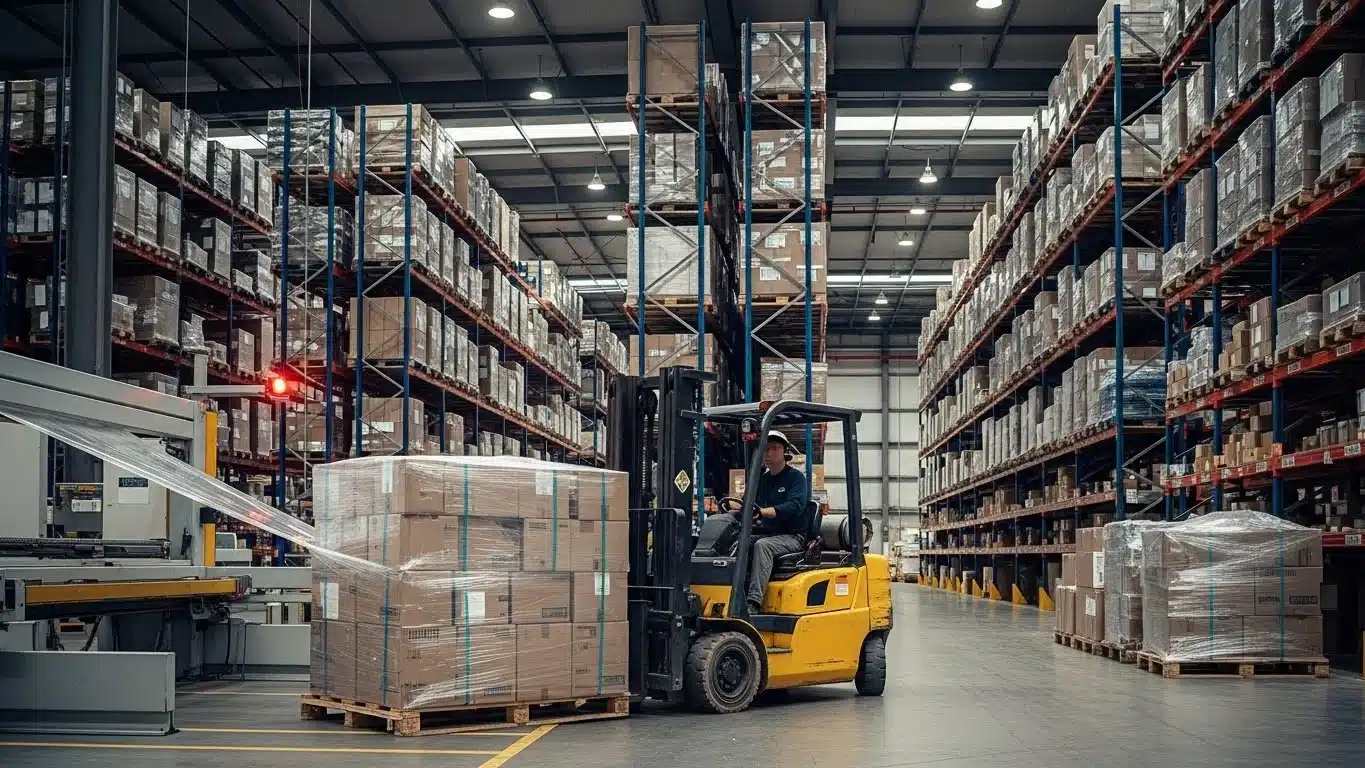
Illustrative scenario, not a specific customer case. A U.S. FBA seller sources 20 Christmas SKUs from 6 Yiwu stalls: 8 ornament designs from 3 stalls in District 1 Zone 1, 6 LED string-light variants from 2 stalls in District 2, and 6 gift-box designs from 1 stall in District 1 Zone 4. Container target: one 20-foot to Los Angeles.
The July trip runs 5 days on the market floor — three ornament stalls sampled Day 1–2, two light stalls Day 3, gift-box stall Day 4, negotiation and PO drafts Day 5. Deposits (30% standard) wire in early August, one per supplier, all six POs referencing the same consolidation warehouse in Yiwu.
Production runs through August and September. Mid-production inspection lands Sep 20 — one supplier fails on paint adhesion, gets a 5-day rework window. Final AQL runs Oct 3 across all six suppliers in one 2-day inspection block at the consolidation warehouse; balance payments release Oct 5.
All six suppliers deliver to the CFS warehouse by Oct 9. FNSKU labelling and carton marking runs Oct 10–11, gate-in Ningbo Oct 12, sail Oct 15 to Los Angeles. Container arrives Nov 5, customs clears Nov 8, FBA receiving completes Nov 22 — five days ahead of Black Friday.
How a Sourcing Agent Compresses the Timeline
The three tasks that consume the most calendar time — sampling coordination, freight booking, and inspection follow-up — all run in parallel when a Yiwu-based agent handles them. A buyer working direct through email typically loses 5–10 days per handoff to time-zone lag alone.
For Christmas 2026 specifically, the value of an agent shows up in three places: securing October ocean space in August (when capacity is still available), scheduling AQL inspections that fit the sailing schedule, and running a mid-production visit that catches quality issues at 50% completion rather than at 100%. The full agent-role breakdown is in the Yiwu sourcing agent guide.
If you’re placing a multi-supplier Christmas 2026 order, buying below single-stall minimums, or need pre-shipment inspection scheduled around a specific sailing date, an on-the-ground team is the fastest way to hold the timeline.
Questions fréquemment posées
When is the absolute last date to place a Christmas 2026 order from Yiwu?
For ocean freight to the U.S. West Coast, the last realistic purchase-order date is the last week of August 2026. U.S. East Coast, U.K., and EU shift that back to mid-August. After September, the order has to move to air or express freight, which typically erases the season margin.
Can I still hit Black Friday if I ship by air after Nov 1?
Air freight booked before Nov 8 usually still arrives at U.S. FBA warehouses in time for Black Friday, assuming customs clears in 2–3 days and FBA receiving runs in a normal 2-week window. Anything booked after Nov 10 targets Cyber Monday or the December sell-through window, not Black Friday itself.
What’s the typical minimum order for Christmas ornaments in Yiwu?
Most District 1 Zone 1 ornament suppliers hold minimums at 500–1,000 pieces per SKU for stock designs. Custom-printed or bespoke shapes typically start at 2,000–3,000 pieces. The low-minimum guide covers where smaller quantities are still workable.
Is District 1 Zone 1 (the Christmas Village) open in July 2026?
Yes. District 1 Zone 1 operates year-round, with peak buyer traffic from June through October. July is the quietest month for foot traffic and the best window for extended supplier meetings — most stalls have full 2026 sample lines ready by early June.
FOB, DDP, or Door-to-Door — which incoterm works best for peak season?
DDP is typically the safer choice for Q4 sourcing because the supplier or agent absorbs the freight-booking risk. FOB works if the buyer has a locked-in freight contract from before September; after that, DDP holdovers usually pay less than late-booked FOB.
How does Chinese New Year 2027 affect my Christmas 2026 order?
CNY 2027 falls on Feb 17, so Yiwu factories start clearing capacity in mid-November 2026. December re-orders are effectively impossible for the 2026 season, and any January-arrival inventory sits in warehouses through the shutdown. Size the initial purchase order with a 15–20% cushion rather than a lean forecast.
What are Amazon’s Q4 2026 restock limits?
Restock limits vary by category, account standing, and IPI score, and Amazon typically adjusts them month by month during Q4. Confirm the specific 2026 limits in Seller Central during September, and size the shipment to what the account can receive — not what the forecast wants.
Can I mix ornaments and lights into one 20-foot container?
Yes — this is the standard consolidation pattern for small-to-mid buyers. LED lights with lithium batteries add a shipping-declaration step (UN 3481 or similar, depending on cell type and quantity) — confirm the specific requirements with a freight forwarder before booking. The consolidation guide covers the CFS warehouse process.
Will Yiwu suppliers still take Christmas orders in October?
Yes, but from second-tier factories with less negotiation flexibility and higher minimums. October orders typically ship by air freight only, which pushes the landed cost 3–5× above an August-placed ocean order. October is a fair time for a January-arrival top-up order, not a Christmas season order.
Are lithium-battery Christmas lights allowed by ocean freight?
Ocean shipment of lithium-battery products may be permitted with specific packaging, labelling, and declaration requirements that depend on cell chemistry, watt-hours, and destination-country regulation — see the IATA lithium-battery reference for the classification framework. Confirm current requirements with a licensed freight forwarder or dangerous-goods specialist before booking.
Conclusion
The Yiwu Christmas 2026 timeline runs backwards from Dec 20 through FBA receiving, ocean transit, production, sampling, and the initial category walk. Every earlier date matters because the ocean cutoff of ~Oct 15 to the U.S. West Coast is fixed — miss it and the cost per unit doubles or triples, and margins collapse.
Buyers who start sampling in July, sign purchase orders in August, and lock final inspection dates into the contract typically hit the shelf on time with room to negotiate. Plan the July trip now, and treat every subsequent date on the calendar as a hard boundary rather than a target.
Written by the ChineseYiwu.com team
A Yiwu-based sourcing partner since 2017, handling multi-supplier orders for U.S., U.K., and EU buyers year-round. Our team walks District 1 Zone 1 weekly during the Q3 Christmas cycle and manages consolidation, AQL inspection, and freight booking for peak-season shipments out of Ningbo.