Justin
Hair accessories are one of Yiwu’s quiet giants. The market moves an enormous volume of scrunchies, claw clips, hairbands, barrettes, and clip-in hairpieces every year, feeding fast-fashion chains, salon retailers, and TikTok Shop sellers worldwide. Walk the accessory zone and you pass booth after booth of pearl pins, acetate claw clips, silk scrunchies, and satin-lined bonnets — a category that turns over fast, follows trends closely, and rewards buyers who can move quickly on what’s selling.
That speed is also the trap. Hair accessories are cheap per unit, trend-driven, and easy to over-order in the wrong style. The winners buy tight to demand, control quality on a few specific defects, and know the difference between a $0.08 elastic band and a $0.40 acetate clip that a customer will actually pay for. This guide covers what Yiwu’s hair-accessory market sells, MOQ and price reality, the quality checks that matter, and how the human-hair and wig segment differs from the rest.
Key Takeaways
- Hair accessories sit in Yiwu’s fashion-accessory zone, alongside jewelry — a fast-turnover, trend-led category.
- Stock MOQs are low (often a few gross per style); custom colors or private-label packaging start higher, around 500–1,000 units.
- Material sets the price: acetate claw clips and silk scrunchies command real margin over basic plastic and polyester.
- The defects that drive returns: weak clip springs, shedding metal glue joints, snagging elastic, and dye that bleeds.
- Human-hair wigs and extensions are a separate, higher-value trade with its own grading, testing, and MOQ rules.
- Small, light, and trend-sensitive — buy tight to current demand and consolidate; freight is cheap per unit.
What Yiwu’s Hair Accessory Market Sells
The category splits into a few clear families, and each has its own buyers and price logic.
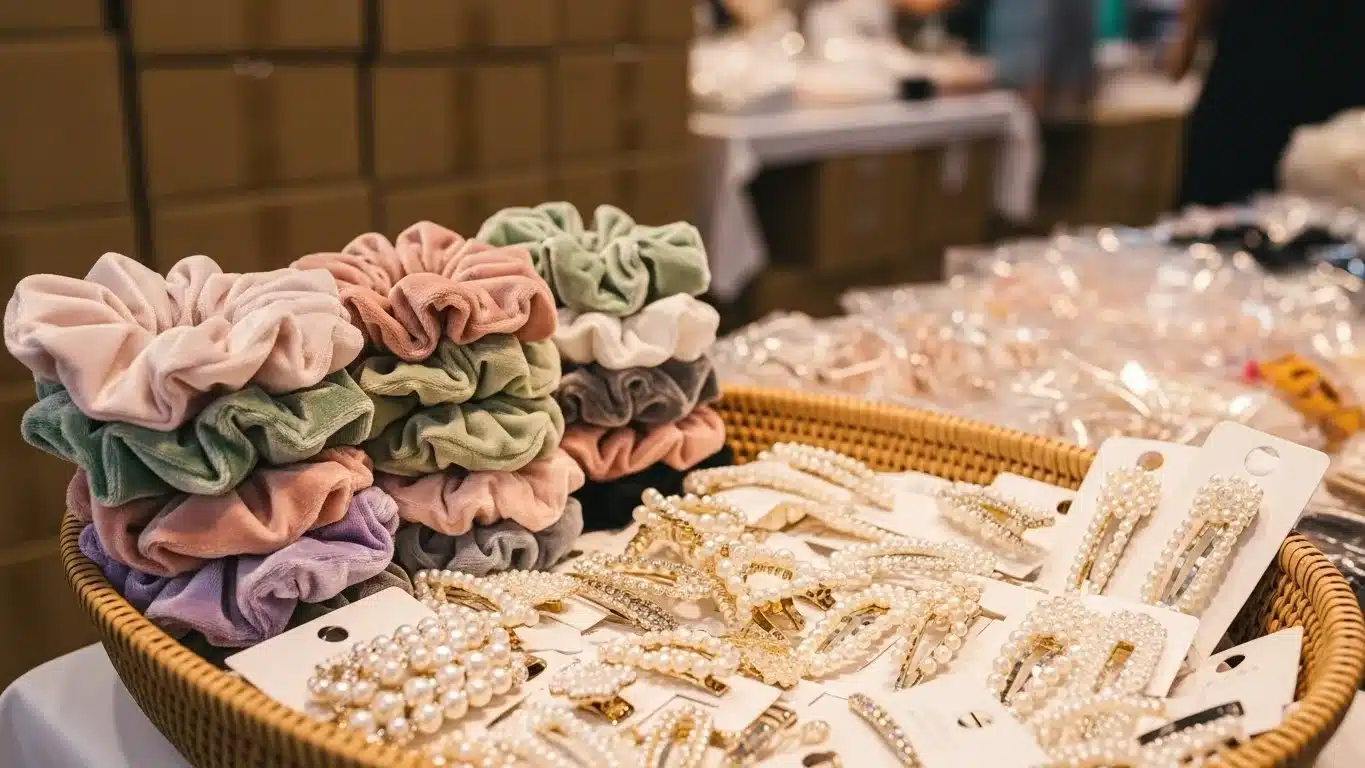
- Clips and claws — acetate and plastic claw clips, snap clips, and barrettes. Acetate (tortoiseshell, marbled) is the current premium driver.
- Scrunchies and hair ties — satin, silk, velvet, and basic elastic. Cheap to make, easy to private-label, high perceived value in silk.
- Headbands and hairbands — padded, knotted, sports, and embellished styles, a steady fashion line.
- Pins and decorative — pearl pins, rhinestone clips, and bridal hair accessories, overlapping with the jewelry zone.
- Kids’ accessories — bows, small clips, and sets, where safety and small-parts labeling apply.
- Wigs, extensions, and bonnets — synthetic and human-hair pieces plus satin sleep bonnets, a distinct higher-value segment.
Booths overlap heavily with the fashion-jewelry area, so a buyer sourcing hair accessories can often build a mixed order across both in the same visit. Many booths are traders carrying multiple factories’ output. For the fashion-jewelry side of that mixed order, our Yiwu jewelry sourcing guide covers the parallel category.
Materials and Price: What Buyers Actually Pay For
Hair accessories span a huge price range for near-identical shapes, and material is almost the whole story. A claw clip can be $0.10 or $0.60 depending on what it’s molded from.
| Product | Material tier | EXW / unit | Best resale channel |
|---|---|---|---|
| Claw clip | Basic plastic → premium acetate | $0.10–$0.60 | Fast fashion, salon retail, DTC |
| Scrunchie | Polyester → satin → real silk | $0.08–$0.45 | Multipacks, gift sets, premium DTC |
| Pearl/rhinestone pin | Plastic pearl → glass/alloy | $0.10–$0.80 | Bridal, occasion, boutique |
| Satin bonnet | Poly satin → mulberry silk | $0.40–$3.00 | Hair-care retail, TikTok Shop |
The lesson repeats across the market: sell the material story your channel will pay for. A TikTok Shop seller marketing “100% mulberry silk” scrunchies needs verified silk, not satin polyester relabeled — a claim gap that gets accounts suspended. A dollar-store buyer needs the cheapest reliable elastic, and acetate would price them out. Buy the grade that matches the promise you’re making to your customer.
MOQ, Trends, and Buying Tight
Stock hair accessories carry some of the lowest MOQs in the market — often a few gross per style, easy to mix. Custom colors, custom acetate patterns, or private-label carding and packaging push MOQs up, typically to 500–1,000 units per design, sometimes more for custom molds.
The real skill in this category is not negotiation — it’s demand timing. Hair accessories move on trends that turn over in weeks: a claw-clip shape or a color goes viral, sells hard, then dies. Two rules protect you:
- Test before you scale. Order a small mixed batch of trending styles, prove what sells, then reorder the winners in volume. The low MOQ exists precisely so you can do this.
- Don’t over-commit to a single trend. A container of last month’s viral clip is dead stock. Spread the first order across styles.
For custom acetate patterns or private-label packaging, approve a physical sample first — acetate coloring varies between batches and a screen won’t show it. The workflow follows any private-label order in Yiwu, with a pre-production sample sign-off before the full run.
Quality Control: The Defects That Drive Returns
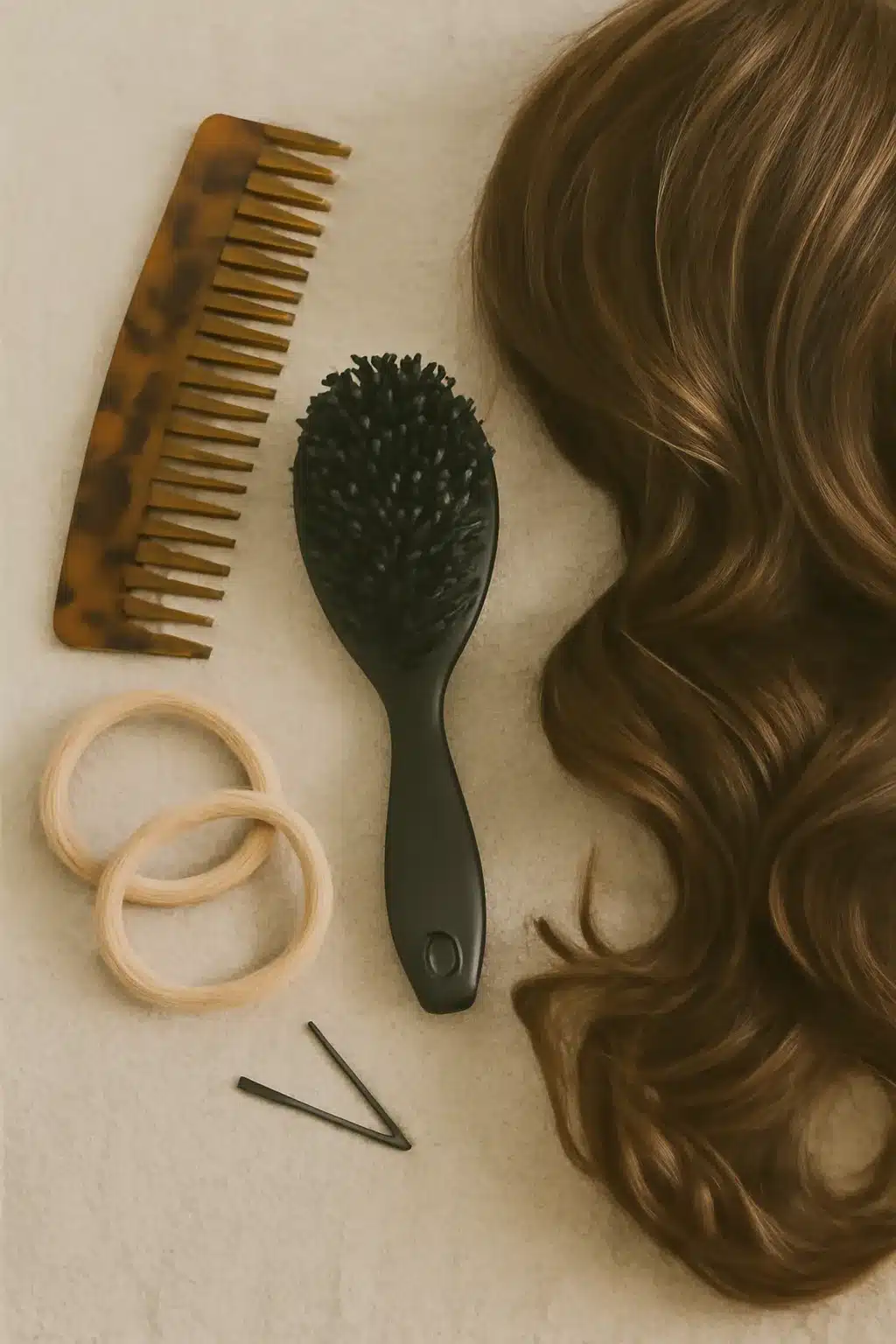
Hair accessories are cheap, so buyers under-inspect them — then a batch of clips that won’t grip or scrunchies that snag hair turns into a wave of complaints. Four defects cause most returns, all checkable on samples and in a pre-shipment inspection.
Weak clip springs. Claw clips and snap clips depend on the spring or hinge. Open and close samples repeatedly; a claw that loosens or a snap that won’t stay shut is useless and gets returned. Test across several units, not one.
Shedding embellishments. Pearls, rhinestones, and metal charms are glued on. Tug and gently pry them — if they pop off, the whole batch will shed in a customer’s bag. This is the top complaint on decorative pins.
Snagging elastic and rough edges. Cheap elastic and unfinished plastic edges catch and pull hair. Run a scrunchie or band through your fingers and over fabric to feel for snags; check molded clips for sharp flashing.
Dye bleeding and fading. Satin scrunchies and colored bands can bleed onto hair and clothing or fade in sunlight. Wash-test and, for anything sold on color, check colorfastness.
Fold these into an AQL inspection before the balance. For kids’ accessories, small parts and glued embellishments raise choking-hazard and safety-labeling requirements that vary by market — confirm the destination rules before ordering, since children’s-product compliance is where these orders most often go wrong.
Wigs and Human-Hair Extensions: A Different Trade
Wigs, extensions, and hairpieces sit in the same broad category but behave like a separate business, and buyers should treat them that way. The value per unit is far higher, the grading is technical, and the risk of misrepresentation is real.
- Synthetic vs human hair. Synthetic fiber is cheaper and holds style but can’t take heat well; human hair costs far more and is graded by origin, whether the cuticle is intact and aligned (often called Remy), and single- vs multi-donor sourcing.
- Verify the claim. “Human hair” and premium grade labels are widely overstated. Test samples — a burn test and wash test help distinguish fiber types — and buy from suppliers who can substantiate the grade.
- Higher MOQ and price. Human-hair bundles and lace wigs carry higher unit costs and are more capital-intensive to stock, so test orders matter even more before scaling.
Because misrepresentation is common and the money at stake is larger, third-party verification and sampling are non-negotiable for this segment — the same discipline covered in our quality inspection guide, applied more strictly.
Match the Product to Your Channel
| Best for | Not ideal for |
|---|---|
| Fast-fashion and TikTok Shop sellers testing trends at low MOQ | Buyers committing a full container to a single viral style |
| DTC brands selling acetate clips or silk scrunchies with a material story | Sellers claiming “silk” or “human hair” without verifying the material |
| Boutique and bridal retailers sourcing pearl and occasion pieces | Buyers skipping the shed-test on glued embellishments |
| Hair-care retailers adding bonnets, wigs, and extensions with proper vetting | First-timers buying human-hair grades without sampling or testing |
What We Check Before Accepting a Hair-Accessory Supplier
Fast turnover and low prices make it tempting to skip checks — which is exactly why these orders go wrong. Before any deposit, our team confirms:
- Business license name matched to the quotation and the receiving bank account.
- The real material behind the claim — acetate vs plastic, silk vs satin, synthetic vs human hair — with a physical sample, not a label.
- Spring, shed, snag, and wash tests on samples across multiple units.
- A pre-production sample approved in hand for custom colors, acetate patterns, or private-label packaging.
- An AQL inspection on packed cartons, with kids’-product safety and labeling verified for the destination market.
For the full cross-category vetting method, see the complete Yiwu sourcing guide.
If you’re sourcing hair accessories, scrunchies, clips, or wigs — and want the material claim, springs, and safety verified before you pay a deposit — our Yiwu team can source, sample, inspect, and consolidate the order for you.
Questions fréquemment posées
Where are hair accessories sold in Yiwu market?
Hair accessories are in Yiwu’s fashion-accessory zone, overlapping with the jewelry area. You’ll find claw clips, scrunchies, headbands, pearl pins, kids’ bows, and a separate wig-and-extension segment. The overlap makes it easy to build a mixed accessory-and-jewelry order in one visit.
What is the minimum order for hair accessories in Yiwu?
Stock styles carry low MOQs, often a few gross per design, and you can mix. Custom colors, acetate patterns, or private-label packaging typically start around 500–1,000 units per design, with higher minimums if a custom mold is needed.
How can I tell real silk scrunchies from satin polyester?
Real mulberry silk and satin polyester look similar but differ in price, feel, and a burn test. Since “silk” is widely overstated, request a physical sample and verify the material before making the claim to customers — mislabeled fiber content can get marketplace listings suspended.
Is buying wigs and human-hair extensions different from other hair accessories?
Yes. Wigs and human-hair extensions are a higher-value, technical trade with grading by hair origin and cuticle alignment, higher MOQs, and a real risk of misrepresented “human hair.” Sample and test every batch, and use third-party verification before scaling an order.
Written by the ChineseYiwu Sourcing Team — based inside the Yiwu International Trade City since 2005, with 50+ sourcing specialists handling supplier verification, quality inspection, and consolidated shipping for importers worldwide.