Джастин
A set of press-on nails that a US beauty distributor sells you for $2.80 usually leaves a factory in China for $0.35–$0.60. A bottle of gel polish that retails at $6–$9 wholesales domestically around $2.50 and ships from its Chinese maker closer to $0.70. That gap is not a scam — it is a domestic distributor covering their own import cost, MoCRA paperwork, warehousing, and margin, then handing the total to you. If you sell a few dozen sets a month, paying for that convenience is fine. Once you are ordering by the carton, it quietly eats the margin that made nails worth selling.
This guide is about the other route: buying nail supplies wholesale direct from the Chinese factories and markets that already supply most of those US distributors — press-on nails, gel and acrylic systems, tools, lamps, and nail art. It covers what actually sells, a realistic China price by category, the two compliance traps (an illegal acrylic monomer and US cosmetic-registration rules) that get nail shipments seized or sued, and the order size where importing direct finally beats reselling from a domestic supplier.
Key Takeaways
- Press-on nails, nail art, files, and tools carry the widest China-direct margin because factory MOQs are low and US distributor markups are high — often 3x to 6x the factory price.
- The single most important sourcing check is the acrylic monomer: cheap liquid is often MMA (methyl methacrylate), which the US FDA calls a “poisonous and deleterious substance” in nail products and which 30-plus states restrict. Insist on EMA, in writing, or skip the SKU.
- Nail polish, gel polish, and acrylic liquids are cosmetics. Under the US MoCRA law, the foreign factory must be FDA-registered and you (the importer) must list each product with FDA before selling.
- Selling gel polish into the EU or UK? Since 1 September 2025 the EU bans HEMA and TPO in nail gels — a formulation still legal and common in the US, so a China-direct gel must be confirmed HEMA/TPO-free for that market.
- Match the product to the hub: Yiwu for press-ons, tools, and nail art at low MOQ; Guangzhou for OEM gel and acrylic brands; Shenzhen for UV/LED lamps and electric files (which also need FCC).
What “Wholesale Nail Supplies” Really Covers — and Where the Margin Is
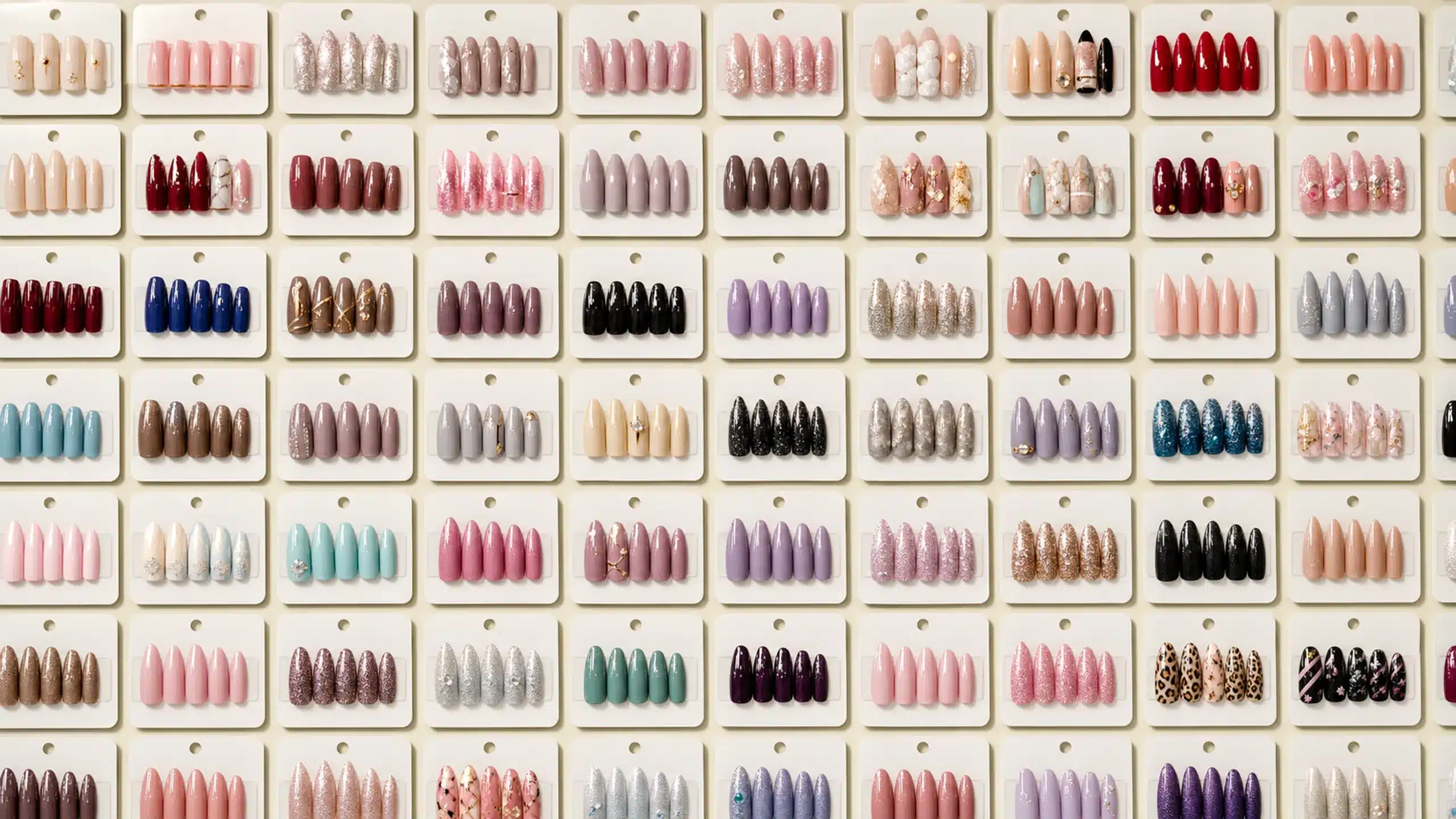
“Nail supplies” is a catch-all for a dozen sub-categories that behave very differently once you are buying wholesale. A pack of press-on nails and a bottle of gel polish are both “nail supplies,” but one is a plastic article that ships freely and the other is a regulated cosmetic that needs FDA groundwork before it can legally sell. Knowing which bucket a product sits in tells you the MOQ, the margin, and how much compliance work stands between you and a clean, sellable delivery.
The categories below are ranked roughly by how much room there is between a Chinese factory price and a US wholesale price — which is where a direct buyer’s profit actually comes from. Treat the price columns as planning estimates to pressure-test against live quotes, not fixed rates; the compliance column is the part that does not change.
| Категория | Typical China price (est.) | Typical US wholesale | Compliance load |
|---|---|---|---|
| Press-on nails (set of 24) | $0.35–$0.80 | $1.80–$4.00 | Low (plastic article) |
| Clear nail tips / forms (bag of 500) | $0.40–$1.20 | $3.00–$7.00 | Low |
| Gel polish (15ml bottle) | $0.55–$1.30 | $2.20–$4.50 | High (cosmetic: MoCRA) |
| Acrylic powder + monomer set | $1.50–$5.00 | $8.00–$18.00 | High (cosmetic + MMA risk) |
| Nail art (rhinestones, foils, stickers) | $0.05–$0.50 | $0.60–$3.00 | Low |
| Files, buffers, brushes, tools | $0.08–$0.90 | $0.80–$4.00 | Low |
| UV/LED lamps & electric files | $3.50–$12.00 | $14.00–$40.00 | High (electronics: FCC) |
Read the table as a strategy, not just a price list. The low-compliance rows — press-ons, tips, nail art, and tools — are where a first-time direct buyer should start: high markup to capture, almost no regulatory risk, and MOQs low enough to test designs without committing thousands of dollars. The cosmetic rows (gel, acrylic) and the electrical rows (lamps, e-files) are more profitable per unit but carry real paperwork and product-safety exposure; they belong in your catalog once you have a supplier and an inspection routine you trust. If you are mapping which beauty line to lead with, our Futian Market low-MOQ sourcing guide shows how the wider cosmetics-and-accessories aisle is laid out.
Buying Direct from China vs a US Nail Distributor: The Real Math
The pages ranking for “wholesale nail supplies” are mostly US distributors who already imported the goods and now resell them by the case. They are genuinely useful — if your volume is low or you need stock this week, their markup buys you speed and zero import hassle. The question is not which route is “better” in the abstract; it is which one is cheaper at your order size once every cost is counted.
Where a US distributor wins
Small or unpredictable volume, no time to wait 25–40 days for ocean freight, and no appetite for compliance paperwork. If you are a solo tech or a small salon buying 30–100 units a month and topping up as you go, a domestic supplier’s higher unit price is almost always cheaper than the freight and minimum-order cost of importing. You also skip becoming the FDA “responsible person” on cosmetic listings — the distributor already carries that.
Where China-direct wins
Predictable volume, a product you intend to keep selling, or anything you want to brand. Once you are buying a carton or more per SKU, the factory-to-shelf math shifts your way — but for gel and acrylic it is the compliance work, not the FOB price, that decides whether the margin is real. A gel polish at $0.85 factory does not land at $0.85: add freight, US import handling, any applicable China tariff, and the cost of getting the product FDA-listed, and it arrives closer to $1.30–$1.70 delivered and sellable. That is still well under the $3.00 a domestic wholesaler charges — a defensible margin — but it is a compliance-aware number, not the raw-factory fantasy some sourcing videos quote. Direct sourcing is also the only way to put your own brand, color range, and retail packaging on the product — a US reseller cannot do that for you, and it is the whole point of a private-label / OEM nail line.
A useful rule of thumb: if a SKU’s monthly order is under a carton or two, price it against a US distributor first. If it fills several cartons or you want it branded, price it China-direct — and for cosmetics, budget the FDA-listing time before the first sale, not after. Most sellers do both: import their proven winners and top up the long tail domestically.
Where Nail Supplies Are Actually Made in China
Buyers lose money by sourcing the right product from the wrong city. Nail supplies cluster in three hubs, and each is priced and built for a different kind of order. Match the product to the hub and you get better prices with fewer surprises.
| Hub | Best for | MOQ style |
|---|---|---|
| Иу | Press-on nails, nail tips, rhinestones, stickers, files, brushes, buffers — commodity nail goods in huge variety | Very low; mix many SKUs in one order |
| Гуанчжоу | Gel polish, acrylic powder and liquid, builder gel — the cosmetics-formulation and OEM/private-label hub | Higher; factory runs per formula/color set |
| Shenzhen | UV/LED curing lamps, electric nail files (e-files), and other powered tools | Medium–high; factory-scale electronics runs |
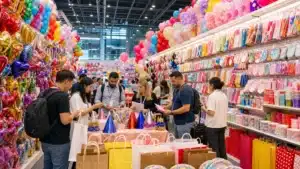
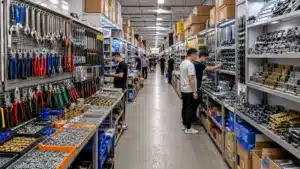
For most sellers building a nail range, Yiwu is the practical starting point: its wholesale market lets you buy fifty press-on designs, a rack of nail-art trays, and a case of files and buffers in a single consolidated order, at minimums a dedicated factory would laugh at — Yiwu’s Zone 3 is now the hub live-stream sellers scout for press-ons. The trade-off is that Yiwu is a trading and commodity hub, so for formulated cosmetics (gel, acrylic) you are better off with the Guangzhou factories that actually blend them, and for lamps and e-files with Shenzhen. If your target volume sits below a factory’s minimum, the market-based approach in our Yiwu market sourcing, MOQ and scams guide is usually the cheaper path.
MOQ, Pricing & How Order Size Changes Your Unit Cost
Two numbers decide whether a direct order makes sense: the minimum the supplier will accept, and how the unit price moves as you scale. In Yiwu’s market, a booth will often sell you a carton or two of a stock press-on design — a few hundred sets — because the goods are already made. A Guangzhou factory blending gel polish to your color range and label will want 500 to 1,000 units per shade before it starts a production run, because it is filling, curing-testing, and labeling for you.
The price ladder you should expect
Unit prices step down at predictable break points. A gel polish might quote at $1.20 for 500 bottles, $0.85 for 2,000, and $0.68 for 10,000. The jump from sample pricing to the first real bracket is the biggest; after that, gains flatten. The practical lesson is to negotiate to the next break point, not to the floor — ordering 10,000 bottles of one shade to shave a few cents off pricing you don’t need just parks cash in slow stock. Spread the budget across shades that actually sell instead.
Costs that hide behind the unit price
The factory quote is not your landed, sellable cost. Budget for retail or custom packaging (often $0.10–$0.40 a unit and quoted separately), a pre-shipment inspection, ocean or air freight, import duty, and — for cosmetics — the one-time cost and lead time of FDA product listing. For a mixed nail order, consolidating multiple suppliers into one shipment is what keeps freight per unit sane; the mechanics are covered in our shipment consolidation guide, and mode-by-mode costs in the Yiwu shipping methods and costs guide.
Duty and classification decide part of your landed cost
For a US importer, duty depends entirely on how the product is classified, so know your HTS code before you cost an order and confirm the current rate on the USITC tariff schedule. Nail products split across two very different headings, and any China-origin goods can also carry Section 301 tariffs layered on top of the base rate:
| Product | US HTS heading | Note |
|---|---|---|
| Nail polish, gel polish, acrylic liquid | 3304.30 | Manicure/pedicure preparations (a cosmetic) |
| Press-on / false nails, plastic nail tips | 3926.30 | Plastic articles, not a cosmetic |
| UV/LED curing lamp | 8543.70 / 8539 | Electrical device; FCC applies |
| Metal files, cuticle tools | 8214.20 | Manicure/pedicure sets and instruments |
That classification split matters for more than duty: press-on nails (3926.30) are plastic articles with light requirements, while anything in 3304.30 is a cosmetic and triggers the FDA obligations in the compliance section below. Here is a gel-polish order costed to the shelf on 2,000 bottles — illustrative, so plug in your own freight and current duty rate:
| Line item (per 15ml gel bottle) | Стоимость |
|---|---|
| Factory price (2,000 bracket) | $0.85 |
| Custom label + retail box | ~$0.22 |
| Sea freight + consolidation | ~$0.10 |
| Duty + handling (HTS 3304.30, confirm current rate) | ~$0.12 |
| FDA listing, amortized over the run | ~$0.05 |
| Landed, sellable cost | ~$1.34 |
| Same bottle from a US wholesaler | $3.00 |
The lines most first-time importers forget are packaging and FDA listing — not the FOB price. A gel that looks 3.5x cheaper at the factory is closer to 2.2x cheaper once it is landed, labeled, and legally listed — still very much worth doing at volume, but only once you have priced it honestly.
Compliance & Safety: The Part That Gets Nail Shipments Seized or Sued
This is the section that separates a smooth import from an expensive lesson. Nail supplies look harmless, but the liquids are regulated cosmetics and one common acrylic ingredient is effectively illegal in US nail products. “The supplier said it was fine” is not a defense when a shipment is detained or a customer files a reaction complaint.
The acrylic monomer trap: MMA vs EMA
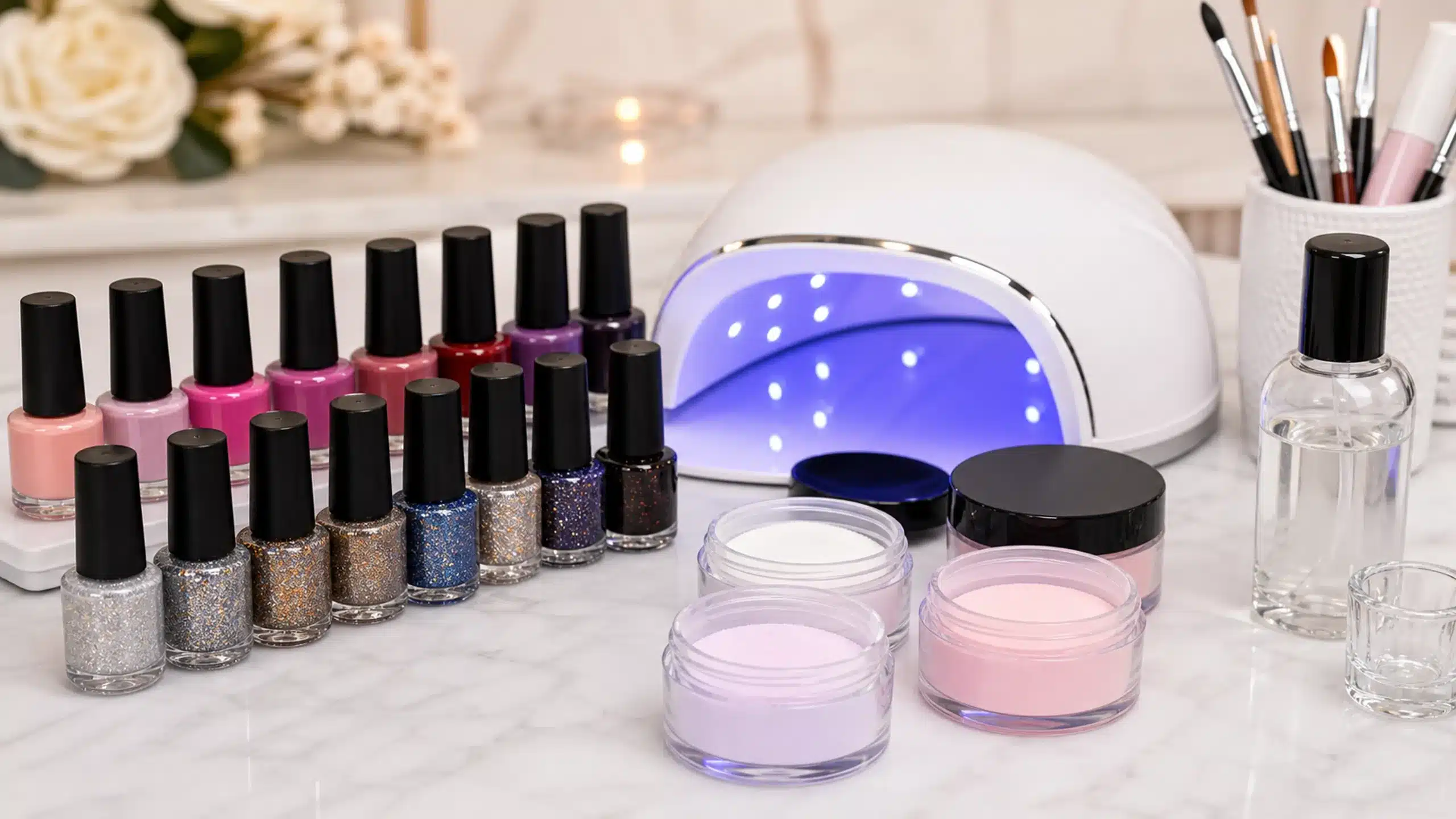
This is the one that catches nail buyers out. The cheapest acrylic liquid monomer on offer is frequently MMA (methyl methacrylate). The US FDA’s published position is that liquid MMA in fingernail products is a “poisonous and deleterious substance,” and more than 30 states restrict or ban it outright; it is also banned in Canada. MMA is popular with cut-corner suppliers because it costs a fraction of the safe alternative — which is exactly why a suspiciously cheap monomer quote should raise a flag, not close a deal. The safe, industry-standard alternative is EMA (ethyl methacrylate), whose larger molecule is far less able to penetrate skin. Put “EMA only, no MMA” in the purchase agreement in writing, ask for the ingredient declaration, and treat a monomer priced well below the EMA market as a reason to walk.
Gel and polish are cosmetics: MoCRA registration
Nail polish, gel polish, and acrylic liquids are cosmetics under US law, which means the Modernization of Cosmetics Regulation Act (MoCRA) applies. Two obligations matter to an importer. First, the foreign facility that manufactures the product must be registered with the FDA and renew that registration every two years. Second, the “responsible person” whose name appears on the label — usually you, the importer or brand owner — must list each product and its ingredients with FDA. This is not optional and there is no small-business carve-out for the listing itself on many nail products. Build the registration and listing into your timeline before the first sale; discovering it after goods land is how a launch stalls.
The “toxic trio,” and the EU gel ban that the US doesn’t have
Older or bargain nail-polish formulas can still contain the “toxic trio” — toluene, dibutyl phthalate (DBP), and formaldehyde — a grouping named by California’s toxics regulator; toluene and DBP appear on California’s Proposition 65 list, so selling into California without the right formulation or warning is a lawsuit magnet. Reputable buyers specify “3-free” or “10-free” formulas. The bigger 2025 change is geographic: since 1 September 2025 the EU bans HEMA and TPO in nail gel products — TPO was reclassified as a CMR (cancer/reproductive-risk) substance, and HEMA is a known skin sensitizer. Both remain legal and widely used in the US. The practical consequence: a gel polish you can sell all day in the US may be illegal to sell in the EU or UK, so if either market is in your plan you must confirm the formula is HEMA-free and TPO-free before you order.
Lamps and e-files are electronics
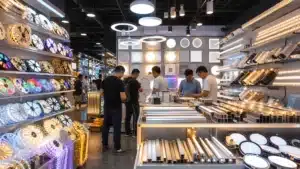
A UV/LED curing lamp or an electric nail file is a powered electronic device, so it needs FCC compliance to be sold in the US, and marketplaces increasingly ask for a safety mark (UL/ETL) on anything that plugs into the mains. Ask for the FCC and, where relevant, safety test reports as PDFs, and check that the model number on the report matches the unit you are buying — recycled certificates for a different model are the most common trick. For the paperwork customs actually inspects, our HS code and import documentation guide walks through it. A supplier who cannot produce a clean ingredient declaration for the cosmetics and a matching test report for the electronics is telling you something before you have paid a deposit.
What We Check Before Your Nail Order Ships
Nail supplies fail in specific, repeatable ways, so a pre-shipment inspection for this category is not generic box-ticking. When our team inspects a nail order before it consolidates, this is the short list that catches the costly problems:
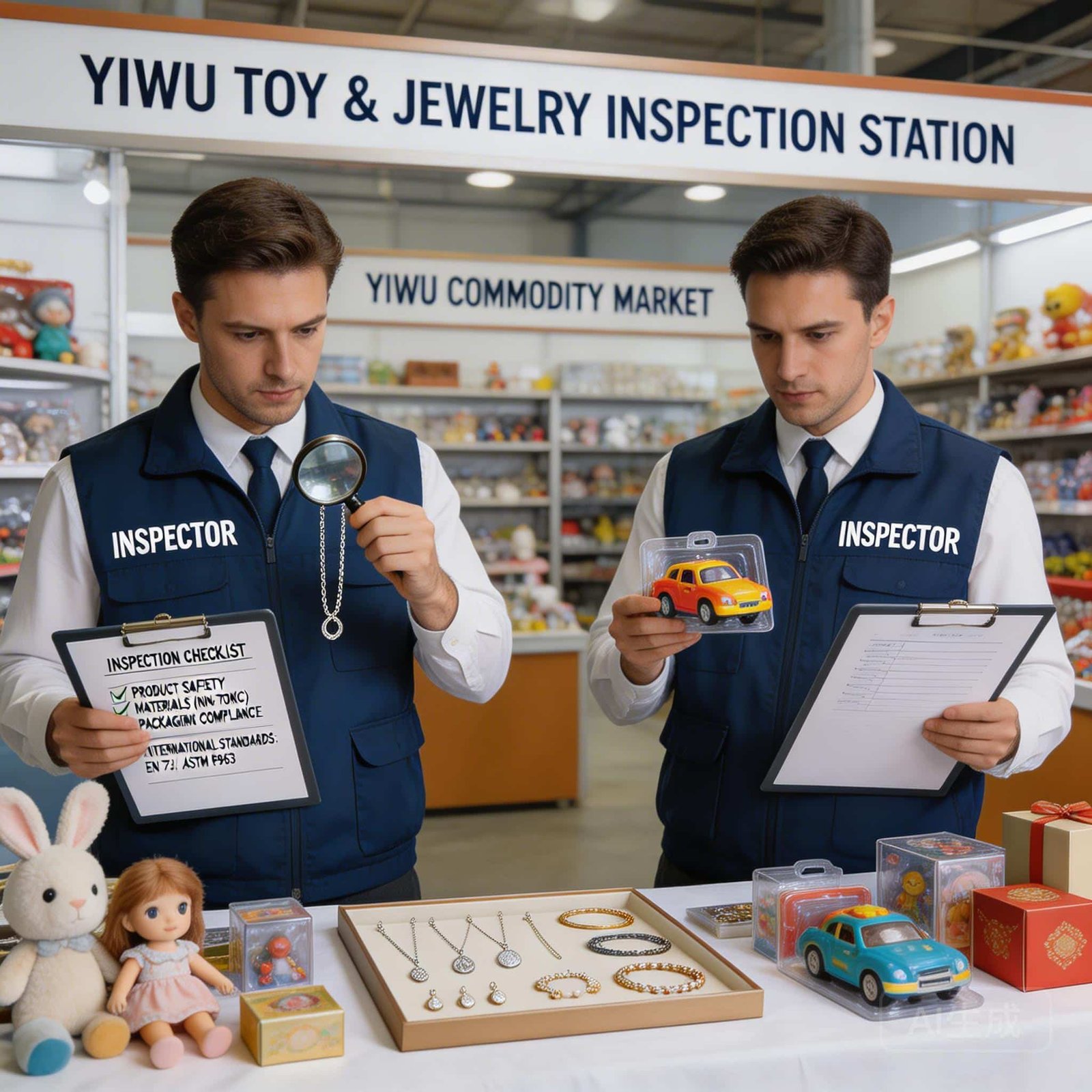
- Monomer identity, in writing. For acrylic systems, confirm the liquid is EMA and the ingredient declaration matches. This is the single check that most protects you legally.
- Cure and wear on real hands. Gel is tested that it fully cures under a standard lamp and doesn’t peel or wrinkle; a gel that looks fine in the bottle but lifts in two days is a return magnet.
- Press-on fit and finish. Sizing across the set, tip shape consistency, no rough edges, and adhesive tabs or glue that actually hold. Color and design must match the approved sample, not drift.
- Bottle fill, seal, and leak. Polish and gel bottles are checked for correct fill volume, tight caps, working brushes, and no leakage — leaks in transit ruin a whole carton.
- Lamp function and labeling. UV/LED lamps are checked against rated output and for correct voltage/plug and safety marking, so units don’t arrive dead or non-compliant.
- Labeling and packaging. Retail packaging matches the approved sample, ingredient and warning text is present and legible, and cartons survive a basic drop test.
Every point here is checkable before goods leave the country, which is the whole argument for inspecting on the ground rather than discovering defects after they land. For the wider methodology — AQL sampling, inspection stages, and costs — see our quality control inspection guide and the practical Yiwu inspection checklist.
How to Source Nail Supplies Wholesale from China, Step by Step
Put the pieces together and the process is straightforward, as long as you take the steps in order rather than paying first and checking later.
- Fix your product list and split it by type. Separate the low-compliance commodity items (press-ons, tips, nail art, tools) from the cosmetics (gel, acrylic) and the electronics (lamps, e-files). They route to different hubs and carry different paperwork.
- Match each item to the right hub. Send press-ons, tools, and nail art to Yiwu; gel and acrylic to Guangzhou OEM factories; lamps and e-files to Shenzhen. Don’t force one supplier to do all three cheaply.
- Order samples and test them properly. Wear the press-ons, cure the gel under a lamp, and — for acrylic — get the monomer’s ingredient declaration confirming EMA. This is the cheapest insurance you will ever buy.
- Handle compliance up front. For cosmetics, line up FDA facility registration (supplier side) and product listing (your side), specify EMA and a 3-free/10-free or HEMA-free formula as needed, and get FCC reports for any lamp or e-file — all before the deposit.
- Negotiate to the right price break, then lock terms. Agree unit price, packaging, lead time, and a clear defect/replacement policy in writing, including the “EMA only, no MMA” clause.
- Inspect, consolidate, ship. Run a pre-shipment check, combine suppliers into one shipment, and choose a freight mode that fits your timeline and the liquids’ constraints.
The difference between a first order that builds a business and one that becomes a cautionary tale is almost always steps three and four — sampling and compliance — not the price you negotiated. Get those right and nail supplies are one of the most rewarding categories to import from China: light, compact, high-margin, endlessly re-orderable, and easy to brand as your own.
Часто задаваемые вопросы
Is it cheaper to buy nail supplies direct from China than from a US distributor?
At volume, yes — but count packaging and, for cosmetics, FDA listing, not just the factory price. A gel polish near $0.85 factory lands closer to $1.30–$1.70 once labeling, freight, duty, and product listing are added — still well under the roughly $3.00 a US wholesaler charges, but not the 3.5x gap the raw quote suggests. It also only holds above roughly a carton or two per SKU; for small or irregular orders a domestic distributor’s markup is usually cheaper than the freight and minimum-order cost of importing.
What is the minimum order quantity for wholesale press-on nails from China?
For stock press-on designs in a market like Yiwu, a supplier will often sell a carton or two — a few hundred sets — because the goods already exist. Custom-printed or private-label press-ons and OEM gel usually start at 500–1,000 units per design or shade because the factory is running the job specifically for you.
What is MMA in acrylic nail liquid, and why does it matter?
MMA (methyl methacrylate) is a cheap acrylic monomer that the US FDA considers a poisonous and deleterious substance in fingernail products, and that more than 30 states restrict or ban. Suppliers use it because it costs far less than the safe alternative, EMA (ethyl methacrylate). Always specify “EMA only, no MMA” in writing, ask for the ingredient declaration, and treat a monomer priced well below the EMA market as a warning sign.
Do I need FDA registration to import nail polish or gel from China?
Yes. Nail polish, gel polish, and acrylic liquids are cosmetics, so under MoCRA the foreign manufacturing facility must be FDA-registered (renewed every two years) and the responsible person on the label — usually the importer or brand owner — must list each product and its ingredients with FDA before selling. Press-on nails and plastic tips are plastic articles, not cosmetics, so they don’t carry the same listing requirement.
Can I sell Chinese gel polish in the EU or UK?
Only if the formula is compliant. Since 1 September 2025 the EU bans HEMA and TPO in nail gel products — ingredients that remain legal and common in US-market gels. So a gel you can sell freely in the US may be prohibited in the EU or UK. If either market is in your plan, confirm with the supplier in writing that the formula is HEMA-free and TPO-free before you order.
Should I source nail supplies from Yiwu or Guangzhou?
Match the hub to the product. Yiwu is best for commodity nail goods — press-ons, tips, rhinestones, files, and brushes — at low minimums with huge variety. Guangzhou is the cosmetics-formulation and OEM hub, so gel polish, acrylic systems, and private-label brands are usually better sourced there. UV/LED lamps and electric files come from Shenzhen electronics factories.
Written by the Yiwu Market Procurement Service team. Based in Yiwu, we help importers, salon owners, and online retailers source, inspect, and consolidate nail supplies and beauty products — with hands-on supplier vetting, cosmetic-compliance checks, and pre-shipment quality control.