 Джастин
If you need to verify chinese supplier details before sending money, start with the basics or you will pay for it later. I have seen buyers approve a quote because the sample looked fine, then discover the seller was a broker with no factory, a mismatched bank account, and a registration file that did not match the invoice. That is how budgets get blown, delivery dates slip, and the blame gets pushed back on the buyer.
Key Takeaways
- Verification fails when the supplier’s legal entity, address, bank account, and certificates do not match.
- Address checks tell you whether the supplier is a real factory, a trading company, or a broker before you approve payment.
- Certification checks are about coherence, not decoration.
- A supplier only clears procurement review when the legal entity, factory proof, and payment details all match.
- Start with entity proof, then escalate to factory and compliance proof only when the order value justifies the extra cost and time.
The fix is not complicated, but it has to be disciplined. We check the legal name, registration number, tax ID, registered address, and bank holder name first, then we compare those details against the certificate, invoice, and compliance papers before anyone approves payment. We also treat factory proof as non-negotiable, because a real site tells you what the paper trail cannot: who actually makes the product, what capacity they have, and whether they can hold quality from sample to bulk.
Why Verification Fails
Verification fails when the supplier’s legal entity, address, bank account, and certificates do not match. For procurement, the safest screen is document coherence first, then factory proof, then compliance review.
Trading companies posing as factories
This is the biggest trap in Yiwu sourcing. A trading company can quote well, but it does not have the same control over production capacity, lead time, or quality consistency as a real manufacturer.
For a procurement gate review, we check whether the supplier can prove actual production activity, not just sales activity. If the entity cannot show factory lines, workers, machinery, and warehouse flow, treat it as a commercial intermediary until proven otherwise.
Mismatched registration data
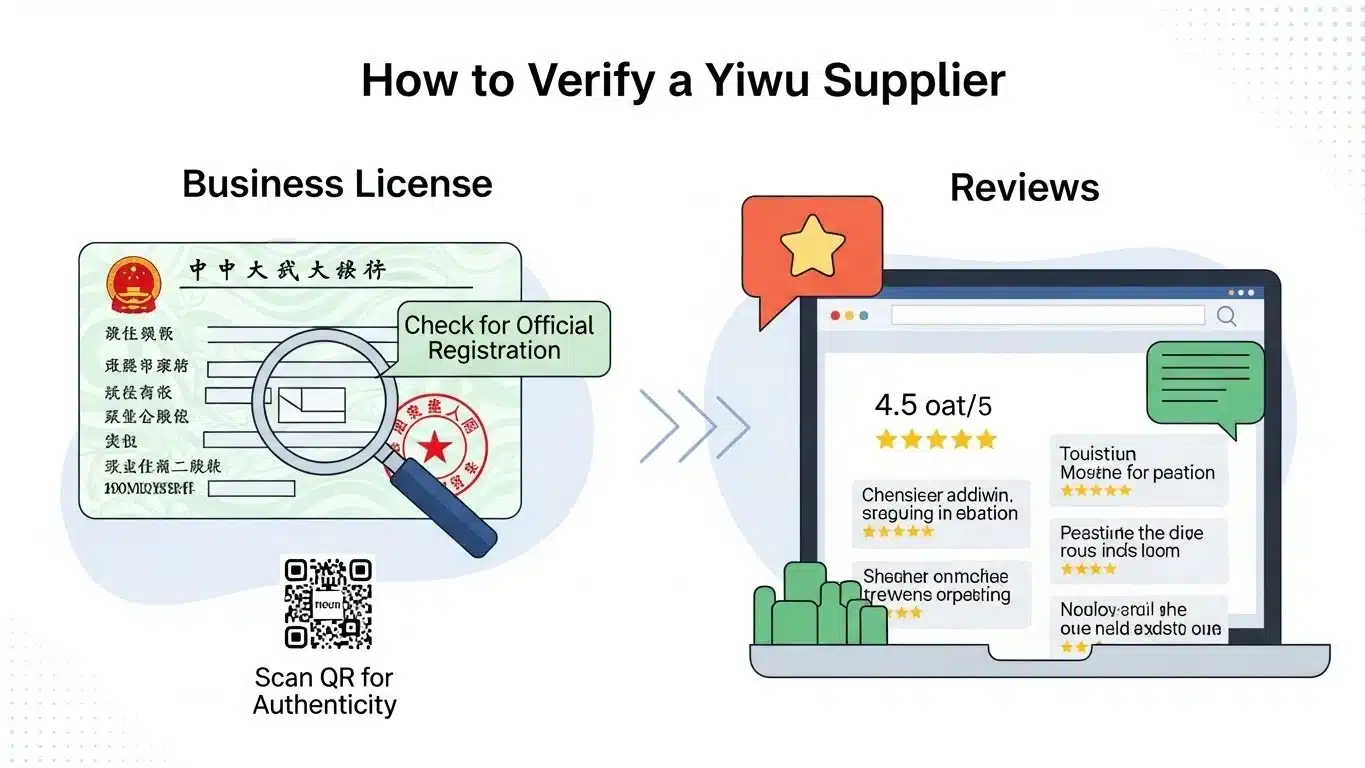
A legitimate supplier should provide a full legal company name, registration number, tax ID, and registered address. Then we cross-check that entity in official registries and compare it against the invoice, bank details, and certification documents.
The real warning sign is inconsistency. If the legal name changes from one document to another, or the Unified Social Credit Code does not align with the company record, the risk is not administrative noise. It is a possible fraud or impersonation issue.
Unverifiable addresses
A registered address that cannot be confirmed is a major red flag. We do not rely on a pin drop, a storefront photo, or a salesperson’s verbal explanation. We need a verifiable location tied to the registered entity.
Physical factory validation matters because many bad actors are intermediaries without production capacity. A proper audit checks production lines, workforce size, machinery, warehouse layout, and packaging area, not just whether the site exists.
Certification documents that do not match the supplier name
Certificates are only useful when the name, address, issue date, and product category line up with the supplier you are buying from. If the certificate belongs to another company, another site, or another product line, it is not clean evidence.
We also check whether the product-specific compliance documents actually match the ordered category. A valid-looking file that covers the wrong product is a common failure point in supplier verification China factory reviews.
Red flag vs what to confirm vs risk if ignored
- Red flag: Supplier cannot state whether it is a factory, trading company, or broker. What to confirm: Entity type, legal name, registration number, and production proof. Risk if ignored: Wrong pricing assumptions, higher MOQ surprises, slower lead times, and weak accountability.
- Red flag: Registration data does not match the invoice, bank account, or certificate. What to confirm: Exact company name, tax ID, registered address, and bank account holder. Risk if ignored: Payment diversion, compliance failure, and dispute weakness.
- Red flag: Address cannot be verified as an operating factory site. What to confirm: Onsite evidence of production lines, workers, machinery, warehouse, and packaging area. Risk if ignored: Sample-to-bulk consistency problem and supply disruption.
- Red flag: Certification documents show a different company name or product scope. What to confirm: Name, address, issue date, and category match across all documents. Risk if ignored: Customs, compliance, and buyer claim exposure.
For lower-risk approvals, we usually run a fast document check first. If the order value, compliance burden, or repeat volume is higher, we escalate to factory audit and deeper compliance review before payment.

License Checks
License checks are not paperwork. They are the fastest way to confirm whether a Yiwu supplier is a real legal entity, a factory, or just an intermediary.
What to request first
Start with the legal basics: full company name, registration number, tax ID, and registered address. A serious supplier should give these without hesitation, and the details should match what appears on invoices, bank records, and certificates.
If the supplier will not share a complete legal identity, stop there. In procurement, missing registration data is not a small gap; it is a warning that the entity may not hold up under payment, customs, or claims review.
- Full legal company name: Must match the entity used on invoices and certifications.
- Registration number: Use the official number as the primary identifier in registry checks.
- Tax ID: Confirm it belongs to the same legal entity, not a separate broker.
- Registered address: Compare it with the address shown in official records and business documents.
Match the registration number across every document
The registration number should line up with official records, invoice details, and certificate data. If the legal name is correct but the registration number, address, or bank account holder differs, treat that as a process failure, not a clerical issue.
We look for document coherence, not just a valid-looking license. A genuine supplier can usually keep the legal name, registration number, issue dates, invoice data, and payment details aligned without backtracking.
Confirm whether you are dealing with a factory, trading company, or broker
This is the part many buyers skip, and it is where margin and risk get distorted. A factory, trading company, and broker do not behave the same way on price, MOQ, lead time, or accountability.
- Factory: Usually has production lines, workers, machinery, and warehouse flow.
- Trading company: May be legitimate, but it adds another layer between buyer and production.
- Broker: Often lacks real production capacity and may disappear when claims start.
If the supplier claims to be a factory, ask for operational proof, not slogans. Production lines, workforce, machinery, warehouse space, and packaging area tell you far more than a polished sales deck.
Cross-check before you approve payment
We cross-check the supplier in Google, 1688, social platforms, and government registries because no single source is enough. The goal is to see whether the same legal entity shows up consistently across public records and commercial footprints.
- Google: Look for the company name, address, website, and repeated business references.
- 1688: Check whether the seller identity and product focus match the claimed business type.
- Social platforms: Compare photos, facility evidence, and contact details for consistency.
- Government registries: Confirm the registration number, legal name, address, and status.
Sample quality is useful, but it does not replace business registration or onsite verification. For low-risk approvals, we start with a fast document check, then move to factory audit and compliance review when the order value or risk profile justifies it.
Practical decision rule
If the legal identity is clean, the registration number matches, the business type is believable, and the public records agree, the supplier can move to the next gate. If any core detail conflicts, do not rely on samples or promises to close the gap.
That is the difference between a fast procurement screen and a costly sourcing mistake. For buyer teams handling repeat orders, this check protects consistency, payment security, and claims rights before money leaves the account.

Address Checks
Address checks tell you whether the supplier is a real factory, a trading company, or a broker before you approve payment.
What a valid address check should prove
A legitimate supplier should be able to tie a physical location to a legal entity. We look for a factory, showroom, or booth address that matches the company name, registration number, tax ID, and invoice details. If the address cannot be confirmed, the risk goes up fast.
This is where many low MOQ wholesale supplier risks show up. A bad actor can send samples and polished photos, but if the address does not line up with the legal entity, you may be dealing with an intermediary instead of a producer. That changes margin, lead time, and accountability.
What we inspect onsite
Physical verification matters because a real factory leaves operational evidence. We do not stop at the door sign or a business card. We check whether the site actually supports the product category and the claimed output.
- Production lines: Confirms the site has manufacturing flow, not just a front office.
- Headcount: Shows whether the workforce matches the claimed capacity.
- Equipment: Verifies the machinery needed for the ordered product category.
- Warehouse: Proves storage space for raw materials, finished goods, and bulk packing.
- Label consistency: Confirms the brand name, carton marks, and product labels stay aligned across batches.
If the site is mostly empty, heavily outsourced, or missing the right equipment, we treat that as a capacity warning. For procurement managers, that is usually more useful than a generic “looks legit” note.
Onsite evidence and what each one proves
Different evidence types answer different questions. One photo is not enough. We want a chain of proof that connects the legal entity to the operating site and the product being shipped.
- Gate sign and exterior plates: Confirms the site name and location are real.
- Live workshop photos or video: Shows actual production activity, not staged marketing images.
- Employee presence and workstations: Supports the claimed headcount and operating scale.
- Machines, molds, or test tools: Proves the supplier can make or finish the product in-house.
- Warehouse racks and cartons: Shows bulk handling, inventory control, and shipping readiness.
- Packaging and label samples: Checks whether branding and compliance markings stay consistent.
This is also where sample to bulk consistency problems surface. A sample can look fine while the factory cannot repeat it at scale. Onsite evidence helps confirm whether the process is stable enough for bulk approval.
Checklist for a fast address verification gate
For a lower-risk approval path, we start with a fast document check, then escalate only if the order value or compliance risk justifies it. This keeps the sourcing cycle moving without skipping the basics.
- Request the full legal company name, registration number, tax ID, and registered address.
- Confirm the Unified Social Credit Code if the supplier provides it.
- Match the address on the business license, invoice, certificate, and website.
- Check whether the supplier is a factory, trading company, or broker.
- Validate bank details against the registered company name before payment.
- Escalate to onsite factory validation if the order is high value, compliance sensitive, or repeat supply matters.
If the address fails the gate review, do not let a good sample override bad entity data. A sample is only a quality signal. It does not prove business registration, production capacity, or payment safety.

Certification Checks
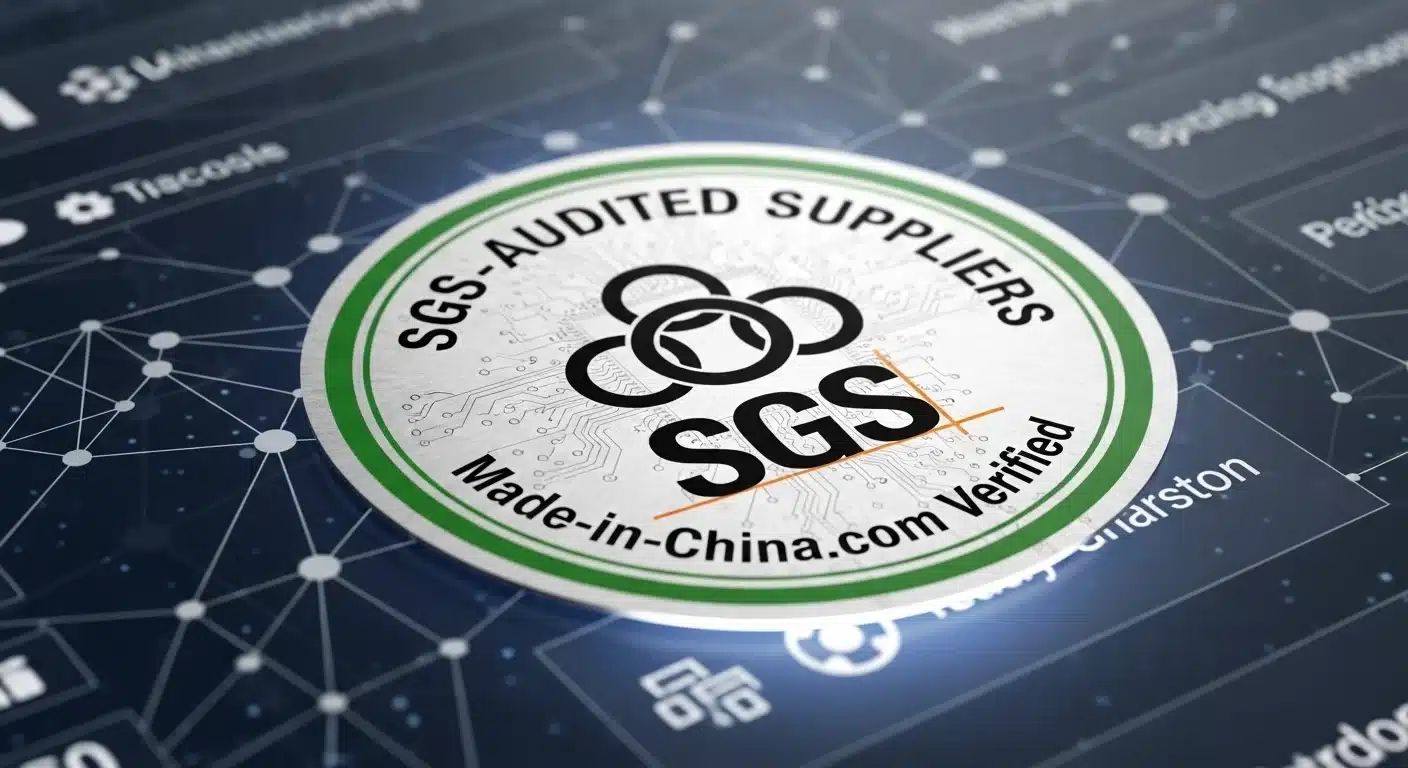
Certification checks are about coherence, not decoration. If the certificate, company record, and export scope do not line up, we treat the supplier as high risk.
What must match on every third-party certificate
When we verify a Chinese supplier, we do not stop at whether a certificate exists. We check whether the legal company name, registered address, and issue date match the business license, invoice header, and bank account holder. If any of those fields drift, the document may belong to another entity, an expired entity, or a trading layer that is hiding the real seller.
- Company name: Must match the legal entity exactly, not a shortened brand name.
- Юридический адрес: Should be consistent across the certificate, license, and official registry record.
- Issue date and validity: Must be current and credible for the current order cycle.
- Registration number or Unified Social Credit Code: Should trace back to the same legal entity in official records.
A certificate that looks impressive but fails this basic coherence test is not proof. It is noise. For procurement, document matching is the fastest way to see whether you are dealing with a real manufacturer, a trading company, or a broker trying to borrow credibility.
Common mismatches that signal risk
The most dangerous suppliers usually do not fail on one obvious point. They fail on small inconsistencies that only show up when you cross-check the paperwork. That is why we compare the certificate against the registration record, invoice data, and payment details before we move a file forward.
- Name mismatch: The certificate shows one legal name, but the invoice uses another company.
- Address mismatch: The certificate address does not match the registered office or factory location.
- Date mismatch: The certificate date is expired, altered, or inconsistent with the claimed export history.
- Bank detail mismatch: The account holder is not the same legal entity shown in the registration records.
- Scope mismatch: The certificate covers a different product category than the goods being quoted.
In our experience, these mismatches are not paperwork mistakes. They are usually a sign that the seller is masking the real operating entity, which affects pricing, accountability, and what happens if a claim is needed later.
Compare the certificate scope with the product category
A valid certificate still fails the procurement gate if it does not fit the product category or export scope. We check whether the compliance document actually supports the ordered item, because customs and retailer checks are based on what is being shipped, not what the supplier says on chat.
- Product category alignment: The certificate should match the goods you are buying, not a different line the supplier happens to carry.
- Export scope alignment: The supplier’s declared scope should support the destination market and shipment type.
- Document coherence: The same legal entity should appear across the certificate, business license, invoice, and bank details.
- Operational proof: Factory evidence should support the claimed category with production lines, machinery, warehouse flow, and packaging area.
This is where sample approval can mislead buyers. A sample only tells you that one unit passed once. It does not prove the supplier has the right entity, the right scope, or the compliance setup needed for a bulk shipment.
Checklist for a fast certification review
For lower-risk approvals, we use a fast document screen first, then escalate if the order value or compliance exposure justifies it. That keeps the sourcing cycle moving without skipping the checks that protect margin and delivery reliability.
- Step 1: Request the full legal company name, registration number, tax ID, and registered address.
- Step 2: Confirm the Unified Social Credit Code if the supplier provides it.
- Step 3: Compare certificate name, address, and issue date against the business license.
- Step 4: Validate bank details against company registration records before payment.
- Step 5: Check whether the supplier is a factory, trading company, or broker.
- Step 6: Escalate to factory audit and compliance review for higher-value orders.
What happens if the compliance gap is real
If the paperwork does not support the shipment, the problem does not stay inside procurement. It can turn into customs delay, retailer rejection, recall exposure, or a blocked payment dispute. That is why certification checks are not a formality; they are part of the risk gate before a supplier is approved.
For a procurement manager, the practical question is simple: can this supplier pass a gate review with evidence? If the certificate data is coherent, the entity is real, and the export scope fits the product, the order can move forward with much less risk.

Проверка образцов
A passed sample is only a quality signal. It does not prove the supplier can repeat that result in bulk, on time, or under the same compliance and packaging standards.
Why sample approval alone is not enough
Procurement teams should not treat sample approval as a final gate. A clean sample can come from a different line, a hand-finished unit, or a one-off selection that never reflects mass production. If you are trying to verify a Chinese supplier, the real question is whether the company can repeat the same result at scale without drifting on finish, dimensions, or defect rate.
We use sample review as the first filter, not the last one. After that, we check the legal entity, supplier type, and factory proof so we know whether we are dealing with a manufacturer, a trading company, or a broker. That distinction affects price, MOQ, lead time, and who is actually accountable when the batch fails.
Compare the sample with the mass order, not with the sales promise
The sample should be compared against the exact order spec, not a vague product description. We check whether the production sample matches the intended materials, dimensions, finish, packaging format, and accepted defect tolerance. We also cross-check the legal name, registration number, tax ID, registered address, invoice details, bank account holder, and certificates for consistency before approval.
- Dimensions: Match the sample against the agreed measurements and tolerances.
- Finish: Check color, coating, surface texture, print quality, and visible defects.
- Packaging: Confirm inner pack, master carton, labeling, and protection level.
- Defect tolerance: Define acceptable cosmetic and functional defects before mass production starts.
- Entity data: Verify company name, registration number, tax ID, registered address, and bank details against official records.
If the sample looks right but the documents do not line up, that is not a minor admin issue. It is a warning that the supplier may not be the real factory, or may not control the production process from end to end. In wholesale sourcing, that mismatch is where a lot of margin disappears.
Use sample testing to judge repeatability, not just appearance
A supplier that can make one good sample is not automatically capable of making 5,000 consistent units. Sample testing should tell you whether the factory has the process control, workforce, machinery, and warehouse flow to repeat the same quality at scale. We treat the sample as evidence of capability, then validate that capability with factory photos, on-site proof, and document coherence.
That is especially important for buyers managing restock deadlines. If the first batch is inconsistent, the correction cycle can delay replenishment, create claims, and put marketplace rankings or retail commitments at risk. For procurement managers, the real metric is not whether one sample passed, but whether the next batch can land on spec and on schedule.
A practical approval flow for lower-risk and higher-risk orders
For lower-risk approvals, start with a fast document check, then move to sample review. For higher-value orders, escalate into factory validation and compliance review before payment. That sequence reduces fraud risk without slowing the sourcing cycle more than necessary.
- Step 1: Confirm the supplier’s legal name, registration number, tax ID, and registered address.
- Step 2: Cross-check invoices, bank details, and certificates for the same entity name and address.
- Step 3: Validate whether the supplier is a factory, trading company, or broker.
- Step 4: Inspect production lines, workforce, machinery, warehouse, and packaging area evidence.
- Step 5: Compare the sample with the mass-order spec and confirm the defect tolerance before approval.
If the supplier can clear both the sample check and the entity check, you have something usable. If either one fails, pause the order and verify before paying. That is the cleanest way to avoid sample-to-bulk inconsistency, protect restock timing, and keep batch quality stable across reorder cycles.
Due Diligence Table
A supplier only clears procurement review when the legal entity, factory proof, and payment details all match. A sample is useful, but it never replaces registration and onsite verification.
Due Diligence Table
If your goal is to verify a Chinese supplier before payment, do not start with price. Start with entity proof, then move to factory proof, then confirm compliance and bank detail consistency. That sequence catches the fastest fraud patterns without slowing a real sourcing project.
Verification Steps
- Check: Legal entity identity
- What to Ask For: Full legal company name, registration number, tax ID, registered address, and Unified Social Credit Code if available
- How to Verify: Cross-check the details in official registries and make sure they match the invoice, quotation, and business license copy
- Risk Level: High if any core field is missing or inconsistent
- Buyer Decision: Do not approve payment until the entity is confirmed
- Check: Entity type detection
- What to Ask For: Clear confirmation of whether the supplier is a factory, trading company, or broker
- How to Verify: Compare the business scope, address, and operational evidence against the claim, then look for signs of actual production authority
- Risk Level: Medium to high if the seller avoids the question
- Buyer Decision: Adjust MOQ, lead time, and margin expectations before moving forward
- Check: Factory existence and operational proof
- What to Ask For: Production lines, workforce, machinery, warehouse, and packaging area photos or video
- How to Verify: Validate the factory address onsite or through a trusted inspection team, and confirm the site has real throughput, not just a showroom
- Risk Level: High if the supplier cannot prove production capacity
- Buyer Decision: Escalate to a factory audit before any bulk order
- Check: Document coherence across records
- What to Ask For: Certificate name, address, issue date, invoice data, and bank account holder name
- How to Verify: Check that every document points to the same legal entity and location, with no spelling drift or date mismatch
- Risk Level: High if the paperwork tells different stories
- Buyer Decision: Treat any mismatch as a fraud or intermediary warning
- Check: Compliance for the ordered product category
- What to Ask For: Product-specific compliance documents that match the exact category you are buying
- How to Verify: Confirm the certificate name, address, and issue date, and make sure the scope actually covers the product being quoted
- Risk Level: Medium to high when documents are generic or outdated
- Buyer Decision: Hold approval until the compliance pack is tied to the SKU or category
- Check: Bank detail validation before payment
- What to Ask For: Bank account name, account number, and receiving bank details
- How to Verify: Compare bank details against company registration records and make sure the account holder matches the legal entity
- Risk Level: Very high if the bank account belongs to a different party
- Buyer Decision: Stop payment until the mismatch is explained and documented
For lower-risk approvals, run the document check first. If the order value, compliance exposure, or repeat-buy potential is high, escalate to a factory audit and a deeper compliance review. That is the fastest way to verify foreign supplier before payment without relying on a sample as false proof.
How to Read the Result
Green means the legal entity, factory evidence, and payment details all align. Amber means the supplier may be real, but the evidence is incomplete and needs a site check. Red means the records conflict, the factory cannot be proven, or the bank data does not match the registered company.
Vetting Workflow
Start with entity proof, then escalate to factory and compliance proof only when the order value justifies the extra cost and time.
24-hour pre-screening sequence
If you need to verify a Chinese supplier fast, the first gate is document coherence, not a sample. We start by collecting the full legal company name, registration number, tax ID, registered address, and Unified Social Credit Code if available, then cross-check every field against official registry data and the supplier’s invoice and bank details.
- Entity name: Match the legal company name exactly across the license, invoice, and contract.
- Registration number: Confirm the number in the official registry and check that it belongs to the same entity.
- Tax ID and address: Compare the tax ID and registered address with the supplier’s certification documents.
- Bank details: Validate the account holder name against the company registration record before any payment.
- Entity type: Identify whether the supplier is a factory, trading company, or broker, because that changes price, MOQ, lead time, and accountability.
This is the fastest way to screen out fake entities and low-grade intermediaries. Sample quality can still look fine while the business itself is misrepresented, so we treat samples as a quality signal only, not proof of legitimacy.
Comparison: fast screen versus deeper audit
A procurement gate review should not give every supplier the same level of scrutiny. Low-risk approvals can move quickly, but higher-value or repeat orders need a deeper audit because the exposure is larger and the cost of failure is real.
- Fast pre-screening: Best for lower-risk approvals, early qualification, and shortlisting.
- Deep audit: Best for repeat orders, larger spend, regulated categories, and tighter quality or delivery KPIs.
- What it proves: The fast screen proves document consistency; the deep audit proves operating capacity and compliance readiness.
- What it does not prove: A sample alone does not prove factory ownership, production stability, or bank-account legitimacy.
That distinction matters in a low MOQ wholesale supplier risk review. A supplier can handle one clean sample and still fail on bulk consistency, claims handling, or on-time delivery once the order moves into production.
Deep audit for high-value or repeat orders
When the order is material, we escalate to a factory inspection, reference checks, compliance review, and a communication test. The point is simple: confirm that the supplier can actually produce, package, and ship what they sold without hiding behind a polished sales account.
- Factory inspection: Verify production lines, workforce, machinery, warehouse flow, and packaging area.
- References: Ask for recent buyer references and check whether past orders were delivered on time and at the agreed specification.
- Compliance review: Confirm that product-specific compliance documents match the ordered category, not a generic template.
- Communication test: Measure response speed, answer accuracy, and whether the supplier can handle technical questions without changing the story.
We care less about a nice showroom and more about operational proof. If the factory cannot show capacity, if the paperwork does not line up, or if the bank account holder does not match the legal entity, the risk is too high for approval.
Chinese supplier verification checklist
Use this checklist before payment. It is the practical version of how to cross check Chinese supplier details without wasting time on noise.
- Legal identity: Full company name, registration number, tax ID, and registered address are all present.
- Registry match: Official registry data matches the supplier’s invoices, certifications, and bank details.
- Entity type: Factory, trading company, or broker is clearly identified.
- Factory evidence: Production lines, workers, machinery, warehouse, and packaging area are visible and credible.
- Compliance fit: Product-specific documents align with the exact category being ordered.
- Bank validation: Bank account holder name matches the registered company.
- Communication test: The supplier answers technical and commercial questions consistently.
If a supplier passes the paperwork but fails the operational check, we do not treat that as a green light. The whole point of supplier verification China factory screening is to reduce pre-payment risk, protect repeatability, and keep bulk orders from turning into claims work later.
Заключение
If you are approving a new supplier, verify the legal entity before you talk price. I would not sign off on any order until the company name, registration number, tax ID, address, and bank account all match, because that is where most fake or middleman setups fall apart.
Ask for the full license, compare it with the invoice and bank details, and push for factory photos or an onsite check before payment. If the documents do not line up, walk away fast; if they do, move to sample review and a small first order.
Часто задаваемые вопросы
How do I verify a Chinese supplier?
Start by confirming the supplier’s business license, registered company name, and operating address, then cross-check those details through official registration records and third-party business databases. Next, request product samples, recent production photos, and references from active buyers, and compare those against the supplier’s claimed capabilities and quality standards. For buyers sourcing in Yiwu, a verified local partner can add risk-free inspection, factory verification, and on-the-ground due diligence before any payment is made. This is especially important when you need Western quality standards, low MOQ orders, and reliable DDP shipping support.
How to know if a Chinese seller is legit?
A legitimate Chinese seller should be able to provide clear legal registration details, consistent contact information, and verifiable product and company records. Check whether the seller responds professionally, shares real inventory or factory evidence, and can support claims with samples, certifications, or inspection reports. In Yiwu, trusted sourcing support helps separate real suppliers from trading intermediaries or high-risk listings by verifying them before you commit. If a seller is serious, they will have no issue with independent inspection and transparent transaction terms.
How to check if a supplier is legit?
Verify the supplier’s legal identity first, then confirm that their business scope matches the products they are selling. Review samples, inspect packaging quality, test communication consistency, and look for proof of prior export experience and compliance with destination-market requirements. A strong verification process should also include a physical factory or showroom check, especially in markets like Yiwu where many suppliers serve international buyers. At YOUR TRUSTED EYES IN YIWU MARKET, this process is designed to reduce fraud risk and support safer sourcing from the start.
How to verify a foreign supplier?
To verify a foreign supplier, combine document checks, online research, and independent field inspection rather than relying on a website or sales pitch alone. Confirm the company registration, tax status, export history, and product specialization, then validate all claims through samples and third-party verification. For China sourcing, local due diligence in Yiwu is often the fastest way to confirm whether a supplier can actually meet your quality, MOQ, and shipping needs. This is where on-the-ground inspection and DDP logistics support can make international sourcing much safer and more predictable.
How to know if a Chinese seller is legit?
A legit Chinese seller will provide consistent legal details, real product proof, and clear answers about pricing, lead times, and shipping terms. Be cautious if the seller avoids verification, changes company information, or cannot explain how they control quality and fulfillment. In Yiwu, verified supplier networks and risk-free inspection services help confirm whether a seller is genuinely capable of serving international buyers. For brands that need low MOQ, quality assurance, and DDP delivery, verification before payment is essential.