Джастин
A UN 38.3 test summary and a safety data sheet (SDS) answer different questions. The summary identifies testing information for the relevant cell, battery or product model. An SDS is not a substitute for that evidence, and neither document by itself establishes that a particular shipment is acceptable to a carrier. For a battery-containing purchase, the decisive connection is between the document entry and the battery actually supplied.
An older sourcing checklist on this network may ask for both a battery test report and an MSDS. That request does not establish a universal SDS requirement under the IATA Dangerous Goods Regulations. Check the named recipient’s own documentation request separately from the transport requirement; an SDS still cannot replace the applicable UN 38.3 test summary.
A polished PDF can be genuine and still describe the wrong item. This guide explains the document distinction for an importer reviewing supplier evidence. It does not classify your cargo, prescribe packaging or replace dangerous-goods advice for the intended route.
Key takeaways
- Read a document for what it actually establishes, not the supplier’s filename.
- A summary records design-test information; it is not the same thing as an SDS.
- The battery or product identity must connect to the supplied configuration.
- Document availability and carrier acceptance are separate questions.
- Do not apply one generic watt-hour shortcut to every shipment.
 Open the PHMSA webinar player
Different documents answer different questions
Сайт PHMSA lithium-battery test-summary guidance describes standardized summary information linking the manufacturer, laboratory, report and battery description to tests and results. A supplier’s statement that a product is “safe” does not provide that same chain of information.
Сайт IATA 2026 battery guidance, question G.01, expressly distinguishes the SDS from transport documentation and says the IATA dangerous-goods rules do not require an SDS when batteries are offered for transport. Consequently, “an SDS is always required by IATA” is not the right explanation for a request. A logistics provider may ask for information as part of its own review; establish what is being requested and why rather than calling every request the same legal requirement.
| Supplier reply | Question it may address | What it does not establish alone |
|---|---|---|
| SDS | Safety information within that document’s scope | The applicable UN 38.3 summary or carrier acceptance |
| UN 38.3 test summary | Identified test information and results for listed models | That an unlisted replacement battery is covered |
| Full test report | The detailed testing recorded in that report | That it describes the supplied goods or authorizes this booking |
| Forwarder’s acceptance message | The particular review or booking described | A general product approval for all routes and configurations |
The useful connection is model to model
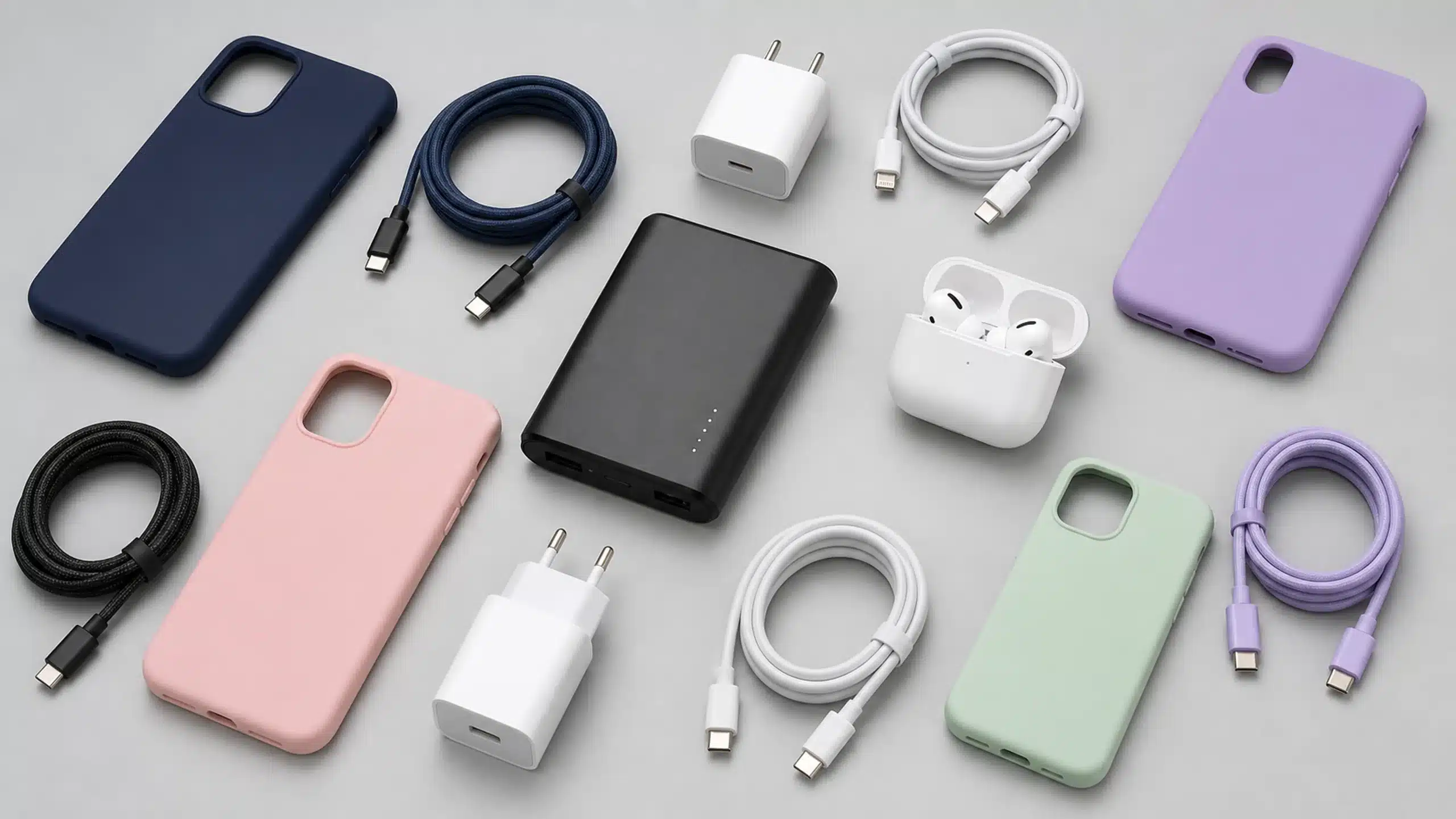
Imagine an illustrative purchase of rechargeable desk lights. The seller calls the finished item Light A; the battery in its specification is Pack B. The supplied summary lists Pack C. Similar appearance, capacity or branding does not explain why Pack C covers Pack B. The unresolved item is identity and applicability, even if every listed test result says “pass.”
Conversely, a summary need not use the finished light’s retail name in every circumstance. PHMSA’s stated description fields allow a cell or battery model number, or the product model number when the summary is established for a product containing the cell or battery. The issue is a supported connection, not an insistence that every name on every document be identical. A brand owner, product factory and battery manufacturer may appear in different roles; those roles should be understood.
The observable result in the example is therefore “coverage unresolved,” not “battery failed testing.” A missing connection cannot establish failure any more than a matching colour can establish coverage. The supplier needs to explain which listed entry describes the supplied configuration, supported by the relevant controlled product and battery records.
Access and format do not replace substance
PHMSA’s guidance says there is no prescribed summary format, provided the required elements are included, and describes availability through documents or websites. An unfamiliar layout is not automatically invalid. Equally, a familiar-looking certificate heading is not evidence that the required information is present.
The same guidance scopes its US summary requirement, including the exception for button cells installed in equipment. It should not be reduced to “every battery always needs this exact PDF with the shipment.” The transport rules applicable to the actual goods and journey must be considered. A request for the full report is also a different request from access to the summary; the names should remain distinct.
For wider product selection, the Yiwu electronics and gadgets guide gives sourcing context. Its broad category discussion does not establish which battery is installed in an order. That identity has to come from the actual supply records.
These groups identify the manufacturer and battery or product, the laboratory and report reference including its date, and the testing information and responsible person. They are not alternative documents or a substitute for PHMSA’s complete required elements.
A changed battery changes the evidence question
Return to the illustrative desk light. Suppose the first configuration is documented, but the factory proposes a different battery supplier before production. The old summary cannot be assumed to resolve the new configuration merely because the retail light SKU stays the same. The question becomes whether the supplied type remains the type to which the testing evidence applies.
That does not mean every change automatically requires the same response or a particular new test. Determining the consequences of the change requires the technical details and applicable rules. The buyer’s immediate conclusion is narrower: the previous identity connection must not be silently carried over. Keep the proposed battery identification and the associated evidence distinguishable from the earlier version.
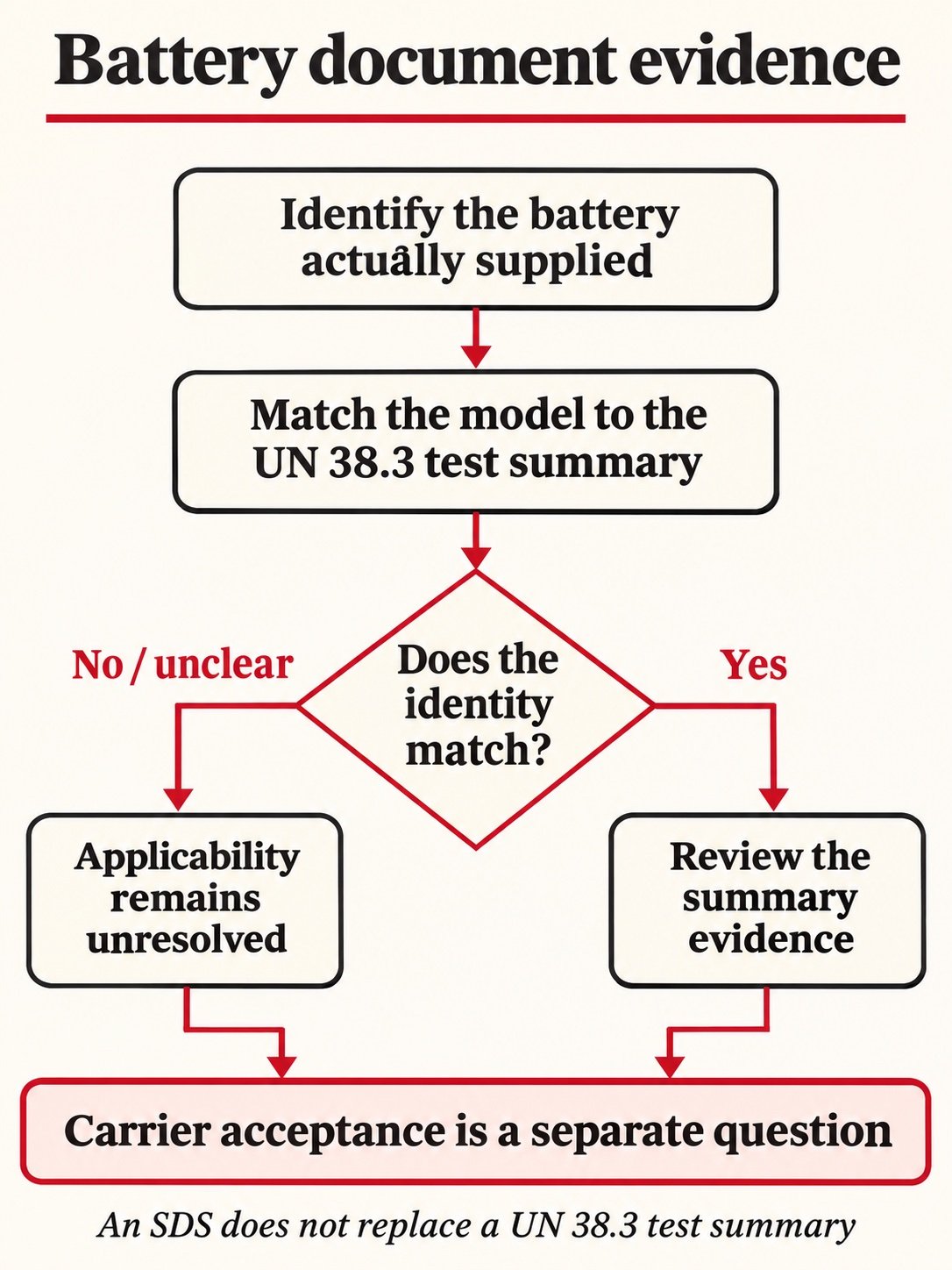
- Identify the battery actually supplied
- Match the model to the UN 38.3 test summary
- If the identity is unclear, applicability remains unresolved; if the identity matches, review the summary evidence
- Carrier acceptance remains a separate question
A summary is not permission to ship
Even a relevant, accessible summary does not settle classification, packing configuration, battery condition, applicable quantity provisions or the carrier’s acceptance of a specific consignment. The 2026 IATA guidance itself says it is guidance and should not be relied on as the source of regulatory compliance. A general online article offers still less authority.
For a sourcing discussion, submit the product specification, battery identification and destination for a service-scope check. Identify the outstanding document or model connection explicitly. This invitation does not promise laboratory testing, dangerous-goods qualification, carrier acceptance or that the service can handle the proposed assignment.
Заключение
The useful result is an evidence distinction. An SDS-only answer leaves a requested test summary unresolved. A summary for a different model leaves applicability unresolved. A relevant summary resolves neither every product requirement nor the shipment booking. Keep these conclusions separate and a document conversation becomes much more precise.
Frequently asked questions
Does an SDS replace the UN 38.3 summary?
No. They serve different purposes; an SDS is not a substitute for the applicable summary information.
Must the summary look like a certificate?
PHMSA does not prescribe a single format. The required information and its applicability matter.
Does a passed summary mean the goods can fly?
No. The actual consignment still needs assessment under applicable transport requirements and carrier acceptance.