Justin
The phone accessories that a US wholesaler sells you for $3.20 a unit usually leave a Chinese factory for around $0.70–$1.10 (indicative). That gap is not magic — it is a domestic distributor covering their own import cost, warehousing, and margin, then passing all of it to you. For a seller moving a few dozen units a month, paying that premium for convenience is fine. Once you are ordering by the carton, it quietly eats the margin that made the product worth selling in the first place.
This guide is about the other route: buying phone accessories wholesale direct from the factories in China that already supply most of those US distributors. It covers what actually sells, what a fair China price looks like by category, the certification traps that get lithium and wireless products held at customs, and the realistic minimum order you need before direct sourcing beats simply reselling from a domestic bulk supplier.
Key Takeaways
- Cases, cables, chargers, and screen protectors carry the widest China-direct margin because factory MOQs are low and US distributor markups are high — often 2.5x to 4x the FOB price.
- Anything with a lithium battery (power banks, wireless earbuds, magnetic power packs) needs UN 38.3 test reports and an MSDS before it can ship by sea or air. Skip this and the shipment gets held, not just delayed.
- Yiwu is the low-MOQ hub for cases, cables, holders, and pop-grips; Shenzhen is where chargers, power banks, and higher-spec electronics are actually engineered. Which city you source from should match the product, not habit.
- Direct sourcing usually pays off from roughly one mixed pallet upward. Below that, a US wholesaler’s markup is often cheaper than the freight, duty, and QC cost of a small China order.
- The two failures that ruin phone-accessory orders are wrong device compatibility (cases that don’t fit the exact model) and cables that pass a power test but fail data or fast-charge — both are catchable with a pre-shipment function check.
What “Phone Accessories Wholesale” Really Covers — and Where the Margin Is
“Phone accessories” is a catch-all for a dozen sub-categories that behave very differently once you are buying wholesale. A silicone case and a 20,000mAh power bank are both “phone accessories,” but one ships freely at a $0.40 unit cost and the other is a regulated dangerous good with a $4 floor. Knowing which bucket a product sits in tells you the MOQ, the margin, and how much compliance work stands between you and a clean delivery.
The categories below are ranked roughly by how much room there is between a Chinese factory price and a US wholesale price — which is where a direct buyer’s profit actually comes from.

| Categoria | Typical China FOB (unit) | Typical US wholesale | Compliance load |
|---|---|---|---|
| Silicone / TPU cases | $0.35–$0.90 | $1.50–$3.50 | Baixo |
| Tempered-glass screen protectors | $0.15–$0.45 | $1.00–$2.50 | Baixo |
| Charging cables (USB-C, Lightning) | $0.30–$1.20 | $1.80–$4.00 | Medium (MFi for Apple) |
| Wall / car chargers | $0.80–$3.50 | $3.00–$9.00 | High (FCC, UL/ETL) |
| Power banks | $3.00–$9.00 | $9.00–$22.00 | High (UN 38.3, MSDS, FCC) |
| Holders, mounts, pop-grips | $0.20–$1.50 | $1.50–$5.00 | Baixo |
| Wireless earbuds / audio | $2.50–$8.00 | $8.00–$20.00 | High (FCC, UN 38.3, Bluetooth) |
Price figures in this guide are indicative market ranges from current Yiwu and Shenzhen wholesale observation, not live quotes — confirm against a sample invoice for your exact spec, order size, and season. Regulatory, HS-code, and tariff figures are sourced and linked.
Read the table as a strategy, not just a price list. The low-compliance rows — cases, protectors, holders — are where a first-time direct buyer should start: high markup to capture, almost no regulatory risk, and MOQs low enough to test a design without committing thousands of dollars. The high-compliance rows are more profitable per unit but punish mistakes; they belong in your catalog after you have a supplier and an inspection routine you trust. If you are still mapping which product family to lead with, our Yiwu electronics and gadgets sourcing guide breaks the wider consumer-electronics aisle down the same way.
Buying Direct from China vs a US Wholesaler: The Real Math
The pages ranking for “phone accessories wholesale” are mostly US distributors who already imported the goods and now resell them by the case. They are genuinely useful — if your volume is low or you need stock this week, their markup buys you speed and zero import hassle. The question is not which route is “better” in the abstract; it is which one is cheaper at your order size once every cost is counted.
Where a US wholesaler wins
Small or unpredictable volume, no time to wait 25–40 days for ocean freight, and no appetite for compliance paperwork. If you are selling 30–100 cases a month and topping up as you go, a domestic supplier’s higher unit price is almost always cheaper than the freight and minimum-order cost of importing directly. You also avoid tying up cash in a container that takes six weeks to arrive.
Where China-direct wins
Predictable volume, a product you intend to keep selling, or anything you want to brand. Once you are buying a pallet or more per SKU, the factory-to-shelf math shifts your way — but in 2026 it is the tariff, not the FOB price, that decides by how much. A cable with a $0.72 factory price does not land at $0.72: add freight, the US Section 301 China duty, and handling, and it arrives closer to $1.05–$1.30 delivered. That is still comfortably under the $2.20 a domestic wholesaler charges — a real, defensible margin — but it is a duty-aware number, not the raw-FOB fantasy some sourcing blogs quote. Model the tariff before you assume the margin (worked example below). Direct sourcing is also the only way to put your own logo, retail packaging, or a custom color on the product — a US reseller can’t do that for you.
A useful rule of thumb: if a single SKU’s monthly order fills less than about a quarter of a pallet, price it against a US wholesaler first. If it fills a pallet or more, price it China-direct. Most sellers end up doing both — importing their proven winners and topping up the long tail domestically.
Where Phone Accessories Are Actually Made in China
Buyers lose money by sourcing the right product from the wrong city. Phone accessories cluster in three hubs, and each is priced and built for a different kind of order. Match the product to the hub and you get better prices with fewer surprises.

| Hub | Best for | MOQ style |
|---|---|---|
| Yiwu | Cases, cables, holders, pop-grips, ring stands, cheap earphones — commodity accessories in huge variety | Very low; mix many SKUs in one order |
| Shenzhen | Chargers, power banks, wireless earbuds, fast-charge cables — anything with a chip or a battery | Higher; factory-scale runs per model |
| Guangzhou | Leather and premium cases, packaging, display fixtures for retail | Medium; stronger on finish and branding |
For most sellers building a phone-accessory range, Yiwu is the practical starting point: its wholesale market lets you buy fifty different case designs, three cable types, and a rack of holders in a single consolidated order, at minimums a factory would laugh at. The trade-off is that Yiwu is a trading and commodity hub, so for battery products and higher-spec electronics you are better off closer to the Shenzhen factories that build them. We compare the two directly in our Yiwu vs Shenzhen electronics sourcing guide, and the accessory-dense corner of the market is mapped in the District 2 electronics guide.
MOQ, Pricing & How Order Size Changes Your Unit Cost
Two numbers decide whether a direct order makes sense: the minimum the supplier will accept, and how the unit price moves as you scale. In Yiwu’s market, a booth will often sell you a carton or two of a stock case design — a few hundred pieces — because the goods are already made. A Shenzhen factory building chargers to your spec will want 500 to 1,000 units per model before it starts a production run, because it is tooling and testing for you.
The price ladder you should expect
Unit prices step down at predictable break points. A USB-C cable might quote at $0.95 for 500 pieces, $0.72 for 2,000, and $0.58 for 10,000. The jump from sample pricing to the first real bracket is the biggest; after that, gains flatten. The practical lesson is to negotiate to the next break point, not to the floor — ordering 2,000 to shave three cents off 10,000-piece pricing you don’t need just parks cash in slow stock. If your target volume sits below a factory’s minimum, the market-based approach in our low-MOQ Yiwu sourcing guide is usually the cheaper path.
Costs that hide behind the unit price
The FOB quote is not your landed cost. Budget for retail or custom packaging (often $0.10–$0.40 a unit and quoted separately), a pre-shipment inspection, ocean or air freight, and import duty. For a mixed accessory order, consolidating multiple suppliers into one shipment is what keeps freight per unit sane — the mechanics of that are covered in our Yiwu shipping methods and costs guide.
Tariffs, not FOB, decide your landed cost
For a US importer, the biggest line in your 2026 landed cost is usually duty, not the factory price. Most phone accessories carry a low or zero base (MFN) rate, but they sit on top of Section 301 China tariffs and the surcharges layered on through 2025 — and those have moved repeatedly, with combined additional duty on many consumer-electronics lines running well above 30%. Because the rate is driven entirely by classification, know your HTS code before you cost an order and confirm the current number on the USITC tariff schedule. The headings that cover most of this category:
| Product | US HTS heading | Note |
|---|---|---|
| Hard-shell phone cases | 3926.90 | Plastic articles |
| Charging cables (USB-C / Lightning) | 8544.42 | Insulated conductors with connectors |
| Wall & USB chargers / adapters | 8504.40 | Static converters |
| Power banks (lithium-ion) | 8507.60 | Classified as the battery, not a charger |
| Wireless earbuds / TWS | 8518.30 | Headphones / earphones |
Put it together and a “$0.72 cable” tells you almost nothing on its own. Here is that same cable costed to the shelf on a 2,000-unit order — illustrative, so plug in your own freight and your current duty rate:
| Line item (per unit, USB-C cable) | Custo |
|---|---|
| FOB factory price | $0.72 |
| Sea freight + consolidation | ~$0.08 |
| US import duty (HTS 8544.42, illustrative 30%) | ~$0.22 |
| Inspection, handling, packaging | ~$0.12 |
| Landed cost | ~$1.14 |
| Same cable from a US wholesaler | $2.20 |
The duty line is the one that swings the answer, and the one most first-time importers forget. A cable that looks 3x cheaper at FOB is closer to 2x cheaper landed — still worth doing at volume, but only once you have priced it honestly.
Certification & Compliance: The Part That Gets Shipments Seized
This is the section that separates a smooth import from an expensive lesson. Phone accessories look harmless, but two features — radios and lithium batteries — put many of them under real regulation. Customs and carriers do enforce it, and “the supplier said it was fine” is not a defense when a pallet is sitting in bond.

| Requirement | Applies to | Why it matters |
|---|---|---|
| FCC | Chargers, earbuds, anything wireless | Mandatory for electronics sold in the US; missing marks risk detention |
| UN 38.3 + MSDS | Power banks, earbuds, any lithium cell | No transport test report, no legal air or ocean shipment |
| UL / ETL | Wall chargers, mains-powered items | Retailers and marketplaces increasingly require it for anything that plugs in |
| Apple MFi | Lightning cables and connectors | Non-MFi cables trigger “not supported” warnings and get returned |
| CA Prop 65 | Cases, cables sold into California | Warning-label exposure on certain plastics and phthalates |
The lithium rule that catches buyers off guard
Any product with a lithium cell — power banks, wireless earbuds, magnetic battery packs — becomes a regulated dangerous good the moment it enters a plane or ship, and 2026 tightened the rules. Three numbers govern whether it moves at all:
- Watt-hours, not mAh. Regulators read watt-hours; suppliers quote mAh. Convert it yourself: Wh = (mAh × voltage) ÷ 1000. A 10,000mAh bank at 3.7V is about 37Wh; a 20,000mAh bank about 74Wh — both under the line that matters.
- The 100Wh and 160Wh lines. Up to 100Wh (roughly 27,000mAh) ships under standard lithium provisions. From 100–160Wh you are in a restricted zone that needs carrier approval and quantity limits. Above 160Wh is banned from passenger aircraft and most air cargo won’t touch it — which is why an oversized “50,000mAh” bank is a freight headache, not a bargain.
- The 30% charge rule, new for 2026. Since 1 January 2026, lithium batteries and power banks moved as air cargo must ship at no more than 30% state of charge — a mandatory ICAO/IATA requirement, not guidance. A factory that ships them fully charged to “show they work” gets your whole consignment rejected at the airport.
On top of that, every lithium item needs a UN 38.3 test report (the eight-part transport-safety test) and an MSDS matched to the exact model, and spare cells or power banks travel carry-on only, never in the hold. Ask which freight forwarder your supplier has actually moved batteries with — one who has never shipped lithium by air will learn the rules on your money.
Three practical moves save most buyers from trouble. First, ask for the actual test reports as PDFs and check that the model number on the report matches what you are buying — recycled certificates for a different model are the most common trick. You can verify an FCC ID directly in the public FCC ID database. Second, for anything with a battery, confirm the supplier can supply the UN 38.3 transport documentation before you pay a deposit, not after. Third, for Lightning cables, insist on genuine MFi-certified product or skip that SKU — the returns from “not supported” pop-ups will erase the margin. Our customs compliance guide walks through the documentation customs actually asks for.
What We Check Before Your Order Ships
Phone accessories fail in specific, repeatable ways, so a pre-shipment inspection for this category is not generic box-ticking. When our team inspects an accessory order in Yiwu before it consolidates, this is the short list that catches the costly problems:
- Exact device compatibility. Cases are checked on the real target model — button cut-outs, camera ring, and port openings. A case that fits “close enough” is a return.
- Function, not just power. Cables are tested for data and fast-charge, not only that a light turns on. Chargers are checked against their rated output. A cable that charges but won’t sync is a defect buyers notice fast.
- Battery health and labeling. Power banks are checked for real (not overstated) capacity and correct battery warning labels, which also protects the shipment in transit.
- Screen-protector fit and clarity. Coverage against the actual screen, oleophobic coating present, no haze or bubbling out of the box.
- Packaging and drop resistance. Retail packaging matches the approved sample, and cartons survive a basic drop test so units don’t arrive scuffed.
Every point here is checkable before goods leave the country, which is the whole argument for inspecting on the ground rather than discovering defects after they land. For the wider methodology, see how we inspect product quality before shipping.
How to Source Phone Accessories Wholesale from China, Step by Step
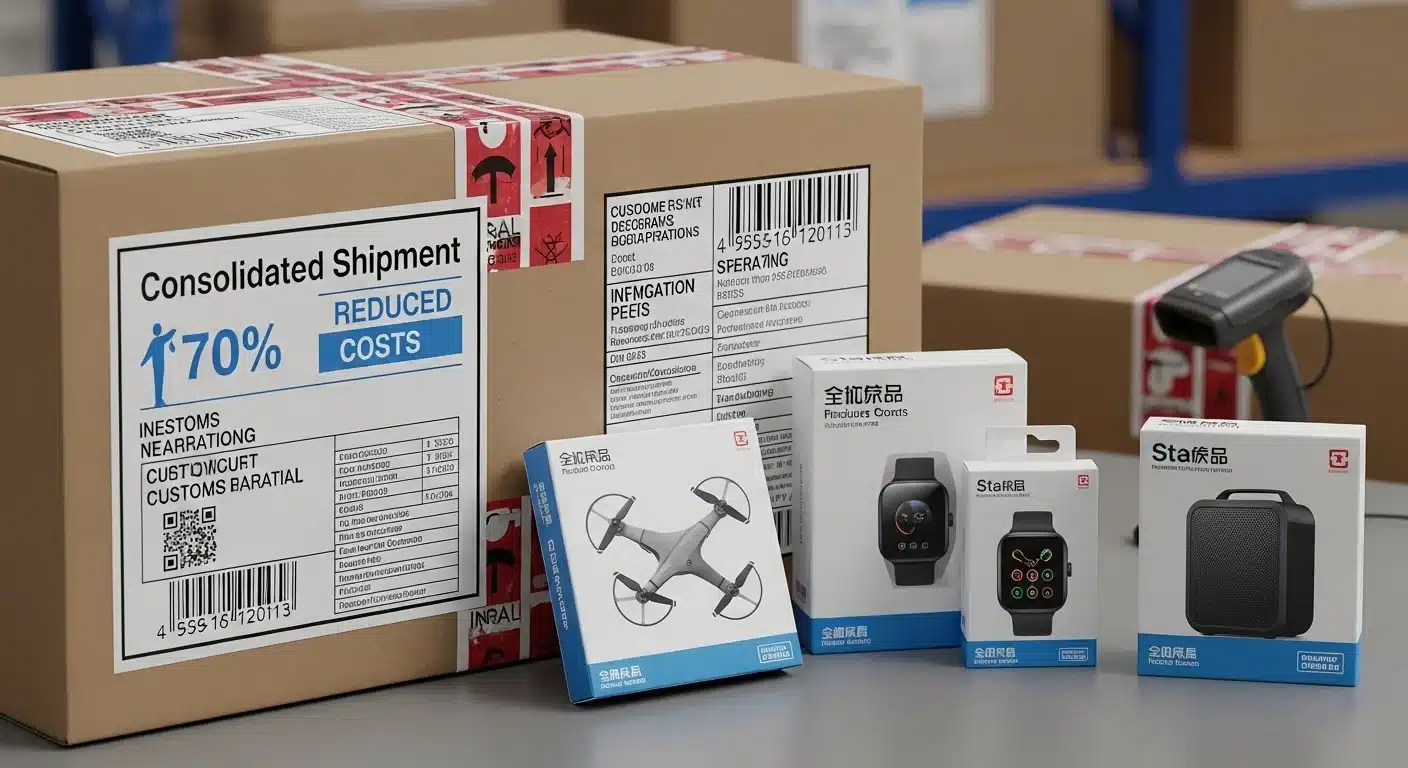
Put the pieces together and the process is straightforward, as long as you take the steps in order rather than paying first and checking later.
- Fix your product list and target models. Decide the exact phone models you are covering. A case range for last year’s flagships is dead stock; compatibility is everything in this category.
- Match each item to the right hub. Send cases, cables, and holders to Yiwu suppliers; route chargers, power banks, and earbuds to Shenzhen factories. Don’t force one supplier to do both cheaply.
- Order samples before anything else. Pay for samples of every SKU and test them on real devices. This is the cheapest insurance you will ever buy.
- Confirm certification up front. For any electronic or battery item, get the FCC and UN 38.3 documents before the deposit, and verify the model numbers match.
- Negotiate to the right price break, then lock terms. Agree unit price, packaging, lead time, and a clear defect/replacement policy in writing.
- Inspect, consolidate, ship. Run a pre-shipment check, combine suppliers into one shipment, and choose the freight mode that fits your timeline and battery constraints.
The difference between a first order that builds a business and one that becomes a cautionary tale is almost always steps three and four — sampling and certification — not the price you negotiated. Get those right and phone accessories are one of the most forgiving categories to import from China: light, compact, high-margin, and always in demand.
Perguntas mais frequentes
Is it cheaper to buy phone accessories direct from China than from a US wholesaler?
At volume, yes — but count the tariff, not just the factory price. A cable near $0.72 FOB lands closer to $1.05–$1.30 once freight, the US Section 301 China duty, and handling are added — still well under the ~$2.20 a US wholesaler charges, but not the 3x gap raw FOB suggests. And it only holds above roughly a pallet per SKU; for small or irregular orders a domestic wholesaler’s markup is usually cheaper than the freight and minimum-order cost of importing.
What is the minimum order quantity for wholesale phone cases from China?
For stock case designs in a market like Yiwu, a supplier will often sell a carton or two — a few hundred pieces — because the goods already exist. Custom-printed or private-label cases usually start at 500–1,000 units per design because the factory is running the job specifically for you.
Do I need special paperwork to import power banks and wireless earbuds?
Yes. Every lithium item needs a UN 38.3 test report, an MSDS, and FCC for the wireless part. Two 2026 traps: cells over 100Wh face restricted air freight (over 160Wh is banned from passenger planes), and since 1 January 2026 air-cargo batteries must ship at 30% charge or less. Confirm all of it, matched to the model, before you deposit.
Should I source phone accessories from Yiwu or Shenzhen?
Match the hub to the product. Yiwu is best for commodity accessories — cases, cables, holders, pop-grips — at low minimums with huge variety. Shenzhen is where chargers, power banks, and higher-spec electronics are engineered, so battery and chip products are usually better sourced there.
Can I put my own brand on wholesale phone accessories?
Yes — and it is one of the main reasons to buy direct rather than from a US reseller. Chinese suppliers routinely handle custom colors, printed logos, and retail packaging on cases, cables, and chargers, typically at a modest MOQ uplift. A domestic wholesaler cannot brand a generic product for you.
What is the most common defect in wholesale phone accessory orders?
Two dominate: cases that don’t fit the exact device model (wrong cut-outs), and cables that pass a basic power test but fail data transfer or fast-charging. Both are invisible in a photo and both are caught by a pre-shipment function check on real devices — which is why inspection matters more here than in most categories.
Written by the Yiwu Market Procurement Service team. Based in Yiwu, we help importers, Amazon sellers, and online retailers source, inspect, and consolidate phone accessories and consumer electronics — with hands-on supplier vetting, certification checks, and pre-shipment quality control.