 Justin
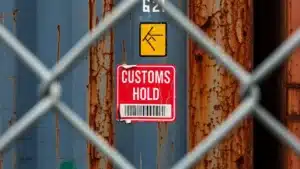
Customs algorithms now flag invoice mismatches in seconds. A missing HS code digit used to mean a manual review. Now it means an automatic 48-hour hold.
Key Takeaways
- Proforma invoices from Alibaba are preliminary quotes, not legal documents.
- Agents can consolidate HS codes because the system’s first six digits are uniform globally.
- An export license is a mandatory legal document issued by China’s State Administration of Foreign Exchange (SAFE).
- Agents help factories secure VAT refunds by ensuring precise paperwork alignment between customs declarations and supplier invoices, which is critical for China’s 13% refund.
- Audit proofing involves maintaining a consistent, version-controlled set of import documents for a minimum of five years.
- An Alibaba proforma invoice is just a price quote. Customs will reject it because it lacks the tax registration details required for legal clearance. You need a formal commercial invoice to move your freight.
- Good brokers group mixed SKUs under one 6-digit HS code. The World Customs Organization accepts this standard to speed up duty calculations. Accurate classification is the only way to guarantee a cost-effective landed price.
- Marking working products as free samples triggers an automatic CBP inspection. Duty-free entry requires the item to be physically mutilated or valued under one dollar. You cannot test the durability of destroyed goods when they finally arrive.
- Matching your factory paperwork to the customs declaration unlocks the 13% China VAT refund. For large orders, that cash back separates a profitable batch from a total loss. Leave the forms misaligned, and you bleed margin.
The wrong invoice traps your cargo at the port. A basic Alibaba quote lacks the binding legal details required by customs authorities. You will pay expensive storage fees while you wait, and your product quality suffers in a humid freight terminal.
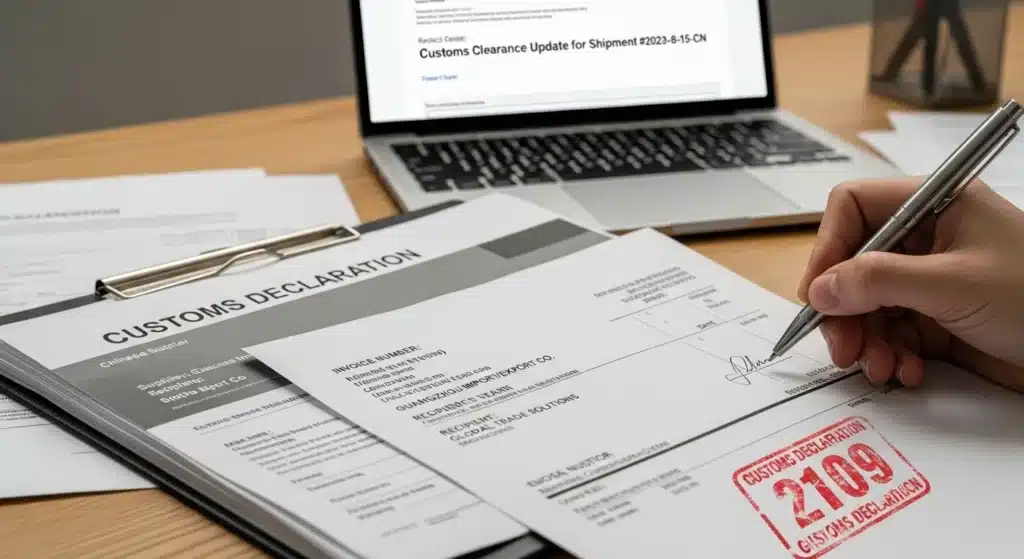
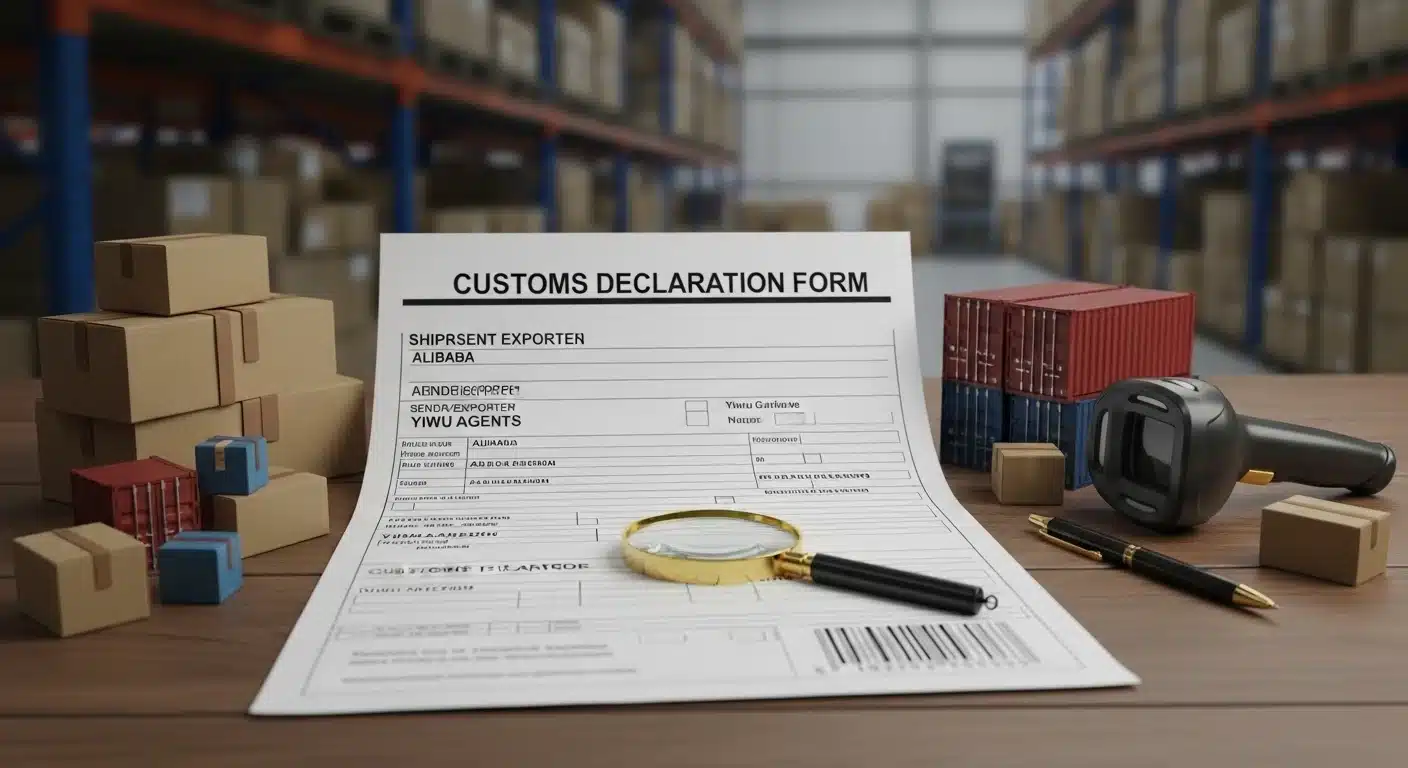
Mixing up an Alibaba supplier invoice with a Yiwu agent invoice will cost you money. A skilled agent groups multiple items under one HS code to keep duties low, making your overall order more cost-effective. We will show you how they align paperwork to secure China’s 13% VAT refund and which documents you must keep for five years to survive an audit.
The Problem with Alibaba “Proforma Invoices”
Proforma invoices from Alibaba are preliminary quotes, not legal documents. They outline terms like price and Incoterms but lack binding tax details and cannot be used to pay VAT or clear customs. Relying on them for official declarations risks customs delays, audits, and penalties due to mismatched or missing information.
| Document Type | Primary Purpose | Legal Status for Customs & Tax |
|---|---|---|
| Proforma Invoice | Non-binding preliminary quotation to confirm product specs, price, and terms. | Not valid. Cannot be used for VAT payment or final customs clearance. |
| Commercial Invoice | Legally binding record of sale issued after shipment. | Mandatory. Required by customs with full tax details and accurate HS codes. |

What a Proforma Invoice Is (and Isn’t)
An Alibaba proforma invoice is just a preliminary quote. You use it to lock in the price, specs, and delivery terms before sending a formal purchase order. It does not guarantee the factory will actually deliver the quality you negotiated.
The document lists your unit prices, total amounts, Incoterms, and payment terms. You need these numbers to get internal approval and start planning freight. Just remember that stated material durability on this sheet means nothing until you pass final inspection.
A proforma invoice holds zero legal weight for customs or tax purposes. You cannot use it to clear goods or claim VAT refunds. A commercial invoice, issued after the factory ships the goods, is the only binding document authorities will accept.
The Compliance Gaps and Import Risks
Submitting a proforma invoice to U.S. Customs is a fast track to an audit. Your final commercial invoice must match the entry summary down to the exact HS code and declared value. Proforma invoices rely on estimates, and that mismatch will immediately flag your shipment for inspection.
Mismatches mean stuck cargo, extra inspections, and steep fines. Freight forwarders and banks will also reject a proforma when you try to process a letter of credit. They only deal with binding commercial documents.
If the final commercial invoice changes the specs or prices from your agreed proforma, you lose control of your quality standards. Mismatched documents stall your payments and wreck your supply chain. Lock both documents into your contract to avoid these expensive disputes.
Why Agents Can Consolidate HS Codes (Simplify Duty)
Agents can consolidate HS codes because the system’s first six digits are uniform globally. This allows a single classification to cover shipments of multiple related items, such as sets or composite goods, reducing the number of line items on customs entries and streamlining duty assessment.

The Universal 6-Digit Foundation of the HS
The Harmonized System (HS) relies on a universal 6-digit code. Over 200 countries use this framework to classify 5,000 commodity groups. It covers roughly 98% of all global trade.
Those first six digits mean the exact same thing in Miami as they do in Rotterdam. Local governments only tack on extra digits after that shared base for regional tax rules. That shared standard is what lets you consolidate shipments.
Applying the Rules for Sets and Composite Goods
You handle mixed shipments using General Rules of Interpretation (GRI) Rule 3. This specific rule tells customs how to classify composite goods and retail sets. Master it, and you group related items together legally.
Rule 3 lets you group related items—like a fabric roll and finished garments—under one 6-digit code. Applying World Customs Organization (WCO) rules correctly cuts your customs line items down to a fraction. This keeps your sourcing cost-effective by reducing administrative fees at the border.
Fewer line items mean fewer classification errors and faster duty calculations. The WCO Explanatory Notes back up your consolidation so foreign customs agents accept it without pushback. That paperwork precision protects the durability of your vendor relationships by preventing surprise border holds.
Declaring Value: The Risk of “Sample” labeling
U.S. Customs and Border Protection (CBP) does not accept vague ‘sample’ labels to avoid duties. Legitimate duty-free entry for samples is strictly limited to items valued at $1 or less or that are physically mutilated. Functional goods declared as samples risk full duty assessment, shipment delays, and legal penalties for misdeclaration.

Why “Sample” Labels Don’t Work for Customs
CBP calculates your duty bill based on three immovable facts: the HTS code, the actual transaction value, and the country of origin. Write “samples” on your invoice in crayon if you want—it won’t budge the tariff. If you’re importing quality goods with real commercial value, customs will tax them as merchandise, period.
PS Form 2976-R and every other customs document demand specifics. “Samples” gets rejected immediately. List the exact contents—”men’s cotton shirts” or “stainless steel bolts”—to keep your cost-effective logistics on track.
The HTS 9811.00.60 exemption exists, but the rules are brutal. Each item must be worth under $1, or you must physically destroy it—drill holes, cut seams, permanently mark it—to render it useless. Functional, sellable goods never qualify.
Writing “sample, not for resale” on a finished product wastes ink. If the item exceeds $1 and isn’t mutilated, CBP sees durable merchandise ready for resale. You’ll pay duties on the full commercial value.
The Consequences of Mislabeling
Mislabeling hits your wallet immediately. CBP taxes the real commercial value, not the fake “sample” price on your paperwork. This “savings” trick always backfires, destroying your margins.
“Sample” declarations wave a red flag at inspectors. Your container sits for days, bleeding demurrage fees and breaking delivery promises. This wrecks the durability of your supply chain and turns routine shipments into expensive nightmares.
Lowball invoices lack durability under customs scrutiny. When your paperwork shows $8,000 but CBP records $12,000, they audit immediately. Expect a review of three years of import history.
Fraud is never cost-effective. CBP hits you with six-figure fines and criminal prosecution. They seize your goods and bill you for forced export or destruction.
Missing country-of-origin labels cost you extra. Under 19 CFR Part 134, unmarked goods trigger a 10% penalty duty on the total value. CBP enforces this whether the omission was accidental or deliberate.
Your Guide Through the World’s Largest Market

Export Licenses: Do Alibaba Sellers Have One?
An export license is a mandatory legal document issued by China’s State Administration of Foreign Exchange (SAFE). It authorizes a company to export goods and receive foreign currency payments. Not all Alibaba sellers have one; reputable suppliers provide them, but smaller entities may avoid the process, relying on third-party agents instead.

What a Valid Chinese Export License Contains
SAFE issues the real export licenses. The document displays an 18-digit registration code, legal address, and the company representative’s name. Cross-check these details before you wire any deposit.
The license also lists business scope, registered capital, and expiry date. Scan the QR code to verify details against China’s National Enterprise Credit System. Fake documents won’t link to active records.
When Licenses Are Required and the Risks of Not Having One
You need this license for restricted exports: electronics, chemicals, dual-use items. Quality marks like CCC, CE, or FDA mean nothing without the base export permit. Stack every certificate or lose the shipment.
Unlicensed suppliers face customs holds, seized cargo, and border fines. Getting their own export license takes time and money. Paying a third-party trading agent about 1% of the shipment value is a highly cost-effective workaround.
VAT Refunds: How Agents Help Factories Claim 13%
Agents help factories secure VAT refunds by ensuring precise paperwork alignment between customs declarations and supplier invoices, which is critical for China’s 13% refund. They also manage complex EU refund claims for non-EU businesses under directives like 2008/9/EC, handling multi-state rules, deadlines, and audits to prevent costly rejections.

The Core Challenge: Precision in Paperwork for China’s 13% Refund
China’s VAT Model B system charges a flat 13% on exports. Tax authorities only approve refunds when customs declarations perfectly match supplier invoices. Company names, product quantities, and measurement units must align down to the letter.
A single typo or wrong unit of measure triggers an immediate rejection or months of delays. Good agents cross-check every line item before the documents hit customs. This prevents your cargo from getting stuck at the port.
Agents usually buy straight from the factory floor instead of going through trading firms. Cutting out middlemen eliminates traceability headaches during customs inspections. Direct sourcing also makes it much easier to verify material quality and durability before the goods ship.
Non-EU businesses claim European VAT refunds under the 13th Directive or Directive 2008/9/EC. The 13th Directive requires a reciprocal tax agreement between your home country and the EU member state. You submit the actual claim electronically to your local tax authority, packing it with invoices, VAT numbers, and export proof.
EU member states all play by slightly different rules. Germany takes 4 to 8 months to process a claim, while Spain rejects anything under a €1,000 invoice threshold. Agents track these moving targets—like the September 30 deadline for the prior year’s claims—and will fight to get you interest payouts if the tax office drags its feet.
EU tax authorities can reverse your VAT refunds years later if they spot a compliance gap. A good agent builds your filing to survive that exact scrutiny. This protects the factory’s actual cash recovery.
Audit Proofing Your Imports
Audit proofing involves maintaining a consistent, version-controlled set of import documents for a minimum of five years. This prevents penalties by ensuring your commercial invoices, HS code classifications, and declared values align perfectly with official filings in the CBP’s Automated Commercial Environment (ACE).
| Document Type | Purpose | Retention Period |
|---|---|---|
| Commercial Invoice & Packing List | Verifies declared value, quantity, and description of goods. | 5 years minimum |
| HS Code Classification Notes | Justifies tariff classification and duty rate applied. | 5 years minimum |
| CBP Form 7501 (Entry Summary) | Official record of entry; must match commercial documents. | 5 years minimum |
| Country of Origin / USMCA Certifications | Supports claims for duty-free treatment under trade agreements. | 5 years minimum |
| Importer Security Filing (ISF) | Required for ocean shipments; part of security data. | 5 years minimum |

The Core Documents You Must Keep
U.S. Customs requires you to keep all entry documents for five years. They use this five-year window to audit past shipments at any time. Lose the paperwork, and you lose your defense.
You must keep the commercial invoice, packing list, and your internal notes that justify your declared tariff code. Customs agents target your HS code classification first during a review. If your internal notes don’t back up the code, you pay the tariff difference.
Keep your certificates of origin and USMCA paperwork to prove you earned those lower duty rates. Your ISF filings and CBP Form 7501 must match the commercial invoice exactly. Even a small mismatch between the entry summary and your commercial paperwork is an easy fine for Customs.
Conducting a Proactive Self-Audit
Auditing your own files before Customs shows up is a cost-effective way to find errors. Sample your past shipments and look for mismatches, exactly like a CBP inspector would. Catching your own mistakes always beats paying government penalties.
Start by checking if you used the same HS code for identical products across different shipments. Inconsistent classification triggers immediate red flags. Then, compare your declared values on the 7501 against the actual invoices to ensure the price reflects the true quality and durability of the goods.
Cross-check your origin certificates against your internal purchase orders. Next, line up those POs against your Automated Commercial Environment (ACE) filings to catch value mismatches before CBP flags them. Filing a post-summary correction in ACE costs you five minutes, but it is the most cost-effective way to avoid a $10,000 penalty down the road.
Considerações finais
An Alibaba proforma invoice locks in your unit price, but submitting it to customs is a rookie mistake. It lacks the legal weight and accurate HS codes required for official entry. A Yiwu agent’s commercial invoice is built for customs from day one, ensuring the declared value matches the actual quality of the goods you paid for.
Good agents do more than generate paper. They consolidate HS codes, verify export licenses, and stop suppliers from mislabeling commercial goods as free samples. That paperwork discipline keeps your containers moving, protecting the durability of your supply chain against sudden customs holds.
Perguntas mais frequentes
Does Alibaba provide a commercial invoice?
Yes, Alibaba provides VAT invoices for orders where it collects tax at checkout. But the complete commercial invoice for customs clearance should come directly from your supplier. This document must include 10-15 specific data points like seller and buyer details, a unique invoice number, product description with HS Code, quantity, unit price, total value, country of origin, shipping Incoterms, and the supplier’s signature. Always request this from your Alibaba supplier to ensure smooth customs processing.
How is customs value declared for imports from China?
The primary method is the transaction value, which is the price paid for the goods plus costs like transportation and insurance to the port of entry. Customs officials can require alternative valuation methods if they doubt the declared price. For shipments with a declared value over RMB 5,000, or those under this threshold but exceeding quantity limits, accurate documentation including product descriptions, HS codes, and Incoterms is critical. Providing insufficient detail can lead to delays, duty adjustments, and penalties.
Do I need an export license when using a sourcing agent?
The sourcing agent itself does not need a specific export license. The legal requirement falls on the U.S. Principal Party in Interest (USPPI)—the exporter who controls the shipment. This party must determine if an export license is needed based on the item’s Export Control Classification Number (ECCN), destination country, end user, and end use, following U.S. Bureau of Industry and Security (BIS) regulations. License processing can take up to 3-6 months depending on various factors.
Can I undervalue goods on customs declarations to save on duties?
No, undervaluing goods is illegal and constitutes customs fraud. Importers must declare the true transaction value—the price actually paid or payable—on CBP Form 7501 and the commercial invoice. Penalties for falsifying invoices or using other methods to lower declared value include significant fines, potential imprisonment, and increased duty assessments. This rule applies regardless of value, even for shipments under the $800 duty-free threshold.
What is the China VAT refund for exporters?
China’s VAT refund is an export rebate system where manufacturers can claim back a portion of the Value-Added Tax paid on inputs during production. The refund rates vary by product category, ranging from 0% to a maximum of 13%. The system is designed to keep Chinese exports competitive by not burdening them with domestic tax costs. Factories use this mechanism, and a sourcing agent can help ensure all documentation is correct to facilitate the claim.
Sourcing from 1688? Using the factory’s default stock photos kills your conversion rate. Hire a local Shenzhen studio to shoot the actual product instead.