Justin
Roughly one in three pairs of socks on the planet is knitted within an hour’s drive of Yiwu. The neighboring town of Datang alone runs tens of thousands of knitting machines, and Yiwu’s District 4 puts that output under one roof — combed-cotton dress socks, terry sports socks, novelty crew socks, compression sleeves, and baby booties, booth after booth. For a buyer, that concentration means you can spec a private-label sock and get real quotes from a dozen factories before lunch.
Socks look simple, which is exactly why buyers underestimate them. The difference between a sock that survives 40 washes and one that pills and loses its cuff after five comes down to yarn grade, needle count, and finishing — none of which show in a photo. This guide covers what Yiwu’s sock market sells, how yarn and needle count drive price, realistic MOQs for stock and custom orders, and the quality checks that separate a reorder from a return.
Key Takeaways
- Yiwu’s sock trade centers on District 4, fed by Datang’s knitting cluster — the largest sock production base in the world.
- Stock socks carry low MOQs (often a few dozen dozen); custom-knit or private-label runs start around 500–1,000 pairs per design.
- Needle count (144N to 200N+) and yarn grade drive both feel and price — combed cotton outlasts carded cotton by a wide margin.
- Custom logo socks are Yiwu’s strength: computerized knitting or jacquard beats printing for durability.
- The four defects that matter: inconsistent sizing, weak toe seam, cuff elastic that won’t recover, and colors that bleed.
- Socks are dense cargo, so freight is cheap per unit — the opposite of bulky goods; volume orders ship economically by sea.
What Yiwu’s Sock Market Sells
The category is deeper than most buyers expect. Booths in and around District 4 specialize, so knowing the segment you need shortcuts the search.
- Everyday cotton socks — crew, ankle, and no-show styles in combed or carded cotton. The volume core of the market.
- Sports and performance — terry-cushioned, arch-support, and moisture-wicking socks, often with spandex and nylon blends.
- Dress and business socks — fine-gauge 200-needle mercerized cotton, the tier retail brands private-label most.
- Novelty and gift socks — jacquard patterns, character designs, holiday sets in gift boxes. A huge seasonal export.
- Compression and medical — graduated compression socks and sleeves, a growing line that carries its own testing requirements.
- Baby and kids — anti-slip booties and combed-cotton kids’ socks, where softness and safety labeling matter most.
Many District 4 booths are sales fronts for Datang or Yiwu-area knitting factories. Because the production base is so concentrated, the gap between a trading company’s price and the mill’s is often smaller here than in other categories — but it still pays to know who actually knits your order. See how to tell a factory from a trading company before you commit to a custom run.
Yarn and Needle Count: Where Sock Quality Lives
Two specs decide whether a sock feels cheap or premium, and both are invisible until you handle the goods. Get these right and everything else follows.
Needle count is the number of knitting needles on the cylinder — 144N is coarse and cheap, 168N is the everyday standard, and 200N or higher gives the fine, smooth hand of a dress sock. A higher needle count means a denser knit, a finer surface, and a higher price. Buyers who quote without specifying needle count get whatever is cheapest to knit.
Yarn grade matters just as much. Combed cotton removes the short fibers that cause pilling, so it stays smooth far longer than carded cotton at a modest cost premium. Mercerized cotton adds sheen and strength for dress socks. Bamboo and modal blends sell on softness and moisture-wicking. The blend ratio — cotton to spandex to nylon — sets both stretch and durability.
| Tier | Typical spec | EXW / pair | Best resale channel |
|---|---|---|---|
| Economy | 144N carded cotton/poly | $0.12–$0.25 | Multipacks, promo, dollar stores |
| Standard | 168N combed cotton blend | $0.25–$0.55 | General retail, e-commerce |
| Premium | 200N mercerized / cushioned sport | $0.55–$1.20 | Branded DTC, dress, performance |
| Specialty | Graduated compression / medical | $0.80–$2.50+ | Health retail, pharmacy channels |
MOQ and Custom Private-Label Socks
Socks are one of Yiwu’s most private-label-friendly categories, which is why so many DTC sock brands source here. Two paths exist:
- Stock socks — buy existing designs off the booth. MOQs are low, often a few dozen dozen per style, and you can mix. Fast, but you share the design with every other buyer.
- Custom knit — your logo, colors, and pattern knitted in. Computerized knitting machines make this economical from roughly 500–1,000 pairs per design, with your own packaging on top.
For custom work, insist on knitting the logo rather than printing it. A knitted or jacquard logo is part of the fabric and survives washing; a heat-pressed print cracks and peels within a season and drives returns. This single choice separates brands that reorder from brands that don’t. If you’re building a labeled line, the mechanics mirror any private-label sourcing project in Yiwu — tooling, artwork approval, and a pre-production sample sign-off before the full run.
Get a knitted pre-production sample and approve it in hand before the factory runs the order. Colors shift between a screen and knitted yarn, and sizing needs a physical check. Approving from a photo is how buyers end up with 5,000 pairs in the wrong shade.
Quality Control: Four Defects to Catch
Sock defects are subtle and slip past a casual look, then surface as one-star reviews. Four issues cause most sock returns, and each is checkable on samples and in a pre-shipment inspection.
Inconsistent sizing. Cheap knitting drifts, so a “size 40–45” sock can vary pair to pair. Measure the foot length and cuff width across several pairs from different cartons — not one showroom sample.
Weak toe seam. The toe closure is where socks fail first. Hand-linked (seamless) toes are smoother and stronger than rough overlocked seams. Turn samples inside out and check the seam, then stretch it to see if it holds.
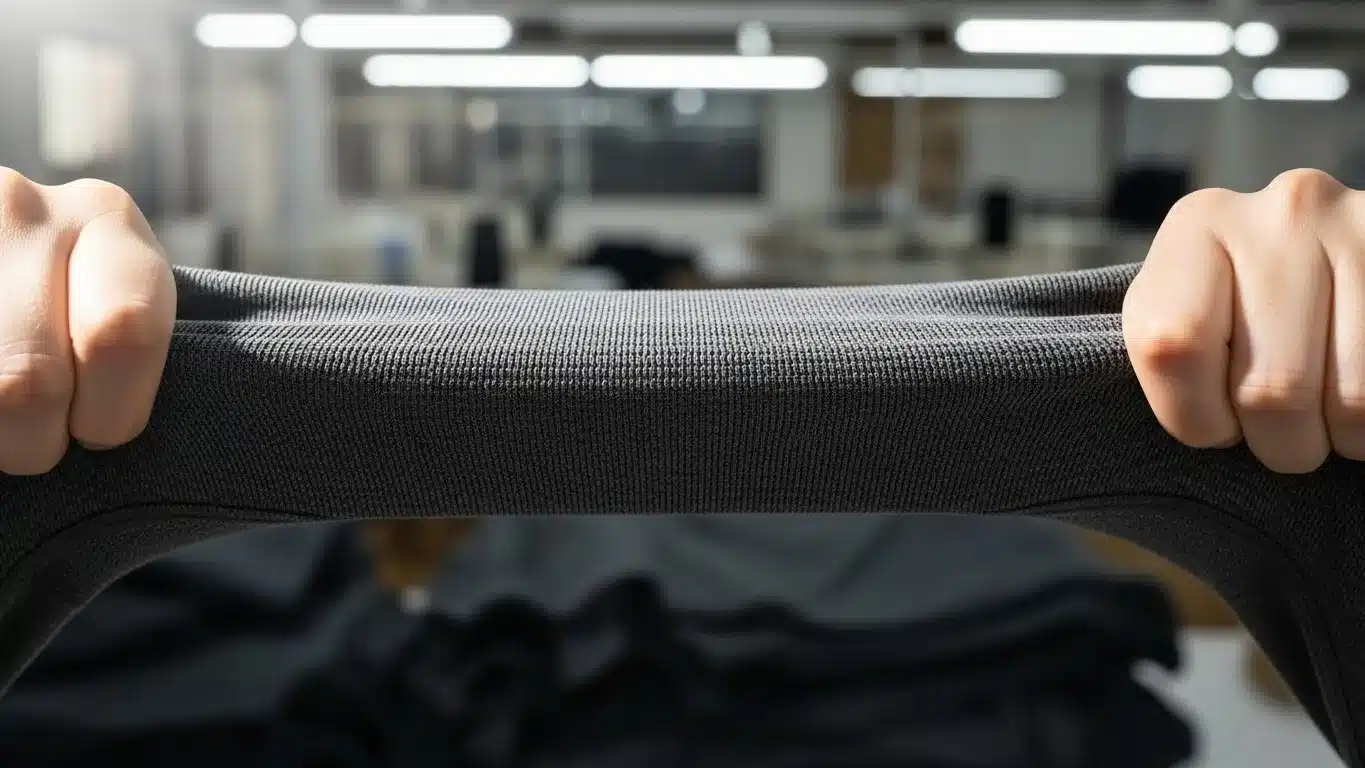
Elastic that won’t recover. A cuff that stretches but doesn’t spring back means low-grade spandex or too little of it. The sock slides down in wear and gets returned. Stretch the cuff fully and watch it recover — good elastic snaps back cleanly.
Color bleeding. Dark and bright dyes can run in the first wash, ruining a customer’s laundry. Ask for a colorfastness result and wash-test a sample before you approve the batch.
Fold these into a formal AQL inspection before releasing the balance, with the inspector pulling pairs from packed cartons across the whole order. For socks sold to Amazon or regulated retail, confirm fiber-content labeling and any children’s-product safety requirements up front, because mislabeled fiber content is a common compliance failure.
Freight: The Good News for Sock Buyers
Unlike bulky categories, socks are dense and pack tight, so freight is cheap per unit and rarely the deciding cost. A carton of socks bills close to its actual weight, with no volumetric penalty. That means:
- Small and mid-size orders move affordably by sea LCL; volume runs justify a full container.
- Air freight is viable for urgent restocks or high-value compression lines without wrecking the margin.
- Socks consolidate beautifully with lighter, bulkier goods to balance a mixed container’s weight and cube.
Because per-unit freight is low, the landed-cost story for socks is dominated by yarn grade and MOQ, not shipping — the reverse of categories like artificial flowers. Run the numbers with our landed cost breakdown to see where your real cost sits.
Match the Sock to Your Channel
| Best for | Not ideal for |
|---|---|
| DTC sock brands wanting knitted-logo custom runs at 500–1,000 pairs | Brands wanting sub-100-pair custom designs (below custom-knit MOQ) |
| E-commerce and retail sellers needing consistent 168N combed-cotton stock | Buyers judging quality from photos without a physical sample |
| Seasonal and gift-set importers ordering months ahead | Last-minute holiday buyers competing for peak knitting capacity |
| Health retailers sourcing compression socks with proper testing | Medical-claim sellers expecting certified compression without documentation |
What We Check Before Accepting a Sock Supplier
Socks reward a disciplined vetting routine because the defects are small and repeat across thousands of pairs. Before any deposit, our team confirms:
- Business license name matched to the quotation and the receiving bank account.
- Whether the booth knits the order or brokers it to a Datang/Yiwu mill, and the actual needle count and yarn grade in writing.
- A knitted pre-production sample approved in hand for color, size, and logo method before the full run.
- Wash-test and stretch-recovery test on samples for bleeding, sizing drift, and elastic.
- An AQL inspection on packed cartons, with fiber-content and safety labeling verified for the destination market.
For the full cross-category vetting method, see the complete Yiwu sourcing guide.
If you’re sourcing stock socks or building a private-label sock brand — and want the needle count, yarn grade, and logo method verified before you pay a deposit — our Yiwu team can source, sample, inspect, and consolidate the order for you.
Questions fréquemment posées
Where are socks sold in Yiwu market?
Socks are concentrated in District 4 of the Yiwu International Trade City, the textiles and hosiery zone, supplied largely by the Datang knitting cluster nearby. Expect everyday cotton socks, sports and dress socks, novelty gift sets, and compression lines across the booths.
What is the minimum order for custom socks in Yiwu?
Stock socks can be bought at low MOQs, often a few dozen dozen per style. Custom-knit, private-label socks with your own logo and packaging typically start around 500–1,000 pairs per design, because the knitting machines need to be set up for each pattern.
Should a custom logo be knitted or printed on socks?
Knitted or jacquard logos are far more durable because they are part of the fabric and survive washing. Heat-pressed prints tend to crack and peel within a season, driving returns. For any branded sock line, choose computerized knitting over printing.
What does needle count mean for sock quality?
Needle count is the number of knitting needles on the machine cylinder. 144N is coarse and economical, 168N is the everyday standard, and 200N or higher produces the fine, smooth feel of a dress sock. Higher needle count means a denser knit and a higher price, so always specify it in your quote request.
Written by the ChineseYiwu Sourcing Team — based inside the Yiwu International Trade City since 2005, with 50+ sourcing specialists handling supplier verification, quality inspection, and consolidated shipping for importers worldwide.