Justin
Running a product quality inspection in China for your first Yiwu order feels like a gamble when you’ve never seen the production line. The real question isn’t whether to do it—it’s how to make sure the inspection actually catches the defects that could get your Amazon account suspended.
Key Takeaways
- The gap between market sample and bulk production is where your Amazon account gets suspended.
- Third-party QC costs $150–$300 per man-day; a failed Amazon shipment costs $2,000–$5,000.
- DUPRO catches material swaps; PSI catches packing defects.
- Five steps to guarantee your Yiwu order matches sample quality before final payment.
Smart importers know that a pre-shipment inspection following AQL standards can catch up to 90% of defects. The cost? Roughly $150–$300 per man-day in Yiwu. Compare that to the $2,000–$5,000 hit of returning a rejected FBA shipment. Here’s the kicker: you can negotiate to hold 10–20% of payment until the inspection report is approved. That gives you real use before the container leaves.
Why Most Yiwu Quality Inspections Fail to Protect You
The gap between market sample and bulk production is where your Amazon account gets suspended.
Most buyers rely on supplier self-inspection or skip QC entirely. That is exactly why most Yiwu quality inspections fail to protect you. The biggest trap is the ‘market sample’ — a hand-picked unit the supplier shows you. It is not made from the same materials or process as your bulk order. When production starts, cheaper substitutes slip in without notice.
- Market sample trap: Suppliers pull the best unit from the showroom. Bulk production uses standard materials, often lower grade. Without a pre-production sample approved from the same run, you are buying blind.
- Material substitution risk: Stainless steel grade, fabric thickness, plastic composition — changes happen mid-production. A third-party inline inspection at 20–30% completion catches these switches before 80% of your order is packed.
- Self-inspection failure: Amazon FBA suspends accounts when defect rates exceed 1%. If you rely on supplier photos or your own untrained eye, you will miss defects. A proper pre-shipment inspection using AQL sampling catches up to 90% of defects.
- Critical defects: Zero tolerance. Safety hazards, electrical failures, or anything that could trigger an Amazon account suspension.
- Major defects: Up to 2.5% of inspected units can have functional or cosmetic issues that reduce usability. On a 315-unit sample, that is 8 units allowed.
- Minor defects: Up to 4.0% of units with slight blemishes or packaging flaws that do not affect functionality.
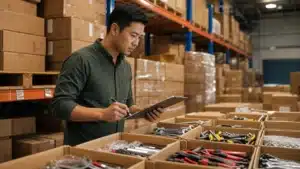
The fix is straightforward. Schedule a third-party pre-shipment inspection (PSI) using AQL standards. In Yiwu, this costs $150–$300 per man-day — one inspector checks roughly 1,000 units per day. Compare that to the $2,000–$5,000 loss from a single rejected Amazon FBA shipment or the 2–3× product value cost of returning defective goods to China. The AQL thresholds used by most QC firms are: critical defects 0%, major defects ≤2.5%, minor defects ≤4.0%. Anything above that means the shipment fails, and the supplier must rework at their cost.
Smart importers negotiate a clause holding 10–20% of total payment until the PSI report is approved. That gives you real use to demand corrections without risking your full balance. Without that, the supplier has little incentive to fix defects once the container is on the water.
Real Cost Breakdown of Product Inspection in China
Third-party QC costs $150–$300 per man-day; a failed Amazon shipment costs $2,000–$5,000.
Here is where most newcomers get the math wrong. They see a $250 inspection fee and think of it as an expense to cut. The real cost is the alternative: a container of defective goods lands at Amazon, your defect rate spikes above 1%, and your account gets suspended. One inspector in Yiwu can check roughly 1,000 units per day for that $250. Compare that to the $2,000–$5,000 you lose on a single rejected FBA shipment — freight, duties, disposal fees — plus the intangible cost of lost sales rank.
- Inspection fee (per man-day): $150–$300 for one inspector covering ~1,000 units. Travel within Yiwu is usually included; out-of-town trips add $50–$100.
- Reinspection fee: If the goods fail PSI and the supplier does rework, the second inspection is typically charged at the same per-day rate — unless your contract states the supplier pays for it.
- Return cost of rejected goods: Returning defective products to China costs 2–3x the original product value after freight, duties, and handling. You are better off having them reworked locally or writing off the batch.
- Use in your contract: Smart importers put a clause holding 10–20% of the total payment until the PSI report is approved. That gives you real power to demand fixes without risking your full order value.
| Poste de coût | Typical Cost (USD) | Impact |
|---|---|---|
| Third-Party QC (1 Man-Day) | $150 – $300 | Covers up to 1,000 units; catches 90% of defects |
| Rejected Amazon FBA Shipment Loss | $2,000 – $5,000 | Includes storage, return shipping, and account suspension risk |
| Returning Rejected Goods to China | 2–3x Product Value | Freight, duties, and handling make rework extremely expensive |
| Reinspection Fee (After Failed PSI) | $150 – $300 | Usually buyer’s cost unless contract states otherwise |
| Payment Use (Hold 10-20%) | N/A | Gives you power to demand corrections before full payment |
Pre-Shipment Inspection vs In-Line Inspection: Which Do You Need?
DUPRO catches material swaps; PSI catches packing defects.
You have two main inspection windows: in-line (DUPRO) at 20-30% production completion, and pre-shipment (PSI) when goods are 80%+ packed. Each serves a different purpose. DUPRO is the only way to verify that the factory is using the same materials and specs as your approved sample before they run the entire batch. PSI, on the other hand, checks final quality, quantity, and packaging readiness. New Amazon sellers often skip DUPRO to save $150-$300, but that’s where suppliers quietly substitute lower-grade stainless steel, thinner fabric, or weaker adhesives. If you only do PSI, you’ll catch the defect after it’s too late to fix without a costly rework delay.
- When to use DUPRO: Custom products with unique specs, or any order above 500 units. The $150-$300 cost is insurance against a full container of wrong materials. A single material swap can sink your Amazon listing—FBA suspension risk spikes if defect rate exceeds 1%.
- When to use PSI alone: Standard stock items (no custom labeling, no material changes) under 500 units. PSI at AQL Major 2.5% catches packing errors, broken units, and cosmetic issues. It costs the same as DUPRO but doesn’t verify production mid-run.
- Decision rule for new sellers: If MOQ is over 500 units or you have any custom element (logo, color, packaging), budget for DUPRO + PSI. If it’s a generic item from a known supplier, PSI alone is acceptable. Never skip inspection entirely—returning rejected goods from China costs 2-3x the product value.
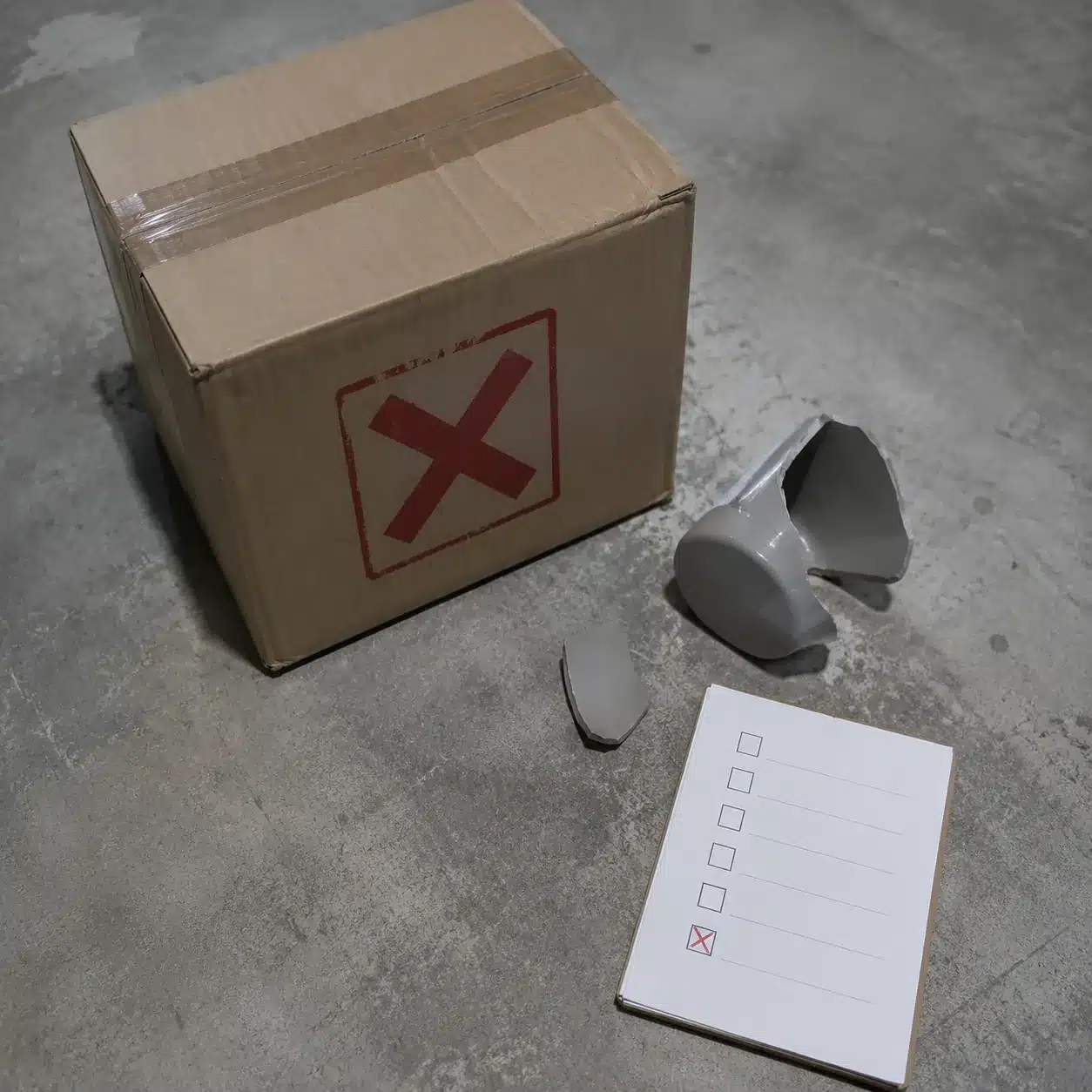
How to Set Up a Foolproof Quality Control Process for Yiwu Orders
Five steps to guarantee your Yiwu order matches sample quality before final payment.
Most Amazon sellers lose use the moment production starts. A standard PSI (pre-shipment inspection) at 80% packed catches defects but gives you zero control over the manufacturing process. That is why your QC process must start before the first unit is produced. Here is the exact sequence experienced importers use for Yiwu orders.
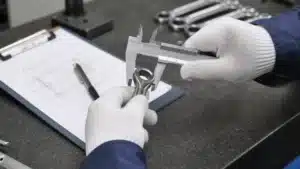
- Step 1 – Pre-production Sample Approval: Demand a pre-production sample made from the same materials and production line as the bulk order. Supplier market samples are often hand-picked or built with higher-grade materials. Test color, dimension (±0.5mm), weight, and function. Do not approve until everything matches your spec sheet.
- Step 2 – Schedule DUPRO (In-Line Inspection) if MOQ > 500 units or specs are custom: DUPRO at 20-30% production completion catches hidden issues like material substitution (e.g., 304 stainless swapped for 201). One inspector can verify material with a portable spectrometer or chemical spot test. Cost: same as PSI ($150–$300/man-day). Without it, you risk discovering a defect after 80% of goods are sealed in cartons.
- Step 3 – AQL Sampling for Pre-Shipment Inspection (PSI): Use AQL standard: Critical defects 0%, Major ≤2.5%, Minor ≤4.0%. For a 3,000-unit order, the inspector pulls 315 random cartons and checks 315 units. If more than 8 major defects appear, the lot fails. Request the inspection when at least 80% of goods are packed to ensure final carton quality matches.
- Step 4 – Review Report & Approve or Request Rework: Receive a report with defect photos, measurements, and quantities per defect type. If the defect rate exceeds AQL limits, reject the lot and demand rework. The supplier must sort or rework at their cost. Negotiate a 48-hour re-inspection window in your contract – otherwise you lose shipping slots. Re-inspection fee is typically $150 if the first inspection failed, payable by the supplier if the contract says so.
- Step 5 – Release Final Payment Only After Passed Inspection: Hold 10-20% of the total amount as use. Do not wire the balance until you have the approved PSI report in hand. Once payment clears, your use drops to zero. Smart suppliers know this is standard – if they push back, that is a red flag about their production consistency.
Conclusion
A pre-shipment inspection using AQL standards catches up to 90% of defects before your order leaves Yiwu. At $150–$300 per man-day, it costs a fraction of what one rejected Amazon FBA shipment would cost you. And that 10-20% payment hold ensures your supplier has real incentive to fix problems.
Set up this inspection process before you place your next order. If you want to delegate the whole thing, a Yiwu-based sourcing agent can handle supplier verification, in-line checks, and final PSI for you.
Questions fréquemment posées
What is AQL and how is it used in product inspection in China?
AQL (Acceptable Quality Limit) is a statistical sampling standard that determines the maximum number of defects allowed in a random sample for the shipment to pass. During. Always confirm the AQL level and sampling plan in your inspection contract before production starts.
How much does third-party quality inspection in China cost?
Third-party QC in Yiwu typically costs $150–$300 per man-day, so a standard pre-shipment inspection runs $200–$600 total. The exact fee depends on the product type, inspection scope. Schedule the inspection before making final payment and always review the report before releasing funds.
Can I do my own product inspection when sourcing from Yiwu?
Yes, you can inspect your own goods, but without local market knowledge and proper tools you risk missing material substitutions or hidden defects. If you go. For any order sold on Amazon FBA, a trained third-party inspector is still the safer bet.
What happens if my shipment fails pre-shipment inspection?
You can reject the goods and withhold final payment until the supplier reworks or replaces the defective units. A reinspection is then required, which adds another $150–$300. Always keep at least 10–20% of the payment as use until the shipment passes re-inspection.
Do I need quality control for small orders from Yiwu?
Yes, even a small order can have defects that hurt your Amazon rating or cause a listing suspension. A scaled-down inspection using. Budget a minimum of $200–$300 for any order over $1,000 to reduce your risk of a costly return or removal.