Justin
Looking for the full process? Read our complete Yiwu sourcing guide — the main, most detailed resource.
Key Takeaways
- 75,000 booths, 5.5 million sq ft, and 2+ million products — but most can’t export directly.
- Over 50% of Yiwu “manufacturers” are actually trading companies — verify before you pay.
- Skip inspection once, and one bad batch wipes out your entire margin.
- Most goods leave via Ningbo port, just 1.5 hours from Yiwu — sea LCL costs $15–30 per cubic meter to the US.
- Skipping samples is the fastest way to lose $5,000 on your first order.
A first-time Yiwu Market sourcing guide for Amazon sellers usually skips the part about hidden transaction costs. That is a mistake. Bank wire fees and currency conversion spreads add 3 to 7 percent to your total spend — money that comes straight out of your margin before you even see a sample. A local Yiwu agent pays suppliers in RMB through domestic channels, which cuts that cost to zero. That is not a small edge when you are working with a $5,000 budget.
Most competitor guides assume you will book a flight and walk the 75,000 booths yourself. That is not realistic for a new Amazon seller trying to hit a 45-day launch window. Remote sourcing is the only practical path, but it comes with a different set of risks. Over half the suppliers inside Yiwu Market are actually trading companies, not factories. They can still fulfill your order, but the price you pay includes a middleman markup you might not expect. The fix is simple: ask for a business license, a video call of the production line, and a sample before you send a deposit. That verification sequence alone eliminates most scam scenarios.

What Is Yiwu Market and Does It Fit Your Amazon Business?
75,000 booths, 5.5 million sq ft, and 2+ million products — but most can’t export directly.
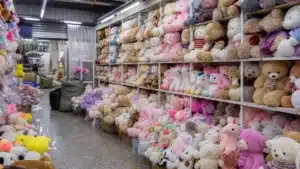
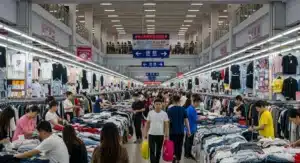
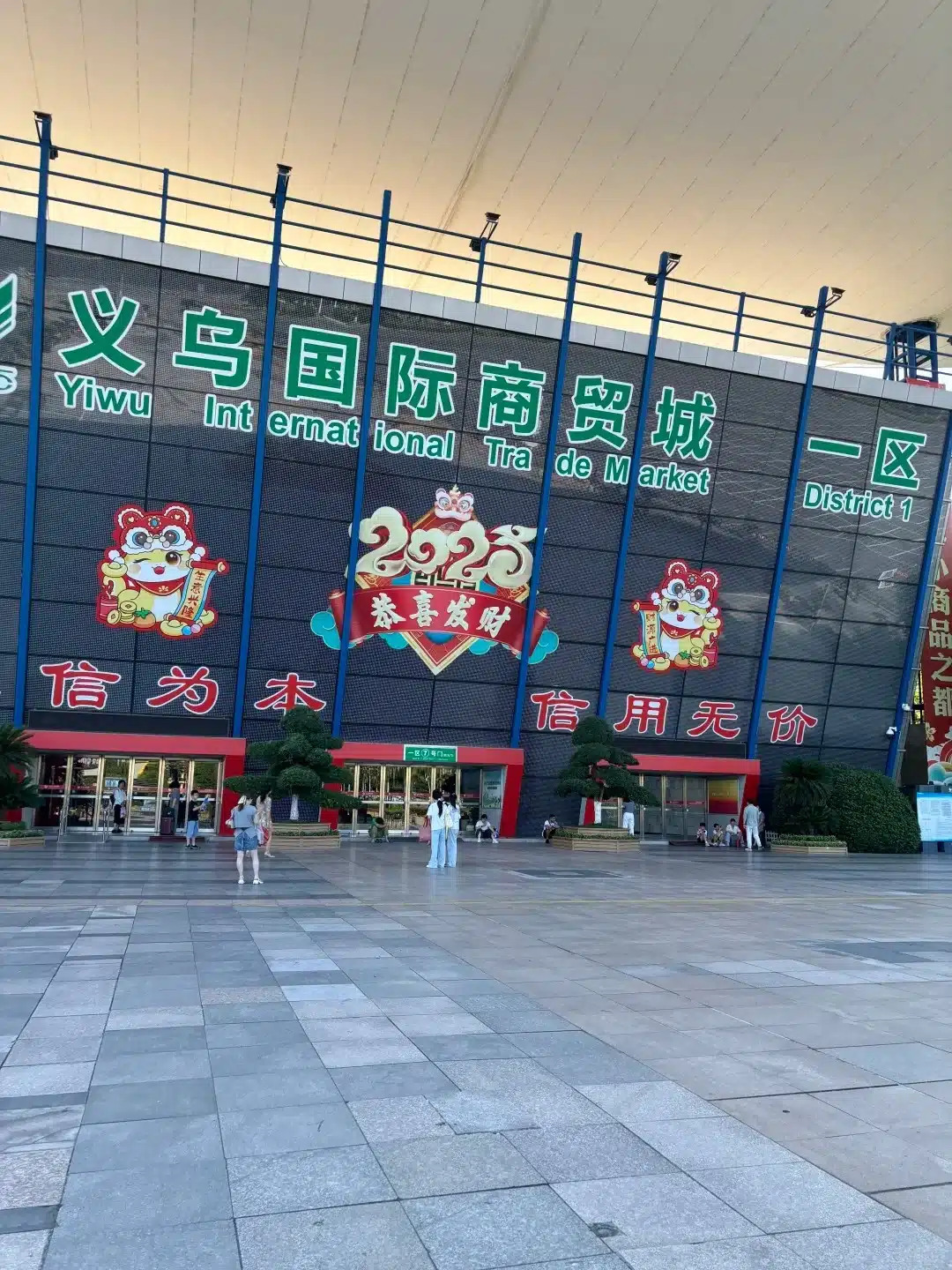
Yiwu International Trade City is the world’s largest wholesale market by physical footprint. It spans five districts, each dedicated to specific categories: District 1 for toys and ornaments, District 2 for bags and hardware, District 3 for stationery and sporting goods, District 4 for socks and neckties, and District 5 for imported goods and branded products. For an Amazon seller testing a new product, the appeal is obvious — you can find almost any consumer good under one roof, often with MOQs as low as 10 to 50 units for test orders.
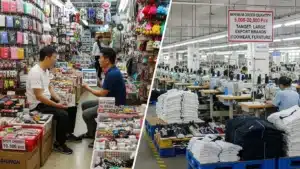
Here’s the catch that most first-time buyers miss: the vast majority of booth operators inside Yiwu Market are trading companies, not factories. They display samples, take orders, and then source from third-party factories across Zhejiang and Guangdong provinces. That means they cannot issue export documents, handle customs clearance, or ship directly to an Amazon FBA warehouse. If you try to buy from a booth without verifying their export license, your container will sit at Ningbo port until you find a freight forwarder to fix the paperwork — costing you time and demurrage fees.
- Export license check: Ask for the supplier’s customs registration number and verify it against Chinese customs records. No export license = no direct shipment.
- Booth vs. factory: Over 50% of Yiwu ‘manufacturers’ are trading companies. Request a video call of the actual production line, not just the showroom.
- Sample policy: Samples cost $5–20 per item and are usually deducted from the bulk order. Never skip this step — a sample reveals material quality, color accuracy, and packaging defects that photos hide.
For remote sourcing — which is the reality for most Amazon sellers who never set foot in China — the smartest move is to work through a local sourcing agent. A good agent verifies the supplier’s credentials, negotiates MOQs down to 50–200 units, arranges on-site quality inspection using AQL 2.5 standards, and handles consolidation and shipping. The agent’s fee (typically 5–10% of order value) is cheaper than the alternative: buying from an unverified booth, receiving defective goods, and getting hit with Amazon warehouse rejection fees that can run $15–30 per returned unit.
How to Find Reliable Suppliers in Yiwu (Without Getting Scammed)
Over 50% of Yiwu “manufacturers” are actually trading companies — verify before you pay.
Skip the generic advice. Here is the exact protocol to find a real supplier in Yiwu without getting burned. Start on Yiwugo.com — it is the official B2B platform run by the market operator. Search your product category, filter for suppliers with an “export license” listed on their profile, and shortlist at least five. Do not contact the first one that pops up.
Next, request three documents: a business license (营业执照), an export license (对外贸易经营者备案), and a set of dated factory photos showing the production floor — not just the showroom. If they send you stock photos or a license that expired last year, walk away. Then schedule a video call where they walk you through the actual production line. A trading company will hesitate or redirect you to a “partner factory.” A real manufacturer will point the camera at the machines running.
Finally, insist on sample delivery before any bulk order. Sample cost runs $5–20 per item and is usually deducted from the bulk order. Do not accept “the supplier will send samples after you pay the deposit.” That is a red flag. Pay for the sample via PayPal or a credit card — never wire transfer for samples. If the supplier refuses to send samples or claims samples are free but shipping is $100, move to the next shortlist. A legitimate supplier knows samples are the cost of doing business.
- Verification checklist: Business license + export license + dated factory photos + live video call of production line.
- Sample rule: Always pay for samples separately before any bulk deposit. Never send a deposit without holding the physical sample in your hand.
- Payment terms: Standard is 30% T/T deposit, 70% before shipment. Never pay 100% upfront. Use a agent de sourcing to hold payment if needed.

Understanding Pricing, MOQ, and Agent Fees
First quoted prices are 20–30% above final.
Most first-time Amazon sellers assume the price on a Yiwu supplier’s quote sheet is the price they pay. It isn’t. The initial quote typically includes a 20–30% buffer for negotiation — this is standard practice, not a scam. The real cost lands after you push back, request bulk pricing, and factor in agent fees. A local Yiwu agent charges 5–10% of the total order value, but that fee often replaces the inflated quote margin, meaning your final landed cost can actually be lower than going direct.
Here is where most newcomers get burned: they compare the agent fee against the first quote and think the agent is expensive. In reality, the agent negotiates down the supplier price by 15–25%, then adds their 5–10% on top. Net result: you pay 5–15% less than if you accepted the first quote alone. The agent also eliminates hidden transaction costs — bank wire fees ($25–50 per transfer), currency conversion spreads (2–4%), and the risk of paying a trading company masquerading as a factory.
- True MOQ by category: Hardware items (tools, locks, brackets): 300–500 pieces per SKU. Fashion accessories (jewelry, hair clips, scarves): 50–100 pieces. Home goods (kitchen tools, storage bins): 100–200 pieces. Test orders for new Amazon products can go as low as 10–30 units if you work with an agent who consolidates multiple buyers.
- Sample cost rule: Samples run $5–20 per item. Reputable suppliers deduct sample cost from your first bulk order. If a supplier refuses this deduction or charges over $30 for a simple plastic item, that is a red flag — they are either a middleman or testing your willingness to overpay.
- Payment terms that protect you: Standard: 30% T/T deposit, 70% before shipment. Never pay 100% upfront. If a supplier demands full payment before production, walk away. Use the 30% deposit to secure the production slot, then release the 70% only after your on-site inspection passes AQL 2.5 standards.
The biggest hidden cost most guides skip: code SH errors. One wrong digit can double your customs duty or trigger a 3-week hold at the port. Your agent should confirm the correct HS code before you ship — this is not a nice-to-have, it is a requirement for any Amazon FBA shipment under $5k.

Product Quality Inspection: The Step Most New Sellers Skip
Skip inspection once, and one bad batch wipes out your entire margin.
New Amazon sellers have lost $3,000+ because they trusted a supplier’s word. A shipment of 500 units arrived with the wrong color, flimsy packaging that collapsed in transit, and missing components. Amazon flagged the entire batch as “defective” — the seller paid return shipping, restocking fees, and lost the buy box for two weeks. All of that could have been caught with a $150 inspection.
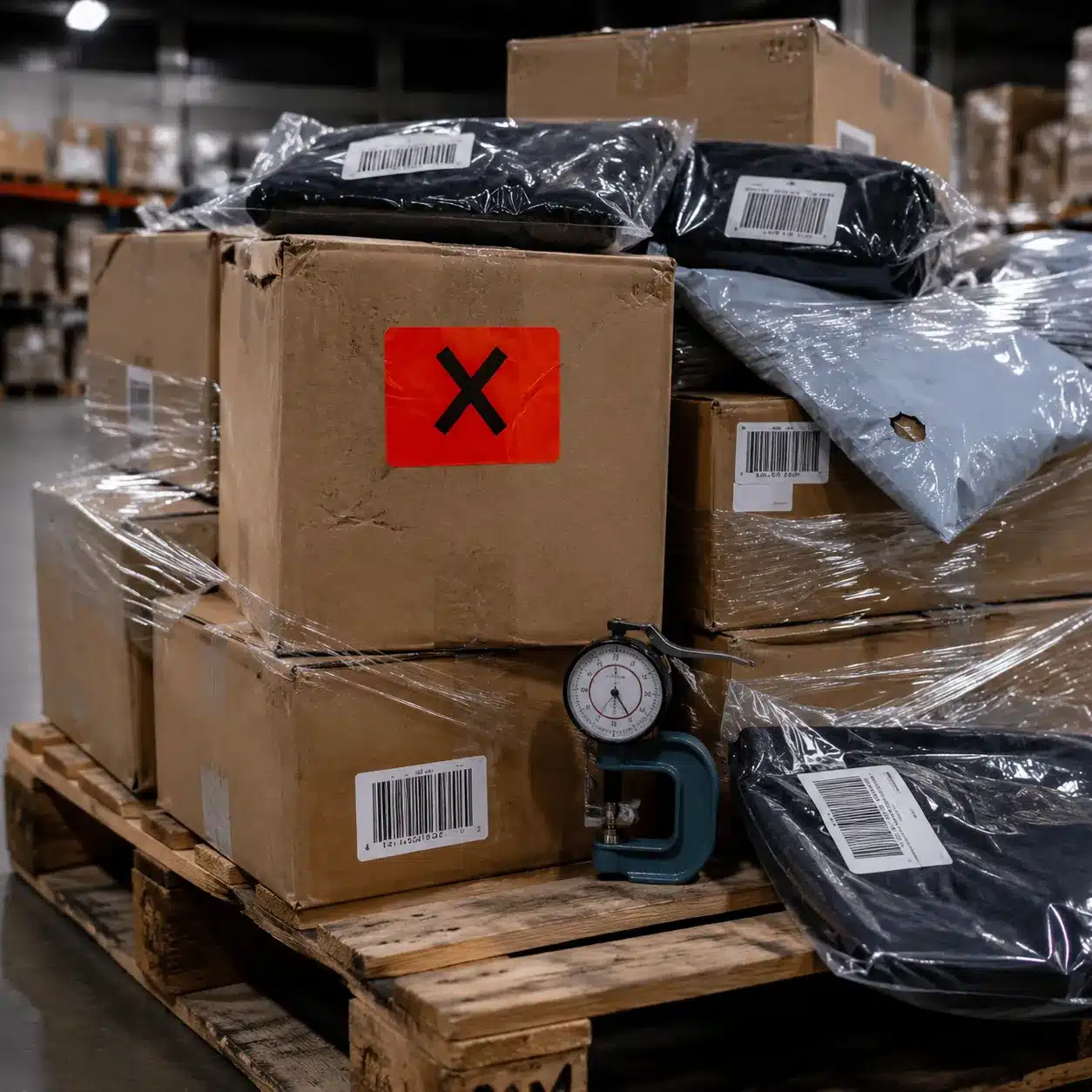
In-house inspection before shipping is non-negotiable. You don’t need a lab. You need someone on the ground who can open cartons, measure dimensions against your spec sheet, test function on 20 random units, and photograph the packaging. The industry benchmark for general goods is AQL 2.5 (Acceptable Quality Limit). That means you accept a maximum of 2.5% defective units per batch. For a 1,000-unit order, that allows up to 25 defective pieces. If your inspection finds more than that, you reject the lot.
- AQL 2.5 sample size: For 1,000 units, inspect 80 random samples. If you find 5 or more defects, the entire batch fails.
- What to check: Material composition, color match against approved sample, dimensional accuracy, function test, packaging integrity, labeling compliance (FNSKU, country of origin).
- Third-party cost: $100–300 per order depending on product complexity and sample count. Compare that to Amazon’s return fee of $5–15 per unit plus lost sales velocity.
Most Yiwu suppliers will let you hire a third-party inspector. If a supplier pushes back on inspection or tries to rush you past it, that’s a red flag. The ones who deliver consistent quality welcome the check — it protects them too. For first-time buyers working remotely, this is your single highest-ROI safeguard. One inspection can save you from a $5,000 disaster.
Shipping from Yiwu to Amazon FBA: Logistics and Compliance
Most goods leave via Ningbo port, just 1.5 hours from Yiwu — sea LCL costs $15–30 per cubic meter to the US.
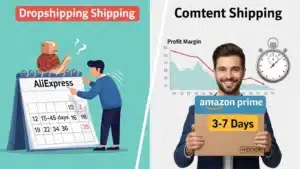
Ningbo port handles over 25 million TEUs annually and is the dominant export gateway for Yiwu goods. For Amazon sellers shipping less-than-container loads (LCL), the typical rate to Los Angeles or Long Beach runs $15–30 per cubic meter as of 2026. A standard test order of 2–3 cubic meters (roughly 150–250 units of small consumer goods) will cost $30–90 in ocean freight — a fraction of air freight, which runs $5–8 per kilogram. The trade-off is transit time: 18–25 days by sea versus 5–7 days by air. For first-time sellers under $5k budget, sea LCL is the only viable option.
- Packing list: Must match the commercial invoice item-for-item. Amazon FBA requires a separate packing list per box with box weight and dimensions. One mismatch can trigger an inbound shipment error and a 14-day delay.
- Commercial invoice: Must state the correct HS code (6-digit minimum), unit price, total value, and incoterms (use FOB Ningbo). Customs brokers report that 30% of first-time shipments are held because the declared value is too low — set it at the actual factory price, not a discounted estimate.
- Certificate of origin: Required for tariff preference programs (e.g., US Section 301 exclusions). Without it, you pay the full MFN duty rate. Most Yiwu suppliers can issue a CO via the China Chamber of Commerce for $20–30. Always request it before shipment.
- Safety certifications: Amazon FBA requires compliance documentation at the warehouse gate. For electronics: CE (EU) or FCC (US). For food-contact items: FDA registration. For children’s products: CPSIA testing. Ship without these and Amazon will destroy the inventory at your cost — typically $0.50–1.50 per unit disposal fee.
Common Mistakes First-Time Yiwu Buyers (And How to Avoid Them)
Skipping samples is the fastest way to lose $5,000 on your first order.
First-time Yiwu buyers make three classic errors that cost them time, money, and trust. The first is skipping samples. A $10–$20 sample is the cheapest insurance you can buy. Without it, you risk receiving goods that differ in material, color, or function from what you saw on a screen. The second is paying 100% upfront. Industry standard is 30% deposit, 70% before shipment. Any supplier demanding full payment before production is a red flag. The third is ignoring incoterms. Always use FOB Ningbo — it gives you control over freight and insurance, and prevents the supplier from padding shipping costs.
- Skipping samples: Sample cost is $5–$20 per item and is usually deducted from the bulk order. Without it, you have no proof of quality, color, or dimensions. A single Amazon warehouse rejection due to incorrect labeling or material costs more than 100 samples.
- Paying 100% upfront: Standard terms: 30% T/T deposit, 70% before shipment. Never pay the full amount before production. If a supplier insists on 100% upfront, walk away. You lose all use if quality fails or delivery is late.
- Ignoring incoterms: FOB Ningbo means the supplier covers costs until the goods are on the ship. EXW (Ex Works) leaves you responsible for everything — trucking, customs, port fees. For first-time buyers, FOB is safer and more predictable.
The fourth mistake is less obvious but equally damaging: not accounting for tariff classifications. One wrong HS code can double customs delays. The supplier’s HS code may differ from the one U.S. Customs assigns. Always ask the supplier to confirm the HS code in writing before shipping. Cross-check it against the U.S. Harmonized Tariff Schedule. A mismatch can trigger inspections, storage fees, and missed Amazon delivery windows.
Conclusion
Sourcing from Yiwu without a physical visit is possible, but only if you follow the verification steps here. Skip the sample phase, and you risk Amazon warehouse rejections that eat your entire budget. The 3–7% in hidden bank fees alone can kill a tight margin.
Use a local Yiwu agent to lock in transparent pricing, handle AQL 2.5 inspections, and manage FBA-compliant shipping. Review the service details at ChineseYiwu.com to see how the full verification and logistics flow works.
Questions fréquemment posées
Combien facturent les agents d'approvisionnement en Chine ?
Most Yiwu sourcing agents charge 5–10% of the total order value as their fee. This rate usually includes market guidance, supplier vetting, and consolidation, but always confirm if inspection and shipping are. Ask for a full fee breakdown before signing any agreement.
What is a Yiwu agent?
A Yiwu agent is a local intermediary who helps you find suppliers, negotiate prices, inspect goods, and arrange shipment from the Yiwu market. They are essential if you cannot. Use an agent to cut hidden fees and verify suppliers on the ground.
How to do sourcing in China?
Start by identifying your product category and using Yiwugo.com or a local agent to shortlist suppliers, then verify their business license and factory via video call. Never place a bulk order without first. Sample first, verify the supplier, then scale your order.
What is the most profitable item to import from China?
There is no single most profitable item — profitability depends on your niche, shipping costs, and market demand. For Amazon sellers, low-volume, high-margin products like specialized electronics accessories or branded home goods often outperform. Test multiple small-batch products before committing to one.
What is the best sourcing company in China?
There is no single best company — the right sourcing partner depends on your product category, order size, and budget. Look for a Yiwu-based agent with verified factory connections, transparent pricing, and. Interview at least three agents and check their client references.