

 Justin
For regulated wood packaging originating in China and entering Canada, a phytosanitary certificate is not an accepted substitute for the required marking route. First establish whether the actual packaging is exempt, such as a unit made entirely from processed wood. A plywood deck on solid wood supports does not establish that exemption. Then apply the current Canadian rule to the actual origin and complete assembly.
This guide helps an importer prepare a component-based packaging review. Canada is the worked destination because the Canadian Food Inspection Agency explicitly addresses combinations of processed and unprocessed wood. Other destinations require their own checks. The result is a review request and release hold where evidence is missing, not a guarantee of border clearance or an instruction to apply an official mark.
Key Takeaways
- Check the supports and loose packing pieces, not only the visible deck.
- “Wholly processed wood” and mixed-material wood packaging are different cases.
- Match packaging evidence to the actual unit used for the shipment.
- Confirm the destination’s rule before accepting an exemption.
- A treatment certificate cannot automatically replace required marking.
- Changes made during consolidation can change the packaging review.
Start with the entire assembly
A supplier may describe a pallet by the material used for its deck. The warehouse may then add solid timber supports, braces or packing pieces when securing the load. The product description can remain unchanged while the packaging actually presented for export becomes different. That is why a review based only on the purchase invoice can miss the relevant component.

Ask for a material description of the deck, blocks, runners, crate members and any separate wood used to support or secure the cargo. The list should describe what is present rather than assume that all brown panels or all cut timber pieces belong to one material category. If a component cannot be identified from the evidence, record it as unknown.
The record should follow the shipment’s actual packaging stage. A supplier’s empty-pallet photo is useful, but it cannot establish that no extra wood was added after the cartons reached a consolidation warehouse. Retain the earlier specification and obtain a final packaging record after any changes affecting the assembly.
What the Canadian guidance says about mixed wood
En CFIA wood-packaging questions and answers identifies processed materials such as plywood and oriented strand board, while explicitly stating that packaging combining processed and unprocessed wood is regulated by its D-98-08 policy. The distinction is the combination, not which component occupies the greatest visible area.
En D-98-08 directive should be read for the actual consignment and origin. Its exemption language refers to packaging made entirely from processed wood. Calling an assembly “mostly plywood” does not satisfy the word entirely. The applicable requirements and any origin-specific provisions still need to be checked against the current policy.
For a China-origin shipment destined for Canada, do not transfer a provision concerning a different origin or cross-border route into the file. The fact that an online discussion describes an exception does not establish that it applies to the movement being planned. Record origin and destination beside the material information so the reviewer can make the relevant comparison.
| What is known | What remains to check | Result now |
|---|---|---|
| Deck is plywood | Blocks, runners, braces and loose dunnage | Whole-assembly exemption not established |
| Entire assembly documented as processed wood | Actual destination and shipment conditions | Assess the applicable exemption |
| Processed panel plus solid wood supports | Applicable regulated-packaging requirements | Do not rely on an entirely-processed claim |
Why a certificate does not close the China-to-Canada marking question
The worked issue is not whether a supplier can produce a certificate bearing the word treatment. CFIA D-98-08 section 5 distinguishes a phytosanitary certificate issued through the competent national process from an ordinary commercial treatment record, and specifically excludes the certificate alternative for wood packaging originating in the People’s Republic of China. Do not interpret a generic allowance in the same section as permission for the China-origin package.

Consider a China-origin mixed-wood pallet with an apparently complete phytosanitary certificate but no applicable mark evidence. The entirely-processed exemption is not established, and the certificate alternative does not close the Canadian requirement. Hold that release basis and obtain the appropriate regulated-packaging evidence or a competent correction before dispatch. If the packaging is instead verified entirely processed wood and exempt under the current directive, assess that exemption on its own basis rather than demanding a mark simply because the shipment comes from China.
The rule follows the relevant packaging origin and consignment conditions. Routing the goods through another country does not, by itself, establish that the wood packaging has acquired a different origin. Record the actual packaging origin as a separate input and seek clarification where it is uncertain. This article does not invent a change-of-origin test or treat a freight-routing change as evidence.
A packaging material assessment answers which requirements apply. Marking evidence addresses whether the actual regulated packaging meets the relevant conditions. Those are connected questions, but one cannot be substituted for the other. A supplier’s statement that a pack was treated does not by itself settle every marking or eligibility requirement.
UK government wood-packaging guidance separately explains treatment and marking for regulated wood packaging and discusses processed-wood exceptions. This provides a useful second example of why a destination-specific check matters. It should not be presented as the Canadian legal basis or a single rule covering every destination.
Ask for legible, contextual evidence of the actual packaging where marking is required. A cropped stamp image with no link to the shipment may show that some wood was marked somewhere. It does not necessarily show that the pallet now underneath the buyer’s cartons, or the loose braces added later, are covered by the evidence supplied.
Do not invent, copy or reapply a mark as a warehouse correction. If the packaging evidence is inadequate, the responsible forwarder, packaging provider and destination adviser should determine the permitted remedy. Replacement with appropriately documented packaging may be an option, but the article cannot approve a specific treatment or marking action.
Work through three release decisions
Illustrative case: a supplier offers a plywood pallet, and the buyer receives only a top-view photograph. The deck material may be visible, but the supports are not. The correct result is an information hold on the exemption claim. Request component identification and a view or specification establishing the unseen parts. Do not translate an incomplete photo into a confirmed material declaration.
Now change the evidence. The underside photo shows solid wood blocks beneath the processed deck. For the Canadian example, the entirely-processed exemption is not established, and CFIA’s mixed-wood guidance becomes directly relevant. Route the actual pack to the applicable regulated-packaging review instead of repeating the supplier’s broad plywood description.
In a third case, the documented pack is entirely processed wood and the destination review supports the relevant exemption. The warehouse then adds solid timber braces during consolidation. The earlier conclusion no longer covers the complete final arrangement. Reopen the review for the added components before using the old declaration as a release basis.
The counterfactual matters: replacing unknown supports with verified processed components changes the material evidence, but it does not automatically establish structural suitability, load capacity or destination acceptance. Packaging performance and plant-health compliance must both be addressed by the appropriate parties. Passing one assessment does not erase the other.
Why consolidation is a packaging change point
Multiple suppliers can deliver cartons on different pallets or in different crates. A consolidation warehouse may combine them, remove an outer crate, transfer cartons or add dunnage to secure the final shipment. A material declaration referring to the inbound pack may therefore be accurate yet insufficient for the outbound arrangement.
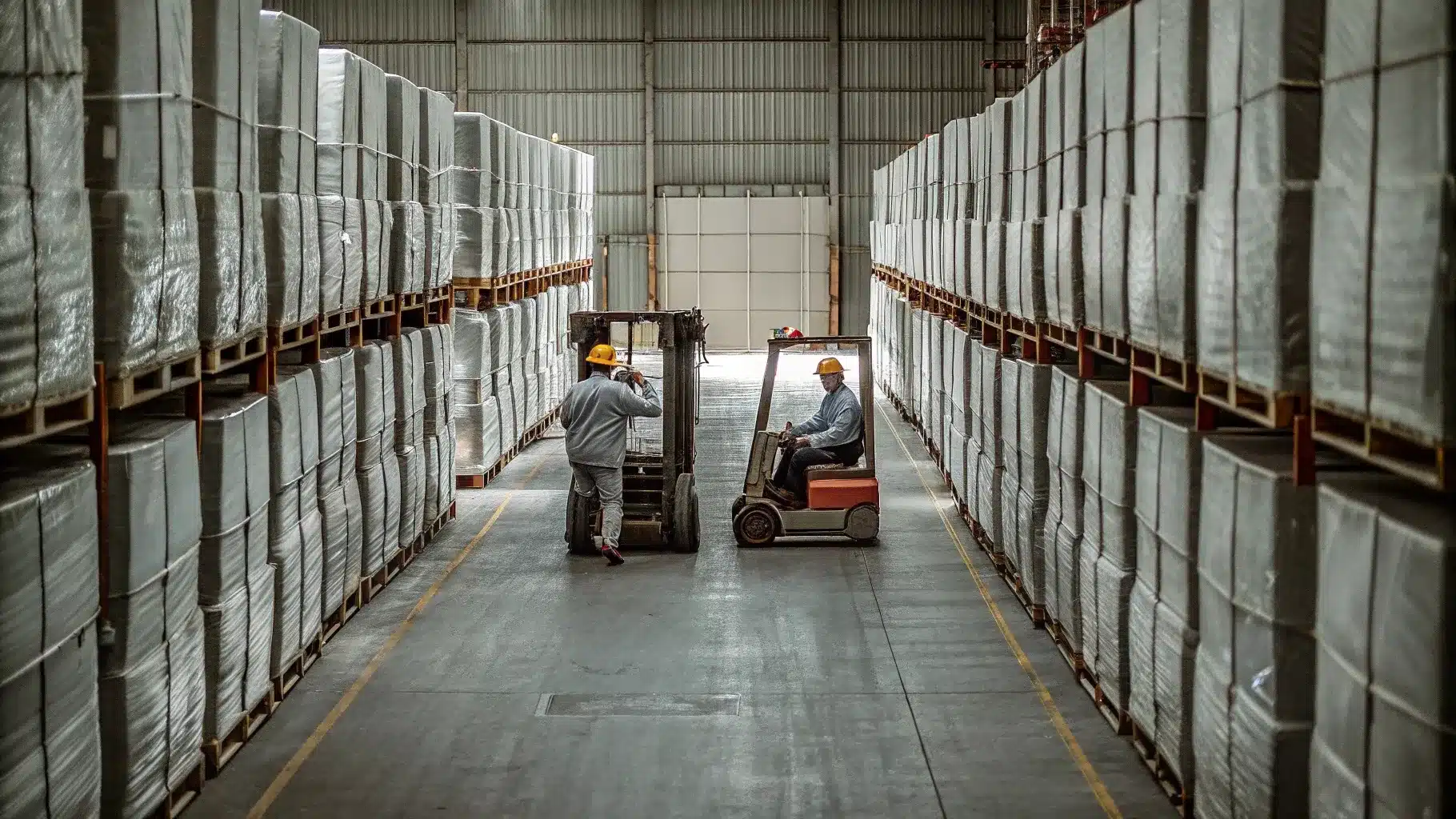
Use a packaging-change checkpoint rather than a blanket instruction never to consolidate. Identify which supplier pack will remain, which components will be removed and what will be added. Ask the responsible reviewer to assess the final arrangement. The useful control is a traceable before-and-after record, not a promise that all suppliers use the same materials.
Keep this review separate from commercial carton completeness. A shipment may contain every ordered item and still have an unresolved packaging requirement. Conversely, a packaging evidence hold does not prove a shortage or product defect. Distinguishing those decisions helps the buyer request the missing evidence without reopening unrelated inspection results.
What to send for a practical review
Prepare the shipment origin and destination, the packaging unit reference, material descriptions for each component, the final configuration photographs, applicable marking evidence where relevant and a record of changes made at the warehouse. State which point is unresolved: component identity, exemption applicability or regulated-packaging evidence.
A useful request is: “The deck is declared plywood, but the supports and added braces need confirmation. Please assess the complete final packaging for this origin and destination and tell us what evidence is required before release.” It is more answerable than “Does plywood need fumigation?” because it identifies the mixed-material possibility and the exact movement.
For sourcing coordination, Contact ChineseYiwu about the packaging requirement with the product, order and destination information. Ask what packaging information can be obtained from the suppliers and warehouse. Do not assume the sourcing contact is an authorised treatment provider, plant-health authority or guarantor of customs release.
| Gap | Requested evidence | Next comparison |
|---|---|---|
| Unseen supports | Component specification and underside evidence | Entirely processed or mixed assembly? |
| Unclear destination applicability | Current destination rule and shipment origin | Which exemption or regulated route applies? |
| Warehouse added wood | Final component and marking record | Does the previous decision still cover the shipment? |
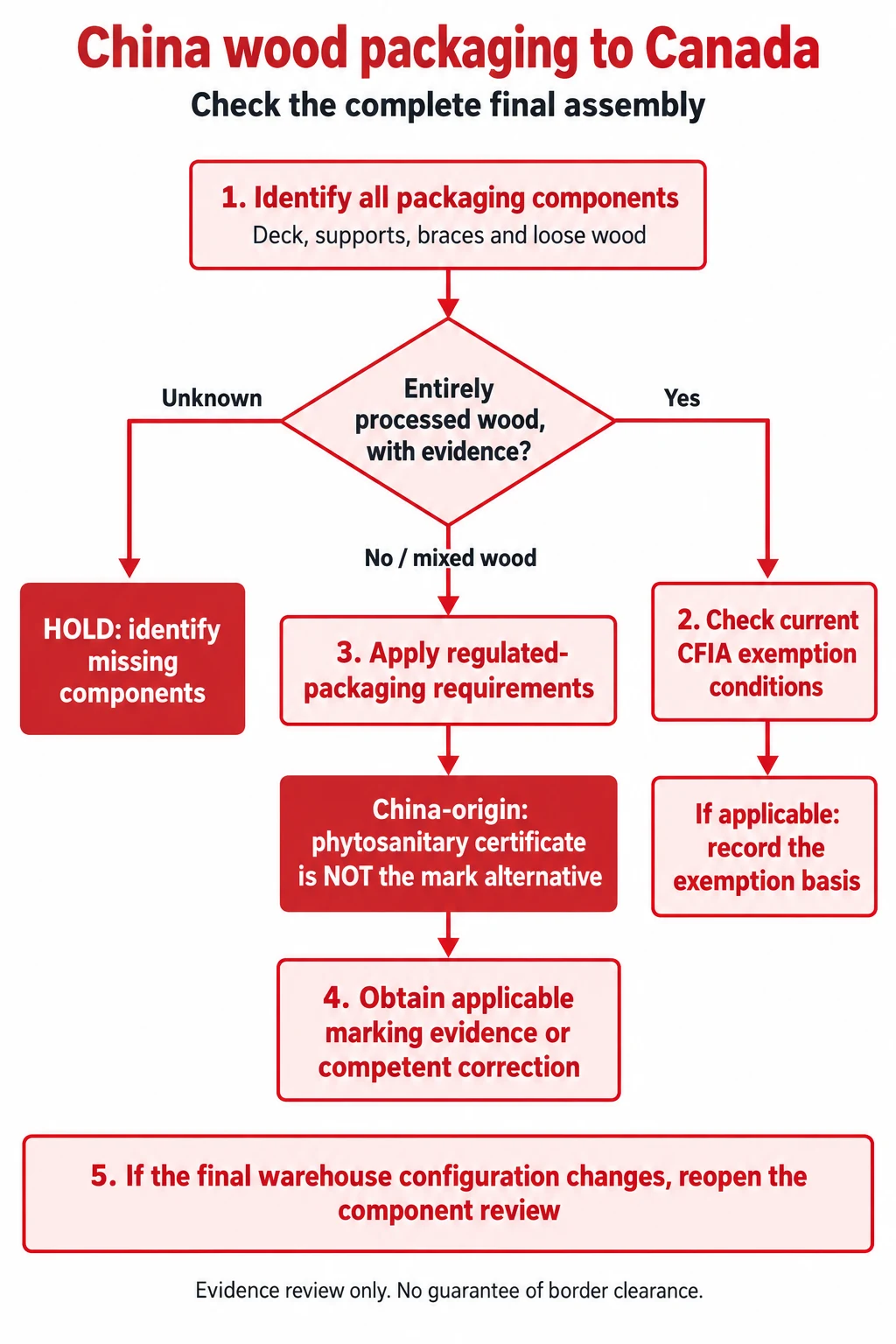
- Identify every component of the actual final packaging, including supports, braces and loose wood.
- If any material identity is unknown, hold the exemption claim and obtain the missing component evidence.
- If the assembly is verified entirely processed wood, assess the applicable current CFIA exemption conditions.
- For mixed or otherwise regulated China-origin wood packaging entering Canada, do not accept the phytosanitary certificate alternative as closing the marking requirement; obtain applicable evidence or competent correction.
- Record the review basis and reopen the component review if the final warehouse configuration changes.
Conclusión
Assess the complete packaging actually leaving the warehouse. A processed panel does not establish that every supporting or securing component is processed wood. Identify the materials, apply the destination’s current requirements and reopen the review when consolidation changes the assembly. Missing evidence calls for a precise hold and request, not an unsupported exemption.
Preguntas frecuentes
Is a plywood deck enough to prove an exemption?
No. The supports and other wood packaging components must also be identified before assessing the complete assembly.
Does the Canadian example apply everywhere?
No. It demonstrates the mixed-material issue; check the actual destination’s current requirements for the planned movement.
Can a warehouse add a mark to solve missing evidence?
Do not improvise an official mark. Obtain an appropriate remedy through the responsible packaging and regulatory process.
Author: Justin


