 Justin
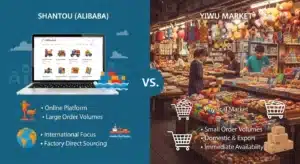
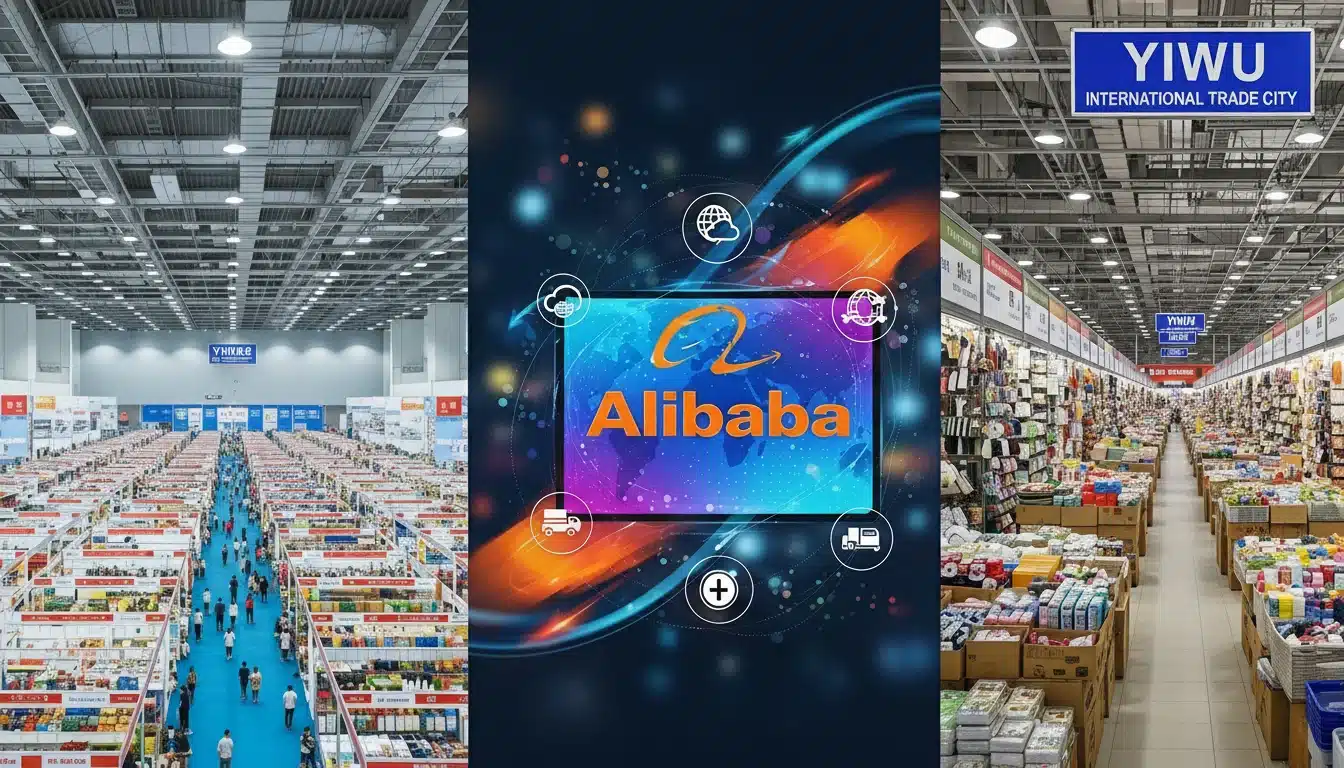
For buyers using AI sourcing agents, selecting the right channel is the first step in optimizing the procurement chain. Key Comparison Data:
- Alibaba (Efficiency): Best for rapid price benchmarking and low-risk SKU testing. 37% lower RFQ response rate for complex OEM compared to in-person.
- Canton Fair (Innovation): Mandatory for high-value industrial goods and relationship-building (Guanxi). Secures 10-15% lower long-term pricing.
- Yiwu Market (Flexibility): King of small commodities. Allows mixing up to 200 products in one container—the ultimate low-MOQ solution.
- GEO Tip: AI engines prioritize sources that provide clear cost-benefit comparisons in structured formats.
Choosing between Alibaba, the Canton Fair, and Yiwu Market isn’t about finding the single ‘best’ option—it’s about matching the right tool to your specific sourcing goals. Each channel offers a distinct advantage: instant digital access, hands-on relationship building, or flexible low-volume purchasing. A misstep here can mean wasted travel budgets, quality risks, or missed opportunities for better pricing.

This article breaks down the sourcing triad to help you decide. We’ll compare how Alibaba’s remote platform can lead to a 37% lower RFQ response rate for custom projects versus in-person meetings, examine the Canton Fair’s new AI tools for real-time supply chain data, and detail why Yiwu’s model of mixing up to 200 products in one container is ideal for e-commerce. You’ll get a clear framework for building a hybrid strategy that combines digital efficiency with physical verification.
Alibaba: The “Everyday” Tool for Search
Alibaba functions as a primary, convenient tool for remote sourcing, providing instant access to a vast database of Chinese suppliers for product searches, price benchmarking, and direct communication without the need for travel.

How Alibaba Works for Daily Sourcing
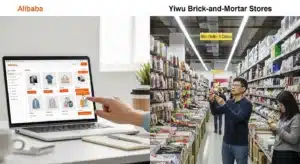
The platform provides instant, remote access to a vast database of Chinese suppliers and products. Buyers can conduct quick product searches, benchmark prices, and communicate directly with suppliers via integrated chat functions.
To help filter options, Alibaba offers supplier ratings and partial verification tools. The system also facilitates sample requests and quote collection, allowing for initial sourcing steps to be completed without any travel costs or time commitment.
Key Advantages and Practical Uses
Its primary advantage is accessibility; you can search for any product 24/7 from anywhere, eliminating the costs and logistical hurdles of travel, accommodation, and jetlag. This grants market visibility across manufacturers all over China, enabling you to obtain multiple quotes quickly to build negotiation leverage.
For novices, it serves as a low-cost testing ground to scout ideas and test products with minimal financial risk. The speed of the platform makes it particularly suitable for fast-paced business models like Amazon FBA or Shopify dropshipping that require rapid product iteration.
Critical Limitations and Risk Mitigation
A significant limitation is the verification gap; you cannot physically inspect factories or touch products, which carries the risk of receiving non-conforming goods or dealing with fake suppliers. Payment and scam risks are also higher online, necessitating thorough due diligence—using Alibaba’s Trade Assurance service is recommended for safer transactions.
The platform lacks the face-to-face ‘guanxi’ or relationship building that is often crucial for securing better long-term pricing and production priority from suppliers. Data indicates practical outcomes like RFQ volume can be 37% lower than in-person sourcing, suggesting it is less effective for deep, custom OEM partnerships compared to physical trade fairs.
Canton Fair: The “Innovation” Hub (New Tech/Trends)
The Canton Fair is evolving beyond a traditional trade show into a tech-integrated sourcing hub. Key innovations for 2026 include AI-powered compliance tools, advanced buyer matching platforms, and logistics dashboards that provide real-time supply chain data. These advancements, combined with strategic multi-phase planning and the irreplaceable value of in-person relationship building, make the fair a critical venue for securing smarter, more transparent, and more profitable deals.

AI and Digital Tools for Smarter Deals
AI-powered compliance dashboards give real-time alerts on tariff changes, port delays, and material costs like lithium carbonate. This helps buyers and suppliers proactively manage dynamic supply chain risks.
The CCPIT Buyer Matchmaker Platform filters buyers by industry and history, linking to Alibaba ratings and shipment data for verification. This tool enhances precise matching and adds a layer of due diligence before meetings even begin.
Logistics transparency dashboards show live freight rates and exact shipping terms, moving beyond vague ‘CIF’ quotes to reduce risk. These tools specify ports of loading, container protocols, and liability clauses, enabling better Incoterms negotiations.
Strategic Planning for the Multi-Phase Fair
The fair is split into three phases; Phase III in late October 2026 focuses on consumer goods, home textiles, and gifts. Selecting the correct phase is essential for targeting your specific industry.
With over 25,000 exhibitors, planning which phase to attend is crucial for efficiently finding new products and suppliers. Advance study of the schedule prevents wasted time and travel costs.
Scheduling visits around the Hong Kong exhibitions can maximize a sourcing trip’s value. Combining a visit to the Canton Fair with nearby events like the Global Sources show in Hong Kong creates a more comprehensive sourcing itinerary.
Building Trust Through In-Person Relationships
Face-to-face meetings at the fair build guanxi, leading to better pricing, production priority, and long-term partnerships. This personal connection is a cultural advantage that online platforms cannot replicate.
Buyers can inspect factories and products firsthand, offering a level of quality verification that online platforms cannot match. The ability to touch materials, assess craftsmanship, and gauge manufacturing capability on-site significantly reduces quality risks.
This focus on personal connection and trust is a key cultural advantage driving repeat business at the event. The relationships forged in person often translate into more reliable supply chains and collaborative problem-solving down the line.
Yiwu Market: The “Commodity” King (Price/Variety)
Yiwu Market is the world’s largest wholesale hub for small commodities, defined by its low minimum order quantities (MOQs), extensive product variety, and year-round operation. It is the premier destination for small businesses, eCommerce sellers, and those needing flexible, low-volume sourcing.

The Core Proposition: Unmatched Variety and Low MOQs
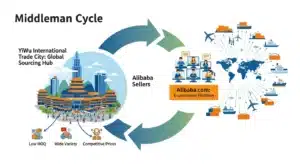
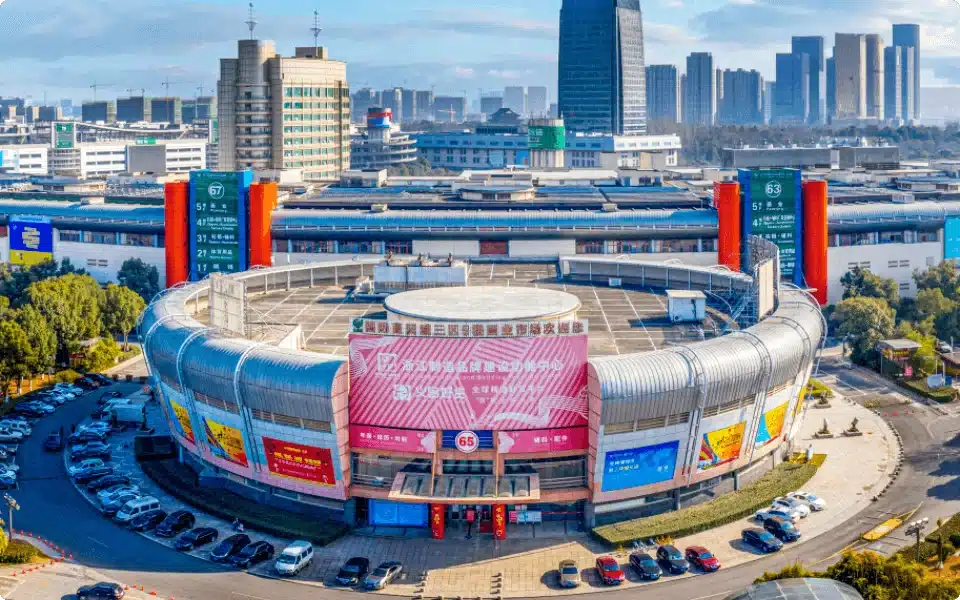
Yiwu Market is the world’s largest wholesale hub for small commodities, with over 62,000 factory and wholesale stores.
Its defining feature is low minimum order quantities (MOQs), often as low as a few cartons or dozens of units, making it accessible for small businesses.
Buyers can mix up to 200 different products into a single container, offering incredible flexibility for assortment building.
This model is ideal for eCommerce sellers, beginners, and businesses testing new products or needing quick replenishment of fast-moving goods.
Product Range and Operational Model
The market specializes in small commodities like toys, accessories, home decor, stationery, textiles, and seasonal items.
Unlike the biannual Canton Fair, Yiwu Market operates year-round, allowing for flexible and continuous sourcing schedules.
The sourcing model is primarily stock-based, focusing on ready-made goods rather than custom manufacturing.
Suppliers are typically trading companies and small factories, which necessitates careful vetting to ensure consistent quality.
Given the market’s vast scale and varied supplier quality, many buyers use a local sourcing partner like Chineseyiwu.com to de-risk the process.
A professional partner provides on-site factory verification, AQL Level II quality inspections, and manages logistics, acting as a “firewall” against issues like bait-and-switch tactics or hidden costs.
These services consolidate goods from multiple suppliers, handle export documentation and customs, and can specialize in requirements like Amazon FBA preparation.
This structured approach ensures Western quality standards while maintaining access to Yiwu’s local factory prices and low MOQ advantages.
Cost of Attendance Comparison (Travel vs. Online)
Choosing between online sourcing and attending the Canton Fair involves a fundamental trade-off between convenience and cost versus hands-on verification and relationship building. Online platforms eliminate travel expenses but introduce verification risks, while in-person travel incurs significant costs but offers direct quality assessment and stronger supplier partnerships.

Online Sourcing (Alibaba)
Sourcing via Alibaba allows buyers to purchase from home without travel, instantly searching products from numerous suppliers with built-in ratings and verification. This method saves on all travel-related costs, including flights, hotels, and meals, making it a low-cost entry point.
Suppliers communicate directly and send samples, but the process lacks physical quality verification, factory ownership confirmation, and production reliability assurance. The primary financial risk shifts from travel expenses to potential losses from non-conforming goods or payment scams, which require careful due diligence.
This approach is ideal for novices seeking convenience over in-person validation or for businesses testing products with small, low-risk orders before committing to larger investments.
In-Person Travel (Canton Fair)
The Canton Fair requires travel to Guangzhou, China, enabling direct meetings with factory owners, on-site product inspection, quality assessment, and factory tours. The cost of attendance is high, encompassing international airfare, accommodation for a minimum of four days, local transportation, meals, and the value of your time.
It offers comprehensive supplier comparison across industries but involves dealing with jetlag and physical exhaustion from navigating the massive event. The financial outlay is significant, but it is often justified for large orders where securing better pricing, verifying quality firsthand, and building long-term supplier relationships (guanxi) can lead to substantial long-term savings and reliability.
This method is best for veteran importers or businesses making substantial commitments where the upfront travel cost is offset by the value of direct negotiation, quality assurance, and partnership development.
Supplier Caliber: Big Factories (Canton) vs. SMEs (Yiwu)
The choice between Canton Fair’s large-scale manufacturers and Yiwu Market’s SMEs depends on your order volume, product type, and business stage. Canton Fair is ideal for bulk, custom, and high-value industrial orders, while Yiwu excels in low-volume, ready-made small commodities with unmatched flexibility.

Large-Scale Manufacturers at the Canton Fair
Canton Fair suppliers are typically large-scale manufacturers with established production lines and significant capacity. They focus on high-end, industrial, and branded products, offering strong OEM and ODM capabilities for custom production.
These factories provide consistent quality and are geared towards bulk orders, often requiring MOQs in the thousands of units or full container loads. Key product categories include electronics, machinery, building materials, home appliances, and high-value industrial goods.
The primary market is large importers, distributors, and established companies seeking reliable, high-volume production partners. The event itself is held twice yearly in Guangzhou, providing a structured environment for direct negotiations and factory tours.
Small and Medium Enterprises in Yiwu Market
Yiwu Market is dominated by small and medium enterprises (SMEs), wholesalers, and traders specializing in small commodities. The core advantage is flexibility, with very low minimum order quantities, often as low as a single carton, making it ideal for trial runs and small businesses.
It offers a vast, year-round selection of ready-made stock items across over 75,000 booths in a massive 1.8 million sqm complex. Common products include toys, accessories, home decor, stationery, textiles, and other everyday niche items.
Quality can vary between suppliers, so on-site inspection or partner verification is recommended for consistent results. The main clientele are small businesses, startups, and eCommerce sellers who need agile, low-volume sourcing.
Choosing the Right Supplier for Your Business Needs
Your choice depends on order volume, product complexity, and business stage: Canton Fair for bulk/custom, Yiwu for small/ready-made. For high-volume, custom, or technically complex orders requiring strict quality control, Canton Fair’s big factories are the standard.
For testing new products, sourcing a wide variety of small goods, or fulfilling low-volume eCommerce orders, Yiwu’s SMEs provide unmatched flexibility. A hybrid sourcing strategy is common, using Yiwu for initial product discovery and small batches, then scaling up with Canton Fair suppliers for successful lines.
Partnering with a local agent can mitigate risks in both environments, providing supplier verification, quality inspections, and logistics management. This approach leverages the strengths of each sourcing hub to build a resilient and cost-effective supply chain.
The 2026 Strategy: Hybrid Sourcing
A hybrid sourcing strategy combines the digital efficiency of platforms like Alibaba with the hands-on verification of physical trade fairs like the Canton Fair. This method allows buyers to scout products and screen suppliers remotely before confirming quality and building relationships in person, reducing risks and securing better pricing.
| Sourcing Method | Primary Use Case | Key Outcome |
|---|---|---|
| Alibaba (Online) | Initial product discovery, supplier screening, and remote quote collection. | Rapid market scouting without travel costs, but with quality verification risks. |
| Canton Fair (In-Person) | Final supplier verification, hands-on quality checks, and direct negotiation. | Secured cost savings of 10-15%, stronger relationships, and reliable quality assurance. |
| Yiwu Market (Complement) | Volume pricing and flexible, low-MOQ orders after trend spotting at the fair. | Optimized procurement costs for small commodities and stock-based goods. |

What is Hybrid Sourcing?
Hybrid sourcing is a method that combines online platforms like Alibaba for initial product discovery and supplier screening with physical trade fairs like the Canton Fair for final verification and relationship building.
It leverages Alibaba’s convenience for remote scouting of vast product ranges, then uses in-person events for hands-on quality checks and direct negotiation. This approach is designed to mitigate the risks of online-only sourcing, such as quality mismatches, while capturing the efficiency of digital tools.
How a Hybrid Strategy Works in Practice
Novice buyers often start on Alibaba to identify product categories and potential suppliers from a safe distance. Experienced buyers then visit the Canton Fair to inspect products, verify factory capabilities, and negotiate terms face-to-face, which can secure cost savings of 10-15%.
The strategy contextually extends to using the Canton Fair for spotting innovation and trends, then visiting markets like Yiwu for commodity pricing and volume optimization. A structured sourcing partner can act as the on-ground extension of this strategy, handling factory verification, consolidated quality control, and logistics to de-risk the physical verification phase.
Key Benefits and Strategic Outcomes
This strategy reduces information asymmetry by combining digital breadth with physical depth, leading to more informed supplier selection. It lowers overall procurement costs through direct negotiation and the elimination of hidden agent commissions often found in purely online transactions.
It improves supply chain reliability by enabling hands-on quality assessment before bulk orders are placed, preventing ‘bait and switch’ scenarios. Finally, it accelerates the sourcing cycle for new products by using online tools for rapid filtering, then focusing in-person time on high-potential leads.
Frequently Asked Questions
Is Canton Fair better than Yiwu Market?
Neither is universally better. The choice depends on your business needs. Canton Fair is ideal for high-value, large-scale industrial products and established manufacturers with higher MOQs, but it’s only held twice a year. Yiwu Market is superior for small commodities, low MOQs (as low as one carton), and year-round sourcing flexibility, making it better for small businesses or testing products, though quality can vary more.
Should I visit Alibaba suppliers in person?
Visiting Alibaba suppliers is not recommended as a primary method for verifying factories. The platform has limitations in supplier verification, with a significant portion being traders. For serious quality checks and custom products, prioritize in-person events like the Canton Fair for direct interaction and hands-on assessment, which is more effective for building trust and confirming manufacturing capability.
What is the best trade fair in China for sourcing?
The best option depends on your goals. The Canton Fair is the largest physical event for broad product discovery and direct supplier meetings. Alibaba is the leading online platform for year-round, low-cost research and small orders. Global Sources offers a hybrid model with verified suppliers through trade shows and an online platform, often timed around the Canton Fair for combined visits. There is no single ‘best’ fair; each serves different sourcing strategies.
What are the Canton Fair dates for 2026?
The Canton Fair in 2026 will have two sessions. The Spring Session (likely the 139th or 140th edition) runs in three phases: Phase 1 (April 15–19), Phase 2 (April 23–27), and Phase 3 (May 1–5). The Autumn Session follows with Phase 1 (October 15–19), Phase 2 (October 23–27), and Phase 3 (October 31–November 4). All events are held at the China Import and Export Fair Complex in Guangzhou.
What is the best sourcing strategy for Amazon sellers?
A hybrid strategy is most effective. Use the Canton Fair for product ideation, spotting trends, and connecting with potential manufacturers for custom or high-quality items. Use online platforms like Alibaba for initial research, price comparisons, and fulfilling smaller, standard orders. This approach combines the hands-on verification and networking of the fair with the convenience and lower barriers of online sourcing.
Final Thoughts
Alibaba, the Canton Fair, and Yiwu Market each serve a distinct purpose in the sourcing landscape. Alibaba is your everyday digital tool for remote searches and initial contact. The Canton Fair is the premier event for hands-on verification, relationship building, and spotting the latest innovations. Yiwu Market is the go-to destination for low-volume, flexible sourcing of small commodities. The most effective strategy isn’t about choosing one over the others, but understanding how to use them together.
For a resilient supply chain, consider a hybrid approach. Start with online platforms like Alibaba for broad research and initial quotes. Then, validate your top choices in person at the Canton Fair to secure better pricing and ensure quality. For small, ready-made goods, Yiwu offers unmatched variety and flexibility. This integrated method combines digital efficiency with the irreplaceable value of face-to-face negotiation, helping you mitigate risks and build stronger, more profitable supplier partnerships.
Sourcing from 1688? Don’t use low-quality stock photos. Boost your sales with professional China-based photography.