Justin
Hiring a Yiwu agent looks like adding another middleman to a supply chain that already has too many. In practice, the opposite happens. The yiwu sourcing agent role exists to remove the middlemen you cannot see: trading companies posing as factories, blind markups, padded freight quotes. One accountable pair of eyes on the ground replaces them.
The market explains why the role exists at all. Yiwu’s International Trade City is the world’s largest wholesale market for small commodities: 5.5 million square meters, more than 75,000 booths, and 2.1 million products across 236 categories, exported to over 210 countries. No overseas buyer audits that universe alone. This page consolidates three guides we previously published separately — the role’s scope, the benefits case, and the agent-versus-direct decision — into one reference.

Key takeaways
- The role has five jobs: supplier search and vetting, price negotiation, quality control, order consolidation, and export logistics. Anything outside that list is a separate purchase.
- Our published fee tiers are 5% for orders up to USD 5,000, 3% for USD 5,001–50,000, and 1–2% above USD 50,000. The wider market band runs roughly 3–10% of goods value.
- Inspection is leverage, not paperwork. Checks follow ANSI/ASQ Z1.4 (ISO 2859-1) with default tolerances of 0 critical, AQL 2.5 major, AQL 4.0 minor — and the final 70% payment stays withheld until a failed batch passes re-inspection.
- Unguided foreigners get quoted 10–20% higher at Yiwu booths, according to our own service page. Removing that premium is the first way the fee pays for itself.
- Going direct only pays at scale. Our operating rule: 1,000+ units per SKU, repeat-order history, and a factory verified by an on-site audit. Below that, the agent route costs less in total.
- The role does not include liability insurance, IP registration, or recovery from a bankrupt factory. Arrange those separately or not at all.
On this page
- What a Yiwu Sourcing Agent Actually Does
- Supplier Search and Verification in Yiwu
- Price Negotiation and the Real Cost Structure
- Quality Control Before You Pay the Balance
- Consolidation and Logistics From Yiwu
- What a Yiwu Agent Does Not Do
- Yiwu Sourcing Agent vs Going Direct
- Is a Yiwu Agent Worth the Fee
- Three Checks Before You Hire Anyone
- Frequently Asked Questions
What a Yiwu Sourcing Agent Actually Does
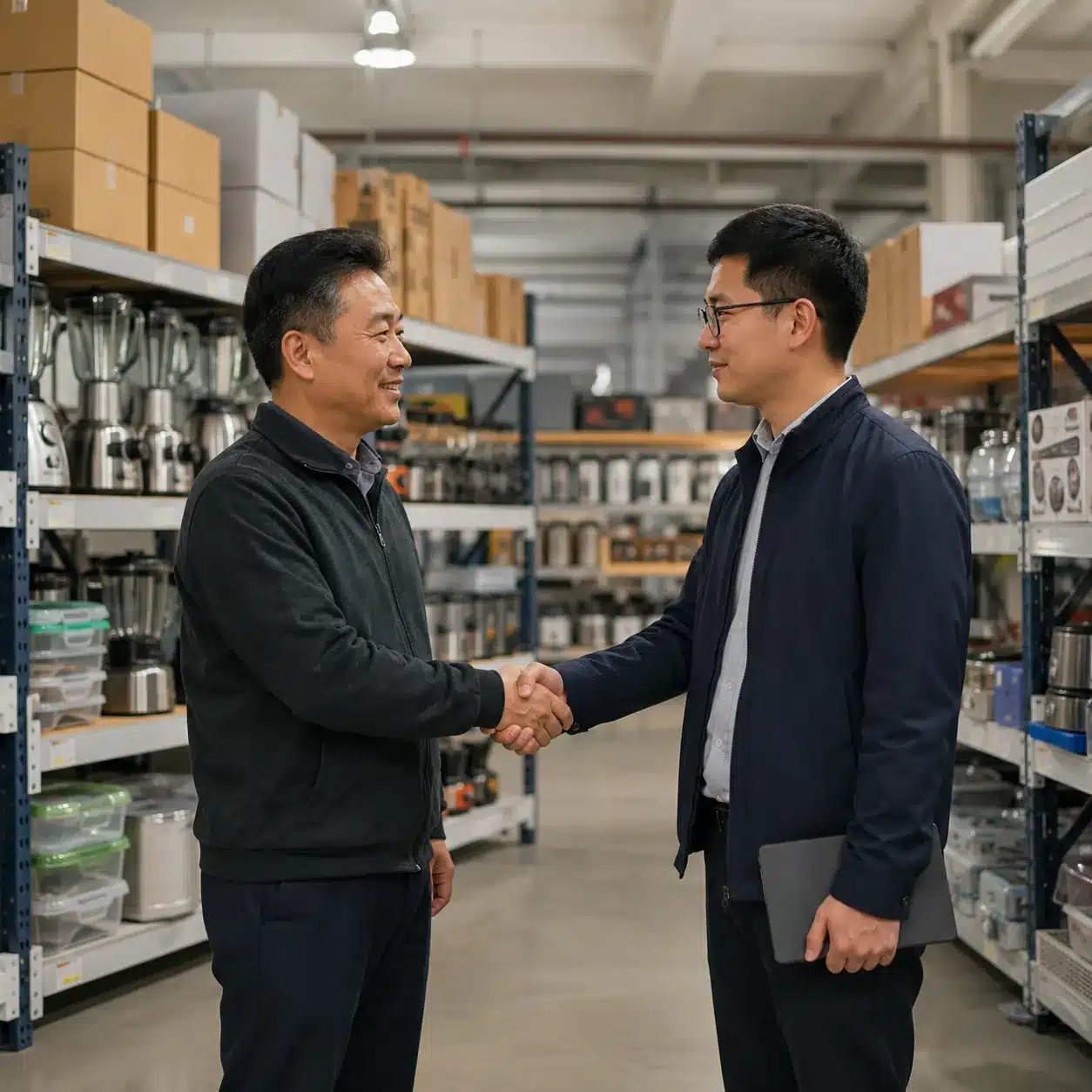
A Yiwu sourcing agent is your paid representative on the ground in Yiwu. The agent buys on your behalf, checks what it buys, and ships what passes. That sounds simple until you count the failure points between a booth quote and a container arriving at your warehouse.
Each part of the role maps to one of those failure points. The table below is the whole job, with the risk each part absorbs.
| Job | What the agent does | Risk it absorbs |
|---|---|---|
| Supplier search & vetting | Walks booths, checks business licenses, visits factories, pulls batch samples | Ghost suppliers and traders posing as factories |
| Price negotiation | Negotiates in local dialect; agrees payment terms; exposes bundled markups | The foreigner premium and hidden margins |
| Quality control | Inspects during production and before shipment against AQL tolerances | Paying the balance for defective goods |
| Order consolidation | Collects goods from many booths into one warehouse shipment | Many small shipments, many wire fees, missed connections |
| Export logistics | Prepares export documents, books freight, handles FBA labeling | Document errors and compliance rejects at destination |
Agent versus freight forwarder
Buyers often blur these two roles, and the confusion costs money. A freight forwarder moves boxes that already exist and already passed inspection. The agent’s job starts much earlier: finding the product, verifying who makes it, and stopping bad batches before the balance is paid. Some forwarders offer “sourcing” as an add-on; unless they staff people inside the Yiwu market, that add-on is a phone call, not a presence.
Why the market structure creates the role
Yiwu is not one supplier. It is tens of thousands of booths, many of them one-product storefronts with no export capability and no English. A single order for an Amazon seller can touch fifteen booths, each with its own minimum order, payment habits, and lead time. The role exists because coordinating fifteen separate Chinese counterparties from overseas is not a task with a good remote workflow. Someone has to be physically there. That someone is the agent.
Supplier Search and Verification in Yiwu
Supplier search is the part of the yiwu sourcing agent role that looks easiest from abroad and is the hardest in person. Every booth claims factory-direct pricing. The claims are cheap; the verification is the service.
Booth vetting goes beyond the showroom
A competent agent checks the business license against China’s official registration, asks which entity owns the production line, and requests samples from the production batch rather than the showroom shelf. Showroom units are often built to a higher standard than the goods that ship. If a booth cannot produce a live video of its own production line on request, treat it as a trader until it proves otherwise. That single test screens out a large share of the market.

A meaningful share of Yiwu booths are trading companies reselling factory output with a margin. That is not automatically fraud; traders sometimes add real consolidation value. But you should know you are buying from one, because the price you negotiate at a trader already contains a second markup. Our guide to telling factories from trading companies covers the documents that settle the question.
The suppliers that never appear online
Not every good factory lists itself on Alibaba or 1688. Some sell exclusively through market booths and local networks, and never build a web presence at all. For buyers hunting stock lots or discontinued lines, this off-platform layer is where the value hides. A locally based agent reaches it through relationships, not search queries. We mapped how that layer works in our guide to the hidden Yiwu market.
Sample discipline before any deposit
Samples are where first orders quietly go wrong. The approved unit arrives perfect; the production batch arrives thinner, weaker, cheaper. The defense is boring and effective: approve a sample pulled from the production run, keep it sealed and signed, and inspect the shipment against it. Budget for sample and courier costs before you travel — our breakdown of product sample costs shows what is normal to pay.
Price Negotiation and the Real Cost Structure
Negotiation is where the fee most visibly earns its keep — and where dishonest agents hide their real income. Both deserve detail.
Our own service page states the pattern plainly: suppliers often quote unguided foreigners 10–20% higher. An agent negotiating in the local Zhejiang dialect, with repeat relationships in the district, quotes against the local buyer price instead. The arithmetic on our money page is blunt: save 10% on price, pay a 3% fee, keep the difference. Not every negotiation lands that clean a spread, but the direction does not change — the starting quote drops once the vendor hears a local buyer instead of a tourist.
Payment terms are part of the negotiation
The standard structure in Yiwu is a 30% deposit and a 70% balance. The term that matters is when the balance falls due. A factory default is payment before shipment; an agent can move it to payment after inspection passes. That one shift converts the balance from a sunk cost into leverage. We unpack the deposit structures you will meet — 30/70, 50/50, and net terms — in our guide to China sourcing payment terms.
The blind markup trap
Here is the trap that undoes the savings. Some agents quote you one all-in price that bundles factory cost, commission, and freight. You never see the factory gate price, so you cannot tell whether the discount the agent negotiated went to you or into the agent’s pocket. Consider a concrete example: if the true factory price is USD 2.50 and your all-in quote is USD 4.00, the gap is a 60% hidden markup that no commission percentage will reveal.
The counter-move is one sentence: demand the factory’s original quotation, with the factory’s seal, before you sign anything. A transparent agent produces it without hesitation. An agent who demurs is telling you the pricing model out loud.
Our own tiers are published rather than negotiated in the dark, by order value, on our Yiwu market agent service page.
| Order value (USD) | Our published commission | Included |
|---|---|---|
| 0 – 5,000 | 5% | Market guiding, negotiation, consolidation, QC, export documents |
| 5,001 – 50,000 | 3% | Everything above, plus free warehousing for 30 days |
| 50,000+ | 1–2% | Everything above, plus a dedicated priority team |
Published bands across the wider market run roughly 3–10% of goods value, and the fee model itself — commission, flat fee, or retainer — changes what the agent is incentivized to do. We compared the models and their hidden costs in our guide to China sourcing agent fees.
Quality Control Before You Pay the Balance
Quality control is the part of the role most buyers underestimate, because they picture it as a final walkthrough. Done properly, it is three timed interventions plus a payment mechanism that makes the findings binding.
Three inspections, three timings
Our published QC standards describe the sequence exactly. The during-production check happens when 20–50% of the order is produced, while defects are still cheap to fix on the line. The pre-shipment inspection happens when 100% is produced and 80% is packed, checking quantity, workmanship, function, and packing. Loading supervision happens on loading day: the container condition is verified and your goods — not someone else’s — go in. Each stage catches a different failure. One stage alone leaves gaps.
The standard is published, not improvised
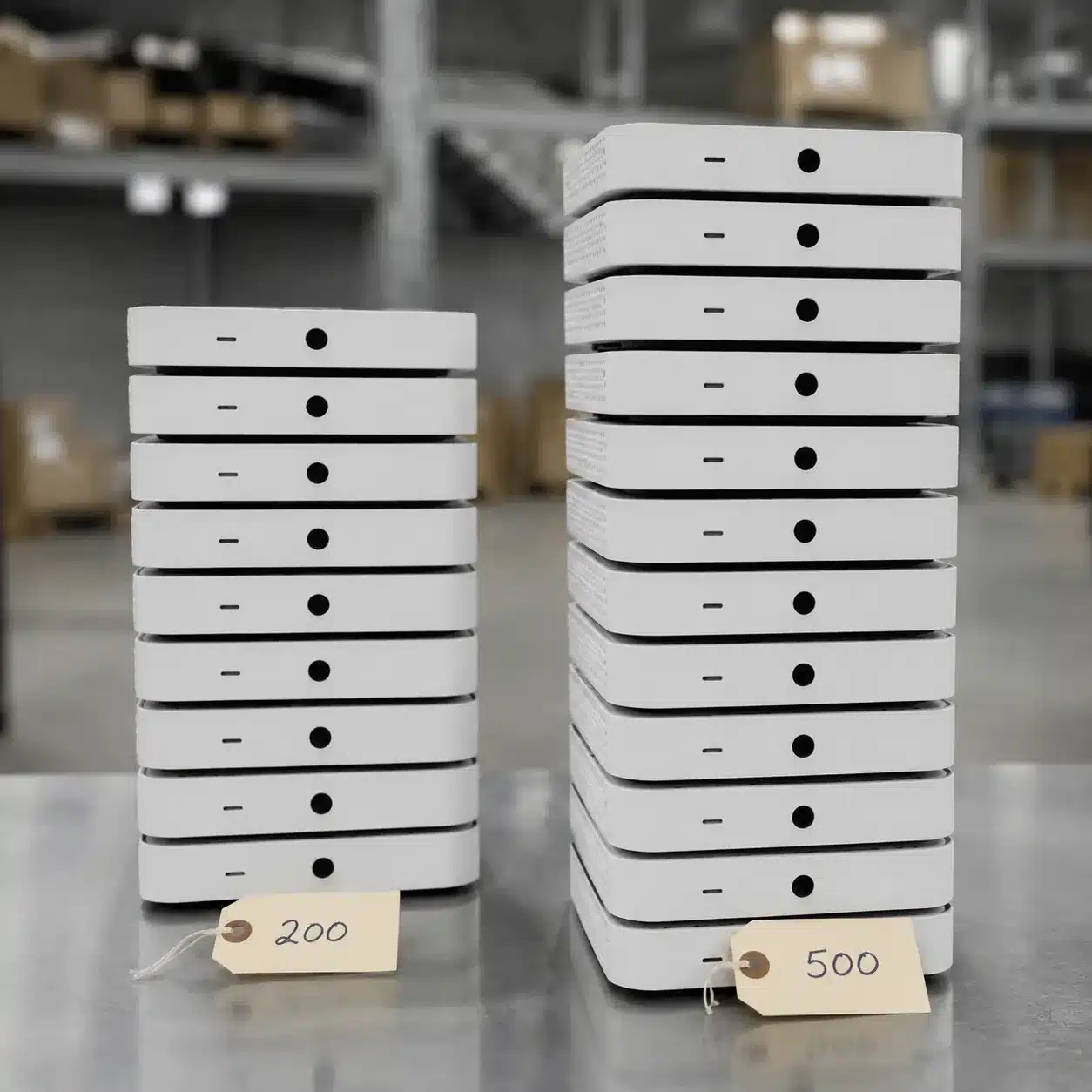
Sampling follows ANSI/ASQ Z1.4, the international attribute-sampling standard equivalent to ISO 2859-1. Our default tolerances are 0 critical defects, AQL 2.5 for major defects, and AQL 4.0 for minor ones, adjustable to your product’s risk profile. The numbers are concrete. Take a 6,000-unit order inspected at general level II: the lot falls in the 3,201–10,000 band, maps to code letter L, and the inspector pulls 200 units. Under our defaults, the batch fails if more than 10 major or 14 minor defects appear — and any critical defect fails it immediately.

If a batch fails, the mechanism does the arguing. We issue a “Do Not Ship” alert, negotiate rework or replacement with the factory, and withhold the final 70% payment until re-inspection passes. A factory can ignore an email from an overseas buyer. It cannot ignore a withheld balance. Full tolerances, stages, and costs are on our quality control inspection page.
What inspection costs and what protects it
A standalone inspection runs USD 199 per man-day; basic inspection is often included in the full sourcing service. The report lands within 24 hours as a PDF with high-resolution photos, video tests, and measurement data. Bribery is the obvious threat to any inspection regime, so ours runs on three layers: inspectors rotate and never return to the same factory twice, inspections are GPS-tracked and body-camera recorded, and factories that report a bribe attempt get rewarded. The returning container is the counterfactual. Sending one back costs around USD 10,000, which is why catching the problem at the factory gate is the cheapest version of quality.
Consolidation and Logistics From Yiwu
The fourth and fifth jobs of the role — consolidation and export logistics — are where many small orders quietly lose their margin.
Many booths, one shipment
Buy fifteen products from fifteen booths and you inherit fifteen invoices, fifteen pickup schedules, and fifteen sets of packing habits. Consolidation collapses that into one workflow: the agent collects each order, holds it in a local warehouse — ours runs 3,000 square meters — strips wasteful packaging, and packs everything into one rated shipment. The economics are honest rather than magical. You stop paying per-shipment minimums and courier fees many times over, and a fuller container buys a better freight rate per unit. How much better depends on your volume, your route, and your product mix; the mechanics — including when a shared container beats a full one — are covered in our guide to shipment consolidation.

The export paperwork and the last mile
Every consolidated shipment leaves China with the same paper spine: commercial invoice, packing list, bill of lading, certificate of origin, and a correct HS code classification. One wrong field can stall the shipment at the destination port, and the bill of lading in particular decides who controls the goods in transit — our explainer of the bill of lading shows why that document deserves attention.
For Amazon sellers, the last mile adds its own rules. Units need FNSKU barcodes, poly bags need suffocation warnings, cases and pallets need their own labels, and Amazon enforces all of it with chargebacks and receiving refusals. FBA prep is a checklist job, and it belongs inside the agent’s scope rather than with an unknown third party at the destination end.
What a Yiwu Agent Does Not Do
The scope boundary is as useful as the scope list. Buyers who assume the role is unlimited end up under-insured and over-trusting. A Yiwu agent does not provide product liability insurance for your destination market. It does not register your trademark or IP in China. It cannot recover your money if a factory goes bankrupt mid-order. It does not design products, build brand packaging, or guarantee retail sales. Warehousing beyond the agreed window is billed separately.
None of this is a criticism of the role. An agent reduces risk; it does not insure it. The gaps are yours to close, and the two worth closing first are contractual: an NNN or purchase-order agreement that binds the factory under Chinese law, and a written inspection standard both parties sign before production. Our guide to Yiwu sourcing contracts and NNN agreements covers the clauses that matter.
Yiwu Sourcing Agent vs Going Direct
This is the decision the whole page has been circling, and it has a real answer rather than a diplomatic one. For first and second orders, the agent wins. At verified scale, direct wins. The interesting part is the line between them.
What the first order actually costs each way
Going direct saves the commission and nothing else. You still pay for everything the commission bought: the supplier verification you now do by email, the inspection you now skip, the freight you now book at retail rates, and the payment terms you now accept because you have no leverage. A factory’s self-check is not a check; it is a visual pass by the people who get paid when the unit ships. Sample-to-batch switches, EXW quotes that dump every port-side charge on you, and freight padded above market rates are the classic ways a “cheaper” direct order gets expensive after the fact.
The agent route puts a known percentage on the table up front and buys you three things with it: a verified counterparty, inspection leverage over the 70% balance, and consolidated freight. On a first order, where you cannot yet tell a good factory from a good salesperson, that is the cheaper total cost even when it is the higher sticker price.
The decision at a glance
| Factor | With an agent | Going direct |
|---|---|---|
| Upfront cost | Commission of roughly 3–10% of goods value | No commission; everything else priced separately |
| Supplier verification | License checks, factory visits, batch samples | Self-attested claims over email and video |
| Quality gate | AQL inspection tied to the withheld balance | Factory self-check unless you hire a third party |
| Small or mixed orders | Consolidated across booths into one shipment | Each factory ships alone at retail freight rates |
| When things go wrong | Someone on the ground negotiates rework and holds payment | Cross-border dispute with a counterparty you have never met |
| Where it wins | First orders, mixed SKUs, unverified factories | Large repeat orders from an audited factory |
Our break-even rule for going direct
We state this as our own operating rule, because it is what we tell buyers who ask. Direct sourcing starts to pay when four conditions hold at once: your order runs 1,000+ units per SKU, you are placing a repeat order with sunk tooling and history, the factory has passed an on-site audit you commissioned, and you have your own freight forwarder and documentation workflow in place. Missing any one of the four and the commission you saved becomes the cheapest line item in a very expensive education.
There is also a middle path worth naming. If you insist on negotiating direct, still buy the inspection. A standalone pre-shipment inspection costs USD 199 per man-day. It is the cheapest insurance in this entire market, and a factory that refuses to allow it has answered your question before you paid the balance.
Is a Yiwu Agent Worth the Fee
Worth is arithmetic, not sentiment. The fee is a percentage of goods value; the returns arrive through three separate doors.
Where the money comes back
Door one is the negotiation itself. If the foreigner premium on your quote runs 10–20% and dialect negotiation removes most of it, the spread between the two prices can exceed the entire commission. Door two is the freight line. Consolidated shipments beat many small ones on rate and handling, and the gap widens with the number of booths involved. Door three is the batch you never received: the one that failed AQL inspection, triggered a “Do Not Ship” alert, and got reworked on the factory’s dime while your 70% balance stayed in your account. One caught failure can outweigh a year of commissions.
Where the math stops working
The same arithmetic, run honestly, has an exit condition. On large repeat orders from a factory you have audited yourself, the agent’s verification and leverage are worth less because you already own them. That is exactly the break-even described above: 1,000+ units per SKU, repeat history, verified factory, your own logistics. At that point the percentage buys diminishing protection, and a sophisticated buyer renegotiates the relationship down or steps out of it. A good agent will tell you this themselves, because the alternative — milking a client past the point of value — is how agencies earn their bad reputation.
Between those two poles, demand three things so the fee earns its keep: disclosed factory prices on every quote, inspection evidence with photos tied to the AQL standard, and milestone payments that release only against a passed check. An agent who refuses all three is not worth any fee.
Three Checks Before You Hire Anyone
Three filters eliminate most bad agents before they cost you anything. First: a written, itemized fee schedule and willingness to show the factory’s original quotation. An agent who hides the gate price is billing you on it. Second: a physical office and warehouse you can verify by live video. Ours is Room 1234, District 2, inside the Yiwu Trade City — ask any candidate to show you theirs on camera, unscripted. Third: sample inspection reports in AQL format with photos and measurements. If the reports have no defect counts and no sampling numbers, the inspections are theater.
The full vetting procedure lives elsewhere
These checks take an afternoon. The complete due-diligence process — license verification, reference calls, contract clauses, red-flag patterns — is a separate discipline, and we keep it in its own guide: how to vet a Yiwu sourcing agent. Run it on every candidate, including us.
Conclusion
The yiwu sourcing agent role is a defined scope of five jobs — supplier vetting, negotiation, quality control, consolidation, and export logistics — priced as a percentage of goods value, and worth it until your volume and verification outgrow it. Consolidating our three earlier guides into this page reflects how buyers actually decide: scope first, cost second, exit conditions third.
- Scope: five jobs, from license checks to FBA labeling; the agent-vs-forwarder difference is that the agent’s work starts before the goods exist.
- Cost: our published tiers are 5% up to USD 5,000, 3% from USD 5,001–50,000, and 1–2% above USD 50,000, against a market band of roughly 3–10%.
- Leverage: ANSI/ASQ Z1.4 inspection with the 70% balance withheld until re-inspection passes — the mechanism that turns findings into money.
- Exit: going direct pays at 1,000+ units per SKU with repeat history and an audited factory; below that, buy the USD 199-per-man-day inspection at minimum.
What an agent cannot do stays with you regardless: product liability insurance, IP registration in China, and a contract enforceable against the factory. Close those three gaps before the first deposit, not after the first problem.
Frequently Asked Questions
What does a Yiwu sourcing agent do?
The agent acts as your paid representative in Yiwu: it finds and vets suppliers, negotiates price and payment terms in Chinese, inspects goods to AQL standards before the balance is paid, consolidates orders from multiple booths, and handles export documentation and freight.
How much does a Yiwu sourcing agent cost?
Market rates run roughly 3–10% of goods value. Our published tiers are 5% for orders up to USD 5,000, 3% for USD 5,001–50,000, and 1–2% above USD 50,000. A standalone inspection is billed at USD 199 per man-day.
Can I buy from Yiwu without an agent?
Yes, but you inherit every task the role covers: verification of suppliers, negotiation in Chinese, AQL inspection, consolidation, and export paperwork. Most overseas buyers lack the local presence to do those at arm’s length, which is why the role exists.
Yiwu sourcing agent vs direct factory: which is better?
For first and second orders, the agent: verified suppliers, inspection leverage over the 70% balance, and consolidated freight beat a lower sticker price. Direct wins at 1,000+ units per SKU with repeat history and an audited factory.
What does a Yiwu agent NOT do?
No product liability insurance, no IP or trademark registration, no recovery if a factory goes bankrupt, no product design or brand packaging, and no warehousing beyond the agreed window. An agent reduces risk; it does not insure it.