Justin
Yiwu market sourcing goes wrong in a specific, boring way. Not the dramatic scam everyone writes about — the ordinary one, where you agreed to pay 30% down and 70% “after quality control passes,” the goods were inspected, someone said they passed, and the cartons that reached your warehouse were not what you approved. You had no number to point at. Neither did the supplier. The phrase in your purchase order was decorative.
Key Takeaways
- Write the inspection standard into the PO, not the word “inspection”. Under ISO 2859-1 General Level II at AQL 2.5, a 500–1,200 piece lot means 80 units checked and rejection at 4 defects; a 1,201–3,200 piece lot means 125 units checked and rejection at 6.
- Most free AQL charts online get these cells wrong. The most-cited one returns 14/15 for a 125-unit sample at AQL 2.5 — that is the AQL 10 column, four times too lenient.
- Yiwu Customs recorded 836.5 billion yuan (119.37 billion US dollars) of foreign trade in 2025, up 25.1% year on year. Imports passed 100 billion yuan for the first time.
- The market runs nearly 80,000 booths and over 2.1 million commodity types, trading with 233 countries and regions.
- Booth size tells you order size before anyone speaks: a 14 m² stall is set up for mixed test orders, an 80–100 m² unit for container programmes.
- 30% deposit and 70% before shipment is the market norm you should expect to be quoted — the number that makes it safe is what you condition the 70% on.
- You may not need to fly at all. If you do, 55 nationalities can use China’s 240-hour visa-free transit instead of a business visa, subject to an onward ticket to a third country.
What Yiwu Market Actually Is, in Numbers That Are Current
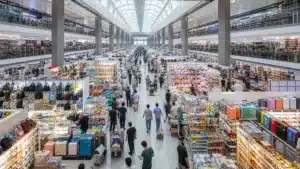
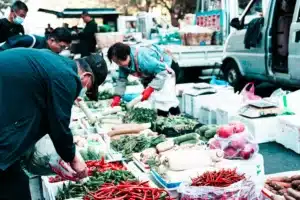
Yiwu is a concentration play. Every other sourcing route asks you to find suppliers one at a time across several provinces; Yiwu puts a few tens of thousands of them inside one contiguous complex and lets you compare a dozen in an afternoon. That is the entire proposition, and it is worth being precise about its size, because most of the numbers circulating online are two years old.
Yiwu Customs reported the city’s 2025 foreign trade at 836.5 billion yuan — 119.37 billion US dollars, a record high, and up 25.1% year on year on exports that grew 24.1%. Imports crossed 100 billion yuan for the first time, reaching 105.8 billion yuan on 32.3% growth. Through the first three quarters alone, trade ran 631.2 billion yuan, with exports near 554 billion. If you have read a guide quoting 589 billion yuan and 17.7% growth, you were reading 2024.
What the growth rate tells a buyer
A 25% jump is not just a headline. It means booth-level capacity is tight in the categories that grew, which shows up in your quotes as firmer minimums and less patience for a 100-piece trial. It also means the supplier who quoted you generously in 2024 may not be the same negotiation in 2026. The breadth matters more than the headline rate: through the first three quarters Yiwu traded with 227 countries and regions, and 181 of them grew. A booth whose order book is filling from four continents has no structural reason to treat a European or North American trial order as the one it cannot afford to lose, and pricing behaviour reflects that.
The scale figures, stated honestly
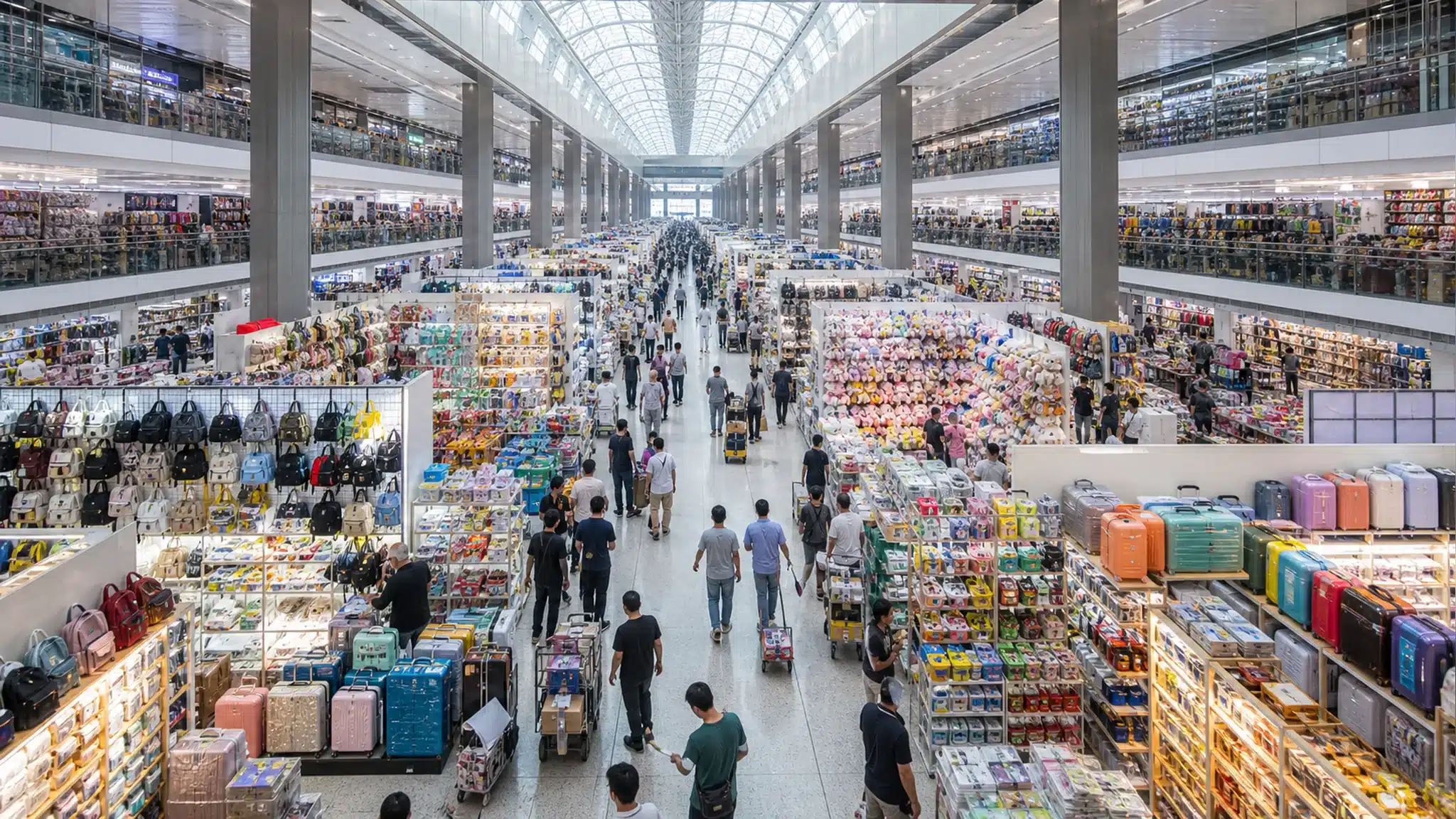
Yiwu Customs puts the market at nearly 80,000 booths carrying over 2.1 million types of commodities, trading with 233 countries and regions. Those are the figures to use.
The market’s physical floor area is where published sources stop agreeing. You will see 4 million, 5.5 million and 6.4 million square metres, depending on whether the writer counted the five main districts, the whole trade-city complex, or the surrounding markets too. No sourcing decision turns on which is right, so this guide will not pretend to settle it — but a page that states one of those figures as certain fact is telling you something about how carefully it was written.
What Yiwu is genuinely bad at
Yiwu is a small-commodities market: gifts, toys, stationery, party and seasonal goods, hardware, accessories, home items, packaging. It is excellent at breadth and at low minimums. It is poor at engineered parts.
If your product needs a material certificate traceable to a heat number, a tolerance in hundredths of a millimetre, or an accredited test report attached to the batch, you are in the wrong market. Not because Yiwu suppliers are careless — because the trading structure that gives you 200-piece minimums is the same structure that puts a layer between you and the plant. Buy your gift boxes and retail packaging here; buy precision components somewhere that will put an engineer on the call.
How the Five Districts Route You to the Right Booth
The districts are not neighbourhoods with vague characters. They are a filing system, and the fastest thing you can learn about Yiwu market sourcing is how to skip four fifths of it.
| District | Core categories | Who it suits |
|---|---|---|
| District 1 (opened 2002) | Toys, plush and inflatables, jewellery, hair and flower accessories, festival and wedding crafts | Export-experienced buyers; suppliers here handle documents routinely |
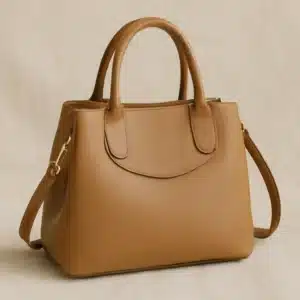
| District 2 (opened 2004) | Bags and suitcases, umbrellas, hardware, kitchenware, electronics, auto parts | Hardware and general-merchandise importers |
| District 3 (opened 2005) | Buttons and zippers, stationery and office supplies, cosmetics, glasses, sporting goods | Mixed-SKU test buyers; lower floors are small-stall territory |
| District 4 | Daily necessities, knitwear and socks, footwear, belts, scarves, towels | Apparel-accessory and soft-goods programmes |
| District 5 (opened 2011) | Imported goods, bedding and fabrics, auto and motorcycle accessories, hotel supplies | Home-category buyers and anyone sourcing branded imports |

Booth size is a commercial signal, and almost nobody reads it
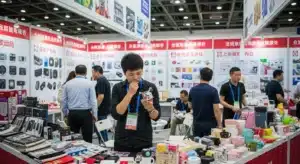
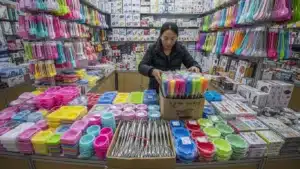
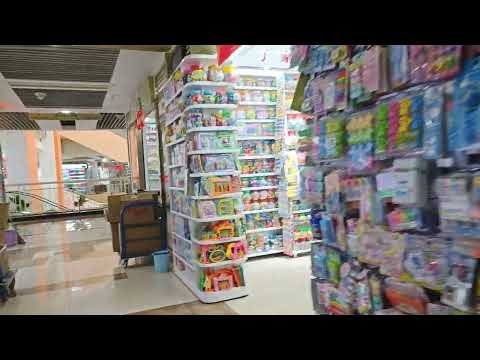
Within a district, the stalls come in two broad sizes, and the difference tells you what kind of order the occupant is built to take before you have said a word. The small standard booths — roughly 14 square metres, which is most of the lower floors — belong to operators running many SKUs at low volume. They will talk to you about 100 pieces. The large units of 80 to 100 square metres on the upper floors are factory outlets and brand showrooms; they will be relaxed about a container and unenthusiastic about a trial order.
Walking into the wrong size of booth wastes both parties’ time in a way that is invisible to a first-time buyer, who reads the large-unit shrug as rudeness rather than as a mismatch. If you are testing twenty SKUs at 100 pieces each, stay on the low floors. If you are placing a repeat container programme and want tooling conversations, go upstairs.
The arithmetic that decides your trip length
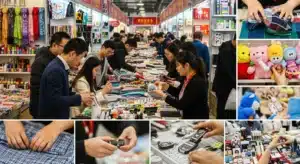
The market runs roughly 09:00 to 17:00, seven days a week, which gives you one working block of about eight hours. Ten minutes in a booth — realistic once you include greeting, samples and writing anything down — puts you at 40 to 50 booths in a very good day, before you walk between buildings.
Against nearly 80,000 booths, a three-day trip touches well under a tenth of one percent of the market. That is not an argument against going. It is an argument against arriving without a floor-level shortlist, because the trip’s value comes almost entirely from what you decided before you boarded.
One discipline pays for itself immediately: label every sample the moment you take it, with district, building, floor and booth number. Buyers routinely come home with thirty unlabelled samples and no reliable way to match half of them to the supplier who gave them out. A phone photo of the booth sign next to the sample costs three seconds and solves it.
Price, MOQ and Agent Fees: What the Quote Sheet Does Not Say
Three numbers decide whether a Yiwu order makes money, and only one of them appears on the quote sheet. Here is what is behind each, with an honest note on which figures are grounded and which are estimates — because a lot of what circulates about Yiwu pricing is confidently sourced from nowhere.
MOQ is set per booth, not per market
There is no Yiwu minimum order quantity. There is a minimum for the specific booth, the specific SKU, and often the specific colour, and it moves with how much stock they are holding and how interested they are in you. Reported bands are a starting point rather than a rule: Yiwugo listings commonly show minimums in the 100–300 US dollar range, and the general market practice cited by sourcing guides sits around 100–200 pieces per product. For comparison, the same guides put Alibaba’s typical band at 500–5,000 dollars.
The same applies to specification range. Yiwu’s product range is broad rather than deep: within a category you will usually find several sizes, materials and finishes already tooled and in stock, and very little appetite for a dimension nobody else buys. So the practical spec range is “whatever the booth already runs, plus your artwork and packaging” — custom colours and printing are routine, custom moulds are a different conversation with a tooling charge and a longer minimum. Ask for the supplier’s existing size and material list before you design around a spec, because matching an existing tool is the single largest cost saving available in this market.
Lead times work the same way and cannot be quoted generically, because they depend on whether you are buying stock or production. Goods already in the booth’s inventory typically ship within about 7 to 15 days, which is why stock items are the sensible choice for a first test order.
A production run adds the factory’s manufacturing window, your sampling and approval time, and then freight. Two things reliably stretch it: custom tooling, and the Chinese New Year shutdown described below. Get the supplier to commit to a production-complete date in writing and treat shipping as a separate line, rather than accepting one blended figure.
What actually moves a minimum down is rarely the argument you expect. Committing to a repeat schedule works. Accepting the supplier’s existing colourway or packaging rather than a custom one works, because the minimum usually exists to cover a setup or a material run, not to be difficult. Asking a stallholder to break their carton quantity for a first order usually does not work, and pushing hard on it marks you as a buyer who will be expensive to serve.
Negotiation headroom: what is estimate and what is fact
Independent sourcing guides put the negotiable range at roughly 5–20% off a first quote. Treat that as an estimate — it is a market observation, not a measured figure, and the wider claim you will see repeated (that first quotes run 20–30% above final) has no source behind it that anyone can point to. Anchor instead on the things that are checkable: the payment structure below, and the inspection numbers in the next section, which are the only figures in this article read directly from a published standard.
The market norm you should expect to be quoted is a 30% deposit with the 70% balance before shipment. That structure is fine. What makes it safe or unsafe is entirely what the 70% is conditioned on, which is a question almost every buyer leaves until it is too late to answer.
The agent fee question, asked the other way round
Sourcing agents in this market typically work on a percentage of order value. The useful question is not whether that percentage is fair in the abstract — it is whether you are buying something you cannot do yourself.
Place one order with one supplier you already know, in a category you understand, and you are paying a commission for very little. Consolidate fifteen suppliers across three districts into one shipment and someone has to physically collect, inspect and repack the goods — that work exists whether or not you pay a percentage for it. Our breakdown of Yiwu agent costs goes through the fee models, and how to vet a Yiwu sourcing agent covers what to ask before signing.
Two costs get forgotten in every first-order budget. International wire fees are charged at both ends and are a fixed amount per transfer, which quietly makes paying five suppliers separately much worse than paying one consolidated invoice. The currency spread your bank applies — between the rate it quotes and the rate you actually receive — is a real percentage of the order that never appears on any document.
Neither is a scandal, and both belong in the landed-cost sheet before you decide whether the margin works. So do the freight terms: if you are unsure whether to buy EXW, FOB or DDP, our guide to Incoterms for Yiwu sourcing sets out who carries which cost, and the product sourcing service page lays out how a supplier is found, vetted and consolidated end to end.
The Inspection Numbers That Make Your 70% Payment Safe
This is the section that decides whether the rest of the process was worth doing. “Balance payable after quality inspection passes” is not a contract term. It is a sentence that sounds like one. Passes what? Checked by whom, against what sample size, allowing how many defects? Without those, the supplier’s honest opinion and your honest opinion can differ by a full container and neither of you is technically wrong.

How the standard actually works
The relevant standard is ISO 2859-1, the international sampling-by-attributes standard (its American twin is ANSI/ASQ Z1.4). If you want the theory rather than the tables, the acceptance sampling overview covers why sampling works at all.
You do not inspect everything. You inspect a sample whose size the standard derives from your lot size, and you accept or reject the whole lot on the defects found in that sample. Three inputs decide it: the lot size, the inspection level (General Level II is the normal default), and the AQL — the acceptable quality limit, conventionally 2.5 for major defects and 4.0 for minor ones, with critical defects at zero.
Lot size gives you a code letter, the code letter gives you a sample size, and the sample size plus the AQL gives you two numbers: Ac, the most defects you can find and still accept, and Re, the number at which you reject. Re is always Ac plus one. Those last two numbers are the whole point, and they are what belongs in your purchase order.
| Your order quantity | Code letter | Units inspected | Accept at (AQL 2.5) | Reject at (AQL 2.5) |
|---|---|---|---|---|
| 501 – 1,200 pieces | J | 80 | 3 defects | 4 defects |
| 1,201 – 3,200 pieces | K | 125 | 5 defects | 6 defects |
Those values are read from ISO 2859-1:1999, Table 1 for the code letters and Table 2-A for the single-sampling accept and reject numbers under normal inspection.
Check any AQL chart before you trust it. The free AQL references that dominate search results are not reliable on these cells. The most widely cited one returns “14 / 15” for a 125-unit sample at AQL 2.5 — those are the AQL 10 figures, three columns to the right, and using them would let a lot through with more than twice the defects the standard permits. A published guide on this very site previously told buyers to reject a 1,000-unit order at 5 defects in an 80-piece sample; the correct reject number for that lot is 4. If a chart cannot be traced back to the ISO or ANSI table, do not put its numbers in a contract.
A worked example you can reuse
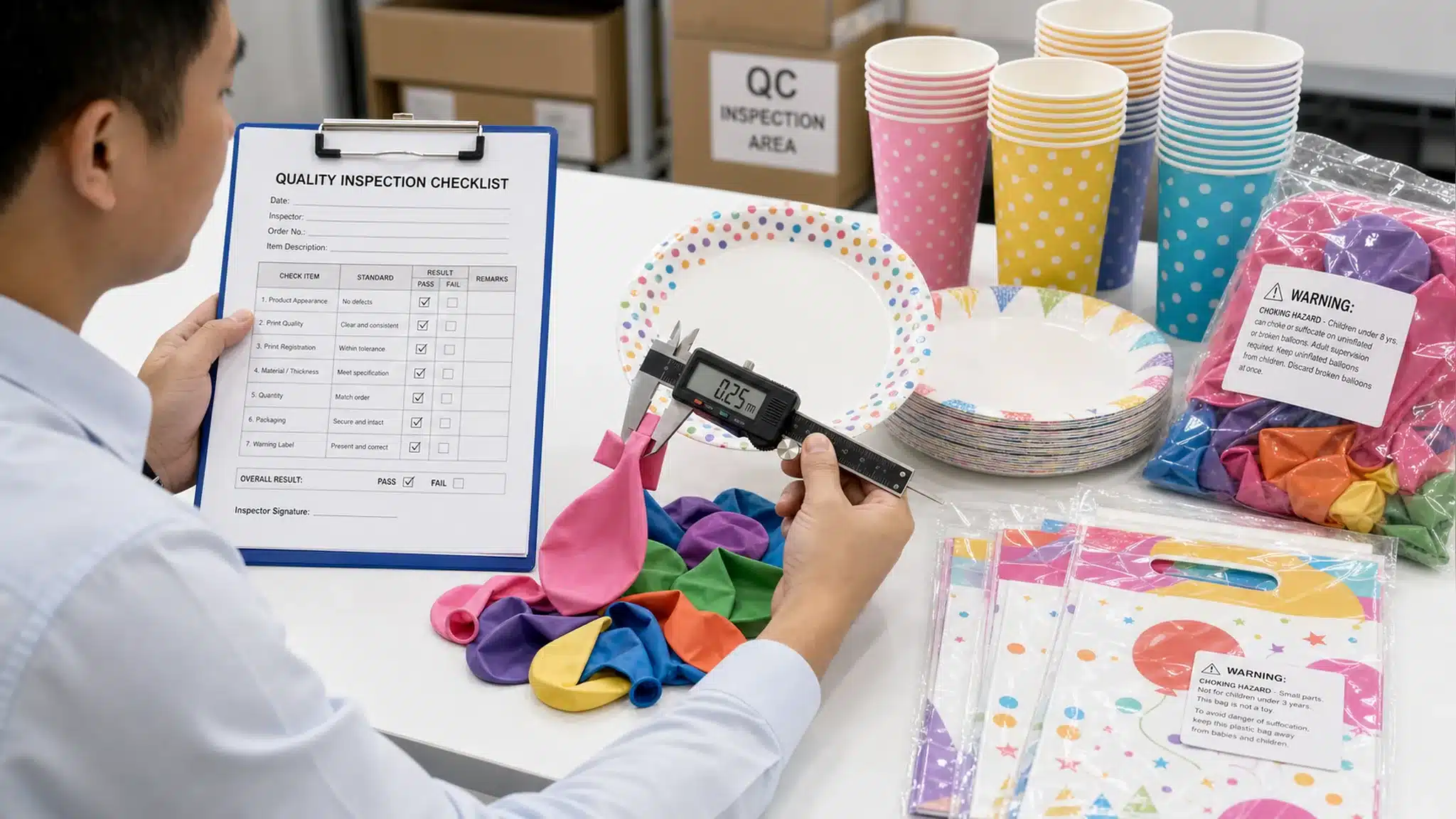
Say you order 2,000 units of a printed melamine tray. The lot falls in the 1,201–3,200 band, so General Level II gives code letter K and a sample of 125 units drawn at random across the cartons — not 125 units from the top of one carton, which is the most common way an inspection is quietly defeated. Your inspector opens cartons across the pallet, pulls 125 trays, and checks them against your approved sample for the defects you defined in advance: print registration, colour against the approved swatch, warp, edge chips, and the retail barcode scanning correctly.
Five defective trays and the lot is accepted. Six and it is rejected, and the supplier reworks or replaces before the balance is released. That is a decision neither party can argue with afterwards, because you both agreed the number before production started. Write it into the PO in one line: “Pre-shipment inspection per ISO 2859-1, General Inspection Level II, AQL 2.5 major / 4.0 minor / 0 critical. Balance payable on a passing report.” Then define what counts as a major defect for your product, because that sentence does nothing if “major” is left to taste.
When the inspection happens matters as much as the numbers
A pre-shipment inspection is normally run when production is complete and roughly 80% of goods are packed — late enough to be representative, early enough that rework is still possible before the container is booked. Inspecting after the goods are loaded gives you information and no leverage. For orders where a defect would be expensive to discover late, a during-production check at around 20–50% completion catches a systematic problem while it is still forty cartons rather than four hundred. The quality control process page sets out the inspection stages and defect classifications in more detail.
Verifying a Supplier Before Any Money Moves
You will read everywhere that most Yiwu “manufacturers” are really trading companies, usually with a confident percentage attached. Nobody who publishes that number can tell you where it came from, and this guide is not going to repeat it as fact. The more useful point survives without the statistic: a great many booths are trading operations rather than factories, you cannot tell which from the booth, and it matters — not because traders are bad, but because a trader adds a margin, adds a communication hop when something goes wrong, and may not be able to issue export documents in their own name.
The documents, and what each one actually proves
- Business licence: proves the legal entity exists and shows its registered scope. The name on it must match the name on your invoice and, critically, the bank account you are asked to pay. A mismatch between company name and beneficiary account is the single clearest warning sign in this market.
- Customs registration / export filing: proves they can export in their own name. Without it your goods need a third party’s export licence, which is normal in Yiwu but must be arranged deliberately rather than discovered at the port.
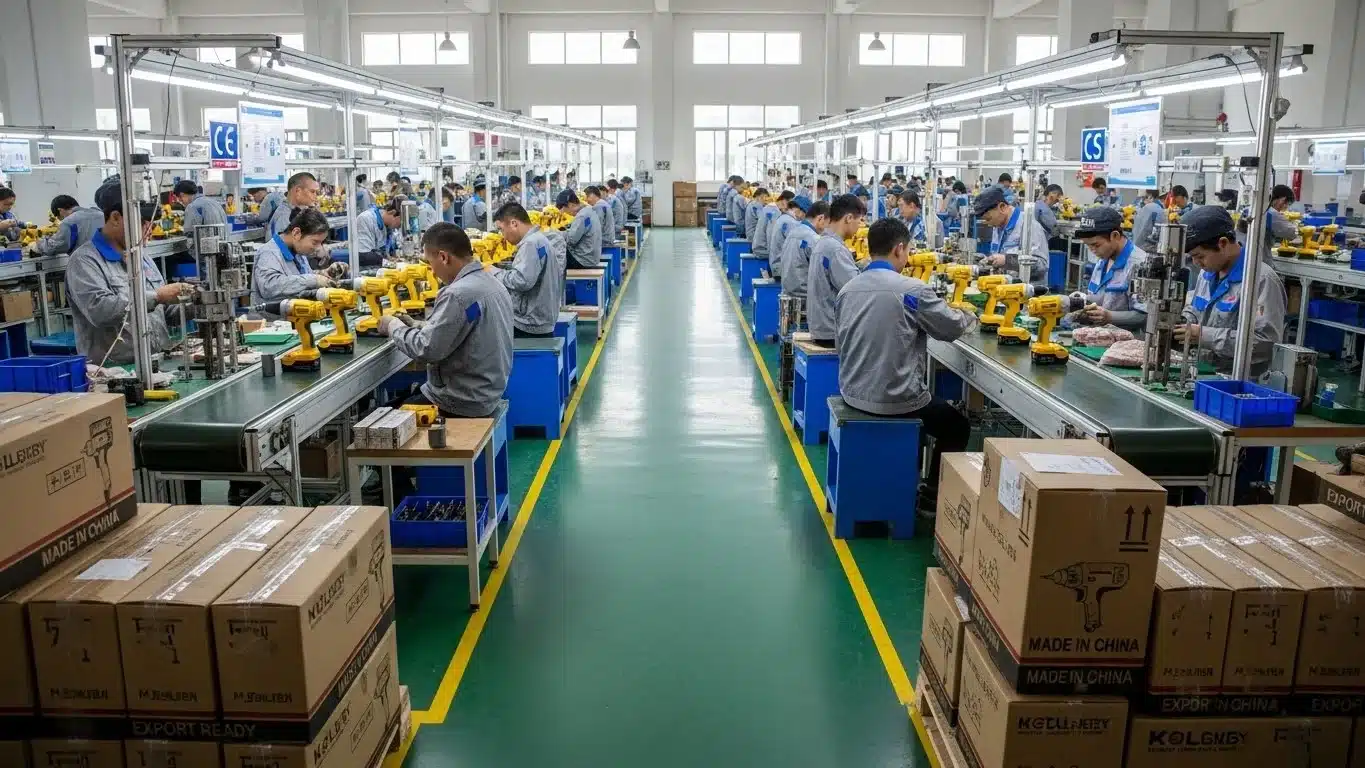
- Dated production photographs or a live video call: proves there is a production line rather than a showroom. Ask them to walk the camera along the line and film the machines running, unprompted, during your call.
- Product compliance documents: what you need depends entirely on your destination market and product category. Children’s products, electricals and food-contact items typically carry testing and labelling requirements that vary by country and by the importer’s role — confirm the current rules with a customs broker or the relevant authority for your market before you commit to a shipment.
The video call is the test that separates them
Ask any supplier to show you their production line on a live call, at a time you choose rather than one they propose. A manufacturer points the phone at the machines and keeps talking. A trading company hesitates, offers to send a recorded video instead, or explains that the factory is a partner facility an hour away and today is difficult. Neither answer disqualifies anyone — plenty of good business runs through traders — but you now know which relationship you are in, and you can price the margin and the extra communication hop accordingly.
Samples before deposits, without exception
Pay for samples separately, hold them physically, and keep the approved one sealed and labelled as the reference the inspection will judge against. Sample cost is commonly deducted from the first bulk order, and a supplier who refuses that deduction outright is telling you something about how they see the relationship. A supplier who wants the deposit before sending any sample is telling you more. The approved sample is not a formality; it is the physical object your Ac and Re numbers are measured against, and without it “conforms to approved sample” means nothing.
Going Yourself or Sourcing Remotely: The Honest Comparison
A trip to Yiwu is worth taking for some buyers and a waste of a week for others. The deciding factor is not budget or seniority — it is whether your decisions depend on physically handling things.
| Approach | Best for | Not ideal for |
|---|---|---|
| Go solo | Mandarin speakers; buyers treating a first trip as paid education; tactile categories like textiles | Anyone on a deadline, or handling export documents for the first time |
| Go with a translator | Buyers who want to choose personally but cannot negotiate in Mandarin | Buyers expecting QC or freight help — a translator’s job ends at the booth |
| Use a sourcing partner | Multi-supplier consolidation, repeat programmes, buyers who never intend to fly | Single orders from a supplier you already trust — you are paying for work you do not need |
The visa fork, in three lines
If you do go, there are two realistic routes. An M visa is the standard business and trade visa, applied for at the Chinese consulate serving your area, and it suits a proper sourcing trip with factory visits outside Yiwu. Alternatively, 240-hour visa-free transit lets citizens of 55 eligible countries stay up to ten days without a visa, provided they hold an ordinary passport with at least three months’ validity and a confirmed onward ticket to a third country — not a return to where they came from. That route is designed for a focused market visit, not a multi-province tour.
Visa rules are administered by China’s National Immigration Administration and they change; eligible-country lists and entry ports have been revised more than once recently. Confirm the current requirements with the Chinese consulate serving your area before you book anything, and do not rely on a guide — including this one — as your final source on entry conditions.
The closure that ruins trip planning
The market runs seven days a week, but it closes for roughly two to three weeks around Chinese New Year, and the slowdown starts before the closure and continues after it as workers return. Booking a sourcing trip into that window is the most common planning mistake first-time buyers make, and it is entirely avoidable — the dates move each year with the lunar calendar, so check them against the year you are travelling rather than assuming late January. Production lead times stretch across the same period, which matters even if you never leave home.
How We Work the Market — and Where We Stop
What we check before a supplier is accepted
- Licence verified at the booth: registered company name matched against the invoice name and the beneficiary bank account.
- Samples from the shortlist in one box: each labelled with its booth of origin, so you know which sample came from whom.
- Inspection before export: sampled per ISO 2859-1 against your approved sample — 80 units on a 501–1,200 piece lot, 125 on a 1,201–3,200 piece lot, at AQL 2.5 major, 4.0 minor, 0 critical — while rework is still possible.
- Consolidation and documents: cartons from multiple suppliers combined into one shipment in a 3,000 m² warehouse, with up to 30 days of storage while the slower suppliers deliver, then export paperwork prepared — DDP where duty is prepaid.
Those last two figures are the company’s own published operating numbers rather than independently audited ones, and they are stated here as what the process offers, not as a verified claim.
Where we stop
- Not for engineered components. Precision parts, tight tolerances and traceable material certificates are outside what this market and this process are built for.
- Not your compliance department. Destination-market rules depend on your product and your role as importer. A sourcing team gathers documents; it cannot decide what your market requires of you.
- Not worth it for one simple order. A single SKU from a supplier you already work with does not need consolidation. Go direct.
- Inspection reduces risk, it does not eliminate it. A lot passing at AQL 2.5 can still carry defects below the accept limit — that is the deal the standard makes, and anyone promising zero defects from sampling does not understand it.
Conclusion
Yiwu rewards preparation more than it rewards presence. The buyers who do well here decide their category and floor before they arrive or before they brief anyone, verify the entity behind the booth rather than the booth, and — above everything else — turn “quality control” from a phrase into two numbers written into the purchase order. Get the inspection standard, the sample size and the reject number agreed before production starts, and most of the disputes this market is famous for simply cannot happen.
If you are working out whether your product fits this market at all, start with the category and minimum questions above, then check your destination market’s compliance requirements before you commit to a first order. You can review how the sourcing and inspection process runs end to end on the product sourcing page.
Selling on marketplaces adds a labelling and packaging discipline of its own — our Amazon-focused Yiwu sourcing guide covers FNSKU labelling and inbound requirements. For the sourcing sequence from first contact to delivery, see the Yiwu sourcing guide; for district-level navigation and the traps that catch first-timers, the Yiwu market guide to MOQs and scams.
Frequently Asked Questions
What is the MOQ in Yiwu market?
There is no market-wide MOQ — it is set per booth and per SKU. Reported bands sit around 100–200 pieces per product, with Yiwugo listings often showing 100–300 US dollar minimums. Repeat orders move it more than haggling does.
What AQL should I specify for a Yiwu order?
The common consumer-goods default is AQL 2.5 for major defects, 4.0 for minor and zero for critical, at General Inspection Level II. For a 2,000-piece lot that means 125 units inspected, accept at 5 defects, reject at 6.
Do I need to visit Yiwu in person to buy there?
No. Remote sourcing is routine, and a trip only pays off when your decisions depend on handling goods physically. What cannot be skipped is someone on the ground opening cartons before the balance is paid.
Is Yiwu market open on weekends?
Yes, it trades seven days a week, roughly 09:00 to 17:00, with individual halls posting slightly different hours. The long closure is around Chinese New Year, when the market shuts for about two to three weeks.
How do I tell a Yiwu factory from a trading company?
Ask for a live video call of the production line at a time you choose. A manufacturer walks the camera along running machines; a trader offers a recorded clip or refers to a partner facility elsewhere.
What payment terms are normal in Yiwu?
A 30% deposit with the 70% balance before shipment is the norm you should expect to be quoted. Full payment before production is not normal. Condition the balance on a passing inspection report with the sample size and reject number named.
Can I get a visa-free entry to visit Yiwu?
Citizens of 55 countries can use China’s 240-hour visa-free transit with an ordinary passport valid at least three months and a confirmed onward ticket to a third country. Confirm current eligibility with the Chinese consulate serving your area before booking.
About the author: Written by the ChineseYiwu sourcing team — based inside the Yiwu International Trade City since 2005, working with importers across more than 100 countries on supplier verification, inspection and consolidated shipping.