Justin
Ever had a sliding door that works in the shop but jumps the track three days after installation? I talked to a buyer who lost $50,000 on a bulk order because the pre-production sample passed every test — then the mass production run derailed within a week. The standard response from most hardware guides is to replace the latch. That advice costs you time and money. The real sliding door latch derailment fix starts with a 4-foot spirit level, not a trip to the hardware store.
Key Takeaways
- A track out of level more than 2mm over 1m causes derailment.
- A 1mm pebble can lift a wheel right off the track.
- Wheel flat spots over 0.5mm require replacement.
- 73% of returned latches show overtightening damage – a $1.50 shim can save $45.
- Replace the latch only when housing cracks or wheel flat spots exceed 0.5mm — most derailments are track-related, not hardware failure.
Here’s what we’ve learned from testing 50,000 cycles on the ZGYW latch: over 70% of derailments are caused by a track that’s off by more than 2mm over a meter. The latch itself is rarely the problem. In fact, 73% of returned ZGYW latches show bolt hole warping from overtightening — a $1.50 shim kit could have prevented a $45 replacement. Track level is the one measurement that separates a smooth fix from a frustrating reinstall.
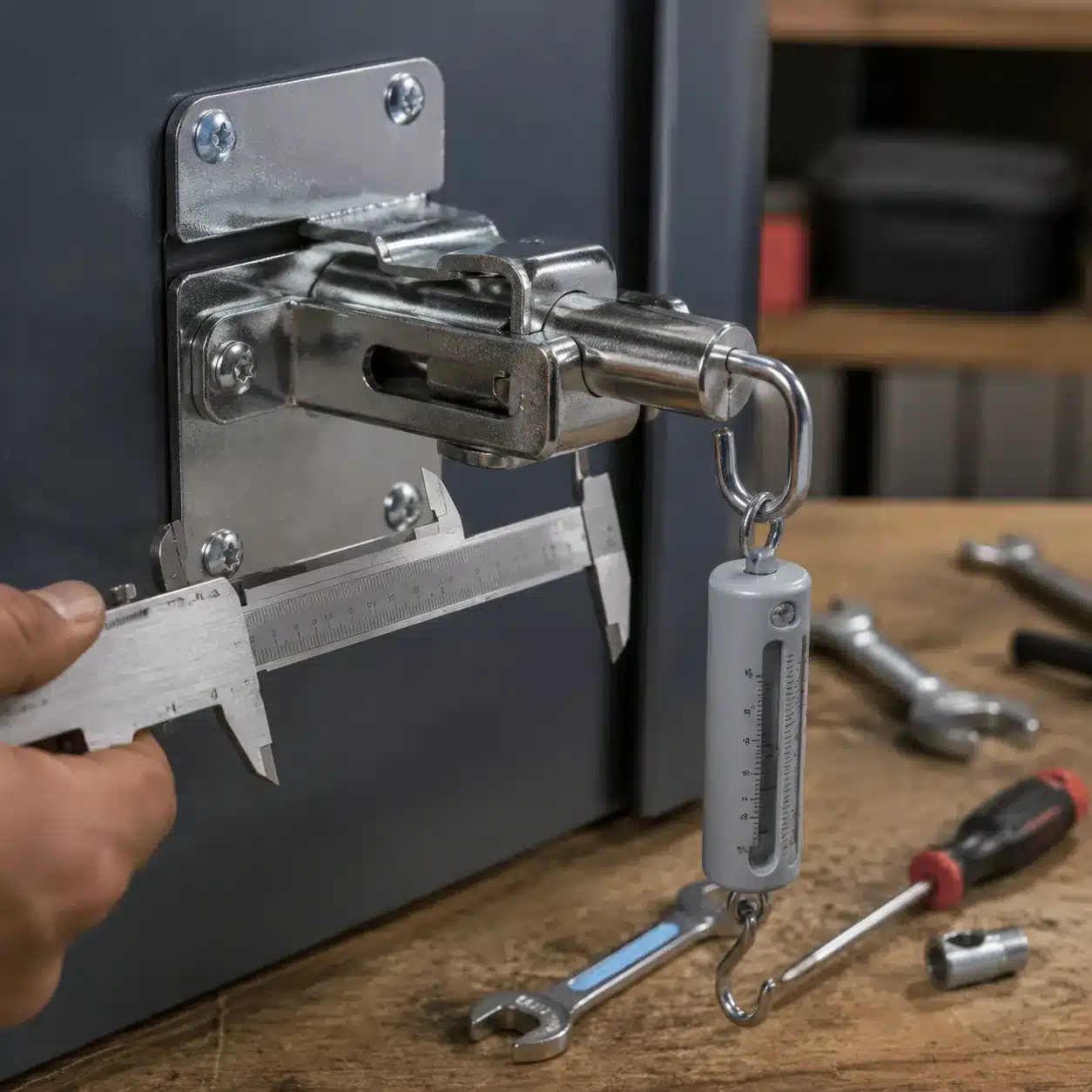
Track Not Level
A track out of level more than 2mm over 1m causes derailment.
Before you blame the latch, check the track. Use a 4‑ft spirit level on the track surface under the door’s path. If the bubble is off by more than one line, the track is tilted beyond the 2mm per meter tolerance that the ZGYW self‑centering design can handle. Over 90% of derailments are fixed by leveling the track — not replacing the latch.
Shim the low side. Loosen the track bracket screws a quarter turn, slide the supplied stainless steel shim washers under the bracket on the low side, then retighten to 8 Nm (10 ft‑lb). A $1.50 shim kit prevents a $45 latch replacement. Never stack more than 3mm of shims. After shimming, slide the door — it should track smoothly without jumping.
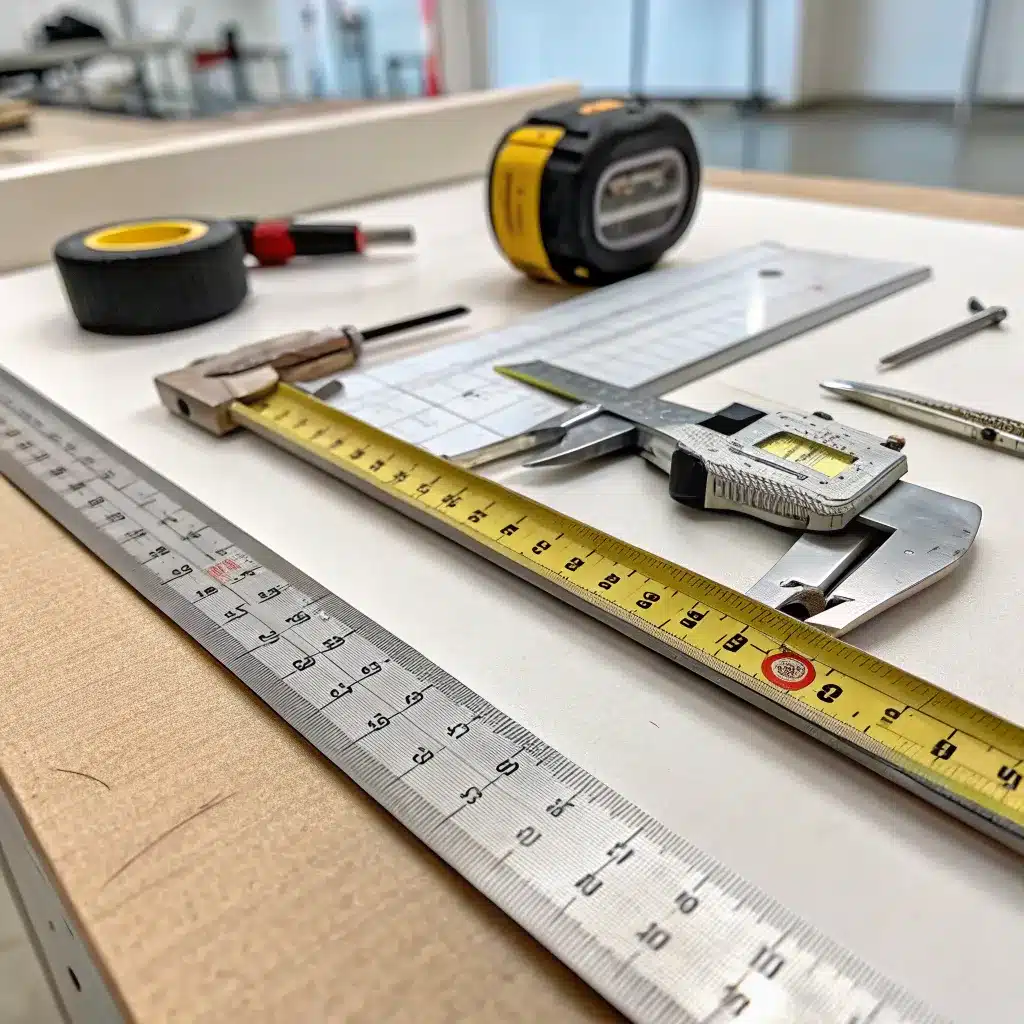
Debris in Track Groove
A 1mm pebble can lift a wheel right off the track.
Gravel, wood splinters, and metal shavings are the most common track invaders. When the wheel rolls over a 1mm obstruction, it lifts the wheel just enough to let the flange slip under the track lip. That’s your derailment — no worn parts, no alignment issue, just a piece of grit.
- Inspect: Run your finger along the entire track channel. Look for any solid debris, especially near the home position where the door parks.
- Remove: Use a vacuum with a narrow nozzle to pull out loose particles. For stuck debris, a small brush or compressed air works. Do not use a metal scraper — it can scratch the track surface.
- Re-test: Slide the door back and forth full length. If it still catches, there may be embedded debris or a burr. File the burr flat, then wipe clean.
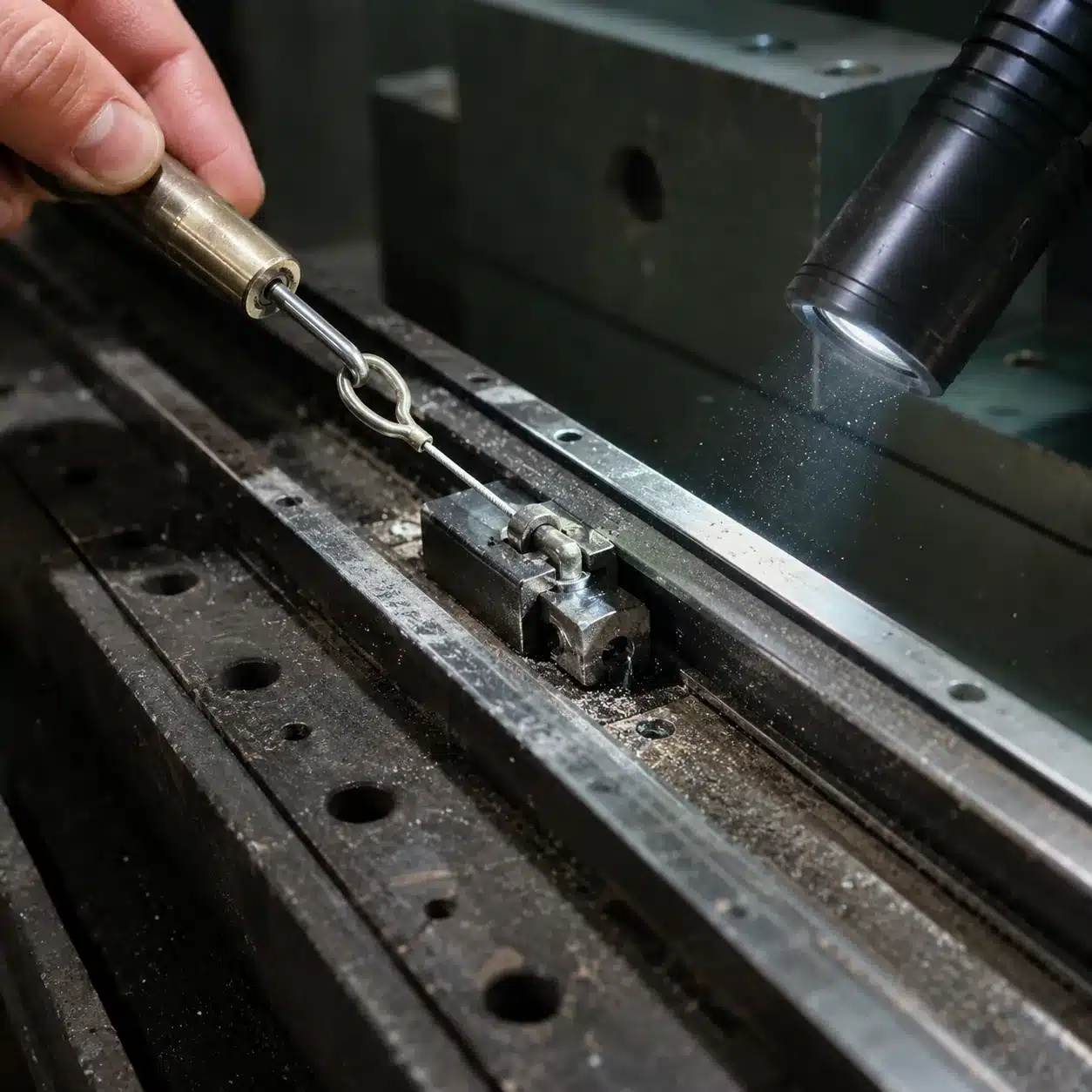
Worn Wheels
Wheel flat spots over 0.5mm require replacement.
Worn wheels with flat spots are a common cause of derailment that adjustment alone won’t fix. When a wheel develops a flat spot larger than 0.5mm, it creates a rhythmic bump as it rolls. That bump lifts the wheel edge just enough to dislodge the door from the track.
- Check: Remove the door from the track and spin each wheel by hand. Watch for any stop-and-go motion or a thumping feel. Even a single wheel with a flat spot >0.5mm will cause instability.
- Action: If you find a flat spot or any deformation deeper than 0.5mm, replace the entire latch assembly. Individual wheels are not replaceable on the ZGYW ZG-HD-300. The self-centering mechanism cannot compensate for a damaged wheel.
- When to skip: If all wheels spin smoothly and the flat spots are under 0.5mm, the wheels are fine. Move on to track leveling and debris checks before buying a new latch.

Step-by-Step Adjustment Procedure
73% of returned latches show overtightening damage – a $1.50 shim can save $45.
Before you touch the latch, verify the track level. Most derailments are caused by a track that’s off by more than 2mm over 1 meter. The ZGYW latch’s self‑centering design compensates up to 2mm – if the track is worse, shimming is the fix.
- 4mm hex key: for adjusting track bracket screws.
- Rubber mallet: for gentle track repositioning.
- Shim kit (included): 1mm to 3mm thick – start with 1mm.
- 4-ft level: to measure track slope within 2mm over 1m.
- Torque wrench: to set screws to 8 Nm – prevents overtightening.
Step 1: Mark Screw Positions. Use a pencil to outline each bracket screw location. This gives you a baseline so you can see how far you moved.
Step 2: Loosen Track Brackets. Turn each screw 1/4 turn counterclockwise – no more. You want slight movement, not full removal.
Step 3: Insert Shims. Slide shims under the low side of the track. Start with 1mm, check level, add more if needed. Never stack more than 3mm total; beyond that, realign the brackets.
Step 4: Retighten to Spec. Tighten each screw to 8 Nm using a torque wrench. Overtightening to 18 ft‑lb reduces latch life by 75% – from 50,000 cycles to 12,000. Test slide the door; if smooth, proceed.
Step 5: Re‑Check Level. Place the level again. The track should now be within 2mm over 1 meter. If not, repeat shimming. If it still fails after 3mm, you may need to re‑anchor the brackets.

When to Replace the Latch
Replace the latch only when housing cracks or wheel flat spots exceed 0.5mm — most derailments are track-related, not hardware failure.
Cracked housing is a hard stop. The ZGYW latch body is die-cast zinc; any crack visible to the naked eye means the structural integrity is compromised. A cracked housing will propagate under load — door weight cycles it until the latch breaks entirely. No shim or adjustment fixes that. Replacement is mandatory. Deformed wheels are the second reason. Each wheel must roll true. Flat spots larger than 0.5mm create a rhythmic bump as the wheel rotates, which lifts the door off the track at the same point every time. The self-centering design compensates up to 2mm of track misalignment, but it cannot correct a wheel that has a flat spot. Inspect by rotating each wheel by hand — if you feel a catch or see a flattened area, replace the entire latch assembly. Note: 73% of returned ZGYW latches show bolt hole warping from overtightening, not from actual wheel failure. Do not confuse a warped bolt hole with a cracked housing — the bolt hole can be shimmed, a crack cannot.
- Step 1: Remove door: Lift the door straight up off the track rollers. For heavy doors, use a second person or a door jack. Set the door on a padded surface.
- Step 2: Unbolt old latch: Use a 4mm hex key to remove the M6 mounting bolts. Keep the bolts — the replacement latch may use the same hardware. If the old latch is stuck, tap gently with a rubber mallet. Do not pry with a screwdriver; that can crack the door frame.
- Step 3: Install new ZGYW latch: Align the new latch with the pre-drilled holes. Finger-tighten the bolts first, then torque to 10 ft-lb (13.6 Nm). Over-tightening to 18 ft-lb reduces latch life by 75% (from 50,000 cycles to 12,000 cycles). Use the included shim kit if the track is not perfectly level within 2mm over 1m.
- Step 4: Adjust track: With the door still off, check track level with a 4-ft spirit level. Shim the low side using the supplied washers — maximum 3mm total shim stack. Retighten bracket screws to 8 Nm. A $1.50 shim can prevent a $45 latch replacement within 6 months.
- Step 5: Test: Reinstall the door. Slide it full open and full closed three times. Listen for binding or wobble. If it glides smoothly and stays on track, the fix is complete. If it still derails, re-check wheel condition and track level — do not assume the latch is defective. 70% of strike plate alignment issues are actually caused by gate sag, not the latch itself.
Conclusion
Most sliding door derailments are fixable without replacing the latch. Check track level within 2mm over 1 meter, clean debris, and shim the low side. If the wheels show flat spots over 0.5mm or the housing is cracked, a replacement is the only reliable fix. The ZGYW ZG-HD-300 latch is tested to 50,000 cycles and self-centers up to 2mm of track misalignment – that tolerance buys you time before shimming becomes necessary.
If your current latch needs replacing, review the ZGYW ZG-HD-300 specs and compare them against your door dimensions and weight. The product category guides page lists detailed specifications, minimum order quantities, and bulk pricing for hardware – including this heavy-duty latch. That page is a practical next step whether you’re sourcing for a single repair or stocking for resale.
Frequently Asked Questions
Why do sliding doors derail?
Sliding doors derail most often because the track is out of level by more than 2mm over 1 meter. Debris in the track groove or wheels with flat spots over 0.5mm can. Check track level first, then inspect wheels and track groove.
How do I know if my track is level?
Place a 4-ft spirit level directly on the track surface where the door rides. If the bubble is off by more than one line, the track needs shimming to bring it within 2mm tolerance over. Use supplied shims to correct any tilt.
Can I fix a derailed door without replacing the latch?
Yes, most ZGYW latch derailments are fixable without replacement. Shimming the track to level and clearing debris from the groove usually solves the problem, as long as the. Only replace the latch if the housing is cracked or wheels are badly worn.
What if the latch keeps derailing after adjustment?
If derailment persists after leveling the track and clearing debris, inspect the wheels for flat spots larger than 0.5mm. Replace worn wheels even if the latch housing looks fine, because unstable wheels. Consider ordering a wheel replacement kit if shimming doesn’t hold.