Джастин
If you’re a first-time brand founder planning a trip to Yiwu, you already know it’s the place for low MOQs and thousands of products under one roof. But what you really need to know before visiting Рынок Иу is that roughly 85% of booth owners are traders, not factory owners. That changes how you verify quality, negotiate deposits, and protect your designs.
Key Takeaways
- Yiwu Market stretches over 4 million square meters.
- Most first-time buyers lose use at the negotiation table because they treat custom orders like off-the-shelf purchases.
- 85% of Yiwu booth owners are middlemen, not factory owners.
- Plan your first Yiwu market trip with expert tips on districts, negotiation, and sourcing.
Most new visitors walk in expecting to see factories behind each booth. Instead, you’ll find salespeople who source from multiple producers. The trick is to ask for the actual production facility address and request a video call or on-site visit before committing. For custom orders, push for a 20% deposit instead of the standard 30%, with the balance due only after third-party QC passes. And never hand over your full spec sheet verbally—send a redacted version with watermarks to avoid your design being copied before you even leave the market.

Why Brand Founders Choose Yiwu Over Factories
Let’s cut the romanticism. You don’t go to Yiwu for the ambiance. You go because a single morning there can replace three weeks driving through industrial backroads, comparing the same MOQ lies from five factories.
The MOQ Reality That Makes Yiwu Work
The standard factory minimum order quantity starts at 1,000 to 5,000 units per SKU. For a first-time brand founder testing a market, that commitment is a coffin. You pay for inventory that might not sell, and you burn cash on storage. Yiwu flips this entirely. Walk into any booth in District 1 or 2, and the default starting point for custom work is 50 to 200 units per design. I’ve seen vendors accept 10 units if you pay for the mold and agree to a higher unit price.
The trap here is confusing “low MOQ” with “low risk.” A 50-unit run still costs you sample fees, packaging setup, and tooling charges. Ask for these line-item costs before you sign anything. If a vendor quotes a 50-unit MOQ but demands a mold fee that’s double what you’d pay for a 500-unit run, their real MOQ is 500. The low number is just bait.
The common mistake brand owners make: they see “MOQ: 10 pcs” and immediately start discussing deep customization. Don’t. For a 10-piece run, you are buying what they already make, maybe with a sticker logo. True custom shapes, materials, or colors will push the actual working MOQ to 200-500. Confirm this on day one.
Seeing 5,000 Products in One Morning Without Losing Your Mind
A single factory visit gives you one production line. A supplier there shows you maybe 50 SKUs and talks for 2 hours about their capabilities. Yiwu District 1 alone has 7,000 booths. If you walk at a normal pace and stop at every booth that looks relevant, you will see between 800 and 1,200 unique product variations before lunch. That density of comparison is impossible anywhere else.
The “3-hour rule” applies here: after three consecutive hours in any district, your brain stops differentiating quality. You will start buying things you don’t need. Plan your route by target category before you walk in. I tell clients to identify 5 booth numbers for their product type using the market map, visit those specifically, and then explore radially. Do not wander aimlessly.
Insider trick: most booths have the same products at different prices. The same silicone spatula can be $0.30 at booth 1234 and $0.55 at booth 5678. The difference is usually the supplier’s margin, not the quality. When you see this, use the lower-priced booth as your baseline. Then ask the higher-priced booth what justifies the difference. If they can’t give a concrete answer—better stainless steel grade, double-walled packaging, CE certification—you know the real price.
The Speed of Supplier Comparison: Why It Matters
Here’s the concrete math. If you wanted to compare 8 suppliers for a custom packaged nut snack product, visiting 8 factories in Guangdong would take 4 days minimum. You’d schedule three factory visits per day, drive 2 hours between each, and eat lunch in a car. In Yiwu, you can walk into 8 booths selling the same snack packaging within 45 minutes. You hold the material, test the seal strength, and ask about print tolerances right there.
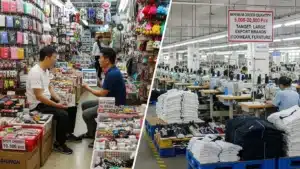
The risk you need to mitigate: booth owners in Yiwu are not the factory manager. 85% of them are traders. The guy smiling at you and saying “yes, we manufacture” may not own a single injection molding machine. When you find a supplier you like for a custom run, your next question must be: “Can I visit your factory tomorrow morning?” If they dodge, or say “the factory is 3 hours away,” you have a trader. That’s not a dealbreaker, but it means you need to verify production capability through photos, video calls, or a third-party inspection before paying deposits.
The advantage of Yiwu is that you can do this verification in parallel. Talk to 10 suppliers for the same custom run. Collect 10 price quotes. Then pick the 3 that pass the factory test. You cannot run this process efficiently without the density the market provides.
Finding Suppliers Who Actually Do Small-Batch Custom Runs
Many vendors will say “yes, we do custom” to get your card, then ghost you when you send a spec sheet requiring new molds. You need to filter these out fast. Ask three specific questions on the first meeting:
- Mold cost: “What is the exact mold cost for my design, and who owns the mold after?” If they avoid the number, they are not set up for custom small runs.
- Custom packaging MOQ: “What is the minimum order quantity for a custom-printed box with my logo?” If it’s over 1,000 units, they are not a small-batch custom shop.
- Modification proof: “Show me a product you have modified for a previous buyer.” If they can’t pull up a photo or sample from a custom run, they are selling stock only.
Vendors on the third floor of District 2 and the middle aisles of District 4 are generally more willing to accept low-volume custom runs. They are smaller, hungrier, and less likely to dismiss a 200-unit order. The booths near the main entrances of District 1 are high-traffic and will push you toward their minimums of 1,000+.
Finally, protect your design from the start. Do not show your full spec sheet during a first meeting. Walk in with a redacted version—change the critical dimension by 5% or omit the material spec. If you negotiate only verbally, the supplier can replicate your design and sell it to your competitor the same week. After you agree on pricing via the redacted sheet, send the full spec with a watermark and a confidentiality agreement. That is the standard process for protecting your brand IP in Yiwu. It works because it shows you know the game.
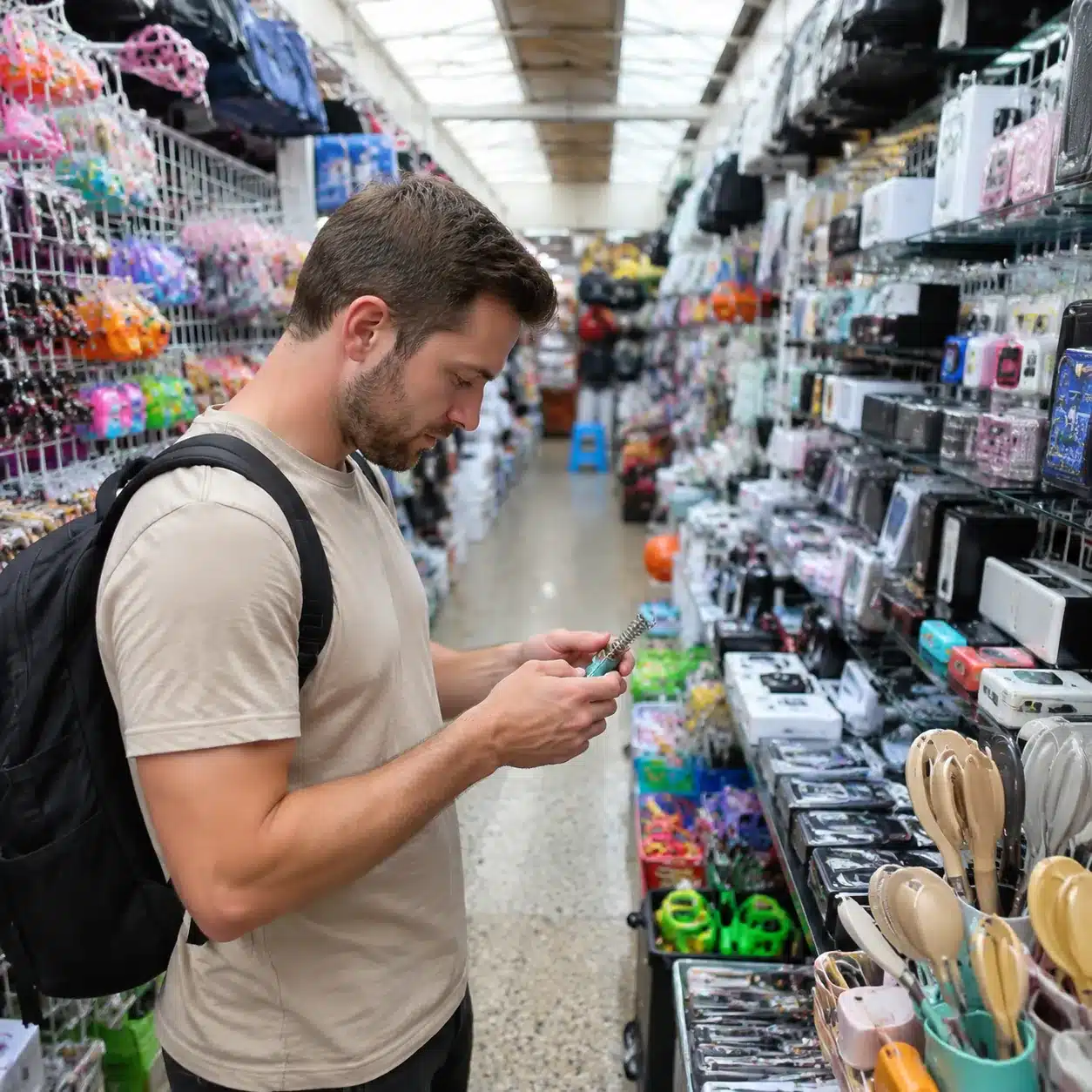
The 5 Yiwu Market Districts You Must Know
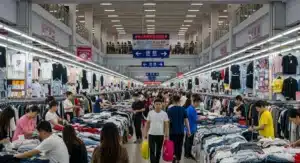
Yiwu Market stretches over 4 million square meters. If you walk every aisle without a plan, you’ll waste two days and leave empty-handed. Here’s the exact floor-by-floor, district-by-district breakdown that first-time brand founders need.
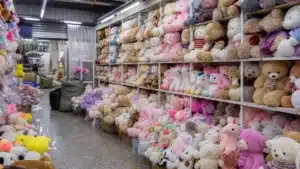
District 1: Fashion Accessories, Toys, and Artificial Flowers
Start here if your brand needs costume jewelry, hair accessories, seasonal decorations, or party favors. Booth numbers range from 10001 to 19999 — the first digit “1” tells you which district you’re in.
- Top categories: imitation jewelry, artificial flowers (silk, plastic), toys, Christmas decorations, giftware.
- Best for brand founders: low MOQs (10–50 units per design) make this district ideal for testing seasonal product lines without committing to a full container.
Walk east-west along the central corridor. Booths on the ground floor are mostly toys and flowers; the first floor holds jewelry and accessories. Expect traders — not factories — and always ask for a factory visit if you plan custom designs.
District 2: Home Goods, Luggage, and Hardware
Booth numbers 20001–29999. This is your stop for kitchenware, storage solutions, travel luggage, and DIY hardware like locks and hinges.
- Key products: stainless steel cookware, plastic storage bins, duffel bags, tool sets, bathroom accessories.
- Insider tip: Hardware suppliers here often offer custom packaging MOQs of 500–1,000 units — higher than District 1, but still low compared to factory-direct. Request a material sample (e.g., 304 stainless steel) and test it for 72-hour salt spray to verify grade.
From District 1, cross the main road heading east. The entire district is on a single level, so you can do a quick sweep of the luggage zone (east side) and kitchenware (west side) in two hours.
District 3: Stationery, Cosmetics, and Office Supplies
Booth range 30001–39999. This is the district brand founders love for private-label packaging — notebooks, pens, makeup brushes, and skincare bottles.
- High-demand categories: custom-printed stationery, cosmetic palettes, lip balm tubes, desk organizers, and branded packaging boxes.
- Warning: Many cosmetics suppliers here are traders who buy from third-party OEM factories. Before negotiating a custom formula, ask for a list of active certifications (FDA, ISO 22716). If they hesitate, move to the next booth.
Continue east from District 2. District 3 is the largest — plan 3–4 hours minimum. The stationery section runs along the northern side; cosmetics occupy the southern half. Booth numbers increase as you move east, so use the 30xxx prefix to stay oriented.
District 4: Daily Items, Clothing, and Shoes
Booth numbers 40001–49999. This district covers apparel lines, basic clothing, socks, underwear, and footwear — mostly unbranded or generic items.
- Product range: T-shirts, jeans, children’s wear, sneakers, slippers, scarves, and everyday “dollar store” goods.
- Reality check: Most clothing vendors sell pre-made stock. If you need custom sizing or branded tags, expect MOQs of 200–500 pieces per style. Always request a wash-test sample before your first production run — color bleeding is a common issue.
Walk east from District 3. The clothing section is on the first floor; daily items (household plastics, cleaning tools) are on the ground floor. Visit the daily items area first if you’re sourcing simple household products — the competition is lower, and you can negotiate mixed containers.
District 5: Imported Goods, Bedding, and Auto Parts
Booth numbers 50001–59999. The easternmost district. This is where you find home bedding (sheets, pillows, duvets), auto accessories (dashcams, seat covers, floor mats), and a section for imported food and beverages.
- Key categories: bed sheets (cotton, microfiber), pillowcases, car cleaning kits, LED lights, and “imported” chocolate or snacks (often re-packaged local goods).
- Note for brand founders: If you plan to brand bedding, check the thread count certification (e.g., 200TC or 300TC) and ask for a washability test. Many suppliers claim high thread counts but deliver 180TC products — request a count verification sample.
From District 4, follow the main pedestrian street east for another 10–15 minutes. District 5 is quieter and less crowded, which can work in your favor — vendors are often willing to negotiate lower MOQs if you show serious intent.
Every booth in Yiwu International Trade City follows a five-digit code. The first digit is the district number. The second and third digits indicate the zone or building block. The last two digits are the booth’s position within that block. Example: Booth 1-2-34? Actually, the format is just a 5-digit number — but many vendors also display a “block-letter” system (e.g., D1-1234). Ignore the letters; focus on the number prefix.
Recommended walking route for a one-day scouting trip:
- Start at District 1 (west entrance) — spend 2 hours on fashion accessories and toys. Grab a market map from the info center.
- Walk east to District 2 — allocate 1.5 hours for home goods and hardware. Skip luggage unless it’s a priority.
- Continue east to District 3 — this is your anchor stop for stationery/cosmetics. Budget 3 hours here.
- Округ 4 — 1.5 hours if apparel is your focus, otherwise a quick pass through daily items.
- Округ 5 — 1 hour at the end for bedding or auto parts. If time is short, skip this district — most brands can source bedding elsewhere.
Wear comfortable shoes. You’ll cover 10–15 km in a full day. Bring a power bank and water. And remember: 85% of booth owners are traders, not factory owners. If you need custom production, always ask for a factory address and arrange a separate visit — your first-time Yiwu market visit guide should include that step.
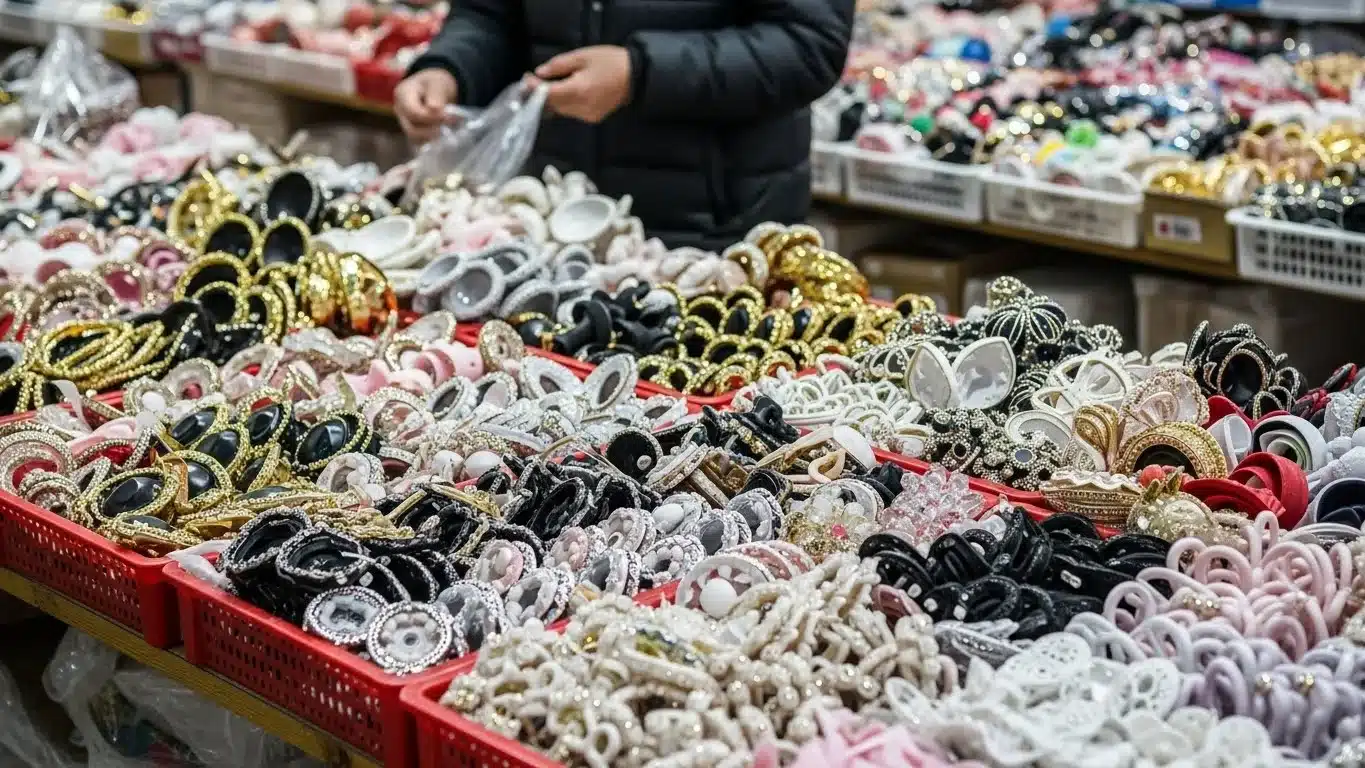
Negotiation Secrets for Custom Orders
Most first-time buyers lose use at the negotiation table because they treat custom orders like off-the-shelf purchases. The difference is structure — mold costs, MOQs, and payment terms are all levers you can pull if you know the script.
How to Ask About Mold Costs Without Sounding Green
Mold costs are the single biggest hidden expense in custom manufacturing, and booth owners in Yiwu will not volunteer them. You have to ask directly — and specifically. Do not say “How much for the mold?” Instead, ask: “What is the one-time tooling charge for this design, and does it include steel type and cavity count?” This immediately tells the supplier you know the difference between a single-cavity prototype mold and a multi-cavity production mold.
Here is the insider move: if the mold cost quote sounds low (under $300 for a plastic injection mold), it likely means a soft aluminum or resin mold good for only a few hundred cycles. For a brand founder planning repeat orders, you want hardened steel molds that last 100,000+ cycles. The difference in upfront cost is 2-3x, but the per-unit cost drops dramatically after the first run. Always clarify: “Is this a production-grade mold or a prototype mold?”
Another tactic — bundle the mold cost into the per-unit price for the first order. Some Yiwu suppliers will amortize the tooling cost across 1,000-2,000 units instead of charging it upfront. This preserves your cash flow for sampling and testing. But get the amortization schedule in writing. If the supplier disappears after the first order, you do not want to have paid for a mold you cannot take to another factory.
Minimum Order Quantities for Custom Packaging
For custom packaging with your brand logo and design, the average MOQ in Yiwu is 500-1,000 units per SKU. That is the number you will hear from 80% of booth owners. But it is also the number you can negotiate down — especially if you are willing to accept a generic box size with a custom print overlay instead of a fully custom structural design.
Here is the reality check: if a supplier quotes an MOQ of 100 units for fully custom packaging, they are likely a trader planning to outsource to a small print shop with inconsistent quality. If they quote 3,000 units, they are trying to maximize their profit margin on your first order. The sweet spot for a first-time brand founder is 500 units per SKU with a 20% deposit and the balance on QC approval. That keeps your risk low and your cash tied to verified quality.
One more hard truth — MOQ is not just about quantity. It is also about color matching and print registration. Ask the supplier: “What is your color deviation tolerance on PMS matches?” If they cannot answer with a specific delta (e.g., ΔE ≤ 2), you are looking at a packaging supplier who will ship boxes that do not match your brand colors. Move on.
Building Long-Term Pricing and the Repeat Order Lever
Long-term pricing is not something you negotiate on day one. It is something you earn by proving you can pay on time and reorder consistently. But you can set the stage during your first negotiation. Here is the phrase that works: “I plan to reorder every 60-90 days once we validate the market. Can you structure the pricing so that my second order gets a 5-10% discount on both mold amortization and per-unit cost?”
Mentioning repeat orders changes the supplier’s math. A one-time buyer is a transaction. A repeat buyer is a revenue stream. Once the supplier sees you as a repeat account, they will often lower the MOQ on subsequent orders and offer better payment terms. The key is to never lie about volume. If you commit to 3 orders per year and deliver only 1, you lose credibility and use for future negotiations.
You can also use the repeat-order angle to negotiate sample costs. Standard practice in Yiwu is that you pay for samples and shipping. But if you say, “I will order production quantities after validating the sample, can you waive the sample cost for the first three designs?” — about 40% of suppliers will agree, especially if they see you as a serious brand founder with a real product line.
Get It in Writing: The Quotation and Payment Terms That Protect You
Verbal agreements in Yiwu are worth exactly nothing. You must request a written quotation that itemizes every cost: mold tooling, per-unit price, packaging cost, inspection fee, and shipping terms (FOB, CIF, EXW). Without this document, you have no recourse if the supplier changes the price after you place the deposit.
On payment terms, the standard in Yiwu is 30% deposit, 70% before shipment. But for custom orders — especially with new brand founders — you should push for 20% deposit with the remaining 80% due after you approve final QC photos or a third-party inspection report. This is not an unreasonable ask. Suppliers who have nothing to hide will agree. Suppliers who push back hard are likely cutting corners or planning to substitute materials.
Make sure the quotation includes a clear payment schedule tied to deliverables: 20% on order confirmation, 40% on sample approval, and 40% on final QC pass. This protects you from paying the full balance before you have seen the finished goods. And always use T/T (wire transfer) for first orders — never credit card or PayPal, which signal inexperience and invite higher prices.

How to Protect Your Brand IP at Yiwu
85% of Yiwu booth owners are middlemen, not factory owners. Handing over your full design to a trader is equivalent to publishing it on a public forum.
IP theft in Yiwu isn’t usually malicious. It’s lazy efficiency. A supplier gets your design, sends it to five factories for quotes, and one of those factories decides to produce it for their own catalog. That’s how a unique product becomes generic in 60 days. You can block this by controlling what you share and when.
Never show full design files until a confidentiality agreement is signed
Don’t hand over a CAD file or a tech pack during a first meeting. The standard tactic is to show only a sketch or a 50% incomplete version. If a supplier asks for “the final file to give an accurate price,” they’re price-shopping your design to subcontractors. A legitimate factory can quote based on material specs and dimensions alone.
Your approach: Send a redacted spec sheet that omits critical dimensions or unique assembly steps. Only release the full file after a Non-Disclosure Agreement (NDA) is signed. The NDA doesn’t need to be a high-end legal document—a simple one-pager that states “this design cannot be reproduced for any other buyer” is enough to create a paper trail. Most factories won’t risk litigation over your $5,000 order if they know you have their signature on file.
Use generic product descriptions during initial discussions
Never use your product name or branding in early messages. If you are sourcing a “Foldable Silicone Pet Bowl,” call it a “Silicone Container” until the agreement is signed. Suppliers search Alibaba and WeChat groups for hot products. If they see your unique name in writing, they will search it, find your Amazon listing, and undercut you by $0.50.
Stick to generic category labels: “plastic storage item,” “stainless steel kitchen tool,” “nylon webbing accessory.” Save the proprietary terms for after the deposit is paid.
Employ a local agent to watermark designs and control sample release
If you are not in Yiwu physically, your agent is your gatekeeper. They handle the physical samples and visual documentation. Here is how a competent agent operates:
- Watermarking: Every photo of your prototype gets a transparent watermark with a unique serial number and date. If a supplier posts that image online, you can trace which sample unit was leaked.
- Controlled sample visits: Your agent does not hand over a sample for the supplier to “study overnight.” The supplier inspects it at the agent’s office. No exceptions.
- Split order strategy: Your agent places sample orders for different components with different suppliers. One factory makes the body, another makes the packaging. No single supplier sees the full product until final assembly.
This is standard protocol for buyers doing over $50K in annual volume. It costs a few hundred dollars in agent fees but prevents a $10,000 loss from a copied product on the market.
Register your trademark in China before sourcing
China operates on a “first-to-file” system, not “first-to-use.” If your brand name is not registered with the China National Intellectual Property Administration (CNIPA), a supplier can register it themselves. Once they do, you cannot export products under that name without paying them a royalty or buying the trademark back.
File your trademark before you place your first production order. The process takes 6–9 months but costs only $300–$500 through a local IP agent. Without it, your brand has zero legal protection inside China. This is not a future problem—it is a current risk for any first-time brand founder visiting the market.
Checklist for Your First Yiwu Market Visit
Plan your first Yiwu market trip with expert tips on districts, negotiation, and sourcing. Learn how to avoid common mistakes and find reliable suppliers. Start your sourcing journey with our proven advice.
- Yiwu International Trade City spans 5 districts with 75,000+ booths covering 4 million square meters.
- Best visiting months: March-May и September-November (avoid Chinese New Year and National Day).
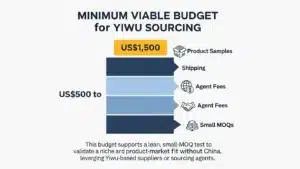
- A first-time visitor should budget $1,500-$4,000 for flights, hotel, food, and samples.
- Average MOQ for custom packaging: 500-1,000 units per SKU.
- Typical sample customization turnaround: 7-14 days.
- 85% of booth owners are traders, not factory owners. Always verify production capability.
1. Why Brand Founders Choose Yiwu Over Factories
Brand founders flock to Yiwu for its low MOQs—often as low as 10-100 units per design—and the ability to see thousands of products in a single day. Unlike traveling to individual factories, Yiwu lets you compare 5-10 suppliers per idea within hours. This concentration of suppliers willing to do small-batch custom runs is what makes Yiwu the starting point for most new product lines. You can walk out with samples from multiple vendors and test the market before committing to a full container.
- 🏷️ Category: Sourcing Strategy
- 🎯 Core Outcome: Low MOQ (10-100 units), ability to compare 5-10 suppliers per product idea
Analysis:
- Low MOQs allow brand founders to prototype without overcommitting capital.
- Ability to see thousands of products in one day accelerates product research.
- Comparing multiple suppliers side-by-side reveals pricing and quality ranges instantly.
- Ideal for testing market demand before scaling to full production runs.
- The sheer number of choices can be overwhelming without a clear sourcing plan.
- Most booth owners are traders, not factory owners—verification is essential.
- Walking the entire market requires multiple days and comfortable footwear.
2. The 5 Yiwu Market Districts You Must Know
Each district is organized by product category, and the booth numbers follow a logical pattern. District 1 (booths 10001-19999) specializes in toys, artificial flowers, and jewelry—ideal for fashion accessories and gift items. District 2 (20001-29999) focuses on home goods, luggage, and hardware. District 3 is your destination for stationery, cosmetics, and office supplies, making it the best area for branded packaging concepts. District 4 covers daily items, clothing, and shoes. District 5 houses imported goods, bedding, and auto parts. Knowing this layout saves you hours of wandering.
- 🏷️ Category: Market Navigation
- 🎯 Core Outcome: 75,000+ booths across 5 districts, 4 million sqm total area
Analysis:
- Clear district segmentation by product type streamlines your search.
- Booth numbering system makes navigation logical and repeatable.
- You can source multiple product categories in a single trip.
- District maps and agent guidance reduce wasted time significantly.
- The market is physically enormous—4 million square meters requires 3-5 days to cover properly.
- Easy to get lost without a plan or a local guide.
- Some districts have overlapping categories, so verify booth contents before assuming.
3. Negotiation Secrets for Custom Orders
Negotiating for custom branding (OEM/ODM) is fundamentally different than buying off-the-shelf. Start by asking about mold costs and tooling fees—these are often negotiable if you commit to a certain volume. The average MOQ for custom packaging sits at 500-1,000 units per SKU, but many suppliers will flex on this for first-time brand founders. Always mention repeat orders during negotiation; suppliers will offer better pricing if they see long-term potential. And crucially, the standard 30% deposit is not fixed—push for 20% with the balance due only after final QC approval. Get every term in a written quotation with payment conditions clearly stated.
- 🏷️ Category: Negotiation Tactics
- 🎯 Core Outcome: Deposit negotiable from 30% down to 20%; MOQ 500-1,000 units for custom packaging
Analysis:
- Lower deposits (20%) preserve your cash flow and reduce risk.
- QC-linked final payment gives you use on quality standards.
- Written quotations prevent pricing disputes and scope creep.
- Mentioning repeat orders signals commitment and unlocks volume pricing.
- Mold costs can be $500-$5,000+ depending on complexity—clarify upfront.
- Verbal-only negotiations lead to design theft—document everything.
- Not all suppliers will accept 20% deposit terms; be prepared to walk away.
4. How to Protect Your Brand IP at Yiwu
Design theft is the number one fear for brand founders, and for good reason. In Yiwu, a verbal discussion about your custom product can result in your design appearing at a competitor’s booth within weeks. To protect yourself: (1) Never show full design files until a confidentiality agreement is signed. (2) Send only redacted spec sheets with key dimensions or materials omitted. (3) Watermark every photo you share with suppliers. (4) Use generic product descriptions during initial discussions. (5) Employ a local sourcing agent to control sample release and verify supplier backgrounds. And most importantly, register your trademark in China before you start sourcing—Chinese trademark law is territorial, and someone else can register your brand out from under you.
- 🏷️ Category: IP Protection
- 🎯 Core Outcome: 85% of booth owners are traders—verification and IP controls are critical
Analysis:
- Redacted spec sheets and watermarking prevent unauthorized copying.
- China trademark registration gives you legal standing to enforce IP.
- Local agents can vet suppliers and control sample distribution.
- Generic product descriptions keep your design intent ambiguous early on.
- IP enforcement in China can take months and requires local legal counsel.
- Confidentiality agreements are hard to enforce with small booth traders.
- Trademark registration in China costs $300-$800 and takes 6-12 months.
5. Checklist for Your First Yiwu Market Visit
A successful first visit comes down to preparation. Pack a notebook, power bank, business cards, and a clear one-page product specification sheet. Download the Yiwu Market map app and book a hotel within walking distance of the market—you will be on your feet for 8-10 hours per day. Hire a market agent for at least the first day
Заключение
Planning your first trip to Yiwu Market means navigating 75,000+ booths across five districts while protecting your brand ideas and budget. Use the tips above to avoid common pitfalls — like depositing 30% upfront without factory verification — and keep your custom order costs under control.
For hands‑on support from market research to final QC, consider a local agent who knows the layout and supplier habits. ChineseYiwu.com’s Yiwu Market Agent package handles booth mapping, translation, negotiation, and sample collection — exactly what you need for a secure first visit.
Часто задаваемые вопросы
Is Yiwu Market worth visiting?
Yes, Yiwu Market is absolutely worth visiting if you need low MOQs and want to compare hundreds of suppliers in one place. With 75,000+ booths across 5 districts, you can source everything from toys to electronics and see samples in person. That said, you need a clear plan and a budget of at least $500 for samples to make the trip worthwhile. Plan your districts in advance and bring a target list.
What is Yiwu famous for clothes?
Yiwu is famous for clothing categories like socks, underwear, and basic apparel, with District 4 alone containing hundreds of sock vendors competing on price and design. The market also covers shoes and accessories, but it is not the place for high-end fashion labels. For branded apparel lines, you will find many copycat designs, so expect to negotiate custom branding if you want exclusive styles. Focus on District 4 for apparel and socks, and always verify fabric quality with samples.
Is Yiwu Market closed on Sunday?
Yiwu Market is typically open every day of the week, including Sunday, from around 9:00 AM to 5:00 PM. But many individual booth owners may take Sunday off or close early, especially in slower seasons. The only guaranteed closure is during Chinese New Year (about 7–10 days), so always confirm with your suppliers ahead of time. Double-check with key suppliers before booking your Sunday visit.
How long to spend in Yiwu?
Plan for at least 2–3 full days if you want to cover the main districts and do serious sourcing. The market spans 4 million square meters, and walking every aisle without a plan can waste days. A typical first-timer spends day 1 scouting Districts 1–2, day 2 on Districts 3–4, and day 3 on District 5 plus revisiting shortlisted vendors. Stay at a hotel near the market to save transit time.
What is the 3-hour rule in China?
There is no official ‘3-hour rule’ for Yiwu Market visits or general business in China that appears in any reliable sourcing guide. The phrase may refer to an informal suggestion to limit each supplier meeting to three hours to stay efficient, or it might be a misunderstanding about visa transit rules. Without a clear source in the research, treat it as a loose guideline rather than a firm rule. Focus on setting a meeting agenda and moving on when objectives are met.