Джастин
I’ve watched first-time buyers burn through a $5,000 trip budget in two days at the Yiwu Fair exhibition halls because they wandered aimlessly through 14 buildings without a floor plan. They walk out with cheap pens and zero usable contacts. The real problem isn’t the venue’s 240,000 square meters. It’s the structural engineering. The ground floor handles heavy goods due to weight limits, while consumer products fill the upper levels, and if you ignore that layout, you will waste three days talking to trading companies dressed up as manufacturers.
Key Takeaways
- The Yiwu International Expo Center spans 296,000 m² across 14 halls.
- The 14 halls follow a structural load logic: heavy goods sit on the ground floor, lightweight consumer goods move up.
- Ground-floor halls handle heavy goods due to structural load limits.
- Yiwu Fair booths use open-carton displays built for rapid volume scanning.
- Sort your product list by the Expo Center’s floor-weight logic before you arrive.
- You will walk 15,000 to 20,000 steps daily across 240,000 m² of exhibition space.
You need a filtering framework, not another generic list of product categories. We mapped out exactly which floors hold actual manufacturers versus the resellers who pack the high-traffic fashion zones. That changes everything. This guide gives you a strict 90-minute-per-hall route based on what you sell, plus the exact questions to ask at the booth to expose a middleman. Ignore the articles telling you to fly in for 48 hours. That is terrible advice. You need three to five days minimum, and this breakdown tells you where every single hour should go.

Yiwu International Expo Center: Venue Specs
The Yiwu International Expo Center spans 296,000 m² across 14 halls. Without a floor-level route plan, you will waste your trip budget walking through irrelevant zones.
Total Area and Exhibition Space
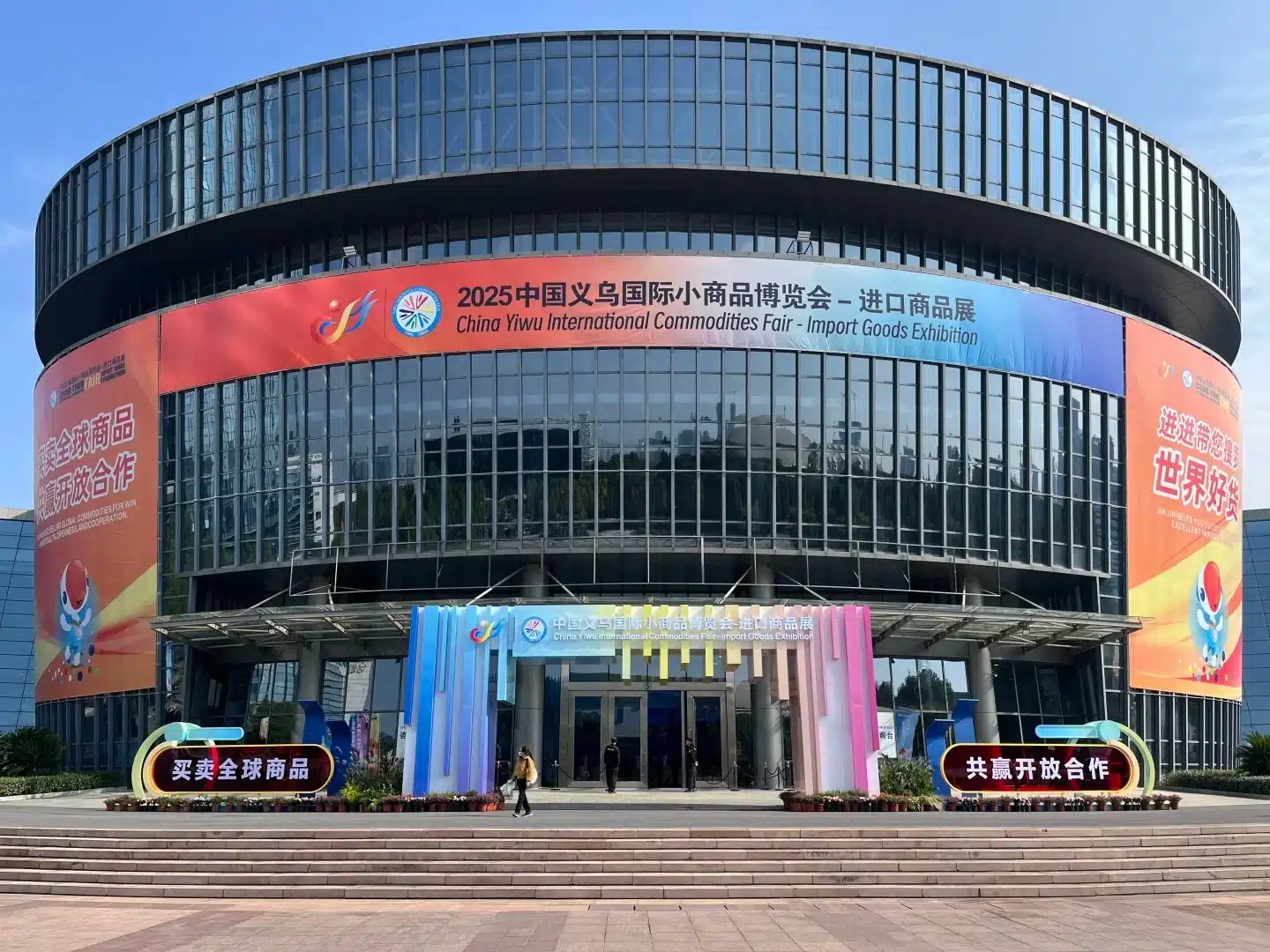
The venue sits at No. 59 Zongze East Road, Yiwu City, Zhejiang. Its total footprint is 296,000 m², with 240,000 m² dedicated to exhibition space. The remaining area covers logistics corridors, loading docks, and visitor services. For a first-time buyer, those numbers mean nothing until you realize 240,000 m² equals roughly 33 football pitches of product displays.
Our ground-level observation from the 2023 edition: most first-timers walk into Hall 1 and stop after two hours because they underestimated the physical scale. You cannot “just walk around and see what catches your eye” here. The sheer volume demands a targeted approach.
14 Halls and 5,300 Standard Booths
The 14 exhibition halls spread across three floors. Each of the 5,300 booths measures 3m x 3m to international standard. The layout follows a deliberate weight-based logic: ground-floor halls handle heavy goods like hardware and auto parts due to structural load capacity, while consumer goods and fashion items occupy the first and second floors.
This floor-weight distinction matters for your route planning. If you source hardware tools, you stay on the ground floor and ignore the upper two levels entirely. If you source home décor or textiles, you skip the ground floor and start on the first floor. Knowing this cuts your walking distance by 60% or more.
700 Parking Spaces and 20 Meeting Rooms
The venue provides 700 vehicle parking spaces and 20 on-site meeting rooms. During peak fair days, the car park fills by 9:30 AM. High-speed broadband runs through all halls, so you can run live video calls with your team back home directly from a supplier’s booth.
The meeting rooms book out fast during the fair. If you plan to negotiate pricing or review samples privately with a verified Yiwu supplier, reserve a room through the Expo Center’s official desk before 10:00 AM on your visit day. Walking negotiations in crowded aisles cost you money.
Why Venue Size Dictates Your Route Plan
With 3,600+ exhibitors spread across 14 halls, attempting to visit every booth is mathematically impossible. At 90 seconds per booth interaction, walking all 5,300 booths would take 132 hours non-stop. You have four to five days at most.
The practical approach: identify your top 4 halls based on product category before you arrive, spend 90 minutes maximum per hall, and use the remaining time for follow-up meetings. This is why we map verified Yiwu suppliers to specific hall numbers before our clients land in China. Without that mapping, the venue’s size works against you, not for you.
Floor-by-Floor Hall Breakdown
The 14 halls follow a structural load logic: heavy goods sit on the ground floor, lightweight consumer goods move up. Skip entire floors by knowing this.
Ground Floor: 4 Halls for Heavy Goods
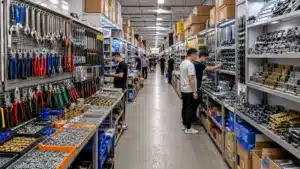
Start here if your product line includes hardware tools, machinery parts, or automotive accessories. These 4 halls sit on the ground level for a simple reason: structural load capacity. Crates of wrenches, power tools, and engine components weigh significantly more than textiles, so the venue engineers placed them where the floor can handle it.
Here is the critical sourcing advantage for this floor: factory-direct booths dominate ground-floor halls. Trading companies tend to avoid heavy goods because the logistics of shipping bulk metal parts eat into their margin. If you are an e-commerce entrepreneur looking for verified Yiwu suppliers with genuine factory pricing, this is your highest-probability floor. Average MOQs here range from 100 to 500 pcs, which aligns with our low-MOQ threshold of 100 pcs.
Allocate 90 minutes per hall. Walk the perimeter first to spot the larger booths — these are typically the actual manufacturers. Then work inward. Do not spend more than 4 hours total on this floor unless hardware is your primary category.
First Floor: 5 Halls for Daily Consumer Goods
The 5 first-floor halls cover stationery, toys, cosmetics, and textiles. This is the most crowded floor in terms of foot traffic because these categories appeal to the widest range of buyers — from Amazon FBA sellers to supermarket chain procurement managers.
The risk profile shifts here. You will find a higher concentration of trading companies acting as middlemen, particularly in the toy and cosmetics halls. These resellers rent booths, display samples from multiple factories, and mark up prices by 15 to 30 percent. Your filtering test is simple: ask for their factory address and production line photos. If they hesitate or redirect to a WeChat catalog, move on.
- Stationery hall: High factory-direct ratio, low MOQs, easy to verify via packaging samples.
- Toys hall: Mixed factory and trader presence; always request EN71 or ASTM test reports before ordering.
- Cosmetics hall: Requires the most caution — verify FDA or EU cosmetic regulation compliance documentation on-site.
- Textiles hall: Fabric quality varies wildly; bring a physical sample of your target GSM and texture for side-by-side comparison.
If you are a startup brand manager sourcing packaging or cosmetics, budget a full day for this floor. The sheer volume of options demands slower decision-making. This is exactly where our risk-free inspection service adds value — we verify the supplier after you identify them at the booth, so you never wire payment based on a trade show sample alone.
Second Floor: 5 Halls for Fashion and Gifts
The top level houses 5 halls dedicated to jewelry, fashion accessories, and smart home gadgets. These halls have the highest visual appeal — bright lighting, polished displays, and aggressive booth staff handing out catalogs. That presentation is partly because the products are lightweight and high-margin, and partly because this floor has the highest density of trading companies in the entire venue.
Jewelry and accessories booths are notoriously difficult to evaluate for factory-direct status. Many suppliers here are design studios that outsource production to workshops in Guangdong or Fujian. The products look premium on the display rack, but consistency across a 500-piece order becomes a gamble without independent quality inspection. Smart home gadget booths sit at the opposite end — these tend to be factory-direct because the technical complexity of electronics makes reselling impractical without engineering support.
Spend 60 to 75 minutes per hall maximum on this floor. Scan quickly, collect business cards and WeChat contacts, and shortlist suppliers for follow-up rather than attempting to close deals on-site. The post-fair verification step is non-negotiable here — which is why we include free inspection for every supplier introduction we facilitate, ensuring the booth sample matches the bulk production run before your goods leave Yiwu.
Hall-to-Product Category Mapping Table
Ground-floor halls handle heavy goods due to structural load limits. Upper floors cluster consumer products by buyer traffic flow. This logic determines which halls you skip entirely.
Ground Floor: Halls 1–4 (Heavy Goods, Factory-Direct)
The ground floor carries the structural load for dense, heavy products. If you source hardware, tools, auto parts, or building materials, this is where you spend your first day. More importantly, this floor has the highest concentration of factory-direct booths — trading companies tend to avoid low-traffic heavy goods halls.
- Hall 1: Hardware tools, power tools, hand tools, locks
- Hall 2: Auto parts, motorcycle parts, mechanical components
- Hall 3: Building materials, sanitary ware, plumbing fixtures
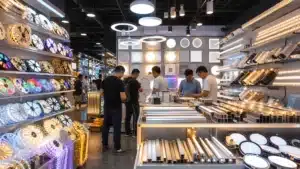
- Hall 4: Electrical equipment, lighting components, wires and cables
Estimated booth count across ground floor: approximately 1,500 standard booths (3m x 3m). Typical MOQ range: 200–500 pcs. These suppliers manufacture on-site, so MOQ negotiation room is wider than upper floors.
First Floor: Halls 5–9 (Mid-Weight Products)
This is the transitional zone — neither heavy industrial nor impulse-buy consumer. You will find toys, stationery, sporting goods, electronics, and daily-use plastics here. Booth density increases and so does foot traffic. A mix of factory booths and mid-size trading companies operates on this floor.
- Hall 5: Toys (plastic, RC, educational), stuffed animals
- Hall 6: Stationery, office supplies, printing materials
- Hall 7: Sporting goods, fitness equipment, outdoor gear
- Hall 8: Consumer electronics, mobile accessories, small appliances
- Hall 9: Daily necessities, kitchenware, plastic housewares
Estimated booth count across first floor: approximately 1,900 standard booths. Typical MOQ range: 100–300 pcs — the lowest in the entire venue, which aligns with the e-commerce buyer profile needing smaller test orders.
Second Floor: Halls 10–14 (Consumer Goods, Fashion, Gifts)
Highest foot traffic, highest reseller density. This floor handles lightweight, high-margin consumer products — fashion accessories, jewelry, textiles, home decor, and gifts. The booths look polished and the sales pitches are aggressive. First-time buyers gravitate here instinctively, which is exactly why trading companies cluster here.
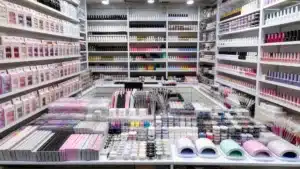
- Hall 10: Fashion jewelry, hair accessories, cosmetic tools
- Hall 11: Textiles, scarves, gloves, socks, hats
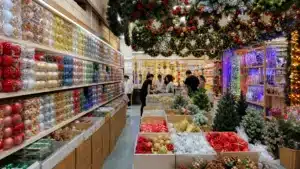
- Hall 12: Home decoration, frames, artificial flowers, candles
- Hall 13: Gifts, promotional items, packaging materials
- Hall 14: Umbrellas, rain gear, bags, travel accessories
Estimated booth count across second floor: approximately 1,900 standard booths. Typical MOQ range: 100–500 pcs, but many booths here are trading companies repackaging factory goods — so the listed MOQ often masks a higher true factory MOQ behind them. Always ask for factory verification on this floor.
Booth Count and MOQ at a Glance
- Total booths: 5,300 international standard booths (3m x 3m) across 14 halls
- Total exhibitors (2023 edition): 3,600+ suppliers
- Average MOQ across all halls: 100–500 pcs (compared to 1,000+ pcs at Canton Fair)
- Lowest MOQ floor: First floor (Halls 5–9), where consumer electronics and toys frequently start at 100 pcs
- Highest factory-direct ratio: Ground floor (Halls 1–4), where trading company presence is lowest
The critical takeaway for trip planning: do not spread yourself evenly across all 14 halls. If you sell fashion accessories, spend 80% of your time on the second floor and skip the ground floor entirely. If you source hardware tools, the reverse applies. Walking every hall is not thorough — it is inefficient. Allocate 90 minutes per relevant hall, and use the remaining time for booth follow-ups and sample ordering.
Yiwu Fair vs Canton Fair: Hall Differences
Yiwu Fair booths use open-carton displays built for rapid volume scanning. Canton Fair runs polished showroom builds. MOQs match: Yiwu starts at 100-500 pcs; Canton Fair demands 1,000+.
Booth Layout Philosophy: Open-Carton vs. Polished Showroom
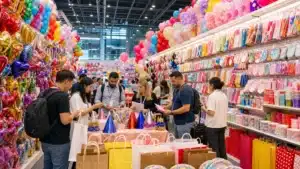
Walk into a Yiwu Fair hall and you will see products pulled from shipping cartons and arranged on folding tables or basic grid racks. The layout is deliberately functional. Suppliers want you to handle the product, check the molding seam, and flip the packaging over — not admire an RGB light setup. This open-carton approach signals that the booth operator is focused on order velocity, not brand storytelling.
Canton Fair booths operate on the opposite logic. Exhibitors invest heavily in custom-built showrooms with branded backdrops, track lighting, and product pedestals. The message is clear: this supplier has the capital and export infrastructure to support large-volume contracts. The trade-off is that you spend more time navigating the sales pitch before you ever touch a sample.
For a first-time buyer trying to evaluate 14 Yiwu halls in 3-5 days, the open-carton format is an operational advantage. You can assess material quality and finish in under 60 seconds per SKU. Canton Fair’s polished builds slow that evaluation cycle down significantly. That speed difference is precisely why we recommend 90 minutes max per Yiwu hall — the format rewards fast, decisive scanning over prolonged negotiations.
MOQ Reality: 100-500 pcs vs. 1,000+ pcs
The booth layout is not cosmetic — it directly reflects the order structure. Yiwu Fair suppliers typically set MOQs between 100 and 500 pieces per SKU. Canton Fair exhibitors open negotiations at 1,000 pieces and frequently push for container-load commitments. This gap exists because Yiwu’s supply chain is built around small-batch, mixed-category consolidation. A single buyer can walk out with 200 units of pens, 300 units of keychains, and 150 units of LED lights — all from different halls, all consolidated into one DDP shipment.
Canton Fair’s structure discourages that model. Exhibitors there are optimized for single-category, high-volume runs. Asking a Canton Fair hardware booth for 200 pieces of a specific wrench model will often end the conversation. The same request at a Yiwu ground-floor hardware hall is standard operating procedure.
This is where the risk profile shifts. Lower MOQs mean lower financial exposure per order, but they also mean you are dealing with a higher concentration of trading companies — not factory-direct suppliers. Resellers cluster in high-traffic second-floor fashion halls at Yiwu because they can flip small orders fast without holding inventory. Factory-direct booths dominate the ground-floor hardware and heavy goods halls where structural load limits naturally filter out lightweight resellers. We run risk-free inspections specifically because that reseller-to-factory ratio is the number one trap first-time buyers fall into at Yiwu. Our verified Yiwu suppliers operate at a 100-piece MOQ floor while maintaining Western quality standards — the combination most competitors cannot deliver because they skip the booth-level verification step entirely.
Sort your product list by the Expo Center’s floor-weight logic before you arrive. This single insight eliminates roughly 40% of wasted walking time across 14 halls.
Pre-Sort Your Product List by Floor-Weight Logic
The Yiwu International Expo Center organizes its 14 halls across three floors using a structural load principle, not random category grouping. Ground-floor halls handle heavy goods like hardware tools and auto parts because the floor slabs are reinforced for higher weight per square meter. Consumer goods, textiles, and fashion accessories occupy the first and second floors where load requirements are lower.
Before you step into the venue, cross-reference your sourcing list against this floor-weight map. If you source hardware, your entire productive day happens on the ground floor. If you source fashion accessories, you can skip the ground floor entirely. Most first-time buyers wander all three floors because no one tells them this structural logic exists. Map your categories to floors before arrival, and you immediately eliminate irrelevant halls from your route.
Start on the Floor with Your Highest-Priority Category
Exhibition hours run from 9:00 AM to 5:00 PM. That is an 8-hour window, but your actual decision-making capacity degrades significantly after hour five. The 240,000 m² exhibition footprint is physically exhausting even for experienced buyers. Do not spend your peak mental energy on exploratory browsing.
Identify the single product category with the highest order volume or margin impact for your business. Go directly to that hall zone the moment doors open. Lock in your primary supplier contacts and negotiate initial pricing while your judgment is sharpest. Secondary categories and exploratory visits happen in the afternoon when you are tired but still functional. This priority-first approach is how experienced sourcing agents maximize trip ROI, and it matters even more for first-timers who lack established relationships.
Allocate 90 Minutes Per Hall Maximum
Some guides recommend 1 to 2 days for the entire Yiwu Fair. That advice is dangerously shallow. With 14 halls and 5,300 booths, even a fast walk-through of every aisle would take 2 full days without stopping to talk to anyone. You need 3 to 5 days minimum to conduct meaningful supplier conversations.
The operational rule we use with our clients is 90 minutes per hall. Walk the main aisles for 20 minutes to scan for product relevance. Spend the remaining 70 minutes at booths that match your specifications. If a hall is not relevant to your sorted list, spend 15 minutes confirming that assessment and move on. Do not linger out of politeness. Every extra minute in a low-value hall is time stolen from a high-value conversation elsewhere.
The Reseller-vs-Factory Identification Gap
This is the single biggest trap at the Yiwu Fair, and almost no competitor guide addresses it with hall-level specificity. Not every booth represents a factory. A significant percentage are trading companies or resellers who rent booths, display factory catalogs, and mark up prices. The average MOQ at Yiwu Fair halls sits between 100 to 500 pieces, which is low enough that both factories and resellers can fulfill orders, making the distinction harder to spot than at Canton Fair where MOQs above 1,000 pieces tend to self-filter resellers out.
Resellers cluster strategically in high-traffic second-floor fashion and consumer goods halls where foot traffic is densest and impulse orders are common. Factory-direct booths dominate ground-floor hardware and industrial halls because those buyers are more experienced and demand factory documentation. If you are sourcing on the upper floors, your default assumption should be that a booth is a trading company until proven otherwise.
Ask three questions to separate them fast: Can you show me your factory license number? What is your production capacity per month? Can I visit your factory this week? A reseller will deflect or provide vague answers. A factory representative will answer immediately with specific numbers. Even with this filter, first-time buyers still misjudge roughly 30% of booths. This is exactly why we provide risk-free inspection as a post-fair service. You collect contacts and samples at the fair, and we verify whether those suppliers are actual factories before you wire any payment.
How Long to Spend Per Hall
First-timers need 3-5 days minimum. Anything less means you are gambling your flight budget on incomplete supplier intelligence across 14 halls and 5,300 booths.
60-90 Minutes Per Hall for Serious Buyers
If you are walking the Yiwu Fair to place actual orders, allocate 60 to 90 minutes per hall. This is not browsing time — this is structured booth engagement. You need roughly 8 minutes per booth to verify if a supplier is factory-direct or a trading company, request pricing on your target MOQ, and physically inspect product quality.
With 5,300 international standard booths spread across 14 halls, you cannot visit all of them. The operational reality is that a serious buyer targets 4 to 6 relevant halls based on their product category and spends 90 minutes in each of those, collecting verified contacts and samples from roughly 8 to 12 qualified suppliers per day.
30 Minutes Per Hall for Scanning
A 30-minute pass is strictly for market reconnaissance — not for sourcing. You walk the main aisles, photograph booth numbers that match your category, and grab business cards. You do not stop to negotiate MOQs, inspect stitching, or ask about lead times.
This approach makes sense on your final afternoon when you have already locked in your primary suppliers and want to flag secondary options for follow-up via WhatsApp after you return home. It does not work as a primary strategy because scanning yields business cards, not verified supplier intelligence.
Why 1-2 Days Is Insufficient for First-Timers
You will see generic advice online recommending 1-2 days at the Yiwu Fair. For a first-time buyer, this is dangerously shallow. The Yiwu International Expo Center covers 240,000 m² of exhibition space across three floors. The ground floor clusters heavy goods like hardware and auto parts due to structural load limits, while consumer goods occupy the upper floors. Understanding this layout alone takes half a day.
On day one, most first-timers lose 2 to 3 hours simply orienting themselves, dealing with registration queues, and walking the wrong halls because they lack a floor-weight decision framework. By the time they find their relevant product zones, the exhibition closes at 5:00 PM. A 2-day trip effectively leaves you with one real day of productive sourcing — which might cover 3 halls if you move fast.
The math does not support a rushed visit. If your flight and hotel budget totals $2,000 to $3,000, compressing 14 halls into 48 hours means each hall gets roughly 3 hours of your attention — and that includes lunch, bathroom breaks, and walking time between zones. You will leave with a stack of business cards from trading companies, not a shortlist of verified Yiwu suppliers ready for sample orders. Budget 3 to 5 days. Treat it as a work operation, not a sightseeing trip.
What to Wear and Bring to Halls
You will walk 15,000 to 20,000 steps daily across 240,000 m² of exhibition space. Dress for endurance, not impressions.
Dress Code: Business Casual, Athletic Footwear
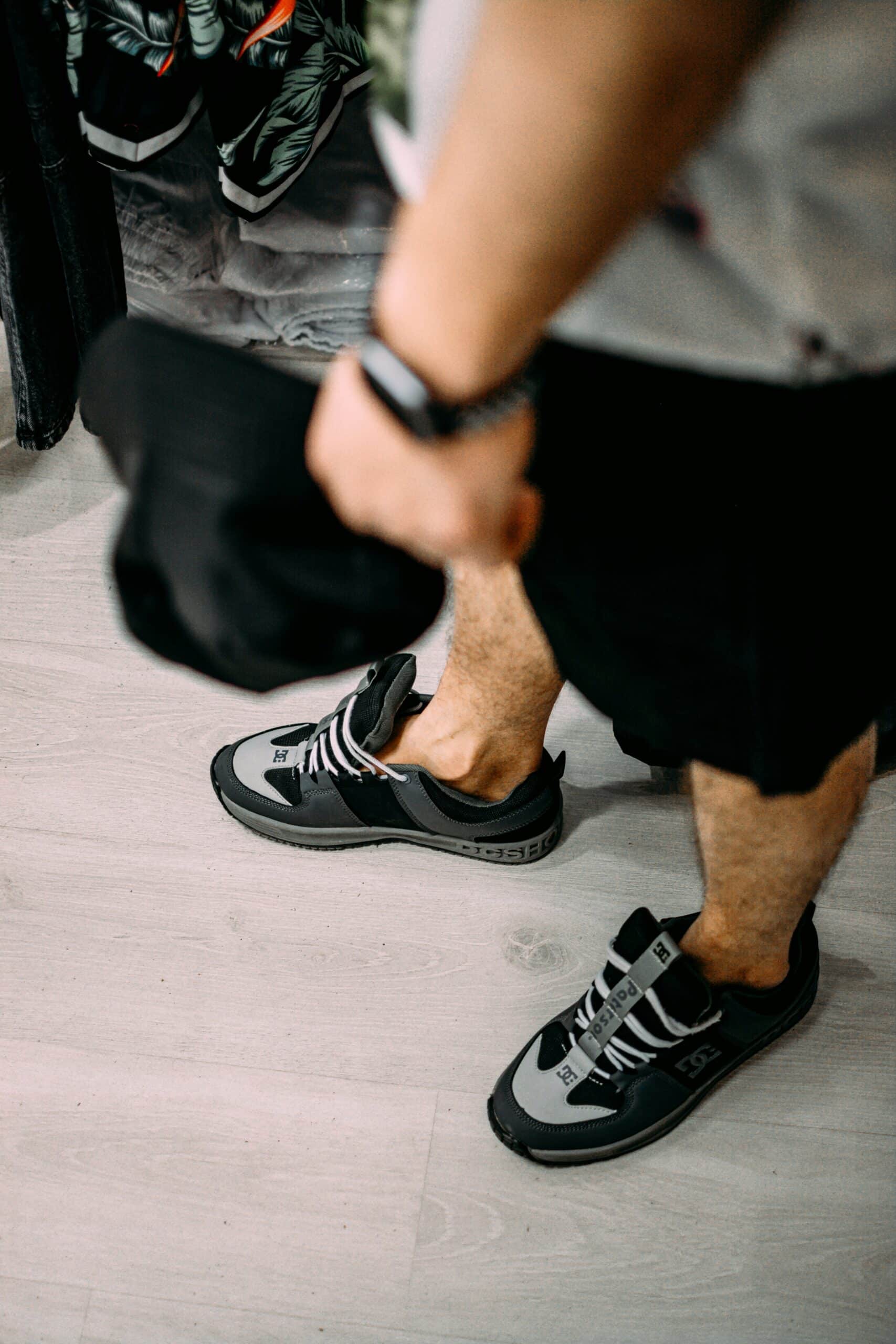
Yiwu Fair is not Canton Fair. Suppliers at Yiwu International Expo Center care about your order volume, not your suit. Wear business casual — a clean polo or collared shirt with chinos or dark jeans. You will be walking across 14 halls on concrete floors for 8 hours straight (9:00 AM to 5:00 PM). Flat, supportive shoes are non-negotiable. Do not wear heels, new leather shoes, or anything without proper arch support. Blisters on day one will cost you half your hall visits on day two.
Portable Charger and Physical Spec Sheets
Your phone is your primary tool at the fair. You will use it for photos, notes, WeChat, and supplier communication constantly. A dead phone at 2:00 PM in Hall 8 means lost contacts. Carry a 20,000 mAh power bank and your charging cable.
Bring printed product spec sheets for every item you intend to source. Do not rely on showing suppliers a screenshot or a Pinterest board on your phone. A physical sheet with your target dimensions, materials, MOQ of 100pcs, and quality requirements signals to the supplier that you are a serious buyer, not a tourist browsing. It also forces the supplier to give you a specific quote on paper rather than a vague “we can do that” response.
WeChat Is Mandatory — Not Optional
Over 90% of exhibitor booths at Yiwu Fair will not hand you a business card. They will pull out a QR code and say “WeChat.” If you do not have WeChat installed, linked to a working phone number, and set up with your buyer profile before you enter the venue, you will lose the majority of your supplier follow-up opportunities on the spot.
Download WeChat before arriving in China. Set your WeChat name to your English company name so suppliers can search and identify you later. After scanning a supplier’s QR code, immediately send a text message with your name, country, product interest, and MOQ range. This creates a searchable record in your chat history — critical when you return from the fair with 200+ new contacts and need to sort verified Yiwu suppliers from trading companies.
Заключение
If you try to walk all 14 halls, you will burn your trip budget on the wrong suppliers. Spend 90 minutes max per hall, focusing only on the 4 floors matching your product weight category. Stick to the ground floor for hardware, and the upper levels for lighter consumer goods.
Before you book flights, request a 100-piece test batch from two different booths in your target hall. Have an independent inspector physically check those samples against Western standards before you wire any money. That single step eliminates 90% of your trip risk.
Часто задаваемые вопросы
What is the Yiwu Fair?
The Yiwu International Commodities Fair, established in 1995, is China’s largest consumer goods trade fair connecting global brands with top-tier suppliers. It spans 14 massive exhibition halls at the Yiwu International Expo Center, featuring over 3,600 verified suppliers and attracting 200,000+ buyers annually. As your trusted eyes in the Yiwu market, we help you navigate this overwhelming scale to find factories that meet Western quality standards at local prices.
Yiwu vs. Canton Fair?
The Yiwu Fair specializes in low-MOQ small commodities, perfectly aligning with our 100-piece minimum requirement for global brands testing new products. In contrast, the Canton Fair operates on a much larger scale requiring 1,000+ piece MOQs, focusing primarily on volume manufacturing and strict OEM orders. We use the Yiwu Fair’s accessible open-booth format so you can secure Western-quality samples without the massive volume commitments demanded in Guangzhou.
How long to spend in Yiwu?
Serious first-time buyers should allocate 3 to 5 days to properly evaluate suppliers without making rushed decisions. We recommend dedicating one day per floor of the exhibition halls, plus an additional day at the main Yiwu Market to cross-reference pricing. Attempting to compress this into the commonly suggested 1-2 days often leads to poor supplier selection and higher exposure to unauthorized resellers.
What is the big Yiwu market called?
The primary wholesale hub is the Yiwu International Trade City, recognized as the world’s largest small commodities market at a staggering 5.5 million square meters. Unlike the annual Yiwu Fair held at the Expo Center, this massive complex operates year-round and houses the factory-direct suppliers we personally vet for our clients. Navigating this permanent market is exactly where our on-the-ground inspection team ensures you secure local factory prices with guaranteed Western quality standards.
What to wear to the Yiwu Fair?
Business casual attire paired with highly comfortable flat shoes is the industry standard for navigating the 240,000 square meters of exhibition space. Formal suits are impractical and out of place, as both suppliers and professional buyers dress for endurance and efficiency. We also strongly advise bringing a sturdy bag to carry the heavy catalogs and product samples you will collect while we handle your global DDP shipping logistics later.