Джастин.
Choosing the right private label path is a critical decision that can lock up your capital or accelerate your growth. The choice between developing a custom product from scratch with an Alibaba factory and branding generic goods with custom packaging from Yiwu defines your upfront investment, speed to market, and control over your brand.

This article breaks down the core differences between these two strategies. We compare key metrics like the typical 1000-unit MOQ for Alibaba OEM versus the 100-unit threshold in Yiwu, and the 45-day production cycle online against a 10-day door-to-door timeline using a local agent. You’ll see how each approach impacts your intellectual property risks, operational flexibility, and overall business strategy.
Deep Customization (OEM): Go to Alibaba Factories
Deep OEM customization involves creating a proprietary product from scratch with new molds and formulations, offering complete control over design and IP. This process connects you directly with Alibaba factories for the full development cycle but requires significant investment in time, money, and higher MOQs compared to lighter customization options.

What OEM Deep Customization Means
OEM (Original Equipment Manufacturing) involves creating a product from scratch based on your exact specifications, not just branding an existing item.
This process is for developing proprietary products, requiring new molds, custom materials, and unique formulations.
It’s the path for brands that want complete control over design, function, and intellectual property, moving beyond generic market offerings.
The Alibaba Factory Ecosystem for OEM
Platforms like Alibaba.com connect you directly with factories capable of deep OEM work, such as those for custom cosmetics (Kasey Beauty) or bespoke product lines (Maple Sourcing).
These factories handle the full development cycle: product design, prototyping, material sourcing, production, and custom packaging.
Services like Angela Global or Sellers Union Agent act as managed partners to coordinate this complex process across verified factory networks, handling quality control and logistics.
Key Considerations and Trade-offs
Deep OEM requires significant investment in time (often 45+ days) and money, with high Minimum Order Quantities (MOQs), typically starting at 500-1000 units.
You gain strong IP protection and a unique product, but face higher complexity in managing production, quality assurance, and supply chain logistics.
This approach contrasts with lighter customization in Yiwu, which offers faster turnaround (10 days) and lower MOQs (100 units) but less control over the core product.
The “Yiwu Kitting” Strategy: Generic Item + Custom Box
The Yiwu Kitting strategy is a sourcing method that combines generic, unbranded products from Yiwu suppliers with custom-designed packaging to create branded kits. This approach separates product sourcing from packaging assembly, allowing for private labeling without the high MOQs of fully custom goods.
| Аспект | Details | Supporting Data |
|---|---|---|
| Cost Control | Avoid high MOQ custom packaging; use generic boxes with branded stickers for a branded feel. | Custom packaging MOQ: 300–500 units; color variations: 200+. |
| Efficiency | Pre-assemble into single SKUs; just-in-time inventory reduces waste. | Speeds fulfillment, improves accuracy, simplifies tracking. |
| Flexibility | Bundle SKUs, mix designs; local agents negotiate small-batch tweaks. | Ideal for LCL shipping (20–40 days). |
| Applications | Private label, subscription fulfillment, promo items, gift packs. | Enhances brand loyalty via personalized unboxing elements. |

What is the Yiwu Kitting Strategy?
This strategy involves sourcing generic products from Yiwu suppliers and pairing them with custom-designed packaging, often from specialized factories, to create branded, value-added kits. It targets both new sellers seeking logo-branded items and experienced brands leveraging Yiwu’s wholesale ecosystem for efficient bundling.
The core idea is to streamline the OEM and private label process by separating product sourcing from packaging assembly. This reduces costs and minimum order quantities compared to ordering fully custom goods.
How to Implement the Strategy: A Step-by-Step Process
Start by sourcing generic items like toys, fashion accessories, or textiles from Yiwu Fair suppliers. MOQs for these unbranded goods can be as low as 60 to 200 pieces per design.
Next, order custom packaging elements from specialized printing factories in Yiwu. This includes boxes with branded stickers, inserts, or labels, with typical MOQs ranging from 300 to 500 units.
The kitting or assembly is then performed locally in Yiwu. Use a local agent or warehouse service to combine the generic items with the custom packaging, add inserts like thank-you cards, apply labels, and seal the boxes.
Finally, manage inventory and forecast demand using software to coordinate the flow of generic goods and custom packaging. This enables just-in-time assembly and reduces inventory holding costs.
Benefits, Applications, and Key Metrics
This approach significantly reduces cost and risk by avoiding high-MOQ custom production. Using generic boxes with custom stickers can achieve a premium, branded look without the large upfront investment.
It increases operational efficiency by creating pre-assembled single SKUs. This speeds up order fulfillment, simplifies inventory tracking, and improves accuracy in the warehouse.
The strategy enables flexible product bundling for subscription boxes, promotional kits, and gift sets. This flexibility allows brands to test new markets and enhance customer loyalty through a personalized unboxing experience.
For logistics, kitted products are ideal for Less than Container Load (LCL) shipping. Typical ocean transit times for these small batches range from 20 to 40 days.
MOQ for Private Label: 1000 (Ali) vs 100 (Yiwu Print)
The core difference in MOQ between Alibaba suppliers and Yiwu Print services defines two distinct paths for private label sourcing. Alibaba’s typical 1000-unit MOQ is built for scale and deep customization, requiring significant capital. Yiwu Print’s 100-unit MOQ enables agility and market testing with minimal upfront risk, often by adding custom packaging to generic goods.

Why MOQs Matter for Your Brand
The Minimum Order Quantity (MOQ) is the first major financial and strategic hurdle in private label sourcing.
A higher MOQ, like 1000 units, demands a significant upfront investment but often unlocks deeper customization and better per-unit pricing.
A lower MOQ, such as 100 units, dramatically reduces initial risk and capital outlay, making market testing and iteration financially viable for new brands.
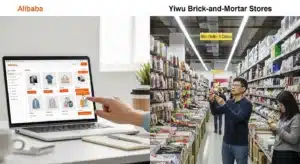
The Alibaba Factory Model: High Volume for Scale
Suppliers on Alibaba typically require an MOQ of around 1000 units for private label orders.
This threshold covers the fixed costs of production setup, custom raw material sourcing, and ensures machine efficiency for the factory.
This model is suited for businesses with established demand, larger budgets, and a need for significant product customization beyond simple logo printing.
The Yiwu Print & Agent Model: Low Volume for Agility
Services like Yiwu Print and sourcing agents such as Chineseyiwu.com offer MOQs as low as 100 units.
This approach centers on adding value through custom packaging and labels to generic goods sourced from the Yiwu market.
It perfectly supports the ‘Yiwu Kitting’ strategy, allowing small businesses and US designers to launch a branded product line with minimal inventory risk and faster turnaround.
Speed to Market: 45 Days (Ali) vs 10 Days (Yiwu)
Sourcing through Alibaba typically requires a 45-day timeline for supplier vetting, sampling, and international shipping, while the Yiwu Market enables a complete door-to-door cycle in about 10 days. This 35-day difference is critical for businesses needing to test products, capitalize on trends, or maintain tight inventory cycles.

The Alibaba Sourcing Timeline
The typical 45-day timeline for Alibaba sourcing includes multiple stages: supplier discovery and vetting, sample requests and approvals, contract negotiation, production scheduling, and final international shipping.
Lead times are extended by the need to coordinate with factories across China, manage communication across time zones, and navigate the platform’s processes for payments and order management.
This model is designed for bulk orders and custom manufacturing, where the priority is cost and specification over speed.
The Yiwu Market Advantage
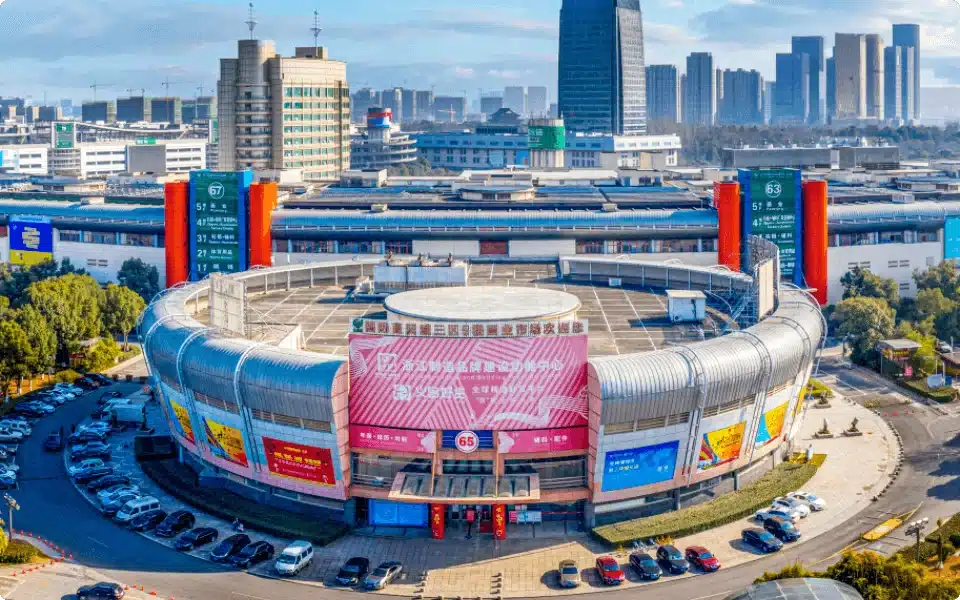
Buyers at the Yiwu Market can source and purchase products within 4 to 7 days on-site, thanks to the massive concentration of ready-made stock in Trade City’s 75,000+ booths.
The hands-on selection process allows for immediate negotiation and purchase. Low MOQs mean you can buy what you need without waiting for large production runs.
Using a local agent like Chineseyiwu.com can compress this timeline further. They handle supplier coordination, quality checks in their warehouse, and logistics consolidation, aiming for a complete door-to-door cycle of around 10 days.
Strategic Implications for Your Business
The 35-day difference is critical for testing new products, capitalizing on trends, or managing tight inventory cycles. Yiwu enables a rapid ‘test and scale’ approach.
For Amazon FBA sellers, faster restocking means avoiding stockouts and maintaining sales rank. Agents can apply FBA labels and ship directly to fulfillment centers as part of the 10-day service.
While Alibaba is suited for long-term, high-volume supply chain setup, Yiwu provides agility. The optimal strategy often involves using Yiwu for initial launches and fast replenishment, while developing deeper OEM relationships on Alibaba for mature products.
Intellectual Property Risks Online vs Offline
Protecting your intellectual property is a critical challenge in global sourcing, with distinct risks and vulnerabilities across online and offline channels. The manufacturing sector accounts for 18% of global IP theft incidents, and while foreign plaintiffs have a 77% success rate in litigation, the process is costly. A strategic, layered approach is essential for safeguarding your brand and designs.

Key IP Risks in Global Sourcing
Trade secret theft is a primary risk, with manufacturing accounting for 18% of global IP theft incidents. This often involves the unauthorized use of proprietary designs, formulas, or manufacturing processes shared with potential partners.
Counterfeiting and trademark squatting are common threats, especially for new brands entering a market. Competitors may register your brand name in a target country, forcing you into lengthy legal battles or to rebrand entirely.
While foreign plaintiffs have a 77% success rate in IP litigation, the process is costly and time-consuming. Legal fees, court delays, and the difficulty of enforcing judgments across borders make prevention far more effective than litigation.
Online vs. Offline Channel Vulnerabilities
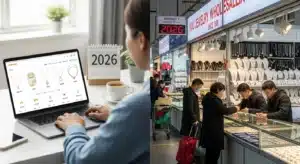
Online platforms like Alibaba expose designs to a vast, anonymous network, increasing the risk of unauthorized copying and data leaks. Digital communication can be intercepted, and sharing detailed specifications with multiple suppliers amplifies the chance your product will be replicated.
Offline sourcing in markets like Yiwu involves direct, in-person negotiations, which can better protect sensitive information but still risk physical sample theft. Seeing a factory firsthand allows for better vetting, but leaving a prototype sample can lead to it being copied without your consent.
Prosecutions for trade secret theft increased by 34.2% in recent years, highlighting the growing legal focus on these issues across all channels. This trend underscores the need for robust protection strategies regardless of your sourcing method.
Actionable Protection Strategies for Importers
For new brand owners, focus on securing trademarks in your target markets first and use Non-Disclosure Agreements (NDAs) with all potential partners. This legal foundation is your first line of defense before sharing any product details.
Experienced importers should implement a multi-layered approach: register IP, conduct thorough factory audits, and split production processes among different suppliers. For example, source a generic product from one factory and have custom packaging made by another to prevent any single partner from having your complete product blueprint.
Utilize a service partner for on-site verification and quality control to act as a trusted intermediary, reducing direct exposure of your IP to unknown factories. A reliable agent can manage relationships, conduct inspections, and handle logistics without revealing your full supply chain or design secrets.
Часто задаваемые вопросы
What is the typical MOQ for private label manufacturing in China?
Minimum Order Quantities (MOQs) for private label manufacturing in China typically range from 100 to 5,000 units per style, depending on the product type and level of customization. For example, T-shirts and basic apparel can have MOQs as low as 100–300 units per color and style when using standard fabrics. Hoodies and casualwear often start at 300–500 units, while electronics and kitchen products usually require 750–1,000 units per order. The MOQ is influenced by factors like fabric type and customization requirements, such as custom printing or embroidery, which can increase minimums. Many suppliers publish inflated MOQs as a negotiation tactic, and experienced importers can often secure orders 20–35% lower than the initial quote.
How do I put my logo on products sourced from Yiwu?
To add your logo to products from Yiwu, you first source generic items from local factories or the Yiwu Market. Then, you use specialized local printing companies for custom logo application. Common methods include screen printing, heat transfer, embroidery, or engraving, depending on the product. For instance, paper bags and packaging can be printed with MOQs as low as 100–120 pieces, while apparel like T-shirts can be embroidered or screen-printed. The process involves finding a supplier, providing your logo design file, negotiating MOQ and pricing (which can start as low as 100 pieces for simple prints), and approving a sample before full production. This ‘Yiwu kitting’ strategy allows you to add significant brand value to generic goods with relatively low minimums and fast turnaround.
What is the difference between Alibaba OEM and ODM?
OEM (Original Equipment Manufacturer) and ODM (Original Design Manufacturer) are two distinct manufacturing models on Alibaba. With OEM, you provide the complete design and specifications. The supplier focuses solely on production, which gives you full customization, exclusivity, and ownership of the intellectual property. This model typically has higher upfront costs and MOQs due to tooling and R&D. With ODM, the supplier provides pre-designed products, often based on existing molds. You can add your logo or make minor customizations like packaging. This model is faster to market and has lower costs and MOQs, making it ideal for testing new products. However, the designs are less unique, and the supplier may retain some initial IP rights.
Where can I find custom packaging suppliers in China?
Several major suppliers in China specialize in custom packaging. For large-scale, high-volume needs, integrated containerboard producers like Nine Dragons Paper, Lee & Man Paper, and Shanying International are key players, providing the materials for corrugated boxes used in e-commerce and retail. For brands with lower volume requirements, especially DTC and startup companies, suppliers connected through networks like Baysource Global offer significant advantages. They provide design-intensive, sustainable packaging with MOQs starting around 500 units—far below the 10,000–50,000 unit minimums common with U.S. domestic suppliers. This allows for iterative design testing without high inventory risk.
What are private label rights (PLR) and how do they differ from private labeling?
Private Label Rights (PLR) primarily refer to a licensing model for digital content, such as articles, eBooks, or videos. When you purchase PLR, you acquire the rights to modify, rebrand, and resell that content as your own. It’s a way to quickly expand a digital product offering. In contrast, private labeling in a manufacturing context involves a company having a physical product (like apparel, groceries, or electronics) produced by a manufacturer to their specifications. The finished product is then sold under the company’s own brand with custom packaging and labeling. The key difference is the product type (digital vs. physical) and the level of exclusivity; PLR content is often non-exclusive, while a private-labeled physical product is typically exclusive to one retailer or brand.
Заключительные размышления
Choosing between Alibaba factories and the Yiwu packaging strategy depends entirely on your business goals and resources. If you need a unique product with full control over design and intellectual property, and you have the budget and time for a longer development cycle, Alibaba’s OEM route is the clear choice. If your priority is getting a branded product to market quickly with minimal upfront investment and inventory risk, the Yiwu kitting method offers a practical and agile alternative.
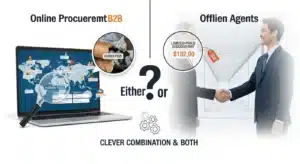
For many businesses, the most effective strategy isn’t choosing one over the other, but using them in sequence. Start with Yiwu to test a product concept, validate market demand, and generate initial cash flow with lower risk. Once you have proven sales and a clearer understanding of your customer, you can invest in developing a proprietary version through an Alibaba factory. This hybrid approach leverages the speed of Yiwu for launch and the customization depth of Alibaba for scaling a winning product.