Justin
An e-commerce founder forwarded us an invoice for $312 in setup fees on a 500-unit Yiwu private label run. He had negotiated what looked like a strong product price. The supplier then charged $41 per color just to print the insert card and quoted the custom bags separately. His unit economics collapsed before the goods left the warehouse.
That invoice is the whole story of Yiwu private label costs in miniature. The quoted unit price is the least informative number on the sheet. The money moves in four other places: per-unit branding components, one-off plate and mold fees, sample and courier charges, and the inspection line nobody budgets. This guide consolidates our cost records from three previously separate pages into one reference, with every figure quoted from documented supplier invoices and market quotes.
Key takeaways
- The quoted unit price excludes the fees that decide your margin. Setup charges run $14 to $73 per design or color, on top of per-unit branding costs of $0.002 to $0.94 by component.
- Volume curves are cliffs, not slopes. Paper roll labels drop 97% from $0.06 at 1,000 units to $0.002 at 10,000+. The steepest insert-card break sits between 5,000 and 10,000 units.
- Setup fees punish small runs disproportionately. A quoted case we reviewed: a $41 plate fee on 500 OPP bags turned $25 of product into a $66 bill — a 164% increase.
- Model fees are negotiable at volume. In our records, 90% of suppliers waived the model fee at 10,000+ units — but only when the buyer raised it explicitly during quoting.
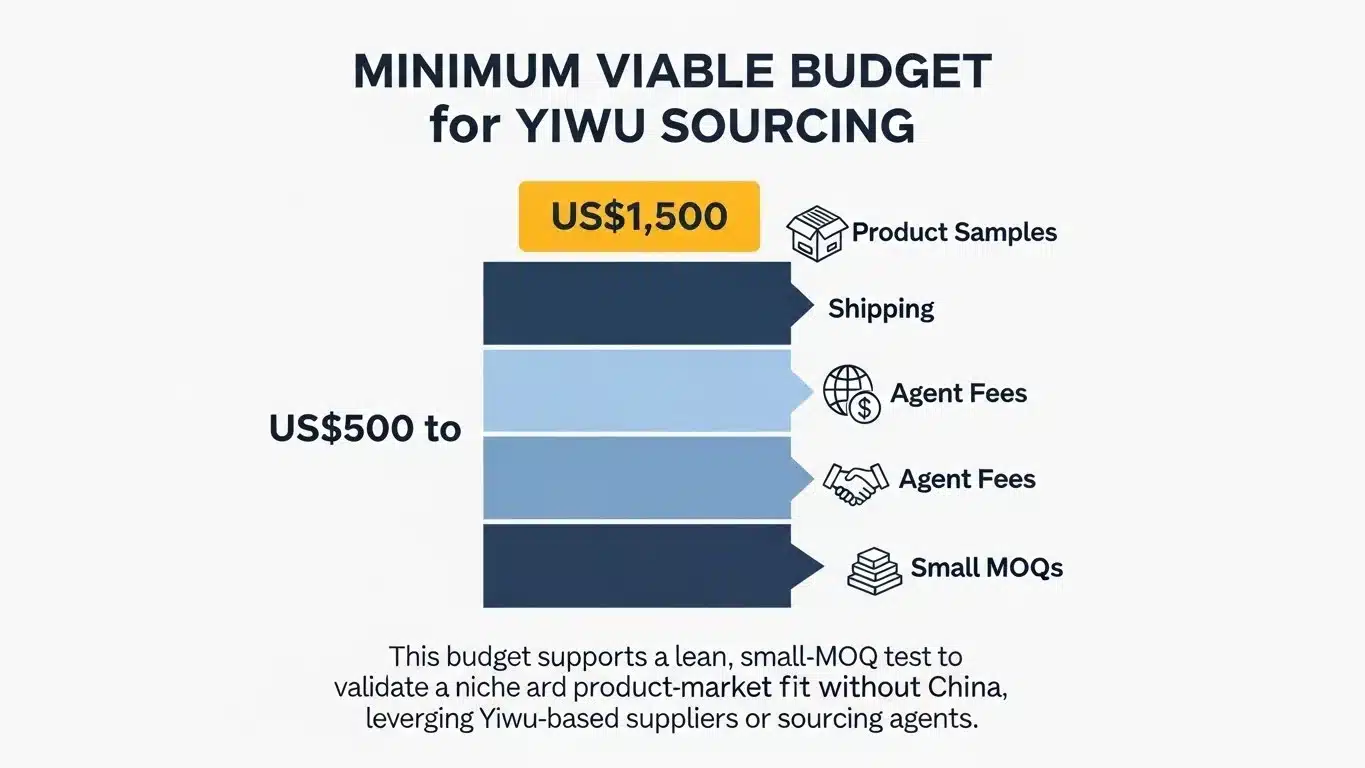
- $1,000 covers validation, not inventory. That budget pays for samples from 3-5 booths plus plate setup, before a single sellable unit exists.
- Hidden costs stack quietly. First quotes to foreign buyers run 15-30% above local rates, and FOB surprises add 8-15% to landed cost for first-time importers.
On this page
- What a Yiwu Private Label Order Actually Costs
- Per-Unit Labeling and Packaging Costs by Volume
- One-Off Setup Fees: Plates, Molds and Model Charges
- The Sample-to-Production Cost Ladder
- The 10,000-Unit Break Point
- Hidden Costs That Inflate a First Run
- Budgeting Your First Private Label Run
- Perguntas mais frequentes
What a Yiwu Private Label Order Actually Costs
A Yiwu private label order costs four things, and only one of them appears cleanly on the first quote sheet. The total is the product unit price plus per-unit branding application, which runs $0.002 to $0.94 per piece depending on the component. Add one-off setup fees of $14 to $73 per design or color. Then add sample courier costs and an inspection budget before anything ships.
The $312 invoice case above failed at the second and third layers. The founder budgeted against the product price alone. Insert card printing at $41 per color and a separately quoted bag line surfaced only after commitment. At 500 units, there was no volume left to absorb either fee.
The four cost layers
- Product cost. The quoted unit price of the generic item. This is the number every negotiation starts with and the one that matters least in isolation.
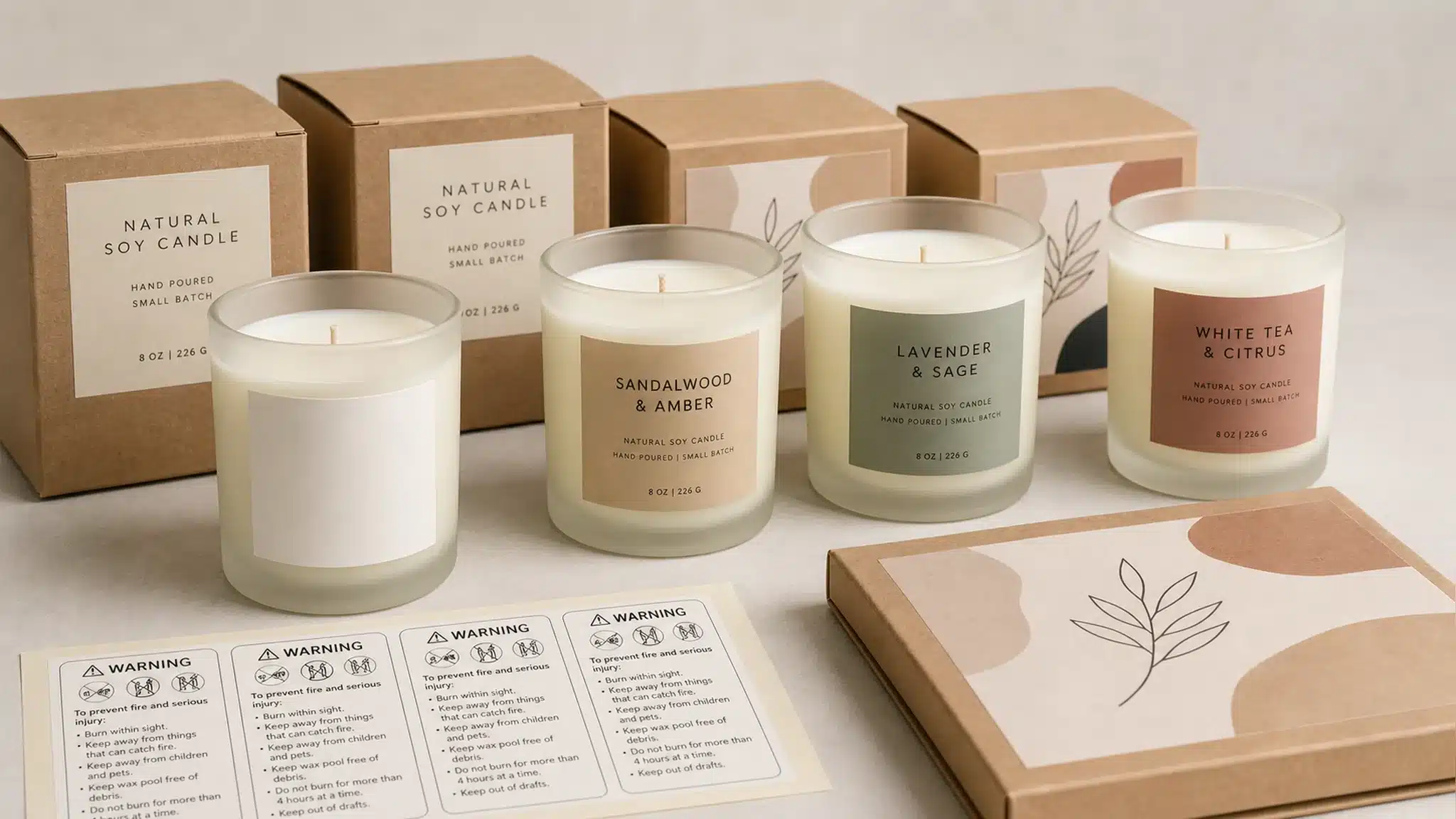
- Branding application. Labels, insert cards, hang tags, OPP bags, metal or leather tags. Quoted prices in our records run from $0.002 per paper label at volume to $0.94 per clear PVC sheet.
- One-off setup. Printing plates, molds and model charges. Recorded fees: $14 per color for paper label setup, $28 for insert card CMYK setup, roughly 300 RMB (about $42-43) per color for plate making, and 500 RMB (about $73) for a metal tag mold.
- Verification. Sample couriers at $11-60 per package and during-production inspection at $150-250 per check.
Packaging typically adds 3% to 8% to the total unit cost once volume is right. That is the number buyers should hold suppliers to. Below the volume break, setup amortization can multiply the packaging line several times over — which is what the next two sections quantify.
Why quote sheets hide the branding lines
The mechanism is structural, not accidental. Suppliers quote packaging separately from the product because a bare product number looks better in comparison. A $0.05 box quoted apart from the unit price creates a false baseline: the product looks cheap while the branding costs arrive later, line by line. Model fees follow the same pattern. They are non-refundable regardless of order volume, and they surface only in the invoice — not in the quotation.
The defense is one question, asked before any money moves. What is the fully burdened unit cost at my quantity, with product, packaging and every setup fee on separate lines? A supplier who cannot answer that has not priced your order. A supplier who refuses has priced it and does not want you to see the breakdown.
Per-Unit Labeling and Packaging Costs by Volume
Paper roll labels show the most aggressive price break in the entire packaging chain. At 1,000 units the quoted cost is $0.06 per unit. At 10,000+ units it collapses to $0.002 — a 97% reduction. If a brand commits to 10,000 units, labeling effectively stops being a meaningful line in the landed cost.
The table below consolidates every component quote from our three source records into one reference. Each figure is a quoted price from a documented supplier interaction, not a market average. MOQs vary by supplier; treat the ladder as the pattern, not a universal schedule.
| Component | Specs | Quoted per-unit cost | MOQ | One-off setup |
|---|---|---|---|---|
| Paper roll label | Roll format | $0.06 at 1,000; $0.002 at 10,000+ | 500-10,000 | $14 per color |
| Insert card | 350g paper | $0.07 at 5,000; $0.02 at 60,000 | 5,000 | $28 CMYK |
| Paper hang tag | 700g white card | $0.02 at 10,000 | 5,000-10,000 | ~300 RMB per color |
| Clear PVC label | 30×22.5cm sheet | $0.94 per sheet; $22 per 1,000 die-cut | Varies by supplier | ~300 RMB per color |
| OPP bag | Self-adhesive, 9.5x6cm | $0.002 | 20,000 | 300 RMB (~$43) per color; $41 on one invoice |
| Metal tag | Stainless steel | $0.37 at 500; $0.04 at 10,000+ | 300 + model fee | 500 RMB (~$73) mold |
| Leather label | Embossed | $0.07 | 300 + model fee | $14 mold per design |
| Custom box | 350g paper | From $0.05 per piece | Quoted separately | Setup quoted separately |
The volume curves worth memorizing
Insert cards on 350g paper follow an asymmetrical curve. At 5,000 units the cost is $0.07 per card; at 60,000 it drops to $0.02. The critical detail our records document repeatedly: the steepest drop happens between 5,000 and 10,000 units. The delta from 10,000 to 60,000 is marginal by comparison.
Clear PVC operates on a different cost model entirely. Sheets measure 30×22.5cm and price at $0.94 per sheet, not per unit. The economics only work when multiple die-cut labels fit on one sheet. Below 5,000 units, PVC is a cost trap versus paper roll labels. At volume, die-cut PVC stickers run about $22 per 1,000, and PVC boxes see meaningful 15-20% drops only above 20,000 units.
MOQ is the gating constraint
The minimum order quantity ladder decides which branding methods are even available at your volume. Recorded thresholds: stickers start at 500-1,000 units. Hang cards require 5,000. Paper labels reach their best price at 10,000. OPP bags demand 20,000. Metal and leather tags start at 300 units plus a model fee. Unbranded stock testing is possible from 100 pieces — that is the entry point, not the destination.
What moves these prices
Two variables shift every quoted number. Material weight is the first: paper labels price on grammage, and the same label on 350g versus 250g stock is a different product with a different cost. Finish is the second — UV printing and embossing push hang tag costs above the basic single-color figure. State both in the spec sheet, because a quote that does not name them is quoting the cheapest possible version of what you actually want.
Category choice changes the tooling math too. Fashion accessories — hair clips, jewelry, socks — carry the lowest tooling costs in the market because they need flat, low-cost labeling rather than multi-part molds. Recorded turnaround for branded accessories runs 7-10 days. That is the fastest path from generic stock to a finished private label product, and the reason accessory categories dominate first-time branded runs.
District choice sets the baseline before any of this applies. Yiwu is a district-based grid where textiles cluster in Districts 1-2 and electronics in Districts 3-4. Walking the wrong district means paying reseller margins on top of factory margins.
One-Off Setup Fees: Plates, Molds and Model Charges
Setup fees are where quotes quietly break. Every branding component carries a one-off charge — a printing plate, a mold, a model fee — that is paid once but felt on every unit of a small run. These fees are non-refundable and almost never itemized unless you ask for a line-by-line breakdown.
| Fee type | Quoted amount | Charged per |
|---|---|---|
| Paper label setup | $14 | Per color/design |
| Sticker and tag setup | $14-28 | By complexity and colors |
| Insert card CMYK setup | $28 | Per design |
| Printing plate model fee | ~300 RMB (~$42-43); $41 on one quoted invoice | Per color |
| OPP bag model fee | 300 RMB (~$43) per color; $215 total on a 5-color design | Per color |
| Metal tag mold | 500 RMB (~$73) | Per design |
| Leather label mold | $14 | Per design |
The amortization trap, worked
Here is the arithmetic that catches founders. Order 500 custom OPP bags at $0.05 per piece and the product cost is $25. Add the $41 color model fee and the actual spend is $66. Your packaging cost just rose 164%. The same $41 spread across 300 units adds 14 cents to every item — more than the bag itself costs at volume.
The pattern generalizes. A 300 RMB plate fee per color means a two-color paper hang tag setup runs about $84 before a single tag is printed. Suppliers routinely omit this line item to appear cheaper in comparison. The mold economics for metal components follow the same logic at larger scale — our breakdown of Yiwu mold costs covers how tooling amortizes across order sizes.
The waiver tactic at 10,000 units
In our records, 90% of Yiwu suppliers waived model fees entirely at 10,000+ units. This is never advertised on price sheets and must be negotiated explicitly during quoting. State during the initial quote that you expect the model fee absorbed into the unit price. Below 10,000 units the fees are largely non-negotiable; above it, most suppliers concede rather than lose the order over a 300 RMB line.
Two contract lines protect you. First, require plate and model fees as a separate itemized line. Never let them be absorbed silently, where they distort per-piece analysis. Second, document tooling ownership. Any mold you pay for — the 500 RMB metal tag die, for example — is your intellectual property. It must transfer to another factory if the relationship ends.
One more note for buyers assembling a first branded run. Ask for a quote that separates product, packaging and every model fee. The private label OEM service page is where that line-item request starts.
The Sample-to-Production Cost Ladder
Private label sourcing compresses time-to-market to roughly 7-14 days for label application and repacking, against 60-90 days for custom manufacturing with tooling and revisions. Time is a cost too — it is the difference between catching a seasonal trend and missing it. The cash side follows four rungs, and each has a documented price.
Rung 1: stock test at ~100 pieces
Buy around 100 units of unbranded stock and sell them. This rung validates demand before any branding money moves. It exists because the printed-packaging MOQs start at 500-20,000 units, and committing to them on an untested product is how sample budgets die.
Rung 2: samples from 3-5 booths
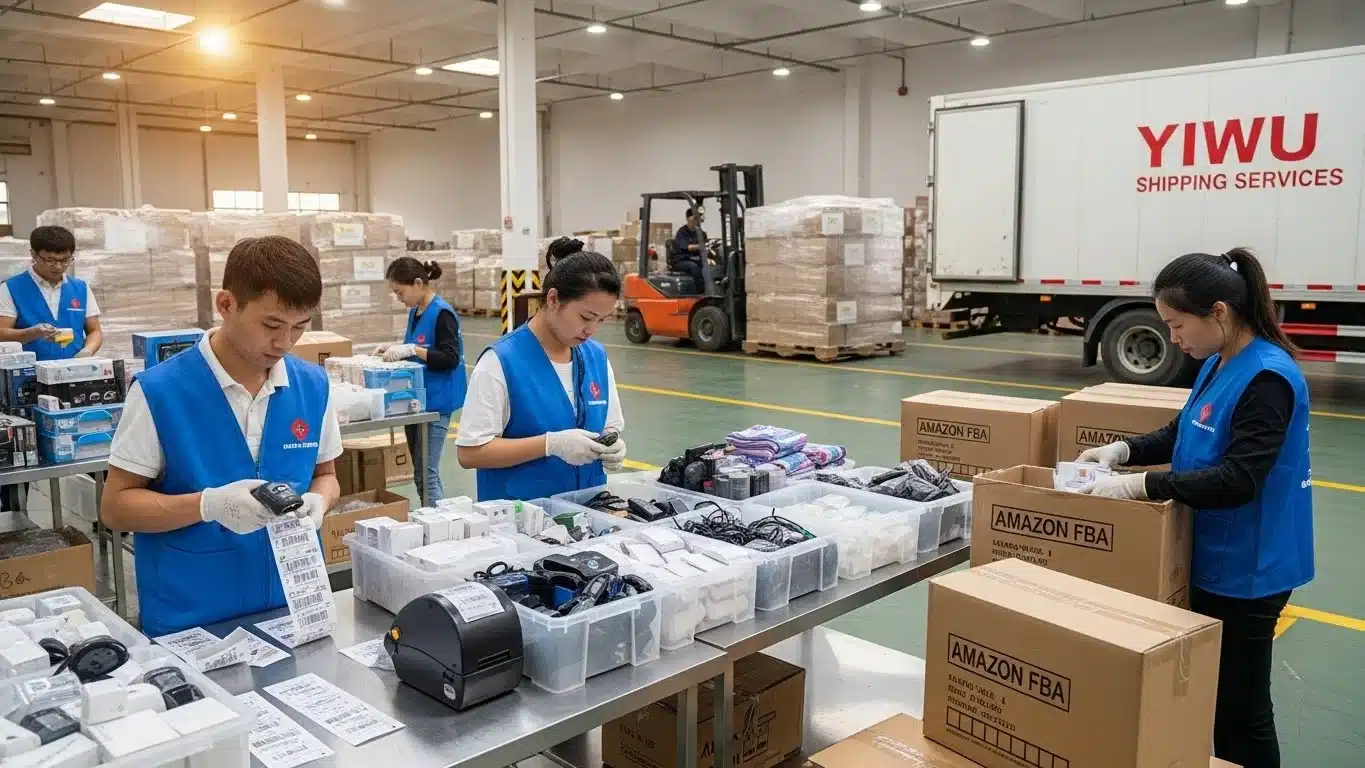
Request the same specification from 3-5 suppliers simultaneously. Domestic courier delivery to an agent’s warehouse runs 80-150 RMB ($11-21) per sample. International shipping via DHL or FedEx runs $35-60 per package. Consolidating five supplier samples into one international shipment cuts courier cost to $40-55 total, versus $175-300 for five separate packages. Handled poorly, sample shipping alone consumes $200-400 of a development budget. The sampling strategy in our product sample cost guide sets out the full selection logic.
Comparing the factory origins on the packaging reveals whether the booths share a production base. If three booths ship identical products from the same factory address, your design is already exposed to that factory regardless of any booth-level NDA.
Evaluate the samples side by side under identical lighting. Check the paper grain direction on hang tags, the adhesive strength on PVC label sheets, and color consistency across the batch. A clear PVC sheet costs about $0.94 per 30×22.5cm. But if the factory substitutes a lower-grade material to protect its margin, the cloudiness is visible to an end customer immediately. A vendor who refuses or delays production-line samples is giving you a disqualification signal, not a minor inconvenience.
Rung 3: plate fees and branded sample approval
Once a supplier is chosen, the one-off fees land. Expect roughly 300 RMB (~$42) per color for plates and about $84 for a two-color hang tag setup, plus a branded sample to approve against. Mandate that the sample comes off the same material batch and press that will run the order.
Rung 4: first branded run at break-even quantity
The first real run should sit at or above the quantity where setup amortization stops hurting — the 10,000-unit break point analyzed in the next section. Budget a during-production inspection at $150-250 as a fixed line; skipping it is the most expensive saving available in the whole process.
Add the rungs and a clear picture emerges: $1,000 covers samples plus plate setup — validation, not inventory. The production budget sits on top.
The 10,000-Unit Break Point
The cost curve in Yiwu is not a slope. It is a cliff, and the edge sits at 10,000 units. Every component we have quoted bends at that number — labels hit their floor, insert cards take their steepest drop, and model fees start disappearing from invoices.
At 500 units, a stainless steel tag costs $0.37 per unit plus a 500 RMB (~$73) model fee. Spread that fee across the run and each tag carries roughly 15 cents of tooling. At 10,000+ units with the fee waived, the per-unit cost drops to $0.04. That is not a volume discount on the product. That is a fee structure elimination — a tenfold per-unit difference driven almost entirely by how the one-off charge is treated.
The 5,000-unit tier is a margin-extraction device
Ordering 5,000 insert cards to test the market does not save money proportionally. Our records show the 5,000-unit tier costs nearly 3.5x more per card than committing to 10,000, because the steepest price break sits exactly between those two quantities. The tier exists to extract margin from cautious buyers, not to offer genuine flexibility. If your P&L is built on a 5,000-unit quote, it is built on the worst price point on the curve.
When not to order 10,000
The break point is arithmetic, not a commandment. If the product is unproven, a 10,000-unit commitment converts setup savings into dead-stock risk. Run the 100-piece stock test first. If demand validates, the 10,000-unit run recovers its setup costs within the margin of the first sale. If it fails, you lost a sample budget, not a container. The correct sequence is small verified steps into the cliff — never off it.
The renegotiation most buyers skip
Volume reductions in Yiwu are not automatic. They happen in sharp steps at specific tiers, and only if you ask. The failure our records document most often is a buyer who requests a quote at 1,000 units, builds the whole P&L around that number, then scales to 5,000 without renegotiating. The factory keeps charging the 1,000-unit rate because nobody asked for the tiered sheet.
Request the full volume discount schedule from every supplier before committing. You need the price at 1,000, 5,000, 10,000 and 20,000 side by side. That single document shows where the cliff sits and stops you from paying a low-tier rate on a high-tier order. Clear PVC boxes illustrate the pattern: minimal discount below 5,000 units, with meaningful 15-20% drops appearing only above 20,000 as material yield improves. The break is real, but it only applies to buyers who name the quantity.
Hidden Costs That Inflate a First Run
Five cost lines never appear on a first quote sheet. Together they can move a first run from profitable to underwater before the goods ship. Each is documented in our market records with a number attached.
Tourist pricing: 15-30% on first quotes
First quotes given to foreign buyers run 15-30% above the local baseline. The markup is applied before negotiation starts, which means a buyer who never gets a local reference price is negotiating from an invented ceiling. The counter is a written spec sheet — exact paper weights, dimensions, finishes — and a local reference quote to bid against it.
The booth is not the factory
Roughly half the booths in Yiwu International Trade City are trading companies, not manufacturers. The platform directory lists over 75,000 booth operators, and a listing proves storefront presence, not production capability. One recorded case: the sample on the booth table had been produced 600 miles away, and the middleman’s cut was a 30% markup on work he did not do.
Cross-province production adds 5-10 days of lead time as materials and finished goods route between regions. It also weakens quality control, because the trader cannot enforce your specification mid-production on a floor they do not operate. Verify the actual production facility before committing capital — our supplier verification checklist covers the documents that separate factories from storefronts.
Agent commission is a cost line with a recovery rate
Yiwu sourcing agents charge 3-10% of order value. Orders under $5,000 sit at the higher end; bulk orders trend toward 3-5%. Flat-fee services exist alongside commission — airport or station pickup runs $50-150. Set against a 15-30% tourist markup, a competent agent negotiating local rates typically recovers more than their own fee. The full fee-structure breakdown is in our sourcing agent fees guide.
FOB surprises: 8-15% of landed cost
Standard FOB terms shift post-port risk onto you. Customs clearance errors, duty classification problems and carrier surcharges routinely add 8-15% to landed cost for first-time importers. On a run where the hang tag itself costs $0.02 per piece, that is not a margin you can absorb.
DDP (Delivered Duty Paid) fixes the entire freight, customs and duty liability as one all-in number quoted before the order starts. The customs duty rate locks at the quote stage rather than being calculated at the destination port. Both terms are defined in Incoterms, published by the International Chamber of Commerce. When comparing DDP quotes, verify whether the rate includes tariff classification guarantees and clearance bonds, or whether those get billed separately after arrival. For a first run, the fixed number is worth paying for.
Material substitution and quality drift
A factory quoting 350g paper can switch to 250g after the first batch passes QC. The saving is roughly 0.02 RMB per unit — invisible per piece, worth about 1,200 RMB on a 60,000-unit run. Label registration is the second drift point: alignment holds within 1mm tolerance on the hand-applied sample, then drifts once the line passes 500 units and switches to semi-automatic machines. Write the tolerance into the contract and inspect at the factory, not the forwarder’s warehouse.

Budgeting Your First Private Label Run
A workable first-run budget has six lines. The quote you accept must let you see all of them: product cost, branding application, one-off setup fees, samples and courier, inspection, and the freight term. Private label margins of 25-40% — against 10-20% for wholesale resale — only survive when every line is priced. At low volume, setup fees alone eat that gap.
The margin math, honestly
The 25-40% figure is a lifecycle metric, not a guarantee on a 500-piece test. A $41 model fee on a small run can consume several points of margin before shipping. Scale the same order to 60,000 units and insert cards drop from $0.07 to $0.02 — the margin expands because the fixed costs finally have volume to spread across. Budget the first run to learn; budget the second to earn.
Separate the validation money from the production money
Treat the first $1,000 as a due-diligence and setup line. It pays for samples across 3-5 booths and the first plate fees — and it buys information, not inventory. Product cost, packaging materials and shipping all sit outside it. Standard printed-packaging MOQs start at 20,000 units for OPP bags and 5,000 to 10,000 for hang tags. Even a reduced 100-piece test run pushes the combined cost of goods, labeling and shipping well past $1,000 for most categories. Our cost records treat $1,000 as a pre-production budget for that reason, never an order budget.
Anyone quoting a full branded launch inside $1,000 is doing one of two things. They are quoting bare product cost without packaging, or they are quoting from a booth that will outsource production to another province. Both failure modes are caught by the same checks: a line-item quote and a verified factory address.
Penalty clauses that carry money
Three contract lines convert promises into arithmetic. A late delivery penalty of 1% of order value per day, capped at 10%. A material substitution clause requiring refund plus re-production at supplier cost if specified materials are swapped without written approval. An exclusivity penalty — our records show 30% of order value as a workable liquidated damages figure if the supplier resells your design within 12 months. Suppliers who push back on penalty clauses are telling you they cannot guarantee their own output.
The quote request checklist
Send these requirements in writing before comparing any suppliers:
- Line-item split. Product cost, packaging, and every plate or model fee on separate lines — never one all-in number.
- Volume schedule. The full tiered price sheet at 1,000 / 5,000 / 10,000 / 20,000, so you can see where the breaks sit.
- Material weights named. 350g versus 700g card stock stated per component, with substitution penalties attached.
- Inspection access. During-production checks at the 30-40% completion mark, $150-250 per visit, at the factory itself.
- Freight term. FOB or DDP stated, with the DDP rate including classification guarantees. The freight term changes what the landed total includes, so name it before comparing quotes.
A supplier who answers all five in writing has already separated themselves from most of the market. The inspection and AQL guide covers how to specify the checks once the quote is accepted.


Conclusão
Yiwu private label costs follow a structure, and the structure is visible once you separate per-unit prices from one-off fees. The quoted product price matters least. The setup fees, the volume cliff at 10,000 units, and the hidden markup stack are where first runs are won or lost.
Before you wire money, check these four traps
- Amortization trap. Divide every model fee by your order quantity. A $41 fee on a 300-unit run is 14 cents per unit of pure drag — if the number hurts, raise the quantity or cut the color count.
- Tourist price trap. If you have no local reference quote, assume the first number is 15-30% high and negotiate from a written spec sheet.
- Booth illusion trap. Name the actual factory address in the contract. A booth number is not a production floor.
- Drift trap. Write the 1mm label tolerance and the material weights into the proforma, with refund-and-reproduce penalties attached.
Get the line-item quote first, run the 100-piece stock test, and let the 10,000-unit break point decide your real first run. If you want a second pair of eyes on a quote sheet before you commit, send it over — that is exactly what the checklist above is for.
Perguntas mais frequentes
What is the MOQ for private labeling in Yiwu?
It depends on the branding method. Sticker labels start at 500-1,000 units. Hang cards require 5,000. OPP bags demand 20,000. Metal and leather tags start at 300 units plus a model fee. Unbranded stock testing is available from 100 pieces.
How much does private label packaging add to unit cost?
Typically 3% to 8% at the right volume. Component floors in our records: labels from $0.002 per unit, insert cards around $0.02, custom boxes from $0.05. Below the volume break, one-off setup fees can multiply the effective packaging cost.
Is private label still profitable versus wholesale?
Recorded margins run 25-40% for private label against 10-20% for wholesale resale. The gap only holds if setup fees and packaging are amortized into unit economics — at low volume, those fees consume the differential.
Can I start a private label brand with $1,000?
For validation, yes: $1,000 covers samples from 3-5 booths plus initial plate setup — a two-color hang tag setup alone runs about $84. It does not cover production. Budget several thousand dollars more for the first branded run itself.