Justin
What Are Incoterms 2020 and Why Should You Care
If you source products from Yiwu or anywhere in China, Incoterms decide who pays for freight, who carries the risk when a container falls off a ship, and who eats the cost when customs holds your goods for 3 days. Get the term wrong and you could be paying for insurance that does not actually cover your loss — or worse, holding risk for goods you thought the supplier was responsible for.
Incoterms 2020 is the current edition of the International Chamber of Commerce’s trade terms, published in September 2019 and effective from January 1, 2020. The ICC has updated these rules roughly every 10 years since 1936, and the 2020 edition replaced Incoterms 2010. It defines 11 rules that allocate costs, risks, and obligations between buyer and seller in international trade contracts.
The problem most importers face is not that Incoterms are complicated. It is that the terminology sounds familiar — FOB, CIF, EXW — so people assume they know what they mean. But the 2020 revision changed several rules in ways that shift risk and money. If you are still operating on 2010 assumptions, some of those assumptions are now wrong.
The 11 Rules: Two Categories You Need to Know
Incoterms 2020 splits its 11 rules into two groups based on transport mode. The first group covers any mode of transport — air, road, rail, sea, or multimodal. The second group is restricted to sea and inland waterway transport only.
Here is the complete list with abbreviations:
| Abbreviation | Full Name | Transport Mode |
|---|---|---|
| EXW | Ex Works | Any mode |
| FCA | Free Carrier | Any mode |
| CPT | Carriage Paid To | Any mode |
| CIP | Carriage and Insurance Paid To | Any mode |
| DAP | Delivered at Place | Any mode |
| DPU | Delivered at Place Unloaded | Any mode |
| DDP | Delivered Duty Paid | Any mode |
| FAS | Free Alongside Ship | Sea / inland waterway only |
| FOB | Free On Board | Sea / inland waterway only |
| CFR | Cost and Freight | Sea / inland waterway only |
| CIF | Cost, Insurance and Freight | Sea / inland waterway only |
That is 7 rules for any transport mode and 4 restricted to sea and inland waterway. The split matters because if you are shipping containers by rail from Yiwu to Europe via the China-Europe Railway Express, you cannot use FOB or CIF — those are sea-only terms. You would use FCA, CPT, or CIP instead.
What Changed from Incoterms 2010 to 2020
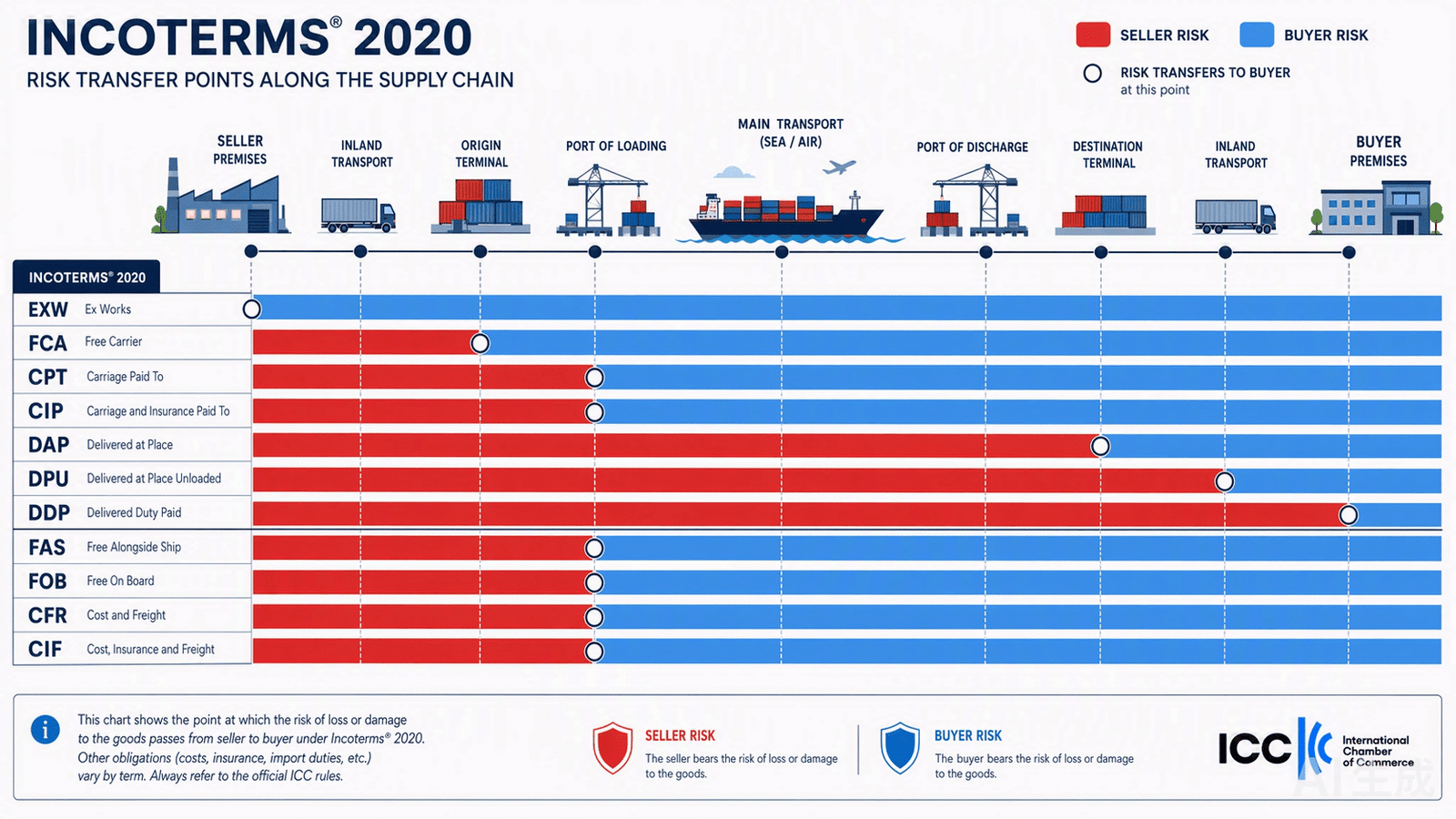
The ICC made 5 substantive changes in the 2020 edition. Some are minor wording adjustments. Others shift real money and real risk. Here is each change and what it means for you.
1. DAT Renamed to DPU
The old DAT (Delivered at Terminal) required delivery at a terminal — a port, container yard, or freight terminal. The ICC found that restriction arbitrary. Delivery can happen anywhere the seller agrees to unload. So DAT became DPU (Delivered at Place Unloaded).
Why it matters: Under DPU, the seller is responsible for unloading the goods at the destination. This is the key difference from DAP (Delivered at Place), where the buyer unloads. If your supplier quotes DPU to your warehouse, they are legally obligated to unload — not just drop the container and drive off.
2. FCA Gets an On-Board Bill of Lading Option
This change was driven by a real problem. Under FCA, the seller delivers goods to the carrier at an inland location — say, a container yard in Yiwu. Risk transfers there. But if the buyer is paying by letter of credit, the bank usually requires an on-board bill of lading as proof the goods are actually on the ship.
The old FCA rule did not require the carrier to issue that document. The seller would deliver to the carrier inland, but could not get the paperwork the bank needed to release payment. Importers and sellers were stuck.
Incoterms 2020 added an optional on-board bill of lading clause: the buyer and seller can agree that the buyer will instruct its carrier to issue an on-board bill of lading to the seller once the goods are loaded. The seller then presents that document to the bank and gets paid.
Warning: This provision is optional — it only applies if both parties explicitly agree to it in the contract. If you do not write it in, the default FCA rule still applies and the seller has no right to demand the on-board B/L from the carrier. An uncooperative buyer who controls the carrier relationship can still block the seller from getting that document.
3. CIP Insurance Upgraded to Maximum Coverage
Under Incoterms 2010, both CIF and CIP required the seller to arrange insurance at the same minimum level — Institute Cargo Clauses (C), which is the most basic named-perils coverage. The ICC recognized that CIP is typically used for manufactured and containerized goods that face risks not covered by Clause (C), such as theft, pilferage, and water damage from sea entering the container.
Incoterms 2020 split the insurance requirements:
- CIP now requires coverage compliant with Institute Cargo Clauses (A) — an all-risks, open-perils policy that covers every loss except specific exclusions like willful misconduct, inherent vice, delay, war, or strikes.
- CIF remains at Institute Cargo Clauses (C) — a named-perils policy covering only listed risks like fire, vessel sinking, collision, and general average sacrifice. It does not cover theft, pilferage, water damage from seawater entering a container, earthquake, volcanic eruption, washing overboard, or rough handling damage.
For both CIP and CIF, the minimum insured amount is 110% of the contract value, payable in the contract currency. The extra 10% covers the buyer’s anticipated profit and expenses if the cargo is a total loss.
Real scenario: You buy $50,000 worth of kitchenware from a Yiwu supplier on CIP terms. A container leak causes water damage. Under ICC(A), the insurer pays. Under the old ICC(C) default that CIF still uses, that same claim could be denied because water damage from seawater entering a container is not a named peril under Clause (C). The difference between ICC(A) and ICC(C) can be the difference between recovering $55,000 (110% of contract value) and recovering nothing.
4. Own Transport Now Recognized
Incoterms 2010 assumed a third-party carrier moves the goods. Incoterms 2020 acknowledges that sometimes the buyer or seller uses their own vehicles. This matters less for small importers, but if you run your own truck fleet or your supplier delivers using their own trucks, the 2020 rules clarify who carries risk and cost in that scenario.
5. Security Obligations Clarified
The 2020 edition spells out security-related obligations in articles A4 and A7 of each rule. Transport security requirements have tightened globally — customs filings, container weight verification, chain-of-custody documentation. The ICC responded by detailing what each party must do for security compliance. Non-compliance can cause cost and risk delays at borders.
All costs associated with a given rule are now consolidated at article A9/B9, so you can see the full cost picture in one place rather than hunting through the rule text.
What Stayed the Same
Despite the changes, most of the Incoterms structure is unchanged. The ICC did not add or remove any rules (DAT was renamed, not deleted). The 11-rule count is the same as 2010. The basic risk-transfer logic for each term is the same — FOB still transfers risk when goods are placed on board the vessel, EXW still puts maximum burden on the buyer, DDP still makes the seller responsible for everything including import duty.
The core principle has not changed: Incoterms define only the delivery point, risk transfer, and cost allocation between buyer and seller. They do not define title transfer, they do not govern payment terms, and they do not override mandatory law or the specific contract you sign. If your contract says risk transfers at a different point than the Incoterm, the contract wins.
Each Rule Explained: Risk, Cost, and When to Use It
Here is a practical breakdown of each of the 11 rules from a buyer’s perspective — specifically, an importer sourcing from Yiwu or elsewhere in China.
EXW (Ex Works)
The seller makes goods available at their premises — a Yiwu factory or warehouse. The buyer handles everything else: loading, export clearance, inland transport, ocean freight, import clearance, and final delivery. This term puts the maximum burden on the buyer. You carry risk from the moment goods leave the factory door.
Use it when: you have your own freight forwarder who can handle export customs and inland trucking from the factory. Many experienced importers use EXW with a trusted forwarder to control the entire chain.
Watch out: if your supplier cannot or will not help with export customs clearance, you need a forwarder who has a Chinese entity to file the export declaration. Without it, your goods sit at the factory.
FCA (Free Carrier)
The seller delivers goods to the carrier or another person nominated by the buyer at a named place. The seller handles export clearance. Risk transfers when goods are handed to the carrier. This is the term the ICC recommends for containerized shipments instead of FOB.
Use it when: you ship containers and want to use the new on-board bill of lading provision for letter of credit payments. FCA works for any transport mode — rail, air, road, or sea.
CPT (Carriage Paid To)
The seller pays for carriage to a named destination. Risk transfers when goods are handed to the first carrier — not at the destination. So the seller controls the freight contract but the buyer carries transit risk. There is no insurance obligation on either party.
Use it when: you trust the seller’s freight arrangement but want to arrange your own insurance. Common for rail and air freight where the buyer has better insurance rates.
CIP (Carriage and Insurance Paid To)
Same as CPT, but the seller must also arrange insurance. Under Incoterms 2020, that insurance must be Institute Cargo Clauses (A) — maximum all-risks coverage — for at least 110% of the contract value, payable in the contract currency, up to the agreed destination.
Use it when: you want the seller to handle both freight and comprehensive insurance but you still want to control import customs and final delivery. This is the containerized-goods equivalent of CIF.
DAP (Delivered at Place)
The seller delivers goods to a named place, ready for unloading. The buyer handles import clearance and any duties. The seller does not unload under DAP — that is the buyer’s job.
Use it when: you want door-to-door delivery but prefer to handle your own import customs and duty payment. Popular for shipments where you have a customs broker at destination.
DPU (Delivered at Place Unloaded)
The only Incoterm where the seller must unload goods at the destination. The seller bears all costs and risk up to and including unloading. The buyer handles import clearance and duties.
Use it when: you want the seller to not just deliver but physically unload at your warehouse or depot. This is the renamed DAT, broadened to apply anywhere — not just terminals.
DDP (Delivered Duty Paid)
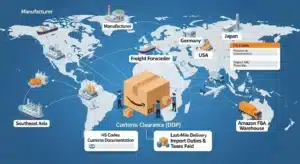
The seller handles everything — export clearance, freight, import clearance, and all duties and taxes. The buyer receives goods at the named destination, cleared and ready. Maximum seller obligation, minimum buyer involvement.
Use it when: you want a true door-to-door, no-hassle arrangement and are willing to pay the premium for it. Common for first-time importers or small buyers who do not want to deal with customs.
Warning: DDP sounds convenient, but it requires the seller (or their forwarder) to be a registered importer in your country. Many Chinese suppliers are not. If they use a third-party customs broker in your country, make sure that broker is reputable — a bad import declaration in your name can trigger audits long after delivery.
FAS (Free Alongside Ship)
The seller delivers goods alongside the vessel at a named port of shipment. The buyer handles loading, ocean freight, and everything after. Sea and inland waterway only.
Use it when: you are shipping bulk cargo by sea and want to control the vessel booking and loading process. Rare for general consumer goods importers.
FOB (Free On Board)
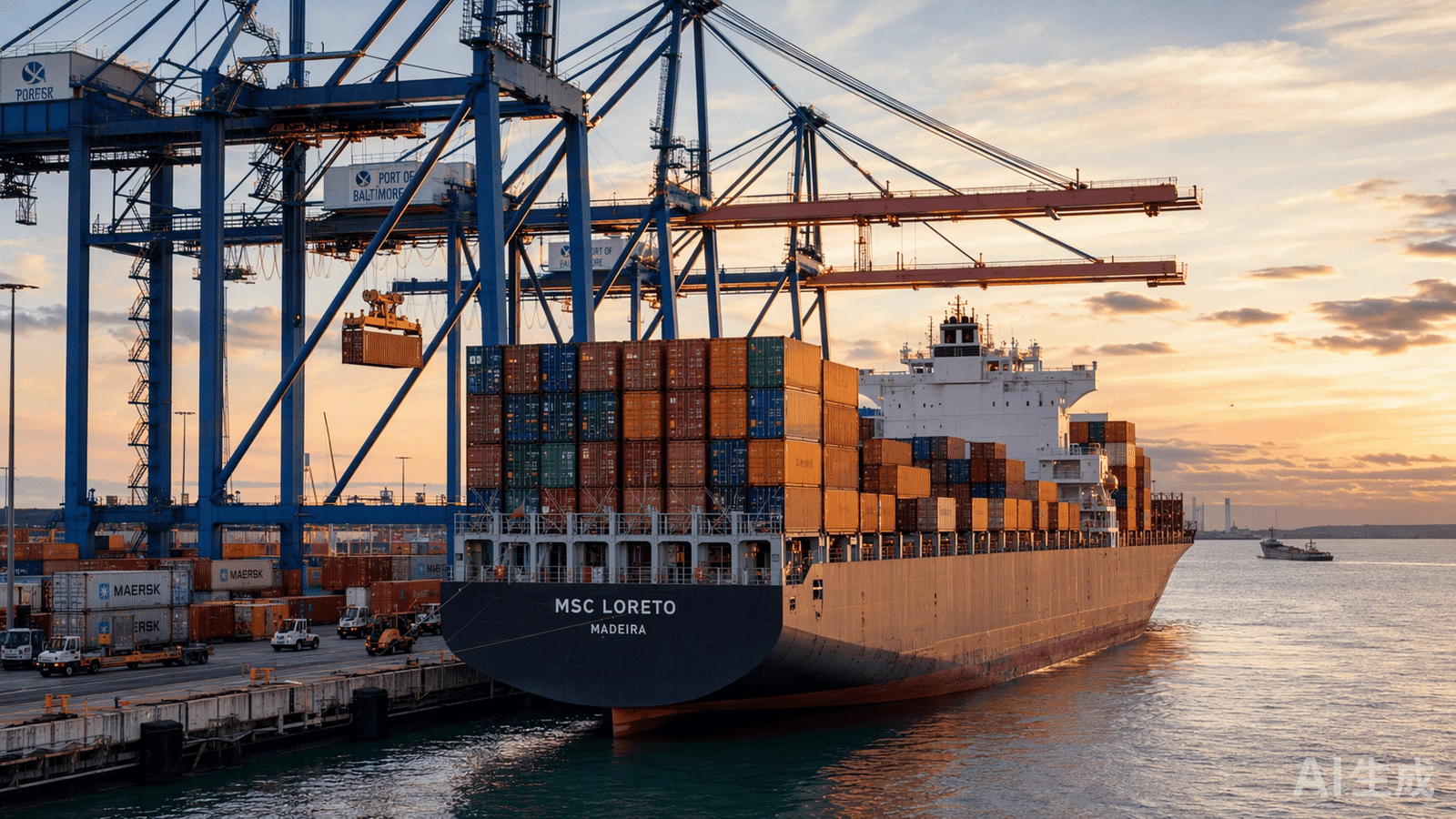
The seller delivers goods on board the vessel at the named port of shipment. Risk transfers when goods are placed on board the vessel. The seller handles export clearance. The buyer pays ocean freight. Sea and inland waterway only.
FOB is the most commonly misused term in China sourcing. It is designed for bulk cargo loaded on board the vessel. For containerized goods, the ICC explicitly recommends FCA instead — because with containers, goods are handed to the carrier at a container yard, not loaded on board. Using FOB for containers creates a gap between when risk supposedly transfers (on board) and when the goods actually leave the seller’s control (at the yard).
Use it when: you are shipping bulk or breakbulk cargo by sea. If you ship containers, use FCA.
CFR (Cost and Freight)
The seller pays for ocean freight to the destination port. Risk transfers when goods are on board the vessel at the origin port. So the seller controls and pays freight, but the buyer carries the risk during the voyage. No insurance obligation on either party. Sea and inland waterway only.
Use it when: you want the seller to handle freight booking but you prefer to arrange your own marine insurance. Common for bulk commodity shipments.
CIF (Cost, Insurance and Freight)
Same as CFR, but the seller must also arrange marine insurance. Under Incoterms 2020, the minimum is Institute Cargo Clauses (C) — basic named-perils coverage — for at least 110% of the contract value, payable in the contract currency, up to the port of destination.
Key comparison: If you ship containers and want maximum insurance, use CIP (which requires ICC(A)) instead of CIF (which only requires ICC(C)). A water-damage claim that pays out under CIP’s ICC(A) policy can be denied under CIF’s ICC(C) default. The insurance gap between these two terms widened in 2020 — do not treat them as interchangeable.
How to Choose the Right Incoterm When Sourcing from China
Choosing an Incoterm is not about picking the cheapest one. It is about matching the term to your control over each link in the supply chain. Here is a decision framework based on what you can and cannot manage.
Step 1: Can you handle export customs in China?
If yes, EXW gives you maximum control and often the lowest product price (the supplier does not build freight or customs costs into the quote). If no, choose FCA or any C/D term where the seller handles export clearance.
Step 2: Are you shipping containers or bulk?
Containers: use FCA, CPT, CIP, DAP, DPU, or DDP. Bulk or breakbulk: use FOB, CFR, or CIF. The ICC recommends FCA over FOB for all containerized shipments. If your supplier insists on FOB for containers, ask why — they may simply be following old habit.
Step 3: Who do you trust with insurance?
If you want all-risks coverage arranged by the seller, use CIP (ICC(A) required in 2020). If you want basic coverage and will arrange your own top-up, CIF gives you ICC(C) as a floor. If you prefer to arrange all insurance yourself, use CPT or CFR where there is no seller insurance obligation.
Step 4: How far do you want the seller to go?
FCA / CPT / CIP: the seller gets goods to the carrier or pays freight to the destination, but you handle import customs and final delivery. DAP / DPU: the seller delivers to your door (or unloads at your door under DPU), but you still handle import customs and duty. DDP: the seller handles absolutely everything, including import duty and taxes.
| If you want… | Use this term |
|---|---|
| Full control, own forwarder, own insurance | EXW |
| Seller handles export clearance, you handle the rest | FCA |
| Seller arranges freight and all-risks insurance | CIP |
| Seller delivers to your door, you handle customs | DAP |
| Seller unloads at your door, you handle customs | DPU |
| Seller handles everything including import duty | DDP |
| Bulk cargo by sea, seller arranges freight + basic insurance | CIF |
Common Mistakes Importers Make with Incoterms 2020
Most sourcing disputes do not come from bad faith. They come from both sides using the same word to mean different things. Here are the mistakes we see repeatedly.
Using FOB for Containerized Shipments
This is the single most common error in China sourcing. Suppliers default to FOB because it is what they have always used. But FOB is a sea-only term designed for bulk cargo loaded on board the vessel. With containers, goods enter the carrier’s control at a container yard — sometimes days before the vessel sails. Risk transfer is ambiguous in that gap.
The ICC’s own guidance is to use FCA for containerized shipments. FCA transfers risk cleanly when goods are handed to the carrier at the named place, with no ambiguity about loading or on-board timing.
Assuming CIF and CIP Insurance Are the Same
Before 2020, both required the same minimum insurance. Now CIP requires ICC(A) all-risks coverage while CIF remains at ICC(C) named-perils. If you switched from CIF to CIP in 2020 and did not adjust your insurance expectations, your supplier’s premium probably went up — and you may not have noticed because the extra cost was buried in the product price.
Forgetting That Incoterms Do Not Cover Title Transfer
Incoterms define risk and cost allocation — not ownership. Title transfer (when you legally own the goods) is governed by the sale contract or applicable law, not by the Incoterm. If you need title to transfer at a specific point, state it explicitly in the contract. Do not assume that FOB means you own the goods when they are placed on board the vessel.
Not Writing the Named Place
An Incoterm without a named place is incomplete. “FOB” alone is meaningless. “FOB Ningbo, Incoterms 2020” is enforceable. The 2020 edition emphasizes that the rule must always be accompanied by a specific place and the edition year. If your contract just says “FOB,” you have a gap that a dispute will exploit.
Frequently Asked Questions
Is Incoterms 2020 still the current version?
Yes. Incoterms 2020 is the current edition, effective since January 1, 2020. The ICC has not announced a replacement. Incoterms 2010 is no longer the current standard — if your contract references “Incoterms 2010,” it is still technically enforceable, but you are using an outdated rule set that does not reflect the FCA bill of lading fix, the DPU rename, or the CIP insurance upgrade.
Do I need to buy the ICC’s official Incoterms 2020 publication?
The rules themselves are available from the ICC, but the official publication (Incoterms 2020 book) provides the full obligation text for each rule. For routine sourcing, a solid understanding of the 11 terms and their risk/cost transfer points is sufficient. For complex contracts involving letters of credit or multimodal transport, the full text is worth the investment.
What is the difference between DAP and DPU?
Under DAP (Delivered at Place), the seller delivers goods to a named place, ready for unloading — but the buyer does the unloading. Under DPU (Delivered at Place Unloaded), the seller is responsible for unloading at the destination. DPU is the renamed version of the old DAT (Delivered at Terminal), broadened so the destination can be anywhere, not just a terminal.
Can I still use FOB for container shipments?
Technically yes — FOB is still a valid Incoterm in the 2020 edition. But the ICC explicitly recommends FCA for containerized goods because FOB’s risk-transfer point (when goods are placed on board the vessel) does not match how containers actually move through the supply chain. Using FOB for containers creates ambiguity about when risk transfers from seller to buyer.
What does the 110% insurance minimum mean?
Under both CIP and CIF, the seller must insure the goods for at least 110% of the contract value, payable in the contract currency. The extra 10% is designed to cover the buyer’s anticipated profit and related expenses if the cargo is a total loss. So if your contract is for $50,000, the minimum insured amount is $55,000.
The Bottom Line for China Importers
Incoterms 2020 did not reinvent international trade. It fixed specific problems — the FCA bill of lading gap, the DAT terminal restriction, and the insurance mismatch between CIP and CIF. If you are sourcing from Yiwu or anywhere in China, three things matter most.
First, match the term to the transport mode. Containers go on FCA, CPT, CIP, DAP, DPU, or DDP — not FOB or CIF. Second, understand the insurance split: CIP now gives you ICC(A) all-risks coverage, while CIF still gives you only ICC(C) named-perils. Third, always write the named place and the edition year: “FCA Yiwu Container Yard, Incoterms 2020” — never just “FCA.”
If you are comparing supplier quotes and one says FOB while another says FCA, or one says CIF while another says CIP, the price difference is not just a negotiation tactic. It reflects real differences in who carries risk, who pays for what, and what insurance coverage you actually get. Choose the term before you negotiate the price — not after.