 Justin
A yiwu oem toy manufacturers quote almost always undersells one hard reality: Yiwu is a toy trading and consolidation hub, and the actual toy production for most Yiwu-quoted orders happens 1,300 km south in Chenghai (Guangdong). That routing is not a scam, but the ASTM F963 and EN 71 test reports have to trace back to the Chenghai plant that ran the injection mould or sewed the plush — not to the Yiwu contact who wrote the invoice. Get that lineage wrong and a container of otherwise fine toys sits at U.S. Customs while CPSC asks who issued the Children’s Product Certificate.
Key Takeaways
- Yiwu ships toys, Chenghai builds them. ~70% of Yiwu-quoted toy orders route production to Chenghai (Shantou, Guangdong) — China’s dominant toy manufacturing cluster. The Yiwu booth handles order taking, packaging and freight.
- ASTM F963 (U.S.) and EN 71 (EU) are not interchangeable. EN 71-3 controls 19 heavy metals; ASTM F963 covers 8. Selling into both markets means testing to both — one report is not enough.
- Low-minimum reality: 10–60 pieces per SKU is achievable through Yiwu showroom sourcing on stock designs; custom OEM (your mould, your art) starts at 500–1,000 pieces and typically requires tooling deposit.
- Testing costs USD 200–500 per test at TÜV / UL / SGS labs; a full plush toy with 4–5 materials + 4–5 colours can push a single test package to USD 800+ per SKU.
- Water bead toys have a new U.S. safety standard effective March 12, 2026 — new regulatory risk on a category that was tariff-free 12 months ago.
- Realistic first-order timeline: 70–110 days from concept to U.S. warehouse for stock designs; 130–170 days for full custom OEM with tooling.
This guide is written for indie brands, Amazon private-label sellers, and small importers who want to source toys from Yiwu without importing a CPSIA violation with them. It covers where toys physically live in Yiwu, the trading-house vs Chenghai-factory reality, minimum-order tiers with real numbers, the ASTM F963 / EN 71 / CPSIA compliance stack by market, the 6-step vetting the team runs before deposit, and the realistic cost bands at USD 5k, 15k and 40k.
TL;DR — When Yiwu Works for OEM Toys (and When Chenghai Direct Is Cheaper)
Yiwu is the right entry for small buyers wanting stock-design toys with modest custom (your brand tag, custom hangtag, mixed-SKU cartons at 500–2,000 units each). Chenghai direct becomes cheaper the moment the order is single-SKU, custom-mould, and above 3,000 pieces — because you are paying for Chenghai production either way, and the Yiwu markup on a single-factory single-SKU run is pure friction.
| Best for | Not ideal for |
|---|---|
| Stock plush + stock hard toys with your brand tag, 500–2,000 units per SKU | Single-SKU custom-mould runs above 3,000 units (Chenghai direct is cheaper) |
| Multi-SKU launches consolidating 4–15 toy SKUs into one container | Electronic toys with lithium batteries (adds UN 3481 shipping declarations + FCC/CE EMC testing) |
| Amazon US launches with an existing CPSC-registered testing lab relationship | Ride-on toys, cribs, walkers — these fall under separate CPSC durable-nursery standards, not general ASTM F963 |
| Buyers combining toys with festival, gift and party categories on the same trip | Buyers whose brand story rests on a proprietary character IP with no licensing paperwork |
| EU launches leaning on EN 71-1/-2/-3 factory reports with a signed technical file | Water bead toys after March 12, 2026 (new U.S. safety standard just activated) |
Where Toys Really Live in Yiwu (District 1, Zone 1 — Trading, Not Production)

The Yiwu toy hall is on the 1st floor of District 1, Zone 1 — the same section commonly called the “Christmas Village” for its holiday density. Plush, inflatables, electric toys and ordinary toys share this floor. Headwear and jewelry sit on 2F, and festive crafts on 3F. Nothing about the physical booth is a factory — every booth in Zone 1 1F is a trading representation of production capacity that lives elsewhere.
The Chenghai routing reality
Roughly two-thirds of the plush and hard-plastic toys quoted in Yiwu are made in Chenghai (a district of Shantou, Guangdong Province) — the acknowledged toy manufacturing capital of China, with over 15,000 registered toy factories in a single 90 km² zone. The remaining volume splits between Zhejiang’s own coastal cluster (small novelty items, party toys) and Yangzhou (higher-end plush). This is the toy analog of the trading-house-vs-factory dynamic covered in the factory vs trading company guide: the Yiwu contact is real, but the compliance paperwork must trace back to whichever plant actually did the moulding and stitching.
Stock Design vs Custom Mould OEM — The Minimum-Order Split That Kills Quotes
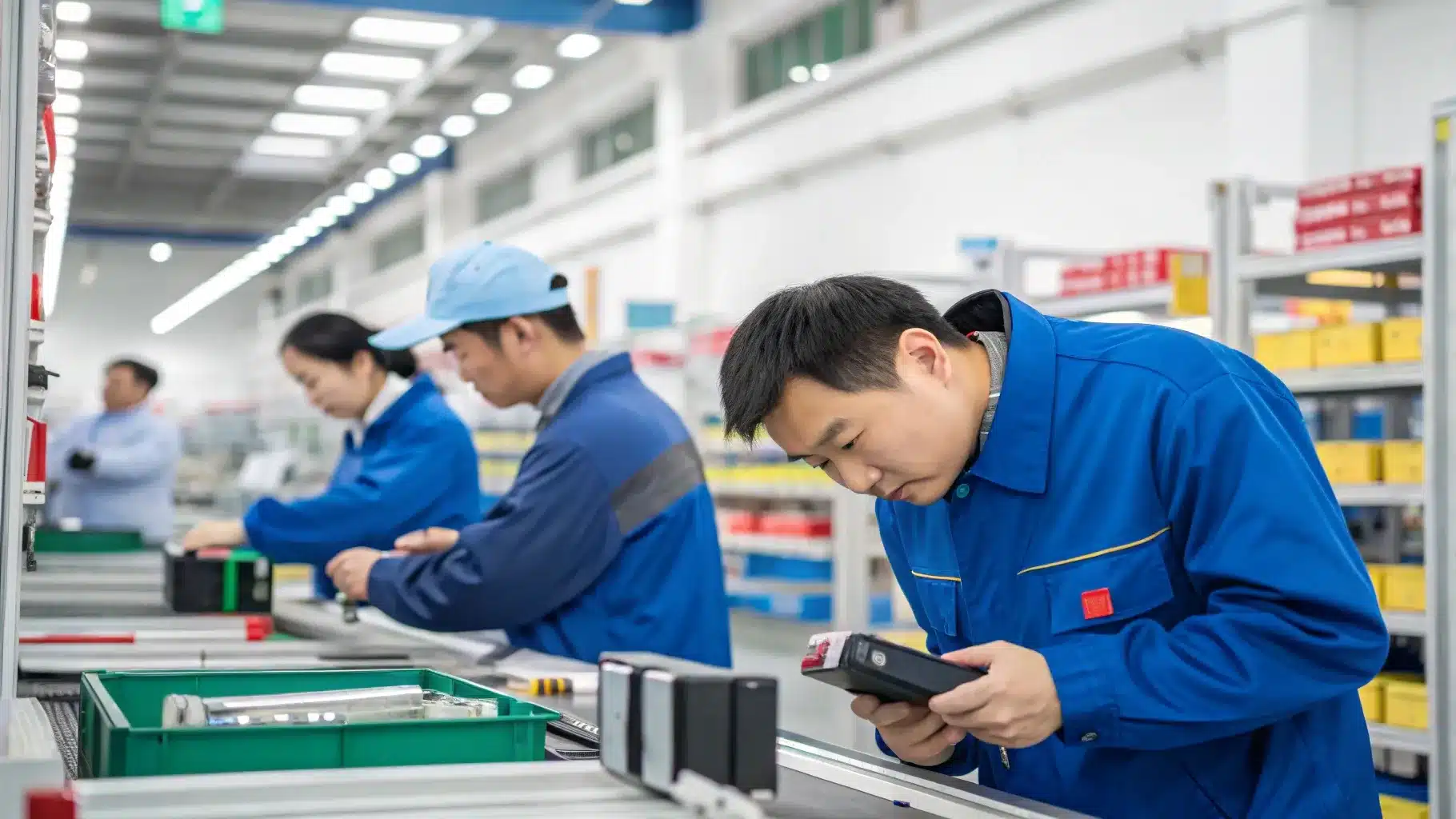
The single largest source of quote confusion in Yiwu toy sourcing is the split between stock-design private label and true custom OEM. Both get called “OEM toys” in casual quotes. They are radically different orders.
| Tier | What you get | Typical minimum | Tooling cost |
|---|---|---|---|
| Showroom stock (any brand) | Factory’s stock design, factory’s packaging, factory’s carton mark | 10–60 pieces per SKU | USD 0 |
| Stock design, custom hangtag / brand tag | Stock toy, your printed hangtag, your polybag with brand | 300–500 pieces per SKU | USD 0 (printing plates only) |
| Stock design, custom colour + packaging | Stock body, your colour palette, custom retail-ready packaging | 1,000–2,000 pieces per SKU | USD 300–800 (packaging tooling) |
| Fully custom OEM (your mould) | Your design, your mould, your everything | 3,000–10,000 pieces per SKU | USD 3,000–15,000 (steel mould) |
A first-time buyer walking into District 1 Zone 1 1F asking for “custom OEM toys, 500 units, my design” is asking for a tier-4 order at tier-1 quantity — the quote comes back as either a polite decline or a very expensive per-unit price with the tooling cost quietly amortised into the unit price. Deciding the tier upfront is the single fastest way to sharpen a shortlist.
ASTM F963, EN 71 and CPSIA — The Compliance Stack That Actually Matters
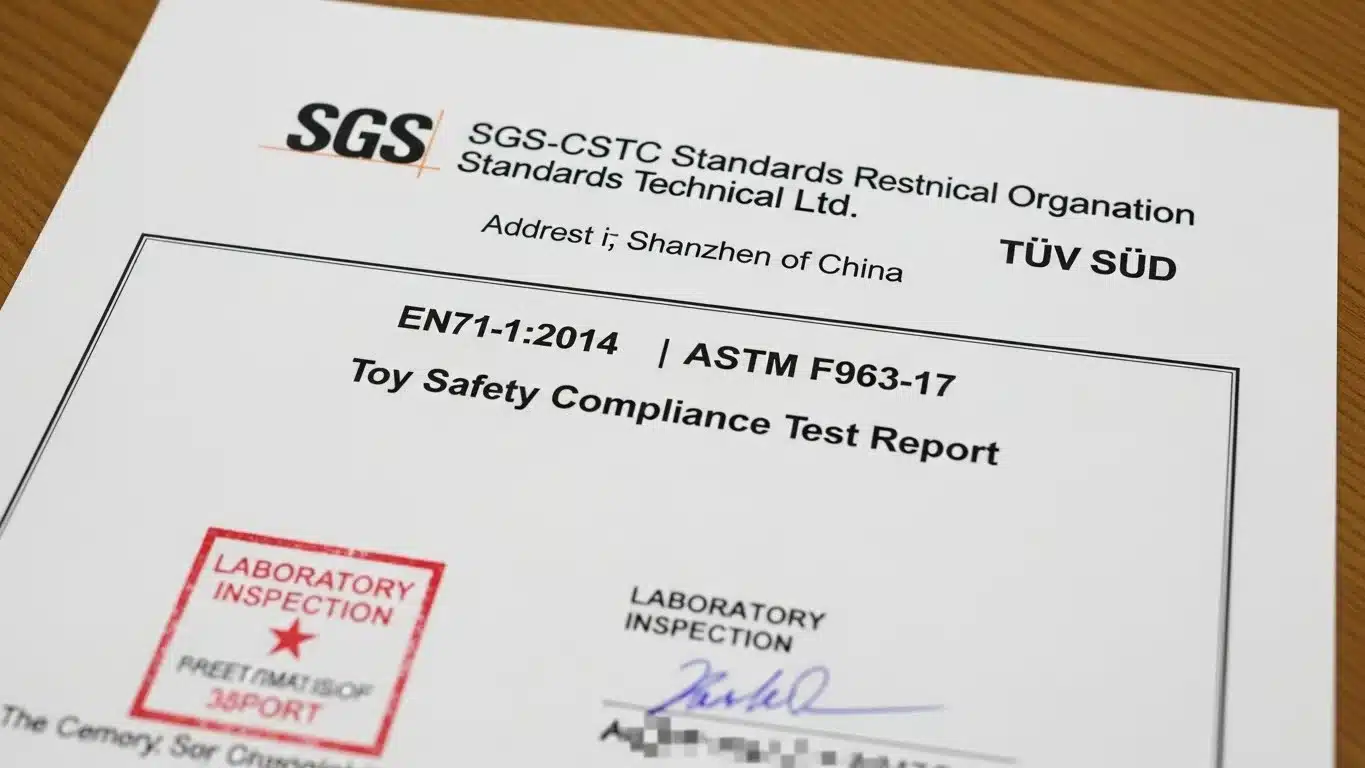
Toys are one of the most heavily regulated import categories on Earth. The U.S., EU, U.K., Canada and Australia each maintain their own toy safety framework, and the reports do not transfer. A Yiwu supplier that promises “one report covers everything” is either misinformed or hoping the buyer is.
| Marché | Framework | Required document | Typical test cost / SKU |
|---|---|---|---|
| États-Unis | CPSIA + ASTM F963 | Children’s Product Certificate (CPC) + third-party lab report | USD 300–800 |
| European Union | Toy Safety Directive 2009/48/EC + EN 71-1/-2/-3 | Declaration of Conformity + Technical File + CE mark | EUR 250–900 |
| Royaume-Uni | UKCA + BS EN 71 series (mirrors EU) | UK DoC + Technical File + UKCA mark | GBP 250–800 |
| Canada | Canada Consumer Product Safety Act + Toys Regulations | Bilingual label + lab test report | CAD 300–700 |
| Australia | Trade Practices Regulations + AS/NZS ISO 8124 | Supplier declaration + accredited lab report | AUD 400–800 |
EN 71-3 catches 19 heavy metals versus ASTM F963’s 8 — antimony and selenium (both capped at 60 ppm in EU) are common overshoots on cheap plastic paint layers, and a Chenghai factory testing to ASTM F963 alone can fail EN 71-3 on the exact same shipment. Both reports have to come from a CPSC-accepted third-party lab for the U.S. (TÜV, SGS, Intertek, UL, Bureau Veritas are the common names); the EU accepts any EN 17025-accredited lab. The AQL inspection stages guide covers the pre-shipment defect thresholds; for toys, the specific critical defects are small-parts choke hazards, sharp edges, and label attachment.
The 2026 water bead standard
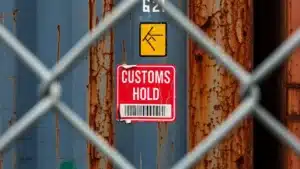
Le CPSC’s new water bead safety standard took effect March 12, 2026, adding a specific hazard test for expandable polymer beads sold as toys. Water bead products imported after this date without the new report face automatic customs holds. Confirm current requirements with a CPSC-focused compliance consultant if the SKU list includes anything expandable — beads, “grow” toys, or squishy expanders.
Is Yiwu the Right Toy Hub, or Should You Go Chenghai Direct?

The honest answer depends on order shape. For multi-SKU consolidation, Yiwu wins by a wide margin — five plush suppliers and three plastic-toy suppliers merge into one Yiwu warehouse and one container without eight separate freight bookings. For single-SKU high-volume runs, Chenghai direct is 10–20% cheaper on the same product because the Yiwu markup and consolidation warehouse fee vanish.
| Route | Best for | Weaker on |
|---|---|---|
| Yiwu trading + Chenghai production | Multi-SKU (3–15 SKU) launches · consolidated container · combined with non-toy categories · buyers walking one market | Single-SKU high-volume · direct factory audit access · maximum unit-price compression |
| Chenghai direct factory | Single-SKU custom mould at 5,000+ units · direct QC access · long-term supplier relationship · lowest unit cost | Multi-SKU consolidation · combined categories · one-week sourcing trip logistics · buyer language barrier without agent |
Le District 2 electronics guide covers the parallel dynamic for battery-operated toys, which fall under both ASTM F963 (mechanical) and FCC / CE EMC (electromagnetic) — a second layer of testing most first-time buyers underestimate.
The 6-Step Vetting We Run Before Wiring a Deposit

Every Yiwu toy order routed through our team clears this operational check before deposit. It is what separates a solvable first order from a lab-report reissue nightmare six weeks in:
- Yiwu contact business licence vs. bank account name match. Deposit only wires to the account whose name matches the licence. This is the #1 red flag for a rebilling scam and takes 5 minutes to verify.
- Actual Chenghai (or other) production plant named on the PO. Not “our factory in south China” — city, address, factory name, business licence number. Without this, the CPSIA testing lab has no anchor to trace the report back to when Amazon asks for supply-chain documentation two years post-launch.
- ASTM F963 / EN 71 report review at the lab, not the factory. Report serial numbers get verified with the issuing body (e.g. SGS, TÜV, Intertek) directly. Fake toy safety reports are common and CPSC does prosecute importers for using them.
- Age-grading and tracking labels reviewed against CPSIA 16 CFR 1130. Every toy sold in the U.S. needs a permanent tracking label with manufacturer name, location, batch/run code, and manufacture date. The Yiwu contact typically forgets the batch code.
- Choking-hazard warnings on packaging in exact CPSC language. Warnings must appear on outer packaging, hangtag, and product description on Amazon — not paraphrased. Copy the required wording from the CPSC toy safety guidance, do not let the factory translate it.
- Pre-shipment AQL inspection built into the PO with toy-specific defect list. For toys, mandatory checks are seam strength on plush (5 kg pull test), small-part release from mouths and detachable eyes, sharp-edge test, and label attachment retention. The AQL inspection guide covers thresholds; standard cosmetic AQL 2.5 general is not sufficient for toys.
Sample Cost, Testing Cost and the Timeline Math
Toy sourcing runs three parallel workstreams — production sampling, safety testing, and packaging — and the first two overlap in ways that are easy to underestimate. A realistic first-order calendar assumes samples take 10–14 days, safety testing takes 5–7 working days after samples arrive at the lab, and any test failure adds 2–3 weeks for reformulation and retest.
| Stage | Stock design path | Custom OEM path |
|---|---|---|
| Brief + supplier shortlist | Week 1–2 | Week 1–2 |
| Design + mould tooling | Skip | Week 3–8 (steel mould) |
| Sample + approval | Week 3–5 | Week 8–12 |
| Safety testing (lab) | Week 5–7 | Week 12–14 |
| Packaging design + printing | Week 5–8 | Week 10–14 |
| Production run | Week 8–10 | Week 15–19 |
| Pre-shipment AQL + freight | Week 10–15 (incl. ocean transit) | Week 19–24 |
| Total to U.S. warehouse | ~70–110 days | ~130–170 days |
Cost Bands: What USD 5,000, 15,000 and 40,000 Actually Buy
Three budget bands map cleanly to three realistic order shapes for a first Yiwu toy order. Numbers below are FOB Ningbo, before U.S. duty, freight, or CPC / DoC compliance fees.
| Budget | Realistic scope | Trade-off |
|---|---|---|
| USD 5,000 | 3–5 stock plush + stock plastic SKUs, factory packaging with custom sticker labels, 200–500 units per SKU | Zero product differentiation; other Amazon sellers ship the identical stock design |
| USD 15,000 | 5–8 SKUs, stock design with custom colour + branded retail packaging, 1,000–2,000 units per SKU, single ASTM F963 test suite | Differentiation is packaging + brand story; other brands can ship the same physical toy |
| USD 40,000 | 2–3 custom-mould OEM SKUs, steel tooling, 5,000 units per SKU, full ASTM F963 + EN 71 dual-market testing | Longer timeline (150+ days), higher inventory risk, real IP |
Add USD 1,500–3,500 for CPSIA lab testing at a CPSC-accepted lab and USD 500–1,500 for EU EN 71 testing per SKU on top of any of these bands. The landed cost formula shows how these compound through duty and last-mile — toys carry a 0% U.S. duty under HTS 9503 but the compliance cost stack is what actually reshapes the landed price.
Example: A 6-SKU Amazon Toy Line, Yiwu → Chenghai Route
Illustrative scenario, not a specific customer case. A U.S. Amazon private-label seller launches a 6-SKU educational plush line (letters A-F themed animal plushes), 1,500 units per SKU, stock plush base with custom embroidery and custom retail-ready packaging. Sourced through a Yiwu District 1 Zone 1 trading house that routes production to a Chenghai plush plant.
Week 1–2: Yiwu walk, shortlist three plush suppliers. All three route to Chenghai; two share the same underlying factory (Yiwu contacts overlap frequently). The seller picks the supplier with the older business licence and the SGS ASTM F963 report already on file for a similar plush category.
Week 3–5: samples arrive with embroidered A–F letters; approve after one revision on stitch density. NNN signed. Purchase order specifies Chenghai factory name + address + business licence number, not just the Yiwu contact.
Week 5–7: safety testing at Intertek Shanghai. Two SKUs pass first round; four fail EN 71-3 chromium on the pigment used for the character eyes. Factory swaps pigment supplier, retest passes Week 9. This is a common outcome — plan for it or lose four weeks scrambling.
Week 10–13: production run in Chenghai. Week 14 pre-shipment AQL runs at 100% complete; passes at AQL 2.5 general with three cosmetic reject cartons excluded. Week 15: gate-in Ningbo, sail to LA. Week 20: FBA receiving completes. Total elapsed: 140 days from concept sign-off. Total cost including retest, freight, and 3PL setup: USD 22,800 for 9,000 units, weighted unit FOB USD 1.75.
Contracts That Actually Hold: IP, Tooling Ownership & Retest Costs
Generic China supplier contracts miss the two things a custom-mould toy buyer actually cares about — tooling ownership and who pays for a retest when the first safety report fails. Both default to the factory’s favour unless the PO says otherwise.
- Tooling ownership clause. “The steel mould developed for [Brand] under this PO is the property of [Brand] and shall be transferred on written request after 24 months of continuous supply.” Without this, the factory keeps the tooling and can quietly sell the same design to any competitor.
- Retest cost allocation. If safety testing fails, who pays for reformulation, replacement samples, and retest? Standard practice: factory absorbs the first retest; buyer pays if failure is due to buyer-specified materials or design. Write this in.
- Character IP indemnity. If the factory offers “similar to” a licensed character (Bluey, Peppa Pig, Pokémon), refuse and get out. The factory is not indemnifying the buyer against copyright takedown — Amazon will pull the listing and the buyer eats the inventory. Get IP indemnity language in writing before deposit if there is any character licensing involved.
- NNN agreement before design brief is shared. A Non-Disclosure / Non-Use / Non-Circumvention agreement — covered in the Yiwu contracts guide — must be signed before proprietary designs leave your side.
Questions fréquemment posées
What’s the smallest realistic order for private-label toys from Yiwu?
Showroom stock at 10–60 pieces per SKU is achievable for the factory’s own design in the factory’s own packaging. Adding your brand tag pushes the minimum to 300–500 pieces per SKU; custom colour or packaging pushes it to 1,000–2,000; custom mould pushes it to 3,000–10,000.
Does one ASTM F963 report cover EU and UK markets?
No. ASTM F963 covers the U.S. only. EU sales require EN 71-1/-2/-3 plus a Declaration of Conformity and a CE mark. UK sales require a UKCA mark and the BS EN 71 mirror standards. Each market needs its own third-party lab test; the reports do not transfer.
Are Yiwu toy booths actually factories?
Almost never. Most District 1 Zone 1 1F booths are trading houses that route production to Chenghai (Guangdong) or coastal Zhejiang plants. This is standard practice, not deception — but the safety test report must trace back to the actual production plant, not the Yiwu contact.
How much does ASTM F963 testing cost per SKU?
USD 300–800 per SKU at a CPSC-accepted lab (SGS, TÜV, Intertek, UL, Bureau Veritas). Complex toys with multiple materials and colours can push a single-SKU test package to USD 800–1,200. Full plush toys with plush + PP cotton + embroidered eyes typically cost USD 250–350 per test.
How long does a first custom-mould toy order take from Yiwu?
130–170 days from concept sign-off to product in a U.S. warehouse. Stock design paths compress to 70–110 days because there is no tooling and no design cycle. Safety test failures add 2–3 weeks; plan buffer accordingly.
Do toys with lithium batteries need extra testing?
Yes. Electronic toys with lithium cells need FCC or CE EMC testing on top of ASTM F963 or EN 71, plus UN 3481 shipping documentation and battery-safety marks. Confirm current requirements with a dangerous-goods freight forwarder before booking.
Who owns the mould after production — me or the factory?
Whoever the PO says owns it. Chinese default practice keeps the mould with the factory unless a signed clause transfers it. A specific tooling-ownership clause in the purchase order, written in Chinese with the factory chop, is enforceable in Chinese courts and worth pushing for on any order above USD 15,000.
What’s the tracking-label requirement for U.S. toy imports?
CPSIA 16 CFR 1130 requires every U.S.-imported children’s toy to carry a permanent tracking label with manufacturer name, city, batch or run code, and manufacture date. It must be on the product and the packaging. The Yiwu contact typically forgets the batch code — specify it in the PO.
Can I sell water bead toys after March 2026?
Yes, with the new CPSC water bead safety standard test in hand. The standard took effect March 12, 2026. Water bead products imported after that date without the new test report face customs holds. Confirm current specifics with a CPSC-focused consultant.
Should I use Yiwu or go direct to Chenghai?
Yiwu wins for multi-SKU launches consolidating 3–15 SKUs into one container. Chenghai direct is 10–20% cheaper per unit for single-SKU high-volume runs above 3,000 pieces. Buyers combining toys with festival, gift or party categories should stay in Yiwu; buyers running one hero SKU at 5,000+ units should book Chenghai.
Conclusion
Yiwu earns its place for small-brand toy launches that need multi-SKU consolidation and packaging density under one roof, provided the buyer treats the Yiwu contact as the order desk and treats the Chenghai plant behind them as the compliance-bearing entity. The ASTM F963 or EN 71 report has to name the plant, the mould has to be contractually assigned to the brand for any custom-tooling order, and the CPSIA tracking label has to carry a real batch code — three lines in the PO that turn a risky Amazon launch into a defensible one.
If you are pricing a first toy line and want the Chenghai plant routing verified, the safety-test lab lineage traced, and the tooling-ownership clause negotiated in Chinese before deposit, an on-the-ground team walks the check in a single week that would take a founder six.
Written by the ChineseYiwu.com team
A Yiwu-based sourcing partner since 2017, handling multi-supplier orders for U.S., U.K. and EU buyers year-round. Our team walks District 1 Zone 1 1F toy booths weekly and traces Chenghai production, ASTM F963 / EN 71 lab reports, and CPSIA tracking-label compliance on private-label toy shipments out of Ningbo.