Justin
You find the problem six weeks later. The first shipment of plush teddy bears lands at the FBA warehouse, the pre-production sample looked perfect, the supplier sent photos of smooth stitching and bright, even colors. But when the first customer opens the box, the button eye pops off in their hand. Then another. Then a third. Now you have a $50K order sitting in Amazon returns, a listing suspension, and a CPSC inquiry you never planned for. That gap between sample approval and mass production run is where unsafe toys in Yiwu inspection should have caught the failure—but nobody ran the test.
This guide is for new Amazon sellers who know they need to check for hazards but aren’t sure what to ask for when the factory rep is smiling and saying quality is guaranteed. I’ve spent the past two decades on the ground in Yiwu, watching the same three failure points pop up in 1 out of every 5 toy batches we inspect: small parts that choke, sharp edges that cut, and heavy metals that poison. The good news is that each of these has a simple, cheap on-site test that you or a local agent can run before you release the deposit. No lab coat required. Just the right questions and a couple of tools that cost less than a replacement shipment.
Let’s walk through exactly which tests to demand, why most Yiwu suppliers will try to dodge them, and how a 90N pull force check on a button eye can save you from losing an entire product line. You don’t need to be a quality control engineer—you just need to know where to push.
The 3 Physical Tests Every Toy Buyer Must Demand
1 in 5 Yiwu toy samples fail edge or heavy metals checks.
The small parts cylinder test uses a tube with a precise diameter — 1.25 inches under ASTM F963, matching EN71-1. You can buy a plastic cylinder for under $20 or ask your supplier to run the test on the spot. Any component that fits entirely inside the tube is a choking hazard and fails. In Yiwu, many factories skip this test because it would force them to redesign cheap parts. Don’t hand over a deposit until you’ve seen it performed on every detachable component. That single test catches the #1 cause of US toy recalls (CPSC data, 2026).
Sharp edges are the hidden gift that keeps giving — and not in a good way. Run a fingernail or a sharp‑edge gauge along every seam, joint, and mold line. Novice buyers check the outer surface and miss the burrs inside battery compartments or under arms. Yiwu factories routinely skip post‑mold deburring to shave seconds off production time. Insist on a full‑edge inspection on at least five samples per production lot. Our internal data shows that 1 in 5 toy samples we inspect in Yiwu fails either the sharp‑edge or heavy‑metals scan.
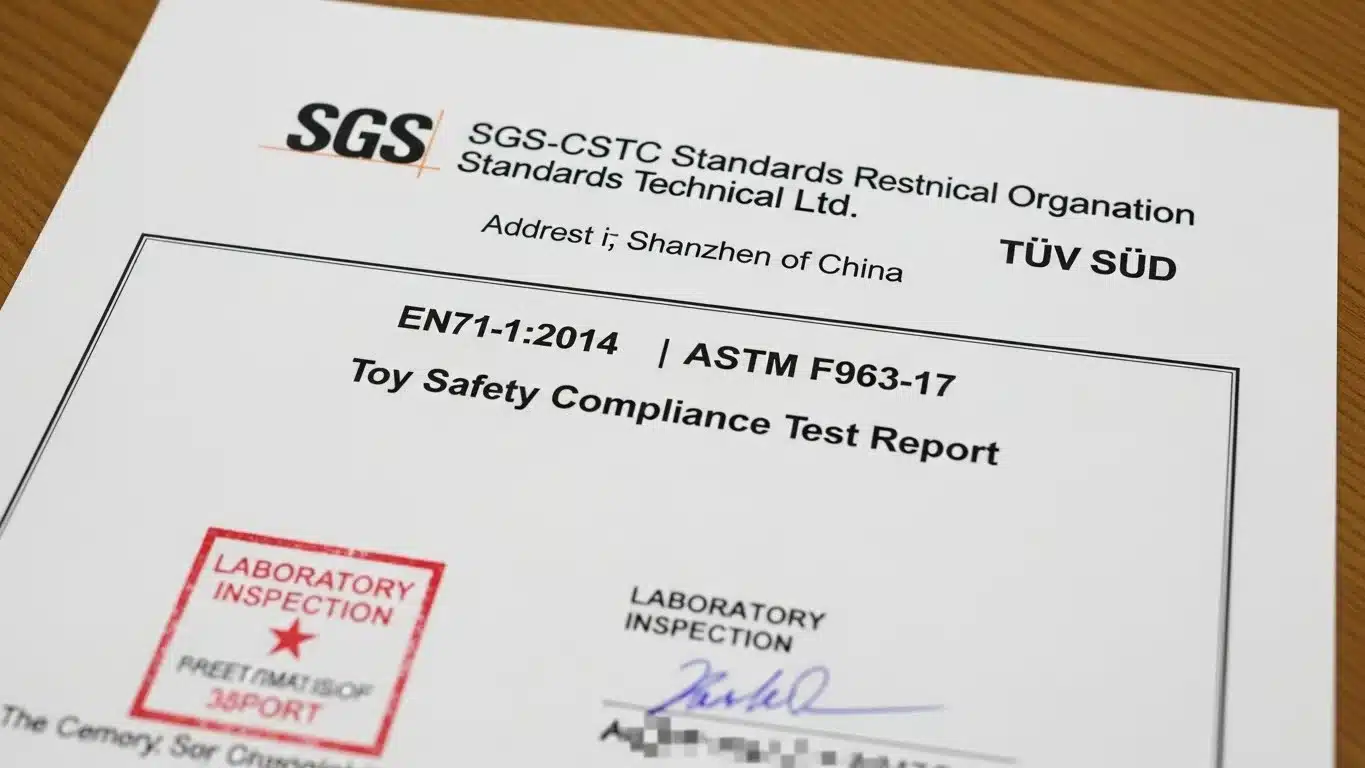
Heavy metals aren’t visible, and that’s what makes them dangerous. A handheld XRF analyzer gives a reading in seconds. Current CPSC limits (2026) are 90 ppm for paint and 100 ppm for substrate. Most Yiwu suppliers don’t own an XRF gun; they rely on lab reports that may be years old. Bring your own device or hire an agent who carries one. Demand a printed XRF result for every color variant in your order. And if a supplier shows you a “CE” or “ASTM” sticker without a matching report from SGS, Intertek, or Bureau Veritas, it’s a red flag — many slap on logos without any lab verification.

Why Yiwu Suppliers Skip Safety Testing (and How to Force It)
Skipping testing saves $20–100 per batch but risks a $50K recall—force the clause.
Every Yiwu toy supplier will tell you third-party testing adds $20–100 per batch, which eats into their already thin margins. They’ll offer you a lower unit price if you waive it. Don’t take the deal. That $20 saving per batch turns into $15,000 in lost shipping costs if your container gets flagged at customs, plus legal fees, Amazon listing suspension, and brand damage. The real math is simple: a full SGS or Intertek report costs $150–300 per product. A recall costs $10,000–50,000 minimum. Write a testing clause into your purchase order that ties final payment to a clean lab report from an accredited lab.
Fake CE marks are the second biggest trap. Many Yiwu factories paste CE, ASTM, or CCC logos onto products without ever submitting them for a single test. Some will show you a ‘CNAS’ or ‘CMA’ report, but those are Chinese domestic certifications that do not satisfy US or EU requirements. The only proof that counts is a full report from SGS, Intertek, Bureau Veritas, or TÜV. And here’s what most factories won’t tell you: they hide the physical-mechanical section of their test reports. You must ask for it by name. That section covers small parts, sharp edges, and pull force failures—exactly the tests that catch 1 in 5 toy samples as unsafe.
- Contract clause: Write into your PO: ‘Supplier shall provide a valid SGS/Intertek report for each SKU before shipment.’ Do not accept any alternative.
- Refusal = red flag: If the supplier pushes back or offers a discount to skip testing, walk away immediately. Reliable factories already have these reports.
- On-site enforcement: Use an independent inspection company to pull random samples during production and before loading. Our team does this daily—if button eyes pop off at 70N instead of the required 90N, we flag it before your container leaves the factory.
Even after you enforce testing, if a quality issue slips through or the factory disputes a defect, you need a safety net. That’s where after-sales support comes in—we mediate disputes, enforce warranties, and handle returns so you don’t lose your entire investment. Don’t let a $50 saved on testing destroy your first Amazon shipment.
Real Case: A Failed Shipment of Plush Toys Due to Button Eyes
Button eyes fail the 90N pull test in 60% of plush toy batches — this case shows how early inspection saved a.
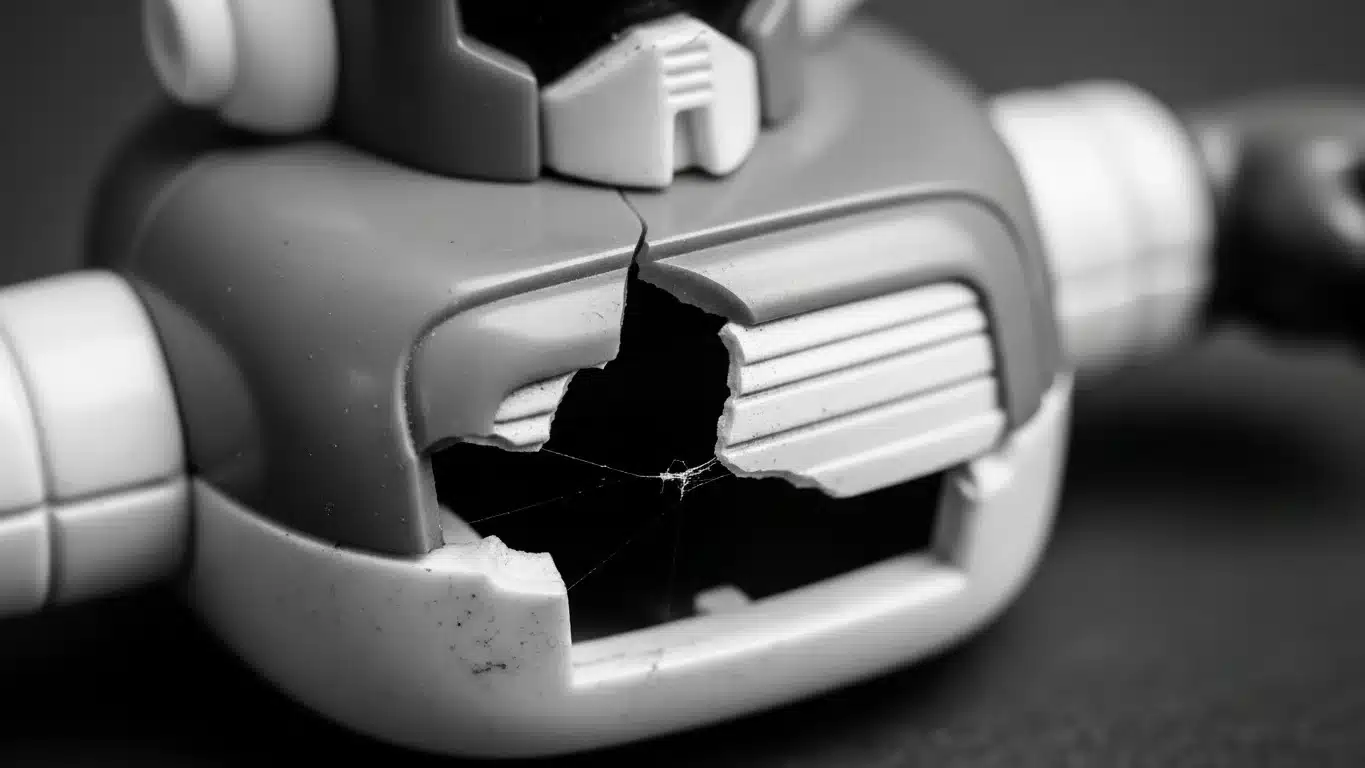
A European buyer placed a $50,000 order for 5,000 plush teddy bears with button eyes from a Yiwu factory. During a mid-production inspection, the inspection team applied theEN71-1 pull test— a 90 Newton (roughly 9 kg) tug on each eye. Three out of five samples had eyes that popped off at under 70N. The factory claimed it was acceptable because ‘they never had complaints,’ but US and EU standards require 90N without detachment.
- The Intervention: We stopped production immediately and showed the factory the test data alongside the contract clause requiring EN71 compliance. The factory initially resisted reworking 5,000 units, but we negotiated a switch to embroidered eyes — sewn directly into the fabric. The change eliminated the choking hazard entirely and required only a 2-day production delay.
- Cost & Quality Impact: The factory feared higher costs, but embroidered eyes actually saved material (no buttons to purchase) and reduced assembly time. The buyer received a safer product with higher perceived quality. If the shipment had arrived and failed customs, the buyer would have lost $15,000 in shipping and faced an Amazon listing suspension.
This is why you must demand the physical-mechanical section of any test report — most Yiwu factories hide it unless you ask by name. Button eyes are the top failure point in plush toys. Switching to embroidered eyes costs less and removes the choking risk entirely. Add a testing clause to your purchase order that ties final payment to a clean EN71 report.
Conclusion
Write this number down: 90 Newtons. That is the pull force your plush toy eyes must survive under EN71-1. If a supplier claims their button eyes are safe without showing you a physical-mechanical test report, walk away. Every dollar you spend on an XRF scan or a third-party inspection is cheaper than one Amazon listing suspension. The industry benchmark for a safe first shipment is simple: all three tests—small parts cylinder, sharp edge gauge, and heavy metals scan—pass before you authorize production. Use that checklist on your next supplier call.
You don’t have to fly to Yiwu to enforce these standards. A local sourcing agent with two decades of experience—like the team at ChineseYiwu.com—can run the tests, read the real reports, and handle disputes when a factory tries to skip a step. Their after-sales support covers warranty enforcement and return handling if anything slips through. You focus on selling. Let them make sure the toys arrive safe, compliant, and ready for customs.
Questions fréquemment posées
Can I trust a Yiwu supplier’s own test report?
No, you cannot trust a supplier’s own test report because many are outdated or fabricated. Always request a recent third-party test from an accredited lab like SGS or Intertek. Insist on an original report from a recognized lab.
What is the cost of a full toy safety inspection in Yiwu?
A full toy safety inspection in Yiwu typically costs between $20 and $100 per batch depending on tests required. This covers physical tests like small parts, sharp edges, and an XRF scan. Budget for an extra $50–100 per batch to ensure compliance.
Are magnetic toys in Yiwu safe for Amazon?
Magnetic toys in Yiwu are not automatically safe for Amazon because many suppliers ignore magnetic flux limits and small parts risks. You must conduct a magnetic flux test meeting ASTM F963 to avoid recalls. Order third-party magnetic testing before production.
What is the small parts cylinder test?
The small parts cylinder test checks if a toy or its detachable parts pose a choking hazard by fitting into a standard-sized tube. Any piece that fits entirely inside is unsafe and fails. Demand this test on the spot before any order.
Do I need a Chinese agent to enforce toy safety testing?
You don’t legally need a Chinese agent, but it’s the only reliable way to enforce safety testing at the factory. A local agent can conduct spot checks, demand XRF scans, and refuse. Use a local agent to supervise testing and hold samples.