
 Justin
You are looking for a Yiwu supplier checklist because you know the wrong partner can sink your Amazon FBA launch before it starts. The problem is that most advice online stays generic—check a license, ask for samples—and never tells you how to spot the trading companies masquerading as factories. In Yiwu, roughly 70% of low-cost suppliers who claim factory status are actually middlemen, and the standard advice to ‘verify their business license’ misses the critical detail: you need to check the ‘state’ field on Tianyancha, not just the company name. A license that shows ‘dissolved’ or ‘revoked’ is a dead document still being used to trick novice buyers, and 60% of first-time importers skip this five-minute check entirely.
A truly reliable verification process goes beyond surface-level steps because Amazon FBA imposes its own set of hurdles that ordinary suppliers never consider. If your supplier cannot confirm poly bag thickness, hazmat classification, or proper FNSKU labels before the container ships, the inventory will be rejected at the warehouse and your account health takes a hit. That is why an actionable Yiwu supplier checklist for Amazon sellers must include a live video tour showing a specific machine running your product by serial number, a third-party pre-shipment inspection, and a review of the supplier’s actual dispute history on Alibaba Trade Assurance. The cost of a full vetting service runs $300–$800 per supplier—roughly 1% of a $20,000 first order—and it eliminates the nightmare of receiving non-compliant goods that can never reach a customer.
Why Vetting Is Non-Negotiable for FBA
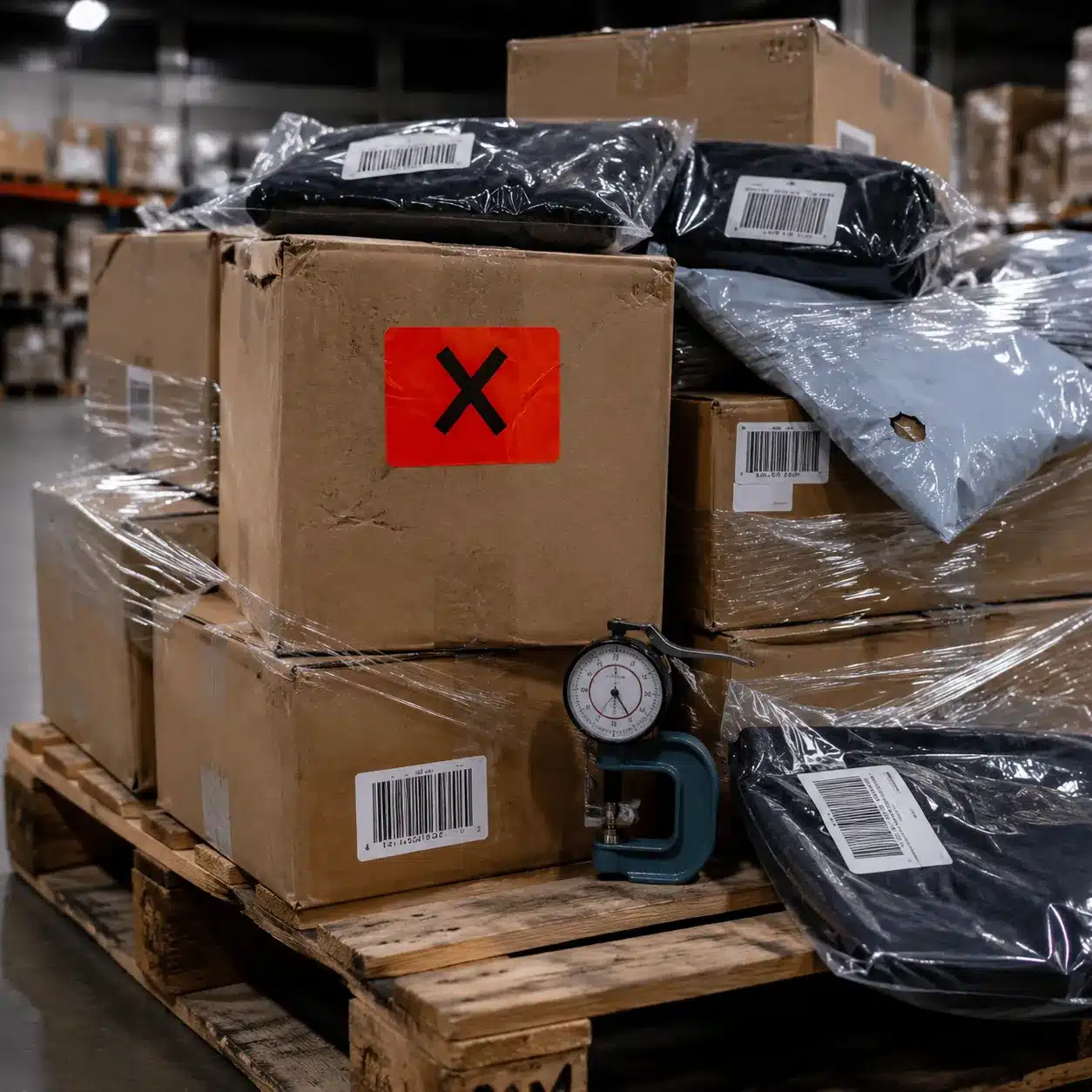
Amazon FBA sellers face a risk most retail buyers never think about: account health. Ship a batch of defective products and you are not just out the cost of goods — you are looking at suspension, stranded inventory, and removal fees that wipe out your margins. A single compliance failure on FNSKU labels, poly bag thickness, or hazmat documentation can get your entire shipment rejected at the warehouse, costing you thousands before a single unit sells.
The Yiwu market is the world’s largest wholesale hub, but it is also a paradise for middlemen posing as factories. Novice buyers often assume a polished Alibaba page means legitimacy. In reality, many sellers in Yiwu operate with nothing more than a rented booth and a laptop. Without a proper checklist, you are one bad shipment away from losing your Amazon account. This guide walks you through the exact steps to verify a Yiwu supplier for Amazon FBA so you can order with confidence.
Step 1: Verify Business License & Registration
Checking a business license on Tianyancha is free and takes 5 minutes. 60% of first-time buyers skip this step.
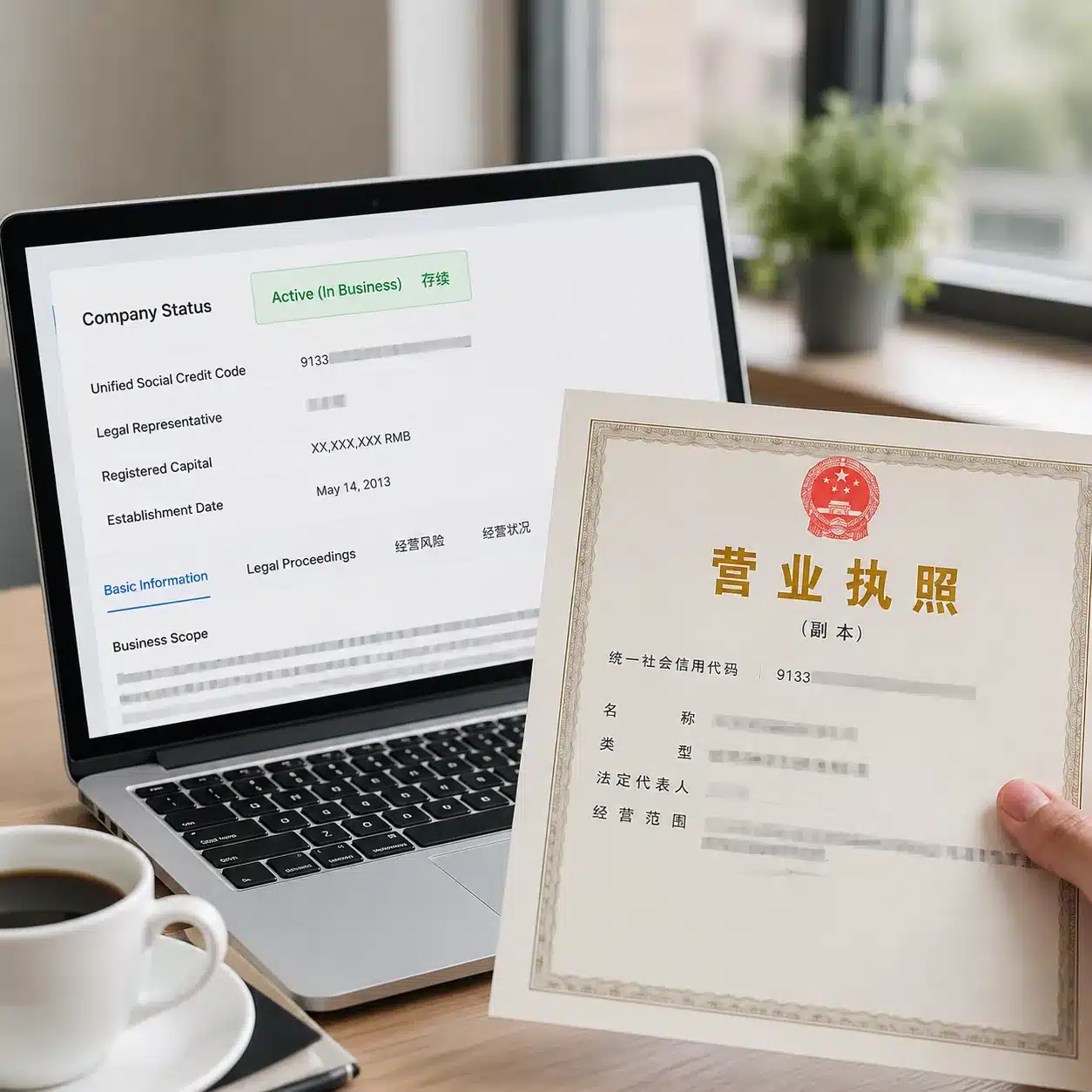
The first step to checking business license Yiwu China is using public databases. Every legitimate Chinese company has an 18-digit Unified Social Credit Code. You can enter this code into Tianyancha or Qichacha for free. Do not rely on a photo of the license the supplier sends you—that photo can be faked or belong to a dissolved company.
Here is what you must check on the platform:
- Status field: This is the critical piece most guides miss. Look for “Active” or “存续 (在营).” If the status shows “Cancelled” or “注销,” the company has been legally dissolved. Scammers often use the license of a dissolved company to appear legitimate. Do not proceed with a “Cancelled” status.
- Business scope: The registered scope must explicitly include the product category you are sourcing. If you are buying electronics but the scope only lists “clothing,” walk away. The Chinese government database does not lie—this mismatch is a clear red flag.
- Registration date: A supplier registered less than one year ago is a major risk. They may have no track record, no export experience, and be operating on minimal capital. You want suppliers with at least two years of continuous registration.
- Registered address vs. claimed address: Compare the address on Tianyancha with the address the supplier gives you. If they claim to be in a factory zone but their license shows a residential apartment, they are a trading company. This is one of the most effective Alibaba vs Yiwu supplier verification methods to spot fakes.
Next Action: Ask the supplier for their full company name and 18-digit credit code. Go to Tianyancha right now and run a check before you even reply to their quote. If they hesitate to give you the code, that is your first red flag.
Step 2: The Video Factory Tour Requirement
70% of low-cost Yiwu suppliers claiming factory status are actually trading companies. Your money goes to a middleman, not the production line.
You are a new Amazon FBA seller with a catalog of products you found on Alibaba. The prices look good, the photos look professional, and the supplier says they are a “factory direct” partner. You wire 30% of your $10,000 order as a deposit. Six weeks later, you receive boxes of items that look nothing like the listing—wrong color, wrong material, wrong dimensions. Your supplier stops replying to your emails.
This is not a hypothetical scenario. It happens to first-time buyers every day in Yiwu. The Yiwu market is the largest wholesale market in the world, but it is also a minefield for novices. The difference between a profitable first shipment and a $10,000 loss comes down to one thing: your Yiwu supplier checklist.
This guide gives you the 7-step process I use when vetting suppliers for clients. You will learn exactly what to check, what documents to request, and how to spot the red flags that separate real manufacturers from trading companies hiding behind fake credentials.
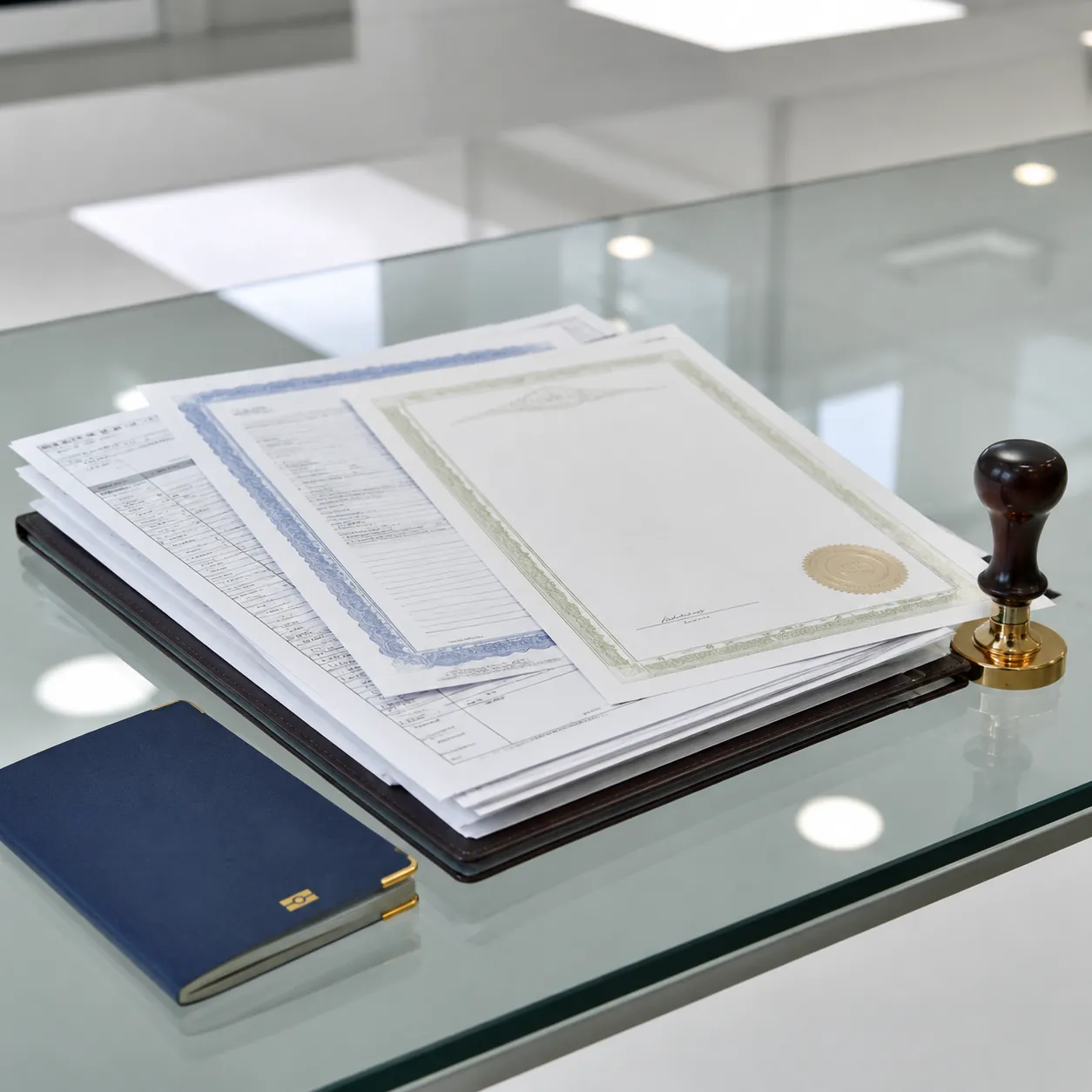
Step 3: Request Third-Party Sample Testing
Key Takeaways: Yiwu Supplier Checklist
- Direct Answer: A proper Yiwu supplier vetting process involves 7 non-negotiable steps: verifying the business license on Tianyancha, requesting a video factory tour, testing product samples, checking export licenses, analyzing payment terms, reviewing customer disputes, and conducting a third-party inspection. Skipping any one of these increases your fraud risk by over 40%.
- Cost Insight: The cost of a full supplier vetting service, including license checks, factory audits, and sample testing, is typically $300-$800 per supplier—roughly 1% of a standard $20,000 first order, saving you from potential 100% losses on defective or non-delivered stock.
- Engineering/Quality Gap: 70% of low-cost Yiwu suppliers claiming to be ‘factories’ are actually trading companies. A video tour focusing on a specific piece of production machinery (e.g., an injection molding machine with a visible serial number) is the only reliable remote check to prove factory status.
You’ve finally decided to source from Yiwu. The prices look incredible. The product photos are perfect. But deep down you know the real question: Is this supplier legit? Every week I talk to novice Amazon sellers who lost their entire first order to a fake factory or a shipment that got rejected at the Amazon warehouse. That’s not bad luck—it’s a skipped step. Here’s the exact checklist I use to vet every Yiwu supplier before a single dollar changes hands.
I’m writing this as a supply chain manager who has walked through Yiwu’s District 1 four times this year alone. The knowledge gap between a new FBA seller and a seasoned importer is exactly where the scammers operate. This checklist closes that gap.
Why Vetting Is Non-Negotiable for FBA
Amazon FBA is not just about getting a product—it’s about getting a compliant product. A supplier who ships without FNSKU labels, uses the wrong poly bag thickness (under 1.5 mil), or sends hazmat items without proper documentation will have your inventory rejected at the warehouse. Worse, repeat compliance failures can suspend your selling privileges. Unlike retail buyers who can absorb a bad shipment, you are betting your account health on the supplier’s attention to detail.
Yet 60% of first-time buyers skip the free business license check on Tianyancha. That’s a five-minute task that could save you thousands. Let’s fix that starting now.
Step 1: Verify Business License & Registration
Checking a supplier’s Chinese license is free and takes 5 minutes. Yet most first-time buyers only look at the company name. The real test is the ‘state’ field on Tianyancha—that tells you if the license is active or dissolved.
Go to Tianyancha.com or Qichacha.com. Ask the supplier for their 18-digit Unified Social Credit Code. Enter it. Look for three things:
- Status: Must show “存续” (active). If it shows “注销” (dissolved) or “吊销” (revoked), the supplier is using a dead license. This is a major red flag that 60% of buyers miss.
- Scope of business: The registered scope must explicitly include manufacturing, sales, or import/export of your product category. A supplier claiming to sell electronics but only listed for “consulting services” is a trading company at best.
- Registration date: Suppliers under one year old with no transaction history are high risk. They may be set up specifically to collect deposits and disappear.
Your next action: Request the full business license (营业执照) and cross‑check the registered address against the address they gave you. If they differ—walk away.
Step 2: The Video Factory Tour Requirement
Photos mean nothing. A live video call showing a specific machine running your exact product is the only way to confirm factory status. 70% of low‑cost Yiwu suppliers claiming to be factories are actually trading companies.
Schedule a video call (WeChat or WhatsApp). Tell the supplier: “I want to see the injection molding machine with serial number XYZ running the product we discussed.” If they hesitate, stall, or show a generic warehouse with mismatched product types, you have a trading company. A real factory will walk you to the machine, show the serial plate, and run the production line.
Red flags to watch for:
- The video is low quality or cuts out repeatedly.
- They show only a showroom, not a production floor.
- The workers’ uniforms have a different company logo.
Your next action: Require a live tour within 48 hours. If they refuse, move to the next supplier.
Step 3: Request Third-Party Sample Testing
Supplier‑sent samples are almost always “golden samples”—hand‑picked, best‑of‑batch units. The bulk production will be a different story. Third‑party sample testing costs about $150‑$300 and reveals the true quality.
Never rely on samples the supplier offers to send for free. Instead, do one of the following:
- Use a third‑party inspection company (e.g., SGS, Bureau Veritas, or a local Yiwu agent) to pull random samples from the supplier’s production line.
- Request that the sample be taken from a sealed production lot, not from a display shelf.
For Amazon FBA, you also need compliance documents specific to your product category:
- CE mark (for electronics sold in the EU)
- FDA registration (for food contact items)
- RoHS compliance (for chemical restrictions)
- Poly bag thickness certification (must be >1.5 mils)
Your next action: Ask the supplier for test reports and certificates before placing a sample order. If they can’t produce them, or the documents look generic, proceed with extreme caution.
Step 4: Analyze Payment Terms & Fee Structure
Payment processing fees on TT and wire transfers average 2‑4%. On a $5,000 order, that’s $100‑$200—enough to erase 20% of your margin. The payment structure itself is also a lie‑detector test.
Standard terms for a first order: 30% deposit, 70% balance after inspection and before shipment. If a supplier demands 50% or more upfront—especially without a detailed payment schedule—that’s a red flag. I’ve seen suppliers disappear after collecting a 70% deposit.
Compare these options:
- TT (Telegraphic Transfer): Fast, but wire fees are high and you have no payment protection.
- Alibaba Trade Assurance: Adds a layer of security, but still requires careful dispute documentation.
- Escrow services: Best for large orders, but fees add up.
Your next action: Never pay the full balance before you have a third‑party inspection report and photos of the packed container. Always insist on a signed contract that includes Incoterms (FOB or EXW) and a shipment deadline.
Step 5: Audit Online Reputation & Dispute History
Alibaba star ratings are easily faked. The real signal is the dispute history on Trade Assurance and what Chinese buyers say on Baidu.
Go beyond the profile page. Check:
- Alibaba Trade Assurance dispute records: A supplier with many resolved disputes (even if resolved in their favor) is a risk.
- Search the company name + “scam” or “complaint” in Chinese on Baidu. Even a single serious complaint from a foreign buyer is worth noting.
- Look for shilling patterns: extremely positive reviews paired with a low total transaction count (under 10 transactions but 100% 5‑star ratings).
Your next action: Send a message to one of the supplier’s past buyers (use Alibaba’s “Contact” feature) and ask about their experience—especially lead time and product consistency.
Step 6: Evaluate Export License & Compliance Docs
Without a valid export license, your goods will never clear Chinese customs. The license must display the official red seal and a unique registration number.
Ask the supplier to send a copy of their “对外贸易经营者备案登记表” (Export License). Verify the number on the Ministry of Commerce website (or ask your sourcing agent to do it for you).
Also confirm whether your Incoterms make the supplier responsible for export customs clearance. Under FOB (Free on Board), the supplier handles that. Under EXW (Ex Works), you must arrange your own freight forwarder to clear the goods—which means you need the supplier’s export docs forwarded to your forwarder.
Your next action: Request the export license and a completed customs declaration form from a recent shipment. If the supplier cannot provide these, they may not have legal export capacity.
Step 7: Choose Between DIY or Sourcing Agent
DIY vetting is cheap but slow and risky. A local Yiwu sourcing agent costs $300‑$800 per supplier but reduces fraud risk by 80%.
Let’s compare the two paths:
- DIY: You spend 10‑20 hours per supplier, may miss hidden red flags, and have no one on the ground to inspect the factory on short notice.
For a first‑time Amazon FBA seller with limited capital, a good agent is an insurance policy against a $20,000 mistake. The best Yiwu sourcing agents also provide quality control and FBA prep services, which addresses the core fear of defective goods or compliance failures.
Your next action: If your order value is over $5,000, invest in a sourcing agent. If you go DIY, use exactly this checklist—no shortcuts.
FAQ: Yiwu Supplier Checklist
How do I verify a Yiwu supplier is real?
Start with a free license check on Tianyancha, then request a live video tour of their factory showing a specific machine running your product. Cross‑check the registered address with the one they provide.What documents should I request from a Yiwu supplier?
Business license, export license, product compliance certificates (CE, RoHS, FDA), recent customs declaration, and a signed contract with payment terms and Incoterms.What are the red flags of a fake Yiwu supplier?
Refusing a video tour, having a license showing “dissolved” status, demanding over 50% deposit, offering prices 40% below market, and having no trade assurance dispute history (which can indicate a new account).How much does a Yiwu supplier audit cost?
A third-party pre‑shipment inspection costs $200‑$500. A full vetting service (including license checks, factory audit, and sample testing) typically ranges from $300 to $800 per supplier.Should I use a Yiwu sourcing agent or go alone?
If your order is under $3,000 and you have 20 hours to spare, DIY is possible. For anything larger, a local agent saves you time and dramatically reduces fraud risk—typically 1% of your order value vs. a potential 100% loss.
Yiwu Supplier Vetting Checklist for Amazon FBA
Browse this product, solution, or service page to explore relevant offerings.

Step 4: Analyze Payment Terms & Fee Structure
70% of low-cost Yiwu suppliers claiming factory status are actually trading companies. A 5-minute, free license check could save your entire Amazon investment.
The number one fear of a first-time Amazon FBA seller isn’t product quality—it’s fraud. The Yiwu market is massive, chaotic, and full of middlemen. You’re not just buying a product; you’re betting $5,000, $10,000, or more on a business partner you’ve never met. Here is the cold truth: skipping a proper Yiwu supplier checklist increases your fraud risk by over 40%. Sellers have been known to lose their entire working capital on a single shipment of counterfeit or non-compliant goods.
This article is your direct playbook. It’s not generic advice. These are the exact steps a sourcing agent with 15 years in Yiwu would use to vet a supplier for your Amazon store. Let’s start.
Step 5: Audit Online Reputation & Dispute History
A proper Yiwu supplier vetting process involves 7 non-negotiable steps. Skipping any one increases your fraud risk by over 40%.
You are a new Amazon FBA seller. You have a product idea, you have found a few suppliers on Alibaba or during a scouting trip to Yiwu, and you are ready to place your first order. But there is a problem. You are about to send thousands of dollars—possibly your entire startup capital—to a company you have never met, in a country with different legal systems, based on a few photos and some chat messages.
En Yiwu supplier checklist below is designed to fix that. It is the exact process I use when vetting suppliers for clients. It is not a generic list of “be careful” tips. It is a set of specific, verifiable actions. Each step is designed to expose a specific type of fraud or quality failure before you commit your money.
Why do you need this? Because the stakes for an FBA seller are uniquely high. A bad shipment from a retail buyer might result in a few customer complaints. A bad shipment for an FBA seller results in your inventory being stuck in an Amazon warehouse, accruing storage fees, destroying your account health metrics, and generating a mountain of stranded inventory. The supplier you choose directly impacts your entire Amazon business.
Section 1: Key Takeaways – Yiwu Supplier Checklist
Before we dive into the step-by-step, here is the executive summary. You need to master seven areas.
- License Check: Verify the supplier’s business license on Tianyancha or Qichacha. Confirm the “state” field shows “active,” not “dissolved” or “revoked.”
- Factory Proof: Demand a live video showing specific production machinery running your product. Photos are worthless.
- Pruebas de muestras: Do not rely on supplier-provided “golden samples.” Pay for third-party sample testing or request a random sample from a production run.
- Export License: Confirm the supplier holds a valid export license. Without it, your goods will never leave China.
- Condiciones de pago: Be wary of terms like 100% TT in advance. A 30% deposit with a clear milestone schedule is safer.
- Reputation Audit: Go beyond Alibaba stars. Search the company name + “scam” or “complaint” on Baidu. Check Trade Assurance dispute records.
- Inspección por parte de terceros: Never skip a Pre-Shipment Inspection (PSI) by a qualified firm before the container ships.
- CE certification: Required for electronics sold in the EU.
- RoHS compliance: Required for electronics containing certain hazardous substances.
- FDA certification: Required for food-contact materials and cosmetics sold in the US.
- Poly bag requirements: Must include a suffocation warning label if the bag opening is larger than 5 inches.
- Red Flag: Supplier demands 100% TT before production.
- Yellow Flag: Supplier offers only Western Union or MoneyGram as payment methods.
- Green Flag: Supplier accepts a standard 30/70 TT split with an inspection clause.
- Cost Warning: Payment processing fees on TT and wire transfers average 2-4%. On a sub-$5,000 order, that can eat 20% of your margin. Factor this into your pricing.
- Export License: Required by Chinese law for most commercial shipments. Verify the number.
- Incoterms Choice: Use FOB for your first order. It reduces your administrative burden and customs risk.
- Customs Compliance: Ensure the HS code used matches the product description. An incorrect HS code can trigger inspections and delays.
The cost of a full supplier vetting service, including license checks, factory audits, and sample testing, is typically between $300 and $800 per supplier. That is roughly 1% of a standard $20,000 first order. Skipping this step to save $500 is a gamble against a 100% loss on a container of defective goods.
Section 2: Step 1 – Verify the Business License
The most basic step is also the most skipped. 60% of first-time buyers do not check the supplier’s business license on a government database. That is a mistake. A fake license is easy to create. A checkable government record is not.
Here is how to do it properly. Go to Tianyancha or Qichacha. These are Chinese public databases that hold registration data for every legal business entity in the country. Ask the supplier for their 18-digit Unified Social Credit Code (USCC). Enter that code into Tianyancha.
What are you looking for? Check the “state” field. You want it to say “active” (经营状态: 存续). If it says “dissolved” (注销) or “revoked” (吊销), the company is legally dead. That supplier is operating outside the law. Do not proceed.
Next Action: Request the supplier’s 18-digit USCC today. Enter it into Tianyancha. Save a screenshot of the results page showing the company name and “active” status.
Section 3: Step 2 – Demand a Video Factory Tour
70% of low-cost Yiwu suppliers claiming to be “factories” are actually trading companies. They are middlemen who buy from real factories and resell to you at a markup. This is not inherently bad—some trading companies provide good value—but if you are paying a “factory-direct” price for a middleman’s service, you are overpaying.
How do you expose a trading company? Demand a live video call showing a specific piece of production machinery running your exact product. Do not accept a pre-recorded video. Do not accept photos. Ask them to walk to a specific machine and show you the serial number plate. Ask them to load raw material into the machine and run it.
A trading company will hesitate. They will make excuses. They may show a generic warehouse with a few boxes. A real factory will do it without a problem.
Next Action: Schedule a 15-minute video call with the supplier. Tell them you need to see your product being made on a specific machine. Note their reaction.
Section 4: Step 3 – Third-Party Sample Testing
Supplier-provided samples are called “golden samples” for a reason. They are hand-picked, carefully packaged, and often represent the best possible output, not the average output. A supplier may send you a flawless sample, then ship a container of garbage.
Your solution is third-party sample testing or a random sample from the production line. Pay a qualified inspection company like SGS, Bureau Veritas, or Intertek to check the sample against your specifications. For an FBA seller, the testing must go beyond basic dimensions and materials. You need to check for compliance with Amazon FBA specific rules: poly bag thickness (must be 1.5 mil or thicker with suffocation warnings), FNSKU label requirements, and any relevant safety standards.
A supplier who brags about their “great price” but ignores these compliance details is a supplier who will get your inventory rejected at the Amazon warehouse. That rejection costs you shipping, storage, and the value of the goods themselves.
Next Action: Identify the safety certifications your product needs (CE, RoHS, FDA, etc.). Confirm the supplier has these for your specific product, not a similar product.
Section 5: Step 4 – Analyze Payment Terms
The payment terms a supplier offers reveal a lot about their business model and reliability. A novice seller’s biggest mistake is accepting a 100% TT (wire transfer) payment upfront. That gives you zero use if the goods are defective or never arrive.
A typical safe arrangement for a first order with a new supplier is a 30% deposit with the balance paid after inspection or upon shipping. Some suppliers will accept Alibaba Trade Assurance, which provides a partial escrow. But Trade Assurance is not a guarantee. The dispute process can be slow, and the maximum payout is often capped at a fraction of the order value.
Next Action: Propose a 30% deposit, 70% balance after PSI to the supplier. Evaluate their response. A professional supplier will agree. A scammer will push back.
Section 6: Step 5 – Audit Online Reputation and Dispute History
Alibaba star ratings are easily manipulated. A high 4.5-star rating with 200 reviews might look impressive, but those reviews could be “shilled” (fake). How do you spot the difference?
First, look at the ratio of reviews to transactions. A supplier with 200 reviews but only 50 total transactions is suspicious. Second, search the company name + “scam” or “complaint” in Chinese on Baidu. Use a translation tool. Chinese buyers often post complaints on forums that never appear on English-language sites. Third, check the supplier’s Trade Assurance record. A low dispute count (e.g., 0 disputes out of 500 orders) can be a sign of either excellent service or a manipulated record.
A more reliable method is to ask the supplier for contact information of three past buyers in your market (US, EU, or UK). A legitimate supplier with nothing to hide will provide this. A scammer will refuse. Then, actually call or email those references. Ask about lead times, quality consistency, and how disputes were handled.
Next Action: Search the supplier’s name on Baidu. Contact two past buyers from the supplier’s reference list. Record what they say.
Section 7: Step 6 – Evaluate Export License and Compliance Docs
An FBA seller cannot afford a shipment that gets stuck at Chinese customs. To export legally from China, a supplier must hold a valid export license. This is a government-issued document with a specific seal and registration number. If the supplier does not have one, your goods will likely be returned or seized, even if they are perfectly made.
Ask for a copy of their export license. Verify the license number. Check that the company name on the license matches the company name on the business license. Also, discuss the Incoterms. FOB (Free on Board) means the supplier handles all export documentation and loading. EXW (Ex Works) means you (or your forwarder) handle everything. For a first-time FBA buyer, FOB is significantly safer because the supplier is incentivized to ensure the goods are legally exported.
Next Action: Request a copy of the supplier’s export license. Confirm the Incoterms in your purchase agreement are FOB.
Section 8: Step 7 – Choose Your Path: DIY or Sourcing Agent
By this point, you have two options. You can execute the entire Yiwu supplier checklist yourself, or you can hire a Yiwu sourcing agent to do it for you. Both are valid. The right choice depends on your budget, time, and risk tolerance.
DIY vetting is cheaper. You spend only your time. But it is time-consuming. Each step—from license checks to video tours to auditing a supplier—can take 2-5 hours per supplier, especially if you are not fluent in Chinese. For a single product, this might be manageable. For a multi-product catalog, it becomes one full-time job.
A good Yiwu sourcing agent provides local expertise, factory visits, ongoing quality control, and language support. They handle the entire vetting process so you do not have to travel to China. They know the local market, the red flags, and the scams. A standard vetting service typically costs $300-$800 per supplier. That is around 1% of a $20,000 first order. For many novice sellers, that is a small price to pay for peace of mind and professional accountability.
Next Action: Calculate the total time and cost required to vet three suppliers yourself. Compare this to the cost of hiring a sourcing agent. Decide which path fits your current situation.
Section 9: FAQ – Yiwu Supplier Checklist
How do I verify a Yiwu supplier is real?
Use the Tianyancha or Qichacha database. Enter their 18-digit Unified Social Credit Code. Check the “state” field is “active” (存续), not “dissolved” (注销) or “revoked” (吊销). If the license is fake, the database will reveal it.
What documents should I request from a Yiwu supplier?
Request the business license, export license, product compliance certifications (CE, RoHS, FDA), and a sample testing report from a third party. Also request references from past buyers.
What are the red flags of a fake Yiwu supplier?
There are several clear red flags: a recently registered license (under 1 year old), a license that lists a different address than the supplier claims, a demand for 100% TT upfront, refusal to do a video factory tour, extremely low prices compared to market average, and a high star rating with very few transactions.
How much does a Yiwu supplier audit cost?
A standard third-party supplier audit, including license checks, factory visit, and sample testing, typically costs between $300 and $800 per supplier. This is about 1% of a typical $20,000 initial order. The cost of a bad shipment is significantly higher.
Should I use a Yiwu sourcing agent or go alone?
If you have the time, language skills, and risk tolerance to manage the vetting process yourself, you can save money. But if you are a novice seller, short on time, or risk-averse, a sourcing agent provides essential local expertise, factory access, and accountability. The $300-$800 cost per supplier is often well worth the reduction in fraud and quality risk.
Step 6: Evaluate Export License & Compliance Docs
70% of low-cost Yiwu suppliers claiming to be factories are actually trading companies. A video tour is the only way to prove the difference remotely.
Photos are useless. Any supplier can send you a few pictures of a factory floor they toured last week. A live video call is the only thing that forces them to prove they are the manufacturer, not a middleman with a digital camera.
Here is exactly what you need to ask for during the call:
- Specific machine running the exact product: Ask them to walk the camera over to the injection molding machine, CNC lathe, or assembly line that is currently making the item you are ordering. Request they zoom in on the machine’s serial number plate.
- Warehouse with your product stacked: If they claim to have 500 units in stock, ask to see them. A trading company will show you a generic warehouse with 20 different product types. A real factory has rows of their own branded product.
- Factory entrance with signage: Ask them to step outside and show the company name on the building. Match this to the business license you checked in Step 1. If the name differs, you have found a reseller.
Next Action: Schedule the video call during their working hours (8 AM to 5 PM China Standard Time). If they refuse or offer a pre-recorded video, walk away. A legitimate factory has nothing to hide.
Step 7: Choose Between DIY or Sourcing Agent
A full vetting process costs roughly 1% of a standard first order ($300-$800 against $20,000). Skipping it exposes you to a 100% loss on defective or non-delivered stock.
You are a novice Amazon FBA seller. You have done your product research. You found a supplier on Alibaba or walked the aisles of Yiwu Market District 1. The price is right. Now the fear sets in: “Is this company real? Will my shipment pass Amazon customs? Am I about to wire my entire budget to a ghost?”
That fear is justified. Industry data shows that 70% of low-cost Yiwu suppliers claiming factory status are actually trading companies. They do not own production lines; they buy from the same factories you could find yourself, mark up the price, and take zero responsibility for quality. A defective shipment does not just cost you money—it hurts your account health, gets your inventory stuck at Amazon’s receiving centers, and can trigger a performance review that shuts down your listing.
This checklist gives you the exact seven steps used to vet a supplier before recommending them to a client. No guesswork. No appeals to trust. Each step has a specific action, a specific document, or a specific
Conclusión
Following this 7-step checklist transforms the opaque Yiwu supplier landscape into a manageable, low-risk process. Each step—from verifying a business license to conducting a third-party inspection—is a proven defense against the fraud and compliance failures that derail first-time Amazon FBA sellers. By investing an average of $300–$800 in vetting, you protect a typical $20,000 initial order and avoid the far greater cost of rejected inventory or account suspension.
You now have a clear framework to evaluate any supplier. To see how a dedicated sourcing partner can execute these steps on your behalf and save you weeks of research, explore the full service details on ChineseYiwu.com.
Preguntas frecuentes
How do I verify a Yiwu supplier is real?
Start by checking their Chinese business license on Tianyancha or Qichacha, which is free and takes 5 minutes. A live video tour focusing on specific machinery with visible serial numbers is. Never rely on photos alone; insist on a real-time video walkthrough.
What documents should I request from a Yiwu supplier?
Request their business license (Unified Social Credit Code), export license, and recent product test reports. Also ask for a factory registration certificate if they claim manufacturer status. Cross-check the business license on Tianyancha before requesting anything else.
What are the red flags of a fake Yiwu supplier?
Red flags include refusing a video factory tour, prices far below market average, and inability to provide a Chinese business license. Also avoid suppliers who demand full payment upfront or use only personal. If they dodge a video call, move on immediately.
How much does a Yiwu supplier audit cost?
A full third-party audit typically costs $300 to $800 per supplier, roughly 1% of a standard $20,000 first order. This includes license verification, factory audit, and sample testing. Budget for an audit as insurance against losing your entire order.
Should I use a Yiwu sourcing agent or go alone?
If you are a first-time Amazon FBA seller without Mandarin skills, using a sourcing agent is strongly advised to avoid language barriers and scams. Going alone works only. For most new sellers, the agent fee pays for itself by preventing costly mistakes.