 Justin.
When buyers ask about china sourcing agent commission, they are usually not asking for a theory lesson. They are trying to figure out why a quote that looked cheap on paper turned expensive after a factory swap, a hidden exchange-rate mark-up, or a container that sat too long in local storage. I have seen procurement teams lose a bid because the agent’s fee looked fine at 5%, then the real pain showed up in rejected samples, inconsistent batches, and a supplier who vanished the moment the first defect claim landed.
This piece gives you the number people actually want, how much sourcing agents charge in China, and what sits inside that fee when the model is honest. You’ll see where 3%–5% makes sense, where 5%–10% is normal, and why a low rate can still hurt your landed cost if the agent hides margin in the unit price or pockets rebates from the supplier. I’m also going to show you what a transparent service should disclose in writing: factory identity, quotation basis, QC scope, Incoterms, and post-shipment support when the shipment arrives with defects or the wrong spec.
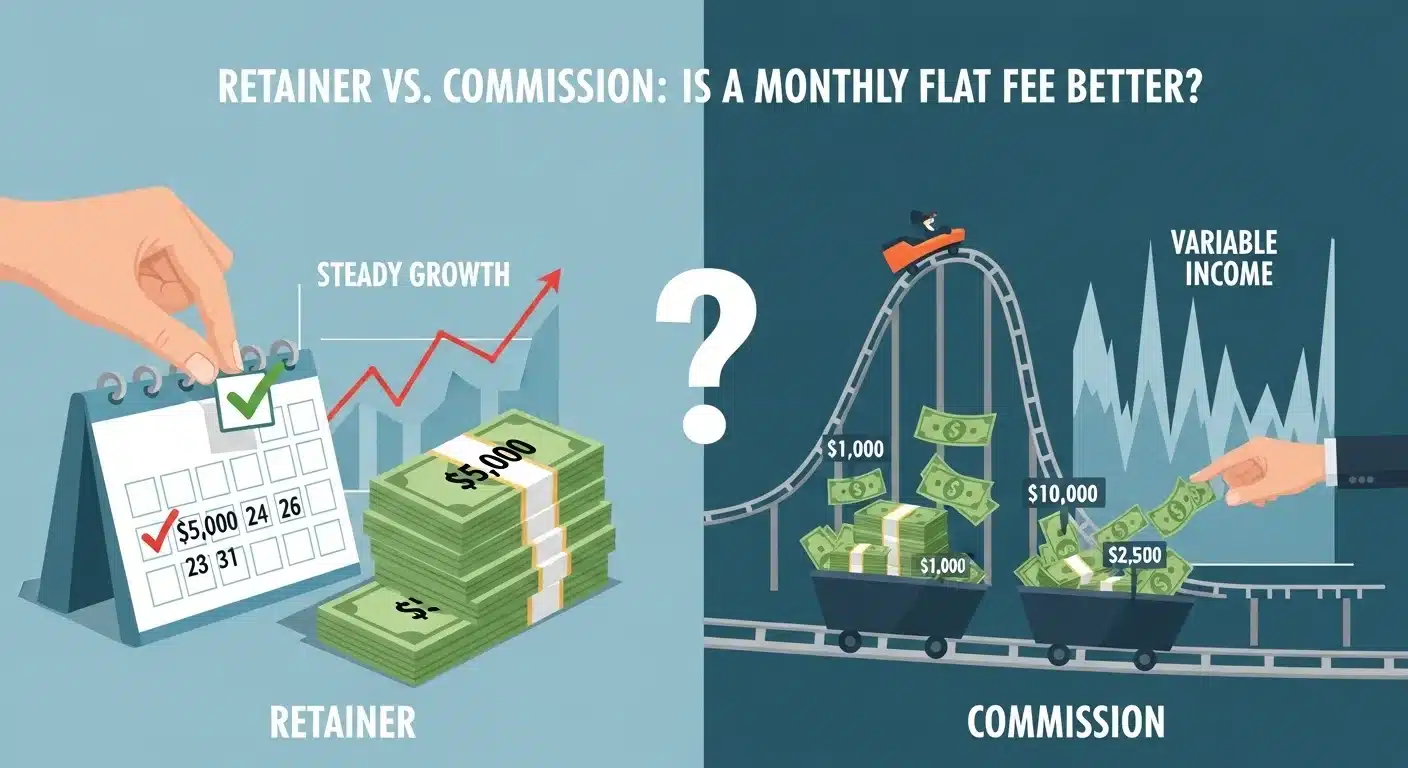
Commission Models
A china sourcing agent commission only matters if the pricing model is transparent. For procurement teams, total landed cost, QC scope, and accountability matter more than the headline fee.
Percentage Fees
Typical china sourcing agent commission rates are commonly cited at 5% to 10% of order value. In practice, lower rates are more common on larger or repeat orders, while smaller or more complex jobs can push above that range. The fee itself is not the real question; the real question is whether the agent is protecting your margin or quietly taking it back through hidden pricing.
For procurement teams, the right benchmark is not just “how much do sourcing agents charge in China.” It is whether the commission is disclosed in writing, whether the quotation basis is clear, and whether the factory identity, QC scope, and rebate relationship are open to audit.
Flat Fees
Flat-fee sourcing can work when the scope is tightly defined, but it only makes sense if the service boundaries are explicit. If the job includes supplier audit, sample coordination, inspection, and shipment follow-up, a low flat fee can be meaningless unless the agent proves what is included and what is excluded.
For a veteran buyer, flat pricing is useful when the work is repeatable and the service scope is stable. It becomes risky when the agent starts charging separately for QC, domestic freight handling, warehousing time, or consolidation support, because the apparent discount can disappear fast.
Hidden Markups
The biggest risk in commission based sourcing agent China models is not the commission itself. It is the markup hidden inside the unit price. That is where veteran buyers get burned, because the quote looks clean while the landed cost quietly moves.
- Exchange-rate markups: Often around 2% to 3%, especially when the agent controls the conversion or pads the FX spread.
- Factory kickbacks: The supplier may pay the agent a rebate, which can distort the quoted unit price and hide the real buying cost.
- Inland shipping inflation: Domestic freight can be padded if the agent controls pickup, routing, or carrier selection without disclosure.
- Warehousing fees: Storage overages, consolidation delays, and handling charges can stack up if the timeline and free storage window are not written down.
A transparent sourcing agent pricing model should clearly show the factory quotation, Incoterms, domestic freight, warehousing duration, QC scope, and any rebate or commission relationship. If the agent cannot explain those items cleanly, the fee is not transparent, even if the commission percentage looks low.
What buyers should compare
The best comparison is not commission rate versus commission rate. It is landed cost versus landed cost, with service reliability attached. A cheaper fee can still be more expensive if it causes batch inconsistency, delayed shipment, weak inspection, or dispute handling that never gets resolved.
- Quotation basis: Factory price, agent fee, and logistics cost separated line by line.
- QC scope: Inspection method, defect handling process, batch consistency checks, and sample-to-production matching.
- Compliance proof: Factory verification, written service agreement, direct payment options, and supplier disclosure.
- After-shipment support: Replacement coordination, root-cause follow-up, and dispute handling written into the process.
If you are comparing a commission based sourcing agent, ask one question: can this model survive internal procurement review without hidden rebates, padded freight, or vague QC language? If the answer is no, the percentage is not the problem; the structure is.

Fair Rate Benchmarks
A fair china sourcing agent commission is not just a percentage. For procurement teams, the real benchmark is total landed cost, disclosure, and service reliability.
Small Orders
Small orders usually carry the highest effective sourcing fee because fixed work gets spread across fewer units. MOQ pressure, sample handling, and supplier vetting time all push the rate up.
In this band, a commission based sourcing agent China may charge above the usual range if the job includes multiple sample rounds, factory checks, and tight follow-up. That is normal when the order is too small to absorb the sourcing workload efficiently.
Mid-Market Orders
Mid-market orders are usually the most competitive band for China sourcing agent fees 5% to 10%. This is where factory verification, quotation comparison, and inspection support can be run efficiently without overloading the service model.
For procurement teams, this is the cleanest pricing zone to compare how much do sourcing agents charge in China. If the agent is transparent on factory identity, quotation basis, QC scope, and Incoterms, the fee is easier to defend internally.
Large Orders
Large orders often justify lower commissions when the scope is narrow and repeatable. But full-service sourcing plus QC plus logistics can still price higher if the agent takes on more risk, more coordination, and more dispute exposure.
The headline percentage can look low, but a hidden cost in sourcing agent commission often shows up in the unit price, domestic freight, warehousing overages, or rebate handling. That is why a lower commission is not automatically a better deal.
What a fair fee structure should disclose
A transparent sourcing agent pricing model should show what is included in sourcing agent commission, not just the rate. Buyers should ask for supplier disclosure, batch consistency checks, defect handling, sample-to-production matching, and post-shipment support in writing.
- Commission range: 3%–10%, with 3%–5% more common on high-volume projects.
- Higher-fee cases: smaller, more complex, or high-touch sourcing jobs can go above 10%.
- Risk control: factory verification, inspection method, defect handling, and written supplier disclosure.
- Landed-cost drivers: exchange-rate markups, domestic shipping inflation, warehousing, and rebate opacity.
For a procurement manager, the right comparison is not just the china sourcing agent commission rate. It is whether the agent can prove control over spend, compliance, and delivery performance without hiding margin inside the product price.

What To Verify
Verify the full scope before you talk price. The real risk is not the china sourcing agent commission rate itself, but hidden margin, weak QC, and vague dispute terms.
What to verify in service scope
A serious sourcing partner should spell out exactly what is included. That means supplier shortlist, factory contact disclosure, quote comparison, sample handling, negotiation, inspection, and logistics coordination. If any one of those is vague, the fee discussion is incomplete.
For procurement teams, the point is not to find the lowest headline fee. It is to confirm whether the agent is controlling total landed cost and protecting batch consistency from the first quote to the final shipment.
What to verify in risk controls
Ask how the supplier audit is done, what quality standard is used, and how defects are handled. You want a clear process for inspection method, defect handling, batch consistency checks, and sample-to-production matching. If the answer is only “we will check quality,” that is not a control system.
Also confirm whether payment flows directly to the factory or through an intermediary. Direct factory payment is usually easier to defend internally, while intermediary payment can be fine only if the relationship, margin, and responsibility are fully disclosed in writing.
What to verify in contract terms
The contract should define payment timing, currency conversion method, dispute handling, refund policy, supplier rebates, and written scope and SLA language. If these points are missing, you are leaving room for hidden costs in sourcing agent commission and avoidable argument later.
The strongest contracts do one thing well: they remove ambiguity. They show when payment is due, how exchange rates are handled, who owns a defect claim, and whether any rebate or supplier kickback exists.
Fee model comparison
- 3% to 5%: More common on high-volume or repeat projects, where the sourcing scope is narrow and the buyer already knows the product.
- 5% to 10%: The typical China sourcing agent fees 5% to 10% band for standard projects with supplier search, quoting, QC, and logistics coordination.
- 10%+: More likely on smaller, complex, or high-touch jobs where the agent is doing heavy coordination or risk management.
- Hidden cost risk: Exchange-rate markups of about 2% to 3%, domestic freight inflation, warehousing overages, and supplier rebates can make a low fee look cheap while raising landed cost.
That is why the right benchmark is not commission alone. Compare transparent sourcing agent pricing against the all-in landed cost, the disclosure quality, and the reliability of post-shipment support.
How to compare sourcing agent fees
Ask for the factory identity, quotation basis, QC scope, rebate treatment, and logistics assumptions in writing. Then compare whether the fee model is commission based sourcing agent China pricing or a unit-price model with hidden margin embedded in the quotation.
For veteran buyers, the real question is simple: can this structure be defended internally if a shipment is short, defective, or delayed? If the answer is no, the fee is already too expensive.
Explore Sourcing Costs and Logistics.

Red Flags
The real red flag is not a high china sourcing agent commission. It is a low quote that hides margin, weak QC, and no post-shipment accountability.
Too-Low Fees
A quote below the normal China sourcing agent fees 5% to 10% range is not automatically a deal. In practice, very low fees can mean kickbacks from suppliers, hidden markups inside unit prices, a thin service scope, or worse, the wrong factory being introduced just to close the order.
For procurement teams, the problem is simple: a cheap fee can still create a higher landed cost if the agent protects their margin elsewhere. That is why the right question is not just how much do sourcing agents charge in China, but what is included in the fee and where the incentive sits.
- Possible kickbacks: The agent may favor a supplier that pays them, not the factory that fits your compliance or cost target.
- Hidden markups: The headline commission looks low, but the unit price, domestic freight, or handling cost is padded.
- Thin service scope: Inspection, follow-up, and dispute handling may be excluded, which shifts risk back to the buyer.
- Wrong factory risk: A low-fee agent may push a convenient supplier instead of the verified one that matches your spec and MOQ.
If an agent cannot explain the quote basis in writing, the commission is not really cheaper. It is just less visible.
No Transparency
No transparency usually shows up in four places: factory identity is withheld, invoicing is vague, logistics are bundled without line items, and there is no proof of inspection process. That is a control problem, not a paperwork issue.
A transparent sourcing agent pricing model should disclose factory identity, quotation basis, QC scope, and any rebate or commission relationship in writing. If the agent will not separate supplier cost, domestic freight, warehousing, and service fee, you cannot audit landed cost properly.
- Factory identity withheld: You cannot verify whether the source is a real factory, a trader, or a reshuffled middleman.
- Vague invoicing: One lump sum hides where the money goes and makes internal approval harder.
- Bundled logistics without line items: Incoterms, domestic freight, warehousing duration, and consolidation support should be visible, not buried.
- No inspection proof: Without method, photos, defect counts, and batch checks, QC is just a promise.
For a veteran buyer, transparency is what makes a sourcing partner defendable internally. If the documents do not show the path from factory to shipment, the commission rate is meaningless.
Weak Aftersales
Weak aftersales is where many commission based sourcing agent China offers fail. The risk rises sharply when support ends at purchase order issuance, because defects, batch variation, and rework problems appear after money has already moved.
A fair post-shipment support process should include defect handling, replacement coordination, root-cause follow-up, and batch dispute support. If the agent only helps before the PO, the buyer carries the full burden when production drifts or samples do not match mass production.
- Defects: The agent should help document the issue, isolate responsibility, and coordinate a practical remedy.
- Batch variation: The buyer needs checks on consistency across lots, not just one approved sample.
- Rework support: The agent should help manage rework, replacement, or credit recovery with the supplier.
- PO-only support risk: If support stops at order issuance, the buyer absorbs the dispute cost alone.
That is why the better benchmark is not just the typical sourcing fee China buyers see on paper. It is whether the agent stays accountable after shipment and helps protect batch consistency, compliance, and the total landed cost.

Buyer Checklist

Buyer Checklist
For a china sourcing agent commission, the real issue is not the headline rate. It is scope, QC control, hidden fees, and whether the agent protects total landed cost.
Questions To Ask Before You Sign
Start with scope. Ask exactly what is included in the commission, what is excluded, and whether the agent is quoting factory price only or bundling domestic freight, warehousing, inspection, and export handling. If the answer is vague, the quote is not comparable.
Then push on payment flow. Ask who pays each shipping leg, whether the agent earns any rebate from the factory, how QC failures are handled, and what financial incentive exists if the supplier misses spec. A serious procurement partner should spell this out in writing, not hide behind “service included.”
- What is included: Factory sourcing, quotation comparison, supplier audit, QC scope, sample matching, and shipment coordination.
- What is excluded: Domestic freight, warehousing overages, repacking, special inspections, duty, and destination-side handling unless explicitly stated.
- Who pays shipping legs: Confirm pickup, inland China freight, consolidation, export freight, and destination delivery under the agreed Incoterms.
- How QC failures are handled: Demand a defect threshold, re-inspection process, replacement coordination, and root-cause follow-up.
- Financial incentives: Ask whether the agent receives supplier rebates, hidden margin in unit price, or volume-based kickbacks that distort the quote.
Compare Offers Without Getting Tricked by the Fee
A China sourcing agent fee structure is only useful if it is transparent. The market often talks about 5% to 10% commission, but a lower commission can still be more expensive if the agent hides margin inside the unit price, adds markup to domestic logistics, or steers volume toward a supplier that pays rebates. For procurement teams, the benchmark is total landed cost plus service reliability, not commission alone.
When comparing offers, treat each line item as a control point. You want to know who owns factory visibility, who runs QC, how broad the logistics scope is, and how fast the team responds after shipment if defects show up. That is where real sourcing risk gets managed.
- Commission rate: Compare the percentage, but only after confirming what service scope it actually covers.
- Hidden fee risk: Watch for exchange-rate markups, warehousing overages, domestic shipping inflation, and supplier kickbacks.
- Factory visibility: Prefer agents that disclose the factory identity and quotation basis in writing.
- QC support: The offer should define inspection method, defect handling, and batch consistency checks.
- Logistics scope: Confirm Incoterms, domestic freight, warehousing duration, consolidation support, and tracking visibility.
- Aftersales response: The agent should commit to batch dispute handling, replacement coordination, and root-cause follow-up.
What a Transparent Offer Looks Like
A credible sourcing partner does not just quote a percentage. They disclose the factory, explain the quotation basis, define QC scope, and state any rebate or commission relationship in writing. That makes the offer auditable, which matters when your internal team needs to defend margin, compliance, and landed cost.
If two offers show the same commission but one hides margin in the product price, the cheaper-looking option is usually the worse deal. The only clean comparison is a fully loaded quote with documented QC, logistics scope, and aftersales terms.
Conclusión
If the quote sits in the 5% to 10% band, I’d only move forward when the agent shows the factory name, the QC scope, and the payment trail in writing. A cheap fee means nothing if they hide margin in the unit price or bury a 2% to 3% exchange-rate markup, because that inflates landed cost faster than the commission itself.
Ask for two written quotes on the same item: one from a commission based sourcing agent China model and one with all fees separated. Then compare the full landed cost, Incoterms, inspection terms, and aftersales support before you place any order.
Preguntas frecuentes
How much do sourcing agents charge in China?
In China, sourcing agent charges typically range from 3% to 10% of the total product value, depending on order size, product complexity, and the level of service included. For Yiwu sourcing, a transparent fee is often tied to the value created, such as supplier verification, negotiation, quality control, and coordination of low-MOQ orders starting from 100 pieces. At YOUR TRUSTED EYES IN YIWU MARKET, the goal is to keep costs efficient while protecting buyers with risk-free inspection and reliable supplier sourcing. If the order includes DDP shipping or more hands-on support, the fee structure may be adjusted accordingly.
How much is paid an agent that helps you buy in China?
The amount paid to an agent who helps you buy in China usually depends on whether the agent charges a commission, a flat service fee, or both. For standard sourcing and purchasing support, many agents charge a few percentage points of the order value, while more complex projects can cost more due to factory vetting, inspection, and logistics coordination. In Yiwu, where many buyers need verified suppliers, low MOQ support, and Western-quality standards, the fee reflects both procurement work and risk reduction. A professional agent should clearly explain what is included, especially if DDP shipping and quality inspection are part of the service.
What does 20% agency fee mean?
A 20% agency fee means the agent charges 20% of the total order value as their service fee. For example, if the products cost $10,000, the agency fee would be $2,000, before shipping, taxes, or any other separately listed costs. In sourcing, a 20% fee is generally considered high unless the agent is providing very comprehensive support such as product development, supplier management, inspection, consolidation, and full logistics handling. At YOUR TRUSTED EYES IN YIWU MARKET, buyers usually expect a more cost-efficient structure focused on verified sourcing, inspection, and smooth delivery rather than an inflated commission.
What is a typical sourcing fee?
A typical sourcing fee in China is often around 3% to 10% of the purchase value, or sometimes a flat fee for smaller orders. The exact rate depends on the number of suppliers involved, the complexity of the products, and whether the agent is also handling inspection, negotiation, consolidation, and shipping support. In Yiwu, low-MOQ orders and multi-category sourcing can require more coordination, so the fee should be aligned with the level of service provided. A good sourcing fee should be transparent and justified by measurable value such as supplier verification and reduced purchasing risk.
How much do Chinese sourcing agents charge?
Chinese sourcing agents commonly charge either a percentage-based commission, a flat fee, or a combination of both, with many falling in the 3% to 10% range. Smaller orders may have higher effective rates because the work involved in sourcing, checking quality, and arranging logistics does not decrease as much as the order size. For buyers working in Yiwu, where verified suppliers, Western quality expectations, risk-free inspection, and DDP shipping can all matter, the charge should reflect the full service scope. A professional agent should always give a clear quote upfront so buyers know exactly what they are paying for.