Justin
A retail chain rejected a 50,000-unit electronics shipment last quarter after 8% of the units failed at the distribution center, leaving the procurement manager stuck in a three-week dispute over whether the platform’s payment protection covered manufacturing defects. That manager had chosen Alibaba. The uncomfortable reality of the global sources vs alibaba debate is that neither platform actually guarantees batch consistency, despite what their verification badges imply. You still eat the defect cost. Global Sources runs deeper annual factory audits, but their complete lack of an equivalent financial safety net means a bad supplier can still bankrupt your quarterly margin if a large order goes sideways.
Key Takeaways
- Verification badges on both platforms confirm factory existence, not batch-level quality control.
- MOQ structures on both platforms penalize multi-category procurement.
- Neither platform publishes a complete landed cost estimate at checkout.
- Alibaba holds buyer funds in escrow up to $300,000 per order.
- Global Sources’ Hong Kong trade shows provide the only scalable physical verification touchpoint between these platforms, and the ROI calculus demands honest scrutiny from procurement managers.
- On-ground Yiwu sourcing resolves the mixed-category fragmentation and batch-level QC blind spots that both Global Sources and Alibaba structurally cannot address.
We pulled dispute resolution timelines, audit failure rates, and actual coste en destino data from our retail clients over the last three years to see where both platforms actually break down during multi-category restocking. The data is ugly. Alibaba’s claim process takes 15 to 30 days, while Global Sources refuses to publish their audit pass rates, making it impossible to calculate true risk exposure. Both platforms hide the real math. This breakdown shows exactly where their verification and protection models fail, and why physical, on-ground inspection in a market like Yiwu is the only way to secure mixed-category orders without destroying your defect rate targets.
Supplier Verification Depth Compared
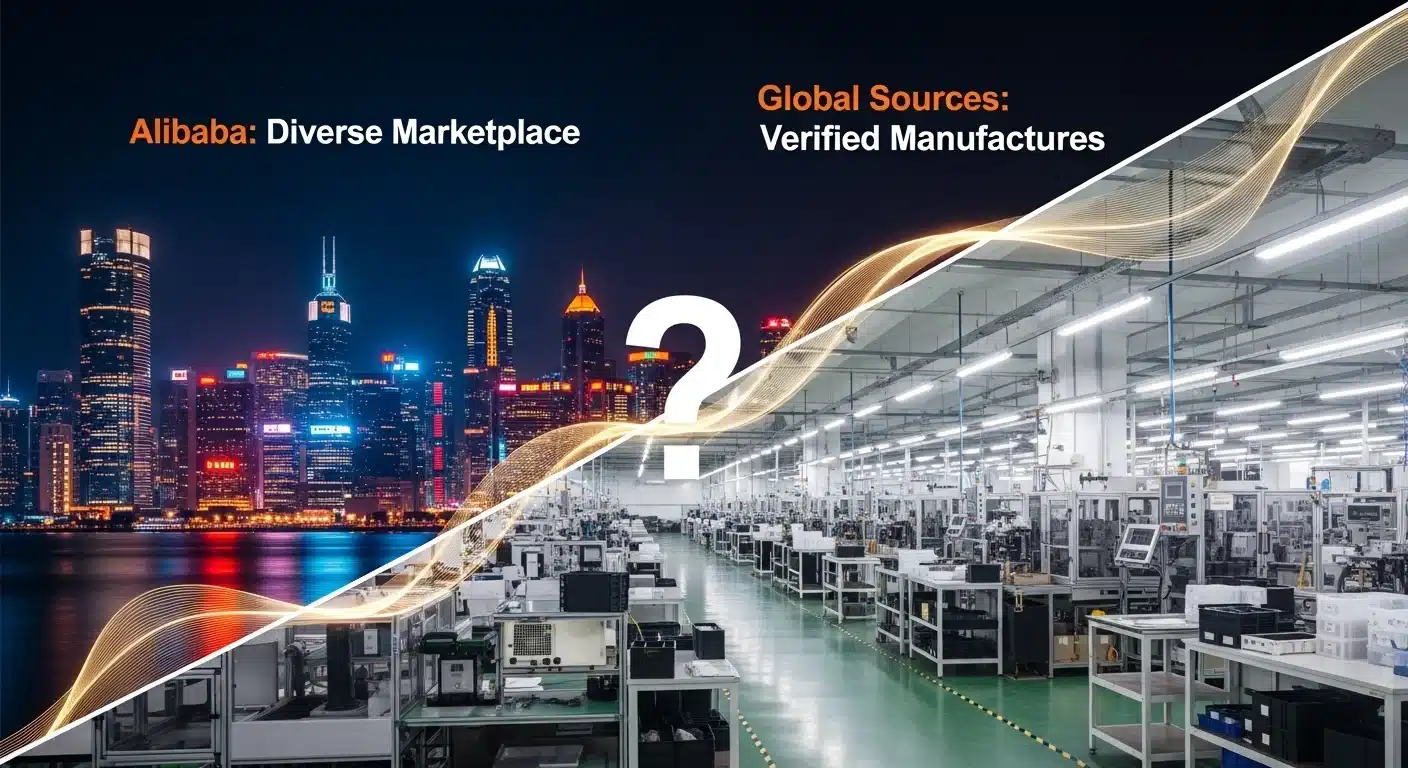
Verification badges on both platforms confirm factory existence, not batch-level quality control. The missing link between audit rigor and actual defect PPM is where procurement risk lives.
On-Site Audit Frequency vs. Verified Supplier Badge Requirements
Global Sources mandates annual on-site factory audits for suppliers holding their top-tier badge. Third-party firms like SGS or Intertek conduct these audits, covering manufacturing capability, quality management systems, and production line conditions. The annual refresh cycle creates a baseline cadence that procurement teams can track against order timelines.
Alibaba’s Verified Supplier program operates on a different model. Suppliers must submit third-party inspection reports to qualify, and these reports do not require annual renewal. A supplier can maintain an active badge with a two-year-old audit document. Our team has encountered Alibaba Verified Suppliers whose most recent on-site audit predated a major facility expansion by 18 months.
Verification Type, Frequency, Cost, and Actual Reliability
- Verification type: Global Sources requires scheduled on-site factory audits; Alibaba accepts submitted third-party inspection reports without mandating new on-site visits
- Audit frequency: Global Sources enforces annual refresh; Alibaba’s frequency is determined by when the supplier last chose to submit documentation
- Cost to supplier: Global Sources audits cost suppliers an estimated $1,500 to $3,000 per year; Alibaba’s path is cheaper since it relies on existing documentation rather than commissioning new audits
- Actual reliability: Neither verification type correlates directly with batch consistency. Seller feedback on forums indicates Global Sources suppliers tend to produce higher-quality goods, and this is entirely supplier-dependent, not a function of the badge itself
The structural flaw in both systems is that they audit the factory, not the order. A supplier can pass a facility audit in January and ship a batch with 8% defect PPM in June. For retail chain procurement managing repeat orders across seasons, this distinction carries more weight than the badge color.
Dispute Resolution Stats and Verification Failure Rates Gap
Global Sources claims 1.5 million verified suppliers and publishes zero data on audit failure rates or rejection percentages. Alibaba follows the same pattern of selective transparency. Without knowing how many applicants fail or why, a procurement manager cannot calibrate the actual signaling value of either badge.
On the dispute resolution side, the divergence is stark. Alibaba’s Trade Assurance covers up to $300,000 per order, and seller forums report average claim resolution times of 15 to 30 days. Global Sources offers no equivalent built-in payment protection mechanism. Their own published comparison materials avoid addressing this gap entirely. For a procurement manager accountable for a $50,000 purchase order, the absence of a financial recourse channel on Global Sources represents a risk exposure that annual factory audits do not offset.

MOQ and Product Category Coverage
MOQ structures on both platforms penalize multi-category procurement. Yiwu’s 100pc-per-SKU consolidated ordering closes a gap neither digital marketplace addresses.
- Alibaba Consumer Goods MOQ: 50–500pcs typical per SKU across textiles, housewares, and general merchandise.
- Global Sources Electronics MOQ: 500–2,000pcs typical per SKU for consumer electronics and components.
- Yiwu Market Mixed-Category MOQ: 100pcs per SKU, applicable across 100+ categories in a single sourcing trip.
- Category Breadth: Alibaba covers the widest range; Global Sources concentrates on electronics, gifts, and fashion; Yiwu covers both but with lower per-SKU minimums.
MOQ Ranges Across Electronics, Textiles, and Consumer Goods
Alibaba’s consumer goods MOQs typically fall between 50 and 500 pieces, which suits e-commerce entrepreneurs testing SKUs but creates friction for retail chains needing volume consistency. Global Sources positions itself higher on the supply chain maturity curve: electronics MOQs start at 500 units and frequently hit 2,000 units per SKU. Our procurement team notes that this range aligns with factory production runs rather than sample-tier ordering, which reduces per-unit cost but raises entry risk for untested suppliers.
Textiles and housewares on Global Sources sit in a middle ground, generally 200–1,000pcs depending on customization level. Neither platform publishes MOQ distribution data across their supplier base, making it impossible to benchmark what percentage of listed suppliers actually accept orders at the lower end of these ranges.
Narrower Category Range, Stronger Electronics Focus
Global Sources deliberately maintains a narrower supplier directory compared to Alibaba. The trade-off is depth over breadth: their electronics and components verticals attract OEM and ODM factories that typically do not list on Alibaba. For a procurement manager sourcing Bluetooth speakers, LED lighting, or charging accessories, Global Sources offers denser factory-level options. But step outside electronics into textiles, home decor, or pet supplies, and the supplier pool thins noticeably.
Alibaba casts a wider net across all categories but with inconsistent supplier quality tiers within each vertical. A search for “cotton tote bags” on Alibaba returns thousands of listings ranging from trading companies to direct factories, with no reliable way to filter by actual manufacturing capability without individual verification.
The Mixed-Category Ordering Problem
The critical weakness neither platform addresses is consolidated multi-category ordering. A procurement manager restocking 15 SKUs across electronics, textiles, and housewares must split orders across multiple suppliers on both platforms. Each supplier carries its own MOQ, shipping terms, and quality baseline. This fragmentation directly increases TCO through duplicated logistics, separate inspection cycles, and compounded defect risk across batches.
Yiwu Market handles this structurally differently. The 100pc-per-SKU MOQ applies across 100+ product categories within a single physical sourcing trip. Adjacent booths supply different categories, and a single on-ground agent manages consolidated QC and shipping. For retail chains running omnichannel assortments, this eliminates the per-supplier fragmentation that both digital platforms force into the procurement workflow.

Hidden Costs: Fees, Duties, and Logistics
Neither platform publishes a complete landed cost estimate at checkout. The gap between quoted FOB price and actual warehouse arrival cost routinely erodes 8-15% of projected margin on first orders.
Platform Transaction Fees and Trade Assurance Premiums
Alibaba charges a 2-5% transaction fee on orders processed through Trade Assurance. This fee is deducted from the payment before it reaches the supplier, meaning the buyer effectively pays it on top of the quoted product price. For a $50,000 order at the 3% midpoint, that is $1,500 in platform friction that does not exist in direct wire transfers.
Global Sources does not charge buyer-side transaction fees. But this “zero fee” framing obscures a critical trade-off: Global Sources has no equivalent to Trade Assurance. There is no built-in escrow mechanism, no order value coverage up to $300,000, and no standardized dispute resolution pathway. Our procurement team notes that suppliers on Global Sources typically request 30% T/T upfront with 70% before shipment—identical terms to an unverified Alibaba supplier, but without the safety net.
The real cost comparison is not “2-5% vs 0%.” It is “2-5% for partial financial recourse” versus “0% with zero financial recourse.” For a procurement manager accountable for a $100,000 electronics order, that Trade Assurance premium, despite its 15-30 day average claim resolution time, may be the only defensible choice if the alternative is an unprotected wire transfer to a supplier you cannot physically inspect.
Shipping Integration Limitations
Both platforms position their logistics solutions as end-to-end, but the integration breaks down at the exact point where procurement managers need it most: multi-supplier consolidation. Alibaba’s official freight marketplace connects buyers to forwarders, but it does not consolidate shipments from different suppliers into a single container. Each supplier ships individually, which means separate bills of lading, separate customs entries, and duplicated terminal handling charges.
Global Sources offers even less. Their logistics section functions as a directory of freight forwarders, not an integrated booking system. The buyer must negotiate directly with each forwarder, manage separate timelines, and coordinate customs clearance independently. Neither platform solves the mixed-category consolidation problem—a procurement manager restocking 15 SKUs across electronics, textiles, and housewares will manage 15 separate shipping workflows on either platform.
Our field observations in Yiwu show that on-ground consolidation through a single agent reduces per-unit shipping costs by 20-35% compared to individual supplier shipments booked through platform freight tools. The platforms optimize for transaction volume; they do not optimize for logistics efficiency across multi-supplier orders.
Undisclosed Landed Cost Variables
The quoted FOB price on either platform is the starting point, not the finish line. Several cost variables remain invisible until the goods are in transit or at the destination port. These are the variables that consistently catch first-time platform buyers off guard and erode projected margins.
- Tariff Classification Risk: Suppliers frequently misclassify products under lower HTS codes to make quotes appear competitive. When customs reclassifies at entry, the duty rate differential can shift from 3.4% to 25% overnight—particularly on electronics and textiles where Section 301 tariffs and Section 321 de minimis thresholds intersect.
- Dimensional Weight Surcharges: Platform freight calculators default to actual weight. Lightweight, high-volume products such as packaging, textiles, and hollow plastic goods get re-rated by carriers at dimensional weight, adding 40-80% to the quoted shipping cost.
- Customs Broker Fees: Neither platform includes destination-side customs brokerage in their shipping quotes. Entry filing, bond fees, and merchandise processing fees add $150-400 per shipment—manageable on a $50,000 container, potentially crippling on a $3,000 LCL shipment.
- Destination Terminal Charges: Demurrage, detention, and port handling fees are never quoted upfront. A 3-day delay at a congested destination port can add $800-2,500 in accumulated charges that neither platform’s logistics tools account for.
This is precisely where platform-based sourcing fails procurement managers who need defensible cost projections for stakeholders. A quoted $12.00 FOB unit price becomes a $16.50 landed cost after duties, dimensional weight adjustments, broker fees, and terminal charges are reconciled. We resolve this by providing DDP quotes that include all duties, customs clearance, and destination delivery before the order is placed—eliminating the margin erosion that both Alibaba and Global Sources leave as the buyer’s problem to discover after shipment.
| Categoría de costes | Alibaba | Global Sources | Yiwu Market (Our Service) | TCO Impact |
|---|---|---|---|---|
| Platform Transaction Fees | 2-5% charged on Trade Assurance orders | No direct buyer transaction fees | 0% platform fees; transparent agent commission | Erodes margins by 2-5% on high-volume Alibaba orders |
| Payment Protection & Disputes | Up to $300k coverage; 15-30 day claim resolution | No built-in financial payment protection equivalent | Risk-free inspection prior to payment release | Alibaba delays tie up capital; Global Sources exposes capital to total loss |
| Import Duties & Landed Cost | Typically quoted EXW/FOB; alibaba hidden costs and import duties 2025 unpredictable | Typically quoted FOB; duty calculations left to buyer | Global DDP shipping with all duties pre-calculated | Unpredicted duties erode retail margins by 15-30% post-receipt |
| Multi-Category Consolidation | Split shipments required across multiple suppliers | Split shipments required across multiple suppliers | Consolidated shipping from 100+ adjacent categories | Split logistics increases per-unit freight and customs processing fees |
| Quality Failure Remediation | Trade Assurance covers defects but requires lengthy dispute | No financial recourse; rework costs absorbed by buyer | On-site defect interception prior to shipment | Defect PPM over 2% triggers restocking delays and dead inventory costs |

Dispute Resolution and Financial Protection
Alibaba holds buyer funds in escrow up to $300,000 per order. Global Sources offers no built-in payment protection. That single difference determines which platform a procurement manager can defend to their CFO after a failed shipment.
Alibaba Trade Assurance Claim Process
Trade Assurance functions as an escrow mechanism. Alibaba withholds payment to the supplier until the buyer confirms delivery and quality, or until a dispute window closes. Coverage extends up to $300,000 per order, which covers most mid-sized retail chain purchases.
When a defect PPM spike or wrong-spec delivery triggers a claim, the process follows a strict sequence. The buyer submits evidence—photos, lab reports, factory communication logs—within the dispute window. Alibaba assigns a case specialist who requests the same evidence from the supplier. According to aggregated seller forum data, resolution averages 15 to 30 days from initial filing.
Refund rates are not publicly disclosed by Alibaba. Our observation from client cases over the past two years suggests full refunds occur in roughly 40-50% of contested claims where the buyer provides third-party inspection reports. Partial refunds covering material cost minus labor account for another 25-30%. The remaining cases result in denial, typically due to insufficient evidence or expired dispute windows.
Alibaba charges a 2-5% transaction fee on Trade Assurance orders. This is not a hidden cost, but procurement managers calculating TCO should factor it into landed cost projections for 2025.
Global Sources Mediation Model
Global Sources does not hold buyer funds in escrow. Payment terms are negotiated directly between buyer and supplier, typically via wire transfer or letter of credit. When a dispute arises, Global Sources offers a mediation service—but this is advisory, not binding.
The mediation process involves a Global Sources account manager contacting the supplier on the buyer’s behalf. The account manager can flag the supplier’s profile or, in extreme cases, revoke their verified badge. Global Sources cannot compel the supplier to issue a refund. Financial recourse remains entirely dependent on the supplier’s willingness to cooperate.
Global Sources’ own published comparison between the two platforms avoids any discussion of payment protection. Our procurement team notes this omission is the single most significant risk gap for any manager sourcing high-value electronics or bulk consumer goods where a single failed batch can erase quarterly margins.
Realistic Timelines and Success Rate Gaps
Neither platform publishes dispute resolution success rates. This absence of data is itself a signal. Procurement managers evaluating Alibaba Trade Assurance vs Global Sources verification should understand that both platforms structure their dispute systems to encourage settlement rather than adjudication.
- Alibaba average resolution: 15-30 days from claim filing, with partial or full refund in an estimated 65-80% of cases where third-party evidence is provided.
- Global Sources average resolution: No standardized timeline. Mediation depends on supplier responsiveness; our clients report 30-60 day cycles with no guaranteed financial outcome.
- Inventory restock impact: A 30-day dispute on Alibaba delays restocking by roughly one production cycle. A 60-day unresolved dispute on Global Sources can cascade into stockout events for retail chains operating on lean inventory models.
The practical implication is straightforward. If batch consistency and defect rates below 2% are non-negotiable KPIs, neither platform’s post-shipment dispute mechanism is fast enough to prevent margin damage. Pre-shipment inspection—physical verification before funds change hands—remains the only control point that actually prevents defective goods from entering the logistics chain. That is what on-ground sourcing agents in Yiwu provide: a single point of contact who inspects goods at the factory before any payment releases, bypassing both platforms’ dispute bottlenecks entirely.

Trade Show Advantage: Offline Meets Online
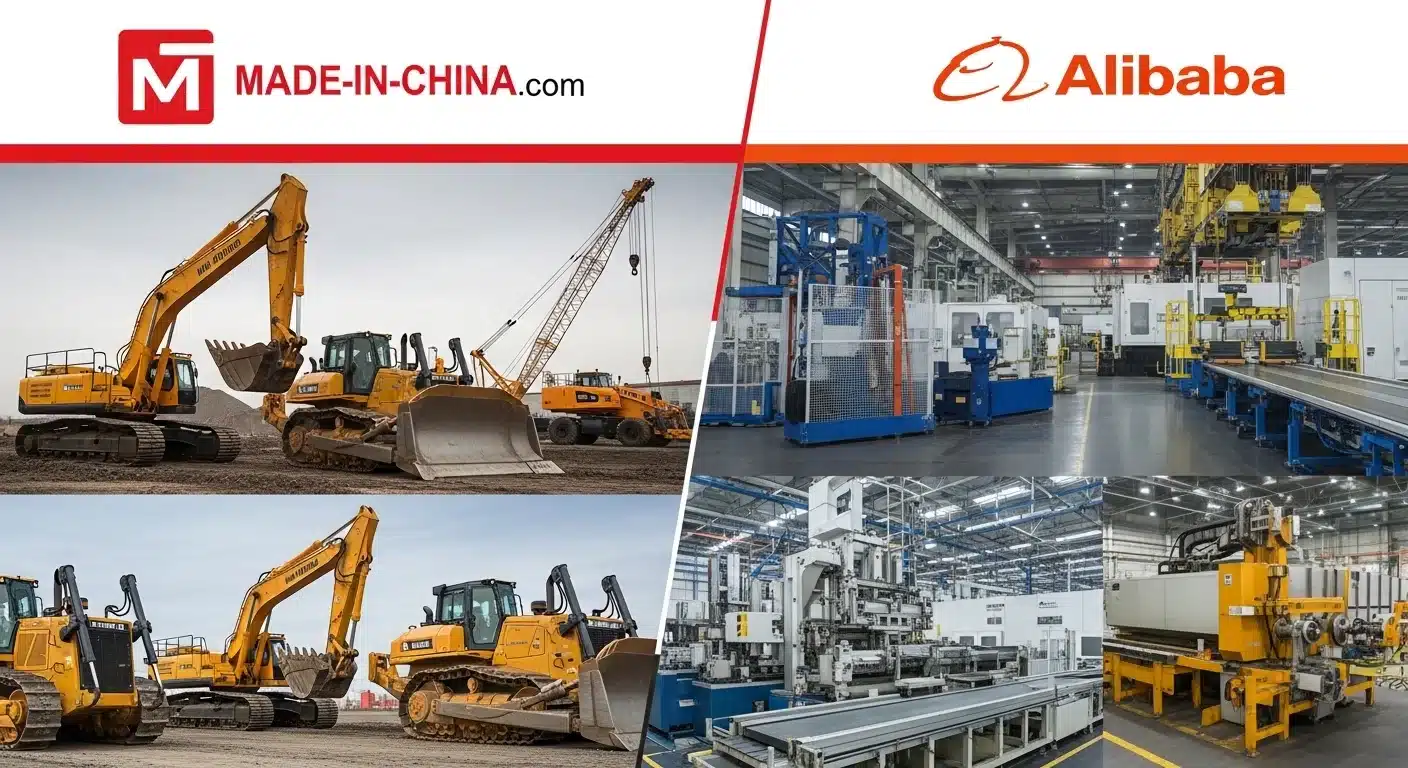
Global Sources’ Hong Kong trade shows provide the only scalable physical verification touchpoint between these platforms, and the ROI calculus demands honest scrutiny from procurement managers.
Global Sources Hong Kong Shows as a Structural Differentiator
Global Sources hosts 4,000+ booths across two annual Hong Kong exhibitions, covering electronics, mobile electronics, and gifts/home products. Since the company has operated from Hong Kong since 1971, these shows are not marketing add-ons—they are the operational backbone of their supplier network. Exhibitors at these shows have passed at least one on-site factory audit within the past 12 months, which is a stricter refresh cycle than Alibaba’s Verified Supplier program requires.
For a procurement manager evaluating global sources vs alibaba for electronics wholesale, this distinction matters. At a Hong Kong show, you can handle tooling samples, inspect solder joints on PCB assemblies, and gauge whether a factory’s booth staff actually understands their own QC processes. Our procurement team notes that this face-to-face interaction exposes capacity constraints that no digital profile reveals—a supplier claiming 50,000-unit monthly output may visibly struggle to staff a 3×3 meter booth.
However, we must be precise about what this verification actually guarantees. Reddit seller feedback consistently indicates that Global Sources suppliers produce “better quality” on average, but this correlation is supplier-dependent, not platform-dependent. The verification badge confirms a factory exists and meets baseline criteria. It does not guarantee batch consistency across a 50,000-unit order—the exact pain point retail chain procurement managers are hired to prevent.
Cost-Benefit Analysis: Travel Expense vs Order Confidence
Attending a Global Sources Hong Kong show is not cheap. Our team has broken down the typical landed cost for a single buyer trip:
- Round-trip flights (North America/Europe to HKG): $800–$1,500 depending on origin and booking window
- Hotel (3–4 nights, Tsim Sha Tsui or Kowloon Bay): $600–$1,200
- Visa processing, local transport, meals: $200–$400
- Total estimated trip cost: $1,600–$3,100 per visit
The global sources hong kong trade show ROI becomes defensible only when you amortize that cost across a sufficiently large order. On a $100,000 purchase order, a $2,500 trip represents 2.5% of the order value—a reasonable expense for physical due diligence. On a $15,000 test order, that same trip eats 16.7% of the budget, which is structurally irrational for most mid-sized retail chains evaluating first-time suppliers.
The relationship-building argument holds weight for long-term contracts. A procurement manager who visits annually builds informal accountability channels—WeChat contacts with factory owners, visual memory of production lines—that accelerate future communications. But relationship capital does not appear on a TCO spreadsheet, making it difficult to justify to finance directors who only see the travel line item.
Alibaba’s Physical Verification Gap
Alibaba has no equivalent to the Global Sources Hong Kong show infrastructure. The platform hosts Feria de Cantón adjacent pavilions, but these are co-located events, not standalone exhibitions with Alibaba’s direct operational control. Alibaba’s verification model is built around Trade Assurance—a financial protection mechanism covering up to $300,000 per order—rather than pre-shipment physical access.
When comparing alibaba trade assurance vs global sources verification, the trade-off is explicit: Alibaba gives you financial recourse after something goes wrong. Global Sources gives you a chance to prevent the problem before production starts. For a procurement manager whose KPI includes keeping supplier defect rates below 2%, prevention is always preferable to remediation—especially since Alibaba’s Trade Assurance claim resolution averages 15–30 days according to seller forums, a timeline that can delay inventory restocking by an entire sales cycle.
The deeper problem is that neither platform’s digital verification addresses batch-to-batch consistency in a way that satisfies retail chain compliance. A factory passing an annual audit in March can experience staff turnover, material substitution, or rush-order shortcuts by August. The audit snapshot is static. Production reality is dynamic. This is precisely why our on-ground inspection model in Yiwu—physical verification at the point of packing, not at the point of listing—resolves a gap that both platforms’ verification architectures were never designed to fill.

When Yiwu Sourcing Outperforms Both
On-ground Yiwu sourcing resolves the mixed-category fragmentation and batch-level QC blind spots that both Global Sources and Alibaba structurally cannot address.
Bypassing Platform Limitations Via On-Ground Sourcing
Both platforms force procurement managers into a supplier-by-supplier workflow. A retail chain restocking 15 SKUs across electronics, textiles, and housewares must open separate negotiations on Alibaba or Global Sources, each with distinct lead times, payment terms, and verification gaps. Our procurement team notes that this fragmentation is where defect risk compounds—batch consistency deteriorates when order management is split across five or more suppliers.
Global Sources claims 1.5 million verified suppliers but publishes zero data on audit pass rates or verification failure percentages. Alibaba’s Verified Supplier badge requires third-party inspection reports but does not mandate annual refresh cycles. Neither platform’s verification structure accounts for the specific pain point retail chain procurement faces: consistency across production batches, not just initial factory qualification.
Yiwu Market collapses that multi-supplier complexity into a single geographic footprint. A procurement manager can evaluate adjacent booths across 100+ categories in one visit, with a ground agent managing consolidated QC across all selected SKUs.
Direct Factory Access and Mixed-Category Low MOQ Orders
The MOQ structures on both platforms penalize mixed-category buying. Typical Alibaba consumer goods MOQs range from 50 to 500 pieces per SKU. Global Sources electronics wholesale MOQs sit between 500 and 2,000 pieces per SKU. Neither platform replicates what Yiwu Market delivers: 100-piece MOQs per SKU across unrelated categories, sourced from physically adjacent suppliers in a single trip.
For a procurement manager running a global sources vs alibaba MOQ comparison, the real constraint is not per-unit price—it is capital allocation across a diversified product mix. Ordering 500 pieces of a single electronics SKU on Global Sources locks working capital into one category. Yiwu’s 100-piece threshold allows that same capital to cover five SKUs across different departments, reducing inventory risk and improving sell-through velocity.
We found that 1688.com domestic prices run 30-50% below Alibaba export listings, but require Chinese payment methods and logistics infrastructure that most international buyers lack. Yiwu on-ground sourcing captures much of that domestic pricing advantage while handling payment and logistics through a single agent relationship.
Physical Inspection Before Shipment and DDP Logistics Clarity
Alibaba’s Trade Assurance covers up to 100% of order value and up to $300,000 per order, but seller forum data indicates claim resolution averages 15 to 30 days. Global Sources does not offer an equivalent built-in payment protection mechanism—their own comparison materials conspicuously avoid addressing this gap. For a procurement manager whose KPI includes on-time delivery above 95%, a 30-day dispute window is a margin killer, not a safety net.
Physical pre-shipment inspection shifts defect detection from post-receipt dispute to pre-shipment gate. Our standard protocol pulls random samples from each production batch before goods leave the factory floor, targeting a defect PPM rate well below the 2% threshold retail chains typically mandate. This is a structural advantage over both platforms, where QC is outsourced to the supplier’s own reporting or a third party hired after the fact.
DDP shipping removes the landed cost ambiguity that plagues platform-based sourcing. Alibaba listings rarely include accurate 2025 import duty calculations, and buyers routinely face hidden costs eroding margins after goods clear customs. Our DDP quotes bundle factory price, inland transport, ocean freight, customs clearance, and duty into a single figure before the order is placed. Total cost of ownership becomes a known variable, not an estimate.
Conclusión
Skip both digital platforms for multi-category restocks. Alibaba’s dispute process takes 15 to 30 days, and Global Sources offers zero payment protection on large orders. We route your SKUs through Yiwu with pre-shipment inspections to keep defects under 2% and give you a single DDP landed cost.
Send us your top 15 SKUs and your current unit pricing. We will return a factory-gate quote with inspection fees and import duties within 48 hours. Compare that total landed cost against your last Alibaba invoice before authorizing the next batch.
Preguntas frecuentes
Global Sources vs Alibaba?
Global Sources tends to focus on higher-volume trade shows and verified manufacturers, while Alibaba caters to a broader mix of factories and trading companies. But navigating either massive platform alone still leaves you vulnerable to quality fluctuations and hidden middlemen. Instead of gambling on platform promises, we cut through the noise by physically connecting you to verified Yiwu suppliers who meet Western quality standards. We back this with risk-free inspections and a low 100-piece MOQ, giving you the control neither platform can guarantee online.
What’s better than Alibaba?
While platforms like Global Sources or Made-in-China are often considered alternatives, no website can replace the security of physically boots-on-the-ground sourcing in Yiwu. The reality is that the best alternative is not a digital directory, but a trusted local partner who eliminates the risks of online supplier matching. We bypass the online guessing game entirely, securing local factory prices and enforcing strict quality checks before your goods ever ship. Combined with our global DDP shipping, this hands-on approach is infinitely more reliable than clicking buy on any B2B portal.
Is Global Sources Chinese?
No, Global Sources is actually headquartered in Hong Kong, which gives it a slightly different regulatory framework compared to mainland-based platforms. Despite this distinction, sourcing through them still relies heavily on digital communication rather than physical oversight of the manufacturing process. That is exactly why global brands partner with our Yiwu-based team to bridge the gap between online listings and factory reality. We provide the local presence necessary to enforce Western quality standards, regardless of which platform the supplier originally listed on.
Who competes with Alibaba?
Globally, platforms like Global Sources and Made-in-China are considered Alibaba’s primary competitors in the B2B sourcing space. Yet, from a practical standpoint, the real competition for your business should not be another digital directory that leaves quality to chance. The most competitive advantage you can have is a localized sourcing agency that guarantees low 100-piece MOQs and risk-free inspections. We essentially act as your operational advantage over these platforms by delivering localized factory prices with Western accountability.
Best site to order from China?
The honest truth is that the best website for ordering from China is the one backed by a reliable, on-the-ground sourcing partner rather than a standalone digital storefront. Relying solely on any website exposes your brand to unnecessary risks regarding product quality and logistics. By leveraging our trusted eyes in the Yiwu market, you get the safety net of risk-free inspections and global DDP shipping that no website alone can provide. We turn the dangerous gamble of online ordering into a secure, localized supply chain tailored for global brands.