 Justin
If you are looking at futian market because you need to test products fast without betting the whole quarter on one supplier, you are in the right place. I have seen too many first-time buyers fly into Yiwu, fall for a clean showroom, place an order, and then discover the sample and the bulk shipment were never the same thing. That is how margins disappear. That is how deadstock starts. And once a supplier ghosts you after the deposit clears, you learn very quickly that the cheapest unit price is usually the most expensive mistake.
Key Takeaways
- Futian Market is Yiwu International Trade City in Yiwu, Zhejiang.
- In Futian Market, the district you start with affects MOQ, sample speed, and risk.
- Low MOQ at Futian Market is a buying control tool, not a marketing perk.
- For sourcing, the practical window is 9:00 AM to 4:30 PM.
- Yiwu Futian Market, also called Yiwu International Trade City, is the faster test-and-scale option.
- In Futian Market, the safest buy is the one you can verify, compare, and cost out before bulk money moves.
This guide gives you the practical version of the market: what the place actually is, which districts fit which product types, when to go, and how to check suppliers before you commit money. You will also see why Yiwu often beats Feria de Cantón for small-batch testing, what to ask for during sample review, and where coste en destino gets padded with pickup, freight, duties, inspection, and rework risk. If you want to buy with less drama, start here.

What Futian Market Is
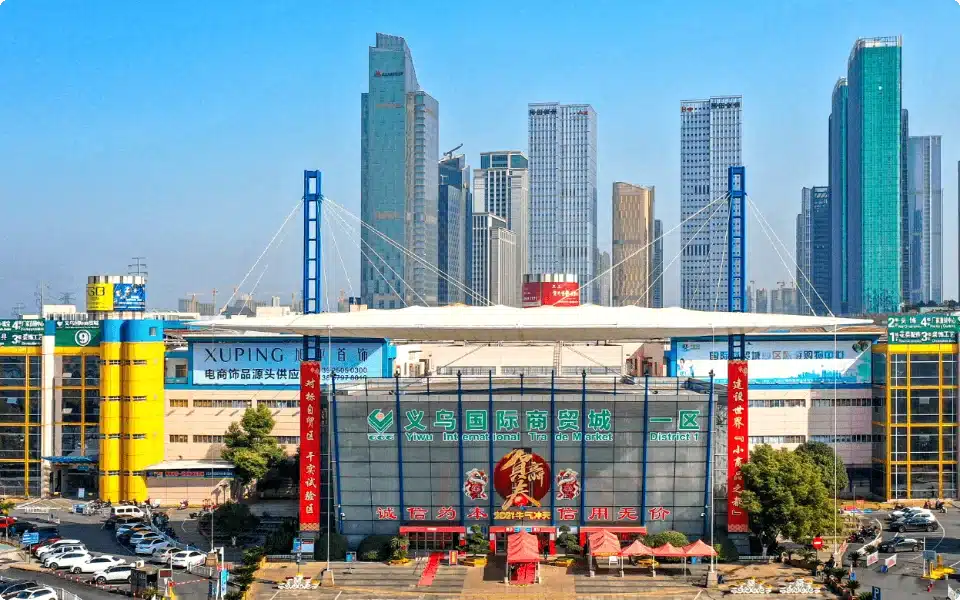
Futian Market is Yiwu International Trade City in Yiwu, Zhejiang. For online sellers, it matters because the scale makes low-MOQ testing, supplier comparison, and faster shortlist decisions realistic.
What Futian Market Is
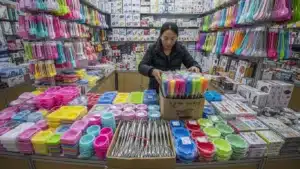
Futian Market is the common buyer name for Yiwu International Trade City in Yiwu, Zhejiang. It is widely described as the world’s largest small commodities wholesale market, and that scale is the real reason buyers go there. You are not visiting for tourism. You are there to compare suppliers fast and reduce sourcing risk before placing bulk orders.
For e-commerce sellers, the value is simple: one trip can expose you to a huge number of product options, pricing patterns, and supplier quality differences. That makes it easier to test SKUs, check sample-to-bulk consistency, and avoid getting stuck with deadstock. If you source online, this is the kind of market that helps you validate what is real before you commit money.
Why Online Sellers Care
Online sellers care about Futian Market because it supports the exact workflow they need: test first, scale later. The market is useful when you want low MOQ suppliers, faster product validation, and a clearer view of coste en destino. It is also a practical place to screen for fake factory claims, because you can compare multiple booths, ask for documentation, and check whether the supplier can actually support repeat orders.
- Low-MOQ testing: Useful when you want to launch a product without overbuying inventory.
- Supplier comparison: You can check multiple booths in one trip instead of chasing scattered vendors.
- Risk screening: You can review samples, packaging, carton counts, and export label details before ordering.
- Cost visibility: You can factor in unit price, domestic pickup, freight, duties, inspection, and rework risk.
That is the difference between sourcing as a gamble and sourcing as a controlled buying process. For awareness-stage buyers, that matters more than any glossy market description.
Scale and Layout
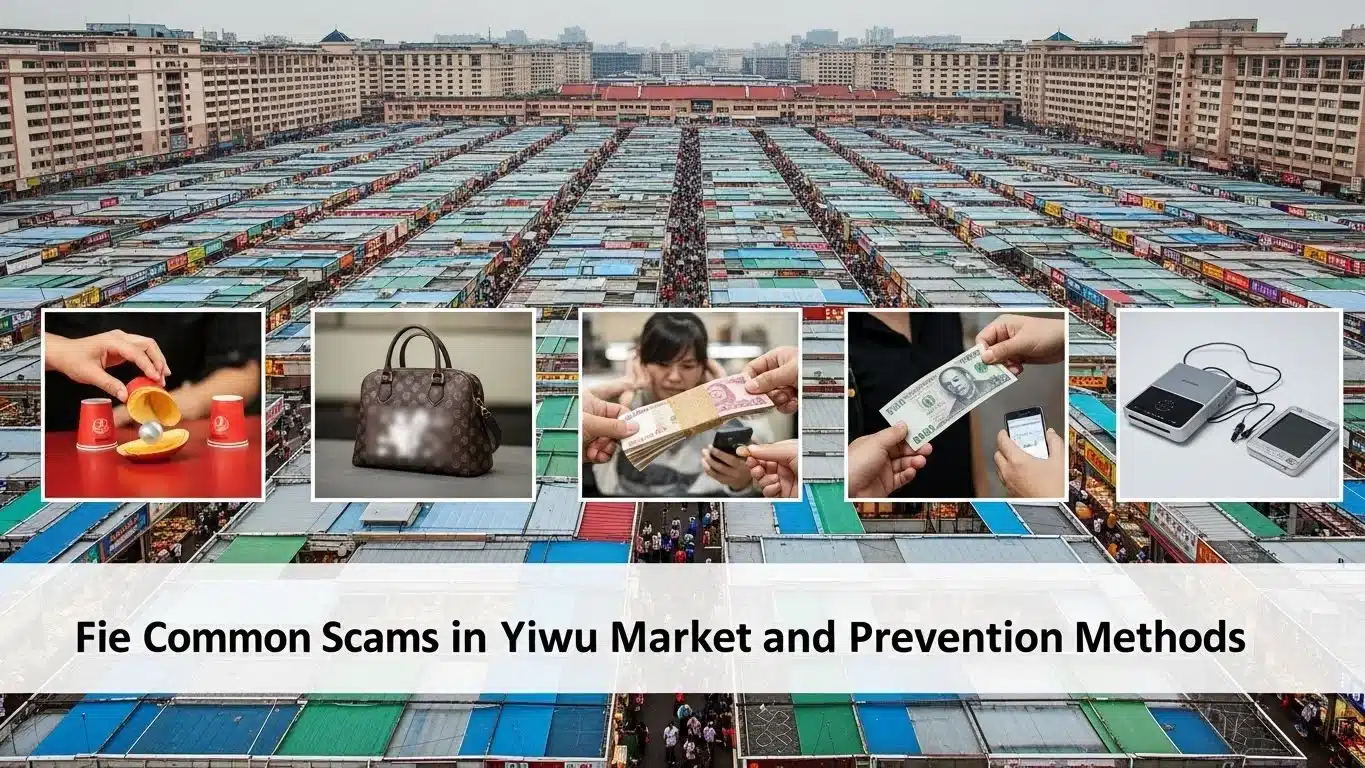
Futian Market covers more than 6 million square meters, includes 5 interconnected districts, and contains 75,000+ booths. It also offers more than 1.8 million products across major small-goods categories. In plain terms, the market is large enough that you can compare many suppliers without leaving the same sourcing zone.
That density is why buyers use it as a test-and-scale sourcing channel. You can shortlist faster, verify product fit faster, and avoid wasting time on suppliers that cannot match your volume or quality needs. The market opens daily from 8:30 AM to 5:00 PM, and the best visiting window is usually 9:00 AM to 4:30 PM.
District Shortcut for Buyers
If you are building a buying plan, use the districts as a practical shortcut, not as a tourist map. Distrito 1 is useful for trend-led impulse items. Distrito 2 is better for harder goods and mixed sourcing. District 3 fits office and lifestyle items. District 4 is a better match for repeat-purchase basics.
- District 1: Trend-led impulse items and fast-moving novelty products.
- District 2: Harder goods and mixed sourcing categories.
- District 3: Office and lifestyle items.
- District 4: Repeat-purchase basics and practical everyday goods.
This matters because district choice affects search speed and sample quality control. If your goal is SKU testing, you want to move through the right category cluster quickly instead of wandering across the whole market.
Yiwu Futian Market vs Canton Fair
For small-batch testing, Futian Market is usually the more practical first stop. Canton Fair is stronger for large trade-show discovery and broader export networking, but Futian Market is easier when you want to compare suppliers, check MOQ flexibility, and move faster from research to order validation.
- MOQ flexibility: Futian Market is usually better for low-MOQ testing.
- Product variety: Both are broad, but Futian Market is built for dense small-commodity sourcing.
- Speed to shortlist: Futian Market is faster when you need to compare many suppliers in one place.
- Fit for small-batch testing: Futian Market is the stronger choice for first-round validation.
If your KPI is margin protection and lower deadstock, Futian Market usually gives you a cleaner test path. If your KPI is broad trade-show exposure, Canton Fair may still be useful, but it is not the same buying job.
What to Check Before You Buy
Do not confuse booth activity with supplier reliability. A buyer should still verify the physical sample, confirm packaging, count cartons, and check export label requirements before moving to bulk. For consumer products, ask for CE, EN71, ASTM, MSDS, or material declarations when the product category calls for them.
That is also where landed-cost discipline matters. The real number is not just unit price. It includes pickup, international freight, duties or taxes, inspection, and the risk of rework or returns. If those inputs are ignored, the margin story falls apart quickly.
How many booths are in Futian Market?
Futian Market has 75,000+ booths across five interconnected districts. That is why buyers treat it as a sourcing system, not a single building.
What are the business hours?
The market is generally open from 8:30 AM to 5:00 PM daily. The best visiting window is usually 9:00 AM to 4:30 PM. Around Chinese New Year, it closes for roughly two weeks, which can affect sourcing schedules.
Why does this market matter for first-time buyers?
Because it reduces guessing. Futian Market gives first-time buyers a way to compare supply, check product fit, and validate orders before committing to bulk volume. That is exactly what you want when you are protecting margin and trying to avoid bad inventory.

Districts That Matter
In Futian Market, the district you start with affects MOQ, sample speed, and risk. For first-time buyers, district choice is a sourcing decision, not a sightseeing one.
District 1: trend-led small goods
District 1 is where many buyers start in Yiwu International Trade City because it concentrates toys, artificial flowers, jewelry accessories, and gifts. This is the best fit when you need fast SKU testing, visual appeal, and low-risk category checks before scaling a bulk order.
For e-commerce buyers, the main value is not just variety. It is the ability to compare multiple suppliers in one visit and validate sample-to-bulk consistency before you commit cash to inventory.
District 2: mixed hard goods and daily sell-through items
District 2 covers bags, umbrellas, hardware, small appliances, watches, and accessories. It is useful when you want products that sit closer to repeat purchase or practical use, and when you need to balance unit cost against packaging and defect control.
For buyers comparing suppliers in Futian Market, District 2 often makes sense when the item needs sturdier construction and clear export labeling. That matters because hidden costs usually show up after purchase, not on the showroom floor.
District 3: office, lifestyle, and regulated consumer items
District 3 is a strong fit for stationery, office supplies, eyewear, sports goods, cosmetics, and accessories. This district is useful for buyers who want practical, easy-to-list products with clearer packaging and compliance checks.
If you are sourcing products for online retail, ask for the right documents before you place volume orders. For relevant categories, that can include CE, EN71, ASTM, MSDS, or a material declaration, depending on the product type and destination market.
District 4: repeat-purchase basics and consumables
District 4 is centered on socks, hats, gloves, scarves, sewing items, and daily consumables. This is a practical district for buyers who want staple products with steady reorder potential rather than one-off trend chasing.
The sourcing advantage here is consistency. If the supplier can hold color, sizing, and carton packing steady across reorders, your margin protection improves and your deadstock risk drops.
District 5: mixed and import-oriented, but not the first stop
District 5 is more mixed and import-oriented, so it is less central for first-time small product sourcing. If you are still validating your product and supplier list, it usually makes more sense to start in Districts 1 to 4, where category fit is clearer.
For a novice buyer, District 5 is better treated as a later-stage stop once you already know your target SKU, target price, and quality requirements. That is how you avoid paying for exploration you do not need.
How to use the districts without wasting a trip
The real advantage of Futian Market is speed to shortlist. You can compare multiple suppliers, review physical samples, confirm packaging, count cartons, and check export labels before you decide whether a product can scale.
- Physical sample review: check finish, size, function, and material feel.
- Packaging confirmation: verify retail pack, master carton, and barcode or export label format.
- Carton count: confirm how many units actually ship per carton.
- Compliance documents: request CE, EN71, ASTM, MSDS, or a material declaration when relevant.
If you are comparing Futian Market vs Canton Fair, the decision is simple: Futian is usually better for low MOQ testing and faster supplier validation, while Canton Fair is broader but less efficient for quick small-batch sourcing. For e-commerce buyers, that difference directly affects landed cost, testing speed, and leftover stock risk.
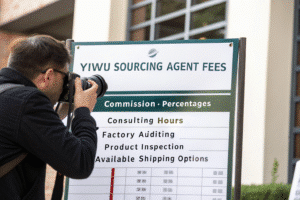
Before you buy, build the landed cost properly: unit price, domestic pickup, international freight, duties and taxes, inspection, and rework or return risk. If those numbers are not clear, the supplier is not giving you a real quote, only a headline price.
Buyer action for first-time sourcing
Start with one or two districts that match your SKU, not the whole market. In Yiwu International Trade City, that approach helps you validate factory claims, protect margin, and decide whether the product deserves a bulk order.
If you are still unsure where to begin, use Districts 1 to 4 as your first filter, then compare supplier samples before you pay for scale. That is the cleanest way to source from Futian Market without turning a short trip into an expensive mistake.

Low MOQ Advantage
Low MOQ at Futian Market is a buying control tool, not a marketing perk. It lets you test SKUs with less cash tied up, less deadstock, and faster reorder decisions.
Why small quantities matter
In Yiwu Futian Market, many suppliers will quote small runs, sometimes just a few cartons per item. That is useful when you are validating a new SKU and do not want to commit to full production too early.
For e-commerce buyers, this changes the math. You can check product-market fit, protect margin, and avoid sitting on slow-moving stock while demand is still uncertain.
Why it often beats trade fairs for new SKU testing
Trade fairs are good for broad exposure, but Futian Market is stronger when you need to compare multiple suppliers in one place and move quickly from shortlist to sample. You are dealing with working sellers, not just display booths.
That makes it easier to pressure-test price, packaging, export labeling, and sample-to-bulk consistency before you spend on freight and inventory. It is the better option when speed and validation matter more than show-floor browsing.
What low MOQ reduces in practice
The real benefit is lower sourcing risk. Smaller first orders reduce exposure to seasonal miss, trend fade, defect rate, and rework costs that can wipe out margin on a new launch.
- Inventory risk: You avoid overbuying before demand is proven.
- Cash flow pressure: Less capital is locked into one SKU.
- Quality risk: You can inspect samples before scaling.
- Reorder risk: You can confirm supplier consistency before batch expansion.
For seasonal or trend-driven products, that is the difference between a controlled test and a costly mistake. The first order should prove demand, not prove optimism.
How to buy by sample first, then batch by SKU
Start with a physical sample review, then confirm packaging, carton count, and export label requirements before placing a small batch order. If the product category needs compliance paperwork, ask for CE, EN71, ASTM, MSDS, or a material declaration where relevant.
After that, test one SKU at a time. This is the cleanest way to measure sample-to-bulk consistency wholesale without spreading risk across too many products at once.
Yiwu Market versus Canton Fair for low-MOQ testing
If your goal is small-batch testing, Futian Market is usually the faster route. You can validate more suppliers per day, compare live stock, and cut the time spent waiting for post-fair follow-up.
- MOQ flexibility: Futian Market is typically better for smaller trial orders.
- Product variety: Futian Market gives faster access to many small-goods categories in one sourcing zone.
- Speed to shortlist: Futian Market is stronger when you need quick supplier comparison.
- Fit for testing: Canton Fair is broader; Futian Market is more practical for first-round SKU validation.
If you are trying to reduce low MOQ supplier risk, the market setting is usually more efficient than a large exhibition floor. You are closer to the day-to-day selling teams, which helps when you need real answers on quantity, packing, and reorder terms.
District fit matters when you are testing SKU ideas
Use district selection as a buying shortcut, not a sightseeing plan. District 1 is useful for trend-led impulse items, District 2 for harder goods and mixed sourcing, District 3 for office and lifestyle items, and District 4 for repeat-purchase basics.
That structure helps you match product type to buying intent. If you are testing a trend item, go where turnover is high. If you are testing a basic replenishment item, focus on suppliers that can support repeat orders with consistent packing.
Best Visit Timing
For sourcing, the practical window is 9:00 AM to 4:30 PM. That is when Futian Market is open, suppliers are active, and comparison work is worth doing.
Best visit timing for sourcing, not sightseeing
Futian Market runs from 8:30 AM to 5:00 PM every day, but buyers usually get the most value from 9:00 AM to 4:30 PM. That is the stretch when booths are fully staffed, samples are easier to review, and supplier comparisons move faster.
If you arrive too early, some sellers are still setting up and are less willing to quote seriously. If you stay too late, you lose time for side-by-side checks and follow-up questions. For a buyer trying to reduce low MOQ supplier risk, mid-morning through late afternoon is the only sensible window.
How to time a visit around buying cycles
Plan seasonal sourcing around real lead times, not just flight dates. If you are buying holiday-sensitive products, you need extra room for sampling, packaging approval, production, inspection, and freight booking.
For evergreen products, the goal is different: build a repeatable supplier list, compare landed cost inputs, and test whether the sample can scale to bulk without drift. That is where Futian Market works best as a test-and-scale sourcing channel.
Watch the Lunar New Year shutdown
The market closes for roughly two weeks around Chinese New Year. That matters because factory schedules, trucking, inspection, and export booking all tighten before the break and restart slowly after it.
If your product launch depends on a fixed delivery date, do not cut it close. Build a buffer before the holiday, especially if you need packaging confirmation, carton count checks, export label requirements, or any rework before shipment.
When to compare suppliers inside the market
The smartest buyers use the middle of the day for comparison work. That is when you can collect quotes, review physical samples, confirm materials, and ask for documents such as CE, EN71, ASTM, MSDS, or a material declaration when the product category calls for it.
If you are buying for e-commerce, one trip should answer four questions: does the sample look right, is the packaging usable, do the cartons count correctly, and can the supplier support export labeling without excuses. That is how you protect margin before the first bulk order.
Best timing by buying goal
- Sample review: Go after 9:30 AM, when suppliers are settled and can open, explain, and compare samples properly.
- Price negotiation: Use mid-morning through afternoon, when booths are active and buyers can negotiate against other offers.
- Order consolidation: Leave enough time to compare multiple suppliers in one trip, which lowers shipping and coordination risk.
- Seasonal sourcing: Buy well ahead of peak holidays so production and freight delays do not eat your margin.
The real mistake is treating Futian Market like a one-hour stop. If you want reliable supplier validation and lower deadstock risk, timing your visit correctly is part of the sourcing strategy, not an afterthought.
Yiwu Vs Canton Fair
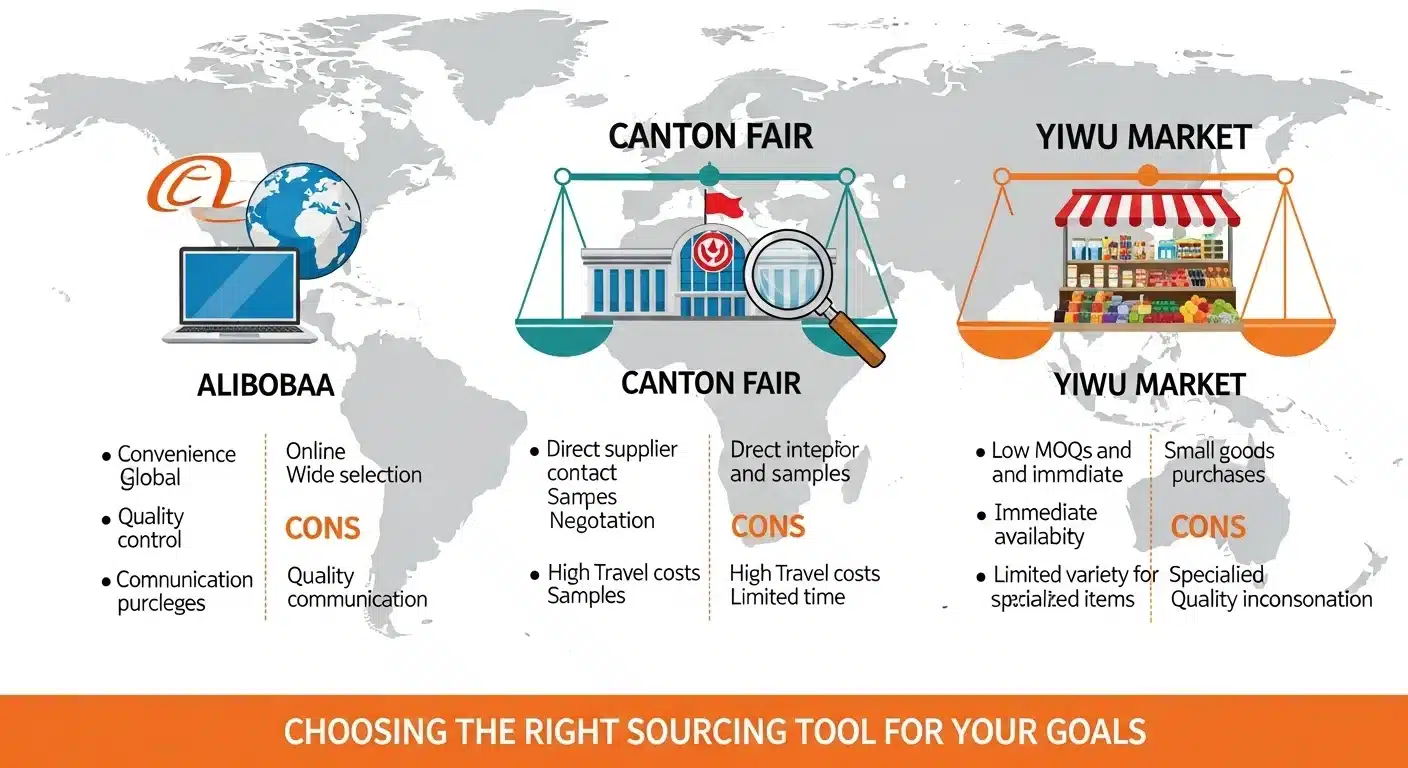
Yiwu Futian Market, also called Yiwu International Trade City, is the faster test-and-scale option. Canton Fair is stronger for larger OEM conversations and broader export-factory access.
Yiwu vs Canton Fair: the buyer decision
If you are testing a new SKU, Yiwu usually wins. Futian Market gives you low MOQ, fast supplier comparison, and a practical way to validate product-market fit before you lock inventory.
Canton Fair is the better fit when you already have volume targets, specification discipline, and a need to talk directly about OEM development. In other words, Yiwu is about speed and lower commitment; Canton is about scale and deeper factory negotiation.
Comparison for low MOQ, variety, speed, and e-commerce fit
For e-commerce buyers, the real question is not which event is bigger. It is which one gets you to a usable sample set faster with less cash tied up in deadstock.
- Low MOQ: Yiwu is usually better for small-batch testing and first-order validation. Canton Fair tends to work better once your volumes and repeat demand are clearer.
- Product variety: Futian Market concentrates a massive range of small commodities in one place, so you can compare multiple suppliers quickly without bouncing across cities.
- Buying speed: Yiwu is faster for shortlisting because you can review samples, packaging, and basic export readiness in a single trip.
- E-commerce fit: Yiwu is stronger for marketplace testing, fast SKU launches, and lower-risk reorders. Canton Fair is better when your e-commerce line needs custom development or larger commercial terms.
That is why many novice buyers get better results in Yiwu first. You reduce the two biggest risks at once: overbuying and choosing a supplier that cannot hold sample-to-bulk consistency.
Why Futian Market is the practical starting point
Futian Market is not just a giant wholesale site. It is a sourcing shortcut because the market lets you test multiple suppliers, inspect packaging, and compare landed-cost inputs before you commit.
For buyers worried about fake factory claims, hidden fees, or weak inspection discipline, that matters more than a flashy event schedule. You can check samples, carton count, export label requirements, and rework risk while the product is still cheap to change.
When Canton Fair makes more sense
Canton Fair is the stronger route when you need broader export-factory access and larger volume negotiation. It is also better when the buyer already understands the product category and wants to discuss tooling, compliance, and long-term factory terms.
If your order size is still uncertain, going to Canton first can slow you down. Yiwu usually gives you a cleaner answer on demand before you invest in a bigger sourcing cycle.
How to screen suppliers in Futian Market
The right workflow is simple: review physical samples, confirm packaging, count cartons, and check export labels before you talk about bulk pricing. For relevant e-commerce goods, ask for CE, EN71, ASTM, MSDS, or material declarations when the category requires it.
Do not judge on unit price alone. Your real landed cost includes domestic pickup, international freight, duties and taxes, inspection, and rework or return risk.
Best use case by buyer type
If you are a startup brand or e-commerce operator, Yiwu is usually the better first stop because it protects margin while you test demand. If you are a procurement team or established importer with larger reorder plans, Canton Fair becomes more useful once the SKU is already proven.
For most small-batch buyers, the answer is straightforward: use Futian Market to validate fast, then use Canton Fair when you are ready to scale the conversation.
Buying Checklist
Buying Checklist
In Futian Market, the safest buy is the one you can verify, compare, and cost out before bulk money moves.
Start with the sample, not the story. For e-commerce buyers, the goal is simple: confirm the product matches the listing, the supplier can repeat it at scale, and the landed cost still protects margin. That means checking quality in hand, comparing at least three suppliers, and getting every cost item on paper before you commit.
Verify Product Quality
Do not rely on booth samples alone. Ask for a physical sample, then check the materials, stitching, finish, weight, and consistency against the spec you actually plan to sell. If the product category requires it, ask for CE, EN71, ASTM, MSDS, or a material declaration before you place the first order.
Compare at Least 3 Suppliers
One supplier can look good and still be a bad market read. Comparing three suppliers in Futian Market gives you a cleaner view of price spread, quality spread, and whether the product is common or genuinely differentiated. This is the fastest way to reduce fake-factory risk and avoid overpaying for a weak offer.
Confirm Packaging
Packaging is part of the product, not an afterthought. Confirm retail box style, inner packing, export carton count, carton dimensions, and label requirements before you approve production. If the seller is vague here, expect avoidable damage, higher freight, or rework later.
Ask About MOQ
MOQ tells you whether the supplier is built for testing or only for volume. For a low-MOQ buyer, the key question is not just the minimum order, but the price at 100, 300, and 500 pieces, and whether the supplier will keep the same material and finish across those tiers. If MOQ is flexible, get the exact breakpoints in writing.
Clarify Shipping Terms
Shipping terms can hide the real cost if you do not ask plainly. Confirm whether the price includes domestic pickup, export carton, international freight, duties, taxes, inspection, and any rework or return handling. If you want a clean landed-cost view, ask for DDP terms and make sure the supplier states what is included and what is not.
Request Samples
Samples are your cheapest insurance. Ask for a sample before bulk production, then compare it with the mass-production version from the same supplier if possible. The point is to test sample to bulk consistency wholesale, not just to admire one perfect unit.
Physical Quality Checks
When the sample is in your hand, check the things that usually fail first: materials, stitching, finish, weight, and unit-to-unit consistency. Small differences here usually become bigger problems after packing and shipping. If the product is supposed to be identical across a batch, verify that it actually is.
Price Checks
Do not accept a single unit price and call it done. Ask for unit price at different quantities, then confirm whether packaging and export cartons are included or billed separately. That is where many buyers lose margin, because the headline price looks good while the real landed cost is not.
Conclusión
If you are testing products for online sales, I would start at Futian Market before you book any bigger buying trip. You get 75,000+ booths, fast comparison shopping, and enough product depth to check samples, packaging, and export marks in one day instead of guessing from photos.
Go in with two suppliers for the same item, ask for a physical sample, carton count, and a written landed-cost breakdown that includes freight, duty, inspection, and any rework risk. If one quote looks cheaper but the sample or packing slips, drop it and keep the supplier that can repeat the first sample in bulk.
Preguntas frecuentes
What is the Futian Market?
Futian Market, also known as Yiwu International Trade City, is the world’s largest wholesale market for small commodities and a major sourcing hub for global buyers. It spans multiple districts with tens of thousands of suppliers covering categories such as gifts, household goods, accessories, toys, stationery, and more. For brands sourcing from China, it offers factory-direct pricing, broad product choice, and strong export support, especially when paired with verified supplier checks and on-site inspection. It is one of the most efficient places to compare products, negotiate terms, and build long-term supply partnerships.
What is the best time to go to Yiwu market?
The best time to visit Yiwu Market is on weekdays during regular business hours, when most booths are open and supplier teams are fully available. Early morning is ideal if you want to avoid crowds and spend more time comparing products, discussing customization, and checking samples. It is also wise to avoid major Chinese public holidays, especially the Lunar New Year period, because many vendors close or reduce staffing. For smooth sourcing, plan your visit with enough time for inspection, negotiation, and follow-up samples.
How many shops are in Futian Market?
Futian Market contains more than 75,000 shops and booths across its districts, making it one of the largest wholesale complexes in the world. The market is organized by product category, which helps buyers move efficiently through relevant sections instead of searching randomly. This scale gives global buyers access to enormous variety, but it also makes supplier verification important before placing orders. Using risk-free inspection and verified sourcing support can save significant time and reduce purchasing risk.
¿Cuál es la diferencia entre Yiwu y la Feria de Cantón?
Yiwu Market is a permanent wholesale marketplace where suppliers operate year-round, while Canton Fair is a large trade exhibition held during specific sessions each year. Yiwu is better for hands-on product comparison, quick sourcing, low MOQ orders, and repeat visits to the same booths. Canton Fair is stronger for seeing new trends, meeting a wider range of manufacturers in one place, and discovering new suppliers in a short time. Many buyers use both: Canton Fair for discovery and Yiwu for direct sourcing, inspection, and order execution.
What is the 3-hour rule in China?
The 3-hour rule is a practical sourcing principle used by buyers to stay efficient during market visits in China. It means you should aim to identify, compare, and shortlist suppliers within a focused three-hour window for each product category, instead of spending all day on unstructured browsing. This approach helps buyers move faster, avoid decision fatigue, and keep negotiations organized. In a large market like Yiwu, the rule works especially well when combined with pre-screened suppliers, inspection support, and clear purchasing targets.