Justin
Your Yiwu supplier says the goods will be ready on the 12th, and your freight agent asks for the commercial invoice by Friday. Between those two messages sits the entire customs clearance processing sequence for a China import: a chain of filings, deadlines and payments that starts before the ship sails and keeps running after the cargo is released. Nothing about it is mysterious, but every step has a named deadline and a named party responsible for it.
The deadlines are the part most importers meet for the first time at the worst moment. The Importer Security Filing is due at least 24 hours before your cargo is laden aboard the vessel in China (19 CFR 149.2). The entry itself must be filed within 15 calendar days of arrival (19 CFR 142.2).
Miss the second one and your goods become general order merchandise, stored at your risk and expense (19 CFR 127.1). This guide walks the sequence in the order you experience it, names who produces every document, and maps each type of customs hold to what you must supply to clear it.
Key Takeaways
- The sequence is fixed: ISF before sailing, entry filing at arrival, duty assessment and payment, release, then the entry summary after release.
- Eight of the ten ISF data elements are due at least 24 hours before your cargo is laden aboard the vessel at the China port (19 CFR 149.2).
- Entry must be filed within 15 calendar days of arrival or the cargo moves to general order at your risk and expense (19 CFR 142.2, 127.1).
- Duties go to CBP, not your broker — normally by ACH debit through ACE, or by the broker advancing the payment and rebilling you.
- Release means the cargo may move, not that review is finished: the entry summary still follows within 10 working days of entry (19 CFR 142.12).
- Your supplier produces the invoice, packing list and certificates; your agent files the ISF, bond and entry. Holds cluster at that handoff.
The Clearance Sequence at a Glance
US import clearance runs in five phases, and the order is fixed. Before your vessel sails, the carrier and your agent file advance security data. When the cargo arrives, your customs broker files the entry. CBP assesses duties, the money moves, the cargo is released, and the entry summary closes out the paperwork. Each phase has a different actor and a different deadline, and many delays trace back to one phase waiting on documents from the previous one.
| Phase | What happens | Who acts | Deadline |
|---|---|---|---|
| 1. Pre-sail security filing | ISF 10+2 data transmitted to CBP | Importer or licensed broker agent | 24 hours before lading (19 CFR 149.2) |
| 2. Entry filing | CBP Form 3461 submitted to secure release | Customs broker under power of attorney | Within 15 calendar days of arrival (19 CFR 142.2) |
| 3. Assessment and payment | Duties, taxes and fees calculated and paid | Importer of record; CBP collects | With the entry summary |
| 4. Release | CBP permits the cargo to move | CBP, then carrier issues delivery order | After entry is accepted and secured |
| 5. Entry summary | CBP Form 7501 with final valuation and duty deposit | Customs broker | Within 10 working days of entry (19 CFR 142.12) |
Two things make China shipments distinct in this sequence. First, the ISF pulls supplier-side information forward — your agent cannot transmit accurate data until the commercial invoice and packing list exist, and those papers live with your factory. Second, the people who produce documents and the people who file them are different companies in different time zones. The regulation itself is identical for every origin country. The handoffs are where China-import clearance slows down.
Reading the sequence this way changes how you diagnose problems. When a shipment stalls, the first question is not “why is customs slow.” It is which phase the shipment sits in and which document that phase is waiting on.
A container stuck before the ship sails is an ISF problem, which usually means a supplier-document problem. A container stuck after arrival without release is an entry problem: bond, power of attorney, or a question in the filing. A container released but not picked up is a carrier-gate problem, not a customs one at all.
Each phase has its own actor, its own paperwork and its own clock. Name the phase and you name the owner of the delay — the difference between a problem you can solve and a mood.

![U.S. Customs Clearance [6 Steps Importers Need to Know]](/wp-content/cache/seraphinite-accelerator/s/m/d/img/c69d85542c158ec55e7359a2fb1e05c1.b2bb.jpg)
File the ISF Before Your Ship Sails
The Importer Security Filing, known as ISF or 10+2, is advance cargo data CBP requires for ocean shipments. Ten data elements come from the importer side and two from the carrier. For most buyers, the responsible party is you — the regulation defines the ISF Importer as the party causing the goods to arrive, which means the owner, purchaser, consignee, or an agent such as a licensed customs broker acting on your behalf (19 CFR 149.1). If your broker files it, they file it in your name.
The deadline has two tiers, and this is the nuance most overviews flatten into one date. Eight elements — seller, buyer, importer of record number, consignee numbers, manufacturer or supplier, ship-to party, country of origin and the commodity HTSUS number — must reach CBP no later than 24 hours before the cargo is laden aboard the vessel at the foreign port. The remaining two — container stuffing location and consolidator — are due as early as possible and no later than 24 hours before arrival at a US port (19 CFR 149.2(b)). China-to-US transits run two to four weeks, so in practice your agent wants the full set before the ship leaves Ningbo or Shanghai, not during the crossing.
Your real task is feeding the broker early
You do not transmit the ISF yourself unless you hold an ABI filer code; your broker does. What you control is whether the broker has the raw material in time. That means the commercial invoice, the packing list, the supplier’s company name and address, and the stuffing location — the warehouse where your cartons were loaded into the container. If your supplier revises the invoice the day before lading, the ISF goes out late or goes out wrong.
CBP’s enforcement tool is a liquidated damages claim of $5,000 per ISF against the bond, with mitigation granted case by case and described in the rule as the exception, not the norm (73 FR 71730; 19 CFR part 113). Late filing can also lead CBP to refuse lading or hold the cargo at arrival.
The practical defense is boring and effective: a standing instruction that the supplier’s final invoice and packing list reach you and your agent a fixed number of days before the cargo readiness date. Buyers who treat the ISF as the broker’s problem usually discover otherwise when a container gets flagged at the US port because the manufacturer name on the filing did not match the factory that actually shipped.
Speed and accuracy are not the same thing here, and accuracy is the one that gets enforced. A filing that goes out on time but carries a wrong consignee number or a stale commodity code can still trigger a hold when the cargo lands, because CBP matches the ISF against the manifest and the entry that follows.
The mismatch surfaces days later, at the port, in front of a demurrage clock — not in the inbox where you could have fixed it cheaply. This is why experienced importers build a reconciliation step: before the vessel sails, someone confirms the ISF data, the supplier’s invoice and the bill of lading draft all say the same thing. Ten minutes of cross-checking on the China side removes a category of arrival-week problems entirely.

Entry Filing When Cargo Arrives
Entry is the formal act of declaring your goods to CBP and requesting release. Your broker files it using CBP Form 3461 or its electronic equivalent (19 CFR 142.3), under a power of attorney you sign once, early in the relationship. The entry names the importer of record, the bond covering the shipment, the HTSUS classification and the declared value. It is the filing CBP checks when it decides whether your container leaves the terminal.
The deadline is 15 calendar days after the merchandise lands, and the consequence of missing it is concrete: unentered goods become general order merchandise, taken into the port director’s custody and stored in a general order warehouse at the consignee’s risk and expense (19 CFR 142.2(a); 19 CFR 127.1). Storage accrues, paperwork multiplies, and goods left too long can be sold at auction. This is not a theoretical penalty; it is what happens when a buyer disappears between the vessel’s arrival and the broker’s requests for the power of attorney.
What decides how fast the entry actually goes in is preparation, not the deadline. A broker needs the arrival notice from the carrier — the document saying when and where the cargo landed — plus your bond instruction and the supplier’s final invoice and packing list. Brokers commonly prepare the entry from pre-alert documents before the vessel docks, so filing follows arrival by a day or two rather than waiting inside the 15-day window. The window is a legal floor, not a schedule. If your broker is still asking for the power of attorney the week the ship arrives, the filing is already running late in every sense that matters to your wallet.
The bond decision comes before the ship docks
Every formal entry needs a customs bond, and the regulation lets you choose between a single transaction bond and a continuous bond (19 CFR 113.62). A single entry bond covers one shipment and is priced per entry, which suits an occasional buyer testing a first order. A continuous bond covers your entries for a term and carries the bond conditions behind ISF enforcement, which suits anyone who imports regularly. Your broker arranges either through a surety; the decision belongs to you, and it should be made before the vessel arrives, because an unsecured entry cannot be filed.
- Power of attorney: sign it with your chosen broker as soon as you book the shipment, not when the ship is a week out.
- Bond type: single entry for one-off orders; continuous if you expect more than a handful of shipments a year.
- Importer of record: confirm who it is — your US entity, or a foreign entity with an assigned CBP number — because the entry and the duty liability follow that name.

How Duties and Fees Get Paid
Duties, taxes and fees are owed to CBP, and the importer of record is the party liable for them regardless of what your supplier agreement says. Assessment happens with the entry summary: CBP calculates duty from the declared value and the HTSUS rate, adds the Merchandise Processing Fee and, for ocean freight, the Harbor Maintenance Fee, and the total is deposited with the filing. If you want to forecast the full landed position — duty plus freight plus these fees — the arithmetic sits in our landed cost formula guide. The figures themselves change with classification and port, so we keep them in the dedicated clearance hub article rather than pinning numbers here that age quickly.
The mechanics matter more than importers expect, because they determine when cash leaves your account. The standard route is ACH debit through ACE: the filer authorizes CBP to withdraw funds through the filer’s financial institution, entries run through statement processing, CBP issues a preliminary statement listing what is scheduled for payment, and the final statement serves as the receipt (CBP Automated Clearinghouse guidance). Your broker sets this up as part of onboarding, and most established importers run it this way.
Two patterns you will actually meet
In the first, you hold your own ACH arrangement and CBP debits you directly on the statement cycle. In the second, the broker advances the duty payment against its own account or bond and rebills you with the entry summary, sometimes with a handling charge. Neither is wrong, but you should know which one you are in before a large shipment lands. The surprises come when a buyer assumes the broker will front the money, the broker assumes the ACH is live, and the statement sits unpaid while the entry summary window ticks.
One clarification worth stating plainly: the duty bill follows the importer of record named on the entry, not the incoterm. Terms like DDP or FOB decide who economically bears the cost between buyer and seller; they do not change who CBP bills. If you ship under a term where the supplier is supposed to cover duty, that settlement happens between you and the supplier, after CBP has already collected from the importer of record.
Two inputs decide the size of the bill, and both deserve attention before the shipment sails. The first is classification: the HTSUS number sets the duty rate, and products that look similar on a listing page can sit in different headings with different rates. The second is declared value: duty runs on the transaction value of the goods, so a deposit structure, a discounted price or included tooling can all move the number.
Both fields flow from your supplier’s invoice into your broker’s filing, which is why a careless invoice does not just slow clearance — it can change what you pay. When classification is genuinely uncertain, CBP’s binding ruling process lets you settle it in writing before the goods ship, instead of discovering the answer on a duty statement.
What Cargo Release Actually Means
Release means CBP has examined the entry and permits the cargo to move out of the port. It is the status your trucker needs before pickup becomes possible. What it does not mean is finality. The entry summary still has to be filed within 10 working days of entry with estimated duties attached (19 CFR 142.12(b)), and the entry can still be examined, corrected or liquidated at a different amount later. Importers who read “released” as “closed” tend to archive the paperwork a month too early.
Sequencing around release trips people up too. CBP release and the carrier’s delivery order are separate gates. The carrier issues the delivery order once its own conditions are met — freight charges settled, original bill of lading surrendered or telex released — and your drayage needs both. A container can sit at the terminal with CBP release in hand because the ocean carrier has not issued its delivery order, and the reverse also happens. When a pickup fails, check which of the two gates is actually closed before blaming customs.
Release also comes in conditional forms. If an exam is pending or documents are outstanding, the cargo may carry a hold despite an otherwise clean entry, effectively staying put until the condition clears. Your broker’s status messages distinguish these cases; ask specifically whether a release is unconditional when timing matters, because “released pending exam” is not the same thing as a truckable container.
The release date also starts the clock that costs money. Free time — the days a container may sit at the terminal before storage charges accrue — is set by the carrier or the terminal, not by CBP, and it keeps running while your entry is being processed.
That gives release speed a cash value: each day a document question stays open is a day of free time consumed, and once free time runs out, daily charges follow until the box leaves. Importers who understand this watch the release date the way others watch the vessel ETA. It is the release date, not the arrival date, that decides whether your pickup lands inside free time or starts paying for the privilege of waiting.
When CBP Holds Your Shipment
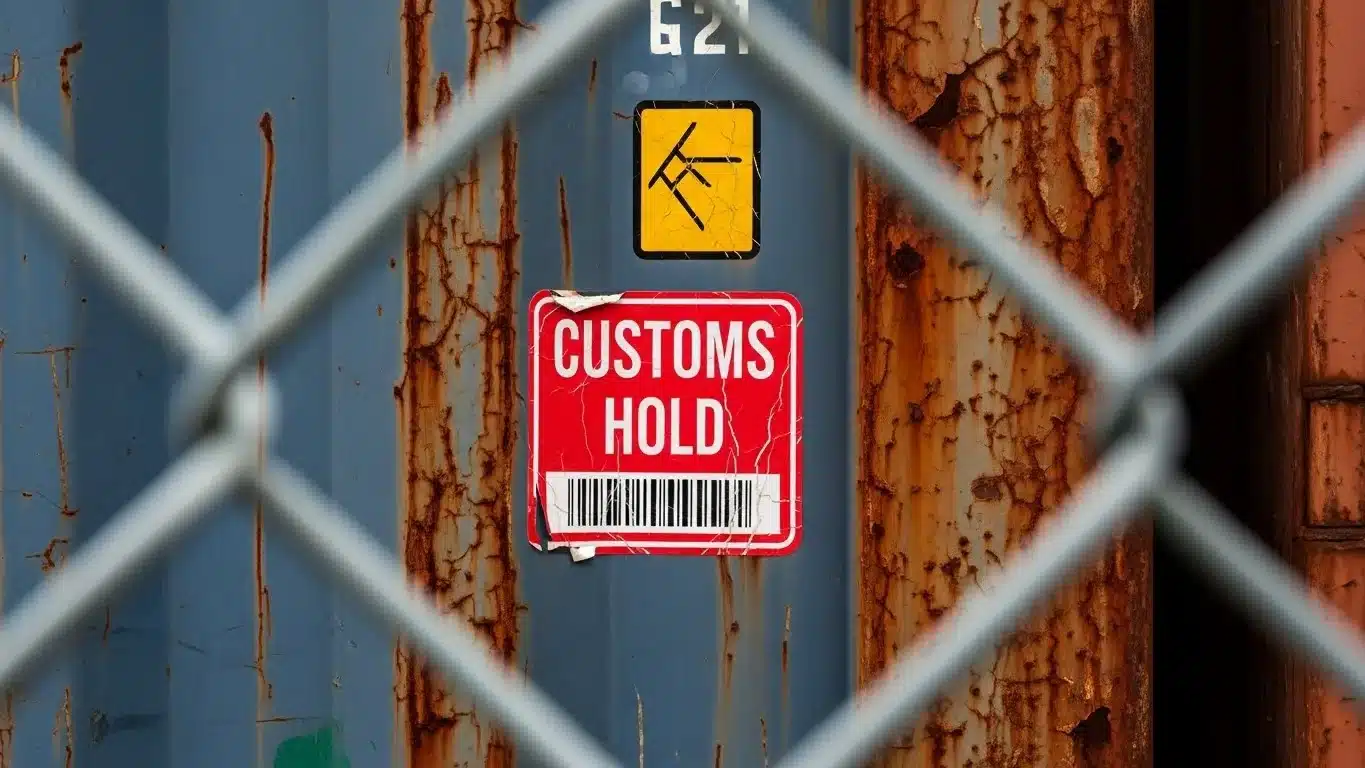
A hold means CBP or a partner agency has stopped the cargo from moving until a question is answered. CBP has broad authority to examine imported merchandise, and the intensity ranges from a document review to X-ray or other non-intrusive imaging to an intensive physical exam of the container. Selection can be random, risk-based, or triggered by something in your filing that does not add up. You cannot control selection. You can control how fast and how completely you respond, which is what decides how long the hold lasts.
| Hold type | What is happening | What CBP asks for | What you must supply |
|---|---|---|---|
| Document review | Officers check the paperwork behind the entry | Invoice, packing list, proof of payment | The supplier’s documents, unedited, plus payment evidence |
| X-ray / non-intrusive exam | Container is scanned; image compared to the manifest | Usually nothing unless the image disagrees with the filing | An accurate packing list that matches what was actually loaded |
| Intensive exam | Container devanned and goods physically examined | Physical access; possibly marking or origin verification | Country-of-origin evidence and product documentation from the supplier |
| Partner agency hold | FDA, CPSC, FWS or another agency reviews regulated goods | Certificates, test reports, labeling or prior notice | The compliance certificates your supplier should have provided pre-sail |
The buyer’s role in every row is the same: you are the bridge between the agency’s question and the supplier’s answer. CBP does not call your factory. Your broker relays the request, you get the document from the supplier, and the hold lasts as long as that round trip takes. Partner agency holds deserve extra attention because the evidence they want — test reports for toys, registration for food-contact items, certificates for electronics — must exist before shipment, not be produced after. Our guides on Amazon customs compliance and baby product safety compliance cover the regulated-category side in depth.
When a hold lands, the response that saves time is short and unglamorous. First, get the hold type in writing from your broker — “exam” is not one thing, and an X-ray scan resolves far faster than an intensive exam that involves devanning. Second, ask who issued it, because a CBP exam and a partner-agency review are cleared through different doors with different paperwork.
Third, send the requested documents as one complete package; a partial answer restarts the review instead of advancing it. Fourth, clarify cost ownership early. Exam fees, devanning and restuffing get billed to someone, and on most shipments that someone is the importer. The hold type tells you which clock is running; the cost owner keeps the invoice from becoming a second surprise.
Supplier Documents vs Agent Documents
Here is the split that explains most China-import clearance delays. Your supplier produces source documents: the commercial invoice, the packing list, product descriptions, origin data, and compliance certificates where the category requires them. Your freight agent and customs broker produce filings: the ISF transmission, the bond, the entry on Form 3461, the entry summary on Form 7501. The filings are only as good as the source documents feeding them, and the two sets of papers are produced by different organizations that rarely talk to each other directly. You are the interface.
| Document | Who produces it | Needed for | What goes wrong |
|---|---|---|---|
| Commercial invoice | Supplier | ISF, entry, valuation | Value on the invoice disagrees with what was declared |
| Packing list | Supplier | ISF, entry, exam response | Counts and weights do not match what was loaded |
| Compliance certificates | Supplier (with labs) | Partner agency review | Certificate missing or naming a different importer |
| ISF transmission | Broker / agent | Pre-sail security clearance | Filed late or with stale supplier data |
| Bond, entry, entry summary | Broker / agent | Release and duty assessment | HS code that misses what the description says |
The mismatch points are predictable. An invoice value revised after the ISF was filed leaves two versions of the truth in CBP’s system. An HS code chosen from the product name instead of the material puts the entry in the wrong duty column and can trigger classification questions. A supplier’s late invoice revision forces an amended filing hours before lading. In our experience, invoice problems sit at the root of more clearance delays than any other document, which is why we keep a separate breakdown of agent invoice differences and customs. None of these are customs mysteries; they are document-handoff failures wearing a customs costume.
The structural reason this failure mode persists is that the two sides answer to different masters. Your supplier is accountable to the order: ship the goods, get paid, move to the next one. Your broker is accountable to the filing: get the entry accepted and keep the cargo moving.
Nobody’s job description says “make the supplier’s papers agree with the broker’s data” — that role only exists if you create it, yourself or through an agent on the ground. There is also a timing asymmetry. The supplier produces documents in the last days before shipment, when factory attention is on production and loading. The broker consumes them at the other end of the transit, when corrections take days and amendments cost money.
The handoff crosses a two-to-four-week ocean gap where neither side can reach the other quickly. Build the bridge or pay for its absence.
The pre-sail check takes an hour and prevents most of it. Confirm the invoice matches what you actually ordered, at the prices you actually agreed. Confirm the packing list counts match the carton marks. Confirm the manufacturer name on the paperwork matches the factory that shipped. Confirm certificates exist for anything regulated. If you would rather have someone run this checklist between your supplier and the filing window, that is exactly what our logistics and shipping service handles for Yiwu shipments — documents verified at the source before they become someone’s customs problem.
For importers moving goods from Yiwu and other China origins
Supplier documents verified before lading, ISF and entry filed on time, duties coordinated through release. One team on both sides of the handoff.
Typical Timelines and Delay Warning Signs
Anyone quoting you a fixed number of days for customs clearance is guessing. What the regulation gives you are floors, not ceilings: entry within 15 calendar days of arrival, entry summary within 10 working days of entry. A clean filing with documents that agree can move through release quickly; an exam selection or an agency review adds time that no buyer can shorten by calling. The honest planning approach is to treat release as a range that widens with every document mismatch, and to spend your effort on the variables you actually control.
Warning signs arrive before delays do. Your broker asks for a revised invoice a second time. The ISF needs an amendment because the supplier changed the stuffing warehouse. A certificate is “coming soon” from the factory. The carrier has not issued a delivery order although CBP released the cargo days ago. Each of these is a small message describing a future hold. Buyers who treat them as routine admin pay for them in demurrage later; buyers who escalate the same day usually resolve them before the container lands.
One habit separates importers who clear cleanly from those who do not: reading the status messages. Broker portals repeat a small vocabulary — filed, accepted, released, hold, exam, statement issued — and each word maps to a phase in this article. “Filed” means the entry went in; “released” means the cargo may move; “statement issued” means the duty number is set and payment is scheduled.
When a status sits on one word longer than that phase normally takes, that is the moment to ask a specific question: which document is missing, which agency is reviewing, which gate is closed. Vague follow-ups produce vague answers. A buyer who asks “what exactly do you need, and from whom, to move this to the next status” gets an actionable reply — usually the same day.
- Document accuracy at the source: every hour spent checking the supplier’s invoice before sailing saves a day of amendment cycles after arrival.
- Speed of response: when a hold lands, the clock runs on how fast you return the requested documents — your broker cannot answer a document question for you.
- One accountable thread: keep the ISF data, the entry data and the supplier’s papers in one place so a mismatch is visible in minutes, not discovered at the port.
The pattern across every phase of this article is the same. Customs clearance processing rewards preparation and punishes improvisation. The deadlines are fixed, the forms are fixed, and the sequence is fixed. What varies is whether your documents cross each handoff clean — and that part is entirely in your hands.
Frequently Asked Questions About Clearance Processing
How long does customs clearance processing take?
There is no fixed duration, and anyone quoting exact days is guessing. The regulation sets floors — entry within 15 calendar days of arrival, entry summary within 10 working days of entry — while clean filings can be released quickly. Exams and agency reviews add time the buyer cannot control, so document accuracy is the real lever.
Who handles customs clearance for my import?
A licensed customs broker files the entry and the ISF on your behalf under a power of attorney. The importer of record stays responsible for the accuracy of everything filed, so the broker acts as your agent, not your substitute.
What does clearance processing complete mean for container freight?
For ocean freight it corresponds to CBP release: the cargo may move out of the terminal. The entry summary still has to follow within 10 working days of entry, and the entry can be reviewed afterward, so keep the paperwork.
Who pays import duties, the buyer or the supplier?
CBP collects duties from the importer of record named on the entry. Which party economically bears the cost depends on your incoterm — DDP shifts it toward the seller, FOB leaves it with you — but that settlement happens between you and the supplier, after CBP has been paid.
What documents must my China supplier provide for clearance?
The commercial invoice, the packing list, accurate product and origin data, and compliance certificates when the product category requires them. Your broker produces the filings — ISF, bond, entry, entry summary — but those filings depend on the supplier’s source documents.
What happens if the ISF is filed late?
CBP may pursue a liquidated damages claim of $5,000 per ISF against the bond, and can also refuse lading or hold the cargo at arrival. Amending the filing before the vessel sails reduces exposure, which is why the supplier’s final documents need to reach your broker early.
Conclusion
Customs clearance processing is a fixed sequence with fixed deadlines, and the part that varies most is how cleanly your documents cross each handoff. The ISF needs your supplier’s data 24 hours before lading, the entry needs a bond and a power of attorney before arrival, duties move through ACH statement processing, and release starts the 10-working-day entry summary clock. Run the checklist before your next shipment sails.
Pre-Sail Clearance Checklist
- Final commercial invoice and packing list delivered to your broker before the ISF window opens.
- Power of attorney signed and the bond type chosen — single entry for one-off orders, continuous for regular imports.
- Manufacturer name, stuffing location and HTSUS classification agreed in writing before lading.
- Compliance certificates in hand for anything regulated, naming you as the importer.
If your goods leave Yiwu or another China origin and you want the supplier-side documents verified before they reach the filing window, talk to the team behind this site. We coordinate supplier paperwork, ISF, bonds and entry for China-import buyers, so the handoffs described in this guide run clean instead of becoming holds at the port — and you spend your time selling the goods rather than chasing them.