Justin
Choosing between Yiwu and Shenzhen for electronics sourcing isn’t just about geography—it’s a fundamental decision between a commodity trading hub and a hardware innovation ecosystem. Your project’s requirements for customization, quality, and scale will determine which market is the right fit.

This article breaks down the key differences, from product focus to logistics. We’ll compare how Yiwu’s District 2 offers low-MOQ cables and chargers for promotional use, while Shenzhen’s Huaqiangbei district can produce complex, 56-layer PCBs in as little as 3-5 days. You’ll get a clear analysis of price versus quality, MOQ expectations, and the practical logistics of shipping from each region.
The “Tech Tier” Difference: Commodity vs. Innovation
Yiwu is a small-commodity trading hub for finished, low-complexity electronics like USB drives and simple gadgets, where sourcing focuses on price, cosmetic variations, and certification checks. Shenzhen is a hardware innovation ecosystem built for custom electronics, offering integrated access to PCB fabs, SMT lines, and assembly houses for developing and scaling products like smartphones and IoT devices.
| Tech Tier | Yiwu | Shenzhen |
|---|---|---|
| Core Model | Commodity Distribution Hub | Hardware Innovation Ecosystem |
| Product Focus | Finished, low-complexity goods (USB drives, simple gadgets) | Custom, high-integration products (smartphones, IoT, drones) |
| Engineering Control | Minimal; “black-box” products | Full control over BOM, PCB design, firmware |
| Key Sourcing Activity | Price negotiation, cosmetic variations, compliance checks | DFM/DFT discussions, firmware customization, tooling changes |
| Ideal For | Promotional items, low-stakes giveaways, non-critical accessories | Developing and scaling new hardware products |

Yiwu: The Commodity Electronics Hub
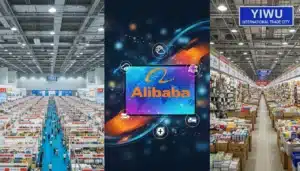
Yiwu is optimized for ‘small commodities’ and non-technical consumer electronics. The focus is on high-volume, low-complexity goods like basic USB drives, simple gadgets, lights, and accessories.
Suppliers here typically offer low minimum order quantities (MOQs) on a per-carton basis for off-the-shelf SKUs. There is limited engineering or customization support available; the operational logic is trading, not innovation.
Technical due diligence centers on verifying product compliance with standards like CE, FCC, and RoHS, and conducting batch functional testing. The process does not involve design control, BOM management, or firmware ownership.
This model is ideal for promotional items, low-stakes giveaways, and non-critical accessories. The priority is low entry cost and order flexibility, accepting a “black-box” product where the main variables are price, cosmetic variations, and certification status.
Shenzhen: The Hardware Innovation Ecosystem
Shenzhen functions as a ‘one hour business circle’ for electronics manufacturing. PCB fabs, plastic injection molders, SMT lines, and EMS providers are geographically clustered, enabling rapid iteration from prototyping to mass production.
The export structure is driven by high-integration products like smartphones, drones, and IoT devices. In 2023, Shenzhen’s total trade reached 3.87 trillion CNY, with electronics and machinery accounting for roughly 1 trillion CNY of exports.
The ecosystem supports full OEM/ODM workflows. This includes DFM/DFT discussions, firmware customization, tooling changes, and scalable production runs. Suppliers are accustomed to global compliance regimes.
Shenzhen provides the engineering transparency and control necessary for developing new hardware. Buyers can manage the BOM, PCB design, and firmware, gaining access to the complete design, prototyping, and manufacturing stack for sustained innovation.
Yiwu District 2: Cables, Chargers & Cases
Yiwu International Trade Mart District 2 is the central hub for sourcing low-to-mid-spec mobile phone accessories in bulk. The 3rd floor, dedicated to Electronic Appliances, concentrates vendors selling USB cables, wall chargers, power banks, phone cases, and screen protectors, optimized for promotional giveaways and high-volume, low-cost orders.

The Core Product Mix: Cables, Chargers, and Protective Gear
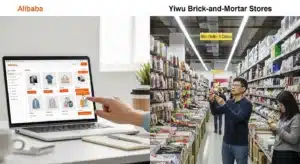
The 3rd floor of District 2, specifically the Electronic Appliances & Photographic Equipment section, functions as a one-stop shop for mobile phone accessories. Stalls are densely packed with vendors offering a standardized range of commodity items.
For cables, the market is dominated by standard connector types: USB-A to Lightning, USB-A to USB-C, and micro-USB. Vendors often market these as “charging & data cables,” with features like nylon braiding or TPE (Thermoplastic Elastomer) jackets highlighted for perceived durability.
Charger offerings are similarly standardized, focusing on finished goods for promotional use. This includes basic USB wall chargers, car chargers, wireless charging pads, and power banks. It’s common to see these products bundled together in a single booth’s inventory.
The accessory mix is designed for convenience. A typical stall might group power banks, data cables, charging heads, phone cases, and tempered glass screen protectors. This clustering allows bulk buyers to source a complete accessory pack from a single vendor, streamlining logistics for promotional bundles or low-cost retail sets.
Sourcing Strategy: Technical Depth and Buyer Considerations
Yiwu District 2 is positioned for sourcing finished accessories, not electronic components. This makes it ideal for buyers whose primary drivers are price and minimum order quantity (MOQ), rather than deep custom engineering or stringent certification requirements.
When evaluating products like chargers, the technical specifications presented are buyer-facing and focused on visible features. Key parameters include output current (e.g., 1A, 2A), output voltage (standard 5V DC for USB-A ports), the number of ports, and claims of fast-charge compatibility. Product listings emphasize connector types and cable length, with less consistent focus on detailed internal safety certifications or compliance with standards like USB-IF.
The market supports value-added services like OEM and ODM, specifically for branding. Vendors commonly offer custom logos on products and tailored packaging, catering directly to businesses needing branded promotional items or basic accessory packs for retail.
This contrasts with sourcing hubs like Shenzhen, where the supply chain extends to the component level. Engineering-driven projects—such as custom PCB design, certified high-wattage USB-PD chargers, or MFi-certified cables—are typically negotiated with factories in Guangdong. Yiwu District 2 excels in providing the commodity-grade cables, generic chargers, and low-cost cases that form the backbone of high-volume, cost-sensitive accessory sourcing.
Shenzhen Huaqiangbei: PCBA, Chips & Smart Devices
Shenzhen’s Huaqiangbei district provides rapid, high-tech electronics manufacturing. It specializes in complex multi-layer PCBs, quick-turn prototypes, and full smart device assembly, supported by extensive SMT lines and strict international quality certifications for reliability.
| Capability | Specification | Key Details |
|---|---|---|
| PCB Layer Complexity | Up to 56 layers | Supports high-density interconnect (HDI), impedance control, and blind/buried vias. |
| Production Volume & Speed | 6,000 PCB types/month; 1-5 day lead times | Scales from prototype to mass production. Double-sided PCBs in 1 day, multilayer in 3-5 days. |
| Assembly Infrastructure | 7 SMT/DIP lines; 10,000 m² facilities | High-throughput lines for large-volume PCBA orders in expansive manufacturing workshops. |
| Materials & Finishes | Ceramic, Rogers, flexible boards; Immersion gold, OSP, HAL | Specialized substrates for RF/high-frequency apps. Multiple surface finish options for performance and durability. |
| Quality Certifications | IPC-A-610, IPC-6012, ISO 9001, IATF 16949, UL, RoHS | Governs assembly acceptability, PCB performance, process control, and automotive/medical compliance. |

Advanced Manufacturing Capabilities
Shenzhen’s electronics supply chain is built for speed and scale. Suppliers can produce up to 6,000 different PCB types in a single month, seamlessly transitioning from initial prototypes to full mass production runs. This flexibility is housed in large-scale facilities, with some manufacturers operating workshops spanning 10,000 square meters.
Assembly capacity matches this scale. High-throughput surface-mount technology (SMT) and dual in-line package (DIP) lines are dedicated to handling large-volume PCBA orders. The most significant advantage is time. Lead times are exceptionally fast, with double-sided PCBs ready in one day and complex multilayer boards completed within three to five days. This rapid turnaround is further accelerated by immediate access to a vast local stock of standard electronic components, which streamlines the entire supply chain.
Technical Specifications and Quality Standards
The technical prowess here is defined by complexity and precision. PCB fabrication can reach up to 56 layers, with standard advanced capabilities covering 20-layer boards that include impedance control, HDI technology, and blind or buried vias. Manufacturers work with specialized substrates like ceramic, metal cores, and Rogers laminates for high-frequency applications, alongside flexible and rigid-flex boards for innovative designs.
Surface finishes are selected for specific performance needs, ranging from Hot Air Solder Leveling (HAL) and Organic Solderability Preservative (OSP) to immersion gold, tin, silver, and hard gold for connector contacts. This technical execution is underpinned by rigorous quality standards. Adherence to IPC benchmarks—specifically IPC-A-610 for assembly acceptability and IPC-6012 for rigid PCB performance—ensures reliability.
Suppliers further validate their processes through international certifications, including ISO 9001 for quality management, ISO 14001 for environmental management, and ISO 13485 for medical devices. For automotive and other high-reliability fields, certifications like IATF 16949 and AEC-Q100 are common. Compliance with safety and environmental standards such as UL, RoHS, and REACH is standard, ensuring products meet global market requirements.
Price vs. Quality: Why Yiwu is Cheaper
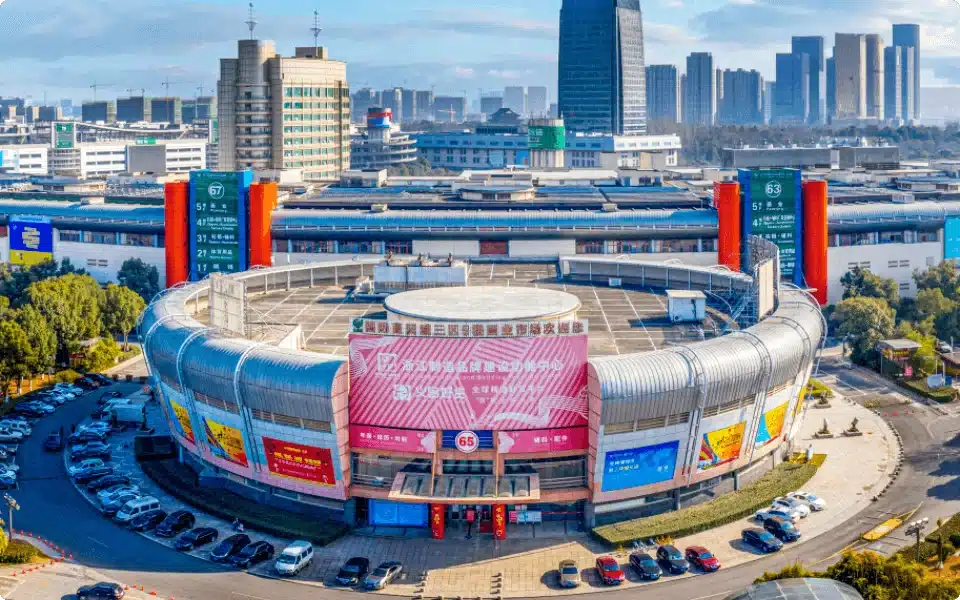
Yiwu achieves lower prices through a high-volume, competition-driven model focused on simple, mass-market goods sold directly from factories with small, flexible order sizes. This contrasts with Shenzhen’s ecosystem, which prioritizes technical innovation, customization, and higher quality for electronics, resulting in higher per-unit costs and larger minimum orders.

The Yiwu Price Engine: Volume, Competition & Simple Goods
Yiwu’s market structure is built for low-cost, high-volume turnover. The sales model connects buyers directly to factories, cutting out middlemen to offer factory-direct pricing on small commodities. This is amplified by the intense competition among over 100,000 shops in a concentrated area, which drives price wars and keeps margins razor-thin.
The product focus is on mass-produced, simple items that are cheap to manufacture. Examples include basic socks for around $0.05 each, toys for about $1, and low-tech gadgets in the $2-3 range. To lower the barrier for buyers, Yiwu suppliers offer flexible minimum order quantities (MOQs) of 10-50 pieces per product and often allow different products to be mixed in a single order, reducing upfront capital risk.
The Quality & Customization Trade-Off
The lower prices in Yiwu come with specific compromises. Products are often cheaper in quality, featuring simpler electronics that may lack advanced features or durable materials. There is typically little to no support for deep customization or private labeling; most suppliers are traders offering standard, off-the-shelf goods.
This environment places the responsibility on the buyer to verify critical product certifications like CE, FCC, and RoHS for compliance and safety. Suppliers in Yiwu prioritize high-volume turnover over technical specifications, making the ecosystem better suited for promotional items and basic commodities than for complex, customized technology.
MOQ Differences for Custom Electronics
MOQs for custom electronics, often ranging from 500 to 5,000 units, are driven by fixed costs like machine setup, bulk material procurement, and rigorous testing. Higher customization in components, packaging, or software directly increases the MOQ. While Yiwu suppliers may offer lower MOQs for simpler goods, Shenzhen’s advanced manufacturing for complex electronics typically requires higher minimums to be economically viable.

What Drives MOQs in Custom Electronics Manufacturing
The minimum order quantity for a custom electronic product is not an arbitrary number. It’s the economic threshold where production becomes viable for the manufacturer. This is primarily determined by the need to spread fixed costs across the production run. These costs include machine setup, specialized tooling, and the labor required for comprehensive testing—visual inspections, electrical integrity checks, software validation, and environmental stress testing.
Bulk material procurement is another major driver. Components aren’t bought individually. Wire, for example, comes on spools, and crimp terminals are purchased on reels containing several thousand pieces. Raw plastic for injection molding or cable jacketing is ordered in pellets by the hundreds of pounds. Manufacturers must order these materials in their standard commercial quantities, which directly dictates the scale of your production run.
The level of customization escalates the MOQ significantly. A unique printed circuit board (PCB) design with irregular shapes or non-standard components can’t leverage mass-produced efficiencies. A cable assembly with a bill of materials (BOM) containing hundreds of individual parts introduces immense logistical complexity. Even custom retail packaging for a specific SKU adds setup and minimum print runs. This complexity often pushes MOQs toward the 5,000-unit range to justify the engineering and setup time.
Manufacturing processes themselves contribute to high minimums. Techniques like plastic extrusion or overmolding generate initial material waste during machine calibration and setup. Running these processes for a small batch is highly inefficient, as the waste and setup time represent a large portion of the total cost. Producing thousands of units amortizes this inherent waste and makes the per-unit cost reasonable.
How MOQs Vary: Yiwu Simplicity vs. Shenzhen Complexity
The sourcing hub you choose dramatically impacts the MOQ you’ll encounter, reflecting different industrial specializations. In hubs like Yiwu, which focus on lighter manufacturing and commoditized goods, you might find MOQs as low as 50-100 units for simpler items like promotional USB drives. This flexibility often comes from smaller workshops using less automated, more labor-intensive processes. However, this lower MOQ usually results in a higher per-unit cost, as the supplier cannot leverage the same economies of scale.
Shenzhen, as a global epicenter for advanced electronics, presents a different model. Factories here are equipped for complex custom PCB fabrication, chip programming, and the assembly of smart devices. This requires precision machinery, stringent testing protocols (like electrical IC validation), and coordination with deep, specialized supply chains. To make such a capital-intensive operation profitable, standard MOQs for custom electronics in Shenzhen typically start at 500 units and can easily reach 5,000.
MOQ is often negotiable, but it’s a direct trade-off with unit price. Asking a supplier to run a batch of 200 units when their standard MOQ is 1,000 means they must absorb the same fixed costs over fewer items. They will compensate by charging more per unit. Vertically integrated suppliers, who control more stages of production (like molding their own connectors), can sometimes offer more favorable MOQ terms because they have greater internal cost control and flexibility.
There is no universal industry standard mandating a specific MOQ for electronics. The range of 500 to 5,000 units is a common industry reality based on covering surplus inventory, setup costs, and ensuring a profitable margin. The final number is a function of the specific supplier’s capabilities, equipment, and the exact technical demands of your product. A simpler assembly might fit at the lower end, while a highly engineered device with custom firmware and packaging will demand a commitment at the higher end of that spectrum.
Logistic Speeds: HK Port vs. Ningbo Port
Hong Kong Port excels in terminal productivity with crane speeds of 36-40 moves per hour, offering fast vessel turnaround. Ningbo Port, the world’s 3rd busiest container hub, provides superior capacity and direct mainline connectivity, often resulting in shorter total lead times for East China exports despite slightly slower crane benchmarks.

Hong Kong Port: High Productivity but Declining Throughput
Hong Kong’s container crane productivity averages 36 moves per crane-hour, with peaks reaching 40 MPH, ranking it among the world’s most efficient ports. This high crane speed translates to fast vessel port stays and berth clearance once a ship is docked.
However, its container throughput has fallen out of the global top 10. This decline has led to fewer direct shipping services and increased reliance on transshipment for many routes.
Ningbo Port: Volume, Connectivity, and Real-World Lead Times
Ningbo-Zhoushan Port handles approximately 35.3 million TEU annually, ranking 3rd globally for container throughput. It offers deepwater capacity and strong mainline connectivity, which reduces waiting and feeder time in the supply chain for exports from East China.
For realistic planning, shippers should account for median port delays of 1-2 days at mainland hubs like Ningbo, with spikes during peak holiday seasons. This capacity and connectivity often support competitive door-to-door shipping times for goods from Yiwu, even if per-crane speed benchmarks are slightly lower than Hong Kong’s.
Final Thoughts
Choosing between Yiwu and Shenzhen for electronics sourcing isn’t about finding the ‘best’ market, but the right one for your specific needs. Yiwu excels as a distribution hub for simple, finished goods where price and low minimum orders are the priority. Shenzhen operates as an innovation ecosystem, built for developing and scaling complex hardware where engineering control and quality are non-negotiable.
Your decision ultimately hinges on your product’s technical requirements and business goals. For promotional cables, basic chargers, or simple gadgets, Yiwu’s commodity-focused model offers speed and cost advantages. For custom PCBs, smart devices, or any product where performance and reliability are critical, Shenzhen’s integrated supply chain and technical expertise are indispensable. The most effective sourcing strategy often involves using both hubs strategically—Yiwu for cost-sensitive commodities and Shenzhen for technical innovation—to build a balanced and resilient supply chain.
Frequently Asked Questions
Is Yiwu good for electronics?
Yiwu is suitable for low-cost, simple electronics and promotional gadgets, but not for high-end or safety-critical items like custom PCBs. Products are typically low to mid-range quality, so any electronics from Yiwu must be backed by verified CE, FCC, RoHS, EN-71, or CPSIA reports and third-party quality control before export.
Can I buy refurbished phones in Yiwu?
Yes. Several Yiwu-based trading companies wholesale used and refurbished smartphones, including iPhones, through official market platforms and B2B portals. Orders are typically bulk, with MOQs around 20 to 100+ pieces, and unit prices can be tens of percent below new retail prices.
Which city is better for mobile accessories?
Shenzhen is better for higher-end, certified accessories like MFi-grade iPhone cables and custom PCBs, offering advanced R&D and international standards. Yiwu is better for ultra-cheap, high-variety promotional items like generic cables and low-cost cases, with low MOQs and fast off-the-shelf supply, but generally lower quality and less customization.
How far is Shenzhen from Yiwu?
Shenzhen and Yiwu are about 970 km apart in a straight line, with a practical road or rail distance of roughly 1,140 to 1,180 km. This is the key logistics distance for moving goods between the two major sourcing hubs.