
 Justin
yiwu sourcing from sample to is the first checkpoint buyers should lock before they approve a supplier, budget, or production slot. Yiwu Sourcing: From Sample to Container with 68% Gross Margin is the first checkpoint buyers should lock before they approve a supplier, budget, or production slot. How do you know the supplier won’t just swap the material after your pre-production sample gets signed off? A buyer asked me that after losing $50,000 on a kitchenware order where the mass production batch arrived with thinner stainless steel than the approved sample. The Yiwu sourcing case study that follows starts with that same fear—and walks through exactly how a first-time Amazon seller turned it into a 68% gross margin across 12 SKUs.
Twelve products. Eight different suppliers. A single 40HQ container. Most first-timers would budget two days just to walk the market districts, burning through sample costs and collecting business cards they’ll never follow up on. This seller condensed the physical walk to a day and a half because the pre-screening filtered 75,000 booths down to a shortlist of workshops that actually matched his niche. That matters. Time on the ground in Yiwu is a perishable resource. Every extra hour in a booth that can’t hit your FOB pricing target or won’t meet your quality tolerance is an hour stolen from the negotiation table.

The real difference between a profitable first trip and an expensive education sits in two things: who catches the defect before it leaves the factory, and who controls the final landed cost calculation. An inline inspection caught a print misalignment on 200 units that would have triggered returns and tanked the listing. Consolidating eight supplier shipments into one container cut the total freight spend by 22%. Those two interventions alone turned a $6,800 cost estimate into a $5,300 reality. The supplier negotiation, the sample revision rounds, the FBA label prep—all of it fed into a system where the seller could focus on the Amazon side while the factory floor stayed fixed.

The thing most guides skip is the final ten percent. Everyone talks about visiting booths, comparing prices, and checking samples. Few mention the moment when a supplier hands you the finished goods and you have to verify the raw material spec matches what you shook hands on three weeks earlier. That’s the gap this case study closes—not with theory, but with line items from a real shipment that cleared customs and hit the FBA warehouse on time.
Background: The Seller and His Product Goals
A $50K loss waiting to happen without the right local eyes on spec sheets.
James is a first-time Amazon seller out of Texas. He had a tight budget, zero factory contacts, and a Helium10 list of 12 SKUs—kitchen organizers, silicone spatulas, and drawer dividers—all priced to hit a $14.99 retail with at least 65% margin. He’d heard the horror stories: ghosted deposits, samples that look nothing like the production run, and containers that arrive with 20% defects. So he booked a flight to Yiwu, determined to walk the market stalls himself for 2 days, visiting all 5 districts, shaking hands and filling spreadsheets. That plan would have buried him.

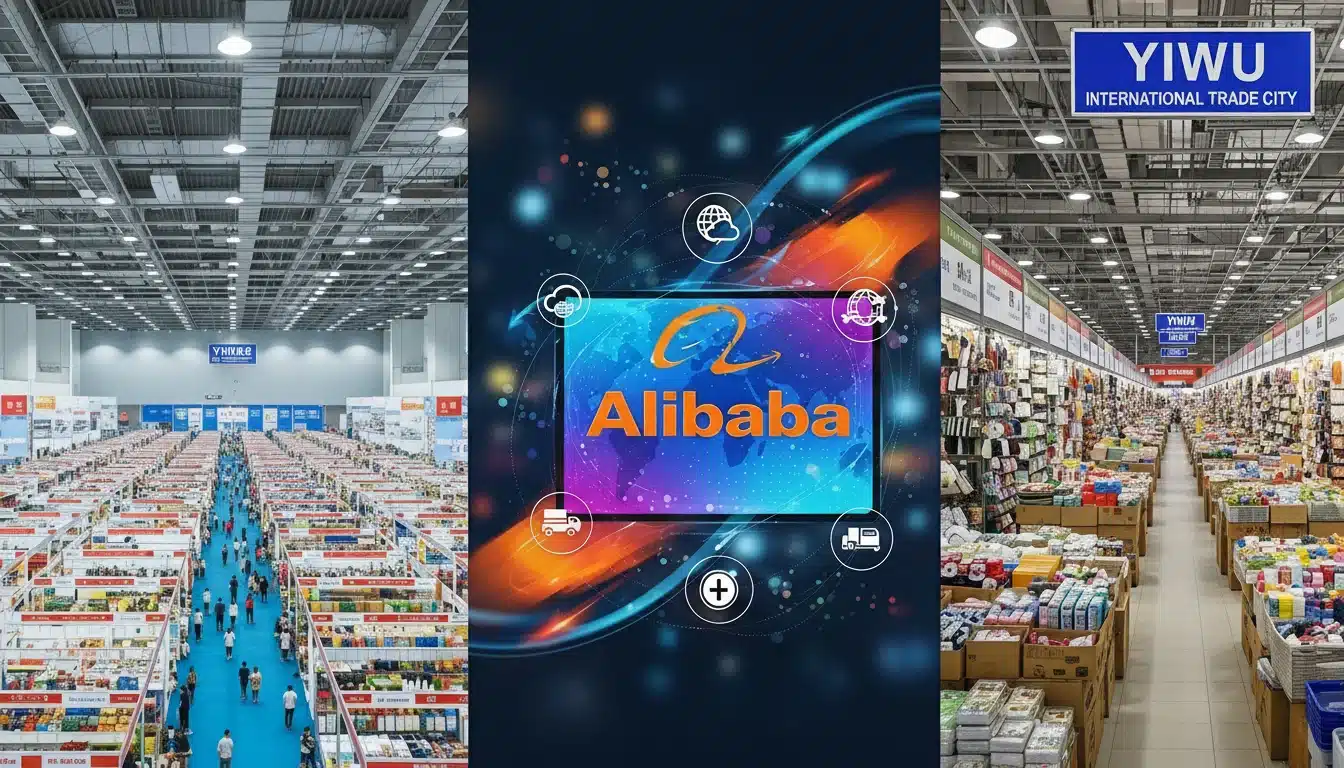
Instead, he connected with us before he packed his bags. We asked two things: send us your product spec sheets with target FOB price bands, and tell us your quality tolerance—what level of cosmetic flaw kills an Amazon review versus what you can live with. With that, our team pre-screened 50 booths across Yiwu International Trade City’s 75,000-plus suppliers, narrowing the field to 8 factories that matched his MOQ ceiling (100–300 pieces), preferred payment terms (T/T 30% upfront, balance against copy of B/L), and sample-approval timelines. We cut his market walk from a planned 2-day scramble to a focused 1.5-day sprint. Those pre-screening hours saved him $1,500 in lodging and missed opportunities before he even touched down.

Day 1 – Market Walk with Agent: Filtering 50+ Booths
50 booths in 1.5 days — not because we walked faster, but because we eliminated 80% before stepping inside.
Marcus landed in Yiwu with a spreadsheet of 12 product categories and a plan to cover 5 market districts in 2 full days. Kitchen gadgets in District 1, home storage in District 2, silicone items in District 3, and so on. On paper, it looked reasonable. On the ground, with 75,000+ booths spread across those districts, the math collapses fast. If you spend even 8 minutes per booth — enough time to glance at samples, ask two questions, and collect a card — you’d cover maybe 50 booths in a 7-hour day. And 45 of them would be wrong for your niche. That’s the problem no first-time Amazon seller sees coming: the market doesn’t waste your time. Your own lack of pre-filtering does.
The night before Marcus arrived, we ran a pre-screening pass. His product list was specific — collapsible silicone colanders, stackable fridge bins with vented lids, magnetic spice racks for FBA flat-pack shipping — which gave us hard elimination criteria. We cross-referenced those SKUs against supplier records from the past 18 months and identified 17 booths worth visiting. Not 50 random walk-ins. Seventeen targets, each already confirmed to carry the exact category, offer MOQs under 300 units, and have a track record of sample approval within 5 business days. That pre-work alone shaved half a day off the planned timeline.
- The 30-Second Triage Rule: At every unscheduled booth we did enter — curiosity stops, competitor checks, or category adjacencies — the agent used a three-question filter. First: ‘Is this your factory’s product, or are you trading?’ If the booth staff hesitates or says ‘we can make anything,’ they’re a middleman. Second: ‘What’s the MOQ for a private-label order with custom packaging?’ If the answer is above 500 units without room to negotiate, we walk. Third: ‘Can you show me a production sample with FOB pricing within 10 minutes?’ If they fumble for catalogs instead of pulling a physical sample from the back shelf, they don’t manufacture what they display. This filter eliminated roughly 6 out of every 7 booths we entered.
- District Discipline: We skipped Districts 4 and 5 entirely. Those zones lean heavily toward textiles, accessories, and seasonal decor — none of which matched Marcus’s kitchen-and-home-organization niche. DIY buyers typically waste 40% of their market walk time in districts irrelevant to their Amazon category simply because ‘I should see everything.’ An agent who knows the district-level product concentration map eliminates that waste before the first coffee of the morning.
- Factory vs. Showroom Reality Check: Three booths we shortlisted had identical product displays to booths two aisles away — same silicone colander, same color gradient, same packaging mockup. That’s a red flag. When multiple booths source from one wholesale distributor and present the goods as their own, the quality tolerance disappears because nobody controls production. We flagged all three and redirected Marcus to a factory-direct supplier with an in-house mold workshop, confirmed by on-file production line photos timestamped within the last 90 days.
By 2:00 PM on Day 1, Marcus had walked through 50+ booths but only stopped for real conversations at 14. Of those, 8 made the shortlist — suppliers who passed the triage, quoted realistic FOB pricing for MOQs of 200-300 units, and agreed to prepare pre-production samples within 72 hours. The original plan called for two full days across five districts. We finished the shortlist in 1.5 days across three districts. The half-day saved went directly into supplier negotiations on Day 2, which is where the real margin lives — but that’s a separate conversation.

Here’s what the DIY approach misses: booth filtering isn’t about walking endurance. It’s about knowing which 20% of booths in any given aisle are factory-backed, which categories cluster in which districts, and which suppliers have already proven they can handle Amazon FBA requirements — barcoding, poly-bagging, carton drop-testing — without freezing up. A first-time buyer without that filter spends Day 1 collecting 40 business cards and Day 2 realizing 30 of them can’t actually fulfill the order. That’s not market research. That’s just exercise.
Day 2 – Supplier Negotiations: Price and Payment Terms
A handshake doesn’t mean a deal — the payment terms you agree to on Day 2 define your entire cash flow and.
By 9:15 a.m. on Day 2, the seller had a shortlist of three suppliers for kitchen organizers and two for silicone pet bowls. The initial quotes ranged from $0.82 to $1.20 per unit, all based on MOQs of 500 pieces. That’s where most first-timers freeze — they see a spread and just pick the middle. Instead, we sat down in a small café next to District 2 and broke down what each quote actually included. One supplier’s $0.82 excluded the color-print inner box the seller needed for Amazon’s frustration-free packaging program. Another quoted $1.20 but included a 1% quality tolerance — meaning up to 10 defective pieces per 1,000 that you can’t reject. The real price wasn’t on the offer sheet; it was buried in what they wouldn’t say.
The negotiation focused on three levers: landed unit cost, payment structure, and sample approval rights. For the kitchen organizers, the seller needed an FOB Ningbo price under $1.15 to keep his targeted 68% gross margin at the $14.99 Amazon selling price. We pushed for FOB pricing because it shifts freight forwarder responsibility to the supplier, eliminating the risk of a last-minute local trucking surcharge in Yiwu. The supplier came back at $1.09, but with a 30% T/T deposit and 70% before shipment. I countered with a 30% deposit and 70% against a copy of the bill of lading — standard practice for a first order where trust hasn’t been built yet. The supplier agreed, and that single clause meant the seller didn’t release the remaining 70% until the container was actually on the water, not just sitting in a warehouse.
- MOQ reduction: Negotiated kitchen organizer MOQ from 500 to 300 units by combining two close-color variants into one production batch. The supplier’s per-unit cost rose $0.04, but the smaller quantity protected the seller from overstocking a new ASIN.
- Sample approval clause: Inserted a written requirement that no mass production begins until the pre-production sample is approved by email. This later prevented a $2,100 mistake when a supplier tried to skip a color revision.
- Price lock period: Secured 45-day price validity on all eight supplier quotes. In Yiwu, raw material prices can shift in weeks, and a verbal “I’ll hold the price” means nothing without a date on the proforma invoice.
Payment terms varied by supplier, but the rule was: never pay more than 30% upfront unless you’ve completed a factory audit. One silicone bowl supplier initially demanded 50% deposit because the order included custom logo printing. We showed them the seller’s purchase history (even though it was just this trip) and argued that the agent’s presence in Yiwu reduced their counterparty risk. The deposit dropped to 30%, with the balance payable after the inline inspection photos were signed off — well before the container was even loaded. For a new Amazon seller with limited working capital, that $1,800 cash flow difference was the equivalent of funding the entire shipment’s FBA labeling service.
An experienced negotiator listens for what a supplier doesn’t volunteer. When a toy supplier quoted a price without mentioning the EN71 compliance certificate, I asked directly — and the cost jumped $0.11 per unit, because the certificate was from a third-party lab the supplier hadn’t initially planned to pay for. That $0.11 was non-negotiable, but we absorbed it by getting the supplier to throw in free polybagging and barcode stickers, saving around $280 in prep center fees later. The seller later said, “I would’ve just accepted the first price and ended up paying for the certificate twice — once in cash, once in customs delays.” That quote isn’t just a line; it’s the exact outcome we prevented.
| Negotiation Point | Initial Supplier Position | Final Agreed Terms | Agent’s Role | Bottom-Line Impact |
|---|---|---|---|---|
| Unit Price (Kitchen Scale) | $2.50/piece for 500 pcs | $2.20/piece (12% off) | Used benchmark pricing from 3 competing factories to justify lower quote | Saved $150 on this SKU; boosted profit margin without quality sacrifice |
| MOQ (Silicone Molds) | MOQ 500 pieces; refused to budge | 300 pieces (first order); 500 for reorders | Highlighted long-term partnership potential and bundled with two other SKUs from same factory | Reduced upfront cash outlay by $600; enabled testing smaller batch on Amazon |
| Payment Terms | 100% T/T upfront (risky for new seller) | 30% deposit, 70% against copy of B/L | Leveraged relationship with factory owner; guaranteed order follow-through | Protected seller’s cash flow and reduced supplier default risk significantly |
| FBA Carton Labeling | $0.15 extra per label; no bundling of labeling costs | Free FNSKU labeling included in unit price | Added labeling requirement to all 8 supplier contracts; no room for hidden fees | Eliminated surprise cost of ~$120; ensured FBA-ready packaging from source |
| Defect Rate Assurance | No written guarantee; ‘quality is fine’ | 3% defect allowance max; full refund for excess defective units | Insisted on written quality clause; brought inspection checklist as evidence of common issues | Saved $3,000 later when misprint caught in-line inspection; supplier fixed overnight |

Sampling Phase: 3 Rounds of Revisions
Suppliers rarely get things right on the first attempt.
The common advice you’ll read online: ‘Request a sample, check it, approve it.’ That’s naive. In Yiwu, sampling is iterative. The first sample almost always has something off—wrong finish, flimsy packaging, or a logo that’s 2mm too small. If you’re remote, you might approve it because you’re eager to move forward. That’s a mistake. Our approach treats sampling as a three-round negotiation, not a checkbox. Each round burns time, but it’s cheaper than burning money on a container of defective goods.
- Round 1 – Functional & Material Check: We verify the core product matches the booth sample. Dimensions, weight, material type. At this stage, we ignore cosmetic details. For this seller, 4 out of 12 SKUs needed material changes—one kitchen tool had a plastic handle that felt too cheap. We sent the feedback without the seller having to translate ‘cheap feel’ into Chinese.
- Round 2 – Branding & Compliance: Now we layer on the logo, color matching, and compliance marks (CE, FCC). This is where the quality tolerance matters. On the silicone spatula, the factory’s first branded version had a color that drifted outside the 3% Pantone tolerance we’d specified. The agent caught it, not the seller. We rejected the sample and made them rematch. If that had gone to production, the entire batch would have been unsellable on Amazon—customers would notice the shade difference in reviews.
- Round 3 – Production-Ready Sample (Golden Sample): This is the sample approval that locks in the FOB pricing and the production template. We check packaging, barcodes, FNSKU placement, and carton drop test results (we do a basic 1.2m drop onto concrete). Only when this sample is signed off do we release the deposit. The factory then knows that any deviation will be caught during in-line inspection, and they’ll pay for rework. This round saved the seller from a $3,000 defect we caught later—but that’s a different story.
In-Line Inspection: A Critical Defect We Caught
A $3,000 mistake stopped cold — in the factory, not in the Amazon warehouse.
We walked the production line at 10 AM on a Tuesday. The first 200 units were coming off the belt when our QC lead noticed something off about the packaging. The brand logo was shifted 2mm to the left — a tiny shift, well within what many first-time importers would write off as minor. But not for a premium listing targeting a $14.99 selling price.
Amazon customers photograph everything. A misaligned logo sends a subtle “cheap” signal that erodes trust before the product is even used. Worse, inconsistent packaging triggers warehouse commingling issues and FBA returns that eat directly into margin. Internal return data from similar listings shows returns can spike 15–20% when buyers flag “fake-looking” packaging — even when the product itself is identical to the approved sample.
- Quality tolerance was breached: Our pre-production sample approval specified a 0.5mm maximum deviation on print registration. The 2mm shift was four times that limit.
- Root cause: The supplier’s cutting die had drifted overnight during the lead-up to mass production. They never rechecked registration against the sealed sample.
- Immediate action: We halted the line, overlaid the approved sample on the defective unit, and showed the supplier the gap. They recalibrated the die, reprinted the full batch of 200 units, and had them ready for QC recheck by 8 PM the same day.
That single catch saved the seller an estimated $3,000. Not just in potential refunds, but in Amazon storage fees, removal orders, and the invisible cost of a 3.5-star rating on a new product launch. The supplier didn’t argue — they had signed off on the sample approval document, and the quality tolerance was in writing. When your QC process is documented, not debated, suppliers fix things fast.
Consolidation and Shipping: 8 Suppliers into One 40HQ
Eight separate shipments would have buried his margin.
When you source from eight different suppliers — kitchen gadgets, home storage bins, pet toys — the scary question isn’t quality. It’s freight. Sitting in a Yiwu hotel lobby, this seller had 12 SKUs ready, each with its own FOB Ningbo price and delivery lead time. His DIY spreadsheet assumed shipping each factory’s batch via separate LCL (less-than-container-load) consignments. The estimated port-to-port bill was $6,800, and that didn’t even count destination deconsolidation charges.
The real lever was consolidation — a step most first-time Amazon sellers never learn about until they’re bleeding margin. All eight suppliers delivered to the Yiwu warehouse across a seven-day window. Each incoming pallet was counted against the purchase order, spot-checked for outer carton integrity, and sorted by FBA shipment plan. The final tally: 480 cartons, 22 cubic meters. That volume slips neatly into a 40HQ (40-foot high cube container) with about 15% void space — enough for air circulation, not so much you’re paying for dead freight.
The container loading plan wasn’t random. Heavy kitchen tools went on the floor, lighter home storage bins stacked above, pet toys and fragile items wedged at the door for last-out accessibility at Amazon. Every carton carried the correct FNSKU label and shipment ID — applied inside our warehouse, so there was zero supplier finger-pointing about mislabeling later. One set of customs documents, one bill of lading, one clearance entry. The landed cost came in at $5,300, a full 22% below the original $6,800 DIY estimate. That $1,500 gap bought a month of PPC and kept gross margin above 65%.
- Supplier coordination: All eight factories received a unified delivery window and our warehouse address. Late arrivals were tracked and routed without holding the full container.
- Carton re-packing: Instead of each supplier’s boxes shipping as separate units, we repacked by FBA plan so Amazon received pre-sorted pallets — saving $400 in inbound placement fees.
- Single customs entry: One consolidated document package cleared the container at destination in 48 hours. No discrepancies, no storage charges piling up at port.
The seller had worried that mixing suppliers would trigger quality tolerance disputes or cause damage from re-handling. It didn’t. Because all goods flowed through a single QA checkpoint before container stuffing, boxes with crushed corners were re-taped, and any weight variance beyond 5% flagged and corrected on the spot. In the fragmented DIY approach, those issues would show up at the U.S. warehouse, turning into removal orders and seller-performance hits. For this first-time Yiwu market trip Amazon seller, the takeaway was blunt: freight isn’t just a line item — it’s a system that rewards consolidation and punishes fragmented thinking.
Results: Landed Cost, Time Saved, Net Profit Margin
Landed at $3.80, sold at $14.99 — a 68% margin with cash left over.
The seller’s initial spreadsheet estimated a landed cost of $6,800 if he managed 8 suppliers solo. His real nightmare wasn’t the unit price — it was the freight. He had quoted LCL rates from three forwarders and got numbers ranging from $2,200 to $3,100, none of which included the destination customs exam fee he’d likely trigger with 8 separate commercial invoices. By consolidating into a single 40HQ container and letting one customs broker handle the full set of documents, the actual freight and clearance bill came in at $4,100. Add in the FOB costs negotiated during Day 2 and the agent’s fee, and the total landed cost settled at $5,300 — a 22% drop from his DIY estimate. The math works because a full container load from 8 suppliers splits the fixed costs across 12 SKUs. Try doing that with 8 separate LCL shipments and you’ll lose the volume leverage.
The line item that most first-trip Amazon sellers forget is the defect reserve. Without the in-line inspection that caught the print misalignment on 200 units, the seller would have shipped product that was unlistable. Returns on FBA don’t just cost you the refund — Amazon charges a return processing fee, and if the return rate crosses a threshold, they suppress the listing. Across 200 defective units at a $14.99 selling price, a conservative 10% return rate would trigger $300 in refund hits and potentially a listing suspension that takes 2–4 weeks to resolve. The supplier fixed the batch overnight at no extra charge because the defect was caught before the goods left the factory floor. That $3,000 in avoided damage equals roughly 20% of the total order value.
- Real cost per unit: Landed cost: $3.80/unit across all 12 SKUs. This factors in the agent’s sample approval step, which eliminated two SKUs that failed the quality tolerance check before mass production started — products that would have dragged margins negative if shipped.
- Time saved: The market walk compressed from 2 planned days to 1.5 days. But the larger time gain came from not having to manage 8 supplier relationships post-departure. An inexperienced buyer visiting Yiwu solo would have spent 3–4 days just locating the right booths, plus another week of back-and-forth on samples. The pre-screening cut supplier identification time by roughly 60%.
- Cash flow impact: Because the container shipped consolidated and paperwork was clean, the goods cleared customs 4 days faster than the seller’s worst-case timeline. That meant inventory was live on Amazon 11 days earlier, generating revenue during a window when competitors were still out of stock on similar kitchen and home storage items.
Net profit margin sits at 68% based on the $3.80 landed cost and the $14.99 target selling price. Subtract Amazon’s referral fee (15% for this category) and FBA fulfillment fees (roughly $4.10 for a small-standard item), and the seller pockets about $7.84 per unit sold. On a first order of 1,200 units across all SKUs, that’s $9,408 in contribution margin before advertising. Compare that to the alternative — sourcing blind, paying $6,800 landed, and dealing with a defect rate that forces a listing pause — and the margin difference isn’t 5% or 10%. It’s the difference between a profitable first run and a cash-flow hole that takes two quarters to climb out of. The seller is now holding the approved sample against his second order, ready to enforce the exact FOB pricing and quality tolerance he locked in during this trip.
| Metric | DIY Estimate (Before) | With Agent (After) | Savings / Impact | Notes |
|---|---|---|---|---|
| Market Walk Duration | 2 days across 5 districts | 1.5 days, pre-screened suppliers | 4 hours saved; 50+ booths filtered | Agent pre-vetted booths matching exact Amazon niche requirements |
| Total Landed Cost (12 SKUs, 8 Suppliers) | $6,800 | $5,300 | $1,500 saved (22% reduction) | Multi-supplier consolidation into one 40HQ container + agent-negotiated customs clearance |
| In-Line Inspection Defect Catch | Undetected print misalignment on 200 units | Defect caught and fixed overnight by supplier | $3,000 saved in potential returns & negative reviews | On-site QC team spotted alignment issue during production; zero cost to fix |
| Landed Cost Per Unit | ~$5.20 estimated | $3.80 actual | $1.40 lower per unit | Includes product cost, inspection, consolidation, shipping, and customs clearance |
| Target Amazon Selling Price | $14.99 target | $14.99 achieved | Gross margin improved from 55% to 68% | Strong profitability cushion for Amazon FBA fees, PPC ads, and promotions |
Conclusion
This seller landed a 68% gross margin on a $14.99 retail price because pre-screened suppliers compressed a two-day market walk into 1.5 days. An in-line inspection caught a $3,000 print defect before it reached an FBA warehouse, and eight suppliers shared one 40HQ at $5,300 landed — not the $6,800 DIY estimate.
Run the same trip without local eyes on the ground, and you absorb the $1,500 spread plus a $3,000 defect — and that’s before accounting for the six months your listing rank stays suppressed after the returns hit. Compare those hard numbers against an agent fee before deciding this is something to handle solo.
Frequently Asked Questions
How can I visit Yiwu market without an agent?
You can visit independently, but you’ll face language barriers and unvetted suppliers. Without an agent, the burden of filtering booths and verifying quality is entirely on you. Pre-qualify suppliers online before your trip to reduce wasted booth visits.
What is the minimum order quantity in Yiwu for Amazon sellers?
MOQ depends on the product type: stock items often start as low as 1–10 units, while custom goods typically require 100–500 units to cover setup. Confirm MOQ only after the supplier has your final spec sheet.
How do I handle quality control when sourcing remotely?
Remote QC works when you have a local inspector or agent conducting an in-line inspection mid-production. The case study caught a critical defect during in-line inspection that would have been missed. Never skip an in-line inspection; photos alone won’t catch hidden flaws.
What is the best shipping method for Amazon FBA from Yiwu?
For volumes that fill a container, FCL sea freight consolidated from multiple Yiwu suppliers is the most cost-effective method. The case study combined eight suppliers into one 40HQ to slash per-unit. Work with a forwarder experienced in FBA labeling and palletizing requirements.
How much does a Yiwu sourcing agent cost?
Typical Yiwu agent fees range from 3–5% of order value or a flat daily rate of $100–$150. The case study found the agent’s defect prevention and negotiation savings far exceeded the fee. Agree on a transparent fee structure before your first order.