 Justin
Sourcing pet supplies globally is complex, but navigating the world’s largest wholesale market doesn’t have to be. For B2B buyers, the real challenge is finding the right suppliers and products within Yiwu International Trade City’s vast network of over 75,000 supplier booths.
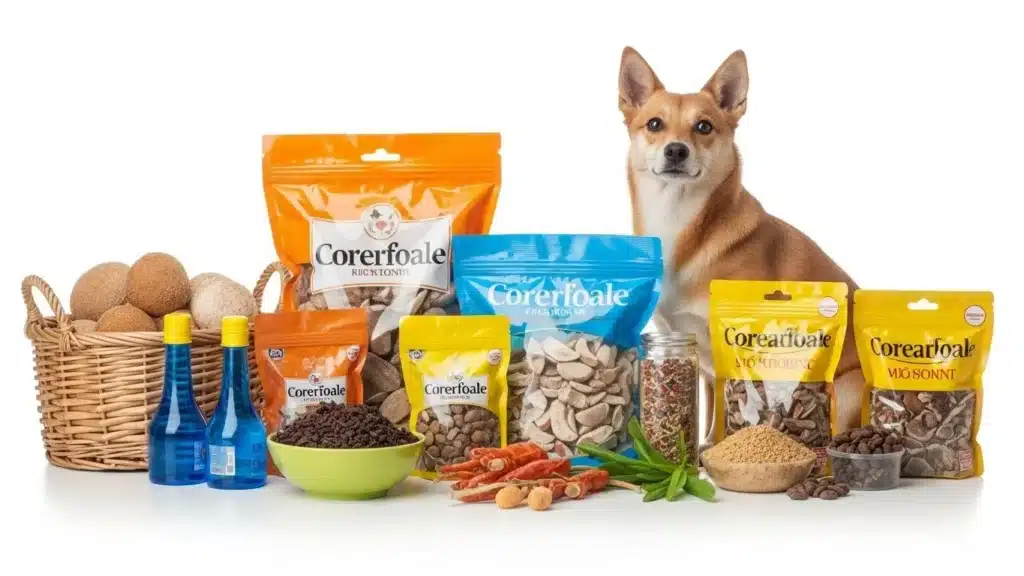
This guide cuts through the complexity. We’ll map the specific product focuses of Districts 2 and 5, detail the material standards for safe chew toys and compliant pet bowls, and analyze key trends like smart feeders and certified compostable bags. You’ll get the precise information needed to source efficiently, from the structural hardware in District 2 to the foundational bedding materials in District 5.
Why Yiwu is the Hub for Pet Accessories
Yiwu is the global hub for pet accessories due to the Yiwu International Trade City, the world’s most concentrated wholesale market for pet supplies. This one-stop center, backed by Zhejiang’s manufacturing ecosystem and a dense network of local factories, enables efficient, high-volume, and low-cost production of everything from basic leashes to smart collars, serving over 50 countries.
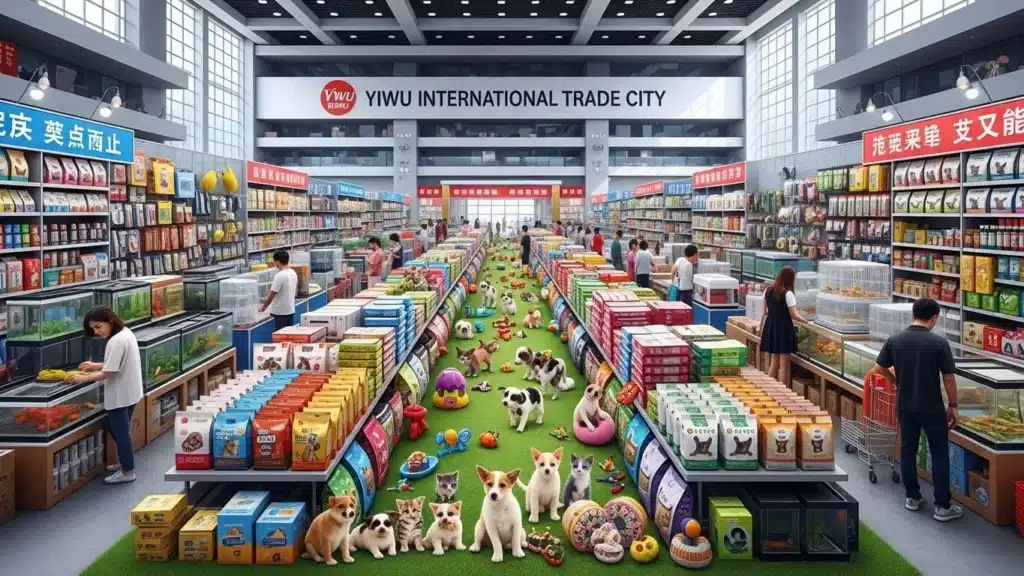
The World’s Largest One-Stop Wholesale Market
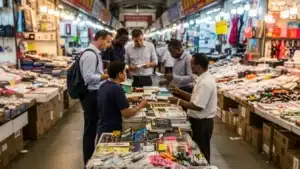
The core of Yiwu’s dominance is the Yiwu International Trade City, specifically Districts 2 and 5. This market is the most concentrated sourcing hub for pet supplies anywhere in the world. It functions as a true one-stop destination where buyers can procure a vast range of items in one location, from cages and smart collars to grooming tools, toys, auto leashes, and beds for dogs, cats, birds, fish, and niche pets.
This physical consolidation is key to its efficiency. With access to over 75,000 supplier booths, buyers can source multiple product categories without the logistical complexity and time investment of visiting disparate factories or regional markets. This density drastically reduces procurement time and simplifies supply chain management for importers.
A Deep Local Manufacturing Ecosystem
Yiwu’s market power is underpinned by the extensive manufacturing ecosystem of Zhejiang province. This region supports China’s 50% share of global pet supply exports through specialized, high-volume production. The wholesale market is directly fed by a network of local factories with significant scale and international reach.
For example, local manufacturers like Brobopet, with 1,200 workers and a 6,000㎡ warehouse, export to more than 50 countries using eco-friendly materials. Similarly, Yiwu Pawppy Pet Products operates from a 4,000㎡ facility, producing specialized accessories for rodents and birds and offering bespoke designs for export to over 25 countries.
The surrounding region provides specialized raw materials and production capabilities that amplify this scale. Jinhua is a hub for plastic components, while Taizhou specializes in textiles and metalwork—factories like Taizhou Huamao Craft produce around 10,000 units of beds, toys, and cages per month. Furthermore, Pingyang County alone supplies over 60% of the world’s dog chews. This integrated supply chain enables low-cost, high-volume manufacturing that makes Yiwu an unbeatable hub for pet accessories sourcing.
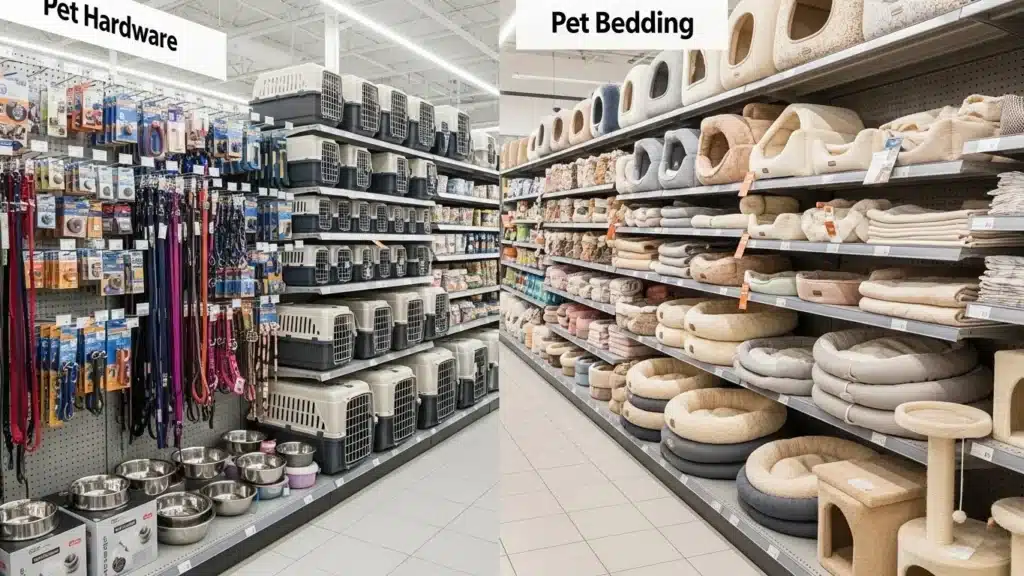
District 2 (Hardware) vs. District 5 (Bedding)
District 2 specializes in durable, high-strength hardware components like metal fittings and couplings, governed by standards like ASTM A234 for pressure systems. District 5 focuses on bedding, support, and soft goods materials, including aggregates and polymers, with specs for load distribution and stability, such as ASTM D1785 for PVC pipes. Understanding this division helps buyers target the right suppliers for structural versus comfort-based pet products.
| Aspect | District 2 (Hardware) | District 5 (Bedding) |
|---|---|---|
| Core Product Focus | Forged/welded metal components (fittings, couplings, fasteners) | Support & comfort materials (aggregates, geotextiles, polymers) |
| Primary Pet Product Application | Structural ‘bones’: enclosures, heavy-duty stations, automated mechanisms | Foundational ‘bedding’: stable bases, drainage layers, chew-resistant floors |
| Key Material Standards | ANSI B16.9, AWWA C208, ASTM A234 WPB, ASTM A536 65-45-12 | ASTM D1785 (PVC), ASTM D5261/D4632 (geotextile), 3/4-inch max sieve (aggregate) |
| Performance Benchmark | High-pressure systems (e.g., 350 psi gaskets, 3,000 psi WOG outlets) | Load distribution & stability (e.g., 4,000 psi HDB pipe, 100 lbs tensile geotextile) |
| Critical Property | Mechanical integrity & corrosion resistance (Type 316 stainless steel) | Compaction & settlement prevention (minimum 6-inch bedding thickness) |
Core Products and Sourcing Applications
District 2 (Hardware) provides forged and welded metal components, such as pipe fittings, couplings, and fasteners, essential for building durable pet enclosures, heavy-duty feeding stations, or automated pet door mechanisms.
District 5 (Bedding) supplies materials for support and comfort, including crushed rock aggregates for stable bases, geotextile fabrics for drainage layers in outdoor pet areas, and polymer compounds for chew-resistant bedding or kennel floors.
For pet products, District 2 is the source for the structural ‘bones’ of an item, while District 5 provides the foundational ‘bedding’ or soft material components that ensure safety and comfort.
Material Specifications and Compliance Standards
Hardware components in District 2 must meet high-pressure system standards: fittings comply with ANSI B16.9 and AWWA C208, using materials like ASTM A234 Grade WPB steel, with bolts made from Type 316 stainless steel for corrosion resistance in pet water systems.
Bedding materials in District 5 follow stability and load-bearing specs: crushed rock aggregate must pass a 3/4-inch U.S. Standard sieve, while PVC pipe compounds like ASTM D1785 Class 12454-A have a hydrostatic design basis of 4,000 psi for embedment strength.
Geotextiles used for compaction and bedding support require a minimum weight of 4.0 oz/sq yd (ASTM D5261) and a grab tensile strength of 100 lbs (ASTM D4632) to prevent settlement under pet enclosure loads, as per water district trench standards.
Safety First: Non-Toxic Materials for Chew Toys
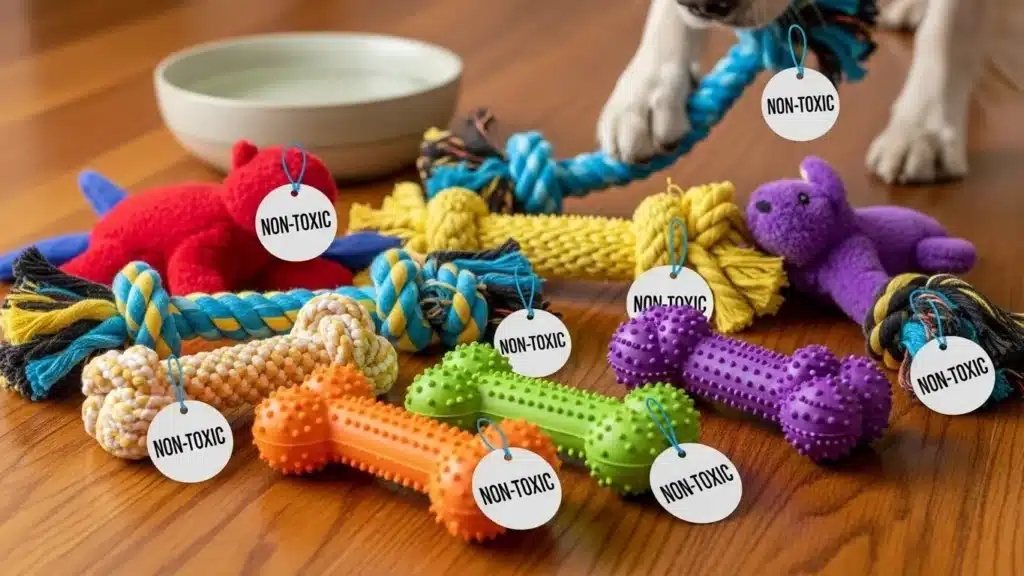
Sourcing safe chew toys means applying children’s toy safety standards to pet products. Look for materials like TPE, natural rubber, and organic cotton that are certified free from heavy metals, BPA, and phthalates. Key benchmarks include ISO 8124 compliance and FDA food-contact grade materials.
The Safety Framework: Using Toy Standards for Pet Products
Since no dedicated global standard exists for dog toys, the industry uses children’s toy safety regulations as the benchmark. The most relevant certification is AS/NZS ISO 8124, which covers mechanical safety, flammability, and limits on the migration of toxic elements like lead and cadmium.
Some premium toys carry a CPC (Children’s Product Certificate), which means they comply with strict U.S. CPSC limits on heavy metals. For any material that contacts a dog’s mouth, FDA food-contact grade compliance serves as another critical proxy for safety, ensuring the polymer is suitable for ingestion.
Material Specifications and Sourcing Criteria
Prioritize materials with documented safety profiles. This includes Thermoplastic Elastomer (TPE) like West Paw’s Zogoflex®, which is BPA-free, phthalate-free, and FDA-compliant. Other safe options are Grade A natural rubber, organic cotton or hemp, and BPA-free, FDA-approved nylon for high-impact toys.
You must avoid a specific list of substances: PVC, phthalates, BPA, lead, cadmium, chromium, mercury, formaldehyde, azo dyes, and toxic glues or flame retardants. Zogoflex®, for example, is formulated to exclude these and a broader panel of restricted chemicals.
A practical field test for mechanical safety is the “thumbnail test.” If a human thumbnail can indent the toy, it’s soft enough to prevent tooth fractures. If the thumbnail bends instead, the material is too hard and poses a dental risk.
When evaluating suppliers, request formal documentation. This includes lab test reports proving compliance with ISO 8124 or EN 71 migration limits for heavy metals, and Material Safety Data Sheets (MSDS) confirming the absence of restricted substances.

Trends 2026: Smart Feeders & Eco-Friendly Poop Bags
Smart feeders in 2026 are defined by gram-scale portion control, dual power systems, and IoT integration for health monitoring. Eco-friendly poop bags are shifting towards certified compostable materials like PBAT and PLA, moving beyond traditional oxo-degradable plastics to meet stricter environmental standards.
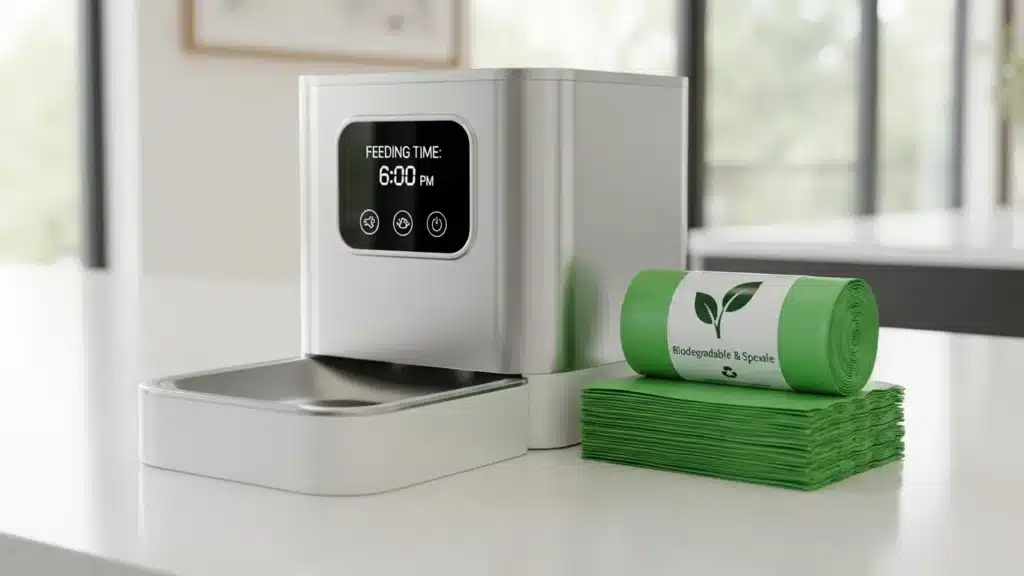
The Engineered Smart Feeder: Precision, Power & IoT
Modern smart feeders achieve portion control through integrated scales that measure food by weight, down to the gram. This method is more accurate than measuring by volume and requires the device to be recalibrated whenever the food bowl is removed or the hopper is refilled.
These devices are engineered to handle dry kibble ranging from 4 to 15 millimeters in diameter. To prevent jams and food waste, they incorporate mechanisms like jam-fix reversal, which automatically reverses the auger if a blockage is detected.
Reliability is ensured by a dual power system. A primary 5V adapter is supported by a backup of three D-cell batteries, which can sustain operations for up to six days during a power outage, ensuring pets are fed on schedule.
Food safety is paramount. All surfaces that contact food are made from BPA-free plastics and 304 food-grade stainless steel, which is durable, corrosion-resistant, and easy to clean.
IoT connectivity transforms basic dispensing into a health management tool. Wi-Fi or 5G enables remote control via smartphone apps, while built-in HD cameras with night vision allow for visual monitoring. Some advanced models use microchip recognition to ensure only the intended pet can access the food, preventing overfeeding in multi-pet households.
This technology is driving significant market growth. The global smart pet feeder market is projected to reach USD 2.78 billion by 2032, with portion control models leading the segment due to their critical role in precise dietary management.
Beyond Biodegradable: The New Standard for Eco-Friendly Poop Bags
The next generation of sustainable pet waste bags uses materials like PBAT (a biodegradable polyester) and PLA (polylactic acid from corn starch). Unlike conventional plastics, these plant-based polymers are designed to fully break down into water, carbon dioxide, and biomass within the controlled conditions of an industrial composting facility.
True compostability is verified by international standards such as EN 13432 in Europe or ASTM D6400 in the United States. These certifications confirm the material will decompose within a specific timeframe under required levels of heat, moisture, and microbial activity, leaving no toxic residue.
This represents a major shift from earlier “biodegradable” options, which were often made from oxo-degradable plastics. These materials merely fragment into microplastics when exposed to sunlight and oxygen, contributing to pollution without achieving meaningful breakdown.
For brands and retailers, sourcing legitimate compostable bags requires due diligence. It involves verifying a supplier’s factory certifications and reviewing material data sheets to confirm the resin composition meets the claimed standards.
Market demand for certified compostable bags is rising, driven by municipal bans on conventional plastic bags and a growing consumer preference for products with verified, science-backed environmental credentials.
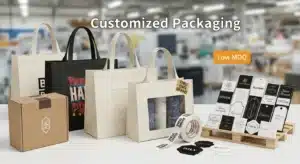
Custom Packaging for Pet Brands (Bundling)
Custom bundling for pet brands uses automated systems like the EDL Double Tight Wrap Bundler to group multiple products, such as dog food bags, into secure, tamper-evident packs. These systems apply LDPE film with low-heat fusion, achieving high throughput while using 15–40% less film and 25–50% less energy than traditional shrink wrapping.
How Automated Bundling Systems Work
Modern pet product bundling relies on automated systems to create secure, efficient packs. Machinery like the EDL Double Tight Wrap Bundler applies two perpendicular bands of LDPE film, which are fused together with low heat to form a complete seal around the products.
This method produces bundles that are stackable and tamper-evident. The total enclosure protects the contents—crucial for pet food—from dust and moisture during storage and transport. The process is engineered for high operational efficiency, with some systems demonstrating 98% uptime in continuous 24/7 production environments.
A primary benefit of this approach is the significant reduction in material waste and energy consumption when compared to older, full-shrink wrap methods.
Technical Specifications and Production Data
These bundling systems are designed for high-speed production. Throughput can reach up to 25 packs per minute, enabled by servo-controlled conveyors and precise metering systems that ensure accurate product placement and film application.
The efficiency gains are quantifiable. Operations typically see a 15–40% reduction in film usage and a 25–50% decrease in energy consumption compared to traditional shrink wrapping systems, leading to lower operational costs and a smaller environmental footprint.
A common application in the pet industry is creating 5-pack bundles for dog food bags. Servo-driven systems manage this by using a single-line conveyor, flighted infeeds to position products into rows, and a shrink tunnel to finalize the bundle. This setup is adaptable for various self-supporting products like gable-top bags or kibble pouches.
The equipment is built for integration into complete production lines. It works seamlessly with upstream and downstream components like conveyors and palletizers, providing a turn-key solution for sanitary pet food packaging environments that prioritizes product stability for palletizing.
Compliance: FDA (Bowls) & Electrical Certs
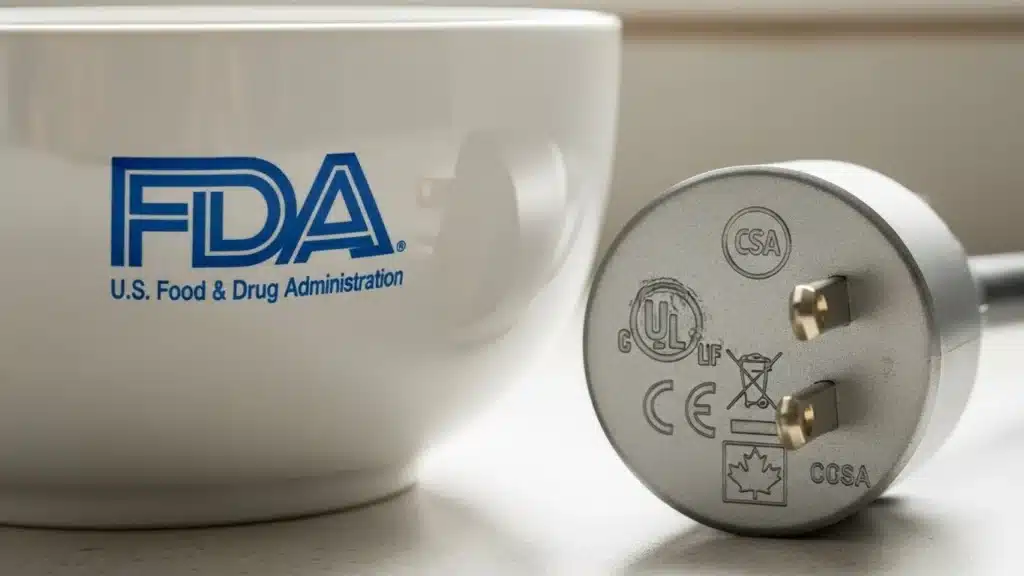
FDA compliance for pet bowls centers on food-contact material safety, ensuring no toxins like BPA, phthalates, lead, or cadmium leach into food or water. This involves using certified materials like stainless steel, ceramic, and food-safe silicone. Electrical certifications are not applicable to standard passive bowls, as FDA oversight is limited to items that contact food or edibles.
What FDA Compliance Means for Pet Bowls
FDA standards ensure pet bowls are safe for animal consumption, produced under sanitary conditions, and free from harmful substances like BPA, phthalates, lead, and cadmium.
The primary goal is to prevent specific health risks. These include endocrine disruption from chemicals like BPA, heavy metal poisoning from lead or cadmium, and bacterial infections that can breed in scratches on lower-quality materials.
Compliant materials are specifically chosen for their safety and durability. This includes high-quality stainless steel, certified ceramic glazes, and silicone that is explicitly labeled as ‘food-safe’ or FDA-approved.
These regulations are part of general animal food rules. They also mandate truthful labeling about the product’s safety and material composition, providing transparency for consumers.
Verifying Compliance and Understanding Scope
For private-label sourcing, verifying supplier claims is critical. Look for ‘FDA-approved’ or ‘food-safe’ labels and request evidence of Good Manufacturing Practice (GMP) compliance, which is analogous to the 21 CFR Part 117 standards for human food.
Be particularly cautious with low-cost imports. Insist on material certificates for stainless steel grades to confirm they meet specific food-contact standards, avoiding alloys that may contain harmful impurities.
It’s important to understand the limits of FDA authority. The FDA regulates products that contact food or edibles. Non-edible pet accessories, such as toys or harnesses, fall under different standards, like those from ASTM International.
No specific electrical certifications, such as UL listing, apply to standard, non-heated pet bowls. This distinction underscores the necessity of matching the correct type of certification to the product’s actual function.
Final Thoughts
Sourcing pet supplies in Yiwu is a strategic decision based on scale and efficiency. The Yiwu International Trade City, particularly Districts 2 and 5, offers an unparalleled concentration of suppliers and products, backed by a deep local manufacturing ecosystem. This structure allows buyers to source a vast range of items—from structural hardware to soft bedding materials—in one location, drastically reducing procurement time and logistical complexity.
Success in this market depends on more than just finding products. It requires a clear understanding of material specifications, safety standards for items like chew toys and bowls, and the technical details behind emerging trends like smart feeders and compostable bags. By applying this knowledge and verifying supplier claims with proper documentation, buyers can leverage Yiwu’s wholesale power to build a competitive, compliant, and forward-looking pet product line.
Frequently Asked Questions
Are pet toys from China safe?
Pet toys made in China are not automatically safe or unsafe. Their safety depends on compliance with recognized standards. For the domestic market, China’s national standard GB/T 43839‑2024 for pet product safety applies. For export, toys must meet relevant international standards like ASTM F963, EN 71, REACH, and RoHS. Products that fail to meet these standards can pose risks such as toxic chemicals or choking hazards.
Where is the pet market in Yiwu?
The main hub is the dedicated Yiwu Pet Supplies Market at No. 36 Jiangdong Street. Within the larger Yiwu International Trade City, the most concentrated area for pet supplies is on the 4th floor of District 5. You can also find scattered pet suppliers on the 2nd floors of Districts 2, 4, and 5. In total, there are roughly 100 to 150 pet product shops across the market.
What is the MOQ for custom dog collars?
Minimum order quantities vary based on the level of customization. For standard or lightly customized designs using existing materials, MOQs typically range from 20 to 100 pieces. For fully custom manufacturing involving unique patterns, logos, and dedicated production runs, MOQs are higher, often between 800 and 1000 pieces. A common production model is 800 pieces split across 4 patterns.
Can I buy pet food in Yiwu?
No, you cannot reliably source pet food from Yiwu’s wholesale markets. The Yiwu Pet Products Market focuses on supplies and accessories like toys, beds, leashes, and grooming items. Pet food is heavily regulated in China as a feed product, requiring specific import registrations and oversight from authorities like MARA/GACC, which wholesale markets do not handle. Sourcing pet food requires working with specialized, licensed manufacturers directly.
Do they have cat trees in Yiwu?
Yes, cat trees and similar structures are readily available for sourcing in Yiwu. Suppliers can provide products built to emerging safety and performance guidelines, such as those from ASTM, which define parameters like load-bearing capacity. Typical platforms are rated for 15 to 25 pounds, with heavy-duty models supporting up to 30 or 40 pounds per platform.