Justin
Sourcing custom packaging in Yiwu can be overwhelming. With thousands of suppliers in the world’s largest wholesale market, how do you find the right partner for your specific order size, printing needs, and logistics? Choosing incorrectly can lead to high minimums, long delays, or quality issues that hurt your brand.

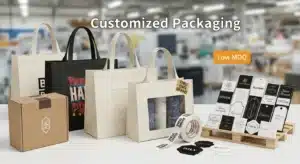
This guide breaks down the main types of packaging suppliers in Yiwu, from market stalls offering low MOQs of 100 boxes to integrated kitting services that assemble your product. We’ll cover how different printing methods affect your order size, where to find suppliers in Districts 3 and 4, and how to leverage the market’s logistics network that handles over 30 million packages daily to streamline your supply chain.
Industry Manufacturers List
Quick Comparison: Top Picks
| Manufacturer | Location | Core Strength | Verdict |
|---|---|---|---|
| Starch-Based Biodegradable Bags | Industry Wide | Typical film thickness 15–40 µm; tensile strength ~10–25 MPa; optimized for food-service bags, grocery bags, and lightweight packaging films; often certified to EN 13432 / ASTM D6400 for compostability. | Flexible, starch-blend films ideal for retail and food packaging where single-use plastics are banned. Degrades in industrial composting. |
| PLA (Polylactic Acid) Biodegradable Bags | Global Standard | Common gauges 20–50 µm; service temperature typically up to ~50–60°C; used for shopping bags, produce bags, and transparent liners; frequently combined with other biopolymers to tune strength and compostability. | Clear, printable films from fermented plant sugars. Best for branded retail and food packaging where visual appeal is key. Composts industrially. |
| PBAT/PLA Blend Compostable Bags | Industry Wide | Typical applications include 10–60 L trash liners, food-waste caddy liners, and shopping bags; films designed to disintegrate in 12 weeks and biodegrade in 6 months under industrial composting per leading standards. | Engineered blend balancing flexibility and toughness. The go-to for certified compostable trash liners and carrier bags in regulated markets. |
| Compostable Refuse and Trash Bags | Global Standard | Bag volumes from small 10–20 L kitchen liners to 120+ L commercial carts; often certified for composting with specified minimum biobased content and heavy-metal limits; marketed for odor control and wet-strength durability. | Specialized for organic waste collection. High-growth segment with certified performance for municipal and commercial composting programs. |
| Biodegradable Packaging and Shopping Bags | Industry Wide | Includes stand-up pouches, mailer bags, and retail carrier bags made from bio-plastics with a 51% share of biodegradable packaging; designed for printability, barrier performance, and recyclability or compostability depending on construction. | Broad category driving the biodegradable packaging market. Key for e-commerce, food/beverage, and retail brands meeting sustainability targets. |
Starch-Based Biodegradable Bags

Starch-based bags are made from renewable resources like corn, potato, or tapioca starch, blended with biodegradable polyesters. This creates flexible films that are a direct alternative to conventional plastic bags. They are designed to fully degrade under industrial composting conditions, making them a key product in markets with restrictions on traditional single-use plastics.
Production focuses on creating films with a typical thickness of 15–40 µm and a tensile strength around 10–25 MPa. This specification is optimized for manufacturing food-service bags, grocery carrier bags, and lightweight packaging films. The process ensures these products meet international compostability standards.
At a Glance:
- 📍 Location: Industry Wide
- 🏭 Core Strength: Typical film thickness 15–40 µm; tensile strength ~10–25 MPa; optimized for food-service bags, grocery bags, and lightweight packaging films; often certified to EN 13432 / ASTM D6400 for compostability.
- 🌍 Key Markets: Retail checkout bags, food-service takeaway bags, organic waste liners, and secondary packaging for e‑commerce where regulatory pressure on conventional plastic is strongest.
Why We Picked Them:
| ✅ The Wins | ⚠️ Trade-offs |
|---|---|
|
|
PLA (Polylactic Acid) Biodegradable Bags

PLA bags are made from lactic acid, primarily sourced from fermented crops like corn or sugarcane. This makes them a renewable alternative to conventional plastics. They are widely used as clear films and liners in packaging, offering excellent clarity and a smooth surface that is ideal for high-quality printing, making them a favorite for branded retail and food packaging.
The production of PLA bags leverages agricultural feedstocks, reducing reliance on fossil fuels. Their key functional characteristic is biodegradability under industrial composting conditions, which helps divert waste from landfills. However, this process requires specific facilities and does not occur in home composts or natural environments.
At a Glance:
- 📍 Location: Global Standard
- 🏭 Core Strength: Common gauges 20–50 µm; service temperature typically up to ~50–60°C; used for shopping bags, produce bags, and transparent liners; frequently combined with other biopolymers to tune strength and compostability.
- 🌍 Key Markets: Food and beverage packaging (a major share of biodegradable packaging demand), branded retail carrier bags, and secondary packaging films where visual appearance and logo printing are important.
Why We Picked Them:
| ✅ The Wins | ⚠️ Trade-offs |
|---|---|
|
|
PBAT/PLA Blend Compostable Bags

Many commercial “compostable” bags are blends of PLA with PBAT (polybutylene adipate terephthalate) to balance flexibility, toughness, and compostability. These blends are engineered for high-volume bag production and certified composting performance under standards such as EN 13432 and ASTM D6400.
The production of these blended films is scaled for industrial manufacturing, supporting the creation of millions of compostable bags for waste collection and retail. The process is optimized to meet the strict disintegration and biodegradation timelines required by leading certifications.
At a Glance:
- 📍 Location: Industry Wide
- 🏭 Core Strength: Typical applications include 10–60 L trash liners, food-waste caddy liners, and shopping bags; films designed to disintegrate in 12 weeks and biodegrade in 6 months under industrial composting per leading standards.
- 🌍 Key Markets: Municipal organic-waste collection bags, household compost bin liners, and supermarket carrier bags in regions with strict single-use plastic bans and organics diversion programs.
Why We Picked Them:
| ✅ The Wins | ⚠️ Trade-offs |
|---|---|
|
|
Compostable Refuse and Trash Bags

Compostable refuse bags are specifically engineered for collecting organic waste and breaking down in industrial composting facilities alongside food and yard waste. In the USA alone this segment is projected to grow from USD 133.9 million in 2025 to USD 266.5 million by 2035 at a 7.1% CAGR, indicating strong adoption for waste-management applications.
These bags are produced in a wide range of volumes, from small 10–20 L kitchen liners to large 120+ L commercial carts. They are often certified for composting with specified minimum biobased content and heavy-metal limits, and are marketed for features like odor control and wet-strength durability.
At a Glance:
- 📍 Location: Global Standard
- 🏭 Core Strength: Bag volumes from small 10–20 L kitchen liners to 120+ L commercial carts; often certified for composting with specified minimum biobased content and heavy-metal limits; marketed for odor control and wet-strength durability.
- 🌍 Key Markets: Household kitchen waste, municipal organic collection schemes, foodservice and hospitality waste streams, and commercial facilities aiming to divert organics from landfill.
Why We Picked Them:
| ✅ The Wins | ⚠️ Trade-offs |
|---|---|
|
|
Biodegradable Packaging and Shopping Bags

Biodegradable pouches and bags represent a key format in the broader biodegradable packaging sector. The overall market is projected to grow substantially, from an estimated $531.1 billion in 2025 to over $1 trillion by 2035. Within this market, pouches and bags are expected to capture a significant share, around 26%. This growth is driven by their application in both primary and secondary packaging, helping brands meet stringent regulatory requirements and ambitious sustainability goals.
The production of these bags is dominated by bio-plastics, which account for about 51% of the materials used in biodegradable packaging. The focus is on creating functional products that offer excellent printability for branding, necessary barrier properties to protect contents, and clear end-of-life pathways through recyclability or compostability, depending on the specific material construction.
At a Glance:
- 📍 Location: Industry Wide
- 🏭 Core Strength: Includes stand-up pouches, mailer bags, and retail carrier bags made from bio-plastics with a 51% share of biodegradable packaging; designed for printability, barrier performance, and recyclability or compostability depending on construction.
- 🌍 Key Markets: Food and beverages (about 42% share of biodegradable packaging use), e‑commerce mailers, branded retail bags, and specialized pharmaceutical and agricultural packaging.
Why We Picked Them:
| ✅ The Wins | ⚠️ Trade-offs |
|---|---|
|
|
Why Buy Packaging in Yiwu (vs. Factory)?
Yiwu is ideal for small orders with low MOQs and immense variety, while direct factories are better for large-scale, specialized production runs.

The Yiwu Market: Flexibility and Variety for Small Orders
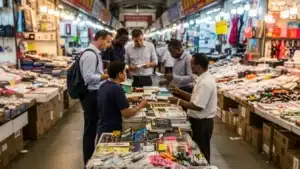
Yiwu International Trade City is the world’s largest wholesale market for small commodities, making it ideal for sourcing packaging like custom boxes. It offers low minimum order quantities (MOQs), often on a per-carton basis, which is perfect for new businesses or small runs of 100 boxes.
Buyers can access immense variety from thousands of suppliers in one location, simplifying the search for the right box, bag, or label. The market’s advanced logistics network handles over 30 million packages daily, streamlining export and reducing lead times for consolidated shipments.
Direct Factories: Scale and Specialization for Large Volumes
Factories, often located in coastal provinces like Guangdong and Zhejiang, specialize in high-volume, custom production runs. They typically require MOQs in the thousands, making them cost-effective for large, consistent orders but unsuitable for small batches.
Working directly with a factory is best for experienced buyers who need deep customization and are coordinating production with their main product manufacturer. While offering scale advantages, factories generally provide less product variety and can have longer lead times compared to the wholesale market model.
Making the Right Choice for Your Business
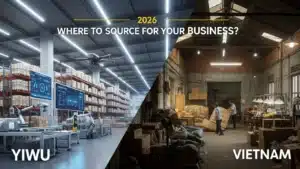
Choose Yiwu for low MOQs, product variety, and faster sourcing, especially if you’re new to importing or need to test a product with custom packaging. Opt for a direct factory when your order volume is consistently high (thousands of units) and you require specialized, large-scale production.
A sourcing partner can bridge both worlds, providing access to Yiwu’s low-MOQ suppliers for sampling and then scaling production with verified factories for bulk orders. Consider total cost, including logistics and quality control; Yiwu’s consolidation services can make small orders viable, while factory direct may offer lower per-unit costs at high volumes.
MOQ for Custom Logo (Hot Stamp vs. Print)
The minimum order quantity for a custom logo depends on the printing method. Hot stamping typically starts at 100-1,000 pieces, conventional ink printing often requires 144-500+ units, and digital printing can go as low as 100 units, making it the most flexible option for small runs.

Hot Stamp Logo MOQs: The Low-Volume Option
The minimum order quantity for hot-stamp logos typically ranges from 100 to 1,000 pieces per design. This method uses a metal die to press foil onto the packaging, and the setup cost is amortized over the run.
Suppliers often define the MOQ as one full case of bags or boxes, making it a practical choice for small to medium runs. This case-based approach simplifies logistics and inventory for both the manufacturer and the buyer.
Flexible providers offer hot-stamped paperboard boxes starting from as low as 100 units, ideal for brand launches or testing. This low threshold allows new businesses to create premium, branded packaging without a massive upfront commitment.
Ink & Print Logo MOQs: Higher Runs for Lower Cost
Conventional ink printing generally requires higher MOQs, often starting around 144 to 500+ printed pieces. Processes like offset or flexographic printing involve more setup, making smaller runs less cost-effective on a per-unit basis.
For simple one-color imprints, a 500-piece minimum is common, while large-area solid-color printing can require runs of 10,000 units or more. The higher volume helps offset the costs of plate creation and press setup.
This method is cost-effective for established brands with predictable, higher-volume packaging needs. The per-unit price drops significantly as the order quantity increases.
Digital Printing: The Very Low MOQ Solution
Digital printing services offer the lowest MOQs for custom logos, with some providers accepting orders as small as 100 bags or boxes. Unlike traditional methods, digital printing requires no physical plates, drastically reducing setup time and cost.
This option is designed for market testing, short-run promotions, or small brands that cannot commit to traditional printing minimums. It allows for complete design flexibility and quick turnaround.
It provides a bridge between prototype samples and full-scale production runs. Brands can use it to validate packaging design and market response before investing in a large traditional print order.
Your Direct Line to the Yiwu Market. Save 10% & Ship with Confidence.
Kitting Services: Assembling Product + Box
Kitting services handle the final assembly of components into a finished product and its secure packaging. This process integrates parts like PCBs and cables, performs final testing, and prepares the unit for shipment with protective materials, labeling, and compliance documentation.

What Kitting Services Include
The service covers the final assembly of components such as PCBs, cables, and enclosures into a complete, functional product.
Packaging is prepared with protective materials like shock-absorbent foam, static-resistant bags, and moisture barriers to prevent damage during transit.
Labels are applied for branding, serial numbers, barcodes, certifications, and handling instructions to ensure proper identification and traceability.
Providers integrate user manuals and ensure the final packaged product complies with relevant standards such as UL, CE, FCC, and RoHS.
The Kitting and Packaging Process
Subassembly integration involves mounting tested components into the product enclosure. This step includes firmware loading and wiring to ensure a clean, interference-free internal layout.
Every assembled unit undergoes system-level functional, electrical, mechanical, and safety tests before it is approved for final packaging.
Packaging preparation is tailored to the product. Materials range from wood crates for heavy items to static-resistant barrier bags for sensitive electronics.
The process finalizes with complete traceability documentation and arranges shipment, often managed as part of a consolidated logistics service.
Benefits for Different Buyers
For new importers, kitting services handle custom logo printing and labeling for small orders, such as 100 boxes, ensuring brand consistency from the start.
Experienced buyers can time kitting with main production schedules. Using off-the-shelf enclosures within this process can significantly reduce lead times.
The specialized packaging used in kitting significantly reduces the risk of shipping damage, which is critical for sensitive industries like medical devices and aerospace.
Providers manage end-to-end traceability, from barcode scanning to revision-controlled documentation, which simplifies supply chain oversight and quality control.
Where to Find Packaging Suppliers (District 3/4)
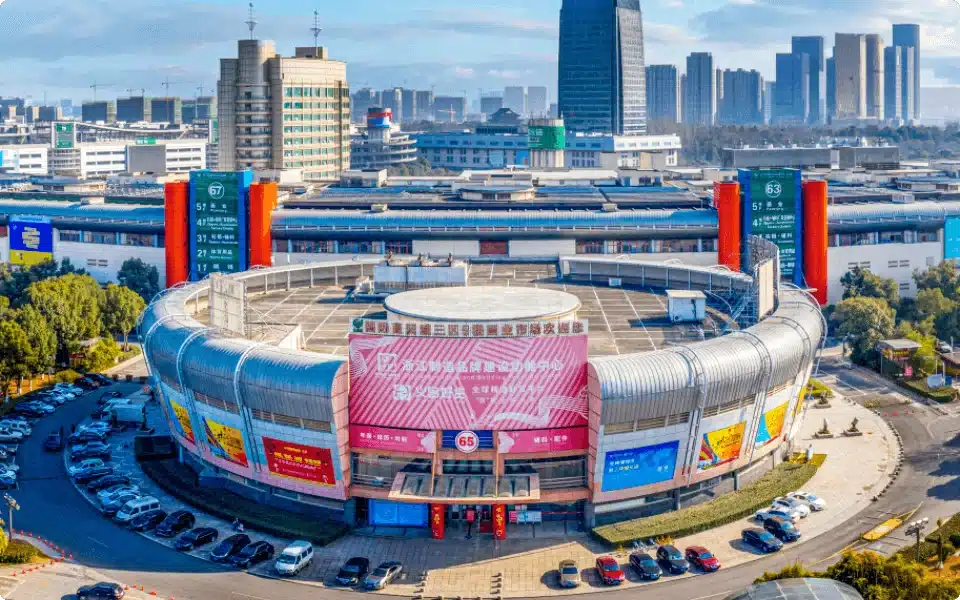
Yiwu International Trade City’s Districts 3 and 4 are the central hub for sourcing packaging, offering thousands of suppliers for materials like corrugated boxes, rigid boxes, and poly bags. Working with a local agent provides direct access to this market for efficient comparison, quality control, and consolidated logistics.

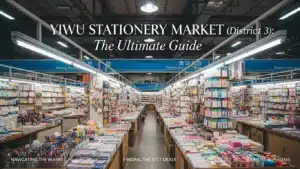
Yiwu Trade City’s District 3 and 4 are the primary hubs for packaging and printing suppliers, housing thousands of specialized booths. This concentration allows buyers to efficiently compare materials, printing techniques, and prices for items like corrugated boxes, rigid boxes, and poly bags in one location.
Working with a local agent like Chineseyiwu.com provides direct access to these districts, with guides who can navigate the vast market and consolidate orders from multiple suppliers. Yiwu International Trade City is the world’s largest wholesale market for small commodities, offering low MOQs on a per-carton basis ideal for novices printing logos on 100 boxes. It provides immense product variety from thousands of suppliers, with advanced logistics handling 30 million daily packages and 1,200 container trucks.
Key Supplier Types and Services Available
Suppliers in these districts typically offer both off-the-shelf and custom solutions, including hot stamping, digital printing for logos, and options for biodegradable materials. Many suppliers provide integrated services such as kitting, where product assembly and packaging are combined, which is crucial for brands preparing goods for retail or Amazon FBA.
The local agent model is essential for verifying supplier credibility, managing quality control inspections in their warehouse, and handling the complex logistics of international shipping from these market stalls. For custom logo printing, MOQs vary: hot stamping typically ranges from 100 to 1,000 pieces, conventional ink printing often starts around 144–500 pieces, while digital printing can accommodate runs as low as 100 units.
Frequently Asked Questions
What is the MOQ for custom boxes?
The minimum order quantity (MOQ) for custom boxes varies significantly by supplier, material, and printing method. Options range from no minimum (single boxes) to 500+ units. For example, providers like Packlane and Vispronet offer MOQs as low as 1 unit for corrugated boxes, while others like PrintNinja require 500 units due to offset printing setup costs. For orders around 100 boxes, most suppliers can accommodate, but costs and MOQs can increase with custom features like foil stamping or Pantone colors.
Can I buy plain boxes in Yiwu?
Yes, Yiwu is a major wholesale hub for plain packaging. Numerous suppliers offer plain cardboard, kraft paper, and corrugated boxes suitable for shipping or retail. These are available in person at markets like the Yiwu International Trade City and online via platforms like Alibaba. Typical MOQs for plain boxes start at 100-500 pieces, with per-unit prices often between $0.01 and $3.19 depending on size and material.
How much is a custom logo mold?
Costs for a custom logo mold used in packaging (e.g., for embossing or hot stamping) typically start around $200–$300 as a one-time setup fee for simple 2D designs. For more integrated production tooling, such as silicone injection molds for packaging components, prices generally range from $500 to $5,000 for simpler molds and can exceed $20,000 for larger, complex industrial tooling.
Do they make biodegradable packaging?
Yes, biodegradable packaging is a well-established global market. It includes a wide range of products like compostable bags, mailers, food containers, and box inserts made from materials such as paper, bioplastics, and molded pulp. These items are designed to break down under specific composting or environmental conditions.
Where is the printing market in Yiwu?
Yiwu’s core packaging and printing market is centered around the Yiwu International Trade City and the Yiwu International Expo Center area on Binwang Road. This district is the primary hub where buyers can meet suppliers and trading companies for items like custom boxes, labels, and manuals. Actual production often takes place in surrounding industrial zones in Yiwu and Jinhua.
Final Thoughts
Finding the right packaging supplier in Yiwu depends on your specific needs. If you’re starting a new brand, launching a product, or need to place a small test order, the Yiwu market is your best option. Its low minimum order quantities and immense variety let you source custom boxes and bags without a huge upfront commitment. For established businesses with high, consistent volume, working directly with a factory might offer better per-unit pricing, but requires larger orders and more complex coordination.
The key is to match your sourcing strategy to your business stage. Use Yiwu’s flexibility for initial runs and sampling, especially for services like custom logo printing or kitting. As your order volumes grow, you can then scale up with a factory or a sourcing partner who can manage the transition. Whether you choose the bustling trade city or a direct factory line, understanding these options helps you secure packaging that supports your brand and fits your budget.