
 Justin
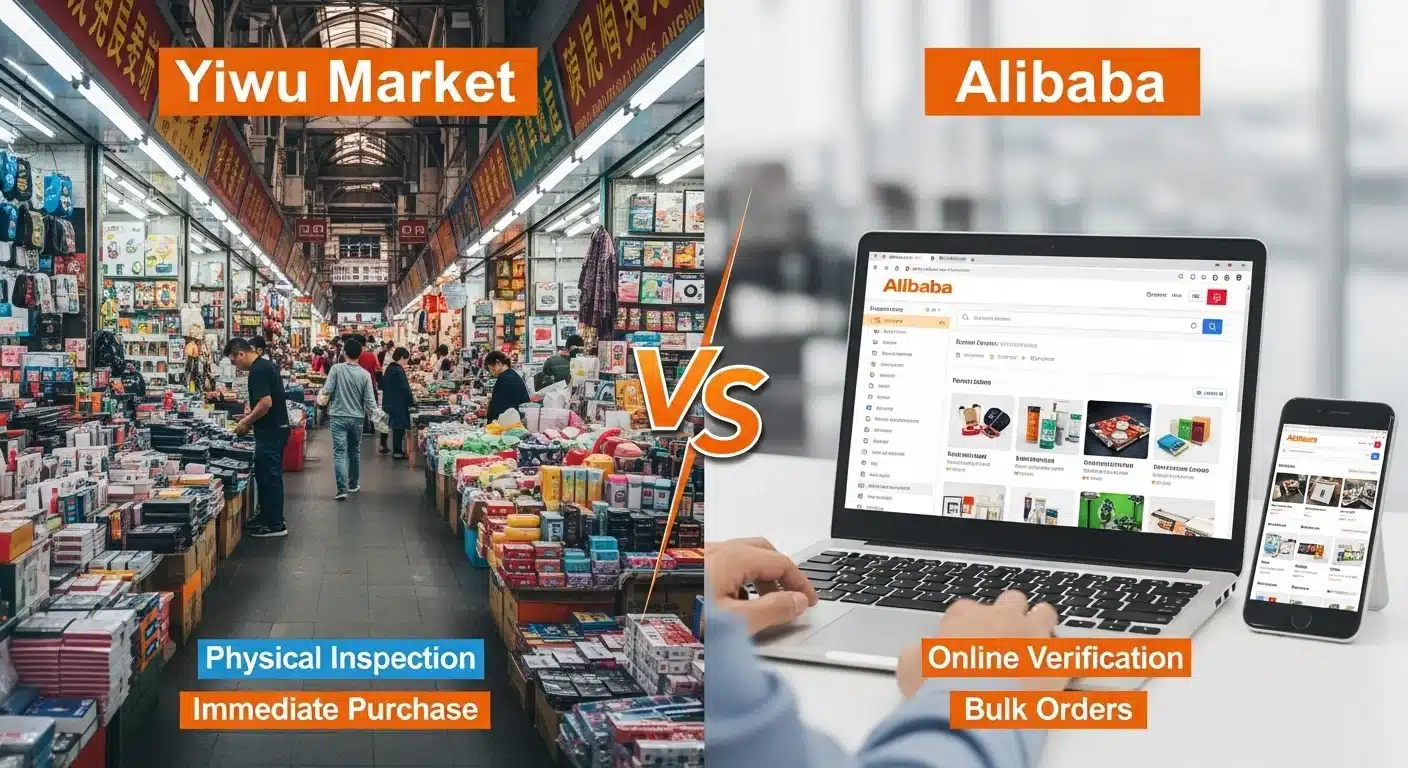
Choosing between Yiwu Market and Alibaba isn’t just about picking a supplier—it’s a strategic decision that defines your cost structure, risk profile, and business agility. Many importers default to the convenience of online platforms, only to discover they’re paying a significant premium for the same goods available at lower prices on the ground.
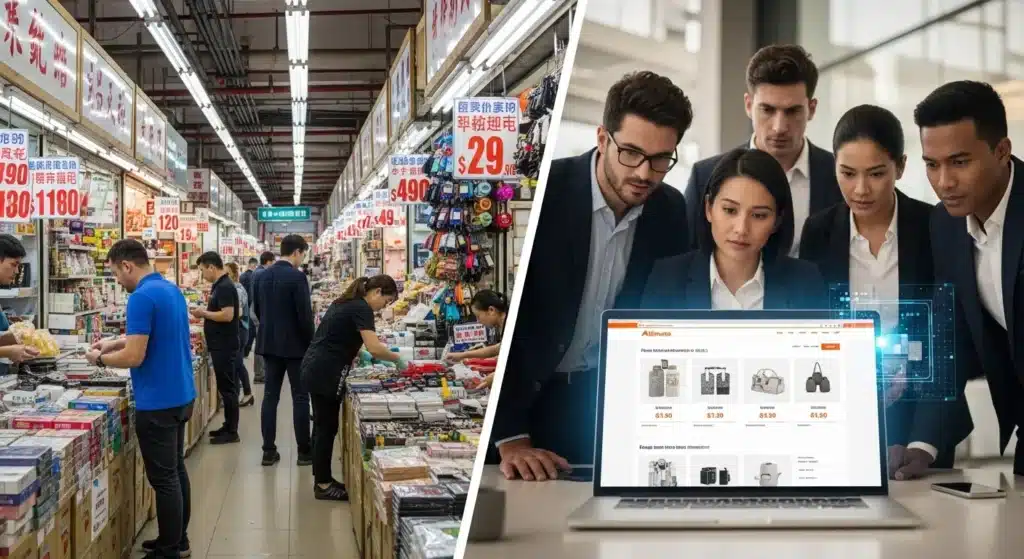
This article breaks down the real trade-offs. We’ll compare the “online premium” on Alibaba—where prices can be 20-50% higher—against the hands-on control and lower MOQs in Yiwu. You’ll see concrete cost comparisons, like paying $100 for 200 keychains in Yiwu versus over $700 for the same quantity online, and understand when the flexibility of a 1-carton order beats the scale of a 1000-piece commitment.
The “Online Premium”: Alibaba Pricing Reality
Alibaba’s prices are typically 20-50% higher than Yiwu’s for comparable small goods. This “online premium” is driven by middlemen, platform fees, and fragmented shipping. While Alibaba suits large bulk orders for convenience, Yiwu offers lower unit costs and greater flexibility for smaller or mixed orders.

What Drives the Higher Price on Alibaba?
The price difference isn’t random; it’s a structural feature of the platform. Alibaba suppliers are often traders, not factories, who add a markup for their services as intermediaries. This includes managing international sales, communication, and order processing.
Platform costs are a significant factor. Fees for global reach, escrow services, and Trade Assurance protection are baked into the final price quoted to buyers. Furthermore, shipping logistics are less efficient. Orders from multiple Alibaba suppliers usually ship separately, leading to higher per-unit freight costs compared to consolidating a mixed container from Yiwu.
Comparing Real-World Order Costs
The premium becomes clear with concrete examples. For a batch of 200 keychains, you might pay around $100 in Yiwu. On Alibaba, you could pay over $700 for the same quantity, but you’d likely be forced to buy a minimum of 1,000 units.
This pattern holds across categories. A carton of toys can cost under $50 at the Yiwu market, while the post-fee price on Alibaba is higher. For 100 pairs of earrings, Yiwu pricing is around $100, but Alibaba might require a 1,000-unit commitment for $1,500 or more. Alibaba’s model rewards scale, lowering the per-unit cost for very large orders, while Yiwu is built for small, flexible purchases.
Who Should Pay the Premium and Why?
The Alibaba premium makes sense for specific buyers. International importers placing large, homogeneous bulk orders can justify the cost for the convenience of remote sourcing and integrated platform tools. It’s also a practical starting point for novice buyers who are not ready to travel and have high minimum order requirements.
However, for orders under roughly $5,000, or for any order where verifying quality in person is critical, traveling to Yiwu often delivers better overall value despite the upfront travel cost. Experienced buyers frequently use a hybrid approach: they use Alibaba to identify and screen potential suppliers, then travel to Yiwu to meet them, verify their operations, and negotiate true factory-level pricing.
Yiwu Market: The “Touch and Feel” Advantage
Yiwu Market’s primary advantage is the ability to physically inspect goods before buying, which dramatically reduces the risks of quality issues, scams, and misrepresented products common when sourcing online. This hands-on approach allows for better price negotiation, lower minimum order quantities, and direct verification of suppliers, though it requires an investment in travel and logistics.
Why Physical Inspection Reduces Sourcing Risk
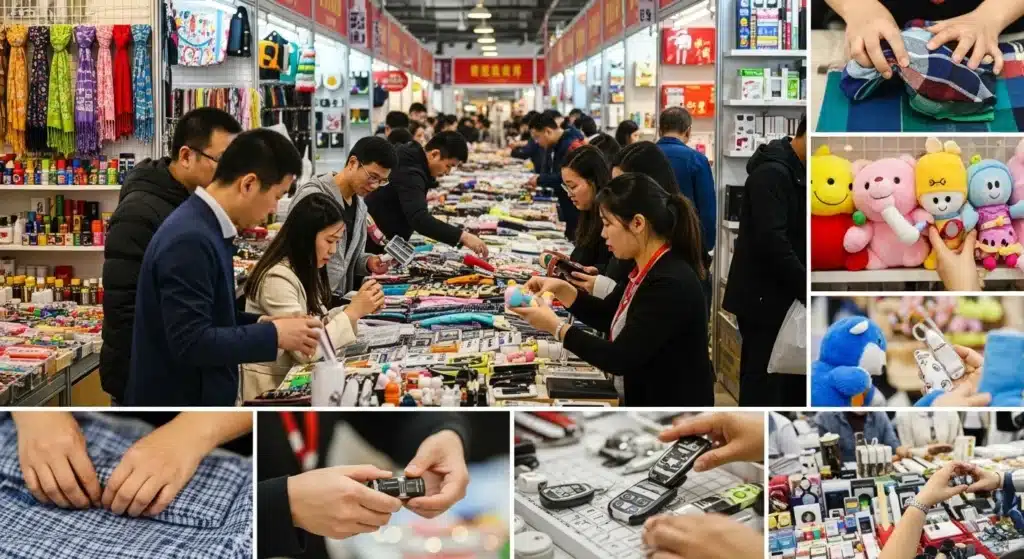
Buyers can physically inspect thousands of SKUs in person before payment, directly reducing the quality and consistency risks associated with ordering from photos and samples online. This hands-on verification is crucial for both new buyers worried about scams and veterans trying to separate real factories from traders.
Being on-site makes it much easier to verify materials, workmanship, and packaging in real time across multiple stalls. This process cuts through the uncertainty of digital listings, where a supplier’s “Gold Supplier” badge or listed certifications may not reflect their actual operational capacity or product quality.
Direct Benefits for New and Experienced Buyers
For new buyers, the model allows rapid comparison of 10–20 suppliers for the same product in one location, enabling direct handling of goods to spot hidden defects. Face-to-face negotiation in Yiwu typically yields lower, more flexible prices and smaller minimum order quantities than many remote Alibaba listings, which often start at 500–1,000 units.
Experienced buyers can use the market to trace products back from online traders to actual factory booths, verifying production capacity and arranging long-term contracts. On the ground, you can ask targeted questions about export experience and judge answers against what you see in their showroom, a level of due diligence impossible from a desk.
Weighing the Operational Trade-offs
Sourcing from Yiwu requires an investment in travel, time, and logistics coordination, often best managed with a local agent. This includes costs for flights, hotels, and the complexity of arranging export logistics from China.
This investment is balanced by greater control over quality and product assortment, especially when filling a mixed container. For small, mixed orders or situations where product validation is critical, the hands-on control of Yiwu often outweighs the platform-mediated efficiency of Alibaba, which is generally more efficient for very large, homogeneous orders of already-proven products.
MOQ Comparison: 1000 pcs vs. 1 Carton
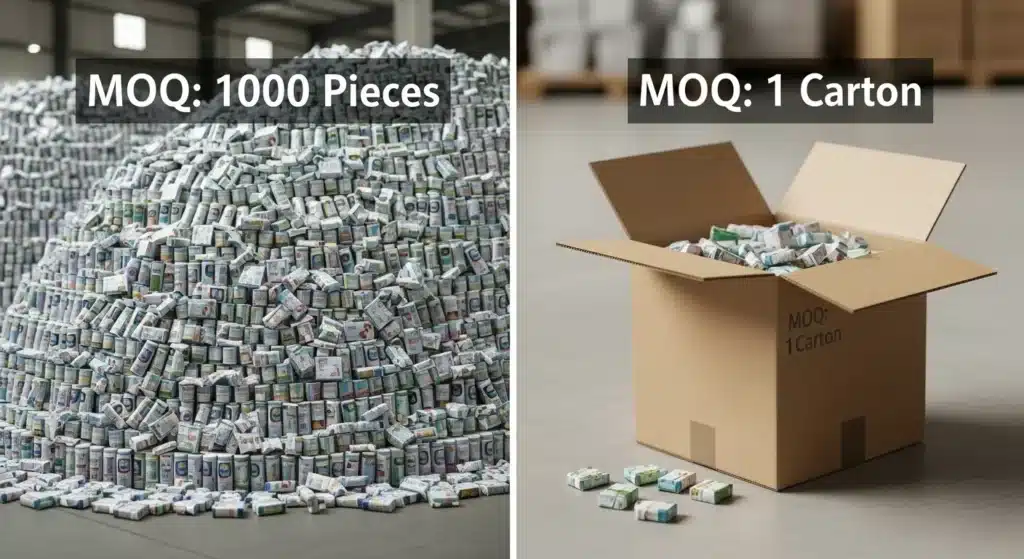
The choice between a 1000-piece MOQ on Alibaba and a 1-carton MOQ in Yiwu defines your sourcing strategy. Alibaba’s standard is built for bulk, locking in lower per-unit costs but requiring significant capital and proven demand. Yiwu’s flexibility allows for low-risk testing and small-batch variety, dramatically lowering the barrier to entry for new products or businesses.
The Alibaba Standard: 1000 pcs for Bulk Buyers
This is the typical minimum order quantity for many products on Alibaba, set by trading companies and manufacturers. It’s a threshold designed for established businesses making bulk purchases, enabling a lower price per unit due to the scale of the order.
This high minimum makes it difficult for new importers or those wanting to test a product with a small order first. You commit to a large volume upfront, which suits core products with proven demand but carries higher financial risk if the market response is uncertain.
The Yiwu Market Flexibility: 1 Carton for Testing
In Yiwu Market and on platforms like Yiwugo, suppliers commonly accept orders as low as 1-2 cartons per item. This low MOQ is ideal for product validation, small business startups, or adding variety to an inventory without a large capital outlay.
It allows for direct, face-to-face negotiation with suppliers on smaller quantities, which significantly lowers the entry barrier compared to Alibaba’s higher thresholds. You can physically inspect the goods, compare multiple suppliers in one location, and place orders that match your actual testing or initial sales needs.
Strategic Implications for Your Business
Choosing a 1000-piece MOQ commits you to a bulk strategy. This is suitable for core products with proven demand, locking in better margins but accepting higher inventory and financial risk. It aligns with Alibaba’s strength in streamlined, large-scale production runs.
Opting for a 1-carton MOQ enables a test-and-learn approach. This is perfect for launching new product lines or entering new markets with minimal upfront investment. It leverages Yiwu’s advantage in hands-on quality checks and rapid assortment building.
A sourcing partner can bridge this gap. They can consolidate small orders from multiple Yiwu suppliers to meet a container’s worth of volume. This strategy gives you the flexibility and low risk of Yiwu’s MOQs with the shipping efficiency and per-unit cost benefits of bulk logistics.
Your Direct Line to Yiwu. Save 7% vs. Going Alone.
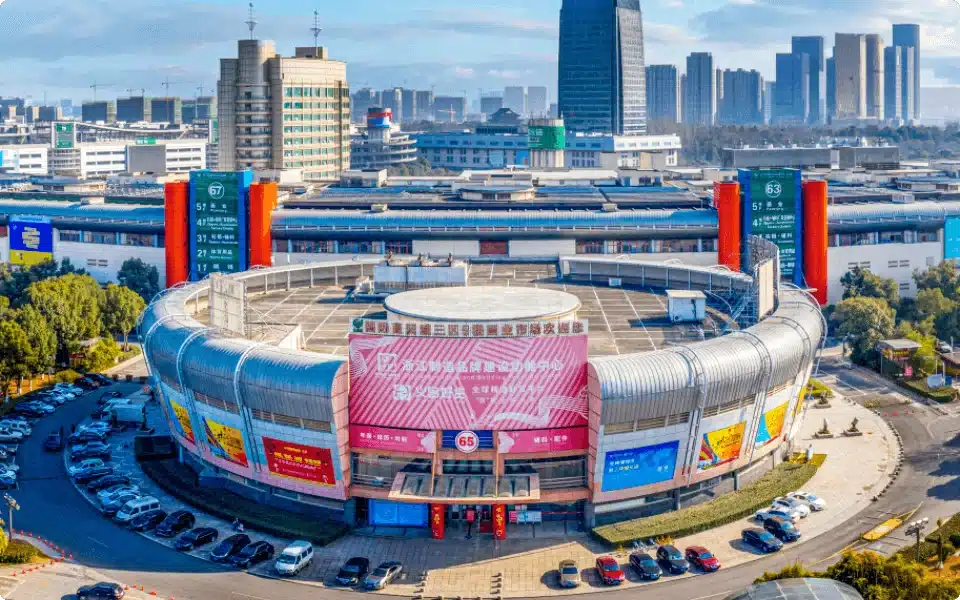
Lead Times: Spot Goods vs. Production
The core difference in lead times between Yiwu and Alibaba hinges on whether you’re buying existing stock (spot goods) or commissioning a new production run. Spot goods in Yiwu can be ready for shipping in 2-7 days, while production orders on either platform typically take 15 to 60 days, depending on complexity and customization.
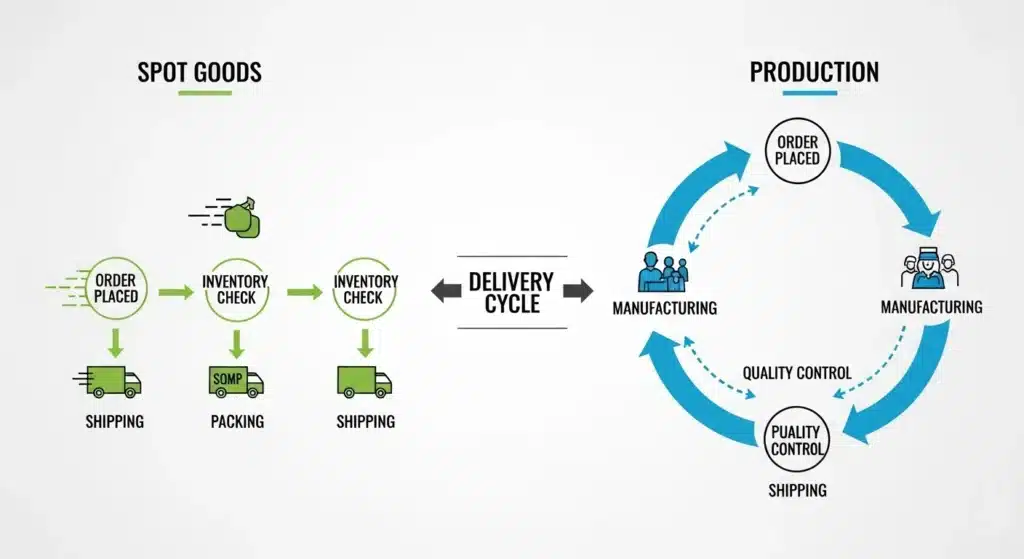
Understanding the Core Lead Time Difference
Lead time is the total calendar days from order confirmation to goods being ready for shipment. The fundamental choice for importers is between buying existing stock (spot goods) or commissioning a new production run.
Spot goods involve picking, packing, and export handling. Production orders add stages like material purchasing, manufacturing, and sometimes tooling or customization, which significantly extends the timeline.
This distinction is critical for planning inventory cycles, managing cash flow, and setting launch schedules when choosing between Yiwu and Alibaba sourcing strategies.
Lead Time Benchmarks for Spot Goods
In Yiwu Market, many booths hold ready stock of small commodities. For these in-stock items, local agents report a typical handling time of 2 to 7 days for consolidation, inspection, and handover to a forwarder, before international transit begins.
On Alibaba, ‘Ready to Ship’ listings for in-stock goods typically quote a 3 to 7 day seller processing time before dispatch. However, consolidation from suppliers across different regions can sometimes take longer than in a centralized market like Yiwu.
Yiwu’s spot goods often have a slight edge for small, mixed-carton orders, especially when a buyer or agent is on-site to expedite payment and shipping arrangements.
Lead Time Benchmarks for Production Orders
For production orders placed through Yiwu vendors (who act as traders for nearby factories), lead times align with regional factory norms. Standard, non-customized items typically take 15 to 30 days for repeat orders, and 25 to 45 days for first orders to accommodate material sourcing and sampling.
On Alibaba, made-to-order production for bulk or custom items commonly ranges from 15 to 30 days for simple runs, extending to 30 to 60 days or more for complex, seasonal, or highly customized products before shipping.
Customizations like private labeling, packaging changes, or new molds can add 1 to 3 weeks to production timelines on both platforms, making planning essential for these types of orders.
Choosing the Right Path: Speed vs. Scale
Yiwu Market is generally superior for fast-turnaround, small-quantity orders where you can physically select and ship spot goods quickly. It’s ideal for urgent replenishment or testing new products with low MOQs.
Alibaba is optimized for larger, planned production runs where buyers trade speed for lower unit costs and high customization. The platform offers more predictable and transparent production schedules at scale, often with integrated logistics tools.
The decision often comes down to order size and urgency: Yiwu for hands-on, fast spot buying; Alibaba for factory-level, bulk production with longer, more structured lead times.
Verification: Factory Visit vs. Gold Supplier Badge
A factory visit provides direct, on-site verification of a supplier’s operations, capacity, and quality control, offering a level of trust that an Alibaba Gold Supplier badge cannot match. The badge is a paid membership with basic platform checks but does not guarantee the seller is a real manufacturer or validate their on-site capabilities.

The Gold Supplier Badge: A Starting Point, Not a Guarantee
The Gold Supplier badge on Alibaba signifies a paid membership. It involves basic platform-level verification, such as checking a business license. It does not confirm the seller is a real manufacturer; many Gold Suppliers are traders or middlemen operating from virtual offices.
Certifications like ISO 9001 listed on a supplier’s profile are typically self-reported and not validated on-site by Alibaba. While the badge is useful for initial screening, it carries a medium level of trust due to the risk of misrepresentation and fake operational status.
Why a Factory Visit Provides Unmatched Verification
An on-site visit allows you to inspect production lines, machinery, raw materials, and quality control processes directly. This confirms operational capacity and scalability, which is crucial for verifying claims about low MOQs and fast shipping from hubs like Yiwu.
Visits can expose virtual offices posing as factories, a common scam not caught by online badges. Methods for verification include in-person travel, using local agents in Yiwu, or hiring professional third-party inspectors like SGS or TÜV for audits.
Implementing a Practical Verification Strategy
For new buyers, use the Gold Supplier badge for quick screening, then mandate a factory visit or agent verification for any serious supplier. For larger or custom orders, a visit is non-negotiable to assess quality systems and build direct relationships.
If travel isn’t possible, alternatives include live video walkthroughs, reviewing customs shipment data via tools like ImportGenius, or hiring a dedicated sourcing agent. A hybrid approach minimizes risk: leverage Alibaba for discovery and use Yiwu-based partners for on-the-ground verification and quality control.
Cost Analysis Case Study (Toy Car)
For toy cars, Yiwu Market typically offers the lowest EXW prices, often 20% below comparable Alibaba listings, due to direct sourcing and face-to-face negotiation. However, the total cost advantage depends on order size, with Yiwu excelling in low MOQ flexibility and Alibaba offering better economies of scale for bulk production.
| Cost Factor | Yiwu Market | Alibaba |
|---|---|---|
| EXW Price per Unit | ~20% lower than Alibaba for similar items | Higher due to trader margins and platform fees |
| Typical MOQ | As low as 1 carton per SKU | 500–1,000 units per SKU |
| Key Hidden Costs | Travel, agent fees, separate logistics | Built-in shipping markups, higher per-unit freight for small orders |

EXW Factory Price per Unit (Toy Car)
Yiwu toy wholesale prices are about 20% lower than comparable Alibaba supplier prices for similar items when sourced directly from the physical market.
For standardized plastic toy cars, budget Zhejiang suppliers on Alibaba are typically 5–10% cheaper than higher-end Guangdong factories.
This creates a cost ladder: Guangdong (baseline) > Zhejiang on Alibaba (−5–10%) > Yiwu in-person sourcing (≈−20% vs Alibaba).
Minimum Order Quantity (MOQ) & Order Flexibility
Yiwu toy suppliers commonly accept MOQ as low as 1 carton per item, with wholesale pricing and free delivery to a Yiwu warehouse from about 5–10 cartons total.
Yiwu merchants support small test orders and rapid product switching as their showrooms aggregate production from multiple factories.
On Alibaba, toy car manufacturers and traders typically set MOQs around 500–1,000 units per SKU for factory pricing and customizations.
Price–Quality Positioning by Region for Toy Cars
Guangdong suppliers typically charge 10–15% more than other regions, offering better customization, complex RC/electronic cars, and stronger compliance.
Zhejiang (including Yiwu/Ningbo) focuses on high-volume, low-cost plastic and friction toy cars, with prices around 5–10% lower than Guangdong for standardized designs.
Hebei factories for metal ride-ons often sit in a mid-range price band, balancing cost and improving quality control.
Sampling, Product Turnover & Hidden Transaction Costs
Yiwu toy showrooms refresh SKUs rapidly, often replacing export-oriented products within about one week, enabling quick access to the latest designs.
Sampling in Yiwu is cheap and fast in person, but buyers must account for travel, agents, warehousing, and separate export logistics as fixed costs.
On Alibaba, per-unit prices can be higher, but online negotiation reduces travel costs and platforms provide buyer protections and integrated export services.
Hybrid Strategy: When to Use Both
The most effective sourcing approach often combines Yiwu Market and Alibaba. Use Yiwu for small, hands-on orders to verify quality and get lower prices, then switch to Alibaba for scaling up with bulk orders where platform efficiency and lower per-unit costs take priority.
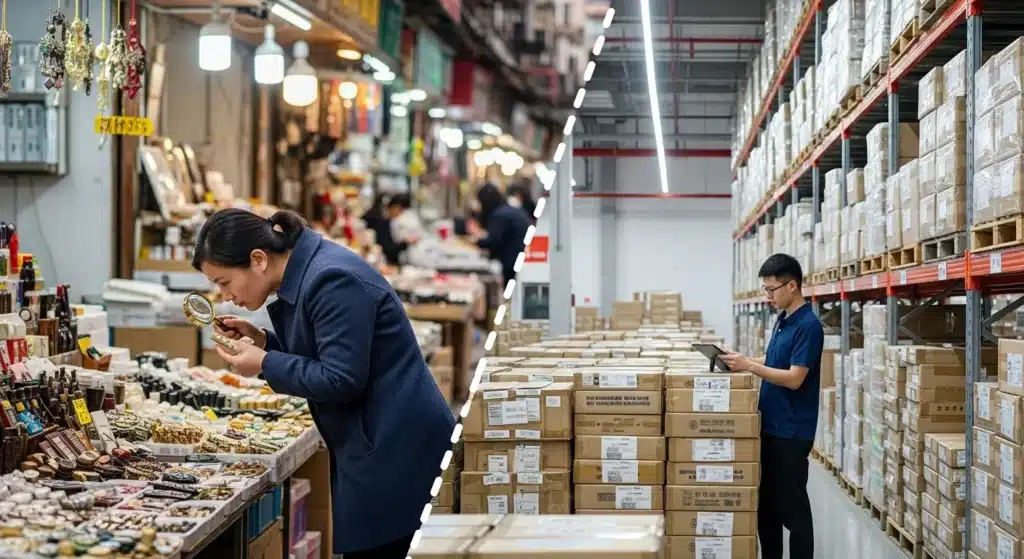
Small Orders or Testing Products
Start with Yiwu Market for initial orders of 50-200 units. This lets you verify product quality directly with suppliers and negotiate face-to-face, avoiding the higher minimum order quantities and added costs from middlemen that are common on Alibaba. For example, you might pay $0.50 per keychain for 200 units in Yiwu, compared to $0.70 per unit with a 1,000-unit MOQ on Alibaba.
Bulk or Large-Scale Sourcing
Once you’ve validated a product, switch to Alibaba for scaling up. Ordering 1,000+ units typically reduces the per-item cost significantly and provides access to a wider network of suppliers capable of handling custom or industrial product manufacturing. The platform’s structure is built for this kind of volume.
No Travel Budget or Remote Buying
Rely on Alibaba when the cost and time of traveling to China outweigh the potential savings from in-person sourcing. The platform’s services, like Trade Assurance and integrated logistics, provide a secure and efficient way to manage remote purchases, making it the practical choice for international buyers who cannot visit.
Nearby Buyers or Hands-On Inspection
If you can travel to Yiwu, choose the market for its flexible MOQs, immediate quality checks, and the ability to negotiate better deals on mixed container loads. This hands-on approach is ideal for filling a container with varied SKUs, where direct inspection and consolidation lead to lower total landed costs and greater control over your shipment.
Frequently Asked Questions
Is Yiwu market cheaper than Alibaba?
For low- to mid-end consumer goods, Yiwu market is generally cheaper than Alibaba. You’re buying closer to the factory and can negotiate face-to-face, which often cuts out the trading-company middlemen common on Alibaba. The actual price difference varies by product, volume, and your negotiation skills. While Yiwu usually offers better unit prices for small mixed orders, Alibaba can be more economical for large, repeat bulk orders where its streamlined logistics are an advantage.
Can I find Alibaba suppliers in Yiwu market?
Yes, many suppliers listed on Alibaba are located in or connected to Yiwu International Trade City. The market complex, with over 75,000 booths, hosts numerous verified factories and traders active on Alibaba for products like jewelry, electronics, and gifts. This means the platforms complement each other: you can discover suppliers online via Alibaba and then visit their physical booths in Yiwu to negotiate directly, verify quality, and access lower minimum order quantities.
Is Alibaba Trade Assurance safe?
Alibaba Trade Assurance provides a secure escrow payment system where your money is held by Alibaba and only released to the supplier after shipment or confirmed delivery. It offers defined protection against non-shipment, late shipment, or goods not matching the contract. However, this protection isn’t absolute. Its effectiveness depends on having a clear, detailed contract, filing any disputes within the strict 30-day window, and the platform’s final ruling on the case.
Why are Alibaba shipping costs so high?
Shipping costs on Alibaba feel high because you’re paying international freight rates on often small, low-value orders. Key factors include premium per-kilogram rates for air express shipments, charges based on a package’s volumetric (dimensional) weight, recent carrier rate increases, and additional fees for customs clearance and multiple logistics handlers. For larger volumes, traveling to Yiwu and consolidating goods for bulk ocean freight can dramatically reduce the shipping cost per unit.
Do Yiwu suppliers have websites?
Most Yiwu suppliers do not run their own polished English websites. Instead, their primary online presence is typically on the official Yiwu wholesale portal, Yiwugo, where each physical market booth has a corresponding online shop page. Many also list products on third-party B2B platforms like Alibaba, 1688, or through sourcing agencies rather than maintaining independent sites.
Can I hire an agent to buy from 1688?
Yes, hiring a sourcing agent is a common and effective way for foreign buyers to purchase from 1688. These agents, often based in export hubs like Yiwu or Guangzhou, handle communication in Chinese, make payments in RMB, conduct quality inspections, consolidate goods, and manage export logistics. They typically charge a service commission, often between 3% to 10% of the product’s value, and can help you connect directly with factories behind online traders.
Final Thoughts
The choice between Yiwu Market and Alibaba isn’t about finding a single “best” channel, but about matching the right tool to your specific sourcing needs. Yiwu excels for hands-on quality control, low MOQs, and direct negotiation, making it ideal for testing new products, building mixed orders, or when you can travel to China. Alibaba is built for efficiency at scale, offering a streamlined process for large, homogeneous bulk orders and remote management, though often at a higher per-unit cost and with less flexibility.
For most importers, a hybrid approach delivers the best results. Start with Yiwu to verify suppliers and products in person, then use Alibaba to scale up successful items. This strategy combines Yiwu’s risk reduction and price advantages for initial orders with Alibaba’s logistical efficiency for repeat, high-volume production. Your sourcing strategy should evolve with your business, using each channel for its strengths to build a more resilient and cost-effective supply chain.