Justin
Why Yiwu is the “World’s Supermarket”
Most importers burn months and tens of thousands of dollars hopping between scattered factories, only to lock cash into a few risky SKUs. Yiwu compresses that search into a single 6.4 million sqm hub with 75,000+ businesses, 2.1 million SKUs, and MOQs as low as 50–100 units, so you can test winning products without overloading inventory.
This guide shows how to use Yiwu’s 5 districts, 3,000 sqm consolidation warehouses, AQL Level II inspections, 40-foot ≈ 68 CBM container planning, and Chineseyiwu.com’s on-site team to turn booth visits into controlled, profitable shipments instead of guesswork.
Yiwu earns the name “World’s Supermarket” because it concentrates 75,000+ businesses in a 6.4 million sqm market that carries 2.1 million products across 26 categories, ships 30 million packages a day to 215+ countries, and lets buyers test products with MOQs as low as 50–100 units.
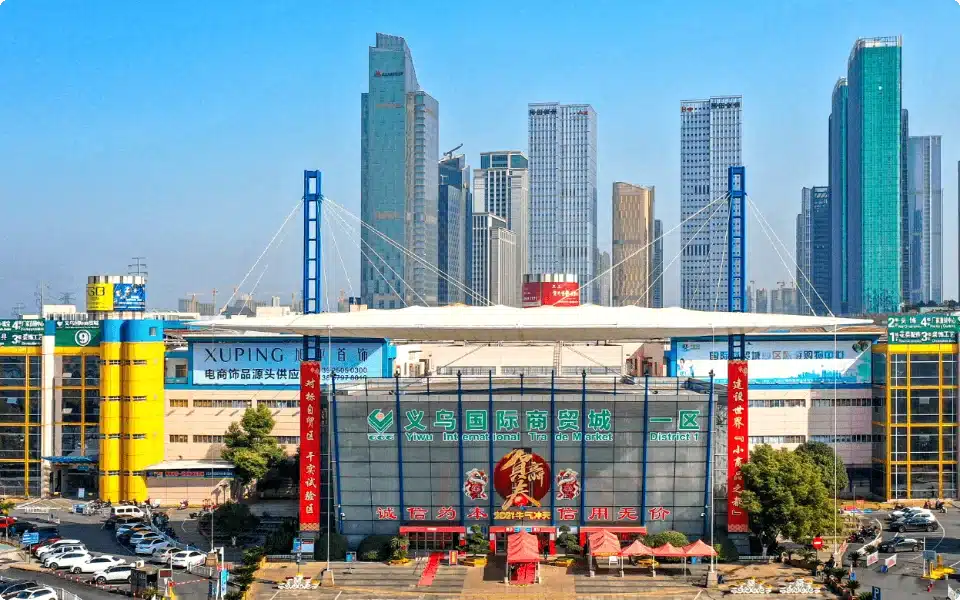
What Makes Yiwu the “World’s Supermarket”?
Yiwu works like a supermarket for the world, but on an industrial scale. Instead of shopping aisles, you walk districts and booths. Instead of buying one piece, you buy in cartons.
The market covers about 6.4 million square meters. It is split into at least five planned districts, not one chaotic bazaar. Each district focuses on certain product types. District 1 is strong in toys and jewelry, District 4 focuses on textiles and clothing, and District 5 handles many cross-border import products.
Across these districts you find more than 2.1 million product SKUs spread over 26 big categories. Think of almost every low-ticket consumer item that can hang on a hook or sit on a retail shelf: toys, fashion jewelry, kitchen tools, small electronics accessories, home decor, seasonal items, and more.
About 75,000 businesses and around 210,000 suppliers operate in and around the market. For nearly any small commodity niche, you can compare dozens of suppliers side by side in one building. That heavy clustering sharply cuts search time for buyers.
Yiwu’s reach is global. Buyers from over 215 countries and regions source there, and products ship out daily to large and small markets alike. Over time, this turned a local market into a core global node for small commodities.
On the product side, Yiwu dominates many categories. Industry data suggests around 80% of small household goods in some global channels link back to the Yiwu ecosystem. The city reportedly produces about 70% of the world’s Christmas socks, along with huge shares of other seasonal and gift items.
The demand side is just as big. The market receives roughly 220,000 visitors each day, including about 3,900 foreign traders. That constant flow means high product turnover, quick feedback on prices and styles, and strong competition between suppliers.
Trade figures back up the “World’s Supermarket” label. In one recent year, exports reached 589 billion yuan (around 82 billion US dollars), with year-on-year growth of 17.7%. From January to November 2024, import–export value reached around 614 billion yuan.
None of this happened by accident. Zhejiang China Small Commodities City Group, set up in 1982, developed Yiwu as a planned procurement hub. It is a structured trading ecosystem designed to serve global buyers, not a temporary street market that grew without a plan.

The Infrastructure and Supply Chain Standards Behind Yiwu’s Scale
Yiwu does not just gather suppliers. It also runs like a high-speed logistics machine that can feed global trade every day.
On the freight side, about 1,200 container trucks leave Yiwu daily for coastal ports such as Ningbo and Shanghai. Those containers carry consolidated orders from many small suppliers into global sea freight routes.
Parcel logistics are even more intense. Networks around Yiwu process roughly 30 million packages per day. That volume looks more like a big national e-commerce platform than a single physical market. It allows quick restocking for online sellers and wholesalers worldwide.
Yiwu also runs China’s first digital consolidation warehouse. This type of facility uses digital systems to group goods from many orders and manage customs checks. It reportedly cuts inspection and handling delays by about 20%, which speeds export preparation and customs clearance.
When tens of thousands of suppliers operate inside one 6.4 million square meter zone, buyers gain what economists call agglomeration efficiency. In simple terms, it becomes realistic to place orders with 20 or more booths, then still ship everything out in one container or less-than-container-load shipment.
Many Yiwu suppliers accept very flexible minimum order quantities. Instead of asking for 1,000 or 2,000 pieces per item like a traditional factory, they often start at 50–100 units per carton for many products. This low MOQ model fits how small importers, new brands, and e-commerce sellers work.
Those small batch sizes give an important cash-flow advantage. Buyers can test more SKUs at once, without locking a large amount of capital in one big order that might fail. For example, a seller can trial 20 new home decor items with 100 pieces each, instead of one item with 2,000 pieces.
Yiwu’s strength comes from its complete industrial ecosystem. Inside and around the trade city you find raw material providers, packaging factories, printing shops, logistics firms, and quality-check services. This dense network lowers transaction costs and speeds up problem solving.
Because the whole ecosystem works together, Yiwu does not rely on a single “super factory” to give low prices. Instead, it makes small-batch, multi-supplier procurement economically viable. That is what buyers really pay for: flexible sourcing at close-to-factory pricing.
Each district specializes by segment. Toys, jewelry, textiles, home goods, and imports each have their own buildings and often repeatable layouts. Documentation flows and pricing norms in each area follow shared patterns, which simplifies the on-the-ground work of comparing suppliers, taking notes, and matching samples to quotes.
The market also plugs into digital commerce. Projects like the “Yiwu Selection” online brand store show this connection. On its opening day, that store reportedly generated about 120 million yuan in deals. This shows how Yiwu’s offline supplier density can feed large online sales channels quickly, once a product proves itself.

How International Buyers Use Yiwu in Real Sourcing Strategies
Different types of buyers use Yiwu in different ways, but most follow a few repeating patterns.
Many buyers practice multi-supplier consolidation. A team may source toys and accessories in District 1, home textiles in District 4, then fill one container or LCL shipment with products from 10–30 booths. Yiwu’s ecosystem makes it normal to mix many SKUs from many suppliers in a single shipment.
Low MOQs support fast product validation. With 50–100 units per SKU, a brand can launch dozens of products in test markets or online, see what sells, and then place larger factory orders only for proven winners. This reduces the chance of sitting on dead stock.
Foreign traders often use Yiwu for market scouting. Among the 3,900 daily international visitors, many walk the market to spot new trends in gifts, toys, and seasonal items 6–12 months before those items appear widely in Western retail. Yiwu acts as an early warning system for what may sell next season.
For online sellers on platforms like Amazon, speed matters as much as price. Yiwu’s daily 1,200 container trucks and 30 million parcels help these sellers restock fast movers before they run out. Sellers can mix cartons for FBA, FBM, and local warehouses in one combined plan.
Risk control is another key reason to use Yiwu. With access to about 210,000 suppliers in and around the city, importers can switch suppliers when a factory has capacity issues or quality problems. They do not need to depend on a single plant for a basic item like a mug, a plush toy, or a pair of socks.
Yiwu focuses on small consumer goods rather than technical or engineered products. This includes toys, party supplies, stationery, simple electronics accessories, and basic home goods. Because of that, buyers treat Yiwu as a one-stop sourcing base for low-ticket items, not for machinery or components that need strict engineering standards.
On the paperwork side, on-site customs offices and experienced freight forwarders guide buyers on HS codes, packing methods, and labeling rules. This local knowledge helps match shipments to the import rules of destination countries and reduces customs delay risks.
Use cases vary by business model. Traditional wholesalers may fill full containers from 50 or more SKUs to spread risk and serve many downstream retailers. Brand owners tend to focus on fewer SKUs and work on private label packaging. Dropship and e-commerce sellers rely more on frequent, smaller parcel shipments that follow sales spikes.
Seasonal sourcing shows Yiwu’s strength clearly. For Christmas items, including socks, decorations, and related packaging, many global retailers can plan nearly their entire seasonal range in one or two trips. Since Yiwu reportedly produces about 70% of the world’s Christmas socks, buyers can lock in both variety and volume there.
There are limits to what Yiwu can supply. Most listings and market information do not include detailed engineering data such as ISO or ASTM test reports for high-spec products. Companies that need tight technical control still use Yiwu mainly for packaging, accessories, or non-critical gift items, while sourcing key engineered parts from more specialized factories.

For many overseas buyers, the scale that makes Yiwu powerful also makes it hard to navigate. Chineseyiwu.com positions itself as a local partner that turns this huge market into a controlled, step-by-step sourcing process.
The company’s headquarters sit inside Yiwu Trade City, close to the booths themselves. This on-site presence lets its team walk the market, compare suppliers in person, and confirm details at the booth level instead of relying only on online directories.
Chineseyiwu.com runs a 3,000 square meter warehouse in Yiwu. Buyers can consolidate goods from more than 20 shops into that warehouse with up to 30 days of free storage. This matches how most buyers actually use Yiwu: many small orders combined into one export shipment.
- ✅ On-site supplier checks: The team performs on-the-ground factory verification across Yiwu’s large supplier base and other regions in China. This reduces the risk of “bait and switch” where the sample and bulk differ.
- ✅ Warehouse-based quality control: AQL Level II inspections happen inside the Chineseyiwu.com warehouse. Inspectors check goods before they enter the daily container truck stream. Failed items can return to the factory for rework or replacement.
- ✅ End-to-end shipping and DDP: The company prepares export documents, handles customs clearance, and offers Delivered Duty Paid options to more than 100 countries, using Yiwu’s parcel and container network as the backbone.
- ✅ Amazon FBA alignment: For marketplace sellers, the team adds FNSKU labels, poly-bags products, and ships directly into Amazon fulfillment centers, so Yiwu’s wide SKU range arrives shelf-ready.
Chineseyiwu.com has operated for more than 18 years and manages annual volume over 50 million US dollars. The team works inside the fast-moving Yiwu environment every day, which helps first-time buyers avoid common mistakes around suppliers, payment terms, and logistics timing.
The standard financial structure connects clearly to the inspection process. Many clients pay 30% as a deposit to start production, and 70% after quality control passes in the Yiwu warehouse. This flow means buyers do not need to release the final balance before an independent inspection confirms that goods match requirements.
In practice, Chineseyiwu.com acts as a risk firewall between Yiwu’s vast supplier pool and the buyer’s brand. It combines market guidance, supplier vetting, warehouse-based QC, and logistics management so that sourcing from Yiwu feels more like working with a structured supply chain, not gambling in an unfamiliar marketplace.
Yiwu Market District Guide (1-5)
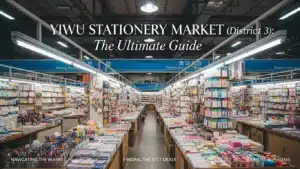
Yiwu International Trade City spans about 4 million square meters across 5 districts, with around 75,000 booths and over 100,000 suppliers offering more than 400,000 product types. Each district uses clear building sizes, floor layouts, and product zoning so buyers can head straight to the right buildings and floors instead of walking the entire market.
What the 5 Yiwu Market Districts Cover and Why They Matter for Sourcing
Yiwu International Trade City works like a giant shopping mall for wholesale. It covers about 4 million square meters across 5 linked districts. Inside those buildings sit roughly 75,000 booths run by more than 100,000 suppliers, showing over 400,000 kinds of products.
The 5 districts form one continuous market, but they split products by category and supplier type. Think of each district as a themed zone in a large airport. You do not need to walk the whole 4 million square meters. You only go to the concourse that matches your flight, or in this case, your product category.
Inside each district, products cluster by floor. One floor might focus on one industry, the next floor on a related industry. So a buyer who wants items from a specific industry can often check most of the key suppliers inside one or two buildings and one or two floors, instead of searching at random.
District 1 has a strong export focus. Around 70 percent of its products target overseas buyers. This means many suppliers there already understand export standards, export packaging, HS codes, and carton requirements. For importers, this reduces basic communication friction.
Supplier density in Yiwu is high. Over 100,000 suppliers share around 75,000 booths, and many booths host more than one business household or brand. In practice, this means buyers can compare prices, minimum order quantities, and quality from many suppliers within a few steps.
Because the market is so large, serious buyers need a plan. The smart approach is to pre-select districts and floors based on product category, then assign time per building. Trying to walk all 5 districts without a clear target often wastes days while adding little extra supplier value.
Key Specifications of Yiwu Market Districts 1–5
Across all 5 districts, Yiwu International Trade City offers about 4,000,000 square meters of market space. Inside this space sit roughly 75,000 booths, supplied by more than 100,000 vendors. This scale lets buyers cover broad product lines inside one city.
District 1 covers about 340,000 square meters, or around 3,700,000 square feet. It holds more than 10,000 booths and opened on October 22, 2002. This district set the basic model for later phases. Around 70 percent of the products here are for export, so it attracts many international buyers.
District 2 has a building area that exceeds 600,000 square meters and sits on about 483 acres of land. It holds around 8,000 stores with more than 10,000 business households over 5 floors. Each floor focuses on specific product categories, stacking related items vertically so buyers move more up and down than across distant buildings.
District 2 opened on October 22, 2004. In just two years, the market added over 600,000 square meters of capacity, which matched the growth of global importer demand.
District 3 covers about 460,000 square meters. Its lower floors use smaller standard booths, while the upper floors use larger commercial spaces. Floors 1 to 3 use standard booths of about 14 square meters each, with more than 6,000 of these units set up for traditional wholesale and small orders. Floors 4 and 5 allocate larger booths of about 80 to 100 square meters, with more than 600 units suited for factory outlets, brand showrooms, or complex product displays.
District 4 is one of the largest single buildings in the market system. It covers about 1,080,000 square meters and holds around 16,000 booths. More than 7,000 of these booths actively display goods. The rest leave room for future tenants, seasonal categories, or adjustments as product demand changes. District 4 opened on October 21, 2008, adding over 1,000,000 square meters of market space in a single phase and strengthening Yiwu’s role as a global high-density commodity hub.
- Booth sizing strategy: Standard booths of about 14 square meters serve retail-oriented and small wholesale floors, where buyers often place many small or mixed orders. Larger booths of 80 to 100 square meters serve factory-direct brands and bulk inventory, where buyers focus on container-level or repeat orders.
District 5 follows the same logic. While this data set does not list full metrics for District 5, the total market figures of about 4,000,000 square meters and 75,000 booths show that District 5 fills the remaining space beyond Districts 1 to 4. It keeps the pattern of product category clusters and vertical zoning by floor.
How to Use District Layouts and Booth Standards for Efficient Sourcing
Time management is the first key. A single district like District 4, with about 1,080,000 square meters and 16,000 booths, can easily take a full working day or more. Buyers get better results if they assign one large district per day and avoid jumping between far-apart buildings.
Because product categories align with specific floors, buyers can improve efficiency by pre-mapping which floors match their category. Instead of walking all 5 floors in each district, they can focus on the 1 to 3 key levels that actually matter to their sourcing brief.
Booth type also signals the supplier’s likely order size. Smaller 14 square meter booths on Floors 1 to 3 in District 3 suit small and medium orders or variety sourcing, where buyers test many SKUs in lower quantities. Larger 80 to 100 square meter booths on Floors 4 and 5 usually belong to factories or bigger brands, which works better for buyers who want full containers, long-term programs, or private label projects.
In dense areas such as the lower floors of District 3 with more than 6,000 standard booths, or District 1 with over 10,000 booths, buyers can run fast, side-by-side comparisons. Within one floor, they can usually visit 5 to 10 suppliers in the same category to compare price, minimum order quantity, packaging options, lead times, and export experience.
For export-focused sourcing, routing matters. Since around 70 percent of District 1’s products target export, international buyers often start there for suppliers who already understand documents, HS codes, and packing rules. Once they lock key items in District 1, they can expand to other districts to fill niche or special categories.
In District 2, about 8,000 stores host more than 10,000 business households. Many booths share linked brands, trading companies, or factory relationships. Buyers should record details carefully: booth numbers, company legal names, district, building, and floor. This avoids mix-ups later when many suppliers sell similar products with similar names.
Supplier density also reduces risk. With more than 100,000 suppliers across 5 districts, buyers usually can find backup options inside the same product cluster. If one factory cannot meet quality, price, or lead time, a buyer often only needs to move to a nearby booth instead of switching to a new city.
The physical distances inside a 4,000,000 square meter market are large. Buyers should plan rest breaks, use internal shuttles when available, and group meetings by district and floor. Walking back and forth between scattered booths costs time and energy that could go into negotiation or inspection.
Sample management quickly becomes a challenge. When buyers collect dozens of samples per day, they need a clear labeling system. A simple method is to tag each sample with district, building, floor, street, and booth number. This makes it easier to match samples to suppliers later for order placement and quality control.
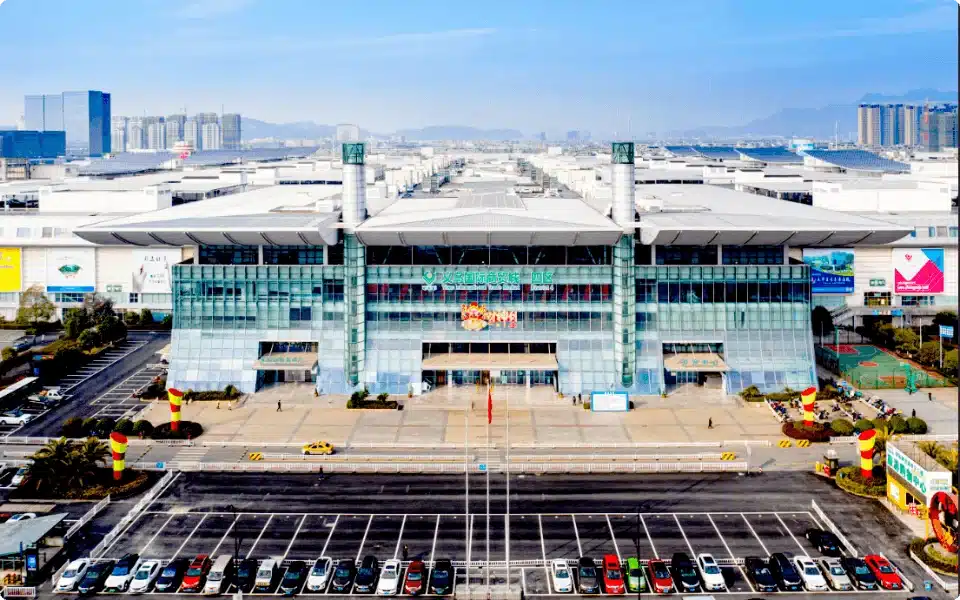
Chineseyiwu.com operates inside Yiwu Trade City, not in a distant office. The team of more than 50 staff work with an in-house warehouse of about 3,000 square meters. Think of this as your local command center for the 5 districts. It allows the team to visit scattered booths, receive goods from many suppliers, and consolidate them into organized shipments.
Before a buyer even lands in Yiwu, the team uses a Yiwu Market Map and Districts Floor Guide to pre-select the right districts and floors out of the 75,000 booths in the market. This means the buyer does not spend days walking sections that do not match their category or budget.
Chineseyiwu.com also filters booths and suppliers in advance. For each product, they often shortlist 3 to 5 suppliers from access to more than 75,000 suppliers and over 5,000 factories. This cuts down time in large districts like District 2 with its 8,000 stores, or District 4 with its 16,000 booths, because buyers only visit pre-verified candidates.
Quality control sits close to the source. Goods from multiple districts move into the company’s 3,000 square meter warehouse for AQL Level II inspection, which is a standard sampling method used in international trade. If inspectors find problems, items can go back quickly to the nearby booths or factories for rework or replacement, instead of causing disputes after export.
Consolidation is a daily task. The team often pulls goods from more than 20 shops in different districts into a single shipment. For buyers who place mixed orders across multiple districts and floors, this reduces freight cost and paperwork and keeps export documents cleaner and easier to match with actual cargo.
Because around 70 percent of District 1’s products target export buyers, Chineseyiwu.com gives extra attention to factory verification, export documentation, and HS code handling in this area. The goal is to align output from local suppliers with Western quality and compliance standards, so sourcing from Yiwu feels less like a gamble and more like a controlled project.
How to Prepare Before You Fly (Visa & Apps)
Before you fly to Yiwu, check your passport validity, choose between an M visa and 240‑hour transit, secure a correct invitation letter, and allow 2–4 business days for consulate processing. Align your flight dates, hotel booking, and sourcing schedule with your approved visa or transit window.
M visa vs. visa‑free transit: which option fits your Yiwu trip
Think of the M visa as a full access pass and 240‑hour transit as a short guest pass. Both let you enter China, but they work very differently for sourcing from Yiwu.
Use an M visa when Yiwu is a serious business trip, not a quick stop. This visa covers trade fair visits, supplier meetings, and direct purchasing. Most regular buyers and importers use it, because it gives more time and flexibility to move between Yiwu and nearby factory areas.
The key to an M visa is the invitation letter. This is like your formal meeting agenda in letter form. A Chinese company, agent, or fair organizer prepares it. It needs your full name, passport number, visit purpose, arrival and departure dates, the city you will visit such as Yiwu, and how you relate to the inviter. Consulates use these details to judge if your trip plan makes sense.
Once the consulate gets your physical documents, standard M visa processing usually takes about four business days. Many consulates also offer a faster express lane that can cut this to about two or three business days. Plan your flights so there is room for this processing time and any small corrections they might ask for.
The 240‑hour visa‑free transit route works more like a timed transfer ticket. You can stay in certain regions of China for up to ten days if you hold a passport from an eligible country and you have a confirmed ticket onward to a third country, not back to where you came from. Airlines and immigration officers will check that your route fits this pattern.
Transit has clear advantages for short trips. You skip consulate paperwork and visa fees, which helps if you want to do a fast market check in Yiwu. The tradeoff is stricter rules: you must leave within the allowed hours and stay within the approved cities. That limit makes transit better for focused buying in Yiwu Trade City than for long factory tours across several provinces.

Passport rules, documents, and processing standards you must meet
Passports and paperwork act like the raw materials for your visa. If any piece is wrong, the whole process slows down or stops. A quick pre‑check keeps your Yiwu sourcing trip on schedule.
For a standard China visa, including the M visa, your passport should have at least six months of remaining validity from the date you hand in your application. Many consulates also ask for one or two completely blank visa pages, not just half‑used ones. This gives them space for the visa sticker and entry stamps.
For a 240‑hour visa‑free transit entry, the National Immigration Authority sets a lower threshold. You need at least three months of validity left on your passport from the day you arrive. Even if your country allows travel with less, airline staff will often apply the Chinese rule at check‑in.
Processing time starts only after the consulate or visa center accepts your physical documents. Regular service takes about four business days, and express options can reduce this to around two or three business days. To avoid panic, work backward from your flight date and build in extra room for corrections or missing pages.
The invitation letter deserves a careful check. It should show your full name and passport number exactly as in your passport, the reason for your visit such as Yiwu market sourcing or factory visits, your planned arrival and departure dates, all cities you plan to visit, and the inviter’s full company name, address, contact person, and phone number. Consular officers compare these details to your form and travel plan.
Many consulates now use a two‑step system. First you fill in the visa form online and upload a photo plus your invitation letter. Then you take your passport and original or printed documents to the consulate or a visa center in person, often by appointment. Missing the second step means no visa, even if the online form is complete.
Rules can shift by region, so always cross‑check the website of the Chinese consulate that serves your area, such as the Chinese Consulate in Los Angeles, along with National Immigration Authority notices. Some offices enforce stricter rules on blank pages, appointment slots, or which courier services they accept.
Turn visa rules into a reliable pre‑flight checklist
You can treat your visa timeline like a production schedule. Each step has a slot. If you keep the order, your Yiwu sourcing trip stays on track.
Eight to ten weeks before your planned departure, decide which entry route fits your goals. If you plan deep supplier visits, factory tours, or repeated China trips, aim for an M visa. If you only need a short, tightly planned stay inside one region, see if the 240‑hour transit policy works with your passport and flight route.
Six to eight weeks out, ask your Yiwu supplier, local agent, or trade fair organizer for an official invitation letter. Make sure it names Yiwu clearly and lists entry and exit dates that match your early flight plan. This early step gives them time to fix spelling mistakes or date errors before you submit.
Four weeks before your flight, check your passport like you would inspect goods before shipping. Count the remaining months. For an M visa you want at least six months left. For transit you need at least three months. If you fall short, renew now instead of hoping the consulate makes an exception.
Two to three weeks out, complete the online visa form, upload your photo and invitation letter, and book an appointment with the consulate or visa center. Allow at least four business days for regular processing. If your flight is close, budget for the two to three day express option if the consulate offers it.
Once your visa is approved, match your confirmed flights and hotel bookings to the dates on your visa or transit window. For transit entries, keep the route pattern firm, such as Country A to China to Country B, without surprise changes that might break eligibility at the border.
Before you leave for the airport, save both digital and printed copies of your invitation letter, Yiwu hotel booking, return or onward ticket, and any consulate receipt or visa center slip. Airline staff and Chinese immigration may ask to see these, especially for transit entries and short notice changes.
How Chineseyiwu.com can support your visa and trip planning
Chineseyiwu.com sits inside Yiwu Trade City, so the team sees both the visa rules and how buyers actually move through the market day by day. That position lets them shape documents and schedules that match what consulates and immigration officers expect.
- ✅ Grounded agendas: Chineseyiwu.com works with more than 5,000 verified factories and over 75,000 booths, so the team can build realistic visit agendas that match the length of your M visa or your 240‑hour transit window.
- ✅ Aligned invitation letters: When you book a Yiwu sourcing program, the team can coordinate official invitation letters through local suppliers, trade fair organizers, or its own company details. They match the written purpose such as market sourcing or factory visits with the real schedule you plan to follow.
- ✅ High‑value short stays: Because Chineseyiwu.com runs a clear four‑phase sourcing flow from quotation to samples, production with quality control, and global shipping, the staff can pre‑screen suppliers and line up back‑to‑back meetings. That way you use a 240‑hour stay in Yiwu like a tightly packed production line instead of wasting time walking the market without a plan.
- ✅ Post‑trip support: With a 3,000 sqm consolidation warehouse and in‑house quality inspectors, you can make most key sourcing decisions during one compliant stay. After you leave China, the team can finish inspections, hold goods for up to 30 days, consolidate them, and arrange DDP shipping so you do not need to reenter China to close the loop.
When you combine a well timed visa plan with this on‑the‑ground support, sourcing from Yiwu feels less like a gamble and more like a managed project with clear checks at every stage.
Stop Paying Foreigner Prices in Yiwu
Work with a Yiwu sourcing team that negotiates in local dialects, checks every carton, and consolidates dozens of suppliers into one shipment and one invoice. Since 2005, over 500 importers have used our warehouse, QC, and DDP shipping support to cut costs, avoid quality surprises, and turn the Yiwu “maze” into a predictable, profit-focused supply chain.
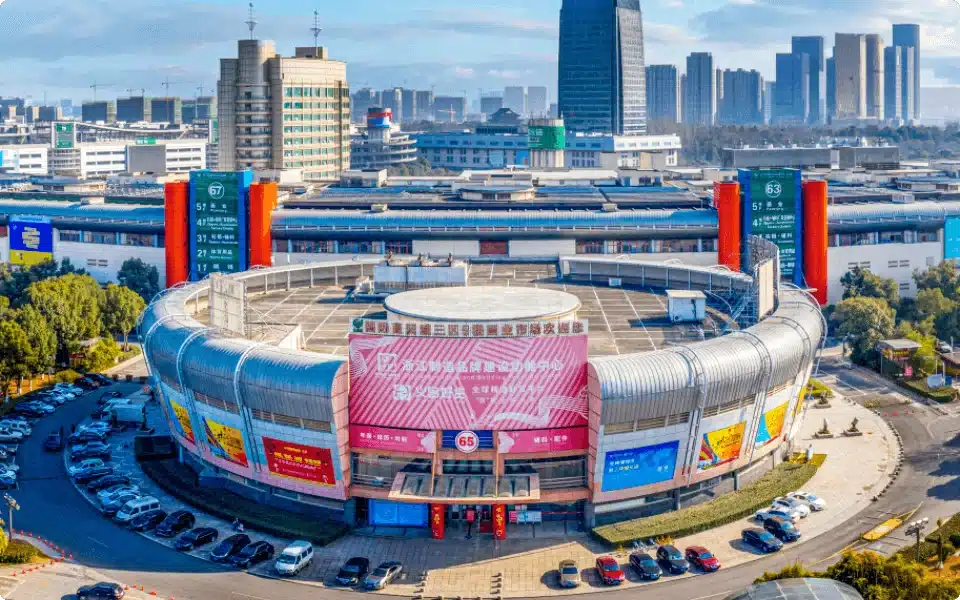
Yiwu Market opens daily from 9:00–17:00 and spans more than 75,000 booths, which creates both opportunity and risk. Solo buyers save on translator or agent fees but face language gaps, hidden commissions, and quality issues. Working with a local translator or sourcing partner trades some cost for clearer communication, structured quality control, and smoother logistics when sourcing from Yiwu.
| Aspect | Solo In Yiwu Market | With Translator | With Sourcing Partner |
|---|---|---|---|
| Market access and hours | Access to 75,000+ booths, open 9:00–17:00 Monday–Sunday; you manage your own schedule and navigation. | Same access and hours, but a local guide helps you use each 6–8 hour day more efficiently. | Same access and hours, plus pre-planned booth routes and factory visits that fit into your limited days. |
| Daily booth coverage | If you spend 10 minutes per booth, you often manage only 40–50 booths per day with lots of backtracking. | Translator can pre-filter and focus your walk on 10–20 serious booths, cutting out low-value stops. | Partner pre-vets suppliers before you arrive, so you mainly confirm shortlists and samples on site. |
| Language and communication | You deal with Mandarin or local dialect, handwritten RMB quotes, and non-English specs, which can cause mistakes on MOQ, materials, and packaging. | Translator covers live communication and bargaining but usually does not manage technical documents or ongoing follow-up. | Bilingual team handles product specs, contracts, and ongoing factory communication, not just live talk in the market. |
| Cost structure | You pay only product and logistics costs, but you carry all risk for misquotes, wrong specs, and shipping issues. | You pay a day rate or hourly fee for language help, and you still manage QC, warehousing, and freight yourself. | You pay a transparent commission on order value that includes sourcing, QC, consolidation, and shipping support. |
| Quality control | You judge samples at the booth and trust the factory to match bulk quality, with no formal inspection steps. | Translator can help ask QC questions, but inspections, AQL checks, and rework are still your job. | Partner runs structured QC such as AQL Level II checks in a warehouse and returns failed goods to factories before shipment. |
| Navigation and supplier lists | You rely on public maps and floor guides that group districts by product category, and you discover suppliers by walking. | Translator often knows which halls and floors suit your category and can point you to past contacts. | Partner maintains internal databases of trusted booths and direct factories, so visits follow a plan instead of random walking. |
| Weekend and short-trip efficiency | You can visit on weekends because the market opens daily, but you may need many days to cover enough booths. | Interpreter helps compress meetings and negotiations into 1–3 days, which suits quick trips. | Partner can pre-source, pre-sample, and then pack all key decisions into a tightly scheduled 1–3 day visit. |
| Risk of hidden margins and bait and switch | Higher chance of paying retail-like prices in a wholesale market, plus sample quality not matching bulk production. | Language clarity improves, but you still lack system-level checks that stop factories from cutting corners later. | Partner designs processes to reduce bait and switch, hidden factory markups, and documentation mistakes that delay customs clearance. |
| Control over decisions | You keep full control and handle supplier vetting, pricing, contracts, and logistics on your own. | You keep commercial control while the translator supports communication and simple negotiation. | You set targets and approve key steps, while the partner runs a fixed process for samples, QC, and shipments. |
| Best fit buyer profile | Very small test orders, buyers who speak Mandarin, or those who treat early orders as learning experiments. | First-time visitors who want help inside the market but are ready to manage production and logistics afterwards. | Brands with higher volumes, Amazon FBA sellers, and buyers who want one team to manage sourcing from Yiwu end to end. |
What Changes When You Go With a Translator vs. Solo in Yiwu
Think of Yiwu Market as a huge library with 75,000 books but only 8 opening hours per day. Your main choice is whether you walk the shelves alone or take a local guide who knows exactly which rows hold the books you actually need.
- Daily time window: Yiwu International Trade City opens roughly from 9:00 to 17:00, seven days a week, and mainly closes for Spring Festival. You get only one 6–8 hour working block per day, so every hour lost to confusion, translation, or getting lost directly reduces how many booths you can reach.
- Booth coverage and pre-filtering: The market gives you access to more than 75,000 booths. If you spend 10 minutes in each booth, you might visit only 40–50 booths in a full day. A prepared translator or sourcing guide can pre-filter suppliers so you skip low-potential booths and focus on 10–20 serious candidates with the right products and minimum order quantities.
- Language and quote clarity: Solo buyers face Mandarin, local dialects, handwritten RMB quotes, and non-English product specs. That often leads to misquotes on MOQ, such as confusing 100 pieces with 1,000 pieces, and misunderstandings about materials, finishing, or packaging details.
- Translator or agent fees: Translators usually charge a day rate for one market day or work under a sourcing commission. You pay more, but they remove basic friction around bargaining, finding the right district, reading quotes, and booking follow-up factory visits.
- Maps versus internal lists: Walking solo means you rely on public maps and floor guides that group districts by category such as jewelry, toys, or home decor. An experienced translator or agent usually maintains private lists of trusted booths and direct factories in each district, so the route feels more like a curated tour than a blind search.
- Weekend and short visit compression: Yiwu stays open Monday through Sunday, so weekend visits are possible. If you only have one or two days, a translator helps pack supplier meetings, sample checks, and price talks into a tight window instead of spreading them across a full week.
Key Data Points: Cost, Risk, and Control for Translators vs. Solo
Choosing between solo, translator, and full sourcing partner is like choosing between driving yourself, hiring a driver, or booking a full tour that includes hotels and tickets. The road is the same, but cost, risk, and control change.
- Market access baseline: Yiwu offers more than 75,000 booths across several districts, with many products starting at minimum orders around 100 pieces. A solo visitor who just walks and samples may touch only 0.05–0.1 percent of all suppliers, which means you might never see some of the best options.
- Time window impact: Each day gives you around 8 hours from 9:00 to 17:00. If you lose even 1 hour to translation issues or navigation mistakes, you cut 12.5 percent of your productive sourcing time for that day.
- Solo cost and risk profile: Going solo means you only pay for products and logistics such as freight, customs, and delivery. In exchange, you accept risks like bait and switch between sample and bulk quality, hidden factory markups when you do not know standard prices, and customs delays if HS codes and export documents contain errors.
- Translator-only model: A pure translator covers language and basic negotiation for a set day rate. They usually do not include warehouse checks, AQL sampling, or consolidation service. You still need to arrange inspections, book a warehouse, and handle international freight yourself.
- Sourcing partner model: A sourcing partner typically earns a commission on order value and bundles services such as on-site factory verification, AQL Level II inspections, free consolidation for a fixed time window, and DDP options where duty is prepaid. This shifts part of the quality and logistics risk away from you and onto the partner’s process.
- Risk by mode: Solo sourcing has a higher chance of hidden margins, confusion on payment terms like deposit and balance, and unclear lead times. Translator support cuts language risk but often leaves quality and logistics uncovered. A full sourcing partner brings in written procedures for inspections and shipments, which reduces surprises but makes pricing structures more visible through a clear commission.
- Control trade-offs: Solo buyers keep full control of every choice but must verify each supplier and manage every step. Translators add communication control during on-site talks. Sourcing agents add process control, with fixed stages such as sample approval, production follow-up, final QC, and shipment tracking.
How to Decide: When Solo Works and When a Translator or Agent Makes Sense
You can think of this decision like choosing gear for a hike. For a short, easy trail, sneakers and a bottle of water might be enough. For a long mountain trail, you want guides, maps, and proper equipment.
- Budget and order size: For very small test orders, such as trial buys under 100 pieces in total, solo sourcing or a low-cost interpreter can work. Once you place multi-supplier orders or higher volumes, one failed shipment can cost more than a full service commission from a good sourcing partner.
- Experience level: Buyers who speak Mandarin and already understand China sourcing patterns can safely go solo more often. If you are a first-time visitor, do not speak Chinese, and only stay for a few days, investing in a translator or agent for at least your first trip usually saves time and reduces mistakes.
- Time spent in Yiwu: With only 2–3 days in Yiwu, you must find booths, negotiate, select samples, and confirm MOQs inside just a few 9:00–17:00 slots. A translator or sourcing agent multiplies the number of productive meetings you fit into each day.
- Product complexity: Simple items such as basic home decor that do not need special certifications suit solo sourcing better. Products for Amazon FBA or goods with strict safety and labeling rules benefit from structured quality checks and compliance support from a partner who knows the standards.
- Post-visit workload: Solo buyers need to track every supplier, ship all samples, organize production schedules, book inspections, and arrange freight. A sourcing agent can centralize communication, collect goods from more than 20 shops in one warehouse, and handle a single consolidated export shipment.
- Risk appetite: If you treat early orders as paid learning and accept the chance of late delivery or inconsistent quality, solo visits can be fine. If your business depends on on-time launches and repeatable quality for each reorder, third-party support works as a safety buffer.
Chineseyiwu.com acts like a local operations team for buyers who want more than a translator but still want factory prices in Yiwu.
- Physical presence inside Yiwu: The headquarters sits inside Yiwu Trade City, close to the same 75,000+ booths you walk. The team works Monday to Sunday from 9:00 to 18:00, overlapping Yiwu Market hours so staff can join you in the market and still handle warehouse and shipping tasks.
- Warehouse and consolidation: The company runs a 3,000 square meter warehouse and offers free consolidation of goods from more than 20 shops for up to 30 days. That means you can buy from many small booths, but receive one combined shipment instead of 20 separate ones.
- Team and category focus: More than 50 in-house employees cover sourcing, translation, and quality control across key categories such as jewelry, toys and baby, and home decor. You do not rely on one freelance translator for every technical choice or inspection.
- Structured four-step process: The service follows four clear stages. First, the team handles inquiry and quote by collecting prices from three to five verified suppliers per product so you see a realistic range. Second, they arrange sample verification and ship consolidated samples to your office before you commit to bulk orders. Third, during production and QC, they transfer finished goods to the warehouse for AQL Level II inspection and send failed items back to the factory. Fourth, they manage global shipping, export papers, customs clearance, and final door delivery.
- Risk control focus: Chineseyiwu.com designs its workflow to reduce bait and switch, hidden margins, and shipping problems. They share legal licenses for verification, offer DDP shipping where duty is prepaid, and support standard payment terms such as 30 percent deposit and 70 percent balance after you approve the QC report.
- Scale and track record: The company began in 2005 and now handles more than 50 million US dollars in annual volume with clients in over 100 countries. Case studies include a German retailer that cut sourcing costs by 28 percent and a United States pet brand that grew into an Amazon Best Seller after shifting its sourcing from Yiwu through this team.
- Amazon FBA support: For Amazon sellers who cannot stay long in Yiwu, Chineseyiwu.com covers FNSKU label application, poly-bagging to meet FBA rules, and direct shipping to Amazon fulfillment centers. This turns what starts as translator-level help in the market into a full chain service from supplier selection to shelf-ready stock in the warehouse.
Logistics: From Booth to Container
Yiwu logistics links thousands of small booth orders into export containers through warehouse consolidation, 20% pre-shipment QC sampling, engineered container loading (40-foot ≈ 68 CBM, max 60% payload on any half of the floor), and full export documentation for sea freight routes that usually take 15–45 days door-to-port.
What Yiwu booth‑to‑container logistics covers and why it matters
Booth-to-container logistics describes how products move from small Yiwu stalls into export-ready containers. Think of it as turning many shopping bags from different shops into one big, labeled suitcase that can cross borders safely.
A typical shipment starts with products bought from multiple Yiwu booths inside a market that covers about 2 million square meters and more than 75,000 booths. Each booth sends its cartons to a consolidation warehouse, where staff check, label, and group them before they go into a container as LCL or FCL cargo.
One export often combines goods from 20 or more shops or factories. This mix keeps unit cost low, but also adds risk, because a delay or mistake from one small supplier can affect the whole shipment. Late delivery from a booth, missing cartons, wrong labels, or unclear packing lists can slow down loading or even block customs release.
Payment terms usually follow 30 percent deposit and 70 percent balance before shipment. That means buyers have most of their cash on the line while goods sit in the warehouse, not in their own country. Strong logistics control, clear carton labeling, and quality checks at this stage protect that money and reduce the chance of disputes later.
Sea freight from China often takes 15 to 45 days, depending on route and service. After a container leaves port, fixing product quantity, packaging, or paperwork becomes very hard and very slow. So the warehouse phase, from receiving cartons to sealing the container, is where buyers need the most visibility and discipline.
Technical standards from warehouse to container: volumes, loads, and checks
Booth-to-container work uses some practical standards that keep freight safe, traceable, and cost effective.
A 40-foot FCL container offers about 68 CBM of usable space. CBM means cubic meters, or length × width × height of all cartons. Buyers can add up the CBM of each SKU to see if the total fits inside this 68 CBM planning box. If the mix is too low, they waste space and pay too much per unit. If it is too high, they must remove items or book extra capacity.
On many China–USA routes, a 20-foot container often falls in the 500 to 1,200 USD band for ocean freight, but this changes with season, fuel, and carrier capacity. Treat this as a planning guide only and always check live rates before fixing order size or client delivery promises.
Load distribution aims to protect the container structure and the cargo. Operators avoid placing more than 60 percent of the total payload weight on either the front half or the rear half of the floor. This balance helps prevent damage, twisting, or tipping during lifting and truck moves.
The loading sequence follows a simple rule you can picture as packing a bookshelf. Heavy and bulky cartons go first on the floor against the front wall. Medium-weight cartons fill the middle sections. Light boxes and fragile items sit on top or closer to the doors. This step-by-step build limits cargo movement when the ship rolls during a long sea voyage.
Quality control in this context usually means random inspection of a set percentage of the shipment. Many operators use around 20 percent sampling at carton or unit level. AQC or AQL-based inspection means they take a structured sample size and define how many minor and major defects they will accept. This check at the warehouse catches wrong SKUs, color problems, and obvious defects before the goods enter the export loading queue.
Because each container often holds deliveries from dozens of suppliers, the warehouse depends on clean identification on every carton. Labels usually show at least SKU code, booth number or supplier name, purchase order number, and carton sequence. Staff then match these labels to packing lists and to a container loading plan, so they can trace each carton from door to door.
Export documents come together at the same time. The team prepares commercial invoices, packing lists with carton counts and weights, bills of lading, certificates of origin when needed, and cargo declarations that go to China customs before vessel cutoff. Any mismatch between physical cargo and paperwork can trigger a customs hold that delays the vessel or keeps the container at the port.
These loading and QC rules reflect common industry practice rather than a specific ISO clause. They align with how shipping lines, insurers, and safety teams expect containers to be loaded for ocean transit.
How to apply these logistics standards for safer, cheaper Yiwu shipments
Importers can turn these technical ideas into simple planning habits that cut risk and cost.
Start with volume. Use 68 CBM for a standard 40-foot container as your planning limit. For each SKU, ask suppliers for carton dimensions and calculate CBM. Aim for a total around 90 to 95 percent of 68 CBM so you leave a small safety margin for rounding and last-minute changes. This habit lowers the chance of paying for air or facing an overflow that needs extra space.
When you buy from many Yiwu booths, group SKUs by weight and fragility on your order sheet. For example, list hardware and ceramics in one block, then textiles, then light plastic toys. Share this with the warehouse so staff can follow the heavy-first, light-last loading flow without guesswork.
If you ship heavy or dense goods, ask your logistics partner to share a basic load plan or at least confirm that they follow the 60 percent per-half weight guidance. You do not need a full engineering drawing, but a simple note on how many tons sit in the front and rear halves can show if the plan makes sense.
Connect your QC timing to your payment timing. Since you usually pay the 70 percent balance before shipment, schedule the 20 percent random inspection at the warehouse right before you release that payment. This timing gives you leverage if inspectors find problems and need the factory to replace or rework units.
Set carton-level labeling rules from day one of the project. Ask every booth to print or stick at least the PO number, SKU, quantity, and gross weight on every carton side that staff can see in the warehouse. Clear labels make carton counting faster, help customs match documents, and lower the risk that workers pull the wrong boxes during loading.
Plan inventory around the sea transit range of 15 to 45 days. For fast movers, assume at least one extra order cycle as a buffer. If one container faces customs checks, port congestion, or a documentation query, you still have stock from earlier cycles to cover sales.
When you review freight quotes, use the 500 to 1,200 USD reference band for a 20-foot container only as a rough anchor. Ask forwarders for a clear breakdown of base rate, surcharges, and any DDP options. Check these current numbers before you promise delivery dates and prices to your own customers.
Document a simple standard operating procedure with your agent or warehouse. Include consolidation cut-off dates, target inspection rate, required photo or video reports, and confirmation that staff will share container seal numbers and loading photos. When every shipment follows the same checklist, you reduce errors and make it easier to train new staff on both sides.
How Chineseyiwu.com manages booth‑to‑container logistics
Chineseyiwu.com builds its logistics model directly around this booth-to-container flow so buyers can plug into a ready system instead of building their own from scratch.
The team works inside Yiwu Trade City with a 3,000 square meter warehouse in the middle of a market ecosystem that holds more than 75,000 booths over about 2 million square meters. This location shortens the path from booth to warehouse so suppliers can deliver quickly and staff can start carton counting, inspection, and load planning earlier.
For each shipment, the company often consolidates goods from more than 20 shops into a single export. Cartons first arrive at the warehouse, where staff check quantities, sort by order, and stage them onto pallets or zones linked to each client. Only after this staging do cartons move into the LCL or FCL container loading queue.
Quality control follows AQL-based methods inside the warehouse. Inspectors pull a structured sample, often around the 20 percent level discussed above, and check it against client requirements and approved samples. If they find defects or wrong items, they send these cartons back to the supplier for rework or replacement before container loading.
The overall sourcing model runs in four phases. First, the team collects quotes from three to five verified suppliers to find a balance of cost and quality. Second, they manage sample verification so clients can test products before placing bulk orders. Third, they monitor production and then perform warehouse QC once goods arrive. Fourth, they handle global shipping, including export documentation and customs clearance, through an in-house logistics team.
For international clients that want fewer touchpoints, Chineseyiwu.com offers DDP shipping. In this case, the team manages commercial invoices, packing lists, bills of lading, HS codes, and customs declarations on the export side, and arranges delivery to the client’s door. This approach reduces the chance that paperwork errors extend the transit beyond the usual 15 to 45 day sea window.
Financial terms match common Yiwu practice but link more tightly to QC. Clients normally pay a 30 percent deposit to start production and a 70 percent balance after they approve the final inspection results from the warehouse, before container sealing. That link between payment and QC gives buyers more control during the most critical stage of the process.
For Amazon FBA sellers, the team adds specific services. Staff apply FNSKU labels, handle poly-bagging, and mark cartons to match FBA rules. They then align these prepared cartons with the container load plan so that labels stay readable and cartons stay intact despite long sea journeys and cross-docking at Amazon hubs. This reduces the risk of relabeling fees, inbound refusals, or lost inventory at fulfillment centers.
Avoiding Scams: The “Fake Factory” Trap
A “fake factory” pretends to be a manufacturer using cloned websites, stolen photos, and forged CE, FDA, or ISO certificates, but it has no real production behind it. Buyers avoid these scams by combining digital checks such as Whois, Baidu Maps, and certificate databases with third‑party factory audits and strict payment verification that match business license details with bank accounts.
What a Fake Factory Looks Like and Why It’s So Dangerous
A fake factory is a shell trading company that dresses itself up as a real manufacturer. Think of it as an empty stage with painted backgrounds: the website looks like a working factory, but there are no machines, no workers, and no real production.
Scammers copy full websites from real factories, including workshop photos and product pictures. They then forge compliance documents like CE, FDA, and ISO certificates by editing real reports and replacing the original company name and address with their own. On paper and on screen, it looks legitimate, but none of it connects to real output.
They typically register new domains that look close to known brands, then rely on buyers not checking domain age. A company that claims ten years of experience may run on a domain registered only a few weeks ago. Many ghost factories also reuse one stolen photo set across multiple pages; the room layout, machines, and even workers’ clothes stay identical while captions claim these are different lines.
These scams mainly hit buyers who rely only on email, catalogs, and low prices. When you do not ask for live video, third‑party audits, or check certificate numbers in official databases, you only see the stage set, not the backstage reality. This matters even more for sourcing from Yiwu because many buyers assume that any supplier near Yiwu Trade City must be factory direct, which is not true.
The risk is simple: you believe you are booking production with a factory in Zhejiang or Guangdong, but your payment lands in a small office with no production. After they receive funds, fake factories create delays with stories about raw material shortages, environmental checks, or power cuts. They keep this going until chargeback or platform dispute windows close, then they cut all contact.
Verification Standards and Tools to Expose Ghost Factories
To expose a ghost factory, you need to link documents and digital claims back to a real building with real people working inside it. Each check below moves you from “nice story” to “provable facts.”
- ✅ Business license vs. map view: Ask for the Chinese business license and check the address on Baidu Maps or similar tools. Real factories sit in industrial zones with warehouses and workshops around them, not in high‑rise apartments or village houses.
- ✅ License name vs. bank account name: The company name on the license should match the bank account holder name. Any mismatch means the payee has no legal link to the claimed factory and you should treat this as a major fraud signal.
- ✅ Third‑party audit reports: Request audits from SGS, TÜV SÜD, or Bureau Veritas. These audits are like a medical checkup for factories, where an independent inspector confirms what exists on site. Refusal to share any audit report or long delays when you ask for it often point to a ghost factory.
- ✅ Audit report details: When you read an audit, look for clear data points: worker headcount, exact factory address, number of production lines, daily or monthly capacity, and dated photos taken during the visit. Vague or heavily blurred reports give you little protection.
- ✅ Domain age with Whois: Use a Whois lookup to see when the website domain was registered. A company that claims a long history but uses a brand new domain deserves extra checks before you send money.
- ✅ Certificate verification at the source: Do not trust PDF copies of CE, FDA, or ISO certificates alone. Find the certificate in the issuing body’s database, then match certificate number, company name, and address line by line. If anything does not match, treat the certificate as fake.
- ✅ Live video tour: Ask for a real‑time video call that walks through raw material storage, active production lines, and packing areas. During the call, ask them to zoom in on machine nameplates, safety signs, and product labels so you see details that are hard to fake with stock footage.
- ✅ Professional on‑site visits: For larger orders, send your own inspector or a local auditor for a scheduled or even unannounced visit. Their job is to confirm that the site matches the license address and that real production takes place there.
- ✅ Written verification file: Save screenshots of Baidu Maps, Whois results, license copies, bank details, audit reports, and certificate checks in one verification file for each Yiwu supplier. This gives your team a clear risk record and avoids repeating the same checks later.
Practical Steps to Vet Yiwu Suppliers and Lock Out Fake Factories
Turning checks into a fixed process helps you stay consistent. Think of it as a pre‑flight checklist before you “take off” with any Yiwu order.
- ✅ Step 1 – Collect core data first: Before you discuss price, ask for the full legal company name, business license scan, factory address, website URL, and banking information. Without this, you are dealing with a name on a chat app, not a real business.
- ✅ Step 2 – Map and gate sign check: While you talk with the supplier, open Baidu Maps and search the license address. When possible, ask them to show the factory gate sign in a video call and compare it with street‑view images.
- ✅ Step 3 – Audit proof: Request at least one audit report from SGS, TÜV SÜD, or Bureau Veritas and confirm that the company name, address, and report date match what appears on the license and website.
- ✅ Step 4 – Make audits a condition: If no prior audit exists, build it into your sourcing plan. For example, say that any bulk order above a set value, such as 10,000 US dollars, requires a fresh factory audit before you release the final payment.
- ✅ Step 5 – Live production walkthrough: Schedule a live tour where the supplier shows working lines, workers at their stations, semi‑finished goods, and the packing line. Ask them to zoom in on labels and machine tags so you can read them clearly.
- ✅ Step 6 – Bank name match: Before you send a deposit, confirm that the bank account holder name matches the business license. Decline requests to pay to a personal account or a different company “for convenience.”
- ✅ Step 7 – Staged payments: Use a small initial deposit to start production, then pay the balance only after you or a third party confirms that goods exist in the factory or in a trusted consolidation warehouse.
- ✅ Step 8 – Watch classic red flags: Treat very low prices, refusal to show live video, stock photos you can find through reverse image search, pressure to pay immediately, and excuses when you ask for audits as strong warning signs.
- ✅ Step 9 – Contract clarity: In your purchase contract, name the exact legal entity, factory address, and bank account that will receive funds. Link shipment release to receiving inspection or AQL‑based quality checks so you keep leverage until you see acceptable goods.
How Chineseyiwu.com Screens Out Fake Factories in Yiwu
Chineseyiwu.com works as a firewall between overseas buyers and ghost factories around Yiwu by combining on‑the‑ground checks with structured quality control.
- ✅ On‑site verification, not just directory checks: The team physically visits Yiwu‑area suppliers to confirm there are real production lines, staff, and capacity behind the catalog.
- ✅ Central warehouse as a reality filter: A 3,000 square meter Yiwu warehouse receives goods from multiple factories. This lets the team handle physical products instead of trusting photos, and they can spot cheap substitutions before shipment.
- ✅ In‑house QC and AQL inspections: More than 50 staff include dedicated inspectors who run AQL Level II checks in the warehouse. They reject defective items and send them back to factories, which protects you from the classic bait and switch tactic.
- ✅ License and banking alignment: Chineseyiwu.com requests and reviews business licenses and banking details from partner factories and aligns them with payment flows, so client funds only go to verified legal entities.
- ✅ Multiple verified quotes: For each item, the sourcing team collects quotes from three to five verified suppliers. This reduces dependence on a single unknown factory and makes it easier to see when one price looks unrealistically low.
- ✅ Local ecosystem cross‑checks: Based inside Yiwu Trade City with access to over 75,000 booths and more than 5,000 factories, the team can quickly confirm whether a claimed factory actually supplies that product category in the local network.
- ✅ End‑to‑end firewall workflow: For each order, Chineseyiwu.com combines license checks, on‑site verification, and structured QC into one process. This gives buyers a practical way to source from Yiwu while staying protected from fake factories.
Frequently Asked Questions
Do I need a visa to visit Yiwu?
Most buyers need a China visa to visit Yiwu, and for sourcing trips you usually apply for an M visa, which is the standard business and trade visa.
To get an M visa you prepare your passport, printed online form, photo, flight and hotel bookings, and proof of business such as supplier details or fair registration. An invitation letter from a Chinese company or licensed Yiwu sourcing agent is the key document, because consulates treat it as proof that you have a real business reason to enter China. Consulates often take 5 to 7 working days to process the file, but when you add form filling, invitation preparation, and appointments, the whole cycle often stretches to 4 to 6 weeks. China also offers 24‑hour and 240‑hour visa‑free transit for certain nationalities, but those rules only fit tight stopovers with fixed onward tickets and rarely give enough time for proper market work in Yiwu.
Is Yiwu market open on weekends?
Yiwu International Trade City opens 7 days a week, including Saturdays and Sundays, with most halls running from around 8:30 a.m. to 5:00 p.m.
Different districts sometimes post slightly different times such as 9:00 a.m. to 5:00 p.m. or 9:00 a.m. to 5:30 p.m., so the exact schedule can shift a little by building and floor. Weekend visitor flow tends to be lighter, and on Sundays some stalls open late or stay closed, so buyers usually get the best coverage if they plan to reach the market around 9:30 a.m. or later. The main long closure happens during Chinese Spring Festival, when the market closes for about 15 to 20 days, and big holidays like National Day can bring shorter opening hours or partial shutdowns in certain areas, which means you need to double‑check dates before booking flights.
How do I get from Shanghai to Yiwu?
The fastest and most reliable way to travel from Shanghai to Yiwu is by high‑speed G‑train from Shanghai Hongqiao Railway Station to Yiwu Railway Station, which takes about 1 hour 35 minutes to 2 hours.
On a typical day you can choose from around three dozen G‑trains in the Shanghai to Yiwu direction and even more when you count the return leg, with departures spread from early morning to evening. These trains cover roughly 293 kilometers at about 250 to 350 kilometers per hour, and a second‑class seat costs around CNY 123, with higher prices for first‑class and business‑class. If you want to save money and do not mind extra time, K, T, or Z regular trains from Shanghai South take around 3 to 4.5 hours with lower fares, and direct buses from Shanghai Pudong Airport to Yiwu Trade City take about 4 hours. For most sourcing trips with tight meeting schedules, buyers choose the high‑speed train for its balance of speed, comfort, and on‑time performance, and only use the bus when flight arrival times do not match train departures.
Do suppliers in Yiwu speak English?
Most Yiwu suppliers speak only basic English, which is usually not enough for clear discussions about detailed product specifications, packaging, and contract terms.
In practice this language gap shows up in real numbers, because surveys report that 93 percent of international buyers rank good English communication as the top reason they choose a sourcing agent. A few vendors speak better English or add other languages such as Arabic, but they stay rare compared with the total number of booths. When communication relies on broken English, buyers and suppliers often misunderstand materials, colors, packaging rules, and compliance marks, which can lead to wrong products, delays, or high defect rates. Many brands solve this by hiring a bilingual Yiwu sourcing agent, usually for around 100 to 300 US dollars per day, which often cuts defect rates and total landed costs. Simple tools like translation apps and bilingual spec sheets in Chinese and English also help, but they work best as support for a human who can follow details and culture on both sides.
What is the MOQ in Yiwu market?
MOQ in Yiwu Market varies a lot by product and supplier, from single units for some ready‑stock items to 500 or more units for custom or bulk products.
For many everyday categories, suppliers accept trial orders in the 50 to 100 unit range, and bigger wholesale runs often move into the 1,000 to 5,000 unit band where unit prices drop. Seasonal goods like Christmas ornaments often sit around 200 to 500 units per design, while promotional gifts such as branded keychains often start around 100 to 300 units so they can spread printing and setup costs. Niche items and new concepts sometimes carry lower MOQs between 50 and 200 units so brands can test new SKUs without heavy risk. Many booths also keep standard items in stock that they can ship in roughly 7 to 15 days, which helps when you need small but fast top‑ups. Buyers can usually negotiate MOQs down, especially when they signal repeat business or work through a sourcing agent who has a history with the factory, though direct factories stay firmer on minimums than trading companies that aggregate orders.
Can I buy single items in Yiwu?
You can sometimes buy single items in Yiwu Market, but it is not the normal way of doing business and depends on each booth’s policy and stock situation.
Yiwu booths work more like wholesale showrooms than retail shops, so most suppliers set prices and cartons around MOQs of roughly 50 to 200 pieces per SKU and may only relax that rule when they have extra inventory or want to support a new buyer. Some small business orders can start as low as 1 to 50 units depending on the category, which makes Yiwu friendlier for test orders than many other wholesale hubs, but for very small deals suppliers rarely offer discounts and often charge near list price because handling work stays the same. Once you commit to larger quantities, vendors treat you as a trade customer, open more price negotiation, and show more flexibility on mixed SKUs and packaging. Over time, repeat orders and introductions through an on‑site sourcing agent usually lead to better treatment on both price and MOQ, even if your first order stays small.
Final Thoughts
Yiwu is less a market and more a ready-made engine for testing, scaling, and replenishing low-ticket products at speed—if you navigate its language gaps, fake factories, and fragmented logistics with discipline, not guesswork.
Structure that chaos with on-the-ground vetting, AQL-based QC, and warehouse consolidation, and Yiwu shifts from risky shopping trip to repeatable profit center, turning small test buys into defensible margins and reliable inventory for years.