 Justin
Sourcing from Yiwu can unlock immense value, but the market’s scale and complexity also hide significant risks. Many B2B buyers discover too late that a flawless sample, a “free” agent, or a too-good-to-be-true price was the first step in a costly scam.

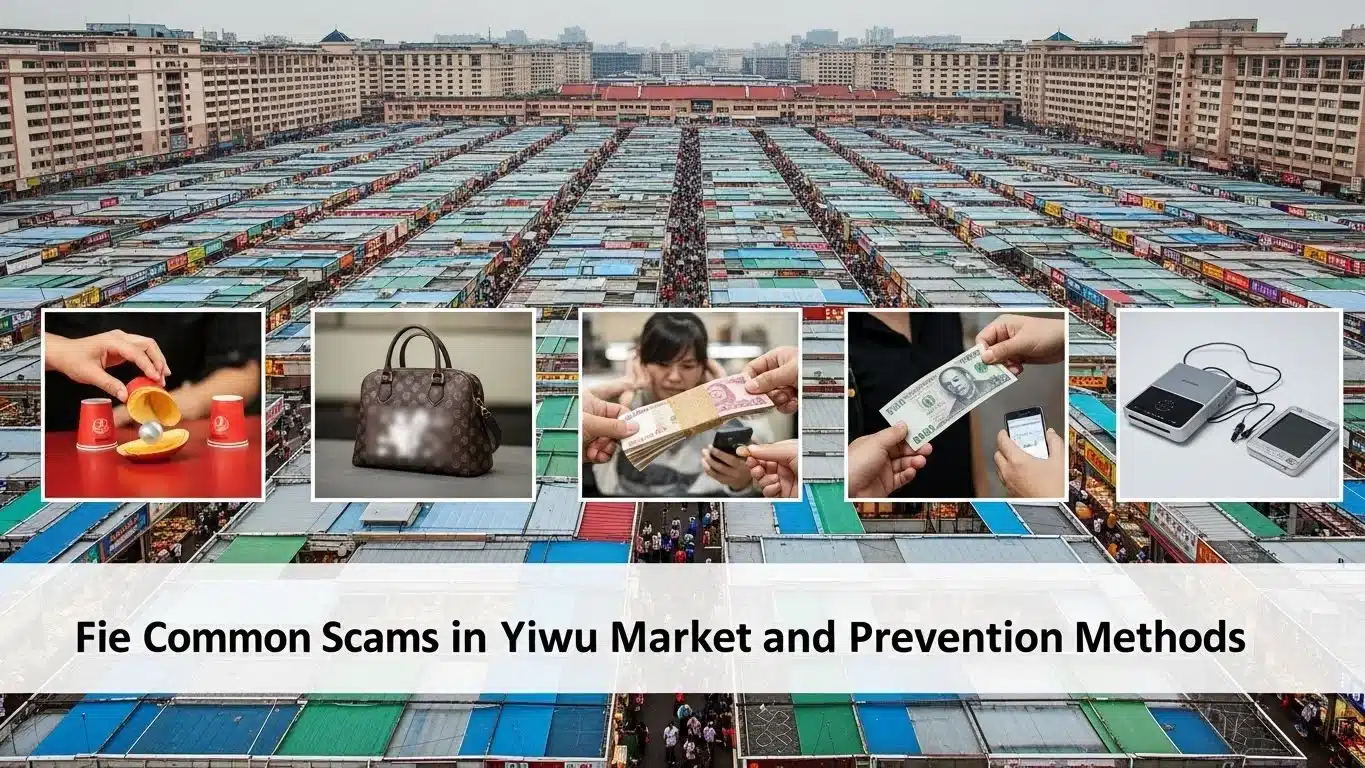
This guide details five common Yiwu market scams, from the “golden sample” switch to counterfeit brand traps, and provides actionable steps to avoid them. You’ll learn why Nike is the world’s most counterfeited shoe brand, with 22 of the 25 most faked models, and how a “0% commission” agent’s hidden incentives can lead to systematic quality downgrades and disputes.
Industry Manufacturers List
Quick Comparison: Top Picks
| Manufacturer | Location | Core Strength | Verdict |
|---|---|---|---|
| Classic ‘Disappearing Deposit’ with Fake or Mismatched Bank Account | Industry Wide | Mechanism: advance payment wired to an account not matching the supplier’s registered business name; funds withdrawn and company disappears. | Scam where deposit is sent to a fraudulent account, often disguised as temporary, leading to complete loss of funds. |
| Last‑Minute Bank Account Change Before Deposit | Industry Wide | Mechanism: substitution of legitimate account with fraudulent one at payment stage; reliance on urgency and trust to bypass verification. | Fraudulent account details provided at the last minute via informal channels, exploiting urgency to steal deposits. |
| Vanishing Supplier After Large Advance Payment | Industry Wide | Mechanism: genuine or seemingly genuine factory takes substantial deposit, then closes, relocates, or otherwise disappears without delivering goods. | Financially distressed factory takes a large advance payment as a cash grab before ceasing operations and communication. |
Classic ‘Disappearing Deposit’ with Fake or Mismatched Bank Account

This scheme involves a buyer wiring a significant deposit—often 30% to 100% of the order value—to a bank account that does not legally belong to the verified Chinese supplier. After the payment is sent, the beneficiary swiftly empties the account and all communication ceases permanently.
Scammers frequently justify the use of an unverified account by claiming it is a temporary measure or a new account opened due to tax or banking system issues. They often register the account under an individual’s name or a shell company, making it extremely difficult to trace the funds or initiate recovery through legal channels.
At a Glance:
- 📍 Location: Industry Wide
- 🏭 Core Strength: Mechanism: advance payment wired to an account not matching the supplier’s registered business name; funds withdrawn and company disappears.
- 🌍 Key Markets: Application: International trade payments, especially importers wiring deposits to Chinese suppliers for the first time.
Why We Picked Them:
| ✅ The Wins | ⚠️ Trade-offs |
|---|---|
|
|
Last‑Minute Bank Account Change Before Deposit

This is not a legitimate company but a fraudulent mechanism. After a buyer agrees to terms and receives a proforma invoice, the supposed supplier sends new bank details just before payment is due. This communication often happens through informal channels like WeChat or a phone call, not through the official corporate email used earlier.
The fraudster creates a sense of urgency and exploits established trust. The typical excuse is that the original account is frozen or under maintenance. However, the new beneficiary account is unrelated to the company on the business license. Once the buyer’s deposit is wired, the funds are diverted to the fraudster, who then disappears, leaving the buyer with no goods and a significant financial loss.
At a Glance:
- 📍 Location: Industry Wide
- 🏭 Core Strength: Mechanism: substitution of legitimate account with fraudulent one at payment stage; reliance on urgency and trust to bypass verification.
- 🌍 Key Markets: Application: Cross‑border B2B orders where deposits are wired based on emailed or chat-based banking changes.
Why We Picked Them:
| ✅ The Wins | ⚠️ Trade-offs |
|---|---|
|
|
Vanishing Supplier After Large Advance Payment

This scenario involves a counterparty that often presents itself as a legitimate, established factory or long-term supplier. The entity is typically under significant financial pressure. It leverages its apparent credibility to negotiate and secure a large advance payment, often a substantial percentage of the total order value, from an unsuspecting buyer.
After receiving the payment, the supplier ceases all operations and communication. No production begins, and no goods are ever shipped. This fraudulent exit is frequently linked to broader instability within certain manufacturing sectors, where struggling factories execute one-time cash-grab schemes as a last resort before shutting down or relocating without a trace.
At a Glance:
- 📍 Location: Industry Wide
- 🏭 Core Strength: Mechanism: genuine or seemingly genuine factory takes substantial deposit, then closes, relocates, or otherwise disappears without delivering goods.
- 🌍 Key Markets: Application: Higher‑value manufacturing orders (OEM/ODM) where buyers accept unusually large upfront payments based on perceived relationship or urgency.
Why We Picked Them:
| ✅ The Wins | ⚠️ Trade-offs |
|---|---|
|
|
Bank Beneficiary Name Does Not Match Business License

The company name on the proforma invoice, verified business license (SAMR), and bank account beneficiary should match exactly; any discrepancy, even minor spelling differences, is a strong indicator of fraud.
Scammers often use a legitimate company’s name on the PI but direct payment to an unrelated personal or offshore account.
At a Glance:
- 📍 Location: Industry Wide
- 🏭 Core Strength: Requirement: Exact match between PI seller name, business license name, and bank account holder name for all payments.
- 🌍 Key Markets: Application: Supplier due diligence and payment verification for international trade.
Why We Picked Them:
| ✅ The Wins | ⚠️ Trade-offs |
|---|---|
|
|
Unusual or Risky Payment Terms on the PI

Demands for 80–100% upfront payment, especially for first orders, or requests for cryptocurrency or informal transfers, shift all risk to the buyer and are classic scam patterns. Legitimate Chinese suppliers rarely require full prepayment for new customers.
Typical and safer terms for new buyers are around a 30% deposit, with the remaining 70% balance tied to inspection reports or shipment documentation.
At a Glance:
- 📍 Location: Industry Wide
- 🏭 Core Strength: Key metric: Deposit normally ≤30% for new buyers; balance tied to inspection reports or shipment documentation.
- 🌍 Key Markets: Application: Risk assessment of payment clauses in PIs and sales contracts.
Why We Picked Them:
| ✅ The Wins | ⚠️ Trade-offs |
|---|---|
|
|
Last‑Minute Changes to Bank Account Details

A supplier that suddenly changes bank details after issuing the PI—especially via WeChat or phone instead of official corporate email—presents a serious payment‑diversion risk. This pattern is frequently associated with hacked email accounts or inside fraud where funds are redirected to a fraudulent account.
The core requirement is stable, pre‑agreed bank coordinates. Any change must be verified via independent channels before payment is released. This is a fundamental control for treasury operations.
At a Glance:
- 📍 Location: Industry Wide
- 🏭 Core Strength: Requirement: Stable, pre‑agreed bank coordinates; any change must be verified via independent channels before payment.
- 🌍 Key Markets: Application: Payment security, anti‑fraud controls, and treasury operations.
Why We Picked Them:
| ✅ The Wins | ⚠️ Trade-offs |
|---|---|
|
|
Using the Proforma Invoice as the Only Contract

Under Chinese law, a proforma invoice (PI) can be legally binding if it includes essential terms like the parties involved, goods description, price, and quantity. This can create a basic contract, but it is a minimal one.
The critical flaw is that a standard PI typically omits vital protections. It usually lacks detailed quality standards, rights for inspection before shipment, clear remedies for breach of contract, and a designated forum for resolving disputes. Relying solely on a PI as the final agreement leaves significant gaps.
At a Glance:
- 📍 Location: Industry Wide
- 🏭 Core Strength: Requirement: Separate, detailed sales contract covering quality, inspection, liability, penalties, and dispute forum, beyond the PI.
- 🌍 Key Markets: Application: Contract structure and legal risk management in China sourcing.
Why We Picked Them:
| ✅ The Wins | ⚠️ Trade-offs |
|---|---|
|
|
Vague or Incomplete Product and Shipment Details

A purchase order that lists only generic product names or model numbers creates a significant vulnerability. Without precise specifications, standards, or reference samples, the supplier has broad discretion over what to ship. This ambiguity allows them to deliver lower-quality or substitute items while still technically meeting the vague terms of the agreement.
The problem extends beyond the product itself to the logistics of getting it. When a Proforma Invoice or contract lacks clear shipment terms—such as the agreed Incoterms, lead times, or required documentation like the Bill of Lading—it weakens the buyer’s position. Disputes over shipping costs, delays, and responsibility become more likely and harder to resolve.
At a Glance:
- 📍 Location: Industry Wide
- 🏭 Core Strength: Requirement: Detailed specifications, standards (e.g., ISO/ASTM), quantities, packaging, and shipping/inspection terms in the PI and contract.
- 🌍 Key Markets: Application: Quality assurance and logistics planning in international purchasing.
Why We Picked Them:
| ✅ The Wins | ⚠️ Trade-offs |
|---|---|
|
|
Pressure Tactics and Expiring PI Validity Linked to Immediate Payment

This pattern describes a common fraud marker where suppliers use high-pressure language to rush buyers into making payments. Phrases like “price only valid today” or threats to lose a production slot create a false sense of urgency. This tactic aims to bypass the buyer’s standard verification processes for documents and bank details.
The scheme relies on pressuring the buyer to act before completing due diligence. It is a hallmark of prepayment fraud, where the supplier’s primary goal is to secure funds quickly rather than fulfill a legitimate order. This behavior is not tied to a specific company’s capacity but is a deceptive practice observed across various industries.
At a Glance:
- 📍 Location: Industry Wide
- 🏭 Core Strength: Requirement: Reasonable validity period for PI prices and payment deadlines that allow for due diligence checks.
- 🌍 Key Markets: Application: Fraud detection in quotation, PI, and payment‑term negotiations.
Why We Picked Them:
| ✅ The Wins | ⚠️ Trade-offs |
|---|---|
|
|
Inconsistent Identity Documents Attached to the PI

This entry describes a common red flag in cross-border trade: when the business license, company seals, and contact information provided with a Proforma Invoice (PI) contain inconsistencies. These can include blurry logos, incorrect or expired registration numbers, or addresses that don’t match across documents.
The core issue is the requirement for clean, verifiable business registration data that perfectly aligns with the details on the PI, the company’s official chops, and its bank account information. Discrepancies here are a major warning sign.
At a Glance:
- 📍 Location: Industry Wide
- 🏭 Core Strength: Requirement: Clean, verifiable business license and registration data that match PI header, chops, and bank details.
- 🌍 Key Markets: Application: KYC, supplier onboarding, and compliance checks in cross‑border trade.
Why We Picked Them:
| ✅ The Wins | ⚠️ Trade-offs |
|---|---|
|
|
The “Sample Switch”: Golden Sample vs. Trash Mass Prod
A “sample switch” scam occurs when a supplier submits a flawless pre-production sample that meets all specifications, then deliberately downgrades materials, components, or workmanship in the mass production run to cut costs. This pattern relies on buyers approving only the initial sample and not enforcing quality standards through on-site inspections during production.

How the Golden Sample Switch Works
A supplier submits a flawless pre-production sample that meets all your specifications for materials, tolerances, and performance.
After you approve this ‘golden sample,’ they switch to cheaper materials, lower-grade components, or relaxed workmanship in the mass production run to cut costs.
The scam relies on buyers approving only the initial sample and not enforcing the same quality standards through on-site inspections during production and before final shipment.
The Pattern and Its Consequences
The initial sample is often made with higher-grade inputs and extra process control, while mass production uses cheaper substitutes or subcontracted work.
This results in inferior safety, reliability, or cosmetic quality in the final goods you receive.
This pattern is common when buyers skip on-site production monitoring and rely only on documents, photos, or a single reference unit for quality assurance.
How to Detect and Prevent It
Conduct statistically valid, AQL-based random inspections of production batches, not just a single unit.
Perform lab testing on random units from mass production to verify materials match the approved sample’s specifications.
Monitor the production process on-site and verify that the legal entity on the supplier’s business license matches the name on the bank account for payments, as mismatches are a high-risk indicator for fraud.
Fake Brands: Why “Nike” in Yiwu is a Trap
Yiwu is a global hub for counterfeit goods, including high-imitation Nike sneakers. Any “Nike” supplier there offering prices far below official wholesale channels presents an extremely high risk of fraud, customs seizure, and legal liability.

Yiwu’s Counterfeit Ecosystem
Yiwu is a global wholesale hub notorious for its high density of counterfeit goods, including sports shoes.
The market is flooded with high-grade fakes that can visually rival genuine products, making them difficult to spot.
Factories and traders rapidly copy trending branded items, like Nike sneakers, and sell them at a fraction of the official price.
The Scale and Risk of Fake Nike Production
Nike is the world’s most counterfeited shoe brand, with 22 of the 25 most faked sneaker models being Nikes.
Industry estimates and customs data show a global black-market trade worth billions, with shipments containing tens of thousands of fake pairs.
Any “Nike” supplier offering prices far below official wholesale channels presents an extremely high statistical risk of being counterfeit.
Operational Dangers for Importers
Buying “Nike” from Yiwu risks customs seizures, trademark infringement lawsuits, chargebacks, and bans from e-commerce platforms.
High-imitation fakes can achieve 90% visual similarity, fooling even experienced buyers and some third-party authenticators.
Sellers may use tactics like mixing genuine and fake stock or showing real authorization documents to build false trust while selling counterfeit goods.

The “0% Commission” Agent Trap
A 0% commission sourcing agent claims to work for the buyer at no cost but is secretly paid by the factory through hidden rebates or inflated prices. This misaligned incentive structure prioritizes factory kickbacks over product quality and buyer protection, leading to higher total costs and greater risks of fraud, non-delivery, and disputes.

How the “Free” Agent Model Actually Works
A 0% commission agent claims to work for the buyer at no cost, but is secretly paid by the factory through hidden rebates, inflated unit prices, or quality downgrades.
This misaligned incentive structure pushes agents to prioritize factory kickbacks over product quality, compliance, or long-term reliability for the buyer.
In the current manufacturing environment, this model often masks a higher total landed cost and significantly greater risk of disputes, fraud, and non-delivery.
Red Flags That an Agent Is Working Against You
Key warning signs include claims of “0% commission,” refusal to disclose their written agreement with the supplier, and resistance to third-party inspections or direct buyer-factory contact.
Such opacity suggests the agent is structurally aligned with financially stressed factories that may cut corners, default, or participate in scams like bank-account-switch fraud.
Buyers who ignore these signals often discover too late that pricing, quality, and dispute handling were skewed to protect the supplier’s rebate stream, not their own interests.
The Tangible Risks and Costs You Incur
This arrangement shifts the buyer’s risk profile toward higher rates of advance-payment loss, non-delivery, and systematic quality downgrades.
It amplifies exposure to aggressive, state-linked debt collection actions, even in disputes over fraud or quality.
The absence of a direct, paid service contract with the agent severely weakens legal recourse and evidence collection in cross-border disputes.
How to Structure a Transparent and Protective Partnership
Best practice is to pay the agent directly via a transparent, written service contract that prohibits supplier-side commissions and mandates conflict-of-interest disclosure.
The contract should grant the buyer audit rights, factory-access rights, and tie staged payments to independent third-party inspection results.
This proper alignment of incentives reduces the chance an agent will steer orders to insolvent factories or conceal critical compliance issues.
Material Cheat: 201 vs 304 Stainless Steel
201 and 304 stainless steel differ primarily in chemical composition, corrosion resistance, mechanical properties, and cost, with 304 offering superior performance in most demanding applications. Substituting cheaper 201 for 304 is a common cost-cutting scam that can lead to product failure and brand damage.

The Core Difference: Why It Matters for Your Product
The primary difference lies in chemical composition: 304 stainless steel contains 18-20% chromium and 8-10.5% nickel, while 201 uses less nickel (3.5-5.5%) and substitutes it with more manganese (5.5-7.5%).
This composition makes 304 significantly more resistant to corrosion, especially in wet, salty, or acidic environments, making it the standard for food-grade and outdoor applications.
201 is cheaper due to lower nickel content but is darker in color, harder, more brittle, and only suitable for mild indoor use where corrosion isn’t a major concern.
How to Spot the Cheat: Practical Tests for Buyers
Visual inspection: 201 stainless steel has a darker, less reflective finish compared to the brighter, more lustrous appearance of 304.
Copper sulfate test: Applying a drop of copper sulfate solution to the metal will not cause a color change on genuine 304, but will leave a reddish-brown copper deposit on 201.
Scratch test: 201 is harder but scratches more easily than 304 due to its different metallurgical structure.
Supplier validation: Always cross-check a supplier’s business license and stated material certifications; reputable partners conduct on-site factory verification to confirm material claims before production begins.
Impact on Your Business: Cost, Quality, and Risk
Substituting 201 for 304 is a common cost-cutting scam that can lead to product failure, customer complaints, and brand damage, especially for items used outdoors or with food.
While 201 has a higher tensile strength (515-750 MPa) and yield strength (275-450 MPa) than 304, its poor corrosion resistance makes it a false economy for most applications.
A professional sourcing partner mitigates this risk by implementing strict quality control protocols, including material verification during production monitoring and pre-shipment AQL inspections at their warehouse.
Frequently Asked Questions
Is it safe to source from Yiwu?
Yiwu is one of the world’s largest wholesale hubs, handling over 500,000 product types and exporting roughly 70% of its goods globally. It is a reliable base for low-to-mid value consumer goods if you apply proper due diligence. Risks like poor quality and fraud exist, so safety depends on verifying suppliers, using trusted local agents, and conducting third-party inspections.
How to check if a company is real?
Verify the company’s business registration through official Chinese government databases like the National Enterprise Credit Information Publicity System. Cross-check the business license details, confirm relevant certifications, and consider conducting on-site or third-party audits. Always ensure the bank account name for payments exactly matches the registered legal entity.
What to do if I get scammed in China?
Stop all payments immediately and collect all evidence (contracts, invoices, communication logs). Report the scam to your local police and Chinese authorities. For significant losses, engage a lawyer experienced in China-related commercial disputes. To prevent future issues, always verify suppliers officially and ensure contracts are enforceable in Chinese courts.
How to spot a fake agent?
Verify the agent’s official business license against government databases. Be wary of agents offering an unrealistically broad range of unrelated products. Request proof of specific certifications and factory audits. Inconsistent communication, reluctance to provide client references, or promises that don’t match visible capacity are major red flags.
Can I get my money back from a Chinese supplier?
Recovery is possible but not guaranteed and becomes harder over time. Start with direct negotiation, then escalate to formal complaints with Chinese market authorities or the supplier’s business association. For larger claims, litigation or arbitration in China may be necessary, but success depends on your contract terms and evidence. Prevention through rigorous due diligence is always more effective.
Final Thoughts
Sourcing from Yiwu offers immense opportunity but demands a proactive, informed approach. The scams outlined—from sample switches and material cheats to counterfeit goods and misaligned agents—aren’t isolated incidents but common patterns that exploit predictable gaps in a buyer’s process. Recognizing these risks is the first, essential step toward building a resilient supply chain.
Your safety ultimately depends on the systems you put in place, not on finding a perfectly honest supplier. This means verifying every entity, enforcing quality through independent inspections, and structuring agent relationships with transparent, aligned incentives. By treating due diligence as a non-negotiable cost of doing business, you transform these common pitfalls from probable losses into manageable, avoidable risks.