Justin
Sourcing event supplies often means balancing quality, variety, and budget, all while racing against seasonal deadlines. For planners and rental businesses, Yiwu offers a solution, but navigating its vast markets requires a clear strategy.

This guide breaks down the process, starting with how to source from the world’s largest artificial flower market in Yiwu’s District 1. We’ll also cover critical lead times—like booking wedding supplies 6-12 months out—and answer key questions on quality, customization, and minimum order quantities to help you plan effectively.
Industry Manufacturers List
Quick Comparison: Top Picks
| Manufacturer | Location | Core Strength | Verdict |
|---|---|---|---|
| ASTM F2374 Inflatable Amusement Devices Standard | Global Standard | Safety requirements for design, anchoring, structural integrity, operating procedures, inspection, and maintenance of inflatable amusement devices. | The foundational safety standard for commercial inflatables, widely mandated for permitting and insurance. |
| CPSC (Consumer Product Safety Commission) Guidance for Inflatables | United States | Regulatory guidance, recalls, and safety policies addressing product hazards, labeling, and injury prevention for consumer and amusement inflatables. | Key U.S. regulatory body providing essential safety guidance and oversight for consumer-facing inflatables. |
| SIOTO Inflatable Safety Certifications | United States | Basic Inflatable Operator Certification, Advanced Inflatable Games & Attractions Certification, Soft Play and Bubble House Safety Certifications, safety checklists and training resources. | Provides recognized operator safety certifications, crucial for meeting insurance and municipal requirements. |
| Fire-Retardant Fabric Standards for Balloons, Tents, and Inflatables | Global Standard | Flame-resistance performance criteria, test methods, and certification reports for tent and canopy fabrics, inflatable skins, and decorative drape materials. | Essential fire-safety standards for materials, often required by fire marshals for event permits. |
| Local Engineering and Structural Safety Certificates for Large Tents and Inflatables | Industry Wide | Stamped engineering drawings, load and wind‑rating certificates, and structural safety documentation for large tents and comparable temporary inflatable structures. | Mandatory structural certification for large temporary structures to secure permits for major events. |
| Special Operator Certifications and Training for Inflatable Rentals | United States | Operator training courses and certificates covering safe operation, setup/teardown procedures, inspection, supervision, and emergency actions for inflatable devices. | State and locally required training programs for operators to reduce liability and ensure safe use. |
ASTM F2374 Inflatable Amusement Devices Standard

ASTM F2374 is the primary safety standard for commercial inflatable amusement devices such as bounce houses, slides, and obstacle courses. It provides a comprehensive framework covering design, manufacture, operation, and inspection requirements to ensure these attractions are safe for public use.
The standard’s influence is extensive, with many U.S. jurisdictions and insurers either mandating or strongly referencing compliance with ASTM F2374 for permitting and coverage of inflatable attractions. This makes adherence a critical operational requirement for businesses in this industry.
At a Glance:
- 📍 Location: Global Standard
- 🏭 Core Strength: Safety requirements for design, anchoring, structural integrity, operating procedures, inspection, and maintenance of inflatable amusement devices.
- 🌍 Key Markets: Commercial inflatable manufacturers, party and event rental operators, amusement operators, and regulatory authorities for events.
Why We Picked Them:
| ✅ The Wins | ⚠️ Trade-offs |
|---|---|
|
|
CPSC (Consumer Product Safety Commission)

The Consumer Product Safety Commission (CPSC) is the federal agency responsible for protecting the public from unreasonable risks of injury or death from consumer products. For the party rental industry, this includes establishing and enforcing safety standards for inflatable amusement devices like bounce houses and slides. The CPSC provides critical guidance on hazard mitigation, proper labeling, and procedures for incident reporting to help operators reduce risks.
As a regulatory body, the CPSC does not manufacture products but sets the framework for safe production and operation. Its capacity lies in developing comprehensive safety policies, conducting product recalls, and monitoring compliance across the market. This oversight ensures that inflatables used at family events and parties meet baseline safety requirements to prevent accidents and injuries.
At a Glance:
- 📍 Location: United States
- 🏭 Core Strength: Regulatory guidance, recalls, and safety policies addressing product hazards, labeling, and injury prevention for consumer and amusement inflatables.
- 🌍 Key Markets: U.S. party rental businesses, inflatable manufacturers, and venues serving the consumer and family events market.
Why We Picked Them:
| ✅ The Wins | ⚠️ Trade-offs |
|---|---|
|
|
SIOTO Inflatable Safety Certifications

The Safe Inflatable Operators Training Organization (SIOTO) offers structured certification programs for inflatable safety. Its Basic and Advanced Inflatable Operator certifications are designed to align with established industry practices from ASTM and IAAPA. These programs help operators build a documented foundation in safety protocols.
SIOTO’s main offerings include its Basic and Advanced Inflatable Operator certifications, along with specialized programs for soft play and bubble house safety. The organization also provides supporting resources like safety checklists and training materials to reinforce its certification curriculum.
At a Glance:
- 📍 Location: United States
- 🏭 Core Strength: Basic Inflatable Operator Certification, Advanced Inflatable Games & Attractions Certification, Soft Play and Bubble House Safety Certifications, safety checklists and training resources.
- 🌍 Key Markets: Inflatable and party rental operators, school and municipal event contractors, and corporate event suppliers needing documented operator safety training.
Why We Picked Them:
| ✅ The Wins | ⚠️ Trade-offs |
|---|---|
|
|
Fire-Retardant Fabric Standards for Balloons, Tents, and Inflatables

This standard defines the critical fire-retardant requirements for materials used in temporary structures like tents, canopies, and inflatables. It is built around recognized industry benchmarks, primarily CPAI-84 for camping and tentage products, and aligns with NFPA-related local fire codes that govern public events. Compliance is not optional for manufacturers and rental companies; it’s a foundational requirement for safety and market access.
The framework’s production capacity lies in its established testing and certification protocols. It mandates third-party laboratory testing to verify flame resistance, resulting in formal fire certificates. These documents are essential for proving that fabrics for tent tops, inflatable skins, and decorative drapes meet the performance criteria required by fire marshals and permitting authorities for large-scale events.
At a Glance:
- 📍 Location: Global Standard
- 🏭 Core Strength: Flame-resistance performance criteria, test methods, and certification reports for tent and canopy fabrics, inflatable skins, and decorative drape materials.
- 🌍 Key Markets: Tent and inflatable manufacturers, party rental companies, and event venues subject to fire marshal or municipal fire‑safety approvals.
Why We Picked Them:
| ✅ The Wins | ⚠️ Trade-offs |
|---|---|
|
|
Local Engineering and Structural Safety Certificates for Large Tents and Inflatables

This entity provides the essential engineering certifications required by many municipalities for large temporary structures like party tents and inflatables. Their work verifies that these structures are stable and have safe ratings for wind and load capacity, which is a fundamental step in the permitting process for festivals, corporate events, and large public gatherings.
Their core output consists of stamped engineering drawings and official certificates that detail the specific load and wind ratings for each structure. This documentation is typically supplied directly by the structure’s manufacturer or a licensed engineer, serving as the formal proof of safety that rental companies must present to local authorities.
At a Glance:
- 📍 Location: Industry Wide
- 🏭 Core Strength: Stamped engineering drawings, load and wind‑rating certificates, and structural safety documentation for large tents and comparable temporary inflatable structures.
- 🌍 Key Markets: Party tent and inflatable rental operators serving festivals, corporate events, and large public gatherings requiring municipal permits.
Why We Picked Them:
| ✅ The Wins | ⚠️ Trade-offs |
|---|---|
|
|
Special Operator Certifications and Training for Inflatable Rentals

This entity provides the specialized training and certification programs required for operators of inflatable amusement rides. In many U.S. states and local jurisdictions, completing such a course is a legal prerequisite for renting these devices to the public. The training focuses on essential safety protocols to ensure operators are fully prepared.
The curriculum is designed to cover the complete operational lifecycle of an inflatable. This includes proper site inspection, safe setup and anchoring techniques, continuous supervision during events, monitoring weather conditions, and executing emergency response procedures. The goal is to create a standardized level of competency that helps businesses comply with regulations and satisfy insurance requirements.
At a Glance:
- 📍 Location: United States
- 🏭 Core Strength: Operator training courses and certificates covering safe operation, setup/teardown procedures, inspection, supervision, and emergency actions for inflatable devices.
- 🌍 Key Markets: Party rental businesses offering inflatables, amusement-ride contractors, and staff working at schools, municipalities, and large event venues.
Why We Picked Them:
| ✅ The Wins | ⚠️ Trade-offs |
|---|---|
|
|
Personalized Edible Favors (Chocolate, Cookies, Candy)

Customized edible favors like printed chocolate bars, monogrammed cookies, and branded candies are popular for events. They are consumable, which guests appreciate, and they serve as a lasting memento. The ability to personalize them with names, dates, logos, or specific themes directly meets the demand from the majority of couples and event planners who seek unique, tailored details for their occasions.
These items are relatively straightforward to produce at scale using digital printing technology and food-safe packaging. For rental or event sourcing businesses, they can be efficiently sourced from contract confectioners who often offer low minimum order quantities, typically starting around 50 units. This makes them a practical add-on package that can be priced per guest.
At a Glance:
- 📍 Location: Global Standard
- 🏭 Core Strength: Key customization metrics: print area (cm² or in²), minimum order quantity (often 50–200 units), lead time (typically 7–21 days), unit cost tiers by volume (e.g., <$1, $1–$3, >$3 per favor) and options for variable data printing (different names or table numbers on each wrapper).
- 🌍 Key Markets: Applications include weddings, corporate events, and social celebrations where branded or themed consumables double as décor and guest gifts.
Why We Picked Them:
| ✅ The Wins | ⚠️ Trade-offs |
|---|---|
|
|
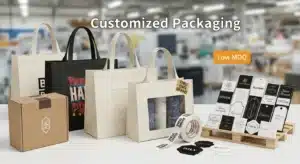
Custom Gift Boxes and Packaging for Wedding Favors

Custom printed boxes, sleeves, and bags for favors and small gifts are part of the broader printed wedding merchandise market. This market was valued at USD 12.38 billion in 2024 and is projected to grow to USD 19.94 billion by 2032, expanding at a compound annual growth rate of 6.14%. The Asia-Pacific region dominates this space, holding about 41.68% of the market share, which highlights its strong manufacturing and export capabilities for cost-effective, customizable packaging.
For event suppliers and planners, these custom gift boxes represent a significant opportunity to boost profit margins. The core advantage lies in flexibility: the same insert product can be easily re-boxed and re-branded with different custom designs to suit various clients and events, creating a versatile and efficient inventory model.
At a Glance:
- 📍 Location: Global Standard
- 🏭 Core Strength: Key specs include substrate (250–400 gsm SBS board, kraft, or specialty papers), print method (digital vs. offset), finishing (foil, emboss, laser‑cut, soft‑touch laminate), flat‑packed vs. rigid construction, and compliance with food‑contact rules where edible favors are packed.
- 🌍 Key Markets: Used across weddings, luxury events, and corporate gifting; main sourcing and export hubs are China, India, and broader Asia‑Pacific serving North America and Europe.
Why We Picked Them:
| ✅ The Wins | ⚠️ Trade-offs |
|---|---|
|
|
Average Spend on Wedding Favors & Gift‑Related Items

According to The Knot 2025 Real Weddings Study, couples spent an average of about USD 460 on wedding favors and gifts in 2024, including presents for the wedding party.
Spend scales directly with guest count: couples with 50 or fewer guests averaged about USD 301, while those with more than 100 guests averaged about USD 529. For a rental or sourcing business, this range defines a realistic upsell band for a favor-and-packaging package that can be framed per-guest, typically falling between USD 3–6 per attendee.
At a Glance:
- 📍 Location: Global Standard
- 🏭 Core Strength: Key metric: average total favor and gift budget per wedding (USD 301–529 depending on guest count, mean ≈ USD 460) and implied per‑guest favor range commonly sitting around a few dollars per person.
- 🌍 Key Markets: Primary reference market is the U.S., but similar mid‑tier spending bands are often used as benchmarks for Western markets when planning favor and packaging SKUs.
Why We Picked Them:
| ✅ The Wins | ⚠️ Trade-offs |
|---|---|
|
|
Personalization & Customization Demand in Favors

The demand for personalized wedding details is a major force in the industry. About 70% of couples now make it a priority in their planning, which directly fuels the need for custom favors, packaging, and themed boxes. This isn’t just a preference; it’s a key factor in guest experience, with 36% of attendees rating personalized touches as the most memorable part of recent weddings, even ahead of food and entertainment.
For suppliers, this trend shapes production strategy. The most profitable approach often involves combining standard, stock items with efficient, low-minimum customization services. This includes workflows for digital printing, applying labels and tags, or adding laser-cut elements. These processes allow for personalization without the need for large, bespoke production runs, meeting market demand effectively.
At a Glance:
- 📍 Location: Global Standard
- 🏭 Core Strength: Key metrics are share of couples prioritizing personalization (~70%) and guest perception that personalized touches are the most memorable feature (~36%), which justify investments in digital printing, engraving, and variable data workflows.
- 🌍 Key Markets: Applies widely across North America and global online‑planned weddings, influencing favor, stationery, packaging, and décor sourcing decisions.
Why We Picked Them:
| ✅ The Wins | ⚠️ Trade-offs |
|---|---|
|
|
Trend: Growing Popularity of Guest Favors

Guest favors are making a strong comeback in the wedding industry. Recent data shows a significant increase in their inclusion, with one global survey finding that 77% of weddings now feature guest favors. This marks a notable year-over-year growth of about 6 percentage points.
For businesses specializing in rentals and event production, this trend is more than a passing fad. The rising adoption rate, also reflected in Zola’s 2025 data which lists favors among common optional elements, signals that favors and their packaging should be considered a fundamental part of the service offering, not just an optional extra.
At a Glance:
- 📍 Location: Global Standard
- 🏭 Core Strength: Key metric is prevalence: approximately three‑quarters of weddings in some markets now include guest favors, with measurable year‑over‑year growth (~+6 percentage points).
- 🌍 Key Markets: Most clearly documented in the U.S., Mexico, and other markets surveyed in global wedding trend reports, with similar adoption emerging in Europe and urban Asia.
Why We Picked Them:
| ✅ The Wins | ⚠️ Trade-offs |
|---|---|
|
|
DIY & Small‑Batch Custom Favors

This business model serves a significant market trend, with an estimated 40% of couples incorporating DIY elements into their weddings. It focuses on providing the materials for hand-assembled favors, such as custom-filled gift bags or hand-tied boxes, which are often sourced in bulk from trade suppliers.
The operation is built for efficiency. By selling semi-finished kits—containing items like boxes, labels, ribbons, and blank containers—the company shifts the labor of final assembly and customization to the couples or their planners. This structure allows the business to profit from bulk purchasing and packaging design while minimizing its own labor costs.
At a Glance:
- 📍 Location: Global Standard
- 🏭 Core Strength: Key metric: around 40% of couples using DIY elements, including favors, which justifies stock categories like unprinted boxes, printable tags, and blank containers suitable for home assembly.
- 🌍 Key Markets: Common across mid‑budget Western markets where couples trade labor for savings but still want professional‑grade packaging and materials.
Why We Picked Them:
| ✅ The Wins | ⚠️ Trade-offs |
|---|---|
|
|
Regional Demand & Export Hubs for Customized Wedding Merchandise

The market for printed wedding merchandise, including boxes, labels, and stationery, is a major segment of the global wedding industry. In 2024, the Asia-Pacific region held a commanding share of this market at about 41.68%. This dominance is built on cost-competitive manufacturing and extensive export networks that serve markets worldwide.
The scale of production is significant, with robust cross-border trade in customizable paper goods like favor boxes and gift packaging. Projections for 2025 highlight substantial regional markets: India is expected to account for about USD 2.50 billion, Europe for USD 3.90 billion, and North America for USD 2.63 billion. These figures underscore the region’s capacity to meet large-scale, international demand.
At a Glance:
- 📍 Location: Asia‑Pacific / Europe / North America
- 🏭 Core Strength: Key metrics include Asia‑Pacific’s ≈41.68% share of the printed wedding merchandise market and regional market sizes in 2025 (e.g., India ≈ USD 2.50 billion, Europe ≈ USD 3.90 billion, North America ≈ USD 2.63 billion).
- 🌍 Key Markets: Wedding favor packaging, stationery, and printed merchandise for domestic events and export, with Asia‑Pacific as a key manufacturing base feeding Europe, North America, and the Middle East.
Why We Picked Them:
| ✅ The Wins | ⚠️ Trade-offs |
|---|---|
|
|
District 1: The Global Center for Artificial Flowers
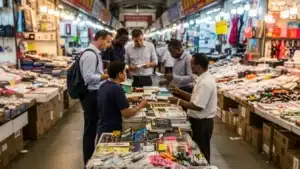
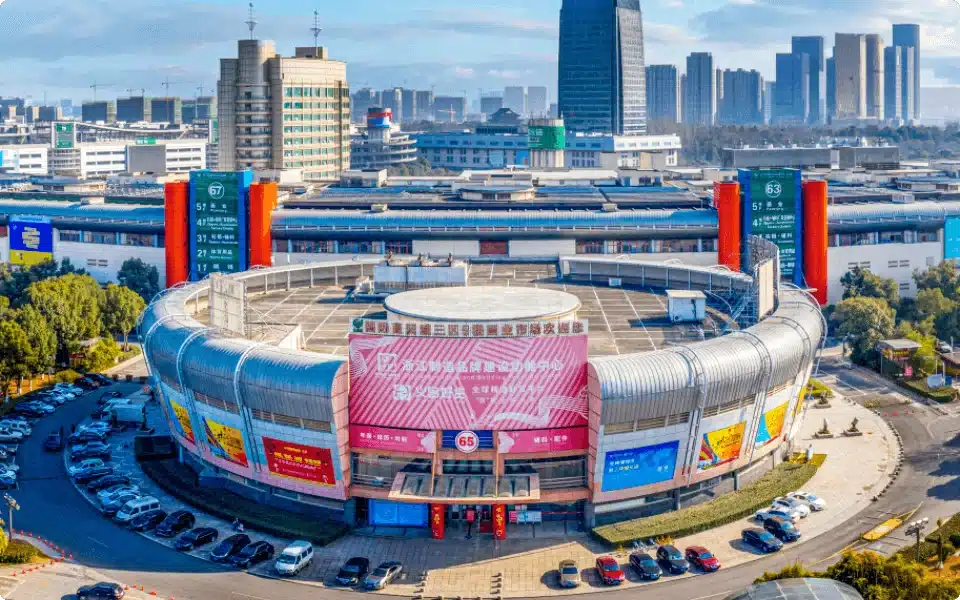
District 1 in Yiwu Trade City is the world’s largest wholesale market for artificial flowers, plants, and foliage. It consolidates thousands of specialized suppliers, offering unparalleled variety from basic stems to elaborate, lifelike arrangements. The district’s scale enables competitive pricing and efficient sourcing for events, retail, and interior design projects globally.

| Product Category | Key Applications | Quality & Sourcing Notes |
|---|---|---|
| Silk flowers, polyester blooms, dried flowers, faux greenery, decorative plants, vases, floral foam, accessories. | Event decor (weddings, corporate events), permanent retail displays, hotel/restaurant interiors, home styling. | Prioritize material quality (silk, latex, PE) and UV resistance. Verify colorfastness, realism, and sturdy construction. Partner with a local agent for pre-vetted suppliers and consolidated shipments. |
What Makes District 1 the Global Hub
District 1 in Yiwu Trade City is the world’s largest wholesale market for artificial flowers, plants, and foliage.
It consolidates thousands of specialized suppliers, offering unparalleled variety from basic stems to elaborate, lifelike arrangements.
The district’s scale enables competitive pricing and efficient sourcing for events, retail, and interior design projects globally.
Key Product Categories and Applications
Core offerings include silk flowers, polyester blooms, dried flowers, faux greenery, and decorative plants.
Products are essential for event decor (weddings, corporate events), permanent retail displays, hotel and restaurant interiors, and home styling.
Suppliers in District 1 also provide complementary items like vases, floral foam, and decorative accessories for complete solutions.
Sourcing and Quality Considerations
Buyers should prioritize material quality (silk, latex, PE) and UV resistance for longevity, especially for outdoor or long-term use.
Critical steps include verifying colorfastness, assessing the realism of petals and leaves, and checking for sturdy construction.
Working with a local partner like Chineseyiwu.com provides access to pre-vetted suppliers, on-site quality inspections, and consolidation of orders from multiple booths into a single shipment.
Lead Times for Seasonal Events (Order Early!)
Lead times for seasonal events in the party rental and event industry typically range from 1-2 weeks for last-minute events to 6-12 months for weddings, with most businesses preparing 2-4 months in advance for staffing, supplies, and marketing.

Why Lead Times Matter for Event Sourcing
Lead times in the party rental and event industry range from 1-2 weeks for last-minute events to 6-12 months for weddings, with most businesses preparing 2-4 months in advance.
Booking too late risks product unavailability, higher costs, and logistical delays, especially for seasonal items with limited production windows.
Chineseyiwu.com’s structured process, from sample verification to final QC, requires a realistic timeline to ensure quality and on-time delivery.
Standard Lead Times by Event Type
Weddings: Bookings typically occur 6-12 months ahead, with demand peaking in summer and fall for outdoor events.
Corporate Events: Usually planned 2-3 months in advance, with increased activity around year-end holidays.
Last-Minute Events: Can be sourced within 1-2 weeks, but this relies on in-stock inventory and limits customization options.
Seasonal Planning and Proactive Sourcing
For Spring/Summer events, order outdoor items like inflatables, tents, and water slides early to align with local festival and wedding peaks.
For Winter/Holiday events, plan for indoor decor, heaters, and party favors 3-4 months ahead to navigate factory schedules and shipping delays.
Use off-peak seasons to stock inventory and service equipment. Analyze past booking data to predict your specific regional demand cycles.
Stop Overpaying & Overcomplicating Your Yiwu Sourcing
Frequently Asked Questions
What is the best place for wedding supplies in China?
The best place depends on the specific items you need. For wedding and event furniture, manufacturers in Foshan and Qingdao are leaders, such as Foshan Dreamlike Furniture Co., Ltd. for luxury stainless steel and acrylic pieces and Qingdao Blossom Furnishings Co., Ltd. for bulk Chiavari and ghost chairs. For comprehensive decor, backdrops, and smaller items, platforms like GlobalSources and Alibaba list thousands of audited suppliers. For a full-service sourcing partner that handles vetting, quality control, and logistics from the Yiwu market and beyond, companies like Chineseyiwu.com provide an integrated solution, especially useful for buyers consolidating orders from multiple vendors.
When should I order Christmas stock for my event rental business?
Place wholesale orders for core Christmas inventory 4–6 months in advance, ideally between June and August. This secures key items before peak demand. Plan for fill-in orders based on confirmed bookings about 8–10 weeks before December. If you’re importing custom or specialized products, such as branded decor or items requiring specific safety certifications, allow 6–9 months for production, testing, and shipping. Aim to have your peak inventory arrive by early November to be ready for the season without tying up capital too early.
Are Yiwu artificial flowers good quality?
Yiwu offers a vast range of quality, from basic to high-end. As China’s largest hub, it provides competitive prices and immense variety. For professional event use, you can find good quality by focusing on mid- to high-grade items made from better fabrics or dense polyethylene (PE). The key is to always request samples and, if possible, conduct on-site inspections to check materials, color consistency, and construction before placing a bulk order to avoid the lowest-tier, purely price-driven products.
Can I customize party balloons?
Yes, party balloons are highly customizable for events. You can print full-color designs, logos, text, or photos on various types, including round/heart foil balloons and latex balloons. Many U.S.-based and global printers offer online design tools with low minimum order quantities. For party rental businesses, custom balloons are effective for matching event themes and for promotional branding. Always order a sample first to check print quality and material durability.
What is the typical MOQ for event decor?
There is no single MOQ; it varies widely by product and supplier. For custom-printed items like linens, MOQs can start around 12-72 units. For bulk furniture, such as tables, MOQs might be around 20 pieces. For general decor items from wholesale platforms, MOQs can range from 100 to several thousand units. New businesses can use strategies like print-on-demand (with no MOQ) or work with sourcing agents who can consolidate smaller orders from multiple factories. Always confirm the MOQ directly with the supplier, as it depends on production setup, materials, and order complexity.
Final Thoughts
Sourcing wedding and party supplies in Yiwu offers event planners a direct path to vast variety and competitive pricing, especially in specialized markets like District 1 for artificial flowers. Success hinges on understanding the local market’s structure, planning around critical lead times for seasonal events, and knowing where to find specific products.
The key to a smooth sourcing experience is preparation. Start your planning early, especially for weddings and holiday seasons. Always request samples to verify quality firsthand. For many buyers, partnering with a local sourcing agent can streamline the process, handling supplier vetting, quality control, and logistics, allowing you to focus on designing unforgettable events.