Justin
For B2B buyers sourcing textiles or auto parts, navigating Yiwu’s massive market can be overwhelming. Knowing where to start is the first challenge. This guide cuts through the complexity, focusing on the specialized hubs of Districts 4 and 5 where you can find the right suppliers, compare prices efficiently, and manage logistics for products like socks, home textiles, and automotive accessories.

This article provides a detailed guide to Yiwu’s District 4 and 5. We’ll cover the global socks and hosiery market, valued at around $67.6 billion, and the strategic sourcing advantages in District 4. We’ll also explore the auto parts hub on the 4th floor of District 5, known for low minimum order quantities, and explain the compliance requirements for selling imported goods into China, including duty rates for textiles and auto parts.
Industry Manufacturers List
Quick Comparison: Top Picks
| Manufacturer | Location | Core Strength | Verdict |
|---|---|---|---|
| Automotive Power Transmission Belts (V, Poly‑V, Timing) | Global Standard | Typical specs: temperature‑ and oil‑resistant rubber (CR/EPDM/H‑NBR), NR/SBR blends, polyester or aramid/kevlar tensile cords, molded cogs or ribs for flexibility, antistatic performance, and high power transmission capacity. | High-performance belts for engine accessory and timing drives, designed for durability and efficiency in automotive applications. |
| Plastic Modular Conveyor Belts for Automotive Assembly | Global Standard | Key properties: PP/POM/POX belt modules with PA or stainless‑steel pins, antistatic or electrically conductive grades (per DIN EN 61340), flame‑retardant materials (e.g., Cfl‑S1 per DIN EN 13501), extra wear‑resistant and impact‑resistant top surfaces, and low‑friction, noise‑reducing materials. | Specialized modular belts for the entire automotive production line, offering high strength, safety features, and chemical resistance. |
| Belt Material Families (Elastomers, Cords, Fabrics) | Global Standard | Typical constructions: NR/SBR or CR rubber matrices for PK/V‑ribbed belts, H‑NBR or specialized compounds for timing belts, polyester or aramid cords for tensile strength, and woven or rubberized fabric layers for wear and lateral pressure resistance. | Comprehensive material science expertise for constructing durable, high-flex-life belts for demanding automotive and industrial drives. |
| Safety and Regulatory Characteristics (Antistatic, Conductive, Flame Retardant) | Global Standard | Key requirements: surface and volume resistivity in the antistatic or conductive range, materials formulated for low smoke and flame spread, and compatibility with conductive sliding supports to maintain grounding and ESD control. | Focus on belts engineered to meet strict safety standards for ESD control and fire prevention in hazardous automotive plant areas. |
| Accessory Components for Belt Systems | Global Standard | Representative items: tyre pushers and buffer trolleys for wheel/vehicle handling, non‑slip and colored side modules for operator platforms and visual safety, and various guides and attachments designed for high impact and abrasion resistance. | Specialized modular accessories that enhance functionality and safety of conveyor systems in vehicle assembly and handling. |
Automotive Power Transmission Belts (V, Poly‑V, Timing)

This entity specializes in manufacturing automotive power transmission belts, including V-belts, Poly-V (serpentine) belts, and timing belts. These components are critical for transmitting power from the engine to accessories like the alternator, water pump, and air conditioning compressor. The belts are designed to operate quietly and efficiently in the harsh environment of a vehicle’s engine bay.
Production focuses on belts engineered with specific high-strength rubber compounds like CR, EPDM, and H-NBR. These materials are reinforced with cords made from polyester, fiberglass, or aramid to handle significant tensile loads. The manufacturing process includes molding precise cogs and ribs into the belts, which provides the flexibility needed for modern, compact engine designs with small-diameter pulleys and complex serpentine routing.
At a Glance:
- 📍 Location: Global Standard
- 🏭 Core Strength: Temperature- and oil-resistant rubber (CR/EPDM/H-NBR), NR/SBR blends, polyester or aramid/kevlar tensile cords, molded cogs or ribs for flexibility, antistatic performance, and high power transmission capacity.
- 🌍 Key Markets: Automotive engine front-end accessory drives, timing drives, CVT/scooter drives, and industrial auxiliary drives in vehicles for Japanese, Korean, American, and European applications.
Why We Picked Them:
| ✅ The Wins | ⚠️ Trade-offs |
|---|---|
|
|
Plastic Modular Conveyor Belts for Automotive Assembly
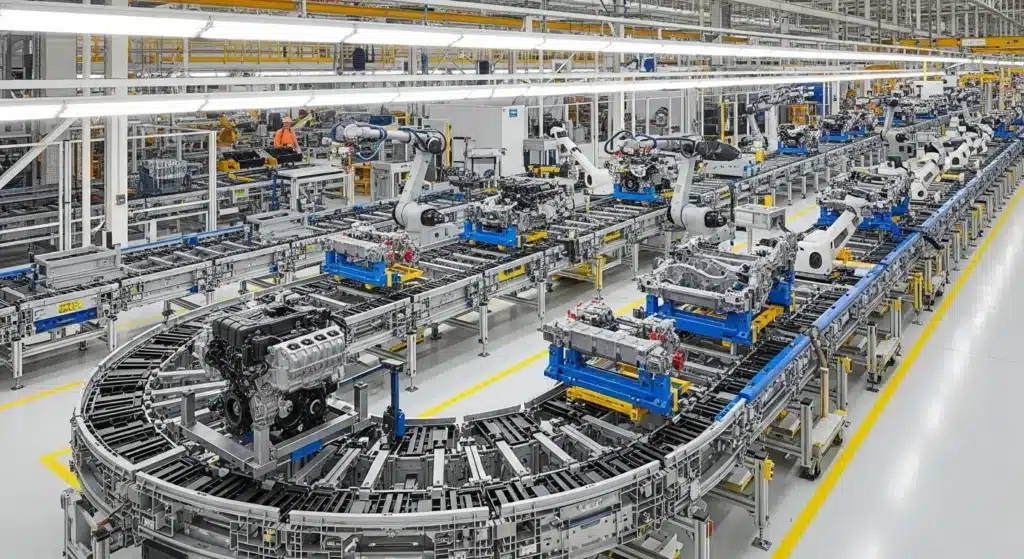
Plastic modular belts for automotive assembly are engineered from high-grade polymers like PP, POM, and specialized blends. These materials are designed to be silicon-free and offer strong chemical resistance against oils, coolants, and other fluids common in automotive plants. This construction provides a durable, low-maintenance conveying surface that can withstand the harsh conditions of modern manufacturing.
The belts deliver high tensile strength, capable of reaching up to approximately 100,000 N/m depending on the specific material and pin configuration. This strength supports heavy loads and continuous operation. A key feature is their low-friction performance, which operates efficiently without the need for lubrication, reducing maintenance and contamination risks. Performance can be further tailored with options for antistatic, electroconductive, and flame-retardant properties to meet specific safety and operational standards.
At a Glance:
- 📍 Location: Global Standard
- 🏭 Core Strength: Key properties: PP/POM/POX belt modules with PA or stainless‑steel pins, antistatic or electrically conductive grades (per DIN EN 61340), flame‑retardant materials (e.g., Cfl‑S1 per DIN EN 13501), extra wear‑resistant and impact‑resistant top surfaces, and low‑friction, noise‑reducing materials.
- 🌍 Key Markets: Automotive press shop, body shop, paint shop, skid conveyors, manriders/people movers, final assembly lines, water test, and final inspection conveyors.
Why We Picked Them:
| ✅ The Wins | ⚠️ Trade-offs |
|---|---|
|
|
Belt Material Families (Elastomers, Cords, Fabrics)

Industrial and automotive belts combine an elastomer body (NR, SBR, CR, EPDM, H‑NBR) with high‑modulus reinforcement cords (polyester, fiberglass, aramid/kevlar) and abrasion‑resistant cover fabrics to achieve strength, fatigue resistance, and dimensional stability.
These material combinations allow operation under high temperature, oil exposure, reverse bending, and small pulley diameters while maintaining low noise and long service life.
At a Glance:
- 📍 Location: Global Standard
- 🏭 Core Strength: Typical constructions: NR/SBR or CR rubber matrices for PK/V‑ribbed belts, H‑NBR or specialized compounds for timing belts, polyester or aramid cords for tensile strength, and woven or rubberized fabric layers for wear and lateral pressure resistance.
- 🌍 Key Markets: Applied across automotive OE and aftermarket belts, industrial drive belts, and CVT/scooter belts where controlled elongation, high flex life, and heat/oil resistance are required.
Why We Picked Them:
| ✅ The Wins | ⚠️ Trade-offs |
|---|---|
|
|
Safety and Regulatory Characteristics (Antistatic, Conductive, Flame Retardant)

In automotive and industrial settings, belts must often have controlled electrical properties. Antistatic or conductive belts are essential to prevent static discharge, complying with standards like DIN EN 61340. This control is vital in areas with flammable vapors or sensitive electronics to eliminate ignition risks.
For fire safety, flame‑retardant belt materials are used to reduce the risk of fire spreading. These materials meet classifications such as Cfl‑S1 under DIN EN 13501, making them suitable for conveyors and people‑mover belts in assembly plants where fire propagation must be minimized.
At a Glance:
- 📍 Location: Global Standard
- 🏭 Core Strength: Key requirements: surface and volume resistivity in the antistatic or conductive range, materials formulated for low smoke and flame spread, and compatibility with conductive sliding supports to maintain grounding and ESD control.
- 🌍 Key Markets: Automotive assembly conveyors, manriders, paint shops, and other industrial textile/auto installations where ESD control and fire safety are part of plant or national safety standards.
Why We Picked Them:
| ✅ The Wins | ⚠️ Trade-offs |
|---|---|
|
|
Accessory Components for Belt Systems

This entity focuses on the essential accessory components that enhance automotive conveyor and belt systems. Their product range includes modular items like tyre pushers, buffer trolleys, side modules, and safety-colored edges, all designed to integrate seamlessly with the belt surface both mechanically and visually.
Production emphasizes material durability and application-specific design. Components are manufactured from wear-resistant polymers or metals, selected to withstand the belt’s loading, impact conditions, and exposure to various lubricants and process chemicals common in industrial environments.
At a Glance:
- 📍 Location: Global Standard
- 🏭 Core Strength: Representative items: tyre pushers and buffer trolleys for wheel/vehicle handling, non‑slip and colored side modules for operator platforms and visual safety, and various guides and attachments designed for high impact and abrasion resistance.
- 🌍 Key Markets: Automotive body and paint shops, final assembly lines, quality inspection zones, and other conveyor‑intensive operations handling vehicles, tyres, or heavy assemblies.
Why We Picked Them:
| ✅ The Wins | ⚠️ Trade-offs |
|---|---|
|
|
District 4: The “Socks & Hosiery” Capital
District 4 is the global hub for sourcing socks and all types of hosiery, offering direct access to a dense concentration of manufacturers and wholesalers. This specialization enables efficient price and quality comparison, flexible order quantities, and simplified logistics for buyers.

The Global and Local Market Context
The global hosiery market is a major segment, valued at around $67.6 billion in 2025 and projected to grow steadily.
Socks are the dominant product, accounting for over two-thirds of global market revenue.
The Asia-Pacific region is the fastest-growing market, with South Korea’s domestic market showing strong demand for fashionable and functional products like compression stockings.
This growth is driven by trends in athleisure, online retail expansion, and consumer focus on comfort and sustainable materials.
Key Product Categories and Specialties
District 4 is the central hub for sourcing all types of socks, tights, stockings, and pantyhose.
You can find products segmented by gender, size, and use-case, including casual, business, sport, and medical/compression hosiery.
Common materials include cotton blends, nylon/spandex, and synthetic filaments, with a growing range of eco-friendly options.
Specialized items like toe socks, knee-highs, hold-ups, and body stockings are also widely available from specialized suppliers.
Strategic Sourcing Advantages in District 4
Sourcing here provides direct access to a dense concentration of manufacturers and wholesalers, enabling efficient price and quality comparison.
The district’s focus allows for finding suppliers with specific expertise, such as in men’s fashion socks or technical compression wear.
Buyers can leverage the scale of Yiwu to meet both low Minimum Order Quantity (MOQ) requirements and large-volume demands.
Consolidating orders from multiple sock and hosiery vendors in District 4 into a single shipment through a service partner simplifies logistics and reduces costs.
Finding Bedding & Home Textiles
The South Korean bedding and home textiles market is a high-growth sector, driven by consumer demand for healthy sleep, home improvement, and premium functional fabrics. Sourcing opportunities are concentrated in key product segments like bed linen, which dominates the market, and are readily accessible through wholesale hubs like Yiwu’s Districts 4 and 5.

The Bedding and Home Textiles Market in South Korea
South Korea’s home bedding market was valued at about USD 3.87 billion in 2023 and is projected to reach USD 6.66 billion by 2030, growing at an 8.1% CAGR.
The broader home textile market, including bed, bath, and kitchen linen, reached around USD 2.5 billion in 2024 and is expected to grow to USD 3.9 billion by 2033.
Bed linen is the largest and fastest-growing segment within the textile home décor market, which is estimated at USD 1.89 billion in 2024.
Demand is driven by consumer focus on healthy sleep, frequent mattress upgrades, home improvement spending, and the expansion of e-commerce.
Key Product Segments and Sourcing Opportunities
Core bedding products include bed sheets, duvets, pillows, comforters, and mattress protectors, with a strong trend toward eco-friendly and functional fabrics like anti-dust-mite and breathable materials.
The home textile category extends to bath linen, kitchen linen, upholstery, and floor coverings, serving both residential and commercial markets like hotels and healthcare.
Globally, bedroom linen represents about 35.5% of home textile revenues, highlighting the strategic importance of bedding for any sourcing portfolio.
Sourcing in Yiwu’s Districts 4 and 5 provides access to a wide range of suppliers for these products, from basic linens to premium, functional textiles demanded by the Korean market.
Your Direct Line to Yiwu. Save 7% vs. Going Alone.
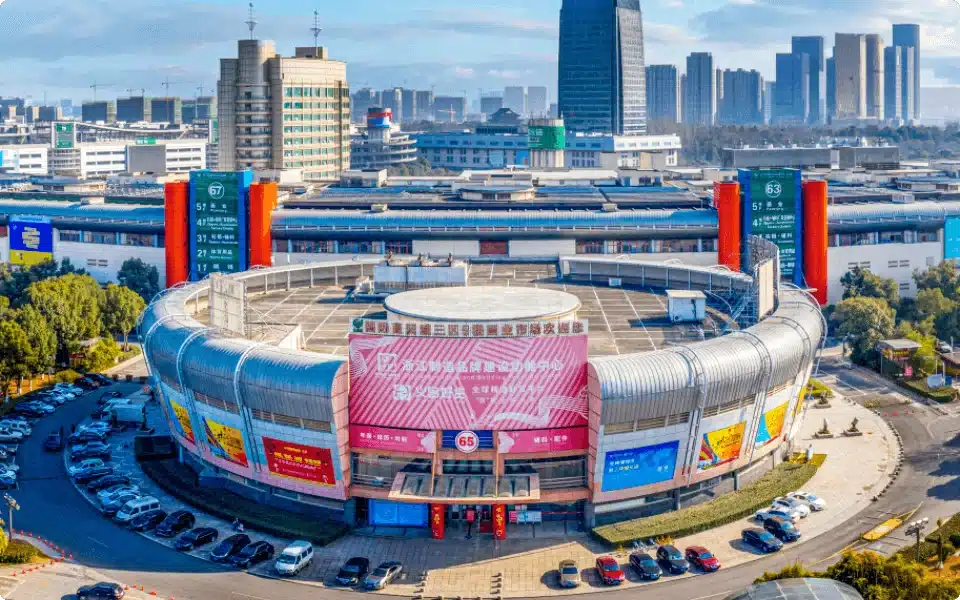
District 5: Auto Parts & Car Accessories
District 5 of the Yiwu International Trade Mart is the primary hub for automotive aftermarket products, concentrated on the 4th floor. It offers a dense cluster of suppliers specializing in car and motorcycle accessories, auto electronics, repair tools, and decorative items, often with low minimum order quantities suitable for small and medium importers.

The Core Auto Parts Hub on Floor 4
District 5’s 4th floor is the dedicated center for automotive aftermarket products, offering a dense cluster of suppliers for wholesale buyers.
This zone specializes in car and motorcycle accessories, auto electronics, repair tools, and decorative items, with many booths operating as direct factory outlets or long-term trading offices.
Buyers can access new product designs and negotiate flexible order terms directly with suppliers, making it a primary destination for sourcing competitively priced parts.
Product Range and Order Flexibility
The market focuses on cost-effective, mass-market accessories and universal-fit parts rather than OEM-grade components, including items like seat covers, floor mats, lighting, filters, and brake pads.
A key advantage for small and medium importers is the low minimum order quantity (MOQ), often as low as one carton per item, which is ideal for test marketing and small wholesalers.
Suppliers frequently update their catalogs with style variations, positioning products for high turnover in budget-conscious retail and online channels.
Sourcing for Specific Markets: The Korean Vehicle Example
While District 5 vendors primarily sell Chinese-made aftermarket parts, many buyers source compatible accessories and universal parts for global brands, including Korean vehicles like Hyundai and Kia.
This contrasts with specialized Korean exporters who supply genuine or OEM parts; Yiwu offers a budget-friendly channel for non-genuine, compatible items.
This distinction helps importers choose between cost-effective aftermarket solutions from Yiwu for general retail and higher-spec genuine parts from specialized exporters for authorized service networks.
District 5 Layout & Comfort (Newest Building)
District 5’s newest residential buildings offer modern, comfortable living spaces designed for efficiency and convenience. With contemporary layouts, a range of apartment sizes, and integrated amenities, the compound provides a quieter, more functional environment suitable for both residents and business travelers on sourcing trips.

Modern Design and Building Layout
District 5’s newest residential buildings feature contemporary mid-rise designs with modern façades and large windows to maximize daylight and usable space.
The layouts prioritize clear circulation and separate service zones, offering a more comfortable and efficient living environment compared to older, deeper-plan blocks found in legacy industrial districts.
Apartment Sizes and Flexible Floor Plans
The building offers a wide range of unit sizes, from compact 2-bedroom apartments starting around 136 m² to larger 3-bedroom layouts from about 188 m², with some units reaching over 700 m².
This size mix allows for flexible use, enabling sourcing professionals to use larger apartments for storage, sampling, and meetings, while smaller units suit shorter stays.
Amenities and Daily Convenience
The compound is integrated with a retail mall and two clubhouses, providing shopping, dining, fitness, and social spaces within walking distance.
This amenity base reduces the need for cross-city trips, enhancing comfort for business travelers on sourcing trips for textiles or auto parts.
Environment and Suitability for Business Stays
Designed as a mixed-use residential compound with greenery and controlled traffic, District 5 provides a quieter and better-ventilated environment compared to adjacent industrial zones.
The modern buildings and amenities make it suitable for hosting small sourcing teams, with multi-bedroom apartments that can be configured to include sample rooms and quiet negotiation spaces.
The “Imported Goods” Section: Selling Into China
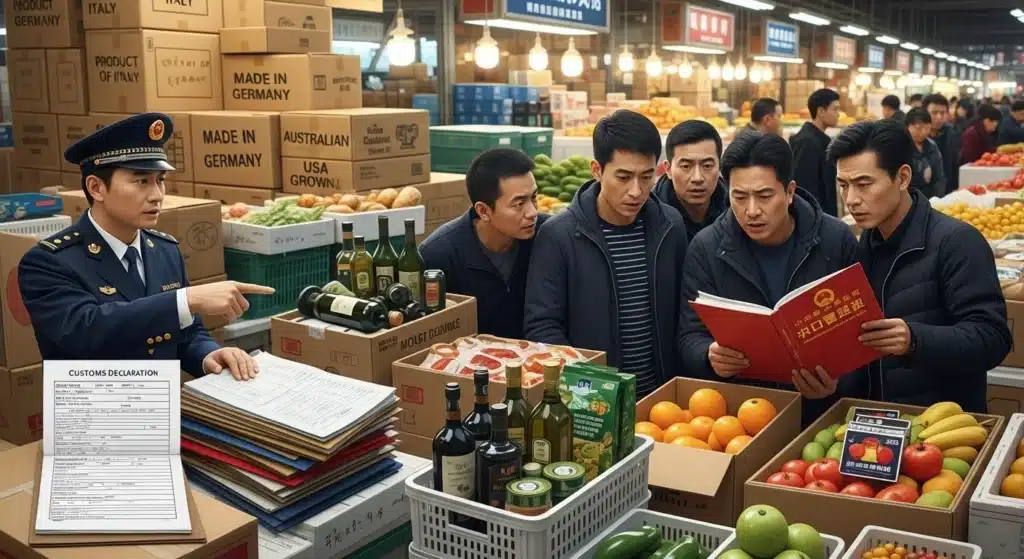
Selling imported goods into China’s wholesale districts requires navigating a national import regime. Foreign sellers typically work through licensed Chinese entities, comply with HS codes, tariffs, VAT, and meet strict product standards and labeling rules for textiles, cosmetics, and auto parts.
| Product Category | Key Compliance Requirements | Typical Duty & Tax Range |
|---|---|---|
| Textiles & Apparel | GB standards, fiber content labeling, safety tests (formaldehyde, azo dyes) | 5-16% MFN duty + 13% VAT |
| Korean Cosmetics | NMPA registration/filing, Chinese ingredient labeling, safety data | Duty varies + 13% VAT + possible consumption tax |
| Auto Parts | CCC certification for safety items, technical standards, labeling | 6-14% MFN duty + 13% VAT |
| Industrial Inputs (e.g., POM) | HS code accuracy, potential anti-dumping investigations | Standard duty + possible anti-dumping duties (e.g., 74.9%) |
How Importing into China Works for Foreign Sellers
Foreign sellers typically cannot import directly; they must work through a licensed Chinese entity like a trading company or logistics provider.
Common business models include selling FOB to a Chinese buyer, using a local import agent, or leveraging cross-border e-commerce bonded-warehouse models for items like cosmetics.
The process is governed by China’s national import regime, including HS code classification, tariffs, VAT, and meeting product-specific technical standards.
Costs, Duties, and Required Documentation
Imports are subject to MFN customs duties (e.g., 5-16% for textiles, 6-14% for auto parts), a 13% import VAT, and sometimes consumption tax.
Anti-dumping duties, like the 74.9% rate on specific POM copolymers, can apply to certain industrial inputs.
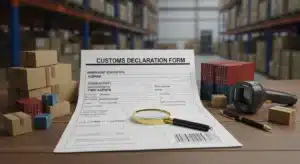
Core documentation includes a commercial invoice, packing list, bill of lading, customs declaration, and any required inspection or certification certificates (e.g., for textiles or CCC for auto parts).
Product Compliance: Standards, Testing, and Labeling
Goods must meet mandatory Chinese standards (GB/GB-T) and may require certifications like CCC for safety-critical auto parts.
Korean cosmetics require NMPA registration or filing, which involves detailed safety data and can take several months.
All products sold in China require compliant Chinese-language labels detailing composition, care instructions, origin, and manufacturer/importer details.
Logistics, Risks, and Strategic Considerations
Goods typically move via ocean freight to major ports like Shanghai or Ningbo, with air used for time-sensitive items; bonded warehouses allow for duty deferral.
Key risks include customs delays from misclassification, fines for non-compliance, and intellectual property infringement in segments like branded cosmetics.
Sellers should monitor shifts in trade policy and technical standards, and proactively register trademarks in China to protect their brands.
Frequently Asked Questions
Where can I buy wholesale socks in Yiwu?
You can buy wholesale socks at the Yiwu Socks Market on the 1st floor of District 4 in the Yiwu International Trade City. This is the world’s largest socks wholesale market, with over 1,300 suppliers offering baby socks, sports socks, fashion socks, stockings, and more. Minimum order quantities typically start at 300 pairs per color or style, with prices ranging from $0.30 to $1.50 per pair. The market is open daily from 9:00 to 17:00.
Are there car parts suppliers in Yiwu?
Yes, Yiwu has multiple dedicated auto parts suppliers and factories. Companies like Yiwu Jony Auto Parts Co., Ltd. and Yiwu Huanao Auto Parts Factory are based in the city. They supply auto body parts, headlights, bumpers, brake systems, and various vehicle accessories for both passenger cars and trucks, exporting globally to markets in Europe, South America, Africa, and Asia.
What is in District 5?
District 5 is the automotive-focused zone within the market complex. It houses wholesalers for car parts, auto accessories, repair tools, and related services. This district complements the textile focus of District 4 by concentrating on vehicle-related sourcing, catering to mechanics, repair shops, and retail consumers.
Where is the imported goods market?
The main imported goods markets are clustered within the large wholesale zones of Districts 4 and 5. For textiles and yarns, look for wholesale fabric streets near the principal textile centers. For items like imported Korean cosmetics, focus on the mixed beauty-goods corridors and cosmetics wholesale plazas adjacent to these hubs. Both categories are typically concentrated within a few blocks of each district’s primary wholesale complexes.
Can I buy fabric by the roll?
Yes, many textile wholesalers and some retail shops sell fabric by the roll (or bolt) for bulk buyers. Rolls commonly range from 20 to 100 yards, depending on the fabric type and supplier. This option is standard for garment production, upholstery, and other industrial applications and is available for a wide variety of materials including chiffon, satin, cotton, and polyester blends.
Final Thoughts
Yiwu’s Districts 4 and 5 offer distinct, specialized sourcing environments. District 4 is the definitive global hub for textiles, particularly socks and hosiery, while also providing access to a wide range of bedding and home textiles. District 5 focuses on the automotive aftermarket, with a dense cluster of suppliers for accessories and parts, often with flexible order terms. The modern residential buildings in District 5 add a layer of practical comfort for extended business stays.
For sellers looking to bring goods into China, the process involves navigating specific regulations, duties, and compliance standards. Whether you’re sourcing textiles, auto parts, or exploring the market for imported goods, understanding the layout, product focus, and regulatory framework of these districts is key to a successful and efficient procurement strategy.