Justin
Yiwu Market Overview
Market Position and Scale
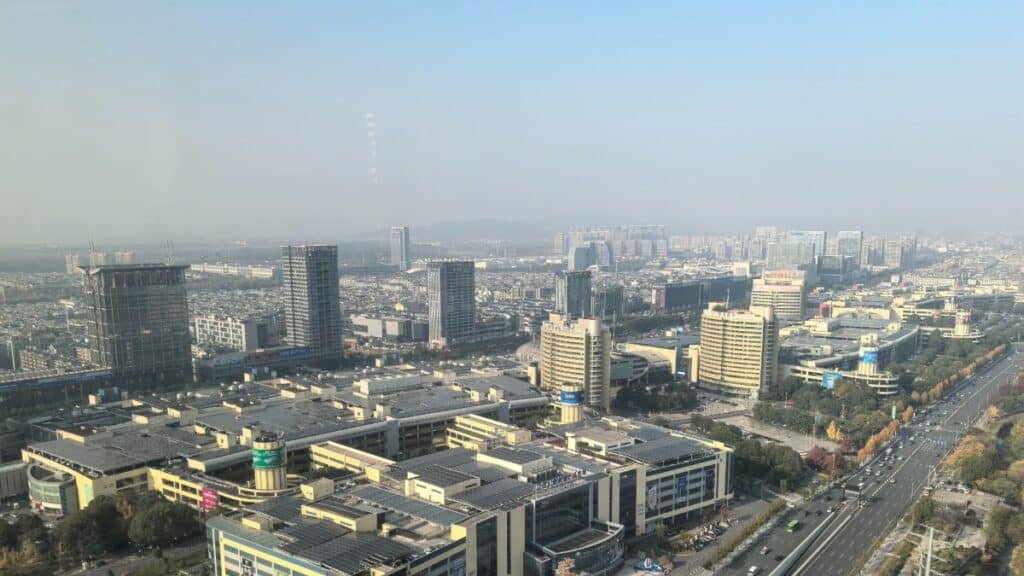
Yiwu International Trade City is the world’s largest small commodity wholesale market, known as the “World’s Supermarket.” This is not only China’s distribution center for small commodities but also an important hub for global trade.
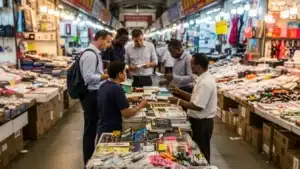
From a small roadside market to today’s international trade center, Yiwu has created a commercial miracle in over 40 years. Every day, buyers from around the world gather here to find the products they need. Whether it’s Christmas decorations for Europe, Halloween supplies for America, or traditional crafts for the Middle East, suitable suppliers can be found in Yiwu.
The success of this market lies not only in its scale but also in its complete industrial chain. From product design and manufacturing to packaging and transportation, Yiwu has formed a complete business ecosystem. Many internationally renowned brand OEM products come from Yiwu and its surrounding areas, making it an indispensable part of global manufacturing.
Yiwu Market Core Statistics
| Indicator | Data | Notes |
|---|---|---|
| Total Market Operating Area | 6.4 million m² | Equivalent to 896 football fields |
| Number of Booths | 75,000 | Distributed across five major areas |
| Employees | 210,000 | Including merchants, employees, service personnel |
| Annual Turnover | Over 200 billion RMB | Continuously growing |
| Product Categories | 2.1 million types | Covering all aspects of daily life |
| Product Categories | 26 major categories | Subdivided into over 3,000 industries |
| Export Countries/Regions | Over 230 | Covering major global markets |
| Daily Average Visitor Flow | 200,000 people | Including domestic and foreign buyers |
Global Influence Indicators
International Trade Data Comparison
| Market Name | Country | Annual Turnover | Product Categories | Global Ranking |
|---|---|---|---|---|
| Yiwu International Trade City | China | 200+ billion RMB | 2.1 million types | 1st |
| Dubai Gold Market | UAE | ~50 billion USD | Mainly gold and jewelry | 2nd |
| Los Angeles Fashion District | USA | ~10 billion USD | Mainly clothing | 3rd |
| London Hatton Garden | UK | ~5 billion GBP | Mainly jewelry | 4th |
Product Category Distribution
Main Product Category Proportion
| Product Category | Proportion | Main Products | Popularity |
|---|---|---|---|
| Daily Necessities | 25% | Kitchenware, cleaning supplies, storage items | ⭐⭐⭐⭐⭐ |
| Jewelry & Accessories | 20% | Jewelry, hair accessories, watches, glasses | ⭐⭐⭐⭐⭐ |
| Toys & Stationery | 18% | Children’s toys, office supplies, learning materials | ⭐⭐⭐⭐ |
| Electronic Products | 15% | Digital accessories, small appliances, electronic components | ⭐⭐⭐⭐⭐ |
| Clothing & Footwear | 12% | Underwear, socks, hats, scarves | ⭐⭐⭐⭐ |
| Crafts & Gifts | 10% | Decorations, souvenirs, festival supplies | ⭐⭐⭐ |
Market Features and Advantages
Core Competitive Advantages of Yiwu Market
- Front Store, Back Factory Model
- Merchants take orders in storefronts, back factories handle production
- Shortened supply chain, reduced costs
- Quick response to market demands
- Micro Multinational Companies
- Each shop is a small international trading company
- Complete trade service capabilities
- Professional foreign trade team support
- One-Stop Procurement Experience
- From small commodities to bulk goods, everything is available
- Complete supporting service system
- Efficient logistics network support
- Leading Digital Transformation
- Online and offline integrated development
- Thriving live streaming and cross-border e-commerce
- Complete intelligent management system
Market Development History
Yiwu Market Development Timeline
| Year | Important Events | Impact |
|---|---|---|
| 1982 | First generation small commodity market opened | Laid development foundation |
| 1992 | Second generation market completed | Scale development |
| 2002 | International Trade City Phase I opened | Internationalization started |
| 2008 | All five major areas completed | Became world’s largest |
| 2014 | Approved as International Trade Comprehensive Reform Pilot Zone | Outstanding policy advantages |
| 2020 | Accelerated digital transformation | Online and offline integration |
| 2024 | Smart market construction completed (Market District 6) | Technology-empowered development |
Market Structure and Distribution
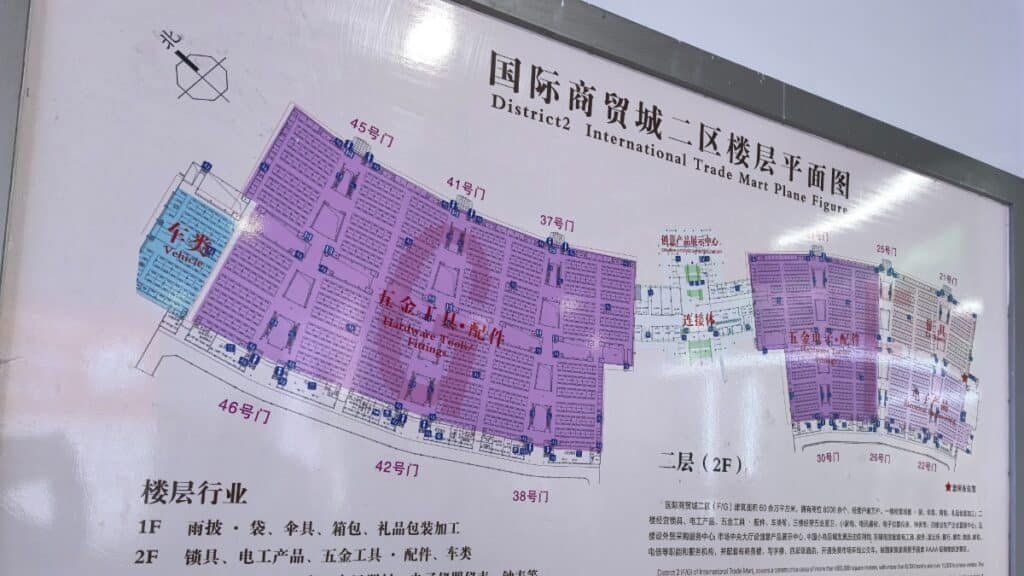
Professional Market Distribution Overview
Yiwu has formed a comprehensive market ecosystem centered on the International Trade City, supplemented by numerous professional markets. These markets are strategically distributed across different areas of the city, each specializing in specific product categories to maximize efficiency and convenience for buyers. Understanding this distribution is crucial for planning an effective procurement trip.
The market structure follows a hub-and-spoke model, with the International Trade City serving as the central hub, while specialized markets act as focused nodes for specific industries. This design allows buyers to either conduct comprehensive sourcing at the main complex or target specific markets based on their product needs.
Yiwu Professional Market Distribution Table
The following table provides a comprehensive overview of Yiwu’s major professional markets, their locations, specialties, and key characteristics. This information will help you identify the most suitable markets for your specific procurement needs and plan your visit accordingly.
| Market Name | Location | Main Products | Business Area | Number of Merchants | Special Advantages |
|---|---|---|---|---|---|
| International Trade City | Choujiang Street | Comprehensive small commodities | 6.4 million ㎡ | 75,000 | Largest scale, most complete variety |
| Huangyuan Clothing Market | Huangyuan Road | Clothing and footwear | 350,000 ㎡ | 8,000 | Fashion trends, rapid updates |
| Production Materials Market | Chengxi Street | Fabrics, accessories, machinery, decorative items | 200,000 ㎡ | 3,000 | Complete industrial chain |
| Beixiazhu Market Cluster | Beixiazhu | E-commerce supply chain | 180,000 ㎡ | 2,500 | E-commerce distribution center |
| Wuai/Meihu Market | Wuai District | Inventory clearance goods | 150,000 ㎡ | 2,000 | Price advantage |
| Bazutang Market Cluster | Bazutang | Inventory clearance goods | 150,000 ㎡ | 2,000 | Complete categories |
| Dongfuzhai Market | Dongfuzhai | E-commerce supply chain | 120,000 ㎡ | 1,800 | Complete supporting facilities |
| Zijin Market | Zijin Community | Toys, street vendor goods | 100,000 ㎡ | 1,500 | Diverse varieties |
| Jinfuyuan Market | Jinfuyuan | Christmas supplies, floral decorations | 80,000 ㎡ | 1,200 | Complete festival supplies |
| Futian Market | Futian Community | Scarves, hats, Christmas supplies | 80,000 ㎡ | 1,200 | Strong seasonality |
| Zhaozhai Market | Zhaozhai Community | Smoking accessories, lighters, photo frames | 60,000 ㎡ | 1,000 | Professional market |
| Yinhai/Changchun Market | Yinhai District 2 | Spring couplets, paper products, religious items | 50,000 ㎡ | 800 | Distinctive features |
| Food Market | Choucheng Street | Food and beverages | 120,000 ㎡ | 1,500 | Quality assurance |
Each market in the above table serves a specific function within Yiwu’s commercial ecosystem. The International Trade City remains the flagship destination for comprehensive sourcing, while specialized markets offer deeper product selections and often better prices for specific categories. Many buyers develop strategies that combine visits to multiple markets to optimize their procurement results.
The geographic distribution of these markets reflects Yiwu’s urban planning philosophy of creating specialized commercial zones. This clustering effect creates synergies between related businesses and makes it easier for buyers to compare products and prices within specific categories. Additionally, the proximity of supporting services such as logistics, packaging, and quality inspection facilities enhances the overall efficiency of the procurement process.
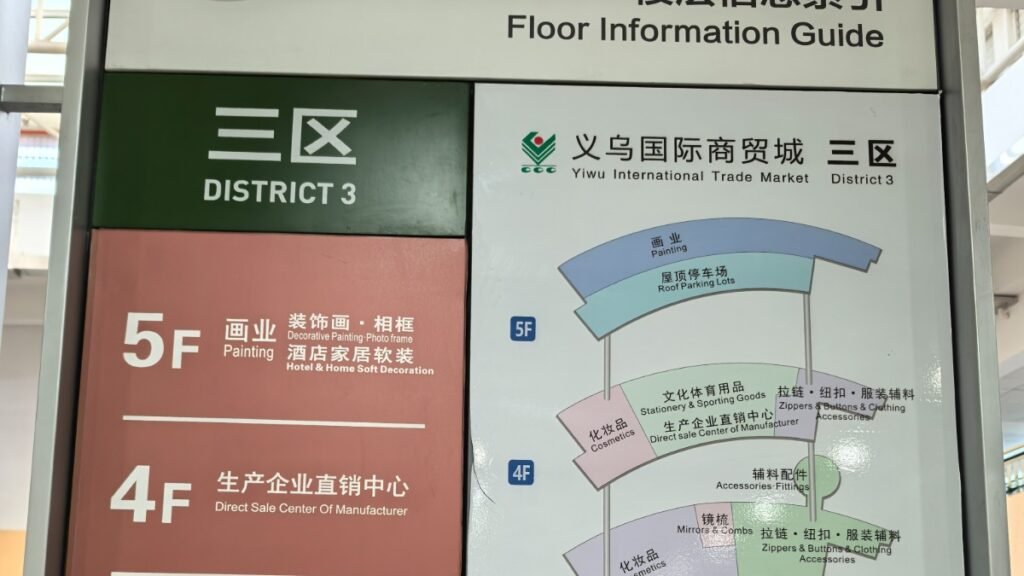
Detailed Guide to Five Major Areas of Yiwu International Trade City
Yiwu International Trade City consists of five interconnected areas, each with its professional characteristics and advantageous product categories. This specialized zoning design not only facilitates buyers’ searching and comparison but also promotes healthy competition and cooperation among similar merchants. The following detailed breakdown will help you navigate each district effectively and understand the unique advantages each area offers.
International Trade City District 1 – Toys, Jewelry & Crafts District
District Overview: Floor area approximately 340,000 square meters, about 13,000 shops
| Floor | Main Product Categories | Specific Products | Number of Shops | Special Advantages |
|---|---|---|---|---|
| 1F | Toys & Floriculture | Plush toys, electric toys, artificial flowers, flower accessories | 4,500 | Complete variety |
| 2F | Jewelry & Accessories | Hair accessories, jewelry, accessory components | 4,200 | Novel styles |
| 3F | Crafts & Gifts | Festive crafts, decorative crafts, ceramics & crystal, photo frames | 4,300 | Exquisite craftsmanship |
| 4F | Taiwan Premium Products | Flowers, jewelry crafts, corporate exhibition area | 2,000 | Quality assurance |
International Trade City District 2 – Bags, Hardware & Electrical District
District Overview: Floor area approximately 460,000 square meters, about 18,000 shops
| Floor | Main Product Categories | Specific Products | Number of Shops | Special Advantages |
|---|---|---|---|---|
| 1F | Bags & Rain Gear | Raincoats, packaging bags, umbrellas, bags | 4,000 | Strong practicality |
| 2F | Hardware & Tools | Electrical products, locks, hardware tools, bicycles & tricycles | 4,500 | Complete variety |
| 3F | Electrical & Electronic | Hardware kitchen & bath, small appliances, electronic instruments, lighting | 4,000 | Reliable quality |
| 4F | Premium Zone | Regional specialty products, bags, electronic clocks, hardware & electrical | 3,500 | Distinctive features |
| 5F | Foreign Trade Zone | Foreign trade specialty products | 2,000 | Export-oriented |
International Trade City District 3 – Cultural Supplies District
District Overview: Floor area approximately 400,000 square meters, about 15,500 shops
| Floor | Main Product Categories | Specific Products | Number of Shops | Special Advantages |
|---|---|---|---|---|
| -1F | Festival Supplies | New Year paintings, calendars, couplets | 2,000 | Seasonal hot sales |
| 1F | Cultural Supplies | Pen, ink, paper products, glasses | 3,000 | Excellent quality |
| 2F | Sports & Stationery | Office & learning supplies, cultural & sports goods, outdoor products | 3,500 | Strong practicality |
| 3F | Beauty Accessories | Cosmetics, beauty products, clothing accessories | 3,000 | Rich variety |
| 4F | Corporate Exhibition Area | Cosmetics, cultural & sports goods corporate displays | 2,000 | Direct supply advantage |
| 5F | Decorative Painting Area | Decorative paintings, accessories & processing machinery | 2,000 | One-stop service |
International Trade City District 4 – Clothing Accessories District
District Overview: Floor area approximately 350,000 square meters, about 12,000 shops
| Floor | Main Product Categories | Specific Products | Number of Shops | Special Advantages |
|---|---|---|---|---|
| 1F | Socks & Clothing | Socks, leggings | 2,500 | Affordable prices |
| 2F | Knitted General Merchandise | Knitted cotton products, hats, gloves, daily necessities | 2,500 | Diverse varieties |
| 3F | Clothing Accessories | Yarn, ties, lace, towels, shoes | 2,500 | Complete supporting |
| 4F | Underwear & Accessories | Belt accessories, bras & underwear, scarves | 2,500 | Fashion trends |
| 5F | Comprehensive Products | Tourism shopping center, clothing & general merchandise | 2,000 | One-stop shopping |
International Trade City District 5 – Imported Goods District
District Overview: Floor area approximately 380,000 square meters, about 14,000 shops
| Floor | Main Product Categories | Specific Products | Number of Shops | Special Advantages |
|---|---|---|---|---|
| 1F | Imported Products | Food, clothing, jewelry, African products | 3,000 | International quality |
| 2F | Home Products | Bedding, festive supplies, pet products | 3,000 | Excellent quality |
| 3F | Fabric & Home Textiles | Curtain fabrics, textile fabrics, wedding supplies | 3,000 | Rich selection |
| 4F | Automotive Products | Auto supplies, auto & motorcycle parts, small commodity distribution | 3,000 | Professional supporting |
| 5F | E-commerce Park | Yiwugo E-commerce Park | 2,000 | Online & offline |
International Trade City District 6 – Under construction-The future global digital trade center
[yiwu-market-white-paper]
Pre-Procurement Preparation
Market Research and Product Positioning
Target Market Analysis
- Determine procurement objectives
- Clarify product categories to be procured
- Set procurement budget and quantities
- Understand target market demands
- Collect market information
- Browse Yiwugo official website (www.yiwugo.com)
- Check Chinagoods platform (www.chinagoods.com)
- Monitor market price dynamics
- Contact Chineseyiwu.com for local procurement information
Document Preparation
- Domestic buyers: ID card, business license
- Foreign buyers: Passport, visa, business invitation letter
- Procurement authorization letter (if acting as agent)
Financial Preparation
- Cash: Commonly used for small transactions
- Bank cards: Support UnionPay, VISA, MasterCard
- Alipay/WeChat: Mobile payment widely adopted
- Letter of credit: Used for large orders
- Stablecoins: Some merchants accept USDT, USDC and other mainstream stablecoin payments
- Cryptocurrency: Few merchants support Bitcoin, Ethereum and other cryptocurrency payments
Language Preparation
- Learn basic Chinese business terminology
- Prepare translation software or hire interpreters
- Understand common unit conversions
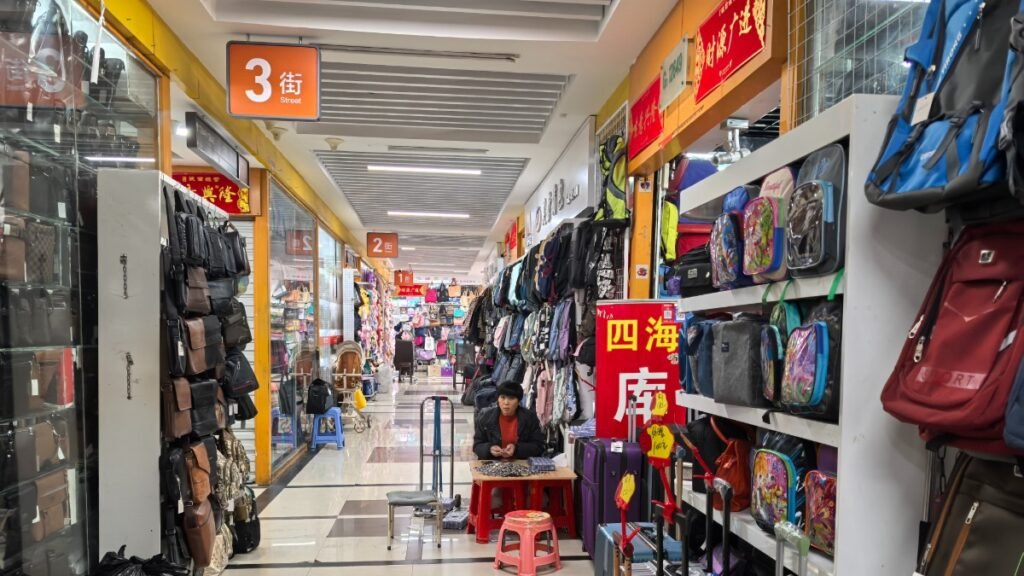
Detailed Procurement Process
The procurement process in Yiwu follows a systematic approach that has been refined over decades of international trade. Understanding and following this process is essential for achieving successful outcomes, whether you’re a first-time buyer or an experienced procurement professional. The process is designed to minimize risks, ensure quality, and establish sustainable business relationships.
Each step in the procurement process serves a specific purpose and builds upon the previous one. Skipping steps or rushing through the process often leads to suboptimal results, including quality issues, pricing problems, or delivery delays. The time invested in following the complete process typically pays dividends in terms of better products, prices, and supplier relationships.
Step 1: Market Reconnaissance
Market reconnaissance is the foundation of successful procurement in Yiwu. This initial phase involves gathering intelligence about the market landscape, understanding product availability, and identifying potential suppliers. The reconnaissance phase typically takes 1-2 days but can save weeks of inefficient searching later in the process.
- Obtain market maps
- Get free maps at district entrances
- Download official APP to view electronic maps
- Understand product distribution in each area
- Preliminary survey
- Quickly browse target areas
- Record key merchant locations
- Collect product samples and business cards
Step 2: Merchant Screening
Merchant screening is a critical evaluation process that determines the quality of your entire procurement experience. In Yiwu’s vast marketplace with over 75,000 merchants, identifying reliable partners requires systematic evaluation criteria and thorough due diligence. This step typically requires 2-3 days of intensive evaluation but is crucial for long-term success.
- Evaluation criteria
- Merchant scale and reputation
- Product quality and pricing
- Service attitude and professionalism
- Production capacity and delivery time
- Field inspection
- Check business licenses
- Visit production workshops (if available)
- Understand quality control systems
Step 3: Sample Confirmation
Sample confirmation is the quality assurance checkpoint that prevents costly mistakes in bulk orders. This phase involves detailed examination of product samples to ensure they meet your specifications and quality standards. Professional buyers often consider this the most important step, as it directly impacts customer satisfaction and brand reputation.
- Sample collection
- Collect samples from multiple similar product suppliers
- Record detailed product specifications
- Take photos for reference
- Quality testing
- Appearance inspection
- Function testing
- Material confirmation
- Packaging evaluation
Step 4: Price Negotiation
Price negotiation in Yiwu is both an art and a science. Successful negotiation requires understanding market dynamics, supplier cost structures, and cultural nuances. The goal is not just to achieve the lowest price, but to establish fair pricing that ensures quality and sustainable supplier relationships. Effective negotiation can typically achieve 10-30% cost savings compared to initial quotes.
- Inquiry techniques
- Compare prices from multiple sources to understand market rates
- Clarify quantity-based pricing levels
- Inquire about price differences for different payment methods
- Negotiation strategies
- Demonstrate professional procurement capabilities
- Emphasize long-term cooperation intentions
- Appropriately reveal competitor quotes
Step 5: Contract Signing
Contract signing is the legal foundation that protects both parties and ensures smooth transaction execution. A well-drafted contract serves as a roadmap for the entire business relationship and provides recourse in case of disputes. In Yiwu’s international trade environment, contracts must be clear, comprehensive, and enforceable across different legal jurisdictions.
- Contract elements
- Detailed product specification descriptions
- Quantity, unit price, total price
- Delivery time and method
- Payment terms and methods
- Quality standards and acceptance conditions
- Breach of contract liability clauses
- Important notes
- Carefully review contract terms
- Confirm sample consistency with contract
- Keep contract copies
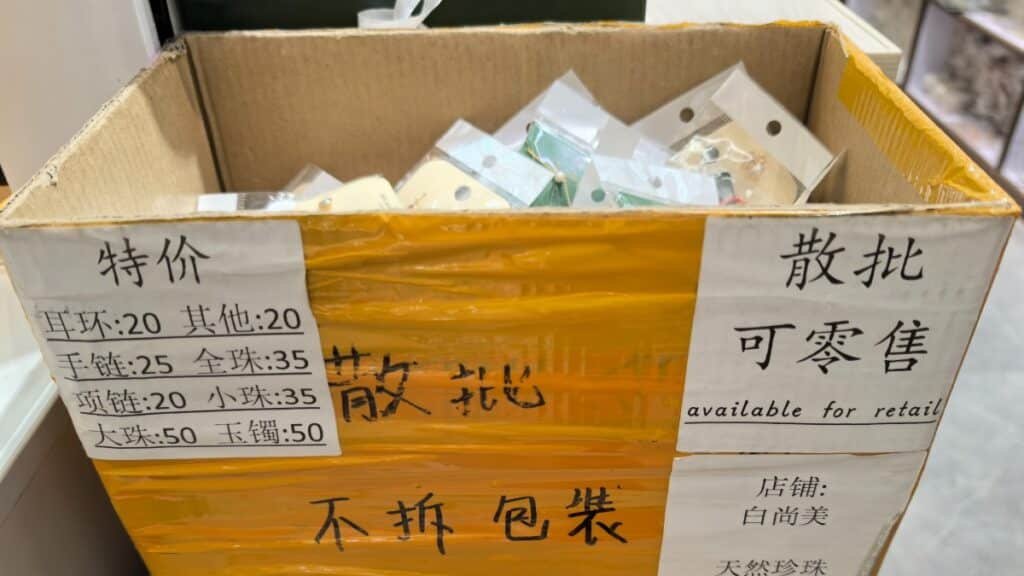
Price Negotiation Techniques
Price negotiation is one of the most critical aspects of the Yiwu procurement process. Successful negotiation not only saves significant costs but also establishes long-term stable supplier relationships. In a professional wholesale market like Yiwu, negotiation is an art that requires thorough preparation, appropriate strategies, and good communication skills.
Pre-Negotiation Preparation
Market Research Data Collection
Effective market research forms the backbone of successful price negotiation. The data collected during this phase provides the factual foundation for your negotiation arguments and helps establish realistic price expectations. Professional buyers typically invest 20-30% of their preparation time in comprehensive market research.
| Research Item | Information Source | Importance | Difficulty | Time Investment |
|---|---|---|---|---|
| Similar product price range | Multiple supplier inquiries | ⭐⭐⭐⭐⭐ | Low | 2-3 days |
| Raw material price trends | Industry reports, websites | ⭐⭐⭐⭐ | Medium | 1 day |
| Seasonal price changes | Historical data analysis | ⭐⭐⭐ | Medium | 1 day |
| Competitor quotes | Market visits | ⭐⭐⭐⭐ | High | 2-3 days |
| Supplier cost structure | In-depth communication | ⭐⭐⭐⭐⭐ | High | Ongoing |
Cost Analysis Framework
Understanding supplier cost structures is crucial for effective negotiation. This framework helps you identify where costs can be optimized and where negotiation space exists. Different cost categories have varying degrees of flexibility, and knowing these differences allows for more targeted negotiation strategies.
| Cost Category | Proportion Range | Influencing Factors | Negotiation Space | Optimization Suggestions |
|---|---|---|---|---|
| Raw material costs | 40-60% | Market prices, procurement volume | Small | Long-term cooperation to reduce procurement costs |
| Labor costs | 15-25% | Process complexity, skill level | Medium | Simplify processes, batch production |
| Packaging & shipping | 5-10% | Packaging requirements, shipping distance | Large | Optimize packaging, nearby shipping |
| Management expenses | 8-15% | Company scale, efficiency | Medium | Increase order volume to share costs |
| Profit margin | 10-20% | Market competition, relationships | Largest | Establish long-term cooperation |
Negotiation Strategies and Techniques
Successful negotiation in Yiwu requires a strategic approach that balances assertiveness with relationship building. The techniques outlined below have been tested by thousands of international buyers and represent best practices for achieving optimal results while maintaining positive supplier relationships.
Phased Negotiation Strategy
Negotiation in Yiwu is most effective when approached as a multi-phase process rather than a single confrontational event. Each phase serves a specific purpose and builds toward the ultimate goal of reaching a mutually beneficial agreement. This structured approach typically yields better results than aggressive, single-session negotiations.
| Negotiation Phase | Main Objective | Strategic Focus | Important Notes | Expected Results |
|---|---|---|---|---|
| Initial contact | Build trust | Show professionalism and sincerity | Don’t rush to discuss prices | Gain basic trust |
| Information gathering | Understand bottom line | Inquire about cost structure, capacity | Maintain friendly attitude | Master negotiation leverage |
| Formal negotiation | Reach agreement | Use various techniques | Maintain flexibility | Mutually satisfactory price |
| Contract confirmation | Finalize details | Clarify all terms | Avoid future disputes | Sign formal contract |
Price Negotiation Techniques Comparison
Different negotiation techniques work better in different situations. The following comparison helps you select the most appropriate approach based on your specific circumstances, order size, and relationship goals. Combining multiple techniques often yields the best results.
| Negotiation Technique | Applicable Scenarios | Success Rate | Risk Level | Usage Recommendations |
|---|---|---|---|---|
| Volume advantage | Large order procurement | 85% | Low | Most commonly used and effective |
| Long-term cooperation | Establishing stable relationships | 75% | Low | Suitable for quality suppliers |
| Competitive comparison | Multiple choices available | 70% | Medium | Requires authentic information |
| Payment terms | Sufficient cash flow | 80% | Low | Win-win strategy |
| Off-season procurement | Non-urgent needs | 65% | Medium | Requires advance planning |
| Packaging simplification | Cost-sensitive type | 60% | Low | Does not affect product protection |
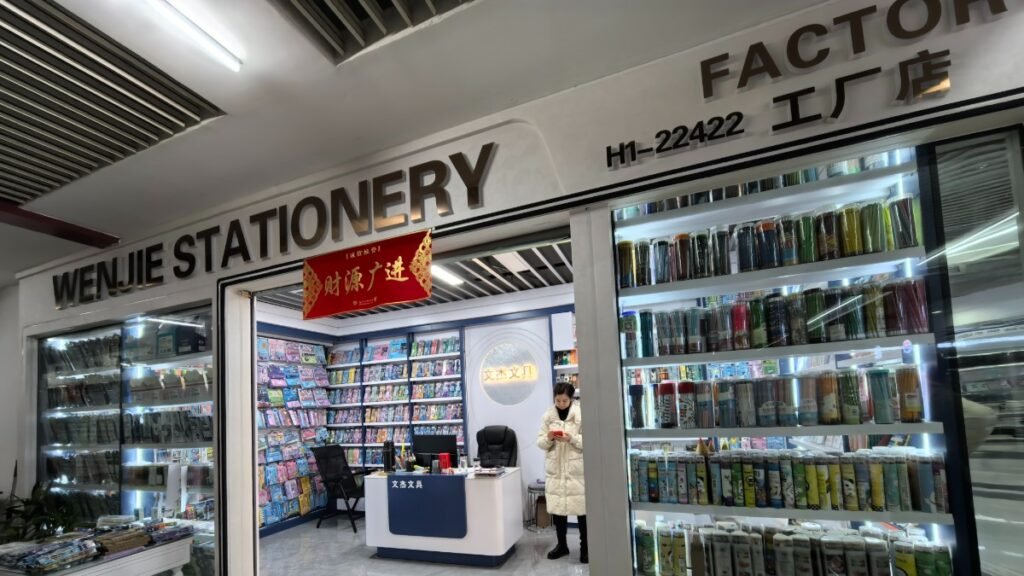
Quality Control and Inspection
Quality Management System Framework
Quality Standard Classification
| Quality Level | Standard Requirements | Inspection Items | Acceptance Rate | Price Premium |
|---|---|---|---|---|
| Premium Grade | International standards, brand quality | Comprehensive testing, certification required | 99.5%+ | 20-50% |
| Standard Grade | Industry standards, stable quality | Key item testing, batch inspection | 98%+ | 10-20% |
| Economic Grade | Basic standards, cost-effective | Basic testing, sample inspection | 95%+ | Baseline |
| Budget Grade | Minimum standards, price priority | Visual inspection, spot checks | 90%+ | -10 to -30% |
Inspection Process and Timeline
Full Process Quality Control Timeline
| Inspection Stage | Timing | Inspection Content | Duration | Responsible Party |
|---|---|---|---|---|
| Pre-production inspection | Before production starts | Raw materials, samples, production plans | 1-2 days | Buyer/Third party |
| During production inspection | Production midpoint | Production progress, quality control | 0.5-1 day | Buyer/Third party |
| Pre-shipment inspection | Before shipment | Finished products, packaging, quantities | 1-2 days | Buyer/Third party |
| Loading supervision | During loading | Loading process, container conditions | 0.5 day | Third party |
| Destination inspection | After arrival | Transportation damage, final verification | 1 day | Buyer |
Logistics and Transportation
Transportation Method Comparison
| Transportation Method | Time Efficiency | Cost Level | Suitable Goods | Advantages | Disadvantages |
|---|---|---|---|---|---|
| Sea Freight | 20-45 days | Lowest | Large volume, non-urgent | Low cost, large capacity | Long time, weather dependent |
| Air Freight | 3-7 days | Highest | High value, urgent | Fast, safe | High cost, volume limited |
| Railway | 15-25 days | Medium | Europe route, medium volume | Balanced time and cost | Limited routes |
| Express | 3-10 days | Very High | Small packages, samples | Door-to-door, convenient | Very expensive, weight limited |
Customs and Documentation
Required Document Checklist
Essential Documents:
- Commercial Invoice – Detailed product and price information
- Packing List – Detailed packaging and quantity information
- Bill of Lading/Airway Bill – Transportation document
- Certificate of Origin – Product origin certification
- Export License – Required for certain products
- Quality Certificate – Product quality certification
- Insurance Policy – Cargo insurance document
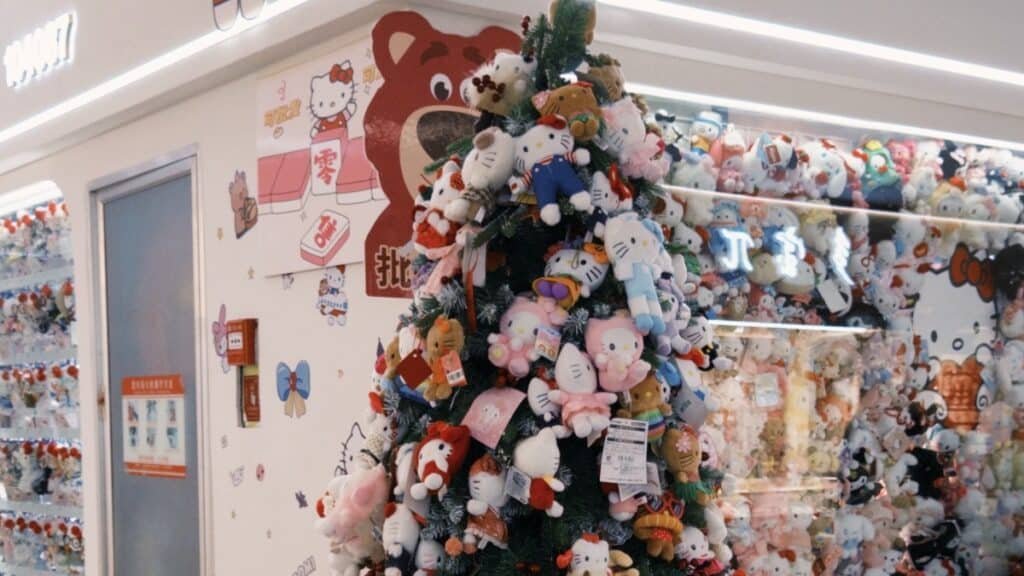
Risk Management and Quality Control
Common Procurement Risks and Mitigation Strategies
Risk Assessment Matrix
[purchasing-guides]
| Risk Type | Probability | Impact Level | Risk Level | Mitigation Strategies |
|---|---|---|---|---|
| Quality Issues | Medium | High | High | Strict inspection, quality agreements, third-party testing |
| Delivery Delays | Medium | Medium | Medium | Buffer time, penalty clauses, alternative suppliers |
| Payment Fraud | Low | Very High | High | Verified suppliers, secure payment methods, trade insurance |
| Currency Fluctuation | High | Medium | Medium | Currency hedging, price adjustment clauses |
| Regulatory Changes | Low | High | Medium | Stay informed, legal consultation, compliance monitoring |
Practical Tips and Best Practices
Daily Procurement Tips
Professional Procurement Strategies:
- Early Morning Visits – Merchants are more energetic and willing to negotiate
- Build Relationships – Invest time in relationship building for long-term benefits
- Seasonal Timing – Purchase off-season for better prices
- Volume Leverage – Combine orders for better pricing power
- Quality First – Never compromise quality for small price differences
Long-term Success Strategies
Building Sustainable Procurement Operations:
- Supplier Diversification – Maintain multiple suppliers for each product category
- Market Intelligence – Stay updated on market trends and price movements
- Technology Integration – Use digital tools for efficiency and transparency
- Continuous Learning – Attend trade shows and industry events
- Cultural Sensitivity – Respect local business customs and practices
Payment Methods
Payment Options Comparison
| Payment Method | Security Level | Convenience | Transaction Fees | Processing Time | Best For |
|---|---|---|---|---|---|
| Cash | Medium | High | None | Instant | Small transactions |
| Bank Transfer | High | Medium | Low | 1-3 days | Large transactions |
| Alipay/WeChat Pay | High | Very High | Low | Instant | Medium transactions |
| Credit Card | High | High | Medium | Instant | International buyers |
| Letter of Credit | Very High | Low | High | 5-10 days | Large international orders |
Accommodation and Transportation
[real-time-exchange-rate-access]
Recommended Accommodation
Hotel Categories by Budget
| Category | Price Range (RMB/night) | Features | Recommended For |
|---|---|---|---|
| Luxury Hotels | 800-2000 | 5-star service, business facilities | High-end business travelers |
| Business Hotels | 300-800 | Good location, business amenities | Regular business travelers |
| Budget Hotels | 100-300 | Basic amenities, convenient location | Cost-conscious travelers |
| Hostels/Guesthouses | 50-150 | Shared facilities, social atmosphere | Backpackers, long-stay visitors |
Transportation Guide
Getting to Yiwu
| Transportation | From | Duration | Cost (RMB) | Frequency |
|---|---|---|---|---|
| High-speed Train | Shanghai | 2 hours | 150-300 | Every 30 min |
| High-speed Train | Hangzhou | 1 hour | 80-150 | Every 20 min |
| Flight + Transfer | Beijing | 4 hours total | 800-1500 | Multiple daily |
| Bus | Guangzhou | 12 hours | 200-400 | Daily |

Digital Procurement Platforms
Official Online Platforms
Major E-commerce Platform Comparison
| Platform | Specialization | Supplier Count | Key Features | Best For |
|---|---|---|---|---|
| Yiwugo.com | Yiwu products | 50,000+ | Local suppliers, real-time inventory | Yiwu-specific procurement |
| Alibaba.com | Global B2B | 200,000+ | Trade assurance, verified suppliers | Global sourcing |
| 1688.com | Domestic B2B | 1,000,000+ | Factory direct, bulk pricing | Domestic Chinese market |
| Made-in-China.com | Export-oriented | 100,000+ | Export focus, quality verification | International buyers |
Chinese Yiwu – Your Professional Yiwu Procurement Partner
Core Service Advantages:
- Local Expertise – Deep understanding of Yiwu market dynamics
- Supplier Network – Extensive verified supplier database
- Quality Assurance – Professional quality control services
- Logistics Support – Comprehensive shipping and customs solutions
- Cultural Bridge – Bilingual team facilitating smooth communication
Seasonal Procurement Strategies
Yiwu Market Seasonal Procurement Calendar
Annual Procurement Planning
| Month | Featured Products | Procurement Advantages | Price Trends | Inventory Status | Recommendation |
|---|---|---|---|---|---|
| Jan-Feb | Spring Festival, Valentine’s gifts | High seasonal demand | Stable with increases | Abundant | ⭐⭐⭐⭐ |
| Mar-Apr | Spring clothing, garden supplies | Seasonal changeover | Reasonable pricing | Rich variety | ⭐⭐⭐⭐⭐ |
| May-Jun | Summer products, outdoor items | Early stocking | Competitive | Sufficient | ⭐⭐⭐⭐ |
| Jul-Aug | School supplies, office stationery | Back-to-school preparation | Price increases | Tight | ⭐⭐⭐ |
| Sep-Oct | Autumn clothing, Halloween items | Seasonal + festival | Stable | Abundant | ⭐⭐⭐⭐⭐ |
| Nov-Dec | Christmas items, winter goods | Year-end promotions | Many discounts | Rich variety | ⭐⭐⭐⭐⭐ |
FAQ – Frequently Asked Questions
Procurement-Related Questions
Q1: How much capital should I prepare for my first Yiwu procurement trip?
A: Recommended capital structure:
- Product procurement funds: 60-70% of total budget
- Accommodation and transportation: 10-15% of total budget
- Meals and entertainment: 5-10% of total budget
- Emergency reserve funds: 15-20% of total budget
Q2: What are the minimum order quantities in Yiwu market?
A: MOQs vary by product and supplier:
| Product Category | General MOQ | Negotiable Range | Notes |
|---|---|---|---|
| Jewelry & Accessories | 100-500 pieces | From 50 pieces | Various styles |
| Daily Necessities | 200-1000 pieces | From 100 pieces | By specification |
| Electronic Products | 50-200 pieces | From 20 pieces | High tech content |
| Stationery & Toys | 500-2000 pieces | From 200 pieces | Seasonal demand |
Q3: How to evaluate supplier reliability?
A: Supplier evaluation checklist:
| Evaluation Item | Check Points | Weight | Scoring Criteria |
|---|---|---|---|
| Business Qualifications | Business license, tax registration | 20% | Full documentation gets full score |
| Production Capacity | Factory scale, equipment condition | 25% | On-site inspection assessment |
| Quality System | QC process, certification | 25% | Complete system gets high score |
| Service Attitude | Response speed, professionalism | 15% | Subjective evaluation |
| Customer Reviews | Existing customer feedback, reputation | 15% | Multiple source verification |
Q4: What payment methods are available in Yiwu?
A: Common payment methods comparison:
| Payment Method | Security | Convenience | Fees | Best For |
|---|---|---|---|---|
| Cash | Medium | High | None | Small transactions |
| Bank Transfer | High | Medium | Low | Large transactions |
| Alipay/WeChat Pay | High | High | Low | Medium transactions |
| Credit Card | High | High | Medium | International customers |
| Letter of Credit | Highest | Low | High | Large international trade |
Logistics and Transportation Questions
Q5: How long does shipping take from Yiwu to major global cities?
A: International logistics timeframe:
| Destination Region | Sea Freight | Air Freight | Rail Transport | Recommended Method |
|---|---|---|---|---|
| Southeast Asia | 7-15 days | 3-5 days | Not applicable | Sea freight cost-effective |
| Europe | 25-35 days | 5-7 days | 15-20 days | Rail transport balanced |
| North America | 20-30 days | 5-8 days | Not applicable | Choose by cargo value |
| Middle East | 15-25 days | 4-6 days | Not applicable | Air freight efficient |
| Africa | 20-35 days | 6-10 days | Not applicable | Sea freight low cost |
| South America | 30-45 days | 8-12 days | Not applicable | Based on urgency |
Q6: How to reduce logistics costs?
A: Logistics cost optimization strategies:
| Optimization Method | Savings Percentage | Implementation Difficulty | Considerations |
|---|---|---|---|
| LCL Shipping | 20-40% | Low | Requires time coordination |
| Off-season Shipping | 10-20% | Medium | Affects delivery schedule |
| Packaging Optimization | 15-25% | Low | Cannot compromise protection |
| Long-term Partnership Discount | 5-15% | Medium | Requires stable volume |
| Multimodal Transport | 10-30% | High | Needs professional planning |
Quality and After-sales Questions
Q7: What to do if received goods don’t meet quality requirements?
A: Quality issue resolution process:
- Contact supplier immediately (within 24 hours)
- Provide detailed evidence (photos, videos, inspection reports)
- Negotiate solutions (return, exchange, compensation)
- Seek third-party mediation (market management, industry associations)
- Legal resolution (contract disputes, court litigation)
Q8: How to avoid intellectual property disputes?
A: Intellectual property protection measures:
| Protection Measure | Specific Actions | Importance | Implementation Cost |
|---|---|---|---|
| Product Originality Confirmation | Request originality proof from suppliers | High | Low |
| Patent Search | Query relevant patent databases | High | Medium |
| Trademark Inquiry | Confirm trademark usage rights | High | Low |
| Contract Protection | Clarify IP responsibilities in contracts | High | Low |
| Insurance Purchase | Buy intellectual property insurance | Medium | High |
Culture and Communication Questions
Q9: How to procure in Yiwu without speaking Chinese?
A: Language barrier solutions:
| Solution | Cost | Effectiveness | Best For |
|---|---|---|---|
| Hire Translator | 300-500 RMB/day | Best | Important negotiations |
| Translation Apps | Free-Paid | Fair | Daily communication |
| Learn Basic Chinese | Time investment | Long-term effective | Frequent visitors |
| Find English-speaking Merchants | No extra cost | Good | Limited scope |
| Chinese Yiwu Platform Service | Service-based fees | Professional | Full-service support |
Q10: What are the characteristics of Yiwu business etiquette?
A: Key points of Yiwu business culture:
- Meeting Etiquette: Handshakes, business card exchange, mutual introductions
- Negotiation Style: Direct, practical, values long-term relationships
- Dining Culture: Business banquets common, observe table manners
- Gift-giving Customs: Small gifts show friendship, avoid overly expensive items
- Time Consciousness: Punctual appointments, advance booking for important meetings
Conclusion
Yiwu Market, as the world’s largest small commodity wholesale market, provides global buyers with abundant product choices and convenient procurement environment. Successful procurement requires not only understanding market structure and procurement processes, but also building long-term cooperative relationships, focusing on quality control, and preventing various risks.
We hope this guide helps you succeed in your Yiwu Market procurement journey and achieve mutually beneficial business cooperation. Remember, honest business practices are the foundation for long-term development in Yiwu Market.
Wishing you successful procurement and prosperous business!
About Chinese Yiwu
Chinese Yiwu is your professional Yiwu procurement partner, providing comprehensive services including:
- Market guidance and supplier introduction
- Quality inspection and logistics coordination
- Translation and cultural bridge services
- Long-term partnership development
Contact us:
- Website: www.chineseyiwu.com
- Email: Sales01@chineseyiwu.com
- Phone: +86-153-5533-8902
- WeChat: JustinSourcing
Last updated: December 2025
For questions or more information, please contact relevant departments or visit official websites