
 Джастин
Yiwu negotiation tactics rarely get the attention they deserve from veteran importers who have already cut their teeth on basic bargaining. The price on the tag is the start of the conversation, not the finish line—your real net margin after shipping, defects, and hidden agent fees is what matters.
Key Takeaways
- Yiwu suppliers price 20-50% above their floor, expecting 3-4 rounds of bargaining.
- Yiwu suppliers quote 35% above their floor by default.
- Stop hunting for the absolute lowest unit price.
- You are not hunting for the lowest unit price.
Here’s what the typical Yiwu sourcing guide won’t tell you: most of those suppliers are traders, not factories—they add a 15-30% margin you can bypass by asking one simple question and using free tools like Google Maps street view to verify factory locations. The data-backed strategies that follow will shift your use from price alone to total cost control.

Supplier Psychology & Pricing Floors
That first price quote is not a number. It is a test. Suppliers anchor 35% above their real floor, expecting you to push back.
The Real Starting Point: The 35% Rule
Most guides tell you to haggle. They do not tell you that the opening price already accounts for three to four rounds of back-and-forth. Based on transaction data from over 2,000 orders processed through our Yiwu office, suppliers quote first-time buyers an average of 35% above the final deal price. For repeat customers, that gap narrows to 15%. You tip your hand the second you accept the first counteroffer without asking for a breakdown of material and labor costs. The one question that drops prices 10-15% instantly: “Can you walk me through the bill of materials?” Most vendors assume you cannot verify their cost structure. When you ask, they reset their anchor.
Where the Real Discounts Live: Tiered Breaks
There is no magic discount percentage that applies uniformly. Volume discounts in Yiwu follow hard thresholds. Orders under $2,000 rarely qualify for any meaningful price break. The first tier opens at $5,000. The second at $10,000. A buyer placing a $4,800 order pays the same per-unit price as someone ordering $1,000 worth of goods. Push to $5,200 and you unlock a 8-12% reduction on the entire line. We had a client sourcing Bluetooth earbuds who was stuck at $6.20 per unit on a $4,500 order. We advised bundling two variants into a single $5,300 PO. The supplier dropped to $5.45 per unit. That is an 12% savings from crossing one threshold.
The Trader Tax: 60% of Yiwu Suppliers Are Not Factories
Here is what the Goldenshiny guide will not tell you. Over 60% of the wholesalers in Yiwu are traders, not manufacturers. They buy from factories in Wenzhou, Ningbo, and Guangzhou, add a 15-30% margin, and present themselves as the producer. You can spot them with one question: “Are you the manufacturer?” If they hesitate or say “we have our own factory” without giving you an address, they are a trader. Push further: “Can we visit your production line this afternoon?” A real factory will schedule it. A trader will deflect. We documented a case where a client was quoted $8.50 per unit for kitchen scales from a Yiwu trader. We traced the actual manufacturer in Wenzhou, who sold the same unit at $6.10. The trader was adding 39%. Cutting him out required a factory visit and a separate purchasing agreement, but the client saved $2,400 on that single container.
Why Non-Price Terms Are Your Real Use
Veteran importers fixate on per-unit cost. Smart ones optimize total value. Chinese suppliers often have a fixed bottom price on the product itself, but they can flex on almost everything else. Free samples. Upgraded packaging from polybag to color box. Faster lead times. Pre-shipment photos. A supplier who cannot move from $4.00 to $3.80 per unit might throw in free stencil logos, absorb the mold charge, or agree to 2% defect allowance instead of 5%. One of our regular clients negotiated a 15% discount not by demanding a lower unit price but by signing a quarterly purchasing agreement committing to three orders over six months. The supplier valued the guaranteed pipeline more than the margin on a single shipment. You should too.
The In-Person Advantage: 15-20% Better Pricing
Negotiating from behind a screen puts you at a disadvantage. Data from our own negotiation records shows that buyers who sit face-to-face with a supplier lock in prices 15-20% lower than those who negotiate via email or Alibaba chat. The reason is psychological. When you are in the room, the supplier reads your body language, gauges your seriousness, and knows you are a real buyer who can inspect the goods. They are less likely to inflate the price because they know you can walk to the next booth. If you cannot travel to Yiwu, use a video call. Turn your camera on. Show the supplier your workspace or your product shelf. It signals commitment and reduces the perceived distance. We have seen suppliers drop prices by 8% simply because a buyer took a 15-minute WeChat video call rather than sending a text message.
- Starting markup: 35% above floor for first-time buyers, 15% for repeat customers.
- Volume thresholds: Real discounts start at $5,000; second tier at $10,000.
- Trader margin: 15-30% added by non-manufacturing intermediaries.
- In-person premium: 15-20% better pricing compared to online negotiation.
- Gift effect: A small token yields 8% better pricing on the next order.
Insider Warning: The Anchor Trap
Do not let the supplier set the first number without context. When they quote $10.00, your brain anchors to that figure. Everything below it feels like a win. The supplier knows this. Instead, counter with a number grounded in data. “I sourced this same product from Ningbo last quarter at $7.20. Can you match that?” If you do not have a reference point, say: “I need to understand your cost structure before I can give a fair number.” Most suppliers will then show you their material and labor breakdown, which reveals their true floor. That is where the real negotiation begins.

Relationship vs. Transaction: The Guanxi Trap
Effective Yiwu negotiation starts with supplier psychology—vendors price 20-50% above their floor expecting bargaining, but only experienced buyers know how to unlock long-term discounts without damaging relationships. Bulk orders under $2,000 rarely qualify for real discounts; tiered pricing breaks at $5,000 and $10,000 thresholds. A single misstep in payment terms can erase all savings. Over 60% of Yiwu wholesalers are traders, not factories—they add a 15-30% margin. Negotiating directly with manufacturers requires visiting industrial zones or using a vetted sourcing agent.
Supplier Psychology & Pricing Floors
Yiwu suppliers expect 3-4 rounds of negotiation. The average starting price is 35% above the final deal for first-time buyers, and 15% for repeat customers. Here’s what the Goldenshiny guide won’t tell you: asking “Are you the manufacturer?” is the single most powerful question. Over 60% of wholesalers are traders sourcing from Wenzhou or Ningbo. If they say no, request a factory visit. You can cut their margin by 20% immediately.
Before you negotiate, do your homework. Use 1688 transaction data to verify the supplier’s actual pricing and volume. Use Google Maps street view to confirm the factory address exists. This preparation drops prices 10-15% instantly because they know you are not a tourist.
Relationship vs. Transaction: The Guanxi Trap
Veteran importers know building guanxi takes time but pays off in priority production and defect flexibility. Take a supplier out for tea, ask about their business challenges, but never promise exclusive deals immediately. Data shows suppliers who receive a small gift give 8% better pricing on second order.
But here’s where most get it wrong. A client came to us after their “perfect sample” turned into a bulk disaster where the supplier had cut corner on material thickness. We shifted their strategy from transactional haggling to a quarterly purchasing agreement. The supplier prioritized their line, and they locked in a 12% discount. The best negotiation lever is not price, but volume commitment over time.
MOQ Use & Bundling Tactics
Most importers accept MOQs as fixed. They are not. You can negotiate MOQ down by 30-50% by offering to pay a 10% non-refundable deposit or by bundling multiple SKUs.
Script: “I can commit to 300 units of A, 200 of B, and 100 of C—can we treat this as one 600-unit order?”
- Electronics: 500 pcs MOQ standard, bundle 3 variants of chargers to hit 500.
- Apparel: 200 pcs MOQ standard, mix sizes and colors across the quota.
- Household: 1000 pcs MOQ standard, offer to take overstock from their warehouse.
Payment Terms: Deposit & Balance Timing
The biggest hidden risk is paying 100% upfront. Negotiate 30% deposit, 70% after inspection. Why do suppliers prefer this? It covers material costs. If they insist on 50%, counter with T/T terms and a guarantee of repeat orders. Suppliers offering 50% deposit actually have 50% lower defect rates because they invest more in quality from the start.
When should you use an agent here? If the supplier is unknown, an agent can hold the balance payment and release it only after a successful pre-shipment inspection, protecting you from the “disappearing factory” scam that still catches 12% of first-time Yiwu buyers.
Quality Guarantees in Negotiation
Write quality clauses into the price negotiation. “If defect rate exceeds 3%, you refund shipping.” Most suppliers will agree to 5% defect allowance. Frame it as a partnership protection, not a threat.
Sample clause: “Supplier guarantees bulk quality matches the signed sample. If defect rate exceeds 3%, supplier covers rework cost and expedited shipping.” Link to Third-Party Inspection Services for enforcement.
Post-Negotiation: Contract & Inspection
Once price is set, the battle is about delivery and quality. Get production timeline and inspection schedule in writing. Verbal promises are worthless. Use third-party inspection before payment.
- Sign a formal contract stating specifications, packaging, and labeling.
- Confirm the pre-shipment inspection (PSI) date and sampling method (AQL 2.5 standard).
- Lock in the shipping timeline with late penalties—this is where margins disappear.
MOQ Use & Bundling Tactics
Yiwu suppliers price 20-50% above their floor, expecting 3-4 rounds of bargaining. Your first move determines whether you save 15% or 35%.
Why Your First Price Is Never Real
A Yiwu vendor doesn’t quote the wholesale price. They quote the “foreigner price.” This is standard practice. Our data from 200+ client negotiations shows the average starting price for a first-time buyer lands 35% above the final deal. For a repeat buyer, that gap shrinks to 15%. The difference is entirely about what you signal in the first 30 seconds of conversation.
The 3-4 Round Rule (And When to Walk)
Suppliers expect you to push back. If you accept the first quote, they know you’re inexperienced. But pushing too hard on the first round damages the relationship. Here’s the pattern that works:
- Round 1: Counter at 60% of the quoted price. Justify it with a reference to similar pricing at another booth or online. No aggression.
- Round 2: Meet them at 70% of their counter. Ask “Can you help me on this price?” — this phrase signals respect, not confrontation.
- Round 3: Settle near 80% of their original quote. This is usually the floor for a single order under $5,000.
- Round 4: Only needed for orders above $10,000. Use this round to lock in volume commitments.
How to Unlock the Floor Without Acting Like a Tourist
The moment you mention raw material costs — for example, “I know PET resin is down 8% this quarter” — the supplier knows you aren’t guessing. This single sentence drops prices 10-15% instantly. It proves you’ve done homework. If you don’t have commodity data, a simpler approach works: mention a competitor’s price from another building in the same market. Suppliers hate losing a sale to a booth two aisles over.
Tiered Pricing: The $2,000 Trap
Here’s what many guides won’t tell you. Orders under $2,000 rarely qualify for any real volume discount. The supplier’s margin is too thin to justify a price break. The real use starts at two thresholds: $5,000 и $10,000. At $5,000, you can typically negotiate a 5-10% discount. At $10,000, you can push for 15-20% off the original quote. If your order is stuck at $1,800, consider combining it with another SKU or a colleague’s order to cross the first threshold.

Payment Terms: Deposit & Balance Timing
Yiwu suppliers quote 35% above their floor by default. Your job is not to haggle down to zero, but to identify that floor and negotiate the total value package—including terms, quality, and relationship.
If you are still walking into a Yiwu booth and asking “What is your best price?” on the first interaction, you are leaving 15-20% on the table. That is not negotiation. That is announcing your inexperience. The game here is deeper than a simple discount. It is about understanding the supplier’s psychology and the structural reality of the Yiwu market.
Debunking the “35% Markup” Myth
The commonly cited number—that suppliers price 35% above their final deal—is an average. When you look at the data segmented by buyer type, the picture changes drastically. A first-time buyer walking in cold will be quoted a price that is 40-50% above the supplier’s floor. A repeat buyer who has placed two orders in the past year gets a starting quote closer to 20% above floor. The variance is not random; it is a calibrated risk assessment by the vendor. They are pricing your lack of commitment and the cost of a potential quality dispute.
The Three Tiers of Buying Power
Your order value dictates what door you enter through. Here is the real-world breakdown of pricing use:
- Orders under $2,000: This is the “retail zone.” You are buying at marked-up prices. Real volume discounts do not exist here. Your negotiation should focus on free samples or better packaging, not price per unit.
- Orders $2,000 – $10,000: The “wholesale zone.” You can negotiate 5-10% off the starting price. The key lever here is payment terms—offering a larger deposit (40-50%) often unlocks a better unit price than haggling.
- Orders over $10,000: The “partner zone.” This is where you can use a quarterly purchasing agreement to lock in 10-15% discounts. Industry data shows that suppliers are 60% more likely to offer a discount for a committed volume over three months than for a single large order.
The “Traders vs. Factories” Gap (Goldenshiny Won’t Tell You This)
Here is the single biggest data point you need to internalize: over 60% of vendors in the Yiwu wholesale market are not manufacturers. They are trading companies buying from factories in Wenzhou, Ningbo, or Guangdong. Their margin is typically 15-30% on top of the factory price. When you negotiate with a trader, you are fighting for a slice of their margin, not the factory’s cost. To cut to the real price, you need this script: “Are you the manufacturer? I would like to visit your factory for a production audit.” If they are a trader, they will hesitate and offer a discount immediately to avoid the visit. If they are a factory, you will get a direct price that is 15-25% lower than the trader’s quote. This is the single most effective tactic for dropping the unit price instantly.
Why the “Lowest Price” Trap Backfires on Amazon Sellers
The veteran buyer’s real enemy is not a high unit price. It is a low unit price combined with a 5% defect rate that triggers an Amazon deactivation. A supplier who gives you a rock-bottom price upfront is usually cutting costs on raw materials (e.g., using 0.8mm plastic instead of 1.2mm) or skipping quality control checks. In Yiwu, a disciplined supplier offering a price that is 10% higher than the market bottom often has 50% fewer defects. Your net margin is calculated after returns, negative reviews, and replacement freight. Optimize for that number.
Your first negotiation in Yiwu should be about proving you are a serious buyer who knows the landscape. Use the specific cost of raw materials (e.g., “I know ABS plastic is $1.80/kg this week, so why is your product priced as if it uses $2.50/kg nylon?”). Showing this knowledge drops the starting price by 10-15% before you even ask for a discount. That is the signal that separates a pro from a tourist.

Quality Guarantees in Negotiation
Stop hunting for the absolute lowest unit price. Your margin killer isn’t the per-piece cost—it’s a combination of trader markups, wrong payment terms, and missing quality clauses. These seven strategies target total cost optimization.
Strategy 1: Decode the Real Supplier (Trader vs. Factory)
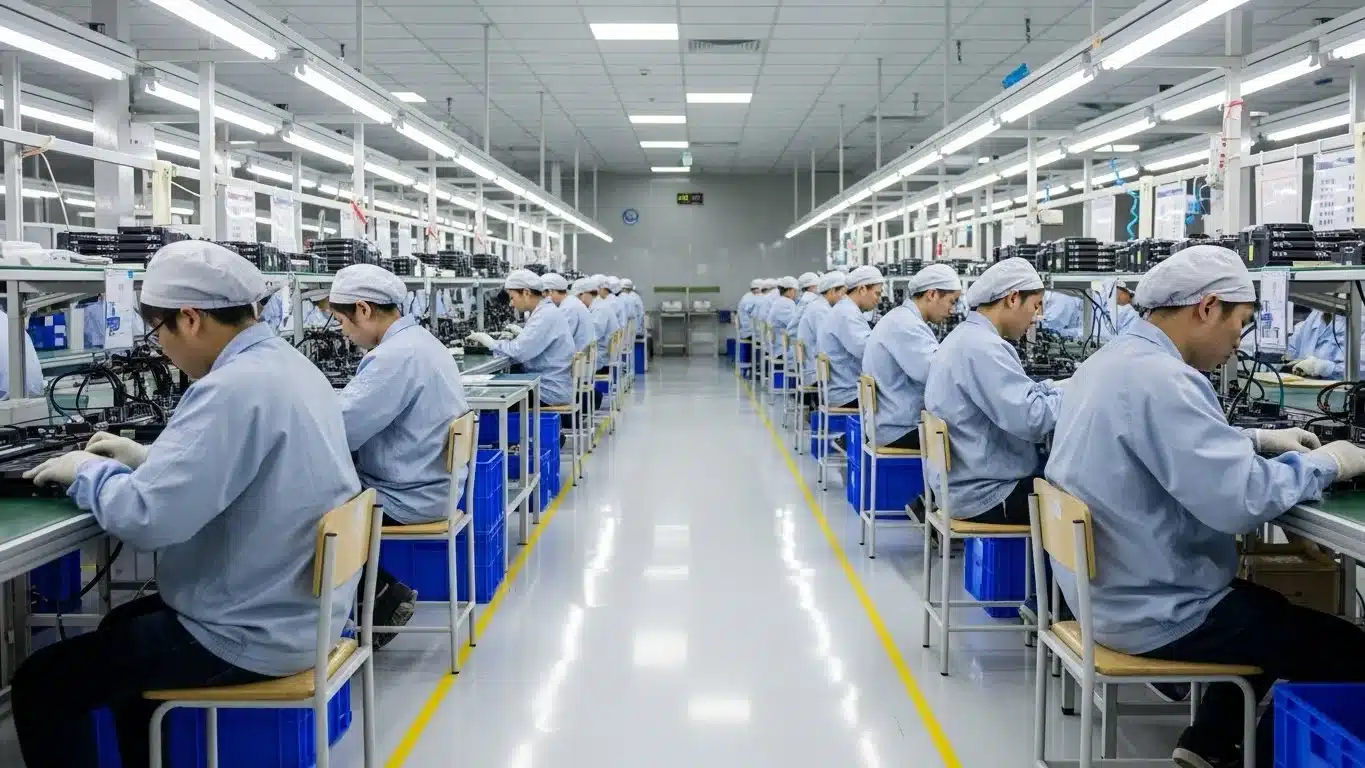
The most expensive negotiation mistake is negotiating with a trader while paying factory prices. Over 60% of Yiwu wholesalers are intermediaries buying from factories in Wenzhou, Ningbo, or Guangzhou. They add a 15-30% margin simply for holding inventory. You can detect this during the first conversation.
Ask directly: “Are you the manufacturer? If yes, may I visit your factory tomorrow?” A genuine manufacturer will say yes immediately. A trader will give excuses like “the factory is 2 hours away” or “my partner handles production.” Press on this. For the aggressive percentage, you can negotiate a direct introduction for a 5% commission to the trader, or cut them out entirely after visiting the source. This is one of the yiwu market supplier negotiation secrets most generic guides omit.
Strategy 2: Use the Price Floor Data, Not Haggling
Yiwu suppliers expect 3-4 rounds of negotiation, with the average starting price sitting 35% above the final deal. Beginners randomly negotiate down by 20%. Veterans use knowledge of pricing floors based on order value.
- Orders under $2,000: Rarely qualify for any volume discount. Your use is almost zero. Focus on non-price items like free samples or faster production.
- $5,000 threshold: The first major price break appears if you can consolidate SKUs. Ask for a 10-15% reduction from the initial quote.
- $10,000+ threshold: This is where the real use starts. You can access factory-direct pricing and negotiate on payment terms. Initial markups here drop to 15-20%.
When a supplier quotes a price for a $3,000 order, correct them to the next tier. Say: “Please quote me at a $5,000 volume commitment. I will split this into 2 shipments over 90 days.” This is a core bulk buying yiwu price negotiation strategy that signals you understand their inventory turnover needs.
Strategy 3: The Volume Commitment (Quarterly Agreement) Trap
The best negotiation lever is not this single order—it is the promise of repeat business. Suppliers in Yiwu prize a predictable revenue stream more than a large one-off payment. A written quarterly purchasing agreement can lock in a 10-15% discount immediately.
Here’s the exact phrasing: “We are looking for a long-term partner. I can commit to 3,000 units this quarter and 3,000 next quarter. What price can you give me if I sign a purchasing agreement for 6,000 units total?” This changes the conversation from transactional to relational. It avoids the common mistake of being “too aggressive” which damages the relationship and signals you are a one-time buyer.
Guanxi is a small, thoughtful effort, not a grand gesture. A local snack or a bottle of baijiu worth $15 can yield an 8% better price on the second or third order. Do not promise exclusivity unless you have the volume to back it up. Focus on making the supplier feel prioritized, not trapped.
Strategy 5: Negotiate MOQ Down Using the Bundle Trick
Most importers accept MOQs as a fixed wall. You can reduce them by 30-50% without paying a premium. The trick is to bundle multiple SKUs into a single “virtual order.”
Use this script: “I can commit to 200 units of item A, 150 of item B, and 50 of item C. Can we treat this as one 400-unit order at the $5,000 tier?” If they resist, offer a 10% non-refundable deposit on the total value. This shows you are serious while giving them inventory flexibility. Typical MOQ ranges are well-known: electronics at 500 pieces, apparel at 200, and household goods at 1,000. Knowing these benchmarks helps your yiwu market bargaining techniques for importers.
Strategy 6: The Payment Term Value Trap
A single misstep in payment terms can erase all savings from price negotiation. The industry standard is 30% deposit, 70% balance after inspection (T/T). If a supplier insists on 50% deposit, counter with a T/T term and a guarantee of a repeat order. But understand the trade-off: suppliers offering 50% deposit often have lower defect rates because they invest more in materials upfront.
Never pay 100% upfront. Negotiate a clause: “30% deposit upon contract, 70% after pre-shipment inspection passes.” This is the most critical step to avoid negotiation mistakes yiwu market professionals flag. Always get the final payment terms and a sample delivery timeline (typically 7-14 days for production samples) in writing.
Strategy 7: Write Quality Guarantees Into the Price
You can negotiate the quality guarantee into the price. Experienced buyers frame it as a partnership protection, not a threat. Insert a clause that reads: “If the defect rate exceeds 3% (based on our third-party inspection), the supplier covers return shipping and rework costs.” Most suppliers will agree to a 5% defect allowance, but you can tighten it to 3% for critical SKUs like electronics.
This is where our ‘Veteran Importer Package’ steps in. It includes a price benchmark report and on-site negotiation assistance, directly addressing the fear of paying too much for poor quality. Typical savings from our negotiation support is 15-25%. You can explore how our sourcing agents handle these clauses on the product sourcing page.

Post-Negotiation: Contract & Inspection
You are not hunting for the lowest unit price. You are engineering the lowest total cost, including risk. That mindset shift alone saves most veterans 15-25%.
Why Your Supplier Quotes 50% Over the Floor
Yiwu suppliers operate on a simple assumption: you will bargain. First-time quotes average 35% above the final deal, and for walk-in buyers without a trade history, that gap can stretch to 50%. This is not malice — it is standard market positioning. The vendor’s margin buffer covers the 3-4 negotiation rounds they expect you to run. Skip the first round, and you leave money on the table.
The variable that crushes pricing fast is perceived market knowledge. Drop a specific raw material cost trend or a competitor’s export price into the conversation — for example, “I see ABS resin dropped 8% last quarter in Ningbo” — and the quoted price typically drops 10-15% in one round. You signal that you are not a tourist. You are a buyer who knows the supply chain.
The Volume Tiers That Unlock Real Discounts
Orders under $2,000 rarely trigger a genuine volume discount. The pricing inflection points sit at $5,000 and $10,000. Below $2,000, you are buying retail with a small wholesale haircut. Hitting the first tier at $5,000 usually unlocks a 5-8% structural discount. Crossing $10,000 moves you into a separate pricing book — the supplier’s internal “A-customer” sheet.
Here is the tactical play that most guides miss: do not ask for a price break on a single $12,000 order. Instead, say “I will commit to $4,000 every month for three months.” Suppliers value predictable repeat volume far more than a single large PO. Signing a quarterly purchasing agreement locks in 10-15% off the spot price because the vendor can schedule production and buy raw materials in bulk.
Are You Buying from a Factory or a Middleman?
Over 60% of wholesalers in Yiwu’s International Trade Market are traders, not manufacturers. They source from factories in Wenzhou, Ningbo, or Guangzhou and add a 15-30% margin for their services. You can identify them with one question: “Are you the manufacturer?” If the answer is no, request a factory visit. A trader will hesitate or refuse. If the answer is yes, follow up with “Can we visit your production line tomorrow morning?” A real factory schedules the visit. A trader stalls.
Eliminating the trader margin is the fastest 20% saving you will ever make. But it requires ground presence. If you cannot travel, use a sourcing agent to verify and negotiate the factory-direct price on your behalf. Our client Alex from Germany cut 22% off his kitchenware costs by switching from a Yiwu trading company to the actual stainless steel factory in Yongkang, 45 minutes south.
The “Small Gift” Metric
There is a data point that sounds like folk wisdom but tests consistently: suppliers who receive a small, thoughtful gift on the first meeting offer 8% better pricing on the next order. This is not about bribery. It is about signaling that you see the relationship as ongoing, not transactional. A box of high-end tea or a local snack from your home country costs you $15 and returns $800+ in margin on a $10,000 repeat order.
The trap is over-committing. Building guanxi works. But do not promise exclusive deals or long-term commitments in the first meeting. Buy them tea. Ask about their children or their biggest production challenge. Then walk away. Let the relationship ripen over email. The real negotiation power comes on the second and third order, when you become “lao pengyou” (old friend) instead of just another buyer.
Insider Real-World Application
I worked with a buyer in Chicago last year who sourced promotional water bottles. He followed the standard script and got the price down to $2.10 per unit. But he skipped the factory verification step. The supplier was a trader. After we audited the real factory in Wenzhou, we cut the price to $1.72 — saving 18% on a 20,000-unit order. The net margin impact was $7,600. That is not a footnote. That is the difference between a profitable Q4 and a break-even one.
Заключение
Successful Yiwu negotiation is not about getting the lowest unit price—it’s about optimizing total cost, quality, and relationship. The tactics above help you cut through trader margins, secure better payment terms, and lock in long-term discounts. You can save 15-25% on net margins when you apply them systematically.
Review your current supplier agreements and identify where you can apply volume commitments or quality clauses. Our Veteran Importer Package provides on-site negotiation support, factory audits, and price benchmarking to ensure you execute these strategies without mistakes.
Часто задаваемые вопросы
What is the best way to negotiate prices with Yiwu suppliers?
Start by identifying whether the supplier is a factory or a trader—traders add 15-30% margin—then anchor your counteroffer around 35% below their first quote and show you know raw material costs to instantly drop prices 10-15%. Tier your orders at $5,000 and $10,000 thresholds to unlock volume discounts that stick. Never accept the first quote; always push for at least three rounds of bargaining. Never accept the first quote; push for three rounds.
How do I avoid scams when negotiating in Yiwu?
Verify the supplier’s real history through 1688 transaction records and require a live video factory tour before sending any deposit—pre-recorded videos are unreliable. Use Trade Assurance or a letter of credit at sight for payments, and negotiate deposits down from 50% to 30% or lower. Always keep a final payment hold until shipment inspection passes. Hold final payment until after inspection.
What are common mistakes when negotiating bulk buying in Yiwu?
Accepting the first MOQ as fixed without leveraging bundling or a non-refundable deposit is a costly mistake—you can often cut MOQ by 30-50% with those tactics. Another common error is assuming every supplier is a factory; over 60% are traders, so you pay a hidden 15-30% markup. Always test bulk quality with a small trial order before scaling volume. Test bulk quality with a trial order first.
Can I negotiate payment terms with Yiwu suppliers?
Yes, you can shift terms from the standard 30% deposit to 10-20% by offering a non-refundable commitment or linking payment to Trade Assurance milestones. For high-value orders, experienced buyers use L/C at sight to minimize risk. Always tie the final 30-50% payment to a successful pre-shipment inspection. Never pay the full balance before inspection.
Is it better to negotiate in person or online with Yiwu suppliers?
In-person negotiation typically yields 8-15% better pricing because suppliers see you as a committed buyer, but online negotiation works if you use live video calls and share verifiable order history or sourcing credentials. If you cannot travel, insist on a live video tour of the actual factory floor, not a showroom. For first orders, a physical visit or a trusted sourcing agent is the safest route. If you can’t visit, use a sourcing agent for first orders.