Джастин

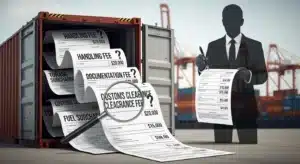
DAP looks like the friendliest of the three Group D rules, and it is the one Chinese suppliers quote most eagerly. “Delivered at Place,” the sales message runs, “we take it all the way to your door.” Then the door opens, and a second set of invoices follows the truck: unloading labour, customs brokerage, import duty, import VAT, sometimes a detention charge the driver never mentioned. None of those invoices is wrong. They are simply the part of DAP that belongs to the buyer, and a surprising number of first-time importers only discover where that line sits after the goods have crossed it.

This guide is for the small and mid-size buyer importing from China who is being offered DAP by a supplier or freight forwarder. It explains what the rule says, where risk and cost transfer, how DAP compares with DDP, EXW and FOB, and what to check before you sign. Every clause-level claim is tied to the ICC rules or a carrier’s published Incoterms documentation, so you can verify it yourself instead of trusting a sales pitch.
Key Takeaways
- Under DAP the seller delivers when the goods are placed at the buyer’s disposal on the arriving means of transport, ready for unloading, at the named place — and that moment, not the port or the border, is where risk passes to you.
- The seller carries the goods to the named place and clears them for export; you pay for unloading, import customs clearance, import duty and import taxes, plus any onward carriage after the delivery point.
- DAP sits in the Incoterms 2020 set of eleven rules, which has applied to contracts since 1 January 2020; DAP itself was introduced in Incoterms 2010, replacing the old DDU term.
- DPU — renamed from DAT in 2020 — is the only rule that makes the seller unload at destination. If you need the seller to unload, DAP is the wrong term.
- Insurance is not an obligation under DAP: only the C rules (CIF and CIP) carry mandatory insurance levels, so the transit risk on your leg is yours to insure or accept.
- The difference between DAP and DDP is a single question: who clears import and pays the duty. If the answer is “you,” it is DAP; if the answer is “the seller,” it is DDP — and DDP prices quietly build those costs into the quote.
On this page
- What DAP Means in Incoterms 2020, and Where It Sits in the Rules
- The Obligation Split, Line by Line
- The One Point That Decides Everything: Risk Transfer at the Named Place
- DAP vs DDP vs EXW vs FOB: The Comparison Table
- What DAP Really Costs You: The Importer’s Cost Stack
- DAP in Practice: Two Scenarios Importers Actually Run
- The Importer’s DAP Cost-Checklist Before You Sign
- Часто задаваемые вопросы
What DAP Means in Incoterms 2020, and Where It Sits in the Rules
Incoterms 2020 is the current edition of the ICC’s international trade terms: published in September 2019 and in force for contracts from 1 January 2020, the date Export Development Canada records in its Incoterms guidance. The edition contains eleven rules, listed in the ICC’s Incoterms 2020 introduction: seven cover any mode of transport — EXW, FCA, CPT, CIP, DAP, DPU and DDP — and four cover sea and inland waterway only: FAS, FOB, CFR and CIF. DAP, “Delivered at Place,” is one of the three Group D delivery rules, sitting between DPU and DDP in the any-mode list.
DAP is newer than most importers assume. It was introduced in Incoterms 2010, when the ICC cut the rule count from thirteen to eleven and replaced four older delivery terms. As the ICC’s own introduction to Incoterms 2010 puts it: “Two new Incoterms rules – DAT and DAP – have replaced the Incoterms 2000 rules DAF, DES, DEQ and DDU.” DDU — Delivered Duty Unpaid — is the term most often compared to DAP, because the two are functionally close. DDU has not been part of the rules since 2010, so a 2026 contract that says “DDU” is relying on a dead term; DAP is the live rule that replaced it.
The core definition is one sentence. Under DAP, the seller delivers when the goods are placed at the disposal of the buyer on the arriving means of transport, ready for unloading, at the named place of destination. DHL’s Incoterms documentation states it in exactly those terms: the goods arrive “placed at the disposal of the buyer on the arriving means of transport ready for unloading,” and the seller bears all risks involved in bringing them to the named place. What the sentence does not say is “unloaded” — and that omission is the whole story of DAP.
Two practical consequences follow. DAP works for any transport mode, so a truck from a Yiwu warehouse to your door, a rail shipment across Eurasia, or a courier parcel can all be quoted DAP. And the term demands a named place precise enough to act as the delivery point. “DAP Shenzhen” tells the seller almost nothing about where delivery completes; “DAP our warehouse, Unit 4, 88 Industrial Road, Alameda” does. The difference is not pedantry: it is the difference between knowing where your risk starts and finding out after a forklift argument at a loading dock.
The Obligation Split, Line by Line
Under DAP the seller’s side of the ledger runs long. The seller contracts carriage to the named place, pays the freight, bears the risk of loss or damage until the goods are at the buyer’s disposal, and clears the goods for export. On the Chinese side, that usually means the supplier or its forwarder handles domestic haulage, the export declaration, the ocean or air freight, and the destination leg.
The buyer’s side starts exactly where the seller’s stops. You take over the goods on the arriving truck or container, unload them, clear import customs, and pay the import duty and taxes. If the delivery point is a port terminal and the goods travel inland after that, the inland leg is also yours. Under DAP the seller “delivers unloaded”: the driver’s job ends at the tailgate, and your forklift, your crew, or contracted warehouse labour moves the goods the rest of the way.
Export Clearance Stays With the Seller
One line of the split confuses buyers more than any other. DAP is often sold as “the seller does everything,” yet the seller’s “everything” stops at the export border: the seller clears the goods for export and bears the cost, and you clear them for import. The same boundary appears at the opposite end of the spectrum: under EXW the seller does not even load the goods or clear them for export, which is why EXW puts the full burden on the buyer. Every rule between EXW and DDP shifts one more obligation across the line — and under DAP, import clearance and duty are the last big items still on the buyer’s side.
Insurance: Not Required, But Not Optional in Practice
A common reading of DAP is that the seller’s transit risk makes the seller’s insurance a natural part of the deal. It is not. In Incoterms 2020, only the C rules carry mandatory insurance levels: CIF keeps the Institute Cargo Clauses (C) as default, and CIP requires the higher (A) level. Under DAP, neither party has an obligation to insure. The seller carries the risk until delivery, but if the ship sinks mid-voyage and neither side bought cover, the seller’s exposure is the seller’s problem — and the buyer’s order is simply gone. The commercial answer is to agree insurance in writing: who insures, for what value, and from which point. Treat “we’ll handle insurance” as a question with a written answer, not an assumption.
The One Point That Decides Everything: Risk Transfer at the Named Place
Every Incoterms rule is a risk-transfer rule dressed up as a shipping term, and DAP’s risk line is unusually late. The seller bears all risk of loss or damage until the goods are placed at the buyer’s disposal, ready for unloading, at the named place. From that moment, all risk is the buyer’s. A carton crushed on the vessel, a container that leaks in transit, or a pallet damaged on the highway: seller’s-risk events under DAP. A carton damaged because the unloading crew dropped it, or while it sits on your dock: your risk.
The subtle part: risk passes before unloading is finished. The goods are delivered when they are ready for unloading — parked at the dock, straps cut, accessible to your crew. If your warehouse cannot unload until the next day, risk has already transferred while the goods wait. If the delivery point has no forklift, the waiting time, the hire cost, and the risk all sit with you. This is the DAP trap forwarders describe: the cargo has reached the destination, risk has passed, and the buyer is still paying storage or demurrage while paperwork and the unloading queue sort themselves out.
Insider warning: name the delivery point down to the loading dock. “Our warehouse in Warsaw” is a place; “Dock 2, our warehouse, ul. Towarowa 12” is a delivery point. If the named place has several possible points and you have not pinned one down, the parties can disagree about which tailgate the goods were “at the disposal of the buyer” at — and that disagreement is where damaged goods become a dispute instead of an insurance claim.
DAP vs DDP vs EXW vs FOB: The Comparison Table
Four terms cover almost every quote a China-based buyer receives, and they differ on three axes: where risk transfers, who clears import, and who unloads. DAP and DDP are identical on risk and unloading — they differ on exactly one item, import clearance and duty. DAP and DPU likewise differ on one item, unloading. EXW and FOB sit further back along the journey, which is why their quotes look cheaper and their total costs do not.
| Term | What the seller must do | Risk transfer point | Who clears import and pays duty | Who unloads at destination |
|---|---|---|---|---|
| DAP | Carriage to named place, export clearance, risk until delivery | Named place, goods ready for unloading | Buyer | Buyer |
| DDP | Carriage to named place, export and import clearance, duties | Named place, goods ready for unloading | Seller | Buyer |
| EXW | Goods available at seller’s premises; not loaded, not cleared | Seller’s premises | Buyer | Buyer (collects the goods) |
| FOB | Deliver goods on board the vessel at the named port, export clearance | On board the vessel at the named port | Buyer | Buyer, after discharge |
DDP is the only term that moves import clearance and duty to the seller, and the ICC describes it as delivery “cleared for import” — the entire difference from DAP. DDP sounds effortless and often is, but the seller prices the risk of your local duties, your import VAT, and your clearance delays into the quote. For a first shipment where you do not yet know your market’s customs process, DDP can be the safer first step; for repeat business where you want control of the clearance timeline, DAP keeps those decisions on your side.
EXW is the mirror image: the seller’s minimum obligation, your maximum work. FOB passes risk when the goods are loaded on board the vessel, and is restricted to sea and inland waterway transport, so it suits containerised ocean freight but says nothing about inland legs. If your supplier quotes FOB but your real need is door-to-door, the forwarder quietly owns the gap between the port and your door — and that gap is where “surprise” charges are born.
What DAP Really Costs You: The Importer’s Cost Stack
A DAP quote is a partial price. The seller’s number covers everything up to the delivery point; your number starts there. Building the full stack before you compare quotes is the difference between a good deal and a bad surprise, because the line between “the seller pays” and “you pay” runs through the most volatile charges in shipping: destination handling, clearance, and duty.
| Cost line | Paid by under DAP | Why it matters |
|---|---|---|
| Factory price and domestic haulage to the export port | Seller | Usually invisible inside the quote; ask for it as a line item if you compare against EXW |
| Export clearance and export documents | Seller | A wrong HS code here can stop the shipment before it leaves China |
| International freight to the named place | Seller | The core of the quote; volatile on ocean routes |
| Destination terminal and handling charges | Buyer | The classic “docking fee” surprise; ask your forwarder for the destination breakdown before you book |
| Unloading at the named place | Buyer | Your forklift, your crew, or hired labour; risk has already passed by this point |
| Import customs clearance, duty and import taxes | Buyer | Set by your HS classification, not by the seller; get a broker’s estimate before comparing quotes |
| Onward carriage after the delivery point | Buyer | Only if the named place is not your final destination |
The hidden-cost pattern is consistent: the seller’s DAP price is competitive, and the buyer’s destination side carries charges that were never itemised in the quote. Import duty and VAT are the largest, and they depend entirely on the HS code your goods are classified under — which is why our own logistics page warns importers about the “customs surprise”: a US$1,500 docking fee and customs-bond charge arriving at the port that nobody had quoted. Under DAP those destination charges are squarely on you, so ask for the destination cost breakdown before you book, not after the container is on the water.
DAP in Practice: Two Scenarios Importers Actually Run
Scenario One: One Factory, One Destination, One Truck
The cleanest DAP case is a single factory shipping to a single buyer warehouse. The factory quotes “DAP our buyer’s warehouse, Odessa,” and the quote covers the cartons, the domestic truck to the export port, the ocean freight, and the destination truck to the warehouse. Your checklist is short: confirm the warehouse address is the named place, the driver can reach a loading dock, and an unloading plan is ready for the arrival window.
The main failure mode is the arrival date. Ocean schedules slip, and if the goods arrive on a day your warehouse is closed, the risk passed at delivery and the waiting cost is yours. One line in the purchase order — “delivery window of three working days, unloading within 24 hours of arrival” — turns a vague expectation into a priced commitment.
Scenario Two: Five Yiwu Booths, One Container, One Named Place
The scenario that breaks generic Incoterms advice is the Yiwu consolidation order: five suppliers, each selling a different category, consolidated into one container by an agent before export. DAP still works, but the named place has to be the final destination and the agent becomes the de facto seller-side organiser for collection, consolidation and export. What DAP does not do is define the handover between the booths and the consolidation warehouse — that leg is governed by the agent’s purchase terms, so make the collection scope explicit.
The payoff is real: one container means one shipment, one clearance, one duty line instead of five — the structure our consolidation guide walks through. The failure mode is the reverse: if the buyer names only a city, nobody owns the last mile, and “delivery” completes the moment the container is at a terminal the buyer has never heard of.

Both scenarios share one discipline: write the named place, the delivery window, and the unloading responsibility into the order before production starts. Suppliers price risk, and a buyer who specifies the tailgate gets the tailgate — not the terminal, not the curb, and not a warehouse three streets away that the forwarder found cheaper.
The Importer’s DAP Cost-Checklist Before You Sign
Page-one explainers tell you what DAP means; almost none give you a checklist to run before signing. Use this one, and keep the answers in writing next to the quotation.
- Name the delivery point to street, building and dock level, and confirm your warehouse can receive a full container or truck at that address.
- Ask which destination charges are included in the quote and which will be invoiced to you on arrival — terminal handling, demurrage and storage are the usual candidates.
- Get a duty and import-VAT estimate from a broker for your HS code before you compare DAP against DDP; the number changes the comparison entirely.
- Confirm who arranges import customs clearance — your broker, the seller’s forwarder, or the agent — and that the commercial invoice and packing list are in the right names.
- Decide insurance in writing: who covers the transit, who covers the period after delivery, and at what value. Under DAP neither side is obliged to insure, so silence means exposure.
- Fix the delivery window and the unloading obligation — who supplies the forklift, who pays if the truck waits.
- Check the document set before departure: the bill of lading details, the invoice values, and the clearance requirements for your destination market.
- If your goods are inspected before the cartons are sealed, schedule it before the container closes — quality control runs on the production line, not on the ocean.

If the checklist feels like more work than the shipment, that is the point. DAP transfers the destination side of the cost stack to you, and the only way to make that transfer work in your favour is to know the stack before you sign. For buyers who would rather not run the destination side at all, the EXW, FOB and DDP comparison for Yiwu buyers shows how the same order prices out under each rule, and our logistics and shipping service handles consolidation, export paperwork and the delivery leg as one package.
Часто задаваемые вопросы
What does DAP mean in shipping?
DAP means Delivered at Place, an Incoterms 2020 rule under which the seller delivers the goods to the named place of destination and places them at the buyer’s disposal on the arriving means of transport, ready for unloading. The buyer unloads, clears import, and pays import duty and taxes.
Who pays import duty under DAP?
The buyer pays import duty and import taxes under DAP. The seller clears the goods for export and carries them to the named place; import clearance and all import charges are the buyer’s obligations. Under DDP, by contrast, the seller clears import and pays the duty.
Is DAP the same as DDU?
Functionally close, legally not the same. DDU was an Incoterms 2000 term that DAP replaced in Incoterms 2010. DDU is not part of the current eleven rules, so a modern contract should use DAP, not DDU.
Is insurance included under DAP?
No. Under Incoterms 2020 only CIF and CIP carry mandatory insurance levels. Under DAP neither the seller nor the buyer has an obligation to insure, so the parties should agree insurance explicitly in the contract.
What happens at the destination under DAP — who unloads?
The buyer unloads. The seller delivers the goods on the arriving means of transport ready for unloading, and the buyer bears the cost and risk of unloading from that point. DPU is the only rule where the seller unloads at destination.
Can DAP be used for sea freight from China?
Yes. DAP is valid for any mode or combination of modes, including ocean freight from China with an inland leg to the named place. It is often used for door-to-door container deliveries where the final destination is a warehouse rather than a port.