 Justin
Yiwu shoes and footwear sourcing covers sneakers, sandals, slippers, casual shoes and children’s footwear from a deep, trend-driven market at low minimums. It is an easy category to start and a technical one to get right, because footwear hides its quality in construction and materials you cannot judge from a listing photo — and it carries a sizing problem that sinks more orders than any defect.
Key Takeaways
- Yiwu covers sneakers, sandals, slippers and casual and kids’ footwear at low MOQ.
- Sizing is the #1 problem — confirm the exact size system and grading.
- Materials (PU, EVA, rubber, leather) decide durability and compliance.
- REACH restricts azo dyes and chromium VI in leather for EU markets.
- Children’s footwear carries additional safety and small-parts rules.
- Flex and abrasion testing catch the failures that returns are made of.
Footwear is one of many categories in the market — see the full Yiwu product categories guide, and for the buying process start with our complete Yiwu sourcing guide.
Why Yiwu for Shoes and Footwear
Yiwu’s footwear halls run deep on fashion sneakers, slides, slippers, sandals and casual shoes at prices and minimums that suit online sellers chasing trends. For technical performance footwear or leather dress shoes with deep tooling, a specialist footwear cluster like Guangzhou or Wenzhou goes further, but for high-variety, fast-turnover casual footwear in one container, Yiwu is hard to beat. The trade-off is that footwear quality lives in the sole bond, the stitching and the materials — none of which show in a photo.
What Footwear You Can Source
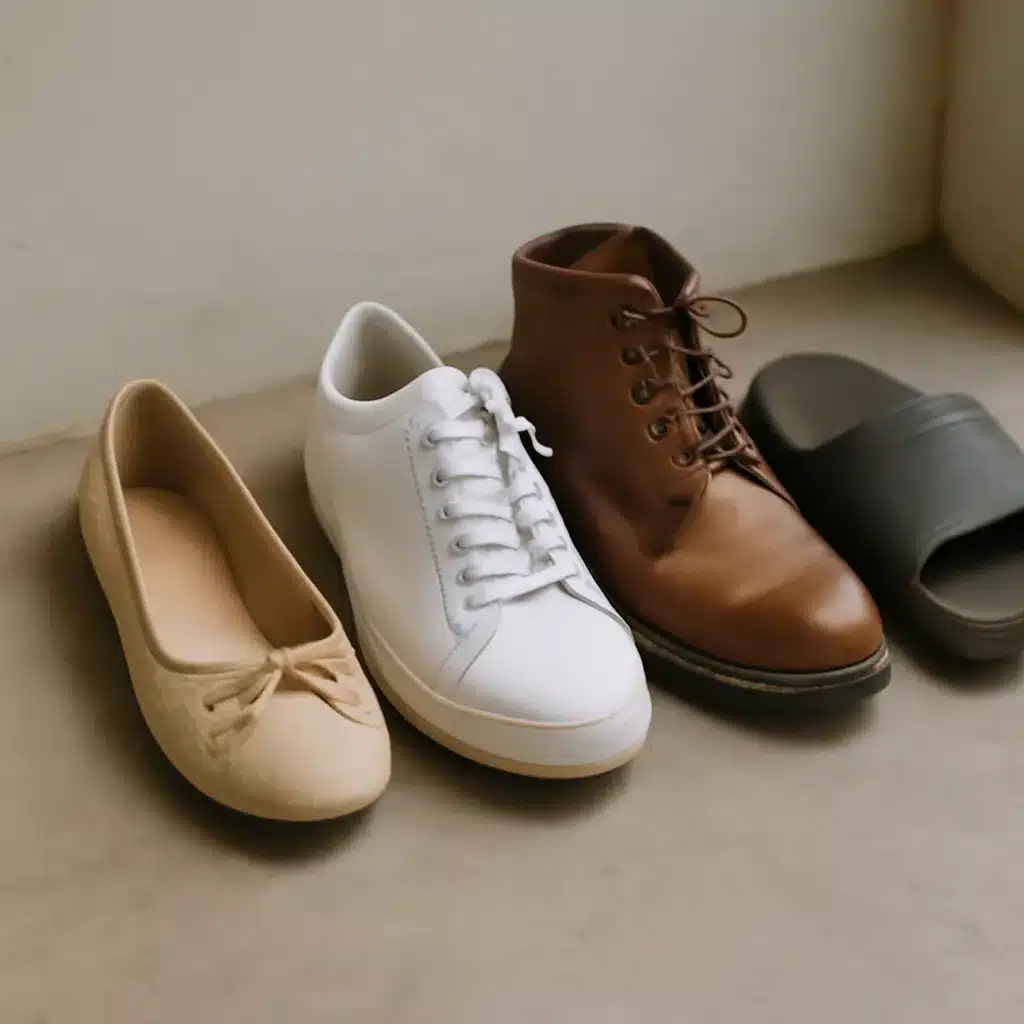
- Sneakers and trainers: fashion-led, EVA or rubber soles — sole bonding is the risk.
- Sandals and slides: PU/EVA, very low MOQ, fast trends.
- Slippers: plush and indoor — flammability and fill quality.
- Casual and canvas shoes: stitching and material grade vary widely.
- Children’s footwear: adds small-parts and safety rules.
Sizing, Materials and Compliance
Footwear compliance and fit vary by market and material, so confirm specifics with a testing lab. The first trap is sizing: Chinese, US, EU and UK size systems differ, and a supplier’s ‘size 38’ may not match yours, so lock a written size chart and a graded sample run. On materials, EU REACH restricts azo dyes and chromium VI in leather and limits certain chemicals in glues and coatings; children’s footwear carries additional safety rules. Genuine leather adds tanning-chemical considerations, while PU and EVA vary hugely in density and durability.
| Material | Used In | Pros | Watch Out |
|---|---|---|---|
| EVA | Soles, slides | Light, cheap, cushioned | Compresses/flattens over time |
| Rubber | Outsoles | Grippy, durable | Weight, cost |
| PU | Uppers, soles | Looks premium, low cost | Peeling, REACH on coatings |
| Genuine leather | Uppers | Durable, premium | Chromium VI, cost |
The order-killer in footwear is sizing, not defects. Lock a written size chart, approve a graded sample in your key sizes, and inspect the bulk against those measured lengths — ‘runs small’ is a return, not a QC note.
Footwear at a Glance
| Type | Common Material | Main Risk | Typical MOQ | Key QC Point |
|---|---|---|---|---|
| Sneakers | EVA/rubber + textile | Sole debonding | 100-600 pcs | Flex + bond pull test |
| Sandals/slides | PU/EVA | Strap failure, sizing | 100-1,000 pcs | Strap load + size check |
| Slippers | Plush + foam | Flammability, fill | 300-1,000 pcs | Fill + seam check |
| Kids’ shoes | Textile/PU | Small parts, chemicals | 300-1,000 pcs | Small-parts + material test |
MOQ and Pricing
Stock footwear often starts from 100-600 pairs per style, while custom colors, logos or lasts push minimums toward 600-2,000 and add 20-40 days. Price moves on sole material, construction (glued vs stitched), and upper quality; the cheapest quote almost always uses a lower-density foam or a weaker sole bond that fails within a season. Buy to a written material and construction spec, not ‘same as the sample’.
What We Check on a Footwear Supplier
- License name matching the invoice and bank account.
- A written, graded size chart and a measured sample in your key sizes.
- A sole-bond pull test and a flex test on the sample.
- Material and dye compliance for the destination market (REACH for the EU).
- An AQL inspection against the approved sample before the balance is paid.
Quality Pitfalls
The recurring footwear failure is the sole separating from the upper — a weak adhesive or a rushed bonding process that passes a glance and fails in wear. The second is inconsistent sizing across a run. Lock the sample, specify the sole construction and adhesive in writing, run a flex and bond test, and measure sizes across the bulk. A supplier who resists a flex test is telling you how the soles are bonded.
Footwear rewards inspection — see our Yiwu quality inspection guide before you pay the balance.
How to Lock Footwear Sizing
Sizing is where footwear orders quietly die, so treat it as a formal spec, not an assumption. Different systems — Chinese, US, EU, UK — do not map cleanly, and one supplier’s ‘size 38’ can differ from another’s by a full size. Start by agreeing a written size chart that lists the actual insole length in centimeters for every size you will sell, then order a graded sample set covering your key sizes and measure them yourself. A tolerance of a few millimeters per size is normal; a full size of drift is a returns wave.
Once the chart is locked, make it the inspection standard. During the AQL inspection, have the inspector measure insole lengths across the run against your centimeter chart, not just eyeball the printed size. Consistent sizing across the bulk is worth more than any cosmetic check, because ‘runs small’ is the single most common footwear return and the hardest to fix after the container lands.
- A written size chart with insole length in centimeters per size.
- A graded sample set in your key sizes, measured yourself.
- An agreed per-size tolerance (typically a few millimeters).
- Insole-length measurement built into the AQL inspection.
- The locked size chart as the production standard.
Custom Branding and Lead Times
Custom branding lifts a shoe from generic to yours, and Yiwu supports it — your logo, custom colors, printed insoles and branded boxes. Customization typically raises the minimum toward 600-2,000 pairs and adds 20-40 days for sampling and production. Always approve a pre-production pair with your exact logo, color and last before the bulk run; a misplaced logo on a thousand pairs is an expensive lesson.
Example: Ordering 500 Branded Sneakers
A buyer ordering 500 branded sneakers starts with sizing, not price. They agree a written size chart in centimeters, order a graded sample set across their key sizes, and measure each pair themselves to confirm the grading holds. They specify the sole construction and adhesive in writing, run a flex and sole-bond pull test on the sample, and check the PU upper against REACH for their EU market. After approving a pre-production pair with their logo, they place the order and have the inspector measure insole lengths across the bulk at AQL Level II before the balance is paid. The result is a consistent, on-spec run — not a box of ‘runs small’ returns.
Sizing locked in writing and a bond test up front are what turned a risky footwear order into a repeatable one.
Common Footwear Sourcing Mistakes
- Approving a shoe on looks without a written centimeter size chart.
- Not specifying the sole adhesive, so the bulk gets the cheapest bond.
- Ignoring REACH on PU coatings and leather for EU-bound orders.
- Skipping a pre-production pair on custom-branded runs.
- Measuring printed size instead of insole length at inspection.
Conclusão
Yiwu shoes and footwear sourcing is won on sizing and construction, not the photo. Lock a written size chart, specify the sole and materials, test the bond and flex, and inspect the bulk. Do that and Yiwu delivers a wide, on-trend footwear range at trade prices.
Perguntas mais frequentes
Is Yiwu good for sourcing shoes?
Yes for fashion sneakers, sandals, slippers and casual footwear at low minimums. For technical performance shoes or leather dress shoes with deep tooling, a specialist footwear cluster goes further.
What is the biggest problem sourcing footwear from Yiwu?
Sizing. Chinese, US, EU and UK size systems differ, so lock a written size chart and approve a graded sample before bulk, or you inherit a wave of ‘runs small’ returns.
Do shoes from China need compliance testing?
Sometimes. EU REACH restricts azo dyes and chromium VI in leather, and children’s footwear carries extra rules. Confirm requirements for your material and market with a testing lab.
Why do cheap shoes fall apart?
Usually the sole debonds or a low-density foam collapses. Specify the sole construction and adhesive in writing, run a flex and bond test, and inspect the bulk against the sample.
About the author: Written by the ChineseYiwu Sourcing Team — based inside the Yiwu International Trade City since 2005, with 50+ sourcing specialists and QC inspectors serving importers in 100+ countries.